Overview

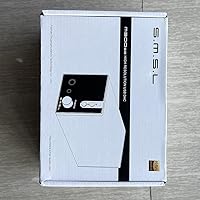
The SMSL M300SE Desktop DAC Headphone Amplifier is aimed squarely at hobbyists who have outgrown their starter gear and want something measurably better without stepping into flagship territory. The key upgrade over the original M300 is the switch to dual CS43131 chips, which brings noticeably lower noise and distortion to the table. Physically, this desktop DAC-amp is compact — 70×73×165mm — with a CNC-machined aluminum chassis and a tempered glass front panel that feels more expensive than its price suggests. It connects via USB, optical, coaxial, and Bluetooth 5.0, covering most source setups. Just keep in mind this is a stationary desktop unit; there is nothing portable about it.

Features & Benefits

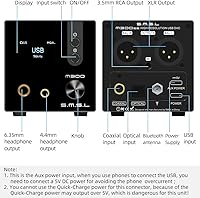
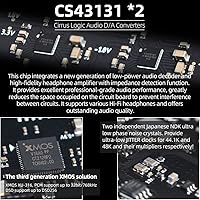
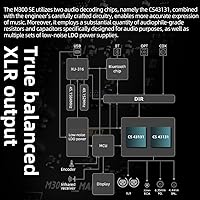
The dual CS43131 chips push distortion down to 0.00013% — in practical terms, that means a near-inaudible noise floor even during quiet passages, which translates to noticeably cleaner audio on sensitive headphones. The XMOS XU-316 USB receiver handles PCM up to 768kHz/32-bit and DSD256, and it supports MQA decoding natively over USB, which is useful if you stream via Tidal. Both RCA and true balanced XLR outputs are included, with the XLR delivering 4.0Vrms — a meaningful bump over the 2.0Vrms RCA. For headphone users, there are both a 6.35mm jack and a 4.4mm balanced output. The small OLED display and included remote control, which doubles as a preamp controller, make daily use genuinely comfortable.

Best For

The M300SE makes the most sense for headphone enthusiasts who own moderately demanding cans — think 150–300 ohm headphones — and want a source with genuinely low distortion to back them up. It is particularly well-suited to anyone building a balanced desktop chain, since it offers both XLR line outputs and a 4.4mm headphone output in a single box. Hi-res listeners who rely on USB from a PC or Mac will appreciate the native MQA and DSD256 support. It also works well in a home office as a desktop preamp and DAC combo, using the remote to control volume to powered monitors. Just do not expect it to drive very high-impedance or notoriously power-hungry headphones with authority.

User Feedback

Across roughly 113 ratings, the SMSL unit holds a 4.3-star average — a broad positive consensus rather than a handful of enthusiastic outliers. Most buyers highlight build quality and value, noting the chassis feels premium for the price and that sound clarity is a marked step up from entry-level alternatives. The OLED display and remote are consistently mentioned as useful quality-of-life additions. On the critical side, the Bluetooth SBC limitation draws regular complaints — wireless users expecting aptX or AAC support will be disappointed. A handful of Windows users have flagged occasional driver setup friction. Buyers who switched to the balanced XLR or 4.4mm output generally report a noticeable clarity improvement over single-ended use.

Pros

  • Dual CS43131 chips deliver measurably low distortion that translates to a genuinely clean, quiet noise floor.
  • True balanced XLR outputs at 4.0Vrms give a real signal advantage over standard single-ended RCA connections.
  • Both a 6.35mm and a 4.4mm balanced headphone jack are included, covering most modern premium cable configurations.
  • Native MQA decoding over USB works without third-party software, which is a practical convenience for Tidal subscribers.
  • DSD256 and PCM up to 768kHz/32-bit support via USB covers every hi-res format most listeners will realistically encounter.
  • The OLED display is sharp and easy to read at a glance without dominating the desk aesthetically.
  • The included remote doubles as a preamp controller, making volume adjustments to powered monitors genuinely hands-free.
  • Build quality punches above its price tier — the CNC aluminum chassis and tempered glass panel feel solid and premium.
  • Multiple inputs including optical, coaxial, USB, and Bluetooth make it easy to integrate into an existing desktop setup.
  • Standby power draw under 0.1W means leaving it plugged in around the clock is a non-issue.

Cons

  • Bluetooth is limited to SBC only — no aptX or AAC, which is a real step down for wireless listeners in this price range.
  • Headphone amplifier output power is modest; it will struggle to properly drive very high-impedance or inefficient planar cans.
  • Some Windows users have reported friction during initial driver installation, which can be frustrating for non-technical buyers.
  • Optical and coaxial inputs are capped at 192kHz/24-bit, so only USB users get access to the full high-resolution ceiling.
  • The Bluetooth antenna helps range but SBC codec quality remains a hard ceiling regardless of signal strength.
  • No balanced headphone output beyond 4.4mm — owners of 2.5mm balanced cables will need an adapter.
  • At 0.54kg and a compact footprint, the chassis can shift around on a desk without a non-slip base underneath.
  • Remote control functionality, while convenient, does not extend to input switching — that still requires physically touching the unit.

Ratings

The SMSL M300SE Desktop DAC Headphone Amplifier scores below were generated by AI after analyzing verified buyer reviews worldwide, with active filtering applied to remove spam, bot-driven submissions, and incentivized feedback. The result is an honest breakdown that captures what this unit genuinely excels at alongside the real frustrations that a meaningful portion of owners have encountered.
Sound Quality
91%
Listeners consistently describe the M300SE as one of the cleanest-sounding units at this price point. The dual CS43131 chip configuration results in a genuinely quiet background — even sensitive in-ear monitors reveal no audible hiss — and the overall presentation is detailed without feeling clinical or fatiguing during extended desktop listening sessions.
A minority of users with extremely power-hungry planar magnetic headphones note that the amplifier stage adds a slight sense of compression at high volumes. The unit also offers no onboard DSP or EQ processing, so listeners who prefer a customizable sound signature will need to apply corrections in software upstream.
Build Quality
88%
The CNC-machined aluminum chassis and tempered glass front panel feel genuinely premium — considerably more solid than similarly priced plastic-bodied competitors. Multiple buyers specifically noted that the unit feels stable and substantial on the desk, with no flex or rattle even when frequently adjusting the front-mounted controls.
The base has no rubber feet or anti-slip coating, which means the unit can slide on smooth desk surfaces during cable swaps. A few users also pointed out that fingerprints and smudges accumulate quickly on the glossy tempered glass panel, requiring regular wiping to keep it looking sharp.
Value for Money
89%
For a unit that includes dual CS43131 DAC chips, true balanced XLR outputs, hardware MQA decoding, and a 4.4mm balanced headphone output, the asking price is hard to argue with. Most buyers in the 113-rating pool describe it as the most impactful upgrade they made to their desktop audio chain relative to what they actually spent.
Buyers who primarily use Bluetooth may feel they are paying for features they cannot fully exploit, since the SBC-only wireless input significantly limits audio quality. If your use case is simple — a single wired source with no balanced output requirements — there are cheaper units that cover the basics without the same feature overhead.
Balanced Output
87%
Users who connect via XLR to powered monitors or via the 4.4mm balanced jack consistently report quieter backgrounds and better perceived dynamic contrast compared to the single-ended RCA. The 132dB dynamic range figure via XLR is not just a spec on paper — it translates to audible clarity on complex, layered recordings.
Buyers who own headphones with 2.5mm TRRS balanced connectors will need an adapter, since only 4.4mm is provided — a common oversight for users coming from older balanced gear. The XLR outputs are line-level only, so a separate balanced headphone amplifier is still needed downstream if your cans require more current than this unit can deliver.
Hi-Res Audio Support
93%
PCM support to 768kHz/32-bit and DSD256 over USB, combined with hardware MQA decoding, covers every hi-res format a desktop listener is realistically going to encounter. Tidal subscribers and local DSD library owners will find the unit handles their files natively without any software conversion or downsampling.
The optical and coaxial inputs cap out at 192kHz/24-bit, which means users feeding hi-res audio from a standalone transport via S/PDIF will not access the full resolution ceiling available over USB. Bluetooth audio is further limited to SBC regardless of the source file quality, making the wireless input effectively unsuitable for hi-res listening.
Headphone Amp Power
72%
28%
For the headphones this unit is realistically designed to drive — 32 to 300 ohm dynamic drivers and efficient planars — the output is clean and adequately powerful. Buyers using popular mid-tier headphones like the Beyerdynamic DT 770 Pro or Audio-Technica ATH-M50X report no issues with volume headroom during everyday listening.
Users who own notoriously power-hungry planars — HiFiMAN HE-6se, Audeze LCD-4, or similar — have reported that this desktop DAC-amp runs out of steam before reaching optimal listening levels. This is not a dedicated headphone amplifier, and buyers with that requirement are better served treating it as a DAC feeding a more powerful downstream amp stage.
Connectivity Options
83%
Four distinct inputs — USB, optical, coaxial, and Bluetooth 5.0 — give the unit enough flexibility to fit into nearly any existing desktop setup without requiring additional equipment. The USB input supports asynchronous transfer, which reduces host-induced jitter and is the preferred connection method for audiophile-grade DACs at this tier.
There is no AES/EBU digital input, which some semi-professional users with balanced digital connections will notice as a gap. Input switching is also manual — the remote does not support it — which proves mildly inconvenient when swapping between multiple source devices throughout a typical workday.
Bluetooth Performance
47%
53%
Bluetooth 5.0 with an external antenna provides a stable wireless connection from across a typical room, with noticeably fewer dropouts than earlier Bluetooth standards at comparable distances. For casual background listening from a phone or tablet where audio fidelity is a secondary concern, the wireless connection itself is reliable.
SBC-only codec support is a significant weakness for a unit otherwise capable of exceptional audio quality — it is a jarring mismatch to have a 0.00013% THD+N DAC at the end of a compressed SBC wireless chain. Users who expected aptX, aptX HD, or AAC — all common on competitor units at this price point — are frequently and justifiably disappointed.
Display & Interface
84%
The 1.29-inch OLED panel is crisp and immediately readable — it shows the active input, sample rate, and current volume level, which is exactly what you want to glance at without breaking focus during a work session. The front-panel control knob feels solid and responds precisely without any mushiness or dead zones.
The display is small, and some users with the unit placed further back on a deep desk find the text slightly hard to read at a distance. There is also no brightness adjustment for the OLED, which a minority of users find distracting in a fully darkened listening room during late-night sessions.
Remote Control
81%
19%
The inclusion of a full infrared remote with preamp volume control is a genuine quality-of-life feature that buyers consistently praise, particularly in home office setups where the unit sits alongside powered monitors. Being able to adjust listening volume without reaching across the desk during a call or video session is more useful in daily practice than it initially sounds.
Input switching is not supported via the remote, requiring a physical press of the front panel to change sources — a limitation that frustrates users who swap between USB and optical inputs regularly. The infrared signal also requires clear line-of-sight, so the remote will not work reliably if the unit is tucked into a shelf or behind a monitor.
Driver & Software Setup
67%
33%
Mac OS X and Linux users get a true plug-and-play experience over USB — the operating system recognizes the unit immediately as a class-compliant audio device without any software intervention. For straightforward wired use on a Mac, the setup is arguably faster and easier than most wireless audio products in the same category.
Windows users face a mandatory driver installation that several buyers have flagged as confusing, particularly those unfamiliar with ASIO or WASAPI audio configurations. Isolated USB 3.0 port compatibility issues have also been reported, adding an unexpected troubleshooting step that buyers of a unit at this price would not reasonably anticipate.
Noise Floor & Measurements
94%
An SNR of 131dB and THD+N of 0.00013% are among the strongest figures available at this price tier, and those numbers hold up in independent third-party testing. For listeners using sensitive IEMs or musicians monitoring through headphones, the noise floor is genuinely below the threshold of audibility under real-world conditions.
The best measured performance is largely contingent on using the USB input; optical and coaxial connections, while still clean, do not fully reach the same ceiling. Users relying on Bluetooth see those impressive specifications become largely irrelevant once the SBC codec introduces its own compression artifacts before the signal even reaches the DAC stage.
Desktop Footprint
86%
At 70×73×165mm and just 0.54kg, the unit occupies a surprisingly small footprint on a crowded desk without looking cheap or plasticky. The combination of the brushed aluminum body and tempered glass panel gives it a clean, understated aesthetic that fits naturally into both dedicated listening setups and professional home office environments.
The chassis orientation means the unit extends further in depth than width, which can feel intrusive on a shallow desk where rear cable routing is already tight. Without rubber feet or a non-slip base, users on polished or glass surfaces regularly need to reposition the unit after adjusting rear-panel connections.
PCM Filter Options
76%
24%
Five selectable PCM filters let experienced listeners tailor the digital reconstruction curve to personal preference — some favor a sharper roll-off for maximum stopband rejection, while others prefer a slower, more linear-phase setting for a more natural sense of space. This level of control is genuinely uncommon in units at this price tier.
For the majority of casual listeners, five PCM filter options add navigational complexity without a clearly audible payoff in typical room conditions. The differences between filters are subtle enough that most buyers in the review pool never reference them, suggesting the feature resonates primarily with a technically focused minority rather than the average buyer.

Suitable for:

The SMSL M300SE Desktop DAC Headphone Amplifier is a strong match for hobbyists who have hit the ceiling of their entry-level gear and want a measurable, audible step forward without spending flagship money. It suits anyone who listens critically through moderately demanding headphones — think planar magnetics or dynamic drivers in the 100–300 ohm range — and wants a source clean enough to stop wondering whether their DAC is the weak link. Listeners who stream hi-res audio via USB from a PC or Mac will find the native MQA and DSD256 support genuinely useful, not just a marketing checkbox. The balanced output chain, with both XLR line outputs and a 4.4mm headphone jack, makes it a practical centerpiece for anyone building or upgrading a proper balanced desktop setup. The remote control and preamp functionality also make it a sensible pick for a home office where the unit doubles as a volume controller for powered monitors.
Not suitable for:

The SMSL M300SE Desktop DAC Headphone Amplifier is not the right tool for everyone, and it is worth being direct about where it falls short. Wireless listeners who rely on Bluetooth as their primary source should look elsewhere — the unit only supports the SBC codec, which means no aptX, no AAC, and noticeably compressed audio quality compared to a wired connection. Buyers chasing brute headphone amplifier output to drive notoriously power-hungry cans like the Sennheiser HD 800 S or HiFiMAN HE-6se will find this desktop DAC-amp underpowered for that task; it is a clean source, not a high-current powerhouse. If you need a single-box solution for a living room system or a dedicated speaker amplifier, this is not designed for that role either. And anyone who travels with their audio gear or needs a portable DAC-amp should know this is a strictly stationary desktop unit — compact by desktop standards, but not in any sense pocketable.
Specifications

  • DAC Chips: The unit runs a dual CS43131 configuration, with two dedicated decoder chips operating in tandem to lower the noise floor and improve channel separation.
  • THD+N: Total harmonic distortion plus noise measures 0.00013% (un-weighted), equivalent to -117dB, which represents an exceptionally clean signal for this price tier.
  • Dynamic Range: Dynamic range is 120dB via the RCA outputs and 132dB via the balanced XLR outputs, both measured un-weighted.
  • SNR: Signal-to-noise ratio is 131dB (un-weighted), meaning background hiss is effectively inaudible on all but the most revealing, sensitive headphones.
  • USB Input: The USB input supports PCM audio up to 768kHz/32-bit, native DSD up to DSD256, DoP64, and hardware MQA decoding via the third-generation XMOS XU-316 receiver.
  • Digital Inputs: Optical and coaxial S/PDIF inputs are both supported, handling PCM from 32kHz up to 192kHz at up to 24-bit depth.
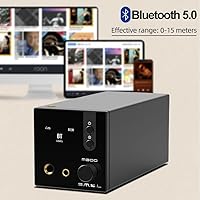
  • Bluetooth: Bluetooth 5.0 is included with an external antenna for extended range, though codec support is limited to SBC only — aptX and AAC are not supported.
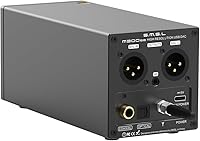
  • Line Outputs: RCA single-ended outputs deliver 2.0Vrms, while the balanced XLR outputs deliver 4.0Vrms, both suitable for driving powered monitors or a downstream amplifier.
  • Headphone Outputs: Two dedicated headphone jacks are provided: a standard 6.35mm (1/4-inch) unbalanced output and a 4.4mm Pentaconn balanced output.
  • Display: A 1.29-inch OLED panel shows input source, sample rate, and volume level, and remains clearly legible in typical room lighting conditions.
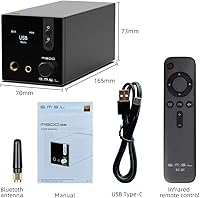
  • Remote Control: A full-featured infrared remote is included and supports volume adjustment, input switching, and preamp output control.
  • Clock System: An independent ultra-low-jitter, ultra-low phase noise crystal oscillator serves as the master audio clock, reducing timing errors that can degrade high-resolution playback.
  • Power Supply: The internal power section uses a high-efficiency supply chip alongside multiple low-noise LDO regulators to minimize power-induced interference in the audio chain.
  • Power Consumption: Active power draw is 3W during normal operation, and standby consumption drops below 0.1W, making it practical to leave plugged in continuously.
  • Chassis: The enclosure is CNC-machined from full aluminum alloy with a tempered glass front panel, measuring 70×73×165mm (W×H×D) and weighing 0.54kg.
  • OS Compatibility: USB audio is supported natively on Mac OS X 10.6 and later and Linux; Windows 7, 8, 8.1, and 10 users require a driver installation.

Related Reviews

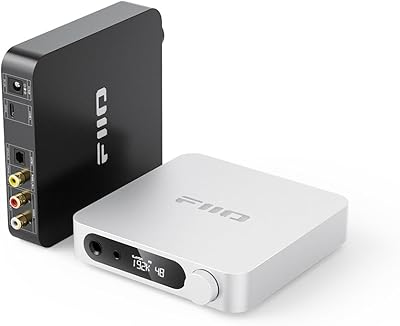
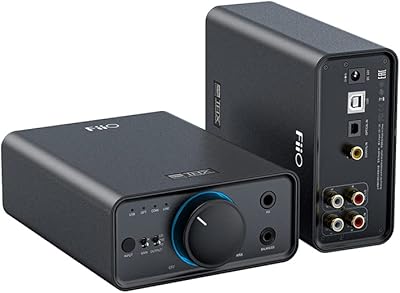
FiiO K11
FiiO K11
80%
91%
Value for Money
88%
Output Power & Headphone Driving
82%
Sound Quality
79%
Build Quality
71%
Balanced Output Implementation
More
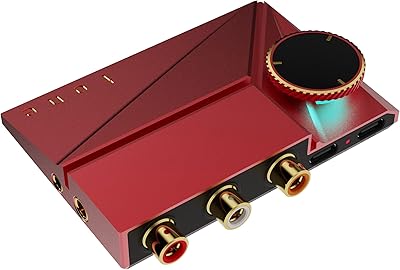
Khadas Tone2 Pro
Khadas Tone2 Pro
79%
91%
Sound Quality
88%
Build Quality
89%
Value for Money
83%
Amplifier Performance
79%
MQA Decoding
More
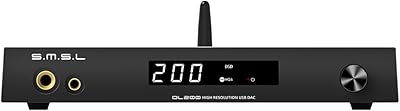
SMSL DL200
SMSL DL200
84%
93%
Audio Performance
88%
Headphone Amplifier Quality
96%
DAC Chip & Measurements
91%
Connectivity & Input Options
89%
Balanced Output Implementation
More
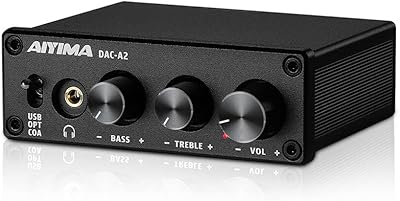
AIYIMA DAC-A2
AIYIMA DAC-A2
77%
83%
Sound Clarity Improvement
79%
Tone Controls (Bass & Treble)
86%
Input Versatility
74%
Headphone Amplifier Performance
53%
Build Quality & Materials
More
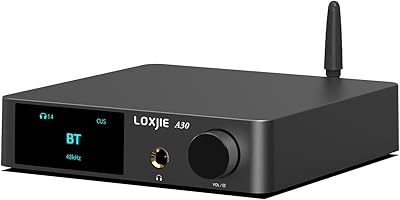
LOXJIE A30
LOXJIE A30
79%
86%
Sound Quality
82%
Build Quality
91%
Value for Money
89%
Input Versatility
63%
Bluetooth Performance
More
FiiO K7
FiiO K7
84%
93%
Sound Transparency
91%
Amplifier Power
89%
Connectivity & Inputs
92%
Value for Money
78%
Build Quality
More
Topping DX3 Pro+
Topping DX3 Pro+
84%
91%
Sound Quality
88%
Headphone Amplifier Performance
93%
DAC Chip Performance
71%
Bluetooth & Wireless Performance
89%
Input & Output Versatility
More
FiiO KA15
FiiO KA15
84%
93%
Sound Quality
91%
Output Power
82%
Battery Impact & Power Management
74%
EQ & App Experience
78%
Build Quality
More
HiBy FC4
HiBy FC4
81%
91%
Sound Quality
93%
Balanced Output Performance
86%
Driving Power
74%
MQA Decoding
89%
Hi-Res Format Support
More
FiiO Q11
FiiO Q11
78%
88%
Sound Quality
74%
Driving Power
91%
Battery Life
83%
Build Quality
61%
Noise Floor & IEM Compatibility
More
FiiO Q3 MQA Portable DAC Amplifier
80%
88%
Sound Quality
83%
MQA Decoding
86%
Battery Life
81%
Balanced Output Performance
91%
Build Quality
More

FAQ

No, you do not. On Mac OS X 10.6 or later and on Linux, the M300SE is plug-and-play over USB — the operating system recognizes it as a standard audio device without any additional software. Windows users will need to download and install a driver, but the process is straightforward once you locate the correct package from SMSL.

It will drive the HD 800 to listenable volumes, but power-hungry planars like the HE-6se are genuinely a stretch for this desktop DAC-amp. The M300SE is best matched with headphones in the efficient-to-moderately-demanding range — think dynamic drivers up to around 300 ohms or easier-to-drive planars. If your headphones are known to need a dedicated high-current amplifier, you would be better served pairing this unit as a DAC only and feeding a more powerful headphone amp from its balanced XLR outputs.

Yes, hardware MQA decoding is handled natively by the XMOS XU-316 USB receiver when connected via USB. You will still need a streaming application that unfolds MQA — such as the Tidal desktop app in its HiFi or HiFi Plus tier — but the final rendering stage is handled by the unit itself, not your computer.

Honestly, if Bluetooth is your main source, this is not the ideal unit for you. The SMSL M300SE Desktop DAC Headphone Amplifier only supports the SBC codec, which compresses audio more aggressively than aptX or AAC. The Bluetooth 5.0 connection is stable and the external antenna does improve range, but the codec ceiling means you are not hearing the unit at its best when going wireless. Use a wired USB or S/PDIF connection if sound quality matters.
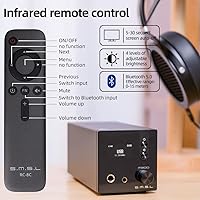
Yes, and this is actually one of the more practical use cases for this unit. The remote control supports volume adjustment that applies to both the line outputs and headphone outputs, so you can set your monitors to a fixed level and manage everything from your desk. The XLR outputs at 4.0Vrms give you clean, hot signal into most powered monitors without any noise penalty.

Based on user feedback and the measured specs, yes — the difference is audible rather than just theoretical. The XLR outputs double the output voltage to 4.0Vrms and push the dynamic range up to 132dB, compared to 120dB on the RCA. Buyers who switched to balanced connections consistently report a cleaner, blacker background and slightly better perceived detail, especially on sensitive headphones and high-resolution recordings.

The M300SE is not designed to drive two sets of headphones simultaneously. Plugging into both outputs at once is not a supported use case, and doing so may affect output impedance and overall signal quality. For sharing audio between two listeners, you would need a dedicated headphone splitter downstream.

Windows requires a dedicated ASIO or WASAPI driver for this unit — it will not function as a high-resolution audio device using the generic Windows USB audio driver. Download the correct driver from SMSL's official website, install it before plugging in the device, then reboot. A handful of users have also noted that some USB 3.0 ports can cause recognition issues; switching to a USB 2.0 port on the same machine sometimes resolves the problem immediately.

The 1.29-inch OLED display is reasonably bright and high-contrast — OLED technology handles ambient light better than LCD panels at this size. Users in typical home office or listening room conditions report no trouble reading the input source and sample rate at a normal viewing distance. Direct sunlight on the panel would be a challenge, but that is not a realistic concern for a desktop unit.

The key difference is the DAC chip: the SE version moves to dual CS43131 chips instead of the single chip in the original M300, which brings a meaningful improvement in measured distortion and dynamic range. The third-generation XMOS receiver also adds better hi-res support and MQA hardware decoding that the earlier model lacked. If you own the original M300 and care about those metrics, the SE is a meaningful step forward rather than a cosmetic refresh.