


Overview

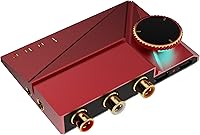
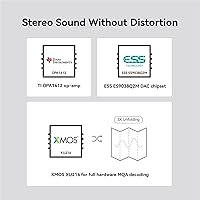
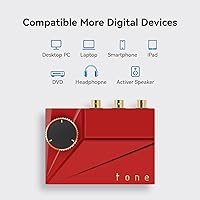
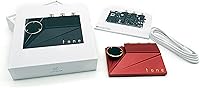
The Khadas Tone2 Pro is a compact desktop DAC and headphone amplifier that punches well above its price point for serious listeners who don't want to empty their wallet. Built around the ESS ES9038Q2M DAC chip and an XMOS XU216 USB processor, it handles digital-to-analog conversion with genuine precision. The slim aluminum chassis feels dense and solid — not at all like budget gear. What sets it apart at this tier is native MQA decoding, which most competitors simply skip. The dual USB-C port design lets you feed power and data separately, a practical touch for anyone chasing a quieter noise floor without investing in a dedicated external power supply.

Features & Benefits

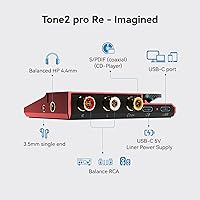
This DAC/amp offers both a 4.4mm balanced output and a standard 3.5mm jack, so you're not locked into one cable ecosystem. The volume knob blends digital and analog control, letting you lean fully on analog attenuation when you want the cleanest possible signal path. Driving power comes from four OPA1612 op-amps working through a three-stage amplification circuit — enough muscle to handle most planar and dynamic headphones up to 150 ohms with confidence. Resolution support stretches to 32-bit/768kHz PCM and DSD512, and a THD+N of -118dB keeps distortion genuinely inaudible under normal listening conditions. The balanced RCA line-out with three-pin connectors is a thoughtful, uncommon addition at this price.

Best For

This desktop headphone amp is a strong fit for home office listeners who have outgrown a laptop's built-in output and want something measurably better without a major investment. If you stream via Tidal or another MQA-enabled service, hardware MQA unfolding delivers the fully decoded signal rather than a software approximation. Mid-impedance headphones in the 32-to-150-ohm range respond well to the amplification on offer. The RCA outputs also make it a capable line-level source for powered desktop speakers. One honest caveat: owners of 300-ohm headphones like certain Sennheiser models may find the amp section falling short of the headroom those cans truly need.

User Feedback

Buyers consistently highlight the build quality — the aluminum enclosure feels premium relative to the asking price, and sound clarity through the balanced output draws steady praise from listeners upgrading from entry-level gear. The more common frustrations sit on the software side: some Windows users report friction during driver installation, and a handful of Mac users have encountered occasional compatibility issues. Owners of sensitive in-ear monitors sometimes flag a faint background hiss at low volumes. The volume knob divides opinion — satisfying for some, lacking resistance for others. Long-term owners generally report reliable daily performance, with few hardware problems surfacing in reviews from users who have run it for six months or more.

Pros

  • Balanced 4.4mm headphone output is genuinely rare at this price point and delivers a cleaner signal path.
  • The ESS ES9038Q2M chip produces a low noise floor that reveals detail most laptop outputs simply bury.
  • Native MQA hardware decoding works reliably for Tidal subscribers without any software workarounds.
  • Solid aluminum enclosure feels premium and holds up well after months of daily desk use.
  • Dual USB-C ports let you separate power and data for a quieter background when using a linear PSU.
  • Balanced RCA line-out doubles this DAC/amp as a clean source for powered desktop speakers.
  • Supports DSD512 and 32-bit/768kHz PCM, covering every high-res format most buyers will encounter.
  • Plug-and-play on macOS and Linux with zero driver friction for most users.
  • Long-term owners report stable, consistent performance with no hardware degradation over six-plus months.

Cons

  • Windows driver installation causes conflicts and occasional dropouts for a meaningful share of buyers.
  • High-sensitivity IEM users frequently report audible background hiss at low volumes on the 3.5mm jack.
  • The amp section runs short of headroom with 300-ohm or higher impedance headphones.
  • Realizing the full power-noise isolation benefit requires buying a separate 5V linear power supply.
  • The volume knob resistance feels too light for some users, making precise low-volume adjustments awkward.
  • Proprietary three-pin balanced RCA connectors require specific cables that are not widely stocked.
  • The aluminum surface scratches relatively easily without a protective mat or case underneath.

Ratings

The Khadas Tone2 Pro has been put through its paces by a wide range of buyers — from home office upgraders to dedicated audiophiles — and our AI has analyzed verified global user reviews, actively filtering out incentivized and bot-generated feedback to surface what real owners actually experience. The scores below reflect both the genuine strengths and the honest frustrations that emerge after extended daily use. Nothing has been smoothed over: where buyers consistently hit friction, the numbers show it.

Sound Quality
91%
Most buyers describe the listening experience as noticeably cleaner and more detailed than anything they had used at this price point before. The low noise floor lets subtle instrument textures and spatial cues come through with real clarity, especially through the balanced output.
A small group of critical listeners feel the sound signature leans slightly analytical, which can make certain poorly mastered tracks sound thin or fatiguing over long sessions. It is not universally flattering across all genres.
Build Quality
88%
The aluminum enclosure consistently earns praise for feeling solid and well-finished in hand, particularly for a device at this price tier. Buyers frequently mention it looks and feels more expensive than it is, which builds confidence in daily desktop use.
A few owners report that the chassis can accumulate fine scratches fairly quickly without a protective surface, and the bottom rubber feet on some units have loosened over time with regular repositioning on a desk.
Value for Money
89%
Buyers who compare the feature set against competitors in the same price range consistently find this DAC/amp difficult to beat. Native MQA decoding, a balanced headphone output, and a solid amplifier section in one compact box represent genuine value for the asking price.
Those who already own a capable DAC or do not use MQA streaming services may find they are paying for features they will never touch. For pure single-ended listeners, cheaper alternatives offer similar practical performance.
Amplifier Performance
83%
Headphones in the 32-to-150-ohm range respond very well here, with buyers noting strong volume headroom and a controlled low end even at higher listening levels. Planar magnetic headphones in the mid-impedance range particularly benefit from the three-stage amplification design.
Owners of 300-ohm or higher impedance headphones — particularly Sennheiser HD 6XX or HD 800 series — report that the amp section runs out of steam before reaching satisfying listening levels. This is a real ceiling, not a minor edge case.
MQA Decoding
79%
21%
For Tidal subscribers and listeners with local MQA files, hardware unfolding works reliably and without driver conflicts in most setups. Buyers who specifically sought MQA support are largely satisfied, noting it removes the need for any software decoding workaround.
The broader audiophile debate around MQA as a format means this feature genuinely divides opinion. Some buyers feel it adds real value while others consider it irrelevant or even undesirable, which affects how meaningfully this feature lands in practice.
Driver & Software Experience
61%
39%
On macOS, the device works plug-and-play without any additional software for most users, which makes the initial setup genuinely painless. Linux users also report clean out-of-the-box compatibility with no configuration required.
Windows users have the roughest experience, with driver installation causing conflicts on some systems and occasional dropouts during playback after OS updates. This is the most consistently mentioned frustration across negative reviews and affects a meaningful portion of the user base.
Volume Knob Feel
67%
33%
The hybrid digital-analog volume control design is functionally smart, and buyers who prioritize accurate analog attenuation appreciate the ability to rely purely on the analog stage for signal control. The knob itself is easy to reach and adjust mid-session.
The physical feel of the knob is polarizing. A notable group of buyers find the resistance too light or slightly wobbly, which makes precise low-volume adjustments feel less satisfying compared to the premium impression the chassis otherwise gives.
IEM Compatibility
63%
37%
The Tone2 Pro works well with most over-ear headphones and some in-ear monitors with moderate sensitivity ratings. Buyers using standard IEMs in casual desktop listening report no issues with audible noise at normal volumes.
Owners of high-sensitivity in-ear monitors consistently flag a faint but audible background hiss, particularly at low volumes on the 3.5mm output. This is a known limitation and makes the device a poor match for very sensitive IEMs used in quiet environments.
Connectivity & Outputs
92%
The combination of balanced 4.4mm, single-ended 3.5mm, and balanced RCA line-out gives this desktop headphone amp an unusually flexible signal routing setup for its size. Buyers who use powered speakers alongside headphones particularly value having a clean line-level output available simultaneously.
The proprietary three-pin balanced RCA connectors, while clever in design, require compatible cables that are not universally available. A small number of buyers discovered this incompatibility after purchase, which caused unnecessary frustration.
Power Noise Isolation
77%
23%
The dual USB-C design is a thoughtful engineering choice, and buyers who connected a dedicated 5V linear power supply to the second port reported a clearly quieter background compared to drawing power from the same USB source as data.
Realizing the full benefit requires purchasing a separate linear power supply, which is an additional cost and complication most casual buyers are not expecting. Out of the box using a single USB connection, the noise isolation advantage is less pronounced.
Portability
71%
29%
At just 4.2 ounces with a genuinely slim aluminum profile, this DAC/amp can slide into a bag without adding meaningful weight. Buyers who split time between a home desk and an office or travel setup appreciate not needing a second device for both scenarios.
It is not truly a pocket device despite some marketing language suggesting otherwise. It still requires a USB-C cable and ideally a power source for best performance, which limits how spontaneous portable use actually is compared to a dedicated portable DAC.
High-Resolution Audio Support
86%
Support for 32-bit/768kHz PCM and DSD512 covers every high-resolution format a buyer is likely to encounter for the foreseeable future. Local file listeners using Roon, HQPlayer, or JRiver report full bitperfect passthrough without configuration issues on supported systems.
The practical audibility of ultra-high-resolution formats beyond 24-bit/192kHz is debated, and buyers who are not already invested in hi-res audio libraries may find this specification more impressive on paper than meaningful in their actual listening habits.
Long-Term Reliability
82%
18%
Users who have owned this desktop headphone amp for six months or longer generally report stable, consistent performance with no hardware degradation in sound quality or output. The aluminum build appears to age well without oxidation or structural issues under normal desk conditions.
There are occasional reports of USB connectivity becoming intermittent after extended use on specific motherboard USB controllers, requiring a port swap to resolve. It is not widespread, but worth noting for buyers running older desktop systems.

Suitable for:

The Khadas Tone2 Pro is a strong match for home office listeners who have been tolerating the headphone output on their laptop or motherboard and want a meaningful, audible upgrade without committing to a high-end stack. It rewards buyers who own mid-impedance headphones — planar magnetics, dynamic drivers in the 32-to-150-ohm range — where the three-stage amplification circuit genuinely stretches its legs. Tidal subscribers and anyone with a local library of MQA or high-resolution files will get tangible use out of the hardware decoding, avoiding the compromises of software-only unfolding. The balanced 4.4mm output is a real differentiator for this price range, and listeners who already own a balanced cable will notice the cleaner signal path. People who want one compact device to serve both headphones and powered desktop speakers will also find the balanced RCA line-out a genuinely practical addition rather than a gimmick.

Not suitable for:

Buyers who rely on high-impedance headphones — particularly 300-ohm models like the Sennheiser HD 650 or HD 800 series — should look elsewhere, as the Khadas Tone2 Pro does not have the output headroom to drive those cans to satisfying levels without audible strain. Sensitive in-ear monitor users should also be cautious: a background hiss at low volumes on the 3.5mm output is a recurring complaint, making this a poor pairing for high-sensitivity IEMs in quiet environments. Windows users who dislike troubleshooting audio drivers should factor in that installation friction is the most consistently reported frustration, and it has caused real setup headaches for a portion of buyers. Anyone expecting a truly pocketable portable device will also be disappointed — while the chassis is slim, this DAC/amp is a desktop tool at heart and works best anchored to a desk with a proper cable setup. Finally, listeners who have no interest in MQA and already own a capable DAC chip elsewhere will find limited justification in switching solely for the Khadas brand.

Specifications

  • DAC Chip: Audio conversion is handled by the ESS ES9038Q2M, a high-performance stereo DAC known for its low noise floor and precise channel separation.
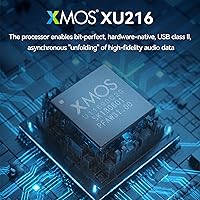
  • USB Processor: The XMOS XU216 manages USB audio input, enabling bit-perfect, asynchronous USB Class II transfer with hardware-native MQA unfolding.
  • Headphone Outputs: Two headphone outputs are provided: a standard 3.5mm single-ended jack and a 4.4mm Pentaconn balanced jack for lower noise and higher output swing.
  • Line Output: A balanced RCA line-out uses a proprietary three-pin connector in a standard RCA form factor, providing a clean analog signal to powered speakers or amplifiers.
  • Amplification: The three-stage amplification circuit uses four OPA1612 operational amplifiers and three buffer amplifiers for stable, low-distortion headphone drive.
  • Max Impedance: The amplifier section is rated to drive headphones with impedances up to 150 ohms reliably; higher impedance loads may not reach satisfying volume levels.
  • PCM Support: The device supports PCM audio up to 32-bit depth and 768kHz sample rate, covering all standard and ultra-high-resolution audio formats.
  • DSD Support: Native DSD playback is supported up to DSD512, suitable for listeners with high-resolution DSD libraries or DSD-capable streaming sources.
  • MQA Decoding: Full hardware MQA decoding is built in, enabling complete unfolding of MQA audio streams from services like Tidal without relying on software renderers.
  • THD+N: Total harmonic distortion plus noise is rated at -118dB, indicating an extremely clean output signal with minimal coloration under normal operating conditions.
  • Power Input: The device is powered via USB-C at 5V, with a second dedicated USB-C port available for connecting a separate power supply to isolate noise from the data path.
  • Dual USB-C Ports: One USB-C port handles audio data while the second accepts a 5V power source, allowing independent power and signal lines for improved noise isolation.
  • Volume Control: A hybrid digital-analog volume knob allows the user to attenuate purely in the analog domain at any point in the volume range, avoiding digital word-length reduction.
  • Enclosure Material: The chassis is machined from aluminum, providing effective RF shielding, passive heat dissipation, and a rigid structure that resists flex during daily desk use.
  • Dimensions: The unit measures 4.76″ in length by 4.72″ in width, giving it a compact square footprint suitable for tight desk setups.
  • Weight: The device weighs 4.2 ounces, making it light enough to transport in a laptop bag without adding meaningful bulk.
  • Interface Types: Input connectivity includes USB (Type-C) for computer audio and a coaxial input rated at up to 192kHz 24-bit for external digital sources.
  • Supply Voltage: Operating voltage is fixed at 5V via USB-C; both minimum and maximum supply voltage are specified at 5V, requiring a stable USB power source.

Related Reviews

Ubiquiti UniFi Dream Machine Pro UDM-Pro
86%
94%
Performance
88%
Ease of Use
90%
Reliability
92%
Connectivity
85%
Network Security Features
More
DS18 PRO-DR1PK44 Compression Driver with PRO-H44/BK Horn
86%
96%
High-Frequency Loudness
93%
Sensitivity & Efficiency
88%
Vocal Clarity & Naturalism
86%
Build Quality & Materials
81%
Installation Versatility
More
DS18 PRO-ZXI10MBASS 10-inch Pro Audio Mid Bass Loudspeaker
86%
88%
Sound Quality
91%
Bass Performance
85%
Ease of Installation
87%
Durability and Build Quality
92%
Value for Money
More
Cinema Secrets Pro Cosmetics Ultimate Foundation 5-In-1 Pro Palette 500A
88%
93%
Coverage & Pigmentation
85%
Skin Compatibility (Sensitive Skin)
88%
Ease of Application
90%
Longevity & Wear
91%
Versatility (Contouring & Concealing)
More
Apple MacBook Pro 14-inch M1 Pro 16GB RAM 1TB SSD
87%
95%
Performance
92%
Display Quality
89%
Battery Life
91%
Build Quality
82%
Value for Money
More
Cinema Secrets Pro Cosmetics Ultimate Corrector 5-In-1 Pro Palette No.1
86%
91%
Effectiveness for Color Correction
88%
Blendability
84%
Coverage Customization
85%
Longevity of Wear
93%
Suitability for All Skin Tones
More
HP Pro Tower 290 G9 Desktop (i5-12500, 32GB RAM, 1TB SSD)
81%
96%
Multitasking Capability
91%
Value for Money
88%
Port Selection
84%
Thermal & Acoustic Performance
93%
Boot Speed & Storage
More
VIZONY E1 Pro
VIZONY E1 Pro
87%
91%
Display Quality
78%
Brightness Performance
95%
Portability
93%
Ease of Setup
88%
Connectivity Options
More
SunPass PRO Transponder
85%
88%
Ease of Use
93%
Compatibility with Toll Systems
75%
Setup Process
90%
Portability
85%
Savings on Toll Costs
More
Epson Pro EX11000
Epson Pro EX11000
89%
96%
Brightness & Clarity
94%
Color Accuracy
88%
Connectivity Options
90%
Setup & Installation
85%
Build Quality
More

FAQ

It depends on your operating system. On macOS and Linux it is genuinely plug-and-play — the device shows up as a USB audio output with no additional software needed. Windows requires installing the XMOS USB audio driver from the Khadas website, and while most users get through it without trouble, a portion of Windows users report conflicts or dropouts that need troubleshooting.

Honestly, not at its best. The Khadas Tone2 Pro is rated up to 150 ohms, and real-world feedback from owners of 300-ohm cans like the HD 650 or HD 800 indicates the amp section runs short of headroom before reaching satisfying listening levels. If high-impedance headphones are your primary use case, a more powerful dedicated amp would serve you better.

This is a genuine concern worth taking seriously. Several owners using high-sensitivity IEMs report a faint but audible background hiss at low volumes through the 3.5mm output. If your IEMs are particularly sensitive, this DAC/amp may not be the best pairing — it is better suited to over-ear headphones.

You only need one USB-C connection for it to function — the data port handles audio and power simultaneously in a standard setup. The second port is there so you can connect a separate 5V linear power supply, which isolates the power path from the USB data line and reduces background noise. You will only hear a meaningful difference if you actually use a dedicated linear PSU, which is a separate purchase.

For most users with compatible balanced cables, yes — the balanced output typically produces a noticeably quieter background and slightly more controlled low end. That said, the improvement is more obvious with better headphones in a quiet environment than it is on casual listening setups. If you do not already own a 4.4mm balanced cable, factor that cost into your decision.

Yes, and this is one of the more useful things about its design. The RCA line-out feeds a clean analog signal to any powered speaker with RCA inputs. Just be aware that the balanced RCA connectors use a proprietary three-pin design — regular RCA cables will work in single-ended mode, but to use the balanced output you need cables specifically compatible with the Khadas three-pin format.

That genuinely depends on your streaming habits and how much weight you give to the ongoing debate around MQA as a format. If you subscribe to Tidal and listen to MQA tracks, hardware decoding here works reliably and does eliminate the need for software workarounds. If you do not use MQA services and listen primarily to standard FLAC or AAC files, the feature will not affect your daily experience at all.

Long-term feedback is generally positive. Owners who have used this desktop headphone amp for six months or more mostly report stable, consistent sound quality with no hardware degradation. There are occasional reports of intermittent USB connectivity on specific older desktop motherboard controllers, but these cases appear to be the exception rather than the rule.

In many cases yes — Android devices with USB audio output support and compatible USB-C connections can drive the unit, though functionality depends on the specific device and its USB audio implementation. iPhone users will need a Lightning or USB-C to USB-A adapter depending on their iPhone model, and not all iOS apps respect external USB DAC output properly.

It works well for gradual volume adjustments, but the knob has a light resistance that some users find makes very fine low-volume control tricky. The hybrid design means you are blending digital and analog attenuation at different points in the range, so the analog-only zone at lower volumes is where you get the cleanest signal. For late-night listening at very low levels, some patience with the knob feel is worth expecting.