
Overview

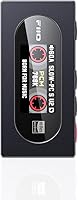
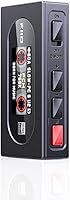
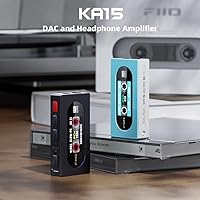
The FiiO KA15 sits in a genuinely interesting spot in the dongle market — not an entry-level impulse buy, but not a boutique luxury piece either. It targets people who already care about how music sounds and want a meaningful upgrade over whatever USB-C adapter came with their phone. Visually, it breaks from the usual matte-black-rectangle formula with a retro tape recorder design that actually looks considered. The thing is small enough to forget in a jacket pocket, measuring just over two inches long. And crucially, it's built around dual CS43198 DAC chips, which puts it in different company than the cheaper dongles cluttering the market.

Features & Benefits

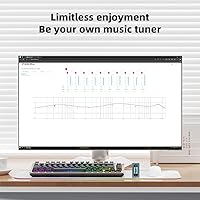
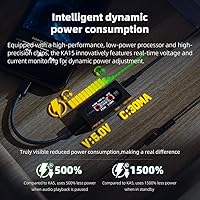
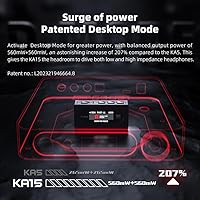
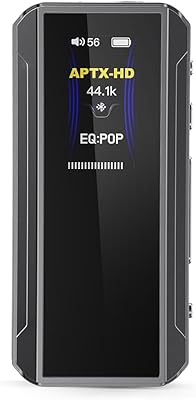
What makes the KA15 stand out technically is the combination of its DAC chips and a patented Desktop Mode that dramatically boosts balanced output power — enough to drive most full-sized headphones you'd realistically use on the go. That's not marketing spin; for anyone running planars or higher-impedance cans from a phone, the difference is audible. The ten-band parametric EQ, accessible through the FiiO Control app or a browser-based interface, is more capable than what most competing dongles offer at this price. The small IPS screen is a genuine convenience for checking gain levels without opening your phone. And the power management system actively monitors current draw to reduce battery impact — something few dongles bother with.

Best For

This portable amp makes most sense for people who already own a decent pair of headphones and are tired of their phone's built-in audio output letting them down. Commuters who want cleaner, more powerful playback without lugging a dedicated audio player will find real value here. It's also a strong pick for EQ enthusiasts — the parametric control on offer goes well beyond what app-based equalizers can do at the system level. If you're running headphones in the 32 to 150 ohm range and want desktop-quality power occasionally, Desktop Mode covers that without buying separate gear. Casual listeners who just want louder music, though, would be overpaying for features they won't use.

User Feedback

Buyers tend to be most surprised by how much power this DAC dongle puts out in Desktop Mode — it's a recurring point, especially from users who weren't expecting it to drive their full-sized cans with real authority. Sound clarity gets consistent praise. On the critical side, a few users have flagged app setup friction, particularly on iOS where the EQ features require extra configuration steps. The LCD screen divides opinion: some find it practical and fun, others consider it a gimmick. A handful of reviewers mention the dongle runs slightly warm during extended use. Overall, satisfaction is high, with most buyers feeling the price is fair for what the hardware delivers.

Pros

  • The FiiO KA15 drives most consumer and prosumer headphones with genuine authority, especially in Desktop Mode.
  • Sound clarity is a consistent highlight — users describe a noticeable, immediate improvement over phone adapters.
  • The ten-band parametric EQ is a serious tool, not a gimmick, with import and sharing support for EQ curves.
  • Active power management measurably reduces battery drain compared to fixed-power dongles at similar output levels.
  • The IPS color display lets you check gain settings or filter modes at a glance without unlocking your phone.
  • This DAC dongle supports every major lossless audio format including DSD256, so file compatibility is never a concern.
  • The retro design stands out — it looks considered rather than thrown together, which matters to some buyers.
  • Sleep timer functionality is well-implemented for overnight use, leaving your phone battery largely intact by morning.
  • At its price point, the combination of dual flagship DAC chips, parametric EQ, and a screen is hard to match elsewhere.
  • Works across Android, iOS, Windows, and Mac with no driver installation required for standard playback.

Cons

  • App setup, especially on iOS, involves more steps than it should for a product at this price.
  • The included cable is short and stiff, which makes daily handling more awkward than necessary.
  • Some users report the USB-C connector develops minor wobble after months of repeated plugging and unplugging.
  • Desktop Mode increases current draw noticeably — phone battery impact is real if you leave it enabled by default.
  • The animated tape UI cannot be disabled in all firmware versions, which mildly irritates minimalist users.
  • EQ curve sharing and import features are compelling but require account setup that not all buyers want to deal with.
  • This portable amp runs slightly warm during extended high-power sessions, which a small number of users find concerning.
  • Advanced iOS features require extra configuration that Android users get more smoothly out of the box.
  • The dangling form factor can feel awkward in tight pockets, particularly when the phone is placed face-down.
  • Occasional app-to-dongle connectivity drops have been flagged by a subset of users across both platforms.

Ratings

The FiiO KA15 has been evaluated by our AI system after analyzing verified buyer reviews from global markets, with spam, bot-generated, and incentivized submissions actively filtered out before scoring. Ratings reflect the full spectrum of real ownership experiences — not just the highlights — so both genuine strengths and recurring frustrations are represented honestly in every category.

Sound Quality
93%
Users consistently describe the audio output as noticeably cleaner and more detailed than anything a phone headphone adapter can produce. The dual-DAC configuration gives instruments better separation, and listeners report hearing small details in familiar tracks they had simply never noticed before.
A small number of users with extremely resolving headphones note a very slight warmth in the tonality that purists may find coloring. This is subtle enough that most buyers consider it a non-issue, but it is worth mentioning for those chasing a perfectly flat reference sound.
Output Power
91%
Desktop Mode is the headline feature here, and buyers who own planar magnetic or high-impedance dynamic headphones are genuinely impressed by how much volume and control this tiny dongle can produce. For on-the-go use with demanding cans, it removes the need to carry a separate portable amp entirely.
Desktop Mode draws noticeably more current from the host device, so phone battery life takes a hit during extended sessions with it enabled. Users who leave it on by default without using a timer report faster battery drain than they initially expected.
Battery Impact & Power Management
82%
18%
The real-time current monitoring system is a meaningful differentiator — it actively scales power draw based on what is actually playing, which translates to measurably less drain compared to fixed-power dongles. Users who use the sleep timer overnight say their phone battery is largely intact by morning.
The power savings are most apparent in standard mode; switching to Desktop Mode significantly increases draw regardless of the monitoring system. A few iOS users also noted that power management behavior felt less predictable than on Android, possibly due to platform-level restrictions.
EQ & App Experience
74%
26%
The ten-band parametric EQ is a serious tool — not a basic bass-boost slider. Users who invest time setting it up report a meaningful improvement in how their headphones sound, and the ability to import and share EQ curves online adds real community value for enthusiasts.
App setup is the most consistently flagged friction point in user reviews. iOS users in particular encounter extra configuration steps, and a handful report occasional connectivity drops between the app and the dongle. For less technically inclined buyers, the EQ setup can feel more complicated than it should.
Build Quality
78%
22%
The casing feels solid for its size and the retro design gives it a more premium tactile feel than the typical all-plastic competition. Most buyers handling it for the first time comment that it feels more substantial than its weight suggests.
Some users have raised concerns about the durability of the USB-C connector after extended daily use, noting minor wobble developing over months of plugging and unplugging. The cable included in the box is also considered short and somewhat stiff by several reviewers.
Display & UI
81%
19%
The IPS color screen is sharp and genuinely readable at a glance, and the animated tape reel UI is charming without being distracting. Being able to check gain settings or confirm a filter mode without unlocking your phone is a small but real quality-of-life improvement during commutes.
Opinions are split on whether the screen justifies the added complexity. A portion of buyers consider it a novelty that adds cost without practical benefit once the initial novelty fades. There are also occasional reports of the UI animation stuttering after firmware updates.
Portability
89%
At just over two inches long and under half an inch thick, this DAC dongle is small enough to genuinely forget about in a bag or coat pocket. Its weight is negligible, and it requires no charging or case — just plug in and play.
Because it connects via a short cable, the dongle itself dangles from the phone, which can be awkward in tight pockets or when the phone is face-down on a desk. Some users wish there were a clip or loop for better cable management.
Format & Compatibility
88%
Support for the full range of high-resolution formats — including DSD256 — means no mental overhead about whether your files will play correctly. It works across Android, iOS, Windows, and Mac without installing drivers on most modern systems.
A few iOS users note that some advanced features, including certain EQ functions, require additional setup steps compared to Android. Full MFi integration is not confirmed, and compatibility nuances with specific apps or older iOS versions have caught some buyers off guard.
Value for Money
84%
Relative to competing dongles with similar DAC hardware, the KA15 offers more features per dollar — the screen, Desktop Mode, and parametric EQ together represent a feature set that typically costs more elsewhere. Buyers upgrading from a basic adapter almost universally feel the jump in quality is immediately obvious.
For users who only need clean audio playback without EQ or display features, there are simpler dongles that deliver comparable sound at a lower price. The value equation is strongest for people who will actually use the advanced features, and weakest for those who just want louder headphones.
Design & Aesthetics
86%
The retro tape recorder aesthetic is a genuine conversation starter and stands out clearly on a desk or in photos. FiiO made a deliberate design choice here rather than defaulting to another forgettable black rectangle, and most buyers appreciate the personality it adds.
Aesthetics are subjective, and a minority of buyers prefer the understated look of competitor dongles for professional settings. The animated UI, while fun, is not customizable or disableable in all firmware versions, which has mildly irritated users who prefer a minimal display.
Ease of Setup
72%
28%
Out of the box, plug-and-play functionality works immediately on most devices for basic audio playback — no drivers, no account needed. The screen guides new users through basic settings without requiring the app at all for standard use cases.
Unlocking the full feature set, especially the EQ tools, requires downloading the FiiO Control app and going through a pairing process that some users describe as unintuitive on the first attempt. Documentation could be more explicit about platform-specific steps, particularly for iOS.
Driving Capability for Headphones
87%
For a device this small, the range of headphones it can handle competently is impressive. Users with over-ear headphones in the 32 to 150 ohm range consistently report clean, controlled playback even at high volumes, with no audible distortion at normal listening levels.
Truly power-hungry planar headphones above 300 ohms will still expose the limits of even Desktop Mode during complex passages. It handles the vast majority of consumer and prosumer headphones well, but it is not a replacement for a dedicated desktop amplifier for the most demanding loads.
Sleep Timer & Overnight Use
83%
The sleep timer feature is thoughtfully implemented for users who fall asleep to music — the dongle enters a low-power state automatically, and users report waking up with far more battery remaining than they would with a standard USB audio device running all night.
Timer configuration is done through the app or the on-device menu, and a handful of users report the timer occasionally resetting after disconnecting and reconnecting the device. It is a genuinely useful feature but one that could benefit from a simpler and more persistent setup flow.

Suitable for:

The FiiO KA15 is the right pick for anyone who already owns a decent pair of headphones and is genuinely frustrated by how flat and lifeless they sound plugged directly into a phone or laptop. If you commute daily with over-ear cans in the 32 to 150 ohm range, this portable amp gives you the kind of controlled, detailed playback that used to require carrying a separate dedicated audio player. EQ enthusiasts will find particular value here — the ten-band parametric system, accessible through an app or browser, is a real tuning tool rather than a toy. Home listeners who occasionally want more output power for demanding headphones without buying a full desktop setup will also appreciate the Desktop Mode, which punches well above what this device's size implies. If you regularly fall asleep to music and worry about draining your phone battery overnight, the sleep timer and active power management make this a notably thoughtful choice compared to fixed-power alternatives.

Not suitable for:

The FiiO KA15 is not the right device for casual listeners who simply want their earbuds to be a little louder — the feature set here is genuinely aimed at people who have already thought about audio quality, and those who have not will be paying for tools they will never touch. If you are an iOS user who is not comfortable navigating app configurations and occasionally unclear setup documentation, the EQ functionality in particular may feel more frustrating than useful. Buyers who want a truly no-fuss, plug-and-forget experience may find the combination of app pairing, Desktop Mode toggling, and firmware-dependent UI behavior more friction than they signed up for. Anyone running extremely high-impedance or power-hungry planar headphones above 300 ohms should be aware that even Desktop Mode has real limits — this is not a replacement for a proper desktop amplifier stack. Lastly, if battery life on your phone is already a concern and you plan to run Desktop Mode constantly, the increased current draw under heavy use is something to weigh carefully before buying.

Specifications

  • DAC Chips: Equipped with dual CS43198 flagship DAC chips, which are among the most capable found in portable dongles at this price tier.
  • Op-Amps: Pairs the DAC chips with dual SGM8262 high-performance operational amplifiers to handle signal amplification with low noise.
  • Balanced Output: In Desktop Mode, delivers up to 560mW per channel via balanced output, providing serious headroom for demanding headphones.
  • Output Jacks: Includes a 3.5mm single-ended output and both 2.5mm and 4.4mm balanced output jacks for broad headphone compatibility.
  • Max Decoding: Supports PCM audio up to 768kHz at 32-bit depth and native DSD decoding up to DSD256.
  • Display: Features a 0.96-inch IPS true-color LCD screen showing playback status, gain settings, and an animated tape reel interface.
  • EQ System: Offers a 10-band high-precision lossless parametric EQ controllable via the FiiO Control app or a browser-based web interface.
  • Connectivity: Connects via USB-C wired connection; no Bluetooth or wireless functionality is included.
  • Compatibility: Works with Android, iOS, Windows, and Mac devices without requiring driver installation for standard audio playback.
  • Power Management: Incorporates real-time voltage and current monitoring to dynamically adjust power consumption and reduce drain on the host device.
  • Sleep Timer: Includes a configurable sleep timer that puts the dongle into an ultra-low power state once a set playback period ends.
  • Dimensions: Measures 2.05 x 0.98 x 0.43 inches, making it compact enough to carry in a pocket without noticeable bulk.
  • Weight: Weighs approximately 3.59 oz including its cable, which is light enough for all-day carry without discomfort.
  • Certification: Holds Hi-Res Audio certification, confirming its capability to reproduce audio beyond standard CD quality.
  • App: The FiiO Control app, available for both iOS and Android, enables full EQ management, firmware updates, and device configuration.
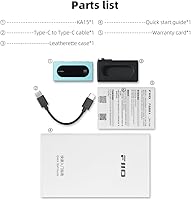
  • Included Contents: Ships with a USB-C cable and retail packaging; no additional adapters or carrying accessories are included in the box.
  • Material: Housing is constructed from plastic with a retro tape recorder-inspired aesthetic and a color LCD front panel.
  • Desktop Mode: Patented Desktop Mode can be activated to significantly boost output power, primarily intended for use with high-impedance or planar headphones.

Related Reviews
FiiO RETRO NANO
FiiO RETRO NANO
87%
94%
Sound Clarity
91%
Balanced Output
88%
Bluetooth Connectivity
90%
Wired Performance
83%
Battery Life
More
FiiO CP13 Cassette Player
90%
94%
Audio Quality
91%
Build Durability
96%
Battery Life
88%
Portability
89%
Ease of Use
More
FiiO M15S Music Player
85%
95%
Audio Quality
91%
Battery Life
67%
Portability
89%
Build Quality
93%
Streaming Support
More
FiiO FH3 HiFi Earphones
84%
91%
Sound Quality
89%
Bass Performance
88%
Comfort for Long Listening Sessions
85%
Build Quality
60%
Cable Durability
More
FiiO BTR17
FiiO BTR17
81%
93%
Sound Quality
91%
Amplifier Power & Output
88%
Bluetooth Codec Support
89%
Versatility & Multi-Mode Operation
79%
Parametric EQ & App Control
More
FiiO BTA30Pro Bluetooth Receiver/Transmitter
84%
94%
Audio Quality
80%
Setup & Installation
88%
Bluetooth Range & Connectivity
85%
Portability & Design
86%
Build Quality
More
FiiO K7
FiiO K7
84%
93%
Sound Transparency
91%
Amplifier Power
89%
Connectivity & Inputs
92%
Value for Money
78%
Build Quality
More
FiiO BTR13 Bluetooth Headphone Amplifier
85%
93%
Sound Quality
88%
Portability
85%
Bluetooth Connectivity
75%
App & EQ Features
82%
Battery Life
More
FiiO BTR3K
FiiO BTR3K
80%
88%
Sound Quality
91%
Balanced Output Performance
86%
Bluetooth Codec Support
72%
Connection Stability
93%
Portability & Form Factor
More
FiiO BTR7
FiiO BTR7
79%
91%
Sound Quality
88%
Build Quality
74%
Bluetooth Stability
93%
Codec Support & Compatibility
89%
USB DAC Performance
More

FAQ

It does work with iPhones, but there are some caveats. Basic plug-and-play audio works fine, though you will need a USB-C to Lightning or USB-C to USB-C connection depending on your iPhone model. Some advanced features like the full EQ setup require additional configuration steps on iOS compared to Android, so expect a bit more friction if you are in the Apple ecosystem.

It depends on which mode you are using. The FiiO KA15 includes real-time power monitoring that actively scales its current draw based on what is actually playing, which does reduce drain compared to fixed-power dongles during normal use. That said, if you enable Desktop Mode for maximum output power, expect a more noticeable impact on battery life — it is drawing significantly more current to deliver that extra headroom.

You can make basic adjustments directly through the on-device menu using the LCD screen, but the full ten-band parametric EQ requires either the FiiO Control app or the web-based interface. If you want to load custom EQ curves or fine-tune individual bands precisely, the app is essentially required.

It handles most consumer and prosumer headphones well, particularly dynamic drivers in the 32 to 150 ohm impedance range. Balanced output through the 4.4mm or 2.5mm jack, especially in Desktop Mode, opens it up to more demanding cans. Extremely power-hungry planar magnetic headphones above 300 ohms may still expose its limits at very high volumes, though for most people that scenario is unlikely in daily use.

Desktop Mode is toggled through the on-device menu or the app. It is not recommended to leave it on constantly — it is most useful when you are sitting still and need maximum output for demanding headphones. For commuting or casual listening with efficient earphones, standard mode uses less power from your phone and is perfectly adequate.

The included cable is functional but on the shorter side, which is a common complaint. In most cases, a standard USB-C cable with proper audio data support will work fine as a replacement, though results can vary depending on cable quality and your specific device. If you plan to swap cables, look for ones explicitly rated for audio data rather than charge-only cables.

It runs slightly warm during extended high-power sessions, which is normal for a device pushing this much output from such a small form factor. The warmth is generally not alarming — users describe it as noticeable but not uncomfortable. If you are running Desktop Mode for long periods, that is when heat is most likely to be perceptible.

For basic use — plug in, play music — there is no setup required at all. The complexity only comes in when you want to use the parametric EQ or adjust advanced settings. The app itself is reasonably well-designed, but the initial pairing and configuration process, particularly on iOS, has a steeper learning curve than it ideally should. If you are not interested in EQ tuning, you can largely ignore the app entirely.

Yes, it has both 2.5mm and 4.4mm balanced output jacks alongside the standard 3.5mm single-ended jack. To use balanced output, your headphones need a cable terminated in 2.5mm or 4.4mm, or you need an adapter — the dongle itself does not come with balanced headphone cables. The improvement from balanced output is most noticeable with better headphones and in Desktop Mode.

If you are coming from the KA5, the upgrade is meaningful rather than cosmetic. The output power in Desktop Mode is substantially higher, the EQ system is more capable, and the LCD screen adds genuinely useful on-device control that the KA5 lacked. Whether it is worth the price difference depends on whether you will actually use those features — if you just want clean audio playback without tuning or high-power output, the gap is less critical.