Overview

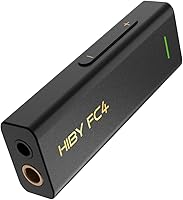
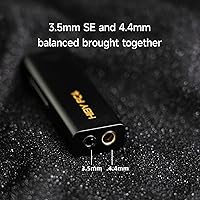
The HiBy FC4 is a compact USB DAC/amp dongle from a brand that audiophiles have genuinely respected for years. At this price tier, most dongles hand you a single DAC chip and call it a day — this one runs dual ESS ES9219 chips, which is a meaningful hardware choice, not just a spec sheet bullet. The 4.4mm balanced output alone sets it apart from similarly priced rivals like the Fiio KA3 or Hidizs S9 Pro. Plug it into Android, iOS, Mac, or Windows and it just works, no driver hunting required. Think of it as getting closer to desktop-quality sound from whatever is already in your pocket.

Features & Benefits

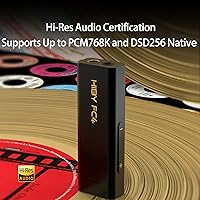
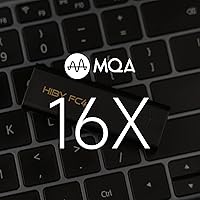
The engineering here is worth understanding in plain terms. A dedicated FPGA handles dual crystal oscillator reclocking, which reduces timing errors in the audio signal and translates to a cleaner, quieter background between notes. Through the 4.4mm balanced port, this portable DAC/amp delivers 340mW at 32Ω — enough headroom for harder-to-drive IEMs and even some planar magnetic headphones. Native DSD256 and PCM up to 768kHz cover virtually every hi-res format available. Hardware volume buttons mean you keep your phone in your pocket. The MQA 16X decoding will matter to Tidal subscribers, though it is worth noting that MQA remains a contested format among serious audiophiles.

Best For

This DAC dongle hits a sweet spot for a specific kind of listener. If you already own IEMs with a 4.4mm cable — or plan to — the balanced output makes a real difference, especially with planar magnetics that typically struggle on phone outputs. Tidal HiFi subscribers who want actual hardware MQA decoding rather than software unfolding will find genuine value here. It also works well for Android and Windows users who want high-end specs without fussing with drivers. Those stepping up from a basic 3.5mm adapter will notice the improvement right away. iOS users can make it work, but will need a separate Lightning-to-USB-C cable to do so.

User Feedback

Across more than 300 ratings, this portable DAC/amp holds a 4.4 out of 5 — a strong score that reflects genuine satisfaction without papering over real complaints. The balanced output is consistently the most praised aspect, with buyers reporting a noticeably cleaner, more dynamic sound compared to built-in phone audio. Build quality gets mostly positive marks, though opinions on the volume buttons are divided. A few users flag that the unit runs warm after extended high-power sessions — worth keeping in mind for long listening stretches. The iOS situation draws fair criticism too: needing a separate adapter cable is a friction point many consider more annoying than a minor inconvenience.

Pros

  • The 4.4mm balanced output delivers genuinely more power and separation than single-ended alternatives at this price.
  • Dual ES9219 chips produce a noticeably quiet noise floor that sensitive IEM users will immediately appreciate.
  • Plug-and-play on Android, Windows, and macOS means zero driver headaches out of the box.
  • Hardware volume buttons let you adjust levels without pulling out your phone mid-commute.
  • Native DSD256 and PCM 768kHz support covers every hi-res format most listeners will realistically encounter.
  • MQA 16X full decoding is a genuine hardware feature, not a software approximation, for Tidal subscribers.
  • At roughly 22g, this portable DAC/amp disappears into any pocket or bag without adding noticeable bulk.
  • The metal housing feels durable and well-matched to the price point, not hollow or cheap.
  • Sound quality is consistently described as cleaner and more dynamic than stock phone audio outputs.
  • Strong value proposition for the feature set compared to competing dongles at similar or higher prices.

Cons

  • The dongle runs noticeably warm during extended high-power listening sessions through the balanced output.
  • iOS users must purchase a separate Lightning-to-USB-C OTG cable not included in the box.
  • Volume button feel divides users — some find the tactile response mushy or inconsistently responsive.
  • There is no companion app for EQ adjustments or filter settings of any kind.
  • Volume increments can feel coarse when fine-tuning levels with highly sensitive IEMs.
  • The attached USB-C cable is fixed length and cannot be swapped out for a preferred alternative.
  • MQA support adds no value whatsoever for users on Spotify, Apple Music, or local FLAC libraries.
  • The RGB indicator light cannot be disabled, which some users find distracting in low-light environments.

Ratings

The HiBy FC4 has been evaluated by our AI rating engine after processing verified buyer reviews from global markets, with spam, bot activity, and incentivized feedback actively filtered out. The scores below reflect where this portable DAC/amp genuinely excels and where real-world frustrations surfaced — both sides weighted fairly.

Sound Quality
91%
Users consistently describe the sound as noticeably cleaner and more open than anything a phone's built-in audio can offer. The low noise floor is something listeners notice immediately — instruments feel more separated, and quiet passages in tracks have genuine silence behind them rather than electronic hiss.
A small number of users with very resolving headphones feel the sound signature leans slightly analytical, which may not suit those who prefer a warmer, more forgiving presentation. At max volume on certain sensitive IEMs, a faint background noise has been reported by a handful of users.
Balanced Output Performance
93%
The 4.4mm balanced port is the reason many buyers chose this over competing dongles in the same bracket. Planar magnetic IEMs and harder-to-drive earphones that previously sounded thin or congested on phone outputs open up noticeably, with better dynamic contrast and a wider stereo image during commutes or focused listening sessions.
The improvement is most pronounced with balanced-cable headphones, so buyers still on standard 3.5mm single-ended cables will not experience the full advantage. The gap between the two outputs is real enough that single-ended users may feel they are leaving performance on the table.
Driving Power
86%
For a dongle this small, 340mW at 32Ω through the balanced output is a genuine headline figure. Most IEMs and a fair number of over-ear headphones reach comfortable listening volumes with plenty of headroom left, which is reassuring when switching between different gear on the go.
This is still a dongle, not a desktop amp — very high-impedance cans above 150Ω or notoriously power-hungry full-size headphones like the Hifiman Arya will not reach their potential here. Buyers expecting to fully drive planar magnetics designed for desktop use may be disappointed.
MQA Decoding
74%
26%
Tidal HiFi subscribers get genuine 16X hardware unfolding rather than software approximation, which matters for those who have invested in MQA-encoded libraries. The format indicator light changes color to confirm active MQA decoding, which provides a small but satisfying confirmation during playback.
MQA itself is a polarizing format in audiophile circles, and a portion of buyers view this feature as irrelevant or even undesirable. For users on Spotify, Apple Music, or local FLAC libraries, this capability goes entirely unused, making it a conditional value-add rather than a universal benefit.
Hi-Res Format Support
89%
PCM support up to 768kHz and native DSD256 decoding covers the full range of hi-res audio files most listeners will ever encounter. Users with large FLAC and DSD libraries appreciate that the hardware handles decoding directly rather than relying on software conversion.
The practical difference between DSD256 and standard 24-bit FLAC is genuinely hard to hear for most people in everyday settings, so this spec has limited real-world impact outside of dedicated critical listening. Content at these resolutions is also still relatively scarce.
Plug-and-Play Compatibility
88%
Android and Windows 10 users report zero setup friction — plug in, play music, done. macOS compatibility is equally smooth. For anyone who has wrestled with driver installations for audio gear in the past, this kind of effortless operation feels like a genuine quality-of-life improvement.
iOS users face a specific hurdle: a Lightning-to-USB-C OTG cable is required and not included, which adds cost and a separate item to carry. This is not a flaw unique to this dongle, but it is a real inconvenience that iOS buyers should factor in before purchasing.
Build Quality
78%
22%
The metal housing feels solid and substantial for something this compact, and the overall finish gives the impression of a product built with some care. Most users report no issues with the USB-C connector or output jacks after extended daily use.
The volume buttons have drawn split opinions — some find them tactile and satisfying, others describe them as slightly mushy or inconsistently responsive. The cable attached to the unit is functional but not particularly premium, and a few users wish it were longer.
Thermal Management
63%
37%
Under normal daily use conditions — standard volume, typical IEMs — the dongle stays at a comfortable temperature that most users never think about. Casual listeners who use it at moderate power levels report no thermal concerns whatsoever.
During extended high-power sessions, particularly through the balanced output at higher volumes, the unit gets noticeably warm. It does not reach dangerous temperatures, but the warmth is pronounced enough that a meaningful number of users specifically mentioned it as a concern in their reviews.
RGB Indicator & UI
72%
28%
The LED color coding gives a quick visual confirmation of what format is being decoded — useful for MQA users who want to verify the full decoding chain is active. It adds a bit of personality without being garish or distracting in a dim environment.
Reactions to the RGB light are divided: some buyers find it genuinely useful, while others consider it unnecessary visual noise, especially when using the dongle in darker settings like cinemas or late-night listening. There is no option to disable it, which bothers a vocal minority.
Portability & Form Factor
92%
At roughly 22g and smaller than most USB drives, this portable DAC/amp disappears into a pocket or bag without adding noticeable weight. The compact footprint means it does not awkwardly dangle from a phone during commutes, which is a practical concern many dongle users know well.
The attached cable, while convenient, is fixed — so users who prefer a specific cable length or want to stow the unit in a case with a different arrangement have no options. A detachable cable design would have added flexibility without meaningfully increasing size.
Value for Money
87%
Getting a dual-chip DAC with a 4.4mm balanced output and MQA decoding at this price point is genuinely difficult to match. Buyers who researched the market beforehand frequently note in reviews that the feature set here typically costs more when purchased through competing brands at similar quality tiers.
The value story is strongest for users who will actually use the balanced output and hi-res decoding. For buyers who only need a basic 3.5mm audio upgrade, less expensive single-chip options from Fiio or Apple provide the functional basics at a fraction of the cost.
Volume Control
76%
24%
Having physical volume buttons on the dongle itself is a meaningful convenience during commutes or workouts, where pulling out a phone to adjust volume every few minutes is genuinely disruptive. The hardware control works independently of the phone screen.
The step-size of each volume increment has been flagged as slightly coarse by sensitive IEM users — fine-tuning to the perfect listening level can require more back-and-forth than expected. A few users also report occasional lag between pressing a button and the volume responding.
Software & App Support
68%
32%
No app is required for core functionality, which keeps the experience clean and accessible. The dongle works reliably with third-party apps like USB Audio Player Pro on Android for those who want bit-perfect playback and more granular control.
There is no companion app for EQ or filter settings, unlike some competing dongles that offer tuning options via mobile software. Users who want to tailor the sound profile beyond what their music player app offers will find no path to do so through the hardware itself.

Suitable for:

The HiBy FC4 is built for listeners who take mobile audio seriously but do not want to carry a stack of gear to get there. If you own IEMs with a 4.4mm balanced cable — or are planning to pick some up — this DAC dongle is one of the most compelling ways to get true balanced output from a phone or laptop without spending significantly more. Tidal HiFi subscribers who want genuine hardware MQA decoding rather than a software workaround will find real value here. It also makes a lot of sense for Android and Windows users who want a tangible, immediate upgrade from their device's built-in audio with zero driver setup involved. Owners of harder-to-drive planar magnetic IEMs will appreciate the power headroom the balanced output provides during long listening sessions at home or on a commute. Even users simply stepping up from a basic 3.5mm adapter dongle will notice the cleaner noise floor and more dynamic sound right away.

Not suitable for:

The HiBy FC4 is not the right tool for every situation, and it is worth being clear about where it falls short. If you only use standard 3.5mm single-ended headphones and have no interest in upgrading to balanced cables, a simpler and less expensive dongle from Fiio or Apple will do the job without the added complexity. Very high-impedance full-size headphones — think anything above 150Ω that was designed to be driven by a desktop amp — will not reach their potential from this portable DAC/amp, and expecting otherwise will lead to disappointment. iOS users should know upfront that a Lightning-to-USB-C OTG cable is required and not included, which adds friction and extra cost. If MQA is a format you actively dislike or consider unnecessary, that feature set provides zero practical benefit and should not factor into your buying decision. Listeners who want any kind of EQ or sound signature customization through a companion app will also find nothing here — there is no software layer to adjust.

Specifications

  • Chipset: The dongle uses two ESS ES9219 DAC chips running in parallel, paired with an FPGA-based dual crystal oscillator reclocking circuit for reduced timing jitter.
  • USB Input: Connects to source devices via a USB Type-C port; no external power supply or charging is required during operation.
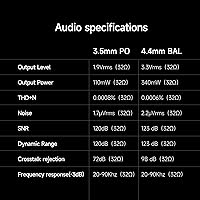
  • 3.5mm Output: The single-ended 3.5mm headphone output delivers 110mW at 32Ω with an output voltage of 1.9Vrms.
  • 4.4mm Output: The balanced 4.4mm headphone output delivers 340mW at 32Ω with an output voltage of 3.3Vrms.
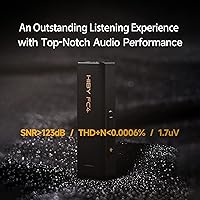
  • THD+N: Total harmonic distortion plus noise measures 0.0008% via the 3.5mm output and 0.0006% via the 4.4mm balanced output, both at 32Ω.
  • SNR: Signal-to-noise ratio reaches 120dB on the 3.5mm output and 123dB on the 4.4mm balanced output, measured at 32Ω.
  • Crosstalk: Channel crosstalk rejection is 72dB on the 3.5mm single-ended output and 98dB on the 4.4mm balanced output at 32Ω.
  • PCM Support: Supports PCM audio decoding up to 768kHz at 32-bit depth via both output ports.
  • DSD Support: Handles native DSD decoding up to DSD256 without relying on PCM conversion.
  • MQA Decoding: Includes full MQA hardware decoding with 16X unfolding for playback of MQA audio files and compatible streaming services.
  • Frequency Response: Frequency response extends from 20Hz to 90kHz at the -3dB point on both output ports at 32Ω.
  • Noise Floor: Output noise measures 1.7μVrms on the 3.5mm output and 2.2μVrms on the 4.4mm balanced output at 32Ω.
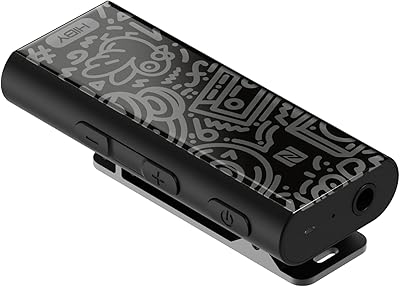
  • Dimensions: The unit measures 65.3 × 22.1 × 11.9mm, making it small enough to sit unobtrusively alongside a phone in-hand.
  • Weight: Total weight is 21.7g including the attached USB-C cable.
  • Controls: Two hardware buttons on the body provide volume up and volume down control without requiring interaction with the connected device.
  • Indicator Light: An RGB LED on the unit changes color to indicate the currently active audio format and operational status.
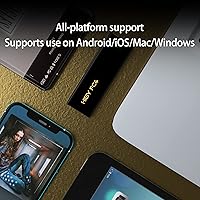
  • OS Compatibility: Driver-free plug-and-play operation is supported on Android, iOS, macOS, and Windows 10 and later; Windows versions below 10 require a manual driver download.
  • Noise Measurement: Output noise is rated at 1.7μVrms for the 3.5mm port and 2.2μVrms for the balanced port, both measured at 32Ω.
  • Dynamic Range: Dynamic range is rated at 120dB on the 3.5mm output and 123dB on the 4.4mm balanced output, both at 32Ω.

Related Reviews
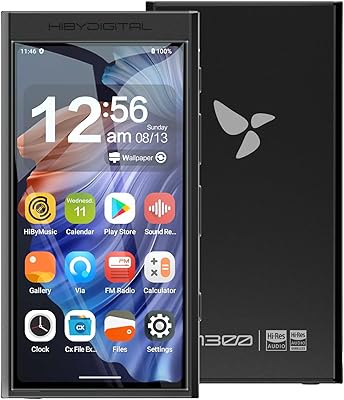
HiBy M300 Android MP3 Player 32GB
85%
93%
Sound Quality
88%
Build Quality
92%
Storage Capacity
84%
User Interface
89%
Streaming Experience
More
HiBy R6III 2025 DAP Player 64GB
86%
94%
Sound Quality
89%
Build Quality
71%
Battery Life
95%
Storage Expandability
82%
User Interface
More
HiBy W3 II
HiBy W3 II
82%
91%
Sound Quality
93%
Bluetooth Codec Support
88%
Car Mode
84%
USB DAC Dongle Mode
74%
Battery Life
More
HiBy R5 Gen 2 Hi-Res Audio Player
83%
95%
Sound Quality
87%
Battery Life
65%
Android OS Usability
90%
Build Quality
82%
App Compatibility
More
HiBy R4 MP3 & MP4 Player with Bluetooth, WiFi, 32GB Storage
86%
93%
Sound Quality
89%
Battery Life
85%
Build Quality
90%
WiFi & Bluetooth Connectivity
78%
Software & App Integration
More
HiBy R3 II 2025 Hi-Fi Lossless Audio Player 2TB
86%
94%
Sound Quality
88%
Build Quality
60%
Battery Life
75%
User Interface
90%
App Integration (Tidal/Qobuz)
More

FAQ

No, this DAC dongle is fully plug-and-play on Android. Just connect it via USB-C and your phone should recognize it automatically as an audio output device within a second or two. No app or driver download needed.

It does work with iOS, but you will need a Lightning-to-USB-C OTG cable, which is not included in the box. Once you have that cable, it connects and operates without any additional setup. Just factor in that extra accessory purchase before buying.

The HiBy FC4 can push a respectable range of full-size headphones, particularly through the 4.4mm balanced output, which delivers 340mW at 32Ω. It handles most consumer over-ear headphones and planar IEMs without trouble. That said, very high-impedance audiophile cans — anything above roughly 150Ω that normally requires a desktop amp — will likely underperform here.

The LED changes color depending on which audio format is currently being decoded. It confirms whether you are getting standard PCM, hi-res PCM, DSD, or MQA playback. It is a quick visual check rather than a menu or display, but most users find it useful enough once they learn the color codes.

For most IEMs and sensitive headphones the difference is real and noticeable — you get a wider soundstage, lower noise floor, and more dynamic range from the balanced port. The gap is most obvious with harder-to-drive gear. If you only own headphones with standard 3.5mm single-ended cables and no plans to change, the benefit is minimal until you upgrade your cables or headphones.

It does run warm during extended sessions at higher volume levels, especially through the balanced output. Under moderate conditions — normal listening volume, typical IEMs — most users never notice it. If you are pushing it hard for an hour or more, expect the metal body to feel warm to the touch, though not uncomfortably hot.

Yes, this portable DAC/amp includes full hardware MQA decoding with 16X unfolding. When you play an MQA track through Tidal, the LED will indicate MQA decoding is active. Keep in mind that Tidal's own app settings need to be configured to pass through MQA to an external device for this to work correctly.

Yes, the two hardware volume buttons on the body control output level directly, independent of your phone screen. They work on both Android and iOS once the device is connected. The step increments are reasonably sized for most headphones, though very sensitive IEMs may find the steps slightly coarse for pinpoint volume matching.

Natively and without any conversion. The dongle supports PCM up to 768kHz at 32-bit and native DSD up to DSD256, so virtually any hi-res file format you are likely to have locally will be decoded in full by the hardware. You will need a player app on your device that supports bit-perfect or USB audio output, such as USB Audio Player Pro on Android.

The USB-C cable is permanently attached to the dongle and cannot be removed or swapped. The cable length is fixed, so if you find it too short or too long for your preferred setup, there is no way to change it. This is a common design trade-off in compact dongle DACs, though some competing products do offer detachable cables.