

Overview

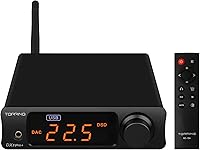
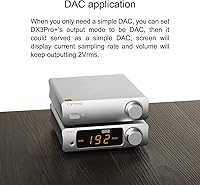
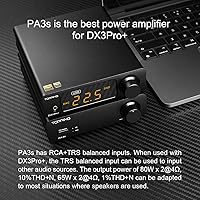
The Topping DX3 Pro+ sits in a sweet spot many desktop listeners have been searching for: enough performance to satisfy serious headphone users without the bulk or cost of full separates. Topping has built a real reputation in the mid-fi audio world, and this desktop DAC/amp reflects that credibility well. The compact aluminum chassis feels solid on a desk and houses a chip stack that punches above its weight class. What makes this Topping unit compelling is not any single feature — it is the combination of wired and wireless inputs, a proper headphone stage, and preamp output all in one tidy box.

Features & Benefits

At the heart of this desktop DAC/amp is an ES9038Q2M chip — a well-regarded component that keeps distortion remarkably low and the noise floor practically inaudible, translating to a clean, transparent sound that lets recordings breathe. The XMOS XU208 USB receiver handles hi-res files up to 768kHz/32-bit and DSD512 without complaint. Bluetooth is managed by a QCC5125 chip with LDAC support, so compatible Android devices can stream at near-lossless quality wirelessly. The NFCA amplifier stage offers two gain settings and enough headroom to drive demanding headphones like a Beyerdynamic DT 770 or Sennheiser HD 6XX with real authority. An included remote control rounds things out practically.

Best For

This Topping unit makes the most sense for listeners tired of juggling multiple devices or relying on a laptop's built-in audio. If you use mid-impedance headphones like a Sennheiser HD 6XX at your desk, the amplifier section will actually drive them properly — something a USB dongle simply cannot do. It also works well as a Bluetooth LDAC receiver for Android users who want wireless listening without sacrificing too much quality, though LDAC performance still depends entirely on your source device supporting it. Anyone feeding powered speakers from a computer will also appreciate having a genuine preamp output with volume control and a remote.

User Feedback

The most recurring praise from verified buyers centers on the low noise floor — even users with sensitive in-ear monitors report no audible hiss, which is a genuine achievement at this price tier. The remote control comes up repeatedly as a feature people did not realize they needed until they had it. On the downside, a handful of users flag inconsistent Bluetooth pairing with certain devices, and the range is considered modest by modern standards. A small number of listeners with very sensitive IEMs find even the lower gain setting runs slightly hot. The 4.4-star average across over 300 reviews reflects a broadly positive consensus, with complaints confined mostly to edge cases.

Pros

  • Drives demanding 300-ohm headphones like the Beyerdynamic DT 880 Pro with real authority and zero strain.
  • The noise floor is genuinely inaudible — even sensitive IEMs reveal no background hiss in quiet passages.
  • LDAC Bluetooth support is rare at this price point and a meaningful upgrade over standard SBC streaming.
  • Five physical inputs including dual coaxial mean you can connect a TV, PC, and turntable preamp simultaneously.
  • The included remote control makes desktop speaker volume adjustment practical without getting up.
  • Topping DX3 Pro+ supports DSD512 and 768kHz PCM over USB, covering any hi-res format you are likely to encounter.
  • The aluminum chassis feels solid and looks appropriately premium on a home office or listening desk.
  • RCA preamp output with accurate digital volume control makes this a capable single-box source for powered monitors.
  • Plug-and-play USB operation on Mac and Linux means no driver hunting before your first listening session.
  • At its price tier, combining a high-measuring DAC, a capable amp, and Bluetooth in one unit is genuinely hard to beat.

Cons

  • No balanced headphone output — XLR or 4.4mm Pentaconn users have no upgrade path here.
  • The 3.5mm headphone jack requires an adapter for full-size headphone plugs, adding a fragile connection point.
  • Bluetooth range is modest and can drop unexpectedly beyond a few meters or through a single wall.
  • Some users report USB audio dropping out after the host PC wakes from sleep, requiring a manual reconnect.
  • The lowest gain setting still runs hot for very sensitive IEMs, making precise low-volume control difficult.
  • LDAC is irrelevant for iOS users, limiting wireless quality to AAC regardless of source quality.
  • The included USB cable is short and generic — most serious users will replace it immediately.
  • No optical cable is included despite optical input being a highlighted feature on the box.
  • The small front display is hard to read from a normal seated desk distance without leaning in.
  • Firmware update tooling is not user-friendly and many buyers remain unaware that updates exist.

Ratings

The Topping DX3 Pro+ was evaluated by our AI system after parsing hundreds of verified global buyer reviews, actively filtering out incentivized, bot-generated, and duplicate submissions to surface genuine listener experiences. The scores below reflect a balanced picture — where this desktop DAC/amp genuinely excels and where real users ran into friction. Both strengths and recurring pain points are represented without bias.

Sound Quality
91%
Listeners consistently describe the sound as clean, neutral, and uncolored — exactly what you want from a transparent DAC/amp. Paired with headphones like the Sennheiser HD 6XX or Hifiman HE400se, the background is essentially silent, letting the music rather than the hardware do the talking.
The strictly neutral tuning is a double-edged sword — listeners who prefer a warmer or more musical character may find it clinical over long sessions. It leaves zero room to compensate for a bright headphone pairing.
Headphone Amplifier Performance
88%
The NFCA amplifier stage delivers real current to demanding headphones — 300-ohm cans like the Beyerdynamic DT 880 Pro come alive in a way a laptop headphone jack simply cannot manage. Two gain settings add flexibility for switching between efficient IEMs and thirsty planars.
The lower gain setting is still on the hot side for very sensitive in-ear monitors, meaning volume control becomes a hair-trigger at quiet listening levels. Users with IEMs under 16 ohms reported occasional channel imbalance at the lowest dial positions.
DAC Chip Performance
93%
The ES9038Q2M chip produces measurably low distortion that translates into a grain-free, high-resolution presentation on hi-res FLAC and DSD files. Listeners upgrading from integrated motherboard audio report an immediately noticeable improvement in instrument separation and clarity.
The ES9038Q2M has a known characteristic brightness that some find slightly analytical on extended listening. It is a minor consideration, but pairing it with a warmer headphone helps balance the overall tonal profile.
Bluetooth & Wireless Performance
71%
29%
LDAC support via the QCC5125 chip is a genuine differentiator at this price point — Android users with an LDAC-capable phone can stream at up to 990kbps, which is audibly cleaner than standard SBC streaming for casual wireless listening sessions.
The Bluetooth range is modest, rarely exceeding reliable connection beyond 5 to 6 meters with obstacles in the way. Several users also flagged occasional pairing delays or dropped connections with certain Android devices after standby, requiring a manual reconnect.
Input & Output Versatility
89%
Having USB, optical, two coaxial inputs, and Bluetooth simultaneously available is genuinely rare at this price tier. The RCA preamp output means it doubles as a source component for powered speakers or a stereo amplifier, replacing multiple boxes with one.
The headphone output is a 3.5mm jack only, which frustrates users who prefer a 6.35mm quarter-inch adapter for full-size headphones — the adapter adds a point of fragility. There is no balanced output, which is a hard stop for users chasing that specific upgrade path.
Build Quality & Design
84%
The milled aluminum enclosure feels noticeably more premium than plastic-chassis competitors at a similar price. The front panel controls are firm and deliberate, and the unit sits solidly on a desk without any flex or rattle during knob operation.
The chassis can accumulate fingerprints visibly on darker finishes, requiring regular wiping to keep it looking presentable. A small number of buyers noted minor cosmetic inconsistencies in finishing around the rear ports, though this did not affect functionality.
Remote Control
86%
Including a functional remote at this price tier is genuinely appreciated — being able to adjust volume from across a room is something users of desktop speaker setups rely on daily. It responds accurately and works from reasonable angles without needing direct line of sight.
The remote itself is a basic credit-card style unit with minimal tactile feedback, so navigating by touch in a dark room is fiddly. It also controls only volume and input switching, with no track control for connected sources.
Hi-Res Audio Support
92%
Support for PCM up to 768kHz/32-bit and DSD512 via USB means this unit is well ahead of what most listeners will ever actually need, giving it long-term relevance as streaming libraries improve. Playing back DSD256 files from a dedicated media player through USB produces an audibly smooth, natural presentation.
DSD and high-resolution PCM support is only fully accessible over USB — optical and coaxial inputs cap out at lower sample rates due to hardware bandwidth limits. Users expecting full DSD512 over Bluetooth or coaxial will be disappointed.
Value for Money
87%
For a unit that functions as a high-measuring DAC, a capable headphone amplifier, a Bluetooth LDAC receiver, and a preamp simultaneously, the asking price is difficult to argue with. Buying equivalent functionality in separate components would cost considerably more.
The market around this price bracket has become more competitive recently, with a few newer rivals offering balanced outputs or app-based EQ at comparable prices. Buyers who need those features specifically may feel they are stretching value rather than getting it.
Setup & Ease of Use
82%
18%
Plug-in-and-play USB operation works without drivers on most modern operating systems, which means getting audio up and running takes under two minutes. Input switching via the front knob or remote is intuitive even without reading the manual.
The display is small and the font is compact enough that reading the selected input from a normal seated position requires a second look. Bluetooth pairing mode is triggered by a non-obvious button hold sequence that a few users found confusing initially.
Noise Floor & Background Silence
91%
With an output impedance under 0.1 ohm and an SNR of 120dB, the unit is genuinely quiet — users with custom in-ear monitors and sensitive single-driver IEMs reported zero audible hiss during quiet passages, which is a real technical achievement.
A small subset of users did detect a faint high-frequency interference pattern when the USB source device had poor power delivery or EMI shielding issues. Using a quality USB cable or an inline power filter resolved it, but it should not be a requirement.
Driver & Firmware Stability
74%
26%
On Windows, the dedicated XMOS USB driver installs cleanly and enables bit-perfect WASAPI exclusive mode, which enthusiasts using foobar2000 or Roon will appreciate. Mac and Linux users benefit from driverless class-compliant operation out of the box.
A handful of users on Windows 11 reported occasional dropouts or failure to re-initialize after the PC woke from sleep, requiring a USB reconnect. Firmware update tooling is not user-friendly, and some users were unaware updates existed at all.
Preamp Functionality
79%
21%
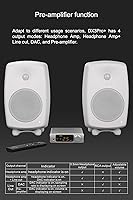
The digital volume control with RCA output makes this Topping unit a legitimate one-box solution for users running powered monitors like the Yamaha HS5 or KEF LSX from a PC. Volume tracking between channels stays accurate across the full rotation.
The preamp function is basic — there is no tone control, no bass management, and no digital signal processing of any kind. Users who need any of that will require a separate solution downstream, which partially undermines the all-in-one appeal.
Packaging & Accessories
67%
33%
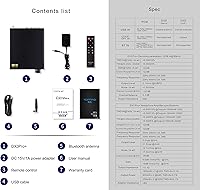
The unit arrives well-protected and includes the remote, power adapter, and a USB cable, which means most buyers can get started immediately without hunting for accessories. The box presentation is clean and appropriate for a mid-tier audio product.
The included USB cable is short and average in quality — most serious users replace it immediately. The power adapter cable is also on the shorter side for certain desk configurations, and no optical cable is included despite optical being a marketed feature.

Suitable for:

The Topping DX3 Pro+ is the kind of unit that makes the most sense for dedicated headphone listeners who have outgrown their laptop's built-in audio and want a single, no-clutter desktop solution that actually drives their headphones properly. If you own something like a Sennheiser HD 6XX, a Beyerdynamic DT 770 Pro, or any moderately demanding full-size headphone, the amplifier stage here will give those cans the current they need to perform as intended. It also works well for Android users with an LDAC-capable phone who want to cut the wire occasionally without a major drop in audio quality — though it is worth knowing upfront that LDAC performance still depends entirely on your phone supporting it. Work-from-home listeners who want cleaner audio for music, video calls, and media throughout the day will appreciate the remote control and multi-input flexibility more than they might expect. Anyone feeding powered desktop speakers from a PC will also find the RCA preamp output with digital volume control genuinely useful as a simple one-box source component.

Not suitable for:

If your priority is a balanced output — whether XLR or 4.4mm Pentaconn — the DX3 Pro+ will leave you unsatisfied, as it offers only a single-ended 3.5mm headphone jack with no balanced stage whatsoever. Listeners who use very sensitive in-ear monitors as their primary listening tool may find the gain too high for comfortable low-volume control, which makes precision listening at quiet levels frustrating regardless of which gain setting you choose. This Topping unit is also not the right fit for buyers who need strong, room-filling Bluetooth range — the wireless reception is modest and drops can occur beyond a few meters, especially through walls. If you are an iOS-only household, you will miss out on LDAC entirely and be limited to AAC, which narrows the wireless value proposition considerably. Finally, anyone expecting tone controls, DSP, or EQ functionality will need to look elsewhere, as the signal path here is intentionally transparent and unprocessed from input to output.

Specifications

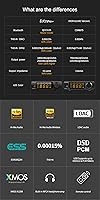
  • DAC Chip: The unit uses an ESS ES9038Q2M DAC chip, delivering a THD+N of 0.00015% and a signal-to-noise ratio of 120dB for a clean, low-distortion audio output.
  • USB Receiver: An XMOS XU208 USB receiver handles the digital interface, supporting PCM playback up to 768kHz at 32-bit depth and native DSD up to DSD512.
  • Amplifier Topology: The headphone amplifier uses an NFCA (Negative Feedback Current Amplifier) topology built around a TPA6120A2 chip, with an output impedance of under 0.1Ω.
  • Output Power: Headphone output power is rated at 1800mW x2 at 32Ω, 900mW x2 at 64Ω, and 250mW x2 at 300Ω, making it capable of driving most full-size dynamic and planar headphones.
  • Gain Settings: Two switchable gain levels are available: 6.0dB for sensitive headphones and IEMs, and 19dB for high-impedance or low-sensitivity full-size headphones.
  • Bluetooth Chip: Bluetooth 5.0 is handled by a Qualcomm QCC5125 chip, supporting LDAC, aptX HD, aptX LL, aptX, AAC, and SBC wireless audio codecs.
  • Inputs: Available inputs include USB Type-B, one optical (TosLink), two coaxial (RCA), and Bluetooth 5.0, providing flexibility across digital source types.
  • Outputs: The unit provides a 3.5mm single-ended headphone output on the front panel and a stereo RCA line output on the rear for use with powered speakers or a power amplifier.
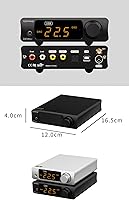
  • Dimensions: The chassis measures 6.5″ in length by 4.72″ in width, making it compact enough to fit comfortably on most desktop setups without dominating the workspace.
  • Weight: The unit weighs 1.74 pounds, reflecting the solid aluminum construction without being heavy enough to be cumbersome when repositioning.
  • Chassis Material: The enclosure is machined from aluminum, contributing to both the rigid feel and the effective dissipation of heat during extended listening sessions.
  • Power Supply: The DX3 Pro+ operates via an external power adapter with a maximum supply voltage of 15V DC, which is included in the box.
  • Remote Control: A credit-card style infrared remote control is included, enabling volume adjustment and input switching from a distance without touching the unit.
  • Output Impedance: The headphone output impedance is specified at under 0.1Ω, which ensures accurate damping and frequency response consistency across a wide range of headphone impedances.
  • SNR: The signal-to-noise ratio is rated at 120dB, meaning the background noise floor is effectively inaudible even through sensitive in-ear monitors at normal listening volumes.
  • Max Sample Rate: The unit supports PCM audio up to 768kHz at 32-bit resolution over USB, along with native DSD playback up to DSD512.
  • THD+N: Total harmonic distortion plus noise is measured at 0.00015%, indicating an extremely low level of audible coloration or distortion in the output signal.
  • Bluetooth Version: Bluetooth 5.0 is implemented, offering improved connection stability and codec support compared to earlier Bluetooth standards found in competing units.

Related Reviews

Ubiquiti UniFi Dream Machine Pro UDM-Pro
86%
94%
Performance
88%
Ease of Use
90%
Reliability
92%
Connectivity
85%
Network Security Features
More
DS18 PRO-DR1PK44 Compression Driver with PRO-H44/BK Horn
86%
96%
High-Frequency Loudness
93%
Sensitivity & Efficiency
88%
Vocal Clarity & Naturalism
86%
Build Quality & Materials
81%
Installation Versatility
More
DS18 PRO-ZXI10MBASS 10-inch Pro Audio Mid Bass Loudspeaker
86%
88%
Sound Quality
91%
Bass Performance
85%
Ease of Installation
87%
Durability and Build Quality
92%
Value for Money
More
Cinema Secrets Pro Cosmetics Ultimate Corrector 5-In-1 Pro Palette No.1
86%
91%
Effectiveness for Color Correction
88%
Blendability
84%
Coverage Customization
85%
Longevity of Wear
93%
Suitability for All Skin Tones
More
Apple MacBook Pro 14-inch M1 Pro 16GB RAM 1TB SSD
87%
95%
Performance
92%
Display Quality
89%
Battery Life
91%
Build Quality
82%
Value for Money
More
Cinema Secrets Pro Cosmetics Ultimate Foundation 5-In-1 Pro Palette 500A

88%
93%
Coverage & Pigmentation
85%
Skin Compatibility (Sensitive Skin)
88%
Ease of Application
90%
Longevity & Wear
91%
Versatility (Contouring & Concealing)
More
HP Pro Tower 290 G9 Desktop (i5-12500, 32GB RAM, 1TB SSD)
81%
96%
Multitasking Capability
91%
Value for Money
88%
Port Selection
84%
Thermal & Acoustic Performance
93%
Boot Speed & Storage
More
UTILYZE Radiant Pro
UTILYZE Radiant Pro
87%
94%
Cleansing Effectiveness
91%
Exfoliation Quality
88%
Skin Comfort
85%
Build Quality
82%
Battery Life
More
Edifier NeoBuds Pro
Edifier NeoBuds Pro
86%
94%
Sound Quality
91%
Noise Cancellation
89%
Battery Life
87%
Comfort & Fit
78%
Bluetooth Connectivity
More
JLab JBuds Pro
JLab JBuds Pro
85%
88%
Sound Quality
85%
Bass Response
91%
Fit & Comfort
82%
Battery Life
78%
Bluetooth Connectivity
More

FAQ

On Mac and Linux, no drivers are needed — it works as a USB audio class-compliant device the moment you plug it in. Windows users will want to install the dedicated XMOS USB driver to unlock WASAPI exclusive mode and bit-perfect playback, which is a free download from Topping's website.

Yes, and it works well for that. The RCA outputs on the rear carry a variable signal controlled by the front volume knob and remote, so you can use the DX3 Pro+ as the volume control for a pair of powered monitors like the Yamaha HS5 or KEF LSX without any additional hardware in the chain.

It can, but only if your Android phone explicitly supports LDAC transmission — not all do, even on modern devices. When LDAC is active and your phone is set to its highest quality mode, the difference compared to SBC is noticeable on a good pair of headphones, especially on detail-rich recordings. iPhone users are limited to AAC, which is still decent but not comparable.

Yes, this Topping unit puts out 250mW per channel into 300Ω, which is enough to drive headphones like the Sennheiser HD 650 or Beyerdynamic DT 990 Pro to comfortable listening levels with headroom to spare. Set the gain to the high setting for 300-ohm cans and you should have no issues.

The noise floor is genuinely very low, so audible hiss with sensitive IEMs is rarely an issue. The more common frustration is that even the low gain setting can feel slightly loud at the bottom of the volume range, making fine-tuned quiet listening tricky. It is manageable but worth knowing before you buy if IEMs are your primary use case.

All five inputs — USB, optical, two coaxial, and Bluetooth — can be physically connected simultaneously, and you switch between them using the front panel knob or the remote. Only one input is active at a time, so you are not mixing signals, just selecting your source.

It is adequate for a standard desk setup where your phone is within a few meters of the unit, but it is not strong enough to be reliable across a large room or through walls. Several users found connection became unstable beyond about 5 to 6 meters with any obstructions in between, so this is better treated as a convenience feature than a proper wireless room solution.

The headphone output is a 3.5mm (mini jack) socket only. If your headphones use a standard 6.35mm quarter-inch plug — which most full-size headphones do — you will need a 3.5mm to 6.35mm adapter. One is not included in the box, so pick one up if you do not already have one.

Absolutely — that is exactly what the optical and dual coaxial inputs are designed for. Connecting a TV via optical TosLink or a CD transport via coaxial is straightforward, and the unit will handle PCM audio from those sources without any configuration needed beyond selecting the right input.

Yes, this desktop DAC/amp retains the last selected input and volume level after being powered off and back on, which is a small but genuinely convenient behavior for users who always come back to the same source. You will not need to reconfigure it every morning.