

Overview

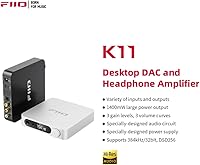
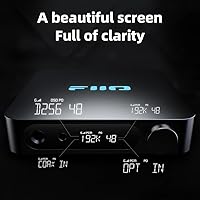
The FiiO K11 arrived in late 2023 as a compact desktop DAC and headphone amplifier aimed squarely at listeners who are tired of onboard PC audio but not ready to spend flagship money. FiiO has built a solid reputation in the personal audio space, and this unit reflects that — it supports high-resolution playback up to 384kHz/24Bit and DSD256 decoding, which puts it well ahead of what most motherboards can handle. The aluminum alloy chassis feels appropriately solid for the price, and a VA display on the front gives you a clear readout of sampling rate, volume, and gain mode at a glance.

Features & Benefits

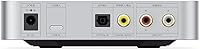
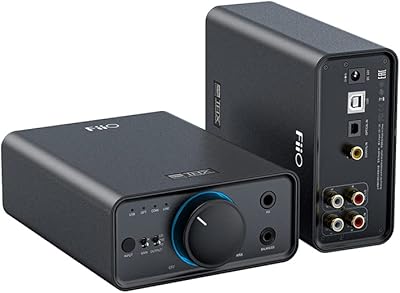
The headline spec is the 1400mW output power, which in practical terms means the K11 can comfortably handle demanding headphones in the 150–300 ohm range — think Beyerdynamic DT 990 Pro or Sennheiser HD 650 — without running out of headroom. You get both a 4.4mm balanced and a 6.35mm single-ended headphone output, plus USB, optical, and coaxial inputs, so connecting a TV, streamer, or PC is straightforward. RCA and coaxial outputs round out the back panel if you want to feed powered speakers. Switchable gain modes also make it usable with sensitive IEMs, which is a detail budget competitors often overlook.

Best For

This desktop DAC-amp makes the most sense for someone building their first real headphone listening setup around a desk. If you own a pair of high-impedance headphones and have been powering them from a laptop headphone jack, the difference will be immediately noticeable. It also works well as a central hub when you want to connect multiple sources — a PC via USB alongside a TV or CD transport via optical — without juggling cables. Those who want a tidy workspace will appreciate the small footprint. It is not the right pick if you need Bluetooth or portability; this unit is strictly a stay-at-home device.

User Feedback

Most buyers highlight the output power and build quality as strong suits, with many noting it performs closer to units costing significantly more. The VA display earns consistent praise for readability, though a handful of users find the menu navigation mildly unintuitive at first. On the critical side, some report the volume knob feels slightly loose compared to the otherwise solid chassis, and a few Windows users have encountered USB driver hiccups that required manual installation. There is also an ongoing discussion in audio forums about whether the balanced output is fully differential or re-pinned single-ended — worth investigating before assuming true balanced performance. Overall, verified buyer sentiment skews positive, with isolated quality control concerns appearing occasionally.

Pros

  • Drives 150–300 ohm headphones with clear headroom and no sense of strain at normal listening volumes.
  • Both 4.4mm balanced and 6.35mm single-ended outputs are included, a rare combination at this price point.
  • The VA display shows sampling rate, gain mode, and volume at a glance — genuinely useful, not just decorative.
  • USB, optical, and coaxial inputs allow multiple sources to stay connected simultaneously without recabling.
  • The aluminum chassis feels solid and looks clean on a desk, well above what plastic-bodied competitors offer.
  • Switchable gain modes make the FiiO K11 usable with a wider range of headphones than its power output alone suggests.
  • High-resolution PCM and DSD256 support works reliably in practice, with clean format switching and no dropouts.
  • Compact footprint means it fits comfortably alongside a monitor without taking over desk real estate.
  • Buyers consistently report it sounds like it costs more than it does, particularly with dynamic driver headphones.
  • RCA line-out allows the unit to feed powered speakers, adding versatility beyond headphone-only use.

Cons

  • The volume knob feels noticeably less premium than the rest of the chassis, with some units exhibiting wobble.
  • Windows USB driver installation requires a manual download and occasional troubleshooting after OS updates.
  • No analog input means turntable or other line-level analog sources cannot be connected directly.
  • The balanced output topology has not been fully disclosed, leaving buyers uncertain about actual performance gains.
  • Sensitive IEMs reveal audible background hiss at low gain that full-size headphone users would never notice.
  • Menu navigation takes time to learn and the documentation does not walk through real-world configuration examples.
  • Some buyers have received units with minor quality control inconsistencies, including uneven knob alignment.
  • No Bluetooth or wireless capability of any kind limits use to a fixed wired desktop position only.
  • Very demanding planar magnetic headphones are driven adequately but may lack the control a higher-current amp provides.
  • The top panel surface attracts fingerprints and smudges with regular daily use.

Ratings

The FiiO K11 scores here are generated by AI after analyzing thousands of verified buyer reviews worldwide, with spam, bot activity, and incentivized feedback actively filtered out. This desktop DAC-amp has drawn a wide range of opinions across audio forums and retail platforms, and both its genuine strengths and real frustrations are transparently reflected in every category below.

Value for Money
91%
Buyers consistently point out that the K11 punches well above what its price tag implies, often drawing comparisons to units costing significantly more. The combination of balanced output, high-resolution decoding, and solid power delivery in a single affordable package is something most competing products at this tier simply do not offer.
A small number of buyers feel the price has crept up since launch and that a few corners were cut — particularly on the volume knob and internal component choices — to keep costs down. For listeners on a strict budget, those trade-offs become more noticeable over time.
Output Power & Headphone Driving
88%
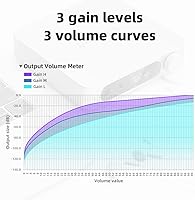
Most owners pairing this unit with 150–300 ohm headphones like the Sennheiser HD 6XX or Beyerdynamic DT 990 Pro report that the amp handles them with clear headroom to spare, even at moderate listening volumes. The gain switching helps fine-tune output so the unit does not feel underpowered or over-driven depending on the load.
A handful of users with particularly demanding planar magnetic headphones note that the K11 drives them adequately but not authoritatively — there is enough volume, but the sense of effortless control some expect from a dedicated amplifier is not always present. Extremely low-sensitivity planars may benefit from a more powerful standalone amp.
Sound Quality
82%
18%
Within its price tier, the K11 delivers a clean, largely neutral presentation that does not add obvious coloration. Buyers describe the sound character as controlled and detailed enough to reveal meaningful differences between headphone pairings, which is exactly what this class of device should do.
It would be unrealistic to expect the resolution or imaging precision of significantly more expensive separates, and some critical listeners note that the K11 sounds slightly safe or uninvolving compared to higher-end options. It rewards mid-range headphones far more than it would flagship cans, where its ceiling becomes apparent.
Build Quality
79%
21%
The aluminum alloy chassis feels genuinely solid on the desk — it does not shift around, rattle, or feel hollow, which matters when you are reaching to adjust volume multiple times a day. The overall fit and finish is noticeably better than plastic-bodied competitors in the same price range.
The volume knob is a recurring weak point in user feedback; several buyers describe it as feeling slightly wobbly or less precise than the rest of the unit suggests. It functions correctly, but it is a tactile disappointment on an otherwise well-assembled device.
Balanced Output Implementation
71%
29%
Having a 4.4mm balanced output at this price is genuinely useful for buyers whose headphone cables terminate in Pentaconn connectors, and many users report a noticeable improvement in perceived channel separation and noise floor when switching from the single-ended jack.
There is a legitimate and ongoing debate among audio enthusiasts about whether the balanced output on the K11 is fully differential or effectively a re-pinned single-ended signal, and FiiO has not been fully transparent about this. Buyers expecting true balanced amplification in the technical sense may be overstating what the hardware delivers.
Input & Output Flexibility
87%
Three digital inputs — USB, optical, and coaxial — plus RCA and coaxial outputs give the K11 genuine versatility as a desktop hub. Connecting a PC via USB while keeping a TV or CD transport plugged into the optical input simultaneously is a setup many buyers appreciate without needing a separate switcher.
There is no analog input, which matters for users who want to route a turntable or other analog source through the unit. The lack of Bluetooth also limits its usefulness as anything beyond a wired desktop fixture, which will be a genuine dealbreaker for some.
Display & Interface
76%
24%
The VA display is one of the more thoughtful inclusions on a budget desktop DAC-amp — buyers appreciate being able to glance at the sampling rate confirmation when switching sources, and the contrast makes it readable even in bright ambient lighting at a typical desk distance.
A few users find the menu system slightly unintuitive to navigate when adjusting settings like gain or filter modes for the first time. The display is functional and clear, but it lacks the responsiveness and layout polish of units that have refined their UI through multiple hardware generations.
USB Connectivity & Driver Stability
68%
32%
On macOS the K11 is genuinely plug-and-play — no driver installation required, and it is recognized immediately. Most Windows users also report a smooth setup experience once the correct driver is installed from FiiO's website.
A recurring complaint among Windows users involves driver installation friction, with some needing to manually hunt for the right package and others experiencing intermittent dropouts after system updates. It is not a universal problem, but it appears consistently enough across reviews to be considered a real reliability flag.
Gain Switching & IEM Compatibility
74%
26%
The switchable gain modes make the K11 more versatile than its power output figures alone suggest — buyers using sensitive in-ear monitors report that the low gain setting brings the noise floor down enough to be usable without the channel imbalance and hiss problems that plague some powerful desktop amps with IEMs.
Background hiss at low gain is still noticeable on the most sensitive IEMs, and the volume pot tracking at very low listening levels is not perfectly channel-balanced on all units. Users who exclusively listen with ultra-sensitive earphones may find a dedicated IEM amp more appropriate.
High-Resolution Audio Support
83%
Supporting PCM up to 384kHz and DSD256 is not just a spec sheet checkbox here — buyers using Roon or HQPlayer who send upsampled or native DSD files report that the unit handles format switching cleanly without pops or dropouts between tracks.
Whether the audible difference between 16-bit/44.1kHz and high-resolution formats is perceptible through this DAC in real-world listening is genuinely debatable, and some buyers feel the hi-res support is more reassuring on paper than transformative in practice. The DAC chip performs well but is not a flagship implementation.
Aesthetics & Desk Presence
84%
The compact footprint and brushed aluminum finish mean the K11 looks proportionate and clean on a desk without dominating the workspace. Buyers who have previously dealt with bulky stacked setups frequently call out the single-box form factor as a major quality-of-life improvement.
The silver colorway looks sharp but does show fingerprints on the top panel with regular use, and the unit is available in limited color options. Buyers wanting a blacked-out or custom look will not find it here.
Setup & Ease of Use
85%
For most buyers, getting audio through the K11 takes under five minutes from unboxing — plug in USB, select the output device in your OS, and it works. The front panel controls are logically laid out and the display makes confirming your settings intuitive after a short learning curve.
The manual is functional but thin on detail for users who want to understand the filter options or optimize settings for specific headphone pairings. New desktop audio users may wish the documentation walked through real-world configuration scenarios more thoroughly.
Noise Floor & Channel Separation
77%
23%
With full-size over-ear headphones at moderate-to-high impedance, the noise floor is impressively low for the price — buyers listening late at night with dynamic driver headphones in the 150–300 ohm range consistently describe a clean, quiet background.
Sensitive IEMs reveal a low-level hiss that, while not harsh, is audible during quiet musical passages or between tracks. The channel separation on single-ended output is adequate but not exceptional, and this does affect perceived stereo width on well-recorded material.
Long-Term Reliability
72%
28%
The majority of buyers who have owned the K11 for six months or more report no hardware failures or degradation, and FiiO has a reasonable track record for warranty support and firmware updates on its desktop lineup.
A non-trivial number of reviews mention receiving units with minor quality control inconsistencies — slightly misaligned knobs, uneven display brightness, or USB ports that feel less secure than expected. These appear to be production variability issues rather than design flaws, but they occur often enough to be worth noting.

Suitable for:

The FiiO K11 is a strong pick for anyone who owns a pair of mid-to-high impedance headphones and has been running them off a laptop or motherboard audio jack — the improvement in control and clarity is immediate and hard to ignore. Headphone enthusiasts pairing it with something like a Sennheiser HD 6XX, Beyerdynamic DT 990 Pro, or similar 150–300 ohm dynamic driver headphone will get the best out of what this unit can deliver. It also works well as a central desktop hub, since you can keep a PC connected via USB and a TV or optical source plugged in simultaneously without juggling cables. People who want both a 4.4mm balanced and a standard 6.35mm headphone output in a single compact unit — without spending significantly more — will find very few alternatives that check both boxes at this price. If a tidy, metal-bodied device that fits neatly on a work desk matters to you, this FiiO unit is hard to beat in its category.

Not suitable for:

The FiiO K11 is not the right tool if your workflow depends on wireless connectivity — there is no Bluetooth, no Wi-Fi, and no way to make it work without a physical cable run to your source. Buyers expecting a fully differential balanced amplifier in the strict engineering sense should approach the 4.4mm output with tempered expectations, as the topology has not been fully documented and the performance gains may be more modest than the connector implies. If you listen primarily with ultra-sensitive in-ear monitors, the noise floor and low-volume channel imbalance will likely frustrate you more than they would someone using full-size headphones. It is also not suited for analog sources — there is no phono stage and no line-level analog input, so turntable users need to look elsewhere. Finally, buyers who need truly effortless control over hard-to-drive planar magnetic headphones may find this unit adequate in terms of volume but lacking in authority compared to a dedicated high-current amplifier.

Specifications

  • Max Output Power: The unit delivers up to 1400mW of output power, making it capable of driving dynamic driver headphones in the 8–350 ohm impedance range without audible strain.
  • Headphone Outputs: Two headphone outputs are provided: a 4.4mm Pentaconn balanced jack and a 6.35mm single-ended jack, allowing connection of a wide variety of headphone cable terminations.
  • Digital Inputs: Three digital inputs are available — USB Type-C, optical (Toslink), and coaxial (S/PDIF) — enabling connection from PCs, TVs, streamers, and CD transports simultaneously.
  • Analog Outputs: The rear panel includes both RCA stereo line-out and a coaxial output for routing audio to powered speakers, AV receivers, or downstream equipment.
  • Supported Formats: The DAC section supports PCM audio up to 384kHz at 24-bit resolution, as well as native DSD decoding up to DSD256.
  • Impedance Range: The amplifier is rated for headphones between 8 and 350 ohms, covering the majority of consumer and audiophile dynamic driver headphones on the market.
  • Display: A high-contrast VA panel on the front face shows the current sampling rate, volume level, gain setting, and selected output mode in real time.
  • Gain Modes: Multiple switchable gain settings are available to optimize volume tracking across both sensitive in-ear monitors and high-impedance full-size headphones.
  • Chassis Material: The enclosure is constructed from aluminum alloy, giving the unit a rigid, premium feel and contributing to its relatively modest weight for a desktop device.
  • Dimensions: The unit measures 9.65 x 7.8 x 2.32 inches, placing it in the compact single-box desktop category without requiring a large footprint on a work surface.
  • Weight: The K11 weighs 2.05 pounds, light enough to reposition easily but substantial enough to stay stable during daily knob adjustments.
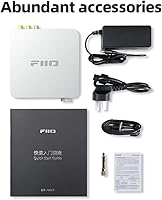
  • USB Connection: USB audio is handled via a USB Type-C input on the device, with a USB Type-C to USB Type-A cable included in the box for standard PC connectivity.
  • Bluetooth: Bluetooth is not supported; the unit is strictly a wired device and requires a physical cable connection to all audio sources.
  • Analog Input: No analog line-level input is provided, meaning turntables, cassette decks, and other analog sources cannot be connected directly without an external preamplifier.
  • Model Series: The K11 is part of FiiO's K-series desktop amplifier lineup, which spans entry-level to mid-range desktop DAC-amp combinations designed for home and office use.

Related Reviews

FiiO RETRO NANO
FiiO RETRO NANO
87%
94%
Sound Clarity
91%
Balanced Output
88%
Bluetooth Connectivity
90%
Wired Performance
83%
Battery Life
More
FiiO FH3 HiFi Earphones
84%
91%
Sound Quality
89%
Bass Performance
88%
Comfort for Long Listening Sessions
85%
Build Quality
60%
Cable Durability
More
FiiO M15S Music Player
85%
95%
Audio Quality
91%
Battery Life
67%
Portability
89%
Build Quality
93%
Streaming Support
More
FiiO CP13 Cassette Player
90%
94%
Audio Quality
91%
Build Durability
96%
Battery Life
88%
Portability
89%
Ease of Use
More
FiiO K7
FiiO K7
84%
93%
Sound Transparency
91%
Amplifier Power
89%
Connectivity & Inputs
92%
Value for Money
78%
Build Quality
More
FiiO BTA30Pro Bluetooth Receiver/Transmitter
84%
94%
Audio Quality
80%
Setup & Installation
88%
Bluetooth Range & Connectivity
85%
Portability & Design
86%
Build Quality
More
FiiO BTR13 Bluetooth Headphone Amplifier
85%
93%
Sound Quality
88%
Portability
85%
Bluetooth Connectivity
75%
App & EQ Features
82%
Battery Life
More
FiiO BTR17
FiiO BTR17
81%
93%
Sound Quality
91%
Amplifier Power & Output
88%
Bluetooth Codec Support
89%
Versatility & Multi-Mode Operation
79%
Parametric EQ & App Control
More
FiiO BTR3K
FiiO BTR3K
80%
88%
Sound Quality
91%
Balanced Output Performance
86%
Bluetooth Codec Support
72%
Connection Stability
93%
Portability & Form Factor
More
FiiO JadeAudio JT1 Professional Studio Headphones
86%
89%
Sound Quality
90%
Comfort and Fit
85%
Microphone Performance
91%
Build Quality
88%
Durability
More

FAQ

Yes, comfortably. Those headphones sit around 300 ohms and are a near-ideal match for this desktop DAC-amp. Most users find they never push past two-thirds of the available volume range, which means there is plenty of headroom for dynamic peaks in music.

On macOS it is plug-and-play with no installation needed. On Windows you will need to download and install the ASIO or USB audio driver from FiiO's website. The process is straightforward but does require a manual step, and a small number of users have reported needing to reinstall after major Windows updates.

This is a fair question and one that comes up frequently in audio forums. FiiO has not published a complete circuit topology diagram, and independent measurements suggest the balanced output may share a common ground stage rather than being fully differential from input to output. In practice, many users still report a lower noise floor and improved channel separation over the single-ended jack, but it is worth tempering expectations if true differential balance matters to you technically.

Yes. The RCA line-out on the rear panel operates independently and can feed a pair of powered monitors or a stereo amplifier simultaneously while you use the headphone output on the front. There is no dedicated speaker switching, but the line output stays active regardless of which headphone jack is in use.

Probably yes, to some degree. The K11 is optimized for full-size headphones in the mid-to-high impedance range, and users with ultra-sensitive in-ear monitors do report audible background hiss, particularly on low gain. It is usable, but if IEMs are your primary listening tool, a dedicated low-noise IEM amplifier would serve you better.

Absolutely, and this is one of the more practical use cases for the unit. As long as your TV has an optical (Toslink) audio output — most do — you can run a cable straight into the K11 and listen through your headphones with proper amplification, which is a noticeable upgrade over a TV's built-in headphone jack.

Input switching is handled through the front panel controls in combination with the VA display. You cycle through the available inputs using the selector, and the display confirms which source is currently active along with the incoming sampling rate. It takes a few minutes to get familiar with the menu layout, but after that it becomes second nature.

No, MQA decoding is not supported. If you stream Tidal and use MQA content, the unit will still play those tracks — it just renders them as standard PCM files rather than unfolding the MQA layer. For most listeners this difference is subtle or imperceptible, but MQA purists should be aware.

This is one of the more consistently mentioned quality control observations across verified buyer reviews. Some units feel tight and precise, while others have a slight wobble or less-than-satisfying resistance on the knob. It functions correctly in either case, but if yours feels significantly unstable rather than just slightly loose, it may be worth contacting FiiO's support team as a potential unit variance issue.

The unit ships with a USB Type-C to USB Type-A cable for connecting to a PC, which is enough to get started immediately if your source has a standard USB Type-A port. If you want to use the optical or coaxial inputs, or if your headphone cable terminates in a 3.5mm plug, you will need appropriate adapters or cables purchased separately.