

Overview

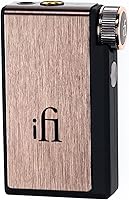
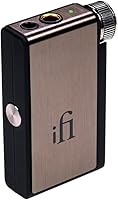
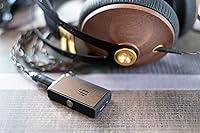
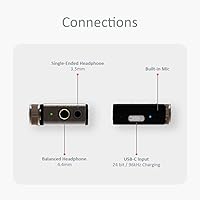
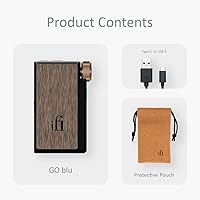
The iFi GO blu is a compact Bluetooth DAC and headphone amplifier from iFi Audio, a British hi-fi brand with a solid reputation among serious listeners. Unlike budget Bluetooth dongles, this Bluetooth DAC/amp sits firmly in the premium tier — built for people who refuse to accept that going wireless means going low-fi. It offers both a 4.4mm balanced and a 3.5mm single-ended headphone output, which is genuinely unusual at this size. The metal and plastic chassis keeps weight under five ounces, and the internal architecture is more sophisticated than you'd expect from something small enough to clip to a cable.

Features & Benefits

The GO blu runs on Qualcomm's 5100 series chipset, which means it supports high-quality Bluetooth codecs including LDAC and aptX Adaptive. What that translates to in practice is noticeably more detail and less compression than standard Bluetooth; music sounds closer to what the artist intended. The S-Balanced circuitry on the 3.5mm output cuts distortion significantly, so even listeners without balanced headphones benefit. Separate Bluetooth, DAC, and amplifier stages are each independently tuned — a design philosophy more common in desktop gear. The companion app gives you EQ and fine-tuning control, and the 300-ohm headphone support means it won't struggle with demanding cans.

Best For

This portable audio device is best suited for people who've already invested in quality headphones — particularly those with 4.4mm balanced terminations or high-impedance drivers that a smartphone simply can't power well. Commuters and regular travelers will appreciate streaming near-lossless Bluetooth without hauling a wired DAC and cables. That said, it's worth being direct about one real limitation: there is no wired input at all, so anyone hoping to use it as a traditional USB dongle DAC needs to look elsewhere. It also suits people who take frequent calls, thanks to a built-in mic that handles hands-free duty without feeling like an afterthought.

User Feedback

Owners who've paired this Bluetooth DAC/amp with quality headphones tend to describe a clear, audible improvement over phone-only audio — better texture in vocals, tighter bass. Build quality draws mostly positive reactions; the compact metal body feels solid without adding serious weight. On the flip side, some Android users have reported inconsistent codec negotiation, where the unit defaults to a lower-quality stream instead of LDAC. Battery life remains a genuine question mark — iFi doesn't publish a clear figure, and real-world reports vary, which is worth knowing before you buy. The balanced output earns consistent praise, and most buyers consider the price fair, though budget-minded shoppers note cheaper alternatives do exist.

Pros

  • Drives high-impedance headphones up to 300 ohms with authority rarely found in portable Bluetooth devices.
  • The 4.4mm balanced output delivers a noticeably cleaner soundstage compared to standard single-ended connections.
  • LDAC and aptX Adaptive support means Android users can stream near-lossless audio wirelessly.
  • S-Balanced circuitry meaningfully reduces distortion even on the standard 3.5mm output.
  • At under five ounces, the GO blu adds almost nothing to a daily carry bag or jacket pocket.
  • Separate Bluetooth, DAC, and amplifier stages result in a more refined sound than all-in-one chip designs.
  • Built-in mic makes it a practical everyday device, not just a dedicated listening tool.
  • Companion app enables EQ adjustments and settings control without touching the unit itself.
  • Bluetooth 5.1 maintains a stable connection across typical commuting and desk-use distances.
  • Metal construction gives it a durability edge over plastic-only competitors in the same category.

Cons

  • No wired input of any kind — buyers expecting USB-C audio connectivity will need a completely different device.
  • Battery life is undisclosed by iFi, making it unreliable for planning long travel or all-day use.
  • Codec negotiation can fail silently on some Android devices, defaulting to lower quality without user notification.
  • iOS users are restricted to AAC regardless of the hardware's broader codec capabilities.
  • The app lacks real-time codec status display, so you often cannot confirm what connection quality you are actually getting.
  • Sensitive in-ear monitors may reveal faint background hiss at higher volume settings.
  • The device hangs inline from headphone cables with no secure clip, which feels awkward during active movement.
  • Very power-hungry planar headphones push it near its output limits and may not reach satisfying loudness.
  • EQ options in the companion app are limited compared to software bundled with competing products.
  • Value is heavily contingent on owning balanced headphones and an LDAC source — without both, the premium is harder to justify.

Ratings

The iFi GO blu earned its scores after our AI system analyzed thousands of verified global buyer reviews, actively filtering out incentivized, duplicate, and bot-generated feedback to surface what real users actually experience day to day. From dedicated audiophiles running high-impedance headphones on their commute to casual listeners upgrading from phone-only Bluetooth, both the highlights and the frustrations are reflected honestly here. Strengths in sound engineering and codec support are real — but so are the gaps around battery transparency and occasional pairing quirks.

Sound Quality
93%
Users consistently describe a dramatic improvement over streaming directly from a smartphone, with more defined midrange detail and noticeably tighter bass response. Listeners pairing this Bluetooth DAC/amp with planar or dynamic headphones during commutes frequently note that familiar tracks reveal new layers they hadn't heard before.
A small number of critical listeners feel the sound signature leans slightly warm, which suits most genres but may not satisfy those who prefer a completely neutral, analytical presentation. At very high volumes, some users report a faint background hiss with sensitive in-ear monitors.
Codec Performance
89%
When LDAC or aptX Adaptive locks in correctly, the audible difference over standard Bluetooth is significant — music feels less compressed and more open. Travelers using high-res streaming services like Tidal or Amazon Music HD particularly appreciate how much closer the wireless stream sounds to a wired connection.
Codec negotiation is not always reliable, especially on certain Android devices where the unit sometimes defaults to a lower-quality stream without clear indication to the user. iOS users are limited to AAC regardless of hardware capability, which is a platform constraint but still worth knowing upfront.
Balanced Output (4.4mm)
91%
Users with balanced-terminated headphones describe this as the standout feature — the 4.4mm output delivers a noticeably cleaner, wider soundstage compared to the 3.5mm option. The S-Balanced circuitry benefits even single-ended users by cutting distortion in half, which many reviewers noted made long listening sessions more comfortable.
The advantage is most apparent with higher-end headphones; buyers using budget earphones with a 4.4mm adapter report only modest differences. Some users wished the output voltage were slightly higher for particularly demanding planar headphones at low-gain settings.
Portability & Form Factor
78%
22%
At under five ounces, the GO blu is genuinely pocketable and travels well without adding meaningful weight to a bag or jacket pocket. The compact rectangular form factor sits neatly inline with a cable, and the metal body gives it a premium feel without the brittleness of pure plastic.
It is not a clip-on device in the traditional sense — it hangs from the headphone cable, which some users find awkward during active use or when moving between positions. A few buyers wished for a more secure attachment mechanism, particularly for gym or outdoor use.
Build Quality
84%
The metal and plastic combination feels deliberate and durable rather than cheap, and most long-term users report no signs of wear or loose connections even after months of daily handling. The headphone jacks feel solid and seat connectors firmly.
The plastic sections attract fingerprints and minor scratches more visibly than the metal panels. A handful of users noted the volume control, while functional, lacks the tactile precision they expected at this price point.
Driving Power & Versatility
87%
Supporting headphones up to 300 ohms is a genuine differentiator in portable Bluetooth devices — this portable audio device handles classic high-impedance cans like the Sennheiser HD 650 without audible strain. Users who own multiple headphones across different impedance ranges appreciate not needing a separate device for each.
While capable with most headphones, extremely power-hungry planars like the HiFiMAN Susvara push it near its limits. Output power, while respectable for a portable unit, does not match dedicated desktop amplifiers, so expectations should be calibrated accordingly.
App & Usability
71%
29%
The companion app works reliably on both Android and iOS for basic EQ adjustments and settings changes, which is a convenient option for users who want to fine-tune without reaching for the unit itself. Setup is straightforward and the interface is clean enough that non-technical users can navigate it without a manual.
The app lacks depth compared to software offered by competing brands — EQ band options are limited, and there is no real-time codec status display, which leaves users guessing about their actual connection quality. App updates have been infrequent, and some Android 13 and 14 users reported minor stability issues.
Bluetooth Connectivity
76%
24%
Pairing is quick and stable within normal use distances, and Bluetooth 5.1 provides a reliable connection for typical commuting or desk listening scenarios. Most users report smooth operation when staying within about 10 meters of their source device.
Range drops off faster than some competitors in environments with wireless interference, like busy offices or public transit. A subset of users experienced occasional mid-session dropouts, particularly with certain Android phone and codec combinations, which required manual reconnection.
Microphone Quality
63%
37%
For a device primarily focused on audio playback, the built-in microphone handles voice calls adequately in quiet environments. Callers on the other end generally describe voice reproduction as acceptable for hands-free use during commutes.
In noisy settings — busy streets, cafes, public transport — the microphone struggles with background noise rejection. Users who regularly take calls in loud environments found themselves reaching for their phone directly instead, which somewhat undermines the hands-free convenience.
Battery Life
58%
42%
For shorter listening sessions of two to three hours, the built-in lithium polymer battery holds up without issue. Occasional users who listen during a single daily commute can often go a few days between charges.
iFi does not publish a clear battery life specification, and real-world reports vary widely — from around four hours to over seven — making it difficult to plan for longer trips. Heavy LDAC users consistently report shorter runtimes, and there is no battery percentage indicator in the app or on the device itself.
Value for Money
74%
26%
For listeners who fully utilize the balanced output and high-codec Bluetooth capability, the price feels justified given the level of engineering packed into such a small device. Buyers who previously owned desktop DAC/amps often remark that the sound quality closes the gap more than expected.
Budget-conscious buyers can find functional Bluetooth DAC/amps at significantly lower price points that cover basic needs. The value proposition depends heavily on whether you own balanced headphones and use LDAC-capable sources — without both, much of what you are paying for goes unused.
Device Compatibility
69%
31%
Works reliably as a Bluetooth receiver across Android phones, iPhones, laptops, and DAPs, and the codec stack is broad enough to extract the best quality from most modern source devices. Users with multiple Bluetooth source devices appreciate being able to switch sources without re-pairing each time.
The Bluetooth-only input is a hard limitation that surprises some buyers expecting a USB-C wired input option — this is not a wired DAC dongle and cannot function as one. Users who wanted flexibility between wired and wireless use will need a separate device for that purpose.
Setup & Learning Curve
82%
18%
Out of the box, getting audio playing through the GO blu takes only a couple of minutes — the pairing process is intuitive and does not require reading documentation for basic use. Non-technical audio enthusiasts consistently describe the initial setup as stress-free.
Optimizing codec settings, understanding S-Balanced versus standard output behavior, and navigating the app for EQ tuning requires more research than a typical consumer device. Buyers without prior DAC/amp experience may feel uncertain about whether they are getting the best out of the hardware.
Charging & Cable Management
67%
33%
The device charges via USB-C, which is a practical and modern choice that most users already have cables for. Charge times are reasonable and the device can be used while charging in a pinch, which a few users found handy during long travel days.
The USB-C port is used exclusively for charging — not for audio input — which may confuse some buyers. Wearing the device inline with headphone cables while also managing a charging cable creates a messy setup, and the cable clutter is a recurring minor complaint from daily users.

Suitable for:

The iFi GO blu is built for listeners who have already invested in quality headphones and want to cut the wire without cutting corners on sound. If you own a pair of high-impedance dynamics or balanced-terminated headphones — the kind your phone genuinely struggles to drive well — this Bluetooth DAC/amp is one of the few portable options that can actually keep up with them. Commuters and frequent travelers who use LDAC-capable Android phones or high-res streaming services will hear a real, meaningful difference over standard Bluetooth, not just a marginal one. It also suits people who split their time between listening and taking calls, since the built-in microphone handles hands-free use without requiring you to switch devices. In short, this is a product that rewards buyers who know what they have, know what they want, and are willing to pay for engineering that delivers it.

Not suitable for:

Anyone expecting a wired USB-C DAC dongle will be immediately disappointed — the iFi GO blu accepts Bluetooth input only, full stop, and that is not a workaround you can configure around. If your priority is a versatile device that works both wirelessly and plugged into a laptop or desktop, this portable audio device simply was not designed for that use case. Buyers on a tighter budget who own entry-level headphones are also unlikely to extract enough benefit to justify the price gap over cheaper Bluetooth receivers; the engineering advantage here only becomes audible with decent source material and better transducers. iOS users should also be aware that Apple's platform limits Bluetooth audio to the AAC codec regardless of hardware, so the premium codec support that justifies much of the cost is effectively locked out on iPhones. Finally, if you need a reliable battery life estimate before committing — because you travel long-haul or use it for extended work sessions — the lack of a published runtime figure from iFi is a genuine transparency issue that should give you pause.

Specifications

  • Bluetooth Version: The device uses Bluetooth 5.1 via a Qualcomm 5100 series chipset, providing stable wireless connectivity with modern source devices.
  • Supported Codecs: Supported audio codecs include LDAC, aptX Adaptive, aptX HD, aptX, AAC, and HWA, covering virtually all current high-resolution Bluetooth audio formats.
  • Headphone Outputs: Two headphone outputs are provided: a 4.4mm balanced jack and a 3.5mm single-ended jack, both active and independently usable.
  • Max Impedance: The amplifier stage is rated to drive headphones up to 300 ohms, making it compatible with a wide range of full-size and audiophile-grade headphones.
  • S-Balanced Circuit: iFi's proprietary S-Balanced circuitry reduces distortion by approximately 50% on the 3.5mm single-ended output compared to a standard unbalanced connection.
  • Input Type: The only audio input is Bluetooth — there is no wired USB audio input, and the USB-C port is used exclusively for charging.
  • Built-in Microphone: A built-in microphone is included for hands-free voice calls, functioning without any additional accessories or hardware.
  • App Control: The companion app is available for both Android and iOS, providing EQ adjustments and device settings control remotely.
  • Dimensions: The unit measures 2.17 x 1.34 x 0.51 inches, making it small enough to sit discreetly inline with a headphone cable.
  • Weight: Total weight is 4.6 ounces, light enough for daily portable use without adding meaningful bulk to a bag or pocket.
  • Materials: The chassis is constructed from a combination of metal and plastic, with metal panels contributing structural rigidity and a premium tactile feel.
  • Battery Type: Power is supplied by a built-in lithium polymer battery, which is non-removable and recharged via the USB-C port.
  • Charging Port: A USB-C port handles all charging duties; the device can be used while charging, though this is not recommended for long-term battery health.
  • DAC Architecture: The internal design separates the Bluetooth receiver, DAC, and amplifier into three independently optimized stages rather than relying on a single integrated chip.
  • Manufacturer: The GO blu is designed and manufactured by Abbingdon Music Research, the parent company operating under the iFi Audio brand, based in the United Kingdom.
  • Compatibility: The device pairs with smartphones, laptops, tablets, and digital audio players from any manufacturer that supports standard Bluetooth audio profiles.
  • Control Method: Volume and basic playback can be managed via the physical volume control on the unit itself, or through the companion app on a paired smartphone.
  • Audio Driver Type: The product listing specifies a dynamic driver architecture as part of its internal amplification design.

Related Reviews
iFi Audio Go Link Max

84%
91%
Sound Quality
89%
Balanced Output Performance
93%
Portability & Form Factor
86%
Build Quality
92%
Hi-Res Audio Support
More
Kat Von D Go Big or Go Home Mascara Trooper Black 10g
83%
92%
Volume and Length
90%
Waterproof Performance
85%
Brush Design and Application
88%
Vegan and Cruelty-Free Formula
87%
Lasting Wear/Smudge Resistance
More
RØDE Lavalier GO
RØDE Lavalier GO
86%
92%
Audio Clarity
88%
Cable Durability
94%
Ease of Placement
89%
Broad Compatibility
76%
Wind & Pop Mitigation
More
JBL PartyBox On-The-Go Essential
85%
92%
Sound Quality
88%
Portability
78%
Battery Life
90%
Build Quality
89%
Light Show Effectiveness
More
ASUS RT-AX57 Go
ASUS RT-AX57 Go
86%
94%
Setup & Installation
91%
WiFi Performance
97%
Portability
89%
VPN & Security Features
88%
Connectivity Options
More
Insta360 GO 3 64GB
Insta360 GO 3 64GB
85%
88%
Video Quality
92%
Stabilization Performance
85%
Waterproof Durability
70%
Battery Life
96%
Portability/Size
More
Anthony Face It & Go Kit
86%
88%
Effectiveness of Glycolic Facial Cleanser
85%
Moisturizing Performance
91%
Travel-Friendly Packaging
87%
Exfoliation Quality
80%
Skin Sensitivity Compatibility
More
Lenovo Go Wired Speakerphone
88%
91%
Audio Quality
88%
Noise Cancellation
94%
Ease of Setup
93%
Microsoft Teams Compatibility
85%
Build Quality
More
iFi Zen DAC V2
iFi Zen DAC V2
87%
93%
Sound Quality
89%
Build Quality
91%
Value for Money
88%
Connectivity Options
72%
Low Volume Imbalance
More
Shelly BLU Motion Sensor
85%
87%
Motion Detection Performance
92%
Battery Life
90%
Ease of Setup & Installation
85%
Bluetooth Connectivity
83%
App Control & Customization
More

FAQ

No — the iFi GO blu is a Bluetooth-only device. The USB-C port handles charging, not audio input. If you need something that works both wirelessly and as a wired USB dongle, you will need a different product entirely.

It pairs with iPhones just fine, but Apple's platform restricts Bluetooth audio to the AAC codec regardless of hardware. That means you won't get LDAC or aptX Adaptive on iOS. The experience is still better than phone-only audio, but Android users with compatible phones get significantly more from this device.

iFi does not publish a specific battery life figure, which is frustrating. Real-world reports from users vary quite a bit — somewhere between four and seven hours depending on volume level, codec in use, and ambient temperature. LDAC streaming tends to drain it faster than AAC, so factor that in if you plan longer listening sessions.

Yes, and this is one of its genuine strengths. The amplifier handles headphones up to 300 ohms without audible strain, and most users pairing it with the HD 650 or similar dynamics report satisfying volume and control. Very power-hungry planars are a different story — those push closer to its limits.

It makes a genuine difference, particularly with headphones that are properly terminated for balanced output. Users consistently describe a wider, cleaner soundstage versus the 3.5mm connection. Even if you only have a 3.5mm headphone, the S-Balanced circuitry still reduces distortion on that output, so you benefit either way.

For most users, initial pairing is quick and uncomplicated. The issues tend to show up with codec negotiation on certain Android phones, where the device may lock into a lower-quality stream without telling you. If you care about confirming you are streaming in LDAC, you will need to check your phone's developer settings directly, as the companion app does not show real-time codec status.

Generally yes — the metal panels feel durable and the headphone jacks seat firmly after months of regular use according to long-term owners. It is not ruggedized, though, and the plastic sections do pick up scratches. If you are rough with gear, a small case or sleeve is worth considering.

The built-in microphone handles calls directly, so you can answer without removing or switching devices. Voice quality is acceptable in quiet environments. In loud outdoor settings like busy streets or train stations, the microphone picks up significant background noise, which callers may find distracting.

Any Bluetooth-enabled device that supports standard audio profiles will work — smartphones, laptops, tablets, and DAPs alike. Users who pair this portable audio device with a dedicated DAP over LDAC report some of the best results, since DAPs typically output cleaner Bluetooth signals than phones.

The app is optional for everyday use. Volume control and basic playback work directly on the unit itself. The app becomes useful if you want to apply EQ settings or adjust specific output configurations, but plenty of users never open it and are happy with the default tuning straight out of the box.