Overview

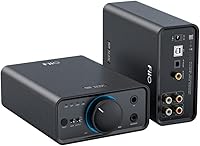
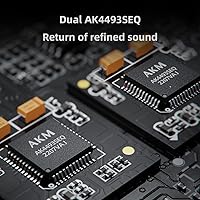
The FiiO K7 sits at a sweet spot in the desktop audio market — serious enough for dedicated listeners, yet priced to avoid the kind of buyer's remorse that plagues flagship purchases. Built around a dual AK4493SEQ configuration and THX amplifier stages, this desktop DAC/amp punches well above its weight class on paper. The aluminum alloy chassis is solid and understated, sitting on a desk without demanding attention. Worth noting upfront: this FiiO unit is strictly a home-bound component. No battery, no portability pretense — it plugs in and stays put.

Features & Benefits

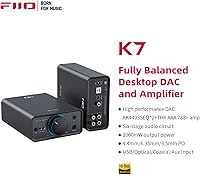
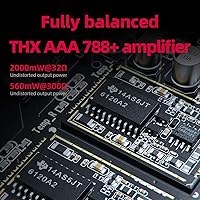
The real story here is the amplifier section. Dual THX AAA 788+ modules keep distortion remarkably low, meaning the noise floor stays quiet enough that you can actually hear what your headphones are capable of — not what the amp is adding. Connectivity is genuinely broad: USB from your PC, optical from a TV or streamer, coaxial from a CD transport, and AUX if needed. The 4.4mm balanced output delivers up to 2000mW, which handles demanding planars without strain. Two gain levels and three output modes let you dial in the right volume range whether you are running sensitive IEMs or something that needs real power.

Best For

This FiiO unit makes most sense for someone stepping off the entry-level ladder — say, graduating from a portable dongle or a budget desktop stack — and wanting a clear improvement in dynamics and headroom. It is particularly well-suited to harder-to-drive headphones: planars like the HE400se, high-impedance dynamics like the HD 6XX, anything that sounds politely compressed on weaker gear. The multiple inputs also make it practical in setups where more than one source needs to connect. Casual background listeners who use earbuds or efficient IEMs at low volume probably won't hear the difference; this desktop DAC/amp rewards those who actually listen closely.

User Feedback

Buyers who have lived with this FiiO unit for extended periods consistently highlight sound transparency and output power as genuine strengths — not just spec-sheet claims. Pairings with the HD 6XX and HE400se draw frequent praise for the headroom and control on offer. Compared to units like the Topping DX3 Pro or SMSL alternatives, most upgraders report a noticeable step up in authority and low-level detail. Criticism tends to cluster around secondary concerns: the volume knob lacks the premium tactile feel some expect at this price, and the RGB indicator lights are brighter than a few users prefer in a dark room. Nothing deal-breaking, but worth knowing.

Pros

  • Dual AK4493SEQ DACs and THX amplifier modules deliver genuinely low distortion and a quiet noise floor.
  • The FiiO K7 handles demanding planar and high-impedance headphones with real authority and headroom.
  • Four distinct inputs make it a versatile hub for multi-source desktop setups.
  • Balanced 4.4mm output is accessible without stepping up to far more expensive alternatives.
  • Long-term reliability reports from verified owners are consistently positive over extended use.
  • RGB indicators provide practical at-a-glance sampling rate identification, not just decoration.
  • Two gain levels and three output modes allow meaningful fine-tuning across different headphone types.
  • Buyers upgrading from competing mid-range units report a clearly audible improvement in dynamics and detail.
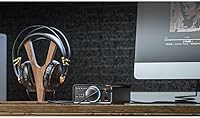
  • The aluminum chassis is sturdy and understated — it fits a desk without demanding visual attention.
  • Optical and coaxial inputs work cleanly with televisions and CD transports without sync or latency issues.

Cons

  • The volume knob feels noticeably lighter and less precise than the solid chassis suggests it should.
  • RGB display brightness cannot be dimmed or disabled, which becomes a real irritant in dark listening environments.
  • No preamp output means this desktop DAC/amp cannot double as a hub for powered desktop speakers.
  • Bluetooth and wireless input are entirely absent, ruling it out for phone-first or streaming-first workflows.
  • The external power brick complicates cable management in already-tight desk arrangements.
  • Input selection does not auto-detect active signals, requiring manual cycling every time you switch sources.
  • Gain and output level interaction is not well-explained in the included documentation, creating a learning curve.
  • Some USB recognition issues have been reported with specific older motherboard chipsets, occasionally requiring a powered hub.
  • After-sales support response times vary significantly for buyers outside major markets.
  • The unit runs warm during extended high-volume sessions, which can unsettle buyers unfamiliar with desktop amp thermals.

Ratings

The FiiO K7 earns consistently strong marks across the desktop audio community, and the scores below reflect AI analysis of verified global buyer reviews — with spam, bot activity, and incentivized feedback actively filtered out. From first-time desktop DAC/amp buyers to experienced listeners swapping out competing units, the aggregate picture is nuanced: real strengths in sound performance and connectivity, with a few honest friction points around secondary hardware details. Both sides of that story are reflected here.

Sound Transparency
93%
Across hundreds of verified reviews, the clarity this desktop DAC/amp produces is the single most praised attribute. Listeners pairing it with the Sennheiser HD 6XX or HiFiMAN HE400se consistently report hearing low-level detail in familiar tracks that cheaper gear masked entirely. The noise floor stays impressively quiet even at higher gain settings.
A small number of highly experienced listeners — those coming from considerably more expensive reference gear — feel the top-end rendering lacks the last degree of air and separation. This gap is negligible for most buyers but worth noting for those with resolving flagship headphones.
Amplifier Power
91%
The balanced output's 2000mW output is not just a spec to cite — buyers driving planar magnetic headphones like the HE400se or Sundara report real, audible control and dynamic headroom that budget desktop amps simply cannot deliver. Even demanding orthodynamic drivers are handled without compression or strain.
For users running sensitive IEMs at low listening volumes, that much power requires careful management of the gain and output level settings to avoid channel imbalance at the very bottom of the volume range. It is a known limitation of high-powered desktop amps and not unique to this FiiO unit.
Connectivity & Inputs
89%
Having USB, optical, coaxial, and AUX inputs on a single unit genuinely simplifies multi-source desktop setups. Users who feed audio from a PC, a television, and a CD transport simultaneously — switching between them without re-cabling — rate this flexibility as one of the strongest practical advantages at this price tier.
There is no Bluetooth input and no built-in streaming capability, which frustrates a portion of buyers who expected wireless source compatibility. For a fully wired setup this is irrelevant, but it is a real limitation if your workflow involves casting audio from a phone or tablet.
Value for Money
92%
Buyers upgrading from units like the Topping DX3 Pro or SMSL SU-9 frequently describe the performance-per-dollar ratio of the K7 as difficult to argue with. Dual premium DAC chips and THX amplification at this price point represent a genuine market anomaly, and the long-term ownership picture from verified buyers supports that assessment.
A narrow segment of buyers who purchased expecting hi-fi performance across every dimension — including premium tactile hardware — feel the price should have delivered a better volume knob and a more refined overall control interface. The internals justify the cost; the physical controls are less convincing.
Build Quality
78%
22%
The aluminum alloy enclosure is solid, heavier than it looks, and sits on the desk without flexing or rattling. The overall industrial design is clean and unassuming — it integrates naturally into a desktop setup without looking out of place next to a monitor or keyboard.
The volume knob is the most consistently cited hardware complaint: it feels lighter and less precise than the chassis itself suggests. Several buyers note a slight looseness or wobble that feels inconsistent with the rest of the unit, and for a component you interact with every single listening session, that tactile disconnect stands out.
Output Options
88%
Three headphone output types — 4.4mm balanced, 6.35mm single-ended, and 3.5mm single-ended — cover virtually every headphone cable termination a buyer is likely to own. Switching between balanced and single-ended outputs is straightforward, and users appreciate not needing an adapter to use legacy 3.5mm cans alongside newer balanced-terminated cables.
There is no RCA preamp output for connecting powered speakers in a dual-use setup, which limits the K7 to headphone-only use for some buyers who intended it as the hub of a wider desktop audio system. This is a meaningful gap for those who want one box to serve both headphones and monitors.
Gain & Output Level Control
83%
Two gain levels and three output modes give users meaningful flexibility when switching between sensitive IEMs and power-hungry full-size headphones without constant volume knob adjustment. Audiophiles who rotate through several headphones in a single session find this genuinely useful rather than a gimmick.
The control logic is not immediately intuitive out of the box, and the manual does not explain the interaction between gain levels and output modes in plain language. New desktop DAC/amp buyers report a brief but real learning curve before settling on the right combination for their specific headphone library.
USB Audio Performance
87%
USB input is where most buyers land as their primary source, feeding audio from a Windows or macOS machine, and the K7 is broadly plug-and-play in practice. Driver installation on Windows is straightforward, and users report stable, drop-free audio even during long listening sessions and system resource spikes.
A small number of users encountered intermittent USB recognition issues on specific motherboard chipsets, requiring a powered USB hub to resolve. This is not a widespread complaint, but it appears consistently enough across verified reviews that buyers with older or budget desktop PCs should be aware of it.
RGB Indicator Lights
61%
39%
The RGB sampling rate indicator is functionally useful — it tells you at a glance what resolution audio is being processed, which audiophiles who toggle between redbook CD quality and hi-res files genuinely appreciate. The color differentiation between sampling rates is consistent and legible.
Brightness is the recurring gripe. In a dark room or evening listening setup, the RGB display is noticeably intense and distracting, and there is no software or hardware option to dim or disable it. Several buyers resorted to covering it with electrical tape, which is not an elegant solution for a unit at this price.
Optical & Coaxial Input Quality
84%
Users feeding the K7 from a television via optical report clean, low-latency audio with no perceptible sync issues during video content. The coaxial input handles CD transport output reliably, making this desktop DAC/amp a practical upgrade path for buyers with existing disc-based sources they are not ready to retire.
There is no input auto-switching, meaning the unit defaults to the last-selected input on power-up rather than detecting an active signal. Buyers who frequently switch between a PC and a television find themselves manually cycling inputs more often than they would prefer.
Thermal Management
81%
19%
The aluminum chassis acts as a passive heatsink, and the K7 runs warm but never hot during extended listening sessions. Users who leave it powered on continuously — a common practice with desktop audio gear — report no thermal throttling or performance degradation over months of daily use.
The unit does run noticeably warm to the touch after an hour or more of high-volume use, which initially concerns some buyers unfamiliar with Class A-adjacent amplifier designs. It is not a fault, but the lack of any ventilation slot or explicit thermal guidance in the documentation leads to unnecessary worry.
Long-Term Reliability
86%
Among buyers who have owned the K7 for a year or more, the reliability picture is positive. No widespread reports of hardware failure, channel dropout, or degrading output quality over time have surfaced in verified purchase communities — a meaningful vote of confidence for a unit positioned as a long-term desktop anchor.
FiiO's after-sales support experience gets mixed reviews depending on region. Some international buyers report slower warranty response times and difficulty obtaining replacement parts outside of major markets, which introduces a degree of long-term ownership risk for those outside the US, EU, or China.
Setup & Ease of Use
79%
21%
Physical setup is uncomplicated — connect a source, plug in headphones, set the gain switch, and the unit is operational within minutes. The front-panel layout is logical enough that most buyers do not need to open the manual just to get sound out of it on day one.
The interplay between input selection, gain levels, and output modes creates occasional confusion for new desktop DAC/amp buyers. The RGB color coding for sampling rates adds useful information but requires a reference card until the colors become second nature, which takes longer than it should.
Desktop Footprint
85%
The K7 occupies a compact, rectangular footprint that fits naturally in front of a monitor without blocking airflow or cluttering the desk surface. Buyers working in space-constrained setups appreciate that the unit does not demand a dedicated shelf or relocated peripheral to accommodate it.
At 2.51 pounds with a fixed external power supply, the K7 is not a device you casually reposition. The power brick adds cable management considerations that a few buyers underestimated before purchase, particularly in tight desk arrangements where cable routing options are limited.

Suitable for:

The FiiO K7 is built for the listener who has outgrown entry-level gear and wants a meaningful, audible step forward without committing to flagship-tier spending. If you own planar magnetic headphones — the HiFiMAN HE400se, Sundara, or anything in that family — or high-impedance dynamics like the Sennheiser HD 6XX or HD 650, this desktop DAC/amp has the output power to actually drive them properly rather than just making noise. It suits home desktop setups particularly well, especially where multiple source devices need to connect: a PC via USB, a television via optical, and a CD transport via coaxial can all feed into the same unit without any cable swapping. Listeners who want balanced 4.4mm output — the kind that measurably lowers crosstalk and noise compared to single-ended — will find this FiiO unit one of the most accessible ways to get there without spending considerably more. The clean aluminum build also appeals to buyers who want audio hardware that looks composed on a desk rather than overtly hobbyist.

Not suitable for:

The FiiO K7 is a poor fit for anyone whose primary listening habit is casual, low-attention background audio through efficient earbuds or cheap earphones — the performance gap simply will not register, and the investment makes no practical sense in that context. Buyers expecting wireless flexibility should look elsewhere entirely: there is no Bluetooth input, no Wi-Fi streaming, and no app integration, so if your audio sources are a phone or a music streaming device that outputs wirelessly, this unit cannot accommodate that workflow. The K7 is also not the right choice if you need a preamp output to drive powered desktop speakers alongside headphones, since that output is absent and limits the unit to headphone-only use. Buyers on the move — anyone wanting a DAC/amp for travel, office hot-desking, or listening in multiple rooms — will find it inconvenient given the fixed power supply and 2.51-pound chassis. Finally, anyone prioritizing a premium tactile hardware experience throughout should be aware that the volume knob does not match the quality impression set by the aluminum enclosure.

Specifications

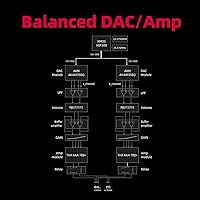
  • DAC Chips: Uses dual AKM AK4493SEQ DAC chips in a dual-mono configuration for improved channel separation and lower noise.
  • Amplifier Modules: Equipped with dual THX AAA 788+ amplifier modules, delivering measurably low distortion across the full output range.
  • Balanced Output: Provides a 4.4mm Pentaconn balanced headphone output with up to 2000mW of output power under load.
  • Single-Ended Outputs: Includes both a 6.35mm and a 3.5mm single-ended headphone output, covering legacy and modern cable terminations.
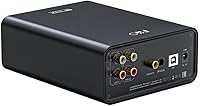
  • Inputs: Accepts four input types: USB Type-B, optical (TOSLINK), coaxial (RCA), and a 3.5mm AUX analog input.
  • THD+N: Achieves 1% THD+N or lower under balanced output conditions, indicating a clean, low-coloration amplification path.
  • Gain Settings: Offers two selectable gain levels — low and high — to accommodate both sensitive IEMs and harder-to-drive full-size headphones.
  • Output Levels: Features three output level settings that allow finer volume control calibration beyond the analog volume knob alone.
  • Sampling Rate Display: RGB indicator lights on the front panel change color to identify the active input source and incoming sampling rate in real time.
  • Chassis Material: Constructed from aluminum alloy throughout, providing structural rigidity and passive heat dissipation during extended use.
  • Weight: Weighs 2.51 pounds, making it a stable desktop unit not intended for portable or mobile use.
  • Power Supply: Operates on a 12V DC external power supply included in the box; the unit does not function on battery power.
  • USB Compatibility: USB input is compatible with Windows (via driver installation) and macOS (driverless), supporting PCM audio playback.
  • Number of Channels: Configured as a 6-channel internal architecture aligned with the dual-DAC, dual-amp signal path design.
  • Form Factor: Desktop-only form factor designed to sit horizontally on a flat surface; no rack-mount or wall-mount provision is included.
  • Interface Type: Front panel features a rotary volume knob, input selector, gain switch, and output level button for all primary controls.
  • Headphone Impedance Range: Designed to drive headphones ranging from low-impedance sensitive IEMs up to high-impedance dynamics and planar magnetics.
  • Item Model: Officially designated as the FiiO K7, released to market in October 2022 as a desktop balanced DAC and amplifier.

Related Reviews
FiiO RETRO NANO
FiiO RETRO NANO
87%
94%
Sound Clarity
91%
Balanced Output
88%
Bluetooth Connectivity
90%
Wired Performance
83%
Battery Life
More
FiiO M15S Music Player
85%
95%
Audio Quality
91%
Battery Life
67%
Portability
89%
Build Quality
93%
Streaming Support
More
FiiO CP13 Cassette Player
90%
94%
Audio Quality
91%
Build Durability
96%
Battery Life
88%
Portability
89%
Ease of Use
More
FiiO FH3 HiFi Earphones
84%
91%
Sound Quality
89%
Bass Performance
88%
Comfort for Long Listening Sessions
85%
Build Quality
60%
Cable Durability
More
FiiO BTA30Pro Bluetooth Receiver/Transmitter
84%
94%
Audio Quality
80%
Setup & Installation
88%
Bluetooth Range & Connectivity
85%
Portability & Design
86%
Build Quality
More
FiiO BTR13 Bluetooth Headphone Amplifier
85%
93%
Sound Quality
88%
Portability
85%
Bluetooth Connectivity
75%
App & EQ Features
82%
Battery Life
More
YINGZIKEJI K7 Mini Spy Camera
84%
87%
Value for Money
91%
Video Quality
75%
Battery Life
92%
Ease of Use
84%
Night Vision Performance
More
FiiO BTR17
FiiO BTR17
81%
93%
Sound Quality
91%
Amplifier Power & Output
88%
Bluetooth Codec Support
89%
Versatility & Multi-Mode Operation
79%
Parametric EQ & App Control
More
FiiO BTR3K
FiiO BTR3K
80%
88%
Sound Quality
91%
Balanced Output Performance
86%
Bluetooth Codec Support
72%
Connection Stability
93%
Portability & Form Factor
More
INNOVV K7 Motorcycle Dash Cam
83%
92%
Video Quality
89%
Durability
65%
Ease of Installation
75%
Mobile App Experience
80%
GPS Functionality
More

FAQ

On macOS it is plug-and-play — the system recognizes it as a USB audio device immediately without any driver installation. Windows users will need to download and install the ASIO or USB audio driver from FiiO's website to unlock full functionality, but the process is straightforward and takes only a few minutes.

Yes, and this is genuinely one of the strongest use cases for this desktop DAC/amp. Planar magnetic headphones tend to need more current than typical dynamic drivers, and the 2000mW balanced output handles them with real headroom to spare. Users pairing it with the Sundara, HE400se, and similar planars consistently report a noticeable improvement in control and dynamics compared to budget alternatives.

It is worth using if your headphones are terminated with a 4.4mm balanced cable or can be re-cabled. Balanced output lowers crosstalk between channels and reduces noise pickup from the cable run, and at the power levels the K7 delivers, the difference is audible rather than theoretical. If your headphones only have a standard 3.5mm or 6.35mm cable, the single-ended outputs still perform very well.

Yes — that is one of the practical strengths of having four separate inputs. You can connect your PC via USB, your TV via optical, and a third source via coaxial simultaneously. Switching between them is done with the front-panel input selector button, and the RGB indicator confirms which source is active. The only caveat is that there is no automatic input switching based on signal detection, so you do switch manually.

Honestly, they are on the brighter side and there is no built-in option to dim or turn them off. In a dark room they are noticeable — some users describe them as distracting during late-night listening sessions. The most common workaround people use is placing a small piece of dark tape over the indicator, which is not elegant but works. It is the most recurring hardware complaint about this FiiO unit across user reviews.

It does run warm after an hour or more of continuous use, particularly at higher volume levels. This is normal behavior for an amplifier of this type — the aluminum chassis acts as a passive heatsink and dissipates heat through the enclosure rather than a fan. It should never become uncomfortably hot to the touch; if it does, check that airflow around the unit is not obstructed.

Unfortunately no — this desktop DAC/amp does not have a line-level RCA preamp output, so it cannot feed signal to powered monitors or a stereo amplifier. It is strictly a headphone output device. If you need a unit that serves both headphones and powered speakers from a single source, you will need to look at alternatives that include a variable preamp output.

This is the one area where the hardware does not quite match the quality impression the aluminum chassis creates. The knob functions correctly, but it feels lighter and slightly less firm than you might expect — a few users describe a minor wobble or looseness. It works fine, but if you are someone who pays close attention to tactile feel in your audio gear, it is worth knowing upfront.

The three output level settings essentially adjust the maximum voltage ceiling of the headphone outputs, working alongside the two gain settings. In practice: use a lower output level with sensitive IEMs to keep the volume knob in a usable range and avoid channel imbalance at very low volumes, and use higher output levels with demanding full-size headphones where you need the full power range. The combination of gain and output level gives you more precise control than a simple single-gain design.

In most cases, yes — particularly if you are using headphones that benefit from cleaner amplification or more power. The jump from a basic budget unit to this desktop DAC/amp is most noticeable in three areas: lower background noise, better dynamic contrast on complex tracks, and improved control over bass-heavy or planar headphones. If you are using very efficient earbuds or inexpensive earphones at moderate volumes, the difference will be less dramatic. The upgrade makes the most sense when your headphones are capable of resolving the improvement.