
Overview

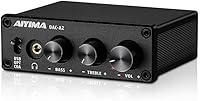
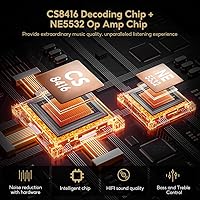
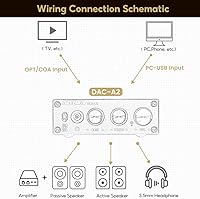
The AIYIMA DAC-A2 is a compact desktop DAC and headphone amplifier that arrived in late 2018 and has quietly held its ground as a practical entry point for anyone tired of their motherboard's mediocre audio output. Powered entirely over USB Type-C at 5V, it needs no wall adapter — just plug it into a spare port and you are running. It accepts three digital inputs: PC-USB, optical TOSLINK, and coaxial S/PDIF, which gives it more flexibility than many rivals at this price. The chipset pairing of SA9023, CS8416, and NE5532 handles decoding and analog output duties. This is not an audiophile-grade device, but that is not the point — it is a sensible budget-friendly upgrade for the casual listener.

Features & Benefits

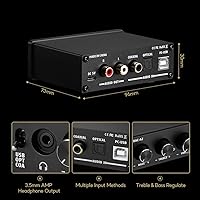
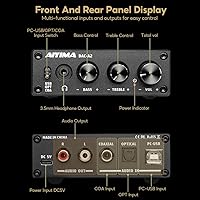
What makes this desktop DAC-amp stand out at its price point is the inclusion of bass and treble controls, something a lot of competing units simply skip. The adjustment range of ±6dB is modest but genuinely useful — enough to take the edge off bright headphones or add warmth to leaner-sounding cans without opening any software. On the output side, you get both a 3.5mm headphone jack and RCA line-out, so connecting powered speakers is straightforward. The headphone amp section handles impedances from 16 to 200 ohms, delivering up to 100mW into a 32-ohm load. The optical and coaxial inputs support 24-bit/192kHz, while USB tops out at 24-bit/96kHz — worth noting if high-res streaming is a priority.

Best For

This little DAC makes the most sense for PC and Mac desktop users who are genuinely fed up with hiss, interference, or the flat lifeless sound that tends to come from integrated audio. If your headphones sit somewhere in the 32 to 150-ohm range — think popular dynamic cans rather than demanding planar magnetics — the onboard amp will drive them confidently. The RCA output is a real bonus for anyone with powered bookshelf speakers who wants a clean digital source without a bulky dedicated component. It also works well as a simple converter for TVs or disc players that output optical or coaxial but lack a headphone stage entirely.

User Feedback

The consensus among buyers is broadly positive, with most pointing to a noticeable improvement in clarity over onboard PC audio right out of the box. The tone controls get particular appreciation — people seem to genuinely use them rather than leaving them flat, which says something. On the downside, build quality is a recurring concern; the chassis feels light and plasticky, understandable at this price but worth knowing upfront. The AIYIMA unit ships with plug-and-play USB support across Windows, Mac, and Linux, eliminating driver headaches entirely. That said, a handful of buyers have reported channel imbalance or low-level noise on certain units, suggesting quality control is not perfectly consistent across every batch.

Pros

  • Three digital inputs — USB, optical, and coaxial — in a single compact unit is rare at this price.
  • Physical bass and treble controls let you shape the sound without touching any software.
  • Plug-and-play USB works on Windows, Mac, and Linux with zero driver installation needed.
  • The RCA line-out makes it easy to connect powered bookshelf speakers alongside headphones.
  • Optical and coaxial inputs support 24-bit/192kHz, covering most home audio sources comfortably.
  • Powered entirely over USB Type-C at 5V, so no separate wall adapter clutters your desk.
  • Most users report a clear, immediate improvement in clarity over integrated motherboard audio.
  • The AIYIMA DAC-A2 handles headphone impedances from 16 to 200 ohms, covering a wide range of popular cans.
  • Small footprint fits easily on a crowded desk or behind a monitor without claiming much space.
  • Tone controls receive consistent praise for sounding musical rather than harsh or over-processed.

Cons

  • USB input caps at 96kHz, which forces downsampling for hi-res audio streamed from a computer.
  • Plastic chassis feels noticeably lightweight and budget in hand, with knobs that have some wobble.
  • A meaningful number of buyers have reported channel imbalance or low-level noise on their unit.
  • No auto-detection between inputs means you can forget which source the unit was left on.
  • Headphone and RCA outputs are always active simultaneously, with no dedicated output selector switch.
  • Demanding headphones above 150 ohms may sound thin or dynamically limited at higher volumes.
  • Quality control inconsistency makes the occasional defective unit a real possibility worth factoring in.
  • Documentation in the box is sparse, leaving some first-time users confused during initial setup.

Ratings

The AIYIMA DAC-A2 has accumulated a meaningful body of real-world feedback since its release, and our AI rating system has processed verified global reviews — actively filtering out incentivized, bot-generated, and spam submissions — to produce the scores below. Each category reflects genuine buyer experiences, with both the highlights and the frustrations given equal weight. The result is an honest snapshot of where this desktop DAC-amp genuinely delivers and where it asks you to compromise.

Sound Clarity Improvement
83%
For anyone coming from integrated motherboard audio, the difference in clarity is immediately obvious. Background hiss drops, instruments separate more cleanly, and vocals stop sounding muddy. Most users describe it as the kind of upgrade that makes you wonder why you waited.
The improvement is real but has a ceiling. Listeners with higher-end headphones or a trained ear will notice the DAC stage is competent rather than exceptional, and some find the overall sound slightly sterile compared to pricier alternatives.
Tone Controls (Bass & Treble)
79%
21%
Having physical bass and treble knobs on a budget DAC-amp is genuinely unusual and buyers appreciate it. The ±6dB range is conservative enough to avoid making things sound broken, and many users rely on it daily to compensate for bright headphones or a bass-light listening environment.
The range, while tasteful, will feel limiting if you want more dramatic adjustments. A few users also report the controls introduce a very faint channel imbalance when set to extreme positions, which can be distracting at low volumes.
Input Versatility
86%
Three digital inputs — USB, optical TOSLINK, and coaxial S/PDIF — make this little DAC genuinely versatile for a single-box solution. Users regularly connect it to a PC for daily work, then switch to a TV optical output in the evening without any reconfiguration hassle.
Input switching is manual and there is no auto-detect, so you have to remember which input you left it on. The USB input also caps at 96kHz, which means it cannot pass high-resolution streams from services like Tidal Masters without downsampling.
Headphone Amplifier Performance
74%
26%
The TPA6120-based amp section handles popular dynamic headphones in the 32 to 150-ohm range without breaking a sweat. Users with everyday cans like the Audio-Technica ATH-M50x or Beyerdynamic DT 770 Pro (80-ohm version) report satisfying volume and decent control.
More demanding headphones, especially planar magnetics or high-impedance dynamics above 150 ohms, expose the amp's limitations. Output headroom is adequate but not generous, and some users pushing harder loads report a slight thinning of dynamics at higher volumes.
Build Quality & Materials
53%
47%
The chassis is compact and the overall layout is tidy, with knobs and ports positioned sensibly. For desk use where it sits undisturbed, the physical construction is functional enough and the unit does not feel like it will fail immediately.
The lightweight plastic shell attracts consistent criticism. It feels noticeably budget in hand, the knobs have some wobble, and the overall fit and finish sits well below what many buyers expect even at this price tier. It does not inspire long-term confidence.
Ease of Setup
91%
Plug-and-play USB works across Windows, Mac, and Linux without any driver installation, which buyers consistently praise. Getting audio out of it takes under two minutes from opening the box, and the simple front-panel controls mean there is no learning curve at all.
The included documentation is sparse, and the input selector labeling on the unit itself is small and easy to misread in dim lighting. New users occasionally spend a few minutes confused about which input position corresponds to which source.
RCA Line Output Quality
76%
24%
The 2.3V RCA output is strong enough to drive most powered bookshelf speakers to a satisfying level without needing a separate preamp. Users with speakers like the Edifier R1280T or Mackie CR3-X report clean, quiet output with no audible hiss at the speaker end.
The RCA output and the headphone output are active simultaneously, which some users find inconvenient when switching between speakers and headphones. There is no dedicated output selector, so you have to physically unplug whatever you are not using.
High-Resolution Audio Support
61%
39%
The optical and coaxial inputs genuinely accept 24-bit/192kHz signals, which is a legitimate spec at this price. Users feeding it from a Blu-ray player or a TV with an optical output can take advantage of the full resolution over those connections.
The USB input's 96kHz ceiling is a real limitation for PC-based hi-res audio fans. If your primary use case is streaming lossless audio from a computer, this cap will likely frustrate you, especially since competing units at similar prices have begun closing this gap.
Value for Money
82%
18%
Considering the three-input flexibility, the built-in headphone amp, and the tone controls, the asking price is hard to argue with for casual listeners. Most buyers feel they received more functionality per dollar than comparably priced single-input DACs or basic USB dongles.
The value proposition weakens if you factor in the quality control inconsistencies some buyers have experienced. Receiving a unit with channel imbalance or low-level noise and having to return it erodes the cost advantage, especially when shipping costs are considered.
Noise Floor & Signal Purity
71%
29%
Under normal conditions the noise floor is low enough that most users do not notice any background hiss through sensitive headphones. The rated SNR of 105dB holds up well in practice for casual listening at moderate volumes.
A subset of buyers reports audible hiss or low-frequency hum, particularly at low volumes with sensitive in-ear monitors. This appears to be a unit-to-unit variance issue rather than a universal flaw, but it is common enough in feedback to be worth flagging.
Portability & Footprint
78%
22%
The small footprint — under four inches long — means it tucks neatly behind a monitor or sits on a crowded desk without claiming too much real estate. Several users mention taking it between home and office regularly, which the USB-only power requirement makes practical.
At just under a pound, it is light enough that the cable tension from multiple connected inputs can shift it around the desk. Without rubber feet substantial enough to grip most surfaces firmly, it tends to creep unless you have a clean cable management setup.
OS & Driver Compatibility
88%
Driver-free operation on Windows, Mac, and Linux is a genuine quality-of-life feature that most buyers appreciate deeply. It shows up as a standard USB audio device instantly, and there are no companion apps or firmware updates to manage.
Windows occasionally re-routes system audio away from the unit after a reboot or sleep cycle, which is an OS-level behavior rather than a device fault but still generates user frustration. A handful of Linux users report needing to manually select the device in ALSA settings.
Frequency Response Accuracy
77%
23%
The 20Hz to 20kHz response within ±3dB means it covers the full audible range without obvious coloration at the extremes. Casual listeners will find the tonal balance reasonably neutral, which makes it a decent reference point for everyday music playback.
Critical listeners using measurement tools have noted a mild roll-off at the frequency extremes, particularly sub-bass below 30Hz. This is unlikely to matter for most popular music genres but can be noticeable with orchestral recordings or electronic music with deep sub-bass content.

Suitable for:

The AIYIMA DAC-A2 is a strong fit for everyday PC or Mac users who are genuinely frustrated by the hiss, interference, or flat sound coming out of their motherboard's headphone jack and want a tangible fix without spending a lot of money. If your headphones sit in the 32 to 150-ohm range — the kind of mid-impedance dynamic cans that most people own — the built-in amp will drive them with noticeably more control and volume headroom than onboard audio ever could. The addition of physical bass and treble knobs is a real differentiator here, since most competing units at this price point skip tone controls entirely, forcing you into software EQ workarounds. It also works well as a straightforward converter for anyone who has a TV, Blu-ray player, or disc transport with an optical or coaxial output and wants to route that signal to headphones or powered speakers at a desk. Home listeners who want a single box to handle both a headphone output and an RCA line-out for bookshelf speakers will find the dual-output design genuinely practical for everyday switching.

Not suitable for:

Buyers who primarily stream high-resolution audio from a computer should think carefully before purchasing, since the USB input on this desktop DAC-amp tops out at 24-bit/96kHz — a ceiling that will require downsampling if you subscribe to a lossless hi-res service and care about that distinction. Audiophiles or critical listeners who own demanding headphones, particularly planar magnetics or high-impedance dynamics above 150 ohms, will likely find the amplifier section underpowered and may feel the overall sound lacks the dynamics and resolution that more capable separates can provide. The build quality is another honest concern: the chassis is lightweight plastic and the knobs have some play to them, so anyone who values a premium tactile feel or expects a device to withstand heavy daily handling may be disappointed. It is also worth flagging that a portion of buyers have received units with channel imbalance or audible low-level noise, which means quality control is not airtight — if you are someone who finds the returns process stressful or costly, that inconsistency is a real risk to weigh up before buying.

Specifications

  • DAC Chipset: The digital-to-analog conversion is handled by a SA9023 USB receiver paired with a CS8416 S/PDIF receiver, delivering clean decoding across all three input types.
  • Amp Chipset: The headphone amplifier stage is built around a TPA6120 amplifier chip and an OP275 op-amp, a combination chosen for low noise and adequate current delivery to mid-impedance headphones.
  • Digital Inputs: Three selectable digital inputs are provided: PC-USB, optical TOSLINK, and coaxial S/PDIF, covering the most common consumer and desktop audio sources.
  • Analog Outputs: A 3.5mm stereo headphone jack and a pair of RCA stereo outputs are both available simultaneously, allowing headphones and powered speakers to be connected at the same time.
  • USB Resolution: The PC-USB input supports audio up to 24-bit at 96kHz, which covers CD-quality and standard streaming resolutions but falls short of full hi-res playback.
  • Optical & Coaxial Resolution: Both the optical TOSLINK and coaxial S/PDIF inputs support up to 24-bit at 192kHz, making them suitable for high-resolution sources such as Blu-ray players and modern TVs.
  • Headphone Impedance: The amplifier is rated to drive headphones with impedances ranging from 16Ω to 200Ω, covering most mainstream dynamic headphone models.
  • Output Power: Maximum headphone output power is 100mW into a 32Ω load, which is sufficient for efficient to moderately sensitive headphones at comfortable listening levels.
  • Signal-to-Noise Ratio: The unit is rated at 105dB SNR or better, indicating a low noise floor that should be inaudible through most headphones under normal listening conditions.
  • Distortion (THD): Total harmonic distortion is specified at 0.01%, a figure that indicates clean analog output with minimal audible coloration introduced by the amp stage.
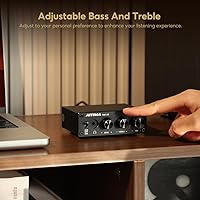
  • Tone Controls: Independent bass and treble rotary controls offer a ±6dB adjustment range, allowing listeners to tailor tonal balance without any software or external equalizer.
  • Frequency Response: The unit's frequency response is rated at 20Hz to 20kHz within ±3dB, covering the full range of human hearing without significant roll-off at either extreme.
  • RCA Output Level: The RCA line outputs deliver a nominal output level of 2.3V, which is strong enough to drive most powered speakers and external amplifiers without additional gain.
  • Power Supply: The unit runs on DC 5V supplied via a USB Type-C port, meaning it can be powered directly from a computer USB port or any standard USB charger — no dedicated power brick required.
  • OS Compatibility: The USB audio interface operates in class-compliant mode, meaning it works on Windows, macOS, and Linux without requiring any driver installation.
  • Dimensions: The unit measures 3.86″ in length by 2.89″ in width, giving it a small desktop footprint that fits easily on a crowded work surface.
  • Weight: The unit weighs 14.8 ounces, reflecting its compact plastic construction and making it light enough to reposition or transport between locations with minimal effort.

Related Reviews
FX-Audio DAC-X6
FX-Audio DAC-X6
78%
83%
Audio Quality
79%
Headphone Amplifier Power
81%
Build Quality
88%
Input Versatility
61%
USB Audio Resolution
More
Topping E50 MQA DAC
Topping E50 MQA DAC
89%
94%
Sound Quality
88%
Ease of Use
90%
Build Quality
85%
Portability
92%
Power Supply Convenience
More
iFi Zen DAC V2
iFi Zen DAC V2
87%
93%
Sound Quality
89%
Build Quality
91%
Value for Money
88%
Connectivity Options
72%
Low Volume Imbalance
More
Slash6 LDAC Bluetooth DAC
88%
92%
Audio Quality
85%
Wireless Connectivity
89%
Build Quality
88%
Compatibility with Devices
90%
Setup and Ease of Use
More
Topping D10s USB DAC
86%
94%
Sound Quality
85%
Ease of Setup
88%
Customization Options
90%
Compatibility
82%
Build Quality
More
FiiO BTR17
FiiO BTR17
81%
93%
Sound Quality
91%
Amplifier Power & Output
88%
Bluetooth Codec Support
89%
Versatility & Multi-Mode Operation
79%
Parametric EQ & App Control
More
AIYIMA T3 PRO Phono Preamp
87%
88%
Sound Quality
91%
Build Quality
85%
Ease of Use
90%
Setup & Installation
89%
Gain Control Functionality
More
Audioengine A2+
Audioengine A2+
79%
91%
Sound Quality
93%
Build Quality
84%
Bluetooth Performance
76%
Value for Money
88%
Connectivity & Inputs
More
iFi uno DAC & Headphone AMP
85%
91%
Sound Quality
89%
Value for Money
87%
Portability
82%
Setup & Installation
88%
Build Quality
More
FiiO K7
FiiO K7
84%
93%
Sound Transparency
91%
Amplifier Power
89%
Connectivity & Inputs
92%
Value for Money
78%
Build Quality
More

FAQ

No, the AIYIMA DAC-A2 uses a standard USB audio class protocol, so Windows, macOS, and most Linux distributions recognize it automatically as a sound output device. Just plug it in and select it as your audio output in your system settings — there is nothing to download or install.

Yes, the 3.5mm headphone output and the RCA outputs are both active simultaneously. However, there is no software or hardware switch to mute one while using the other, so if you want exclusive headphone use you will need to unplug the speakers, or vice versa.

Absolutely. Connect a standard TOSLINK optical cable from your TV to the optical input on the back of the unit, select the optical input using the front selector switch, and you can route your TV audio directly to headphones or powered speakers.

The unit is rated up to 200 ohms, so 250-ohm headphones sit right at the edge of its design envelope. You may find the maximum volume is adequate for some listeners but not for those who prefer louder levels, and the dynamics may feel slightly compressed. For high-impedance headphones like the Beyerdynamic DT 990 Pro 250-ohm edition, a more powerful dedicated amp would be a safer long-term choice.

Yes, the RCA outputs work well as a line-level source for any stereo amplifier or AV receiver with RCA inputs. The 2.3V output level is standard, so it should integrate cleanly with most home audio equipment without any impedance mismatch issues.

A small number of buyers have reported this, and it does appear to be a quality control variance rather than a universal characteristic of the design. Some units are quiet and clean right out of the box, while others exhibit low-level hiss or hum, particularly through sensitive in-ear monitors. If noise is present and bothersome, it is worth requesting a replacement, as working units tend not to have this issue.

No, this little DAC is a wired-only device. It accepts digital audio over USB, optical TOSLINK, or coaxial S/PDIF — there is no Bluetooth receiver or wireless functionality of any kind built in.

Partially. The USB input maxes out at 24-bit/96kHz, so any hi-res track encoded above that — such as 24-bit/192kHz content — will be downsampled by your computer before being sent to the unit. If your hi-res listening is primarily via optical or coaxial from an external transport, those inputs handle up to 192kHz without issue.

Most users describe them as subtle and musical rather than dramatic. The ±6dB range keeps adjustments from sounding unnatural, and the controls are particularly useful for compensating if your headphones lean too bright or too thin. Do not expect the kind of heavy-handed EQ you get from a graphic equalizer — these are gentle tilts rather than scoops.

The unit runs on 5V DC supplied through a USB Type-C port, so any USB charger or computer USB port that can deliver a stable 5V will work. A standard phone charger on your desk is a perfectly valid power source, which is one of the more practical conveniences of this design.