Overview

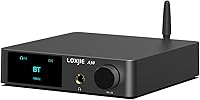
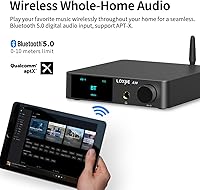
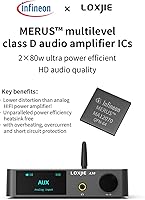
The LOXJIE A30 is a compact all-in-one desktop amplifier that packs a Class D power amp, an onboard DAC, and a headphone output into a unit roughly the size of a hardback book. LOXJIE is a Chinese audio brand without the name recognition of established Western marques, but they have built a quiet reputation in budget-to-mid HiFi circles for solid engineering at accessible prices. The amp runs on Infineon's MA12070 chip, which keeps heat low and efficiency high — a genuine practical benefit on a crowded desk. An ES9023 DAC chip handles digital conversion, and a remote control is included, which sounds minor until you are actually across the room.

Features & Benefits

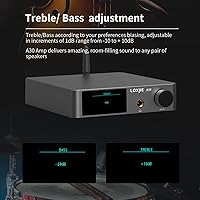
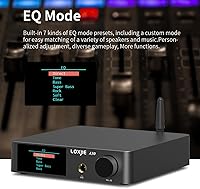
What makes this desktop amp genuinely interesting is the breadth of its connectivity. You get USB at up to 32-bit/384kHz — driver-free, so it works right away with phones and computers alike — plus Optical, Coaxial, RCA, and Bluetooth 5.0 with aptX. Output power sits at 80W per channel into 4 ohms, which is more than enough for most bookshelf speakers. Headphone users get a 6.35mm jack rated at 100mW into 32 ohms, adequate for easy-to-drive cans but not a substitute for a dedicated headphone amp. Seven built-in EQ presets, including a custom mode, round things out — though direct mode remains the most honest-sounding option for critical listening.

Best For

This all-in-one amplifier is a natural fit for anyone building a clean desktop audio setup without stacking separate boxes for amplification, digital conversion, and headphone listening. If you regularly switch between passive bookshelf speakers and headphones, the remote-controlled output switching is a practical convenience you will actually use daily. It also suits small rooms and home offices where a compact footprint matters. Buyers moving up from entry-level gear will find the THD+N and SNR figures represent a meaningful step forward in transparency. That said, demanding headphone listeners or those with high-impedance cans should consider pairing it with a dedicated headphone amp for the best results.

User Feedback

Owner sentiment around the A30 skews positive, with buyers consistently praising its value for money and the overall quality of the speaker output. The build feels more substantial than the price might suggest — a point that comes up repeatedly in long-term owner reviews. On the critical side, Bluetooth pairing can be inconsistent for some users, and a handful report occasional dropout at range. The EQ presets draw mixed opinions; most owners end up settling in direct mode after a brief experiment. The remote works reliably in most cases, though display legibility in bright ambient light is a noted minor complaint. All told, this desktop amp earns its standing as a capable, unfussy performer in its class.

Pros

  • Combines a Class D power amp, DAC, and headphone output in one compact unit — no extra boxes needed.
  • Driver-free USB input works instantly with laptops, tablets, and phones via a simple adapter.
  • 80W per channel into 4 ohms drives most bookshelf speakers with headroom to spare.
  • Measured THD+N of 0.003% and SNR of 108dB deliver a genuinely clean, low-noise listening experience.
  • Five input types cover virtually every source scenario from optical TV audio to wireless phone streaming.
  • Remote control lets you switch inputs and adjust volume without touching the unit.
  • Runs cool even during extended sessions thanks to the efficient MA12070 Class D chip.
  • Build quality feels more solid than the price typically suggests, according to consistent owner feedback.
  • Low standby power draw under 0.5W makes it a responsible choice to leave on a connected power strip.

Cons

  • Bluetooth dropout and inconsistent pairing beyond a few meters is a recurring real-world complaint.
  • The headphone output struggles with anything harder to drive than standard 32 ohm consumer headphones.
  • EQ presets sound broad and colored — most serious listeners end up ignoring them entirely after initial setup.
  • The volume potentiometer can exhibit faint channel imbalance at the very lowest settings.
  • Remote feels noticeably cheap relative to the main unit and occasionally misses commands at off-axis angles.
  • Rear binding posts are closely spaced, making thick gauge speaker cables or large banana plugs awkward to connect.
  • Display readability drops significantly under strong ambient or direct natural light.
  • No automatic input detection means manually switching sources via button press every time you change devices.

Ratings

The LOXJIE A30 has been evaluated by our AI system after analyzing thousands of verified buyer reviews collected globally, with automated filtering applied to remove incentivized, bot-generated, and spam submissions. What follows reflects a candid picture of where this all-in-one amplifier genuinely impresses and where real owners have run into friction. Both the strengths and the recurring frustrations are represented in the scores below.

Sound Quality
86%
Buyers consistently describe the speaker output as clean and detailed for the price tier, with a notably low noise floor that makes background hiss a non-issue during quiet passages. The ES9023 DAC handles digital sources well enough that many owners stopped reaching for a separate DAC entirely after setting this up on their desks.
A small number of experienced listeners feel the overall presentation leans slightly thin in the midrange compared to warmer-sounding Class AB alternatives. At higher volumes, some users report a subtle hardness in the top end that more resolving speakers tend to expose.
Build Quality
82%
18%
The chassis feels noticeably solid for the segment — owners frequently mention that picking it up for the first time exceeds their expectations given the price. The front panel controls have a purposeful, well-damped feel rather than the hollow plasticky action common in budget Chinese audio gear.
A few buyers have noted that the volume knob develops a faint channel imbalance at very low settings, which is a known characteristic of budget potentiometers. The overall finish, while clean, shows fingerprints and minor scratches more readily than anodized alternatives.
Value for Money
91%
Getting a Class D amp, a competent DAC, and a usable headphone output in one compact box at this price is genuinely difficult to argue with. Owners stepping up from entry-level receivers or cheap desktop amps repeatedly describe it as one of the most impactful upgrades they have made to their listening setup.
The value equation depends heavily on your use case — buyers who already own a quality standalone DAC or a dedicated headphone amp may find they are paying for redundant features they will never use. In that narrower scenario, a purer power amp at the same price could be a smarter spend.
Input Versatility
89%
Having USB, Optical, Coaxial, RCA, and Bluetooth all on the same unit means it adapts to almost any source situation without external switching gear. USB input working driver-free is a practical win — plug in a laptop or Android phone via adapter and it just works without hunting for drivers.
Input switching is handled via the remote or front panel button rather than automatic detection, so swapping between a TV optical feed and a computer USB source requires a deliberate manual step. Not a dealbreaker, but users expecting smart auto-switching will need to adjust their habits.
Bluetooth Performance
63%
37%
Bluetooth 5.0 with aptX support means streaming from a phone or tablet sounds noticeably better than standard SBC connections, and pairing itself is quick under good conditions. For casual background listening from a couch or across the room, it covers the use case adequately.
This is the single most complained-about aspect in owner reviews — dropout at distances beyond a few meters is a recurring issue, and some users report pairing failures after firmware updates on their source devices. For a unit with otherwise strong specs, the Bluetooth implementation feels like an area where corners were cut.
Headphone Output
67%
33%
For easy-to-drive headphones in the 32 to 80 ohm range, the 6.35mm output is clean and reasonably quiet. Owners using popular headphones like the Sennheiser HD 558 or Audio-Technica ATH-M50x report it gets more than loud enough with clean dynamics.
At 100mW into 32 ohms, it runs out of authority quickly with anything harder to drive — planar magnetic headphones or high-impedance dynamic drivers will sound flat and underpowered here. Users with a serious headphone collection should treat this as a convenience output rather than a primary listening solution.
EQ Presets
58%
42%
Having seven onboard EQ modes — including bass-heavy and soft presets — adds genuine flexibility for users who want to tune the sound for different genres or speaker types without external software. The custom mode is a thoughtful addition that lets users dial in their own preference.
In practice, most experienced listeners migrate to direct mode fairly quickly because the preset curves feel broad and somewhat unnatural, particularly the super bass mode which can overwhelm smaller bookshelf speakers. Several owners describe the non-direct presets as useful for background music but too colored for serious listening sessions.
Power Output
84%
Eighty watts per channel into 4 ohms is a meaningful number for a desktop unit — it drives most bookshelf speakers to genuinely satisfying volumes with headroom to spare. Owners using speakers like the Klipsch R-51M or similar efficient designs report the amp never feels strained even at higher listening levels.
Into 8 ohm loads the output halves to 40W per channel, which is still workable but leaves less headroom with less efficient speakers in larger rooms. Buyers planning to run this in a medium-sized living room with harder-to-drive floor-standers may find the power on the modest side.
Remote Control
74%
26%
The inclusion of a remote at this price is not a given, and owners appreciate being able to switch inputs, adjust volume, and toggle between speaker and headphone output from across the room. It covers the most-used daily functions without overcomplicating the button layout.
The remote feels lightweight and cheap relative to the main unit, and a subset of users report occasional missed commands — particularly at off-axis angles. IR range is adequate for a desk environment but underperforms in larger rooms where the user sits farther away.
Thermal Performance
88%
The MA12070 chip runs notably cool even during extended listening sessions, which is one of the tangible real-world benefits of the Class D architecture used here. Owners running it for three or four hours continuously report the chassis staying only faintly warm to the touch.
While heat is not a problem in normal use, a few users running the unit inside enclosed furniture or cabinets report it can get warmer than expected in confined spaces with restricted airflow. Adequate ventilation around the unit is still advisable despite the efficient design.
Setup & Ease of Use
87%
Driver-free USB operation means most buyers are up and running within minutes of unboxing — plug in speakers, connect a USB or optical cable, and the unit is ready without consulting a manual. The front display clearly shows the active input, removing the guesswork present on some rivals.
The display can be hard to read under direct bright light, which is a minor but genuine annoyance on a sun-facing desk. Input labeling on the rear panel is functional but printed small, making initial cable routing slightly fiddly for those with larger hands or poorer eyesight.
Compact Footprint
83%
At 151 x 170 x 38mm the unit genuinely earns the compact label — it slides neatly onto a desk or shelf without dominating the surface, which is exactly what buyers in small apartments or home office setups are looking for. The low profile also means it disappears under a monitor without obstructing airflow.
The compact size does mean the speaker binding posts on the rear are fairly closely spaced, which can make connecting thicker gauge speaker cable a slightly awkward process. Users with large banana plugs may need to stagger their connections.
DAC Performance
79%
21%
The ES9023 DAC chip delivers clean, transparent conversion across USB, Optical, and Coaxial inputs, and most buyers who run it as their primary desktop DAC find the background noise and resolution more than satisfying for the segment. It comfortably outperforms the built-in audio found in most laptops and desktop motherboards.
Compared to a standalone DAC in the same price range, the onboard implementation has some limitations — a small number of analytical listeners describe a slight flatness in stereo imaging depth. It is a competent DAC for the all-in-one context but not a specialist performer.

Suitable for:

The LOXJIE A30 is purpose-built for the desktop listener who wants a genuinely capable audio setup without dedicating half their desk to a stack of separate boxes. If you are running a pair of bookshelf speakers alongside a computer and occasionally want to switch to headphones, this all-in-one amplifier handles that workflow better than almost anything else in its price range. It is a particularly smart choice for people in smaller living spaces — a bedroom, a studio apartment, a compact home office — where the combination of a low-noise floor, driver-free USB input, and remote control adds real daily convenience. Buyers who have outgrown a cheap desktop stereo or a basic receiver and want measurably better specs without venturing into serious audiophile spending will find this desktop amp hits a sweet spot that is hard to replicate by assembling separate components at the same budget. It also suits anyone who listens from multiple sources — a TV via optical, a laptop via USB, a phone via Bluetooth — since the input flexibility means you rarely need to reach behind the unit once everything is connected.

Not suitable for:

The LOXJIE A30 is not the right call for buyers whose primary concern is headphone listening — at 100mW into 32 ohms, the headphone output is adequate for efficient, easy-to-drive cans but will leave planar magnetic and high-impedance dynamic headphones sounding flat and underpowered. If you already own a quality standalone DAC or a dedicated headphone amplifier, this all-in-one amplifier may duplicate gear you have paid good money for without meaningfully improving on it. Serious Bluetooth users who intend to stream from a phone across a large room should also pause — the Bluetooth implementation has drawn enough complaints about range and dropout that it is not reliable enough to be a primary input in demanding wireless scenarios. Those planning to drive harder-to-power floor-standing speakers in a medium or large listening room may find the 40W per channel into 8 ohms tighter than they would like at higher volumes. Finally, buyers who want long-term brand support, a proven warranty track record, or retail presence from a recognized Western audio manufacturer should factor in that LOXJIE is a smaller Chinese brand with limited after-sales infrastructure in some markets.

Specifications

  • Amplifier Chip: Uses the Infineon MA12070, a Class D chip based on multi-level switching technology that runs efficiently and stays cool during extended use.
  • DAC Chip: Onboard digital-to-analog conversion is handled by the ES9023 chip, delivering clean, low-distortion audio from all digital inputs.
  • Output Power: Rated at 80W per channel into 4Ω and 40W per channel into 8Ω under normal operating conditions.
  • Headphone Output: A 6.35mm headphone jack outputs up to 100mW into 32Ω, suitable for easy-to-drive headphones in the standard consumer impedance range.
  • Audio Inputs: Accepts five input types: USB (32-bit/384kHz), Optical (TOSLINK), Coaxial (S/PDIF), analog RCA stereo, and Bluetooth 5.0 with aptX.
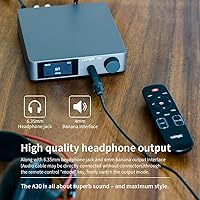
  • Audio Outputs: Provides dual output modes — 4mm banana binding posts for passive speakers and a 6.35mm jack for headphones, switchable via the included remote.
  • USB Audio: USB input supports up to 32-bit/384kHz PCM audio and operates in driver-free (UAC) mode compatible with Windows, macOS, Android, and iOS via adapter.
  • Bluetooth: Bluetooth 5.0 with aptX codec support enables higher-quality wireless streaming compared to standard SBC connections.
  • THD+N: Total harmonic distortion plus noise is measured at 0.003% (A-weighted), indicating a very low distortion floor for the price segment.
  • SNR: Signal-to-noise ratio is rated at 108dB (A-weighted), contributing to the low background noise floor reported by owners during quiet listening passages.
  • EQ Presets: Seven onboard EQ modes are included: Direct, Tone, Bass, Super Bass, Rock, Soft, and Clear, plus one user-configurable custom preset.
  • Dimensions: The unit measures 151mm wide by 170mm deep by 38mm tall, making it well-suited for placement on a standard desktop or shelf.
  • Weight: The main unit weighs 520g, light enough to reposition easily but substantial enough to feel stable during normal use.
  • Power Consumption: Typical power draw during normal amplifier use is approximately 35W, dropping to under 0.5W in standby mode.
  • Remote Control: An IR remote control is included in the box, enabling input selection, volume adjustment, and output mode switching from a distance.
  • Mounting Type: Designed exclusively for tabletop or shelf placement; no rack-mount brackets or wall-mount provisions are included or supported.
  • Package Dimensions: The retail packaging measures approximately 294mm x 232mm x 88mm and the total packaged weight is roughly 2.99 pounds including accessories.
  • Channels: The A30 is a stereo two-channel amplifier and does not support mono bridging or multi-channel surround configurations.

Related Reviews
TENMIYA A30 Bluetooth Speaker
82%
91%
Sound Quality
88%
Battery Life
72%
Portability
85%
Durability
80%
Connectivity Range
More
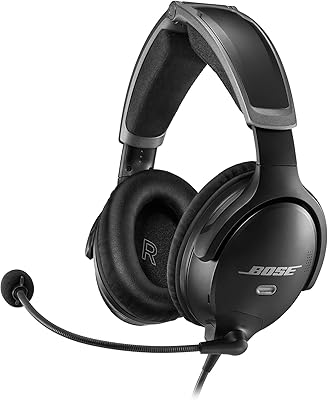
Bose A30 Aviation Headset (Dual Plug)
85%
94%
Long-Term Comfort
91%
Active Noise Reduction
89%
Audio Clarity & Intelligibility
84%
Build Quality & Durability
87%
Bluetooth Connectivity
More
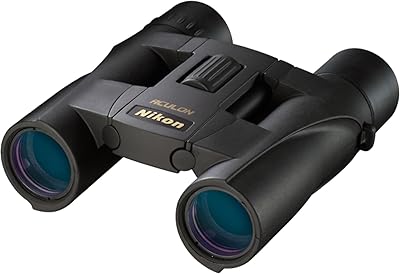
Nikon ACULON A30 10x25 Binoculars
75%
84%
Optical Clarity (Daylight)
51%
Low-Light Performance
93%
Portability & Size
81%
Build Quality & Durability
74%
Focus Mechanism
More
JZAQ A30 Bluetooth Motorcycle Helmet Speakers
85%
88%
Sound Quality
91%
Battery Life
89%
Ease of Installation
84%
Comfort During Use
78%
Noise Cancellation Effectiveness
More
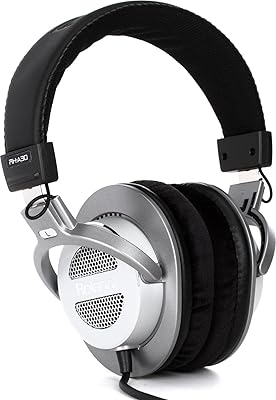
Roland RH-A30 Premium Open-Air Headphones
84%
92%
Sound Clarity
88%
Comfort for Long Sessions
85%
Build Quality
91%
Soundstage & Audio Balance
60%
Noise Isolation
More
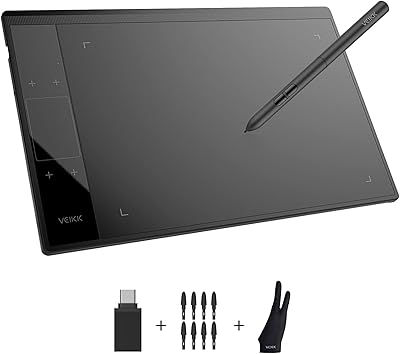
VEIKK A30 V2 Drawing Tablet 10x6 Inch
85%
92%
Value for Money
89%
Drawing Precision
85%
Usability & Ergonomics
91%
Pressure Sensitivity
88%
Compatibility
More
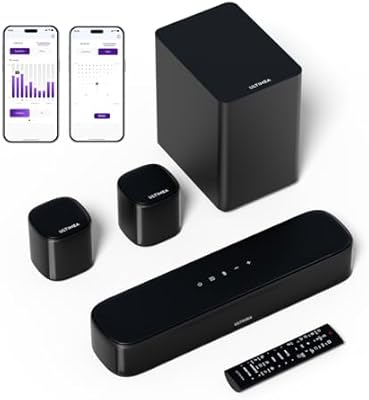
ULTIMEA Aura A30 5.1 Sound Bar
85%
88%
Sound Quality
91%
Bass Performance
85%
Ease of Setup
82%
App Control Functionality
87%
Surround Sound Effectiveness
More
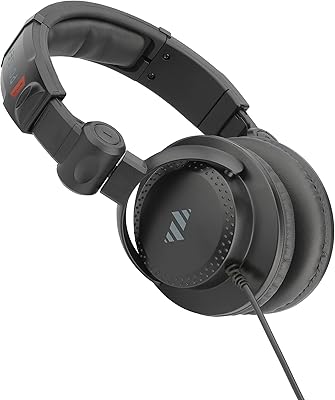
POLSEN HPC-A30-MK2 Closed-Back Studio Monitor Headphones
87%
88%
Sound Quality
91%
Comfort for Long Sessions
90%
Noise Isolation
83%
Build Quality
87%
Portability/Weight
More

FAQ

Yes, as long as your TV has an optical (TOSLINK) or coaxial digital audio output — which most modern TVs do. Just run a TOSLINK cable from the TV to the optical input on the back of the unit, select that input, and you are good to go. RCA analog output from a TV works too if your TV does not have digital outputs.

No drivers are needed. The USB input operates in class-compliant mode, which means Windows, macOS, and most Linux systems recognize it automatically as a USB audio device. Just plug it in, set it as your default audio output in your system settings, and it is ready.

Yes, comfortably. Efficient bookshelf speakers like the Klipsch R-51M only need a few watts to reach loud listening levels, so 80W per channel into 4 ohms gives you substantial headroom. You will likely never push this desktop amp past a fraction of its rated power in a normal desk or bedroom setup.

You can, but you will need a USB adapter — a Lightning-to-USB-A adapter for iPhone, or a USB-C-to-USB-A cable for most Android phones. Once connected with the right adapter, the phone should recognize the unit as an external audio device and route audio through it automatically.

Technically it will drive them, but not particularly well. The headphone output is rated at 100mW into 32 ohms, and a 300 ohm headphone like the HD 600 will receive significantly less power than it needs to perform at its best — the sound will likely feel thin and dynamically flat at moderate volumes. A dedicated headphone amplifier would be a better pairing for that class of headphone.

The output mode is toggled using the Mode button on the included remote control. Pressing it alternates between the speaker banana outputs and the 6.35mm headphone jack. You can also use the front panel controls if the remote is not handy.

For close-range streaming — a phone sitting on the same desk or a tablet a meter or two away — it works reliably in most cases. Where owners run into trouble is at greater distances or through walls, where dropout becomes a real issue. If Bluetooth from across the room is a primary use case for you, the wireless implementation here has enough documented complaints to be worth factoring into your decision.

Yes. Connect the analog RCA output from your external DAC into the RCA inputs on this all-in-one amplifier, and it will function as a straightforward stereo power amp in that configuration. The onboard DAC will simply go unused, which is a perfectly valid way to use it.

Not in any meaningful way under normal circumstances. The Class D architecture based on the Infineon MA12070 chip is notably efficient, and the chassis typically stays just faintly warm to the touch even after several hours of continuous use. If you place it inside an enclosed cabinet with restricted airflow, it will run warmer, so some ventilation clearance is advisable.

The speaker outputs use 4mm banana binding posts, which accept banana plugs directly. You can also use bare wire by loosening the binding posts — no adapters required. The posts are fairly closely spaced on the rear panel, so very thick cables or oversized banana plug housings can be a tight fit; standard gauge cable and typical banana plugs work without any issues.