Overview

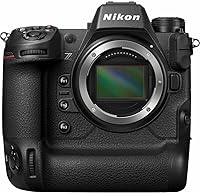
The Nikon Z9 Full-Frame Mirrorless Camera is Nikon's unambiguous answer to what a professional body should look like in the mirrorless era — no compromises, no apologies. Dropping the mechanical shutter entirely wasn't a marketing gesture; it removes a physical failure point and enables burst speeds that would otherwise be mechanically impossible. Realistically, this camera competes with the Sony A1 and Canon EOS R3, and buyers considering all three already know exactly what they're doing. This is a body-only purchase, so factor in compatible lenses, dual CFexpress cards, and a workflow built around large files. This review is about real-world usability, not spec recitation.
Features & Benefits

The Z9's stacked CMOS sensor isn't just a spec advantage — stacking the readout circuitry directly behind the pixel layer cuts read time so dramatically that you get full-resolution RAW at 20fps with zero viewfinder blackout and genuinely negligible rolling shutter at speed. The deep-learning AF handles nine subject categories simultaneously, and in practice it stays locked through partial obstructions and cluttered backgrounds in a way that feels almost stubborn. For video work, internal 8K/30p running for over two hours is practically useful rather than decorative, and 4K at 120fps gives you real slow-motion latitude. The High-Efficiency RAW format compresses files to roughly one-third standard RAW size with no visible quality penalty, which quietly changes how you think about storage and workflow costs.

Best For

Nikon's pro-tier mirrorless makes most sense for people whose livelihood depends on not missing the shot. Sports and wildlife photographers shooting sustained action will find the burst depth and tracking work in tandem in a way that feels almost anticipatory — whether you're covering a sprint finish or a bird of prey mid-stoop. Broadcast and hybrid teams can run a single body from 8K delivery all the way down to proxy dailies. Photojournalists get Ethernet and GPS built in, which matters when filing from a press box with no time to spare. Commercial and studio photographers will appreciate the resolution ceiling and tethering reliability. If you're a hobbyist or still building your Z-mount glass collection, there are better starting points.

User Feedback

This flagship mirrorless body holds a 4.4-star average, and the praise clusters around three things: AF tracking accuracy, a build that feels impervious to hard use, and battery life that lasts a full shooting day without anxiety. Nikon's post-launch firmware record has also earned real goodwill — significant updates added 8K RAW output and refined subject detection after release, something early adopters genuinely appreciate. The honest criticisms are worth noting: the body approaches three pounds before glass, CFexpress Type B cards add meaningful cost to ownership, and the Z-mount lens selection still doesn't match Sony's breadth. Reviewers switching from the Sony A1 or Canon R3 consistently flag that the switching cost — in money and relearned habits — is real and shouldn't be underestimated.

Pros

  • Autofocus tracking is among the most reliable available in any mirrorless body, holding locks through chaotic, fast-moving scenes.
  • Full-resolution RAW bursts with zero viewfinder blackout change how you approach fast action — react instead of anticipate.
  • Internal 8K recording for over two hours removes the need for an external recorder on most production jobs.
  • The build quality and weather sealing inspire genuine confidence in rain, dust, and freezing field conditions.
  • Battery life comfortably covers a full professional shooting day across most stills-heavy assignments.
  • Built-in Ethernet and GPS are practical, assignment-ready tools — not just connectivity checkboxes on a spec sheet.
  • Nikon has delivered significant post-launch firmware updates that meaningfully improved performance after purchase.
  • The High-Efficiency RAW format reduces file sizes dramatically without visible quality loss, easing storage and offload burden.
  • Dual CFexpress and XQD slot compatibility provides both future-proofing and a transition path for existing Nikon media.
  • Deep-learning subject detection across nine categories works across both stills and video without requiring menu changes mid-shoot.

Cons

  • At nearly three pounds body-only, extended handheld sessions cause real fatigue — particularly with heavy telephoto glass attached.
  • CFexpress Type B cards are expensive, and properly equipping two slots adds a significant hidden cost to ownership.
  • The Z-mount native lens ecosystem still trails Sony E-mount in third-party options, limiting glass flexibility.
  • Flash sync maxes out at 1/200 sec due to the all-electronic shutter, which affects studio strobe workflows.
  • Nikon's wireless transfer app has received mixed reliability feedback — wired tethering remains the more dependable option for studio work.
  • The LCD tilts but does not fully articulate, frustrating hybrid shooters who need flexible screen positioning for video.
  • Occasional subject misidentification in extremely cluttered frames has been reported by sports photographers in dense crowd situations.
  • Firmware updates, while generally positive, have occasionally altered AF behavior or menu logic in ways that disrupt established muscle memory.
  • 8K video recording generates enough heat and file volume to require deliberate planning — it is not a casual run-and-gun mode.
  • The total cost of entry — body, fast media, and professional Z-mount glass — is one of the highest in the mirrorless market today.

Ratings

The scores below for the Nikon Z9 Full-Frame Mirrorless Camera were generated by our AI system after analyzing verified purchase reviews from buyers worldwide, with spam, bot-submitted, and incentivized feedback actively filtered out. Each category reflects the genuine consensus of working professionals — sports shooters, photojournalists, and hybrid video crews — who put this body through real assignments. Both the standout strengths and the recurring frustrations are represented honestly, because buyers at this level deserve the full picture.
Autofocus Performance
96%
Reviewers across sports, wildlife, and event photography consistently describe the AF as the most reliable they have used in any mirrorless body. Subject detection locks onto moving targets — a sprinting athlete, a bird banking through tree cover — and holds with a tenacity that makes previously missed shots feel like a workflow problem solved. Firmware updates have only sharpened this further over time.
A small number of reviewers note that subject detection can occasionally misidentify the priority target in extremely cluttered frames, such as a scrum of players mid-tackle, briefly hunting before reacquiring. It is a rare edge case, but professional shooters in chaotic environments should be aware it exists.
Image Quality
94%
The 45.7MP stacked sensor delivers files with exceptional tonal depth and dynamic range, particularly in the shadows, where detail is recoverable well beyond what photographers accustomed to earlier Nikon bodies would expect. Commercial and studio shooters report that the Z9 comfortably handles large-format print and billboard-scale crops with no anxiety about resolution headroom.
At the very top of the expanded ISO range, luminance noise becomes noticeable enough that some photographers prefer to pull back and expose more conservatively than the camera technically allows. It is not a sensor weakness so much as a reminder that stacked CMOS still has a ceiling, and a handful of reviewers feel that ceiling arrives slightly earlier than on the Sony A1.
Burst Speed & Buffer
93%
Shooting full-resolution RAW at 20fps without viewfinder blackout genuinely changes how you approach fast action — you stop anticipating and start reacting, knowing the buffer and the system will keep up. Wildlife photographers covering unpredictable animal behavior describe this as the single most practically transformative feature of the Z9 over previous generations.
To sustain those burst rates without bottlenecking, you need fast CFexpress Type B cards, and the good ones add meaningful cost on top of an already substantial body price. Reviewers also note that offloading a full deep-burst session to a computer takes patience, even with a fast card reader — the High-Efficiency RAW format helps, but file management discipline becomes genuinely necessary.
Video Capabilities
91%
Internal 8K/30p for over two hours of continuous recording, combined with 4K at 120fps for real slow-motion work, makes the Z9 one of the few stills-first bodies that hybrid crews can deploy on paid video productions without compromise. ProRes 422 HQ recorded in-camera removes an entire external recorder from the kit bag, which matters on location.
Some hybrid shooters note that 8K recording produces heat and large file volumes that require deliberate workflow planning — this is not a run-and-gun video tool in the same casual sense a smaller mirrorless might be. Rolling shutter, while greatly reduced by the stacked readout, is still detectable in rapid panning 8K shots and is worth testing for use cases that demand it.
Build Quality & Weather Sealing
97%
The magnesium alloy construction and weather sealing earn near-universal praise from professionals who have used the Z9 in rain, dust, and freezing conditions without a single failure to report. Photojournalists covering outdoor events describe the body as confidence-inspiring in a way that lets them focus entirely on the story rather than protecting the gear.
The exceptional build contributes directly to the substantial weight — nearly three pounds before attaching glass — and after a long day shooting on the sidelines or in the field, that mass accumulates. A small number of reviewers specifically mention wrist and shoulder fatigue on extended shoots as a genuine ergonomic trade-off for the durability.
Electronic Viewfinder
88%
The 0.8x EVF is large and bright, and the blackout-free shooting experience it enables during bursts is something reviewers consistently single out as transformative for action work. Seeing exactly what the sensor sees in real time — including exposure preview — helps photographers nail settings faster in changing light without test shots.
In extremely bright outdoor conditions, some reviewers report that the EVF can feel slightly dimmer than they would prefer, requiring eye socket contact to shade the eyepiece. A few photographers switching from optical viewfinder bodies also mention an adjustment period before the EVF feels as instinctive during fast panning.
Battery Life
92%
The EN-EL18d battery is a legitimate full-day solution for most professional scenarios — sports shooters covering a double-header and photojournalists on all-day assignments regularly report finishing the day with charge to spare. The included charger and the option to charge via USB-C in the field add flexibility that frequent travelers genuinely appreciate.
Heavy 8K video recording drains the battery considerably faster than stills work, and videographers planning extended shoots should budget for a spare. A small number of reviewers note that cold-weather shooting in sub-freezing temperatures reduces real-world capacity more noticeably than typical sports mirrorless bodies in this class.
Connectivity & Workflow Integration
89%
Built-in Ethernet is a feature that photojournalists filing from press areas — where Wi-Fi is congested and speed is critical — describe as genuinely important rather than merely convenient. Integrated GPS eliminates the need for a separate geotagger, and the combination of Bluetooth, Wi-Fi, and Ethernet means the Z9 fits naturally into almost any professional filing workflow.
Nikon's companion app for wireless transfer has received mixed reviews for stability and transfer speed compared to tethering software from competitors, and a handful of studio photographers note that the wireless workflow feels less polished than the hardware deserves. USB tethering works solidly, but the cable management clip is a small detail that reviewers either love or find fiddly.
Handling & Ergonomics
83%
The grip is deep and secure, and professionals who shoot with heavy telephoto lenses report that the balance is excellent — the body feels intentionally designed to carry substantial glass without wrist strain during active tracking. Button layout earns praise for being logical and customizable, with dedicated controls that experienced Nikon shooters adapt to quickly.
The overall size and weight mean the Z9 is not a body you carry casually — it demands a serious bag and a deliberate decision to bring it. Photographers coming from smaller mirrorless systems, or those who shoot in tight spaces like theater pits or crowded press areas, note that the footprint is a real consideration.
Lens Ecosystem Depth
72%
28%
The Nikon Z-mount native selection covers the professional essentials well, including fast primes and pro-grade zooms across the focal length range that matters most to working photographers. The FTZ adapter also makes the extensive F-mount back-catalog usable, which mitigates the transition cost for long-term Nikon shooters considerably.
Compared to Sony's E-mount, the Z-mount native lineup is still catching up in terms of third-party lens options, and photographers who rely on specialized or budget-tier glass from Sigma or Tamron will find fewer choices today. Reviewers switching from Sony specifically cite lens selection as the most significant hesitation when recommending the Z9 over the A1.
Storage Media Costs
61%
39%
Dual CFexpress Type B and XQD slots provide the read and write speeds the Z9 needs to function without bottlenecking at high burst rates, and the backward compatibility with XQD gives existing Nikon professionals a transition path without immediately replacing all their media.
CFexpress Type B cards remain expensive relative to SD cards used by competing bodies, and outfitting the Z9 with two fast cards of meaningful capacity adds a visible line item to total ownership cost. Reviewers who were previously shooting with SD-slot bodies consistently flag media costs as an underappreciated expense when first budgeting for this system.
Firmware & Post-Launch Support
93%
Nikon's commitment to post-launch firmware has been a genuine differentiator for the Z9 — major updates added 8K RAW output, refined subject detection, and performance improvements that meaningfully changed the camera after purchase. Reviewers who bought early describe the body as having gotten measurably better over time, which is unusual and earns considerable loyalty.
Not all firmware updates have been universally welcomed — a handful of reviewers note that certain updates changed menu behaviors or AF response curves in ways that required relearning established settings. For professionals mid-assignment, unexpected behavioral changes after a firmware update can be disruptive, and a more robust change-log communication from Nikon would help.
Value for Money
78%
22%
For professional photographers whose livelihood depends on capturing critical moments reliably, the Z9 justifies its position at the top of the market — the combination of burst depth, AF accuracy, and video capability in one body can replace what previously required multiple specialized tools. Frequent users describe the cost-per-shot and per-assignment value as genuinely competitive at a professional billing rate.
For anyone without a clear professional use case, the price is difficult to rationalize — the gap between this body and the next tier down is substantial, and the performance delta only manifests in scenarios that demand it. Reviewers who acknowledge buyer's remorse almost always trace it back to overestimating how often they would actually push the system to its limits.
High-Efficiency RAW Format
84%
Photographers who have adopted the compressed RAW format describe it as quietly transformative for storage costs and offload times — getting files down to roughly a third of uncompressed RAW size with no visible quality loss in print or screen delivery is a practical workflow win at high volume.
Some photographers remain cautious about the compressed format for archival purposes, preferring uncompressed RAW when the assignment demands maximum future flexibility. A small number of reviewers also note that not all third-party software pipelines support the High-Efficiency format natively yet, occasionally requiring an extra conversion step.
Display Quality
79%
21%
The tilting LCD is responsive and sharp enough for accurate image review and basic video monitoring, and the tilting mechanism is praised by photographers who shoot from low angles or above crowd lines where a fixed screen would be unusable. Touchscreen responsiveness in menus is smooth and reduces the time spent navigating settings mid-shoot.
The screen is not fully articulating, which frustrates hybrid shooters who are accustomed to vlogging-style flip screens or who shoot vertical video from unusual angles. In direct sunlight, maximum brightness is adequate but not exceptional compared to some competing bodies, and a few video-focused reviewers note they reach for an external monitor regardless.

Suitable for:

The Nikon Z9 Full-Frame Mirrorless Camera was built for professionals who cannot afford to miss the shot and whose clients notice when they do. Sports photographers covering fast-moving action — sideline NFL shooters, track and field specialists, motorsport photographers — will find that the sustained burst depth and blackout-free tracking remove the guesswork that costs frames in other systems. Wildlife photographers stalking unpredictable subjects in variable light will appreciate how the deep-learning subject detection holds a lock through foliage, motion blur, and partial obstructions without constant manual intervention. Broadcast and hybrid production crews who need a single body capable of delivering 8K masters or broadcast-ready ProRes footage in-camera will find the Z9 genuinely replaces dedicated video rigs in many workflows. Photojournalists filing from the field will value the built-in GPS and Ethernet as practical tools rather than novelties — when you are filing from a press box on deadline, wired transfer reliability matters more than any spec on paper. Commercial and studio photographers who need the resolution ceiling for large-format print, billboard, or advertising work will also find the 45.7MP sensor gives them more than enough latitude to crop and deliver without compromise.
Not suitable for:

The Nikon Z9 Full-Frame Mirrorless Camera is a poor match for anyone who is still building their photography practice, exploring camera systems, or shooting primarily for personal enjoyment rather than professional output. At close to three pounds before you attach a lens, this body demands physical commitment on every shoot — casual travel photographers, street shooters who prioritize discretion, or anyone who wants a light kit for everyday carry will find the weight and bulk genuinely limiting rather than reassuring. Buyers not already invested in Nikon Z-mount glass face a compounded cost: body plus a professional lens lineup represents a significant total outlay, and the Z-mount native ecosystem, while solid at the professional tier, still does not match the depth of third-party options available for Sony E-mount. Studio photographers who rely on strobes at full sync speeds should also factor in the all-electronic shutter — the native flash sync tops out at 1/200 sec, and while high-speed sync is possible with compatible speedlights, photographers accustomed to focal-plane shutter flexibility may find the constraint a real workflow consideration. Anyone seriously evaluating the Sony A1 or Canon EOS R3 alongside this body should spend time honestly assessing their existing lens investments and studio workflow before committing, because switching costs at this tier are real and rarely recouped quickly.
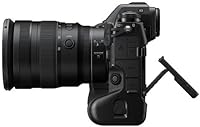
Specifications

  • Sensor: Full-frame (35mm) 45.7MP stacked CMOS sensor designed for high-speed readout with reduced rolling shutter and improved heat management during extended shooting.
  • Processor: EXPEED 7 image processor enables simultaneous high-resolution stills, deep-learning subject detection, and internal 8K video without thermal throttling under typical professional use.
  • Burst Rate: Captures full-resolution 45.7MP stills at up to 20fps in RAW or 30fps in JPEG, and 11MP stills at up to 120fps, all with continuous AF and AE active.
  • Autofocus: 493-point hybrid AF system with deep-learning subject detection covers nine categories including people, animals, and vehicles, operating across both stills and video modes without menu switching.
  • Shutter: Fully electronic shutter with a maximum speed of 1/32000 sec and a minimum of 900 seconds; there is no mechanical shutter, with flash sync limited to 1/200 sec.
  • Video: Records 8K/30p internally for over two hours, 4K/120p for slow motion, and 10-bit 4K/30p from oversampled 8K in ProRes 422 HQ or H.265 format directly to card.
  • ISO Range: Native ISO range runs from 64 to 25600, expandable to a minimum of 64 and a maximum of 102400 for low-light stills and video work.
  • Viewfinder: 0.8x magnification electronic viewfinder delivers a blackout-free shooting experience during bursts, with real-time exposure preview and subject tracking overlay.
  • Display: 3.2-inch tilting LCD touchscreen with 2,100,000-dot resolution supports touch-to-focus, menu navigation, and angle adjustment for low or overhead shooting positions.
  • Storage: Dual card slots accept CFexpress Type B and XQD media, supporting simultaneous backup, overflow, or RAW-plus-JPEG split recording workflows.
  • Connectivity: Built-in Ethernet (1000BASE-T), Wi-Fi, Bluetooth, GPS, HDMI output, and USB provide comprehensive studio tethering, field filing, and remote shooting options.
  • Image Stabilization: Dual image stabilization combines in-body sensor-shift with lens-based optical stabilization for compatible Z-mount lenses during handheld stills and video capture.
  • RAW Format: High-Efficiency RAW compresses files to approximately one-third the size of uncompressed RAW while retaining equivalent dynamic range and bit depth at 14-bit output.
  • Battery: EN-EL18d rechargeable lithium-ion battery is included alongside the MH-33 charger and EH-7p AC adapter, with USB charging also supported in the field.
  • Body Weight: Camera body weighs approximately 2.95 pounds (around 1340g) without lens, battery, or memory cards, reflecting the robust magnesium alloy construction and integrated vertical grip.
  • Lens Mount: Nikon Z bayonet mount is compatible with all native Z-mount lenses and supports F-mount lenses via the optional FTZ or FTZ II mount adapter.
  • Flash Support: Hot shoe accepts Nikon-compatible speedlights and studio triggers, with support for first-curtain sync, rear sync, slow sync, and red-eye reduction flash modes.
  • Aspect Ratios: Supports 3:2 (standard full-frame) and 16:9 aspect ratios for both stills and video, selectable in-camera without cropping the native sensor output.
  • Warranty: Covered by a one-year manufacturer warranty from Nikon USA, applicable to defects in materials and workmanship under normal professional use conditions.
  • In-Box Contents: Includes body cap, rubber eyecup, battery chamber cover, EN-EL18d battery, MH-33 charger, EH-7p AC adapter, UC-E24 USB cable, HDMI and USB cable clip, and neck strap.

Related Reviews
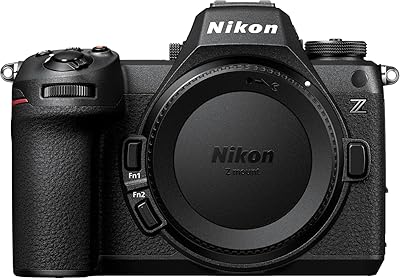
Nikon Z6 III
Nikon Z6 III
81%
96%
Video Capability
93%
Autofocus Performance
97%
Electronic Viewfinder
89%
Image Stabilization
41%
Card Slot Configuration
More
Canon EOS R6 Full-Frame Mirrorless Camera
79%
94%
Autofocus Performance
91%
Image Stabilization
89%
High ISO and Low-Light Quality
76%
Video Capabilities
88%
Burst Speed and Action Performance
More
Canon EOS RP
Canon EOS RP
74%
88%
Image Quality
83%
Autofocus Performance
93%
Portability & Form Factor
54%
Battery Life
61%
Video Capabilities
More
Panasonic LUMIX S5 Full Frame Mirrorless Camera
79%
93%
Video Quality
91%
Image Stabilization
67%
Autofocus Performance
88%
Low-Light / High ISO Performance
82%
Build Quality & Ergonomics
More
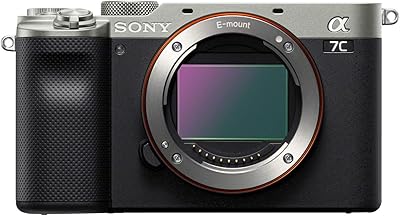
Sony a7R II Full-Frame Mirrorless Camera
85%
93%
Image Quality
91%
Autofocus Performance
89%
Video Quality (4K)
90%
Build Quality & Durability
78%
Ease of Use
More
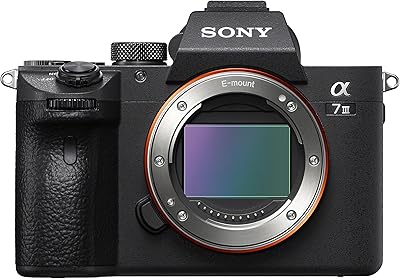
Sony a7 III
Sony a7 III
83%
93%
Autofocus Performance
91%
Low-Light & High-ISO Quality
92%
Image Quality & Dynamic Range
84%
Battery Life
81%
Video Capabilities
More
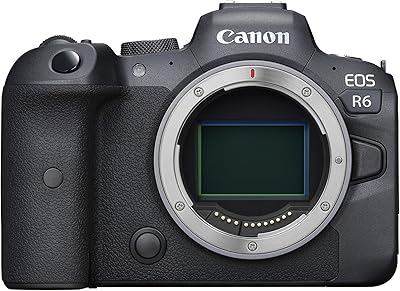
Sony Alpha 7C Full-Frame Mirrorless Camera
80%
93%
Autofocus Performance
91%
Image Quality
94%
Portability & Size
86%
Video Capability
62%
Battery Life
More
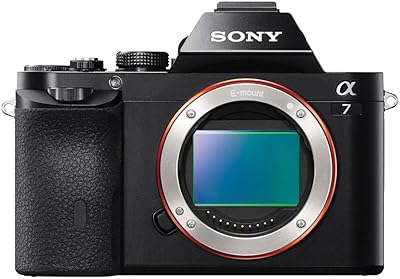
Sony a7 Full-Frame Mirrorless Camera Body
84%
91%
Image Quality
94%
Autofocus Performance
88%
Build Quality
72%
Battery Life
85%
Ease of Use
More
Sony Alpha a7R V
Sony Alpha a7R V
78%
97%
Image Quality
91%
Autofocus Performance
78%
Video Capabilities
88%
Autofocus Tracking Consistency
84%
Build Quality & Ergonomics
More
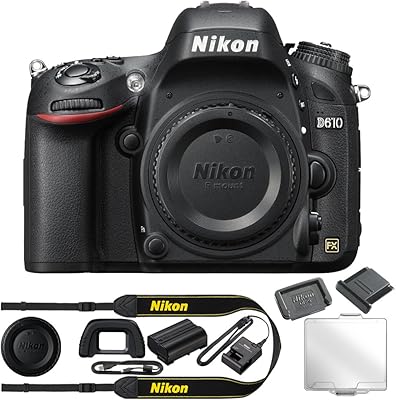
Sony Alpha 7R IV Full-Frame Mirrorless Camera
80%
97%
Image Quality & Resolution
91%
Autofocus Performance
94%
Dynamic Range
78%
Continuous Shooting Speed
83%
In-Body Image Stabilization
More
Sony ZV-E1
Sony ZV-E1
78%
94%
Video Quality
92%
Autofocus Reliability
91%
Image Stabilization
89%
Low-Light Performance
78%
Build Quality & Ergonomics
More

FAQ

Correct — the Nikon Z9 Full-Frame Mirrorless Camera eliminated the mechanical shutter entirely, relying exclusively on its electronic shutter. In practice, this works well for the vast majority of shooting scenarios. The main practical limitation is flash sync, which tops out at 1/200 sec with standard speedlights and studio strobes. High-speed sync is supported with compatible Nikon speedlights, but photographers who rely heavily on strobes at high ambient light levels should factor this into their workflow planning.

The Z9 uses CFexpress Type B cards, and it also accepts the older XQD format — so if you already have XQD cards from a previous Nikon body, those will work. That said, to get the full burst and write-speed performance the camera is capable of, fast CFexpress Type B cards are strongly recommended. Quality cards of meaningful capacity are a real additional expense, so budget for at least two before your first serious assignment.

For most fast-action scenarios, the deep-learning AF is impressively sticky — it picks up subjects quickly and holds lock through partial obstructions and background clutter better than most competing systems. In extremely dense, overlapping situations (a tight scrum, multiple birds crossing paths), there are occasional moments where the camera briefly hunts for the priority subject before reacquiring. It is an edge case rather than a consistent weakness, but sports professionals shooting in highly chaotic scenes should do their own testing before relying on it for critical assignments.

Nikon rates internal 8K recording at over two hours of continuous capture, and most users find this holds up in normal ambient temperatures. In very warm environments or under sustained studio lighting, some photographers report increased heat buildup that warrants monitoring. For multi-hour broadcast or event coverage, giving the camera periodic breaks between recordings is a sensible precaution regardless of the rated limit.

For professional focal lengths — fast primes, pro zooms, and telephoto options — the native Z-mount lineup is solid and genuinely competitive at the high end. Where it still lags behind Sony E-mount is in third-party depth: Sigma and Tamron have a much more extensive range for Sony at various price points, while Z-mount third-party support is still growing. If you rely heavily on specialized or mid-tier third-party glass, the ecosystem gap is a real consideration worth weighing alongside the switching cost of your existing Sony lenses.

In practical use — including large-format print, screen delivery, and heavy post-processing — the vast majority of photographers report no visible quality difference between High-Efficiency RAW and standard uncompressed RAW. The compression is lossless in perceptible terms, and the file size reduction to roughly one-third of standard RAW is a genuine workflow advantage at high volume. Some photographers still prefer to archive in standard RAW for maximum long-term flexibility, which is a reasonable precaution, but for delivery purposes the compressed format holds up extremely well.

Yes, with the optional FTZ or FTZ II mount adapter, F-mount lenses work on the Z9 with full autofocus support for most AF-S and AF-P lenses, and manual focus capability for older Nikon glass. AF performance with adapted lenses is generally reliable, though it will not match the speed and responsiveness of native Z-mount glass. If you have a substantial F-mount collection, the adapter is a very practical and cost-effective bridge while building your Z-mount lens lineup.

Battery life is consistently one of the most praised aspects of the Z9 among working photographers. The EN-EL18d is a large-capacity cell, and most users covering a full day of stills shooting — whether a double-header or a long wildlife session — report finishing with meaningful charge remaining. Heavy 8K video work drains the battery faster, so video-heavy productions should carry a spare. Cold weather also reduces real-world capacity noticeably, which is worth planning for if you shoot winter sports or outdoor events in low temperatures.

At nearly three pounds without a lens, the Z9 is a substantial piece of kit — attach a 400mm f/2.8 or a 70-200mm f/2.8 and you are carrying a serious load for an extended session. Most professional sports and wildlife photographers are accustomed to this category of body weight, and the deep grip helps distribute the load comfortably during active tracking. That said, if you are coming from a lighter mirrorless system, the difference is real and noticeable by the end of a long shooting day — investing in a solid strap or a monopod for extended sessions is genuinely worthwhile.

Nikon's post-launch firmware support for the Z9 has been unusually active and substantive — updates have added 8K RAW output, refined subject detection behavior, expanded video recording options, and addressed various user-reported performance issues. Early adopters have consistently noted that the camera they have today is meaningfully better than the one they received at launch, which is a strong signal about Nikon's commitment to the platform. It is worth checking Nikon's official firmware page periodically and reading the detailed change notes before updating, since some revisions do alter AF tuning or menu behavior in ways that affect established shooting habits.

Where to Buy