Overview

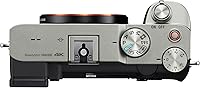
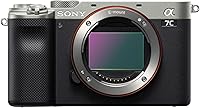
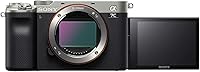
The Sony Alpha 7C Full-Frame Mirrorless Camera is the rare camera that makes you question why professional gear ever had to be heavy. Packaged into a body that barely tips the scale at one pound, this compact full-frame camera delivers the kind of image quality that used to demand a much larger bag. The 24.2MP sensor shares its DNA with Sony's higher-end Alpha lineup, so you're not trading capability for portability. The silver finish gives it a distinctly retro personality — less intimidating on the street, more stylish at a dinner table. Paired with the included 28-60mm kit lens, the whole package fits comfortably in a small shoulder bag.
Features & Benefits

What separates this mirrorless body from smaller-sensor alternatives isn't just resolution — it's how the sensor performs when light gets scarce. The 24.2MP back-illuminated chip handles high-ISO shooting with impressive restraint, and with 15 stops of dynamic range and 14-bit RAW files, there's real latitude for editing in post. The Eye AF system tracks subjects with the kind of reliability that makes spontaneous portraits feel effortless. In-body stabilization means handheld video stays steady without a gimbal. The articulating touchscreen is genuinely useful — flip it out for low-angle shots or vlogging, and suddenly tricky compositions become trivial. 4K video pulls from the full sensor width, with no cropping involved.

Best For

The Sony A7C punches above its weight for a specific type of shooter — the person who refuses to compromise on image quality but also refuses to check a bag on every flight. Travel photographers will get the most out of it, but it's equally at home in the hands of vloggers who want a capable, low-profile setup. Sony E-mount shooters upgrading from APS-C will find the transition nearly painless; all existing lenses carry over, though the crop factor disappears. Street photographers appreciate how unobtrusive it looks compared to a traditional pro body. Portrait and event shooters will lean on the Eye AF heavily, and for good reason — it locks on fast and stays there.

User Feedback

Among owners, the autofocus and Eye AF tracking draw consistent praise — people genuinely trust it in fast-moving situations. The compact size gets mentioned repeatedly, particularly by users who switched from bulkier systems. That said, the single memory card slot is a real sticking point for working professionals who rely on in-camera backup. Buffer depth during rapid burst sequences also frustrates action shooters expecting more headroom. The viewfinder feels slightly cramped by full-frame standards. Battery life is adequate for a half-day of casual shooting but falls short on demanding full-day outings without a spare. Despite those tradeoffs, overall reception skews strongly positive — buyers note that full-frame performance in a body this size is genuinely hard to argue with.

Pros

  • Full-frame image quality packed into one of the lightest mirrorless bodies on the market today.
  • Eye AF tracking is fast, reliable, and works impressively well on both humans and animals.
  • 5-axis in-body stabilization keeps handheld shots and video footage sharp without needing extra gear.
  • 4K video uses the full sensor width — no crop, no compromise on field of view.
  • The articulating touchscreen is practical and well-implemented, especially for solo vloggers.
  • 24.2MP back-illuminated sensor handles low-light situations with noticeably clean results.
  • Existing Sony E-mount lenses work without any compatibility headaches, making upgrades straightforward.
  • Wireless connectivity via Bluetooth and Wi-Fi makes transferring files to a phone or tablet genuinely quick.
  • The retro-inspired silver finish makes this compact full-frame camera look distinctive and far less intimidating in public.
  • 14-bit uncompressed RAW files give editors real flexibility in post-processing, especially in high-contrast scenes.

Cons

  • Only one memory card slot — no in-camera redundancy for professional or backup-critical shooting situations.
  • Buffer depth runs out faster than expected during sustained high-speed burst sequences.
  • Battery life is adequate for casual outings but demands a spare on any serious full-day shoot.
  • The electronic viewfinder magnification is noticeably small by full-frame camera standards.
  • The body grip is shallow, which can feel uncomfortable for photographers with larger hands during long sessions.
  • The included kit lens, while convenient, is not sharp enough at the edges to satisfy demanding technical work.
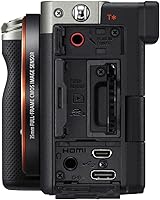
  • Micro-HDMI output is fragile and less practical than full-size HDMI for studio or desk-based video setups.
  • No weather sealing means this mirrorless body needs extra caution in rain, dust, or humid environments.
  • Menu system inherits Sony's traditionally steep learning curve, which can frustrate newcomers for weeks.

Ratings

The scores below reflect an AI-driven analysis of verified global owner reviews for the Sony Alpha 7C Full-Frame Mirrorless Camera, with spam, incentivized, and bot-generated feedback actively filtered out before scoring. Each category is evaluated on real-world usage patterns reported by buyers across travel, portrait, street, and video applications. Both the strengths that make this camera genuinely compelling and the friction points that frustrate certain users are transparently represented in every score.

Autofocus Performance
93%
Eye AF is the most consistently praised feature across owner reviews — users report that locking onto a subject's eye, even during unpredictable movement, happens almost instantly. Portrait and event photographers describe the confidence of knowing the camera will track correctly without manual intervention, which changes how they approach shooting situations entirely.
A small subset of users note occasional hunting in very low contrast or backlit scenes, where the system can briefly lose its lock. Animal Eye AF, while functional, receives slightly less consistent praise than its human-tracking counterpart.
Image Quality
91%
Owners repeatedly describe being surprised by how much latitude the RAW files offer in post-processing, particularly in high-contrast outdoor scenes. The 15-stop dynamic range means recovering shadow and highlight detail in Lightroom or Capture One feels genuinely forgiving compared to older or smaller-sensor alternatives.
At the extreme end of the expanded ISO range — beyond 51,200 — noise becomes more intrusive and fine detail starts to soften noticeably. For the majority of real-world shooting this is not a practical concern, but it is worth knowing the ceiling.
Portability & Size
94%
This is consistently the category owners rave about most. Travelers describe fitting the camera and kit lens into a small shoulder bag or even a large jacket pocket, which changes how frequently they actually bring the camera out. The roughly one-pound body weight rarely comes up as a burden even after hours of carry.
The compact dimensions are a double-edged situation for photographers with larger hands — several reviewers describe fatigue or mild discomfort during extended handheld sessions where a deeper grip would have helped. An add-on grip accessory partially addresses this, but it adds bulk that undermines the original appeal.
Video Capability
86%
The uncropped 4K output is a genuine advantage for vloggers and hybrid shooters who need to retain their full field of view — particularly when using wide lenses. Combined with the articulating screen and reliable Eye AF during recording, this camera handles solo content creation workflows more naturally than many competitors at a similar size.
Extended 4K recording sessions in warm conditions can trigger thermal warnings, which disrupts longer takes. Additionally, the Micro-HDMI port is a frustration for users wanting a cleaner desk or studio setup, as the connector feels fragile and full-size HDMI cables are far more practical.
Battery Life
62%
38%
Under light shooting conditions — a few hours of walking and occasional bursts — a single charge gets most casual users through a half-day outing without anxiety. The NP-FZ100 battery is also used across multiple Sony Alpha bodies, making it easy to share or stock spares if you already own other Sony cameras.
Serious all-day shooters consistently flag this as a real limitation. With the LCD open, Wi-Fi active, and regular video recording in the mix, the rated 680-shot estimate becomes optimistic quickly. Most experienced owners carry a minimum of two batteries on any full-day outing, which is an extra cost and planning step that feels unnecessary at this price point.
Build Quality & Ergonomics
74%
26%
The body feels solid and well-assembled in hand — materials and tolerances give it a premium feel that matches expectations for the price tier. The button layout is logical for anyone already familiar with Sony Alpha cameras, and the articulating screen hinge feels durable even after repeated use.
The absence of any weather sealing is a notable gap, especially for outdoor-focused buyers who assumed a camera at this level would handle light rain or dust. The shallow grip is the other consistent ergonomic complaint — it is genuinely fine for smaller hands but becomes a real comfort issue for longer sessions with heavier lenses attached.
Autofocus in Video
84%
Real-time Eye AF during video capture is one of those features that owners only fully appreciate once they have relied on it in practice — interviews, run-and-gun documentary work, and talking-head vlogs all benefit from the camera staying locked without requiring manual correction. The transition between subjects is smooth enough for most casual to semi-professional use cases.
In complex scenes with multiple people or fast lateral movement, the AF occasionally shifts to the wrong subject or hunts briefly before reacquiring. For scripted or controlled video environments this is rarely a problem, but unpredictable documentary-style situations can expose the occasional lapse.
Low-Light Performance
88%
Indoor available-light shooting and evening street photography fall comfortably within what this mirrorless body handles well. Multiple owners describe using it at social events and in restaurants without flash and coming away with usable, clean results — a scenario where smaller-sensor cameras would have struggled visibly.
Beyond ISO 12,800, some users report that color accuracy and fine detail begin to soften in ways that require more aggressive noise reduction in post. It remains one of the stronger performers in its size class, but it does not quite match the very best full-frame sensors available from competing brands at higher price points.
Viewfinder Quality
67%
33%
The electronic viewfinder is functional and responsive, with low enough lag to be usable for most stills shooting. For users coming from entry-level APS-C cameras or smartphones, it will feel like a genuine upgrade in both clarity and shooting confidence.
Photographers stepping down from larger Alpha bodies or competing full-frame cameras notice the smaller 0.59x magnification fairly quickly. Eyeglass wearers in particular report finding the smaller eyepiece tiring to use for extended periods, and the view feels cramped when composing complex scenes.
Kit Lens Quality
71%
29%
The 28-60mm f/4-5.6 is a competent starter lens that earns its place in the box — it is genuinely sharp in the center at mid-range focal lengths, and its compact collapsible design keeps the overall package small enough to fit in a large jacket pocket, which matters for the target buyer.
Edge sharpness and performance at wider apertures disappoint users with more demanding expectations. At f/4 to f/5.6, background separation is modest at best, and the lens is clearly not designed for low-light priority shooting — most owners planning serious portrait or event work will want to budget for a prime lens relatively quickly.
Wireless Connectivity
79%
21%
Bluetooth pairing for basic remote control and Wi-Fi transfer via Sony's Imaging Edge Mobile app work reliably for the majority of users who just need a practical way to move images to a phone quickly. Travel photographers particularly appreciate the ability to send selects wirelessly from a café rather than unpacking a laptop.
The app itself receives occasional criticism for being slower than expected during large batch transfers, and the interface feels less polished than competing manufacturer apps. Some users also report the Bluetooth connection dropping intermittently, requiring re-pairing more often than it should.
Value for Money
82%
18%
Owners who evaluate this camera purely on the combination of full-frame image quality, autofocus capability, and body size reach a consistent conclusion: there is nothing else offering this exact package at a comparable price. For the target buyer, the cost feels justified by the very specific problem it solves.
Budget-conscious buyers who compare it against APS-C alternatives will feel the price gap sharply, particularly given the single card slot and battery limitations. If your priorities do not specifically require a full-frame sensor in a compact body, the value argument weakens considerably.
Menu System & Usability
66%
34%
Experienced Sony users will feel at home immediately — the menu structure and custom button layout follow the same logic as the rest of the Alpha lineup. The touchscreen adds a practical shortcut for adjusting focus points quickly, which speeds up the learning curve for newcomers.
First-time Sony buyers consistently describe the menu system as overwhelming and counterintuitive during the first few weeks. Important settings are buried several layers deep, and the sheer number of options — many of which the average buyer will never use — makes initial setup feel more complicated than it needs to be.
Stabilization Effectiveness
87%
The 5-axis in-body stabilization is noticeably effective for handheld stills in dim interiors and during slow-paced video walking shots. Owners who previously relied on a tripod for indoor architecture or low-light still life work report being able to hand-hold at much slower shutter speeds than they expected.
During faster walking or movement, the IBIS compensates well but does not fully replace a gimbal for professional-grade video smoothness. A few users also note that stabilization effectiveness varies more than expected depending on which lens is attached, particularly with older or adapted optics that lack electronic communication with the body.

Suitable for:

The Sony Alpha 7C Full-Frame Mirrorless Camera was clearly designed with a specific kind of photographer in mind — one who wants full-frame results without the physical burden of a traditional professional body. Frequent travelers will find it hard to beat: the roughly one-pound body pairs with a compact 28-60mm kit lens and fits in a bag that won't slow you down at airport security. Content creators and vloggers will appreciate the articulating touchscreen and uncropped 4K video in a camera that doesn't look out of place on a desk or in a café. Sony E-mount shooters already invested in lenses will find the upgrade path from APS-C practically frictionless, since every lens they own carries over. Street and portrait photographers benefit from the discreet profile and the Eye AF system, which locks onto subjects quickly enough to catch candid moments without fuss.
Not suitable for:

Photographers who shoot high-volume events or sports professionally will likely run into the limits of the Sony Alpha 7C Full-Frame Mirrorless Camera fairly quickly. The single memory card slot is not a minor inconvenience — for anyone who relies on simultaneous backup as a professional safeguard, it is a genuine workflow problem. The buffer also has a relatively shallow ceiling during sustained burst shooting, which makes fast action sequences a frustrating experience. Users with larger hands may find the grip uncomfortably small during extended shooting sessions, and the 0.59x electronic viewfinder feels noticeably compact compared to what you get on larger full-frame bodies. If your work depends on consistent all-day battery performance without spare cells on hand, the roughly 680-shot battery rating will require careful management. Finally, buyers expecting a professional-grade optic in the box should know the included 28-60mm kit lens is a capable starter lens, not a workhorse for demanding commercial work.
Specifications

  • Sensor: 24.2MP back-illuminated full-frame CMOS sensor delivering 15 stops of dynamic range and 14-bit uncompressed RAW output.
  • ISO Range: Native ISO 100–51,200, expandable to ISO 50–204,800 for extreme low-light shooting conditions.
  • Autofocus: 693 phase-detection points and 425 contrast-detection points cover approximately 93% of the image frame, with real-time Eye AF for humans and animals.
  • Stabilization: 5-axis sensor-shift in-body image stabilization compensates for camera shake during both stills and video capture.
  • Video: Records 4K UHD (3840×2160) at up to 30fps with full-pixel readout and no sensor crop, plus 1080p at up to 120fps.
  • Viewfinder: Electronic viewfinder with 0.59x magnification and approximately 2.36 million dots of resolution.
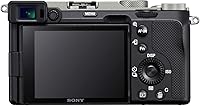
  • Display: 3-inch articulating capacitive touchscreen LCD with 921,600 dots, fully side-opening for vlogging and low-angle shooting.
  • Kit Lens: Includes a 28-60mm f/4-5.6 zoom lens with 7-blade aperture, 8 elements in 7 groups, and a 40.5mm filter thread.
  • Memory: Single card slot supporting SD, SDHC, and SDXC formats with UHS-II compatibility and write speeds up to 300 MB/s.
  • Mount: Sony E-mount, compatible with the full range of Sony E-mount and FE lenses as well as supported third-party optics.
  • Connectivity: Bluetooth and Wi-Fi built in, with a Micro-HDMI video output, one USB 2.0 port, and one USB 3.0 port.
  • Battery: NP-FZ100 Lithium-Ion battery rated for approximately 680 shots per charge under CIPA standard testing conditions.
  • Body Weight: Camera body weighs approximately 1 pound (509g) without lens, battery, or memory card.
  • File Formats: Captures JPEG at Basic, Normal, and Fine quality levels, plus 14-bit uncompressed or compressed RAW files.
  • Shooting Speed: Continuous shooting at up to 10 frames per second with autofocus and auto-exposure tracking active.
  • Flash Sync: Maximum flash sync speed of 1/160 second; hot shoe mount accepts compatible external flash units.
  • Audio: Built-in microphone for video recording, with a 3.5mm headphone jack for audio monitoring during capture.
  • Aspect Ratios: Supports 3:2, 16:9, 4:3, and 1:1 aspect ratios for both still images and video framing.
  • Weather Sealing: This camera body does not have official weather or dust sealing and should be protected in wet or dusty environments.
  • Warranty: Covered by a 1-year limited manufacturer warranty provided directly by Sony.

Related Reviews
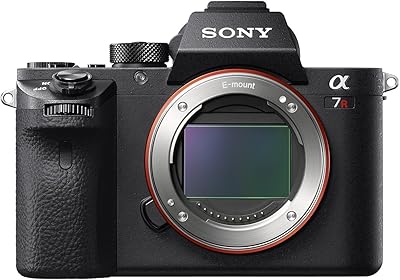
Sony Alpha 7R IV Full-Frame Mirrorless Camera
80%
97%
Image Quality & Resolution
91%
Autofocus Performance
94%
Dynamic Range
78%
Continuous Shooting Speed
83%
In-Body Image Stabilization
More
Sony Alpha a7R V
Sony Alpha a7R V
78%
97%
Image Quality
91%
Autofocus Performance
78%
Video Capabilities
88%
Autofocus Tracking Consistency
84%
Build Quality & Ergonomics
More
Sony ZV-E1
Sony ZV-E1
78%
94%
Video Quality
92%
Autofocus Reliability
91%
Image Stabilization
89%
Low-Light Performance
78%
Build Quality & Ergonomics
More
Sony Alpha 7CR Full-Frame Mirrorless Camera
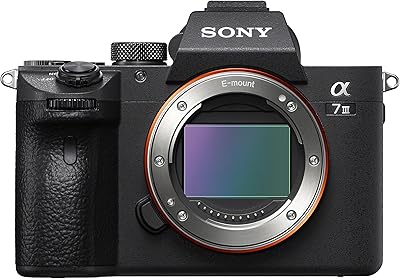
78%
97%
Image Resolution & Detail
88%
Autofocus Performance
91%
In-Body Image Stabilization
93%
Dynamic Range
84%
Body Size & Portability
More
Sony a7 III
Sony a7 III
83%
93%
Autofocus Performance
91%
Low-Light & High-ISO Quality
92%
Image Quality & Dynamic Range
84%
Battery Life
81%
Video Capabilities
More
Sony a7R II Full-Frame Mirrorless Camera
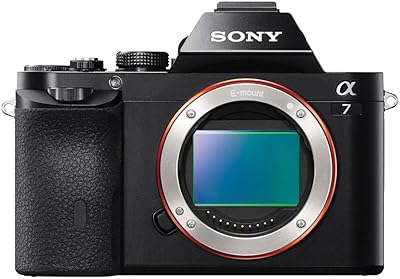
85%
93%
Image Quality
91%
Autofocus Performance
89%
Video Quality (4K)
90%
Build Quality & Durability
78%
Ease of Use
More
Sony a7 Full-Frame Mirrorless Camera Body
84%
91%
Image Quality
94%
Autofocus Performance
88%
Build Quality
72%
Battery Life
85%
Ease of Use
More
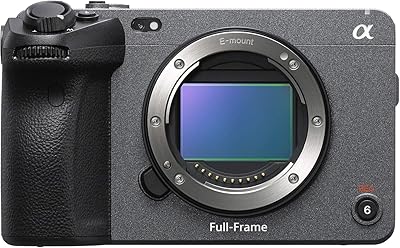
Sony FX3 Full-Frame Cinema Camera
80%
93%
Autofocus Reliability
94%
Image Quality & Dynamic Range
91%
Color Science (S-Cinetone)
89%
Video Codec & Recording Options
82%
Thermal Management & Recording Limits
More
Sony Alpha 6700
Sony Alpha 6700
82%
93%
Autofocus Performance
91%
Video Quality
89%
Image Quality & Sensor
86%
Image Stabilization
58%
Battery Life
More
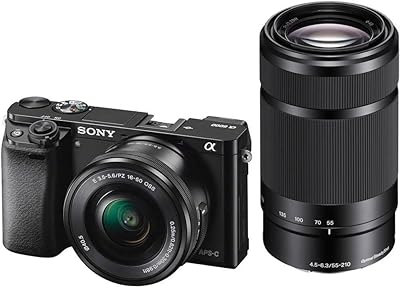
Sony Alpha a6000 Mirrorless Digital Camera
84%
96%
Autofocus Speed
91%
Image Quality
63%
Battery Life
88%
Portability/Weight
84%
Build Quality
More

FAQ

Not natively. The camera uses a Sony E-mount, so A-mount lenses require the optional Sony LA-EA3 or LA-EA5 adapter to connect. Autofocus performance through an adapter can vary depending on the lens, so it is worth researching your specific glass before committing.

The included 28-60mm f/4-5.6 is genuinely useful for everyday shooting — it is compact, light, and reasonably sharp in the center. That said, it has real limits at wider apertures and toward the edges of the frame. If you shoot portraits or low-light events seriously, stepping up to a dedicated prime like the FE 50mm f/1.8 or FE 85mm f/1.8 will make a noticeable difference.

It depends on how you work. The image quality and autofocus are strong enough for professional results, but the single memory card slot is a real limitation for event shooters who need dual-card backup as a safety net. Many working professionals consider two slots a non-negotiable requirement, so factor that in before deciding.

Honestly, one battery is tight for a long day. Sony rates it at around 680 shots under standard conditions, but real-world use — especially with the LCD open, Wi-Fi active, or video rolling — will drain it faster. Picking up one or two spare NP-FZ100 batteries before a trip is strongly recommended.

It is genuinely practical, especially if you shoot video solo or frequently work at low angles. The screen swings out fully to the side, which makes it easy to frame yourself for vlogging or shoot from hip level without crouching. It is not a fully rotating selfie screen like some competitors offer, but it covers most real-world needs well.

Very well, relative to its size class. The back-illuminated sensor structure and wide expanded ISO range let you push into difficult lighting conditions while keeping noise reasonably controlled. In practical terms, indoor available-light shooting and evening street photography are comfortably within its capabilities.

Yes, the 5-axis IBIS is active regardless of the lens attached, though it works most effectively when paired with lenses that communicate focal length data to the body. For lenses that do not transmit that information, you can manually enter the focal length in the camera menu to help the stabilization system compensate correctly.

Yes. The camera supports both Bluetooth and Wi-Fi, and Sony's Imaging Edge Mobile app lets you transfer images, use your phone as a remote shutter, or control basic settings wirelessly. The connection setup is straightforward once you pair the devices the first time.

It is probably the most natural step-up path available in the Sony ecosystem. Your existing E-mount lenses carry over without any compatibility issues, the menu system will feel familiar, and the body size is not dramatically larger than some APS-C cameras. The main adjustment is learning to account for the different depth-of-field characteristics of a full-frame sensor.

Some users have reported thermal warnings during prolonged 4K sessions, particularly in warm environments. For short-to-medium video clips it performs reliably, but if your work involves continuous long-form video recording — think documentary or interview shoots — it is worth testing your specific workflow carefully before relying on it without a backup plan.

Where to Buy