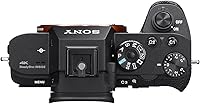
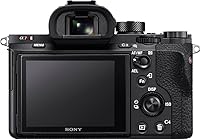
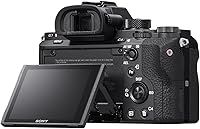
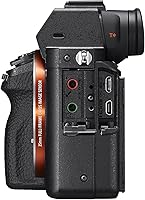
Overview

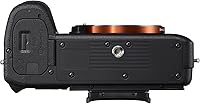
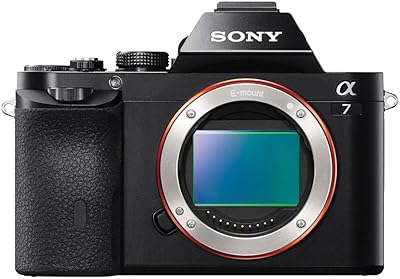
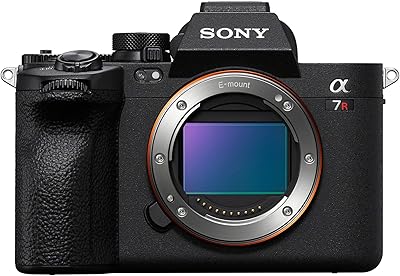
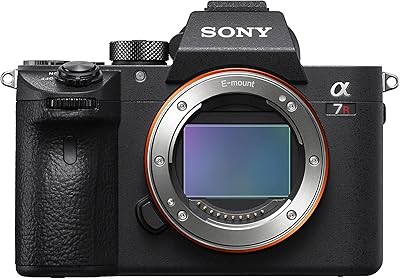
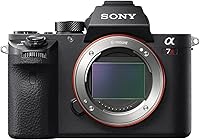
The Sony a7R II Full-Frame Mirrorless Camera was Sony's clearest statement to professional landscape, studio, and commercial photographers that full-frame mirrorless was ready for serious work. When it launched, 42.4 megapixels in a body this compact was genuinely rare — and that resolving power still earns respect today. Within Sony's lineup, it sits above the general-purpose a7 II and below the low-light-focused a7S II, occupying the resolution-first niche. Sold body-only, it suits photographers already in the E-mount ecosystem or those planning to adapt A-mount or third-party glass. The included one-year warranty covers parts and labor, though professionals shooting commercially would be wise to budget for extended coverage separately.
Features & Benefits

The 42.4MP back-illuminated sensor is where this high-res Sony body earns its reputation. Shooting RAW, you can crop aggressively and still deliver files with enough detail for billboard-sized prints — a practical advantage in commercial and fine-art contexts. The 5-axis IBIS is particularly useful when adapting older manual-focus lenses that carry no optical stabilization of their own. Autofocus with native E-mount glass in good light is fast and accurate; just manage expectations for moving subjects. The 4K video output uses full-pixel readout without binning, producing genuinely clean footage, though extended recording can trigger overheating warnings. The OLED viewfinder, at 0.78x magnification, feels surprisingly natural for photographers transitioning from optical finders.

Best For

Sony's 42-megapixel mirrorless is purpose-built for resolution-driven photography — landscape work, studio portraiture, architectural detail, and commercial product shoots where you need large, crop-worthy files. It is also a legitimate tool for hybrid shooters who want high-quality 4K video alongside stills without juggling two systems. Photographers coming from Sony's A-mount DSLR lineup will appreciate that adapted lenses can still engage phase-detection autofocus, making the transition less disruptive. Where it falls short is anything involving fast, unpredictable movement: the 5fps burst rate and AF tracking reliability simply are not built for sports or wildlife in action. Know what you are buying it for.

User Feedback

Across nearly 900 reviews, the a7R II holds a strong 4.6-star rating, and the consistent theme is that image quality and dynamic range routinely exceed expectations. Buyers adapting vintage and third-party lenses frequently highlight the IBIS as a revelation. On the critical side, battery life is the most repeated complaint — the NP-FW50 drains faster than most professionals would like, and carrying spares is not optional, it is mandatory. The menu system draws regular frustration from newcomers. Ergonomically, opinions split: travel photographers value the compact form, while those pairing it with large glass find it noticeably front-heavy. Long-term owners generally report solid reliability, though the sensor-shift mechanism is worth factoring into any long-range servicing calculus.

Pros

  • 42.4MP resolution produces files with extraordinary detail, ideal for large-format printing and aggressive cropping.
  • The back-illuminated sensor design delivers strong dynamic range, giving you significant recovery latitude in post.
  • 5-axis in-body stabilization works with virtually any adapted lens, making vintage glass genuinely usable handheld.
  • 4K video uses full-pixel readout with no pixel binning, which produces noticeably cleaner footage than most contemporaries.
  • The silent electronic shutter makes this high-res Sony body a natural fit for weddings, events, and quiet studio environments.
  • 399 phase-detection AF points deliver reliable, fast focus with native E-mount lenses in well-lit conditions.
  • A-mount lenses adapted via Sony's LA-EA3 or LA-EA4 adapter retain phase-detect autofocus, protecting legacy lens investments.
  • The 0.78x OLED viewfinder offers a bright, detailed view that holds up well even in bright outdoor conditions.
  • At 625 grams body-only, it is meaningfully lighter than comparable full-frame DSLRs without sacrificing build quality.
  • Wi-Fi and NFC connectivity allow remote shooting and quick file transfer directly to a smartphone.

Cons

  • The NP-FW50 battery drains quickly under heavy use — carrying at least two or three spares is essentially non-negotiable.
  • Sony's menu system has a steep learning curve; new users routinely report spending hours finding basic custom settings.
  • 4K recording sessions can trigger overheating warnings, making it unreliable for extended video work in warm environments.
  • The single memory card slot is a genuine risk for professionals who shoot to dual cards as a backup workflow.
  • AF tracking on moving subjects in variable light lags behind what sports and wildlife photographers reasonably need.
  • The compact body becomes front-heavy and uncomfortable when paired with large telephoto or zoom lenses for extended periods.
  • This is a prior-generation body — buyers comparing it to the a7R III or later will find measurable gaps in AF, battery, and buffer performance.
  • RAW files at 42.4MP are large, which strains older computers during editing and demands fast, high-capacity storage investments.
  • No built-in USB charging means you cannot top off the battery from a power bank in the field without a separate charger.
  • The rear LCD does not fully articulate, limiting its usefulness for low-angle or overhead shooting compositions.

Ratings

Our AI-generated scores for the Sony a7R II Full-Frame Mirrorless Camera are built by analyzing thousands of verified global buyer reviews, with spam, bot activity, and incentivized feedback actively filtered out. The result captures a balanced picture that reflects both what this camera genuinely excels at and where real-world photographers consistently run into friction. Every score below transparently weighs enthusiastic praise alongside honest, recurring criticism from users across professional and enthusiast contexts.

Image Quality
96%
Photographers shooting landscapes, commercial products, and studio portraits consistently describe the files as extraordinary — and it is not just resolution. The 42.4MP sensor renders fine texture and tonal gradations with a depth that holds up under aggressive post-processing, making large-format prints viable without any visible compromise in detail.
At this resolution, any softness in glass or slight camera shake becomes visible at 100% crop, raising the bar for technique and lens quality. Photographers accustomed to smaller files also face meaningful storage and processing overhead that can slow down high-volume shooting workflows.
Dynamic Range
93%
In high-contrast situations — backlit subjects, golden-hour landscapes, mixed indoor and window light — the sensor gives photographers substantial latitude to recover shadows and pull back highlights in post without losing detail. Many users describe it as a significant leap over their previous full-frame bodies.
To fully exploit the dynamic range, shooting RAW is essentially mandatory; JPEG files compress tonal headroom noticeably. At very high expanded ISO settings, the dynamic range advantage narrows significantly, which limits its usefulness in extreme low-light or high-gain situations.
Autofocus Performance
72%
28%
With native E-mount lenses and adequate light, the phase-detection autofocus locks quickly and reliably onto portraits, products, and static architecture — solid performance for the majority of controlled shooting scenarios. Eye-detection autofocus, while not as refined as later generations, adds meaningful precision for portrait work at wide apertures.
Tracking fast-moving subjects is where the age of this system shows clearly. Birds, athletes, and unpredictable movement at events can expose real AF inconsistencies, and in lower light the hunting is noticeably more pronounced compared to cameras released even two or three years later.
Video Capabilities
74%
26%
The full-pixel readout 4K implementation produces footage with noticeably better detail and less moiré than cameras using pixel binning. For controlled video work — product showcases, short documentaries, interview-style shoots in well-ventilated spaces — the output quality is genuinely impressive and holds up well in professional contexts.
Overheating during extended 4K sessions is a documented, repeatable issue that affects real-world production workflows, particularly in warm environments. The absence of log picture profiles and limited dual-system audio flexibility make it less capable as a dedicated video platform compared to purpose-built hybrid bodies.
Image Stabilization
88%
The 5-axis IBIS is frequently cited as transformative by photographers who shoot handheld with adapted manual-focus lenses that carry no optical stabilization of their own. Using vintage Leica, Zeiss, or Contax glass handheld in low-light environments becomes practically viable, dramatically expanding the usefulness of older lens collections.
The stabilization works best at moderate focal lengths; at very long telephoto reach its effectiveness becomes more variable and less reliable. Users also report that enabling IBIS noticeably accelerates battery drain, which compounds the already limited NP-FW50 capacity on longer field shoots.
Battery Life
41%
59%
For quick portrait sessions or controlled studio work where power outlets are accessible, the NP-FW50 performs adequately. Photographers who plan sessions around battery changes and keep a charger nearby can work around the limitation without it becoming a serious obstacle in a controlled environment.
In the field — landscape shoots at dawn, all-day event coverage, travel days — the NP-FW50 capacity is genuinely problematic. Most professionals carry at least three spares as a baseline, and the lack of in-camera USB charging means topping up on location requires a separate dedicated charger.
Build Quality & Ergonomics
78%
22%
The magnesium alloy body feels solid and purposeful in hand, and the dust and moisture resistance holds up reasonably well in light rain or dusty outdoor conditions. Travel photographers regularly praise the compact form factor, which pairs naturally with smaller prime lenses for street and documentary work on the road.
When mounting large telephoto or heavy zoom lenses, the compact grip becomes noticeably inadequate — the body feels front-heavy and fatiguing during extended handheld sessions. There is no official IP ingress-protection rating, so moisture resistance provides reasonable but not guaranteed protection in genuinely wet conditions.
Viewfinder & Display
83%
The OLED electronic viewfinder is a genuine advantage for photographers making the switch from DSLRs — the live exposure preview means what you see through the finder closely matches what you get in the final shot. The ZEISS T* coating reduces glare effectively in bright outdoor conditions.
The 3-inch tilting LCD does not fully articulate, limiting its usefulness for awkward angles; overhead shots and very low-level compositions require uncomfortable positioning. In very low light, the EVF introduces a subtle but perceptible lag that some photographers find distracting during fast or handheld shooting.
Menu System & Usability
57%
43%
Once you invest time learning the menu architecture and assigning custom buttons to your most-used functions, the body becomes significantly more fluid to operate. Photographers already familiar with other Sony bodies will find the overall logic recognizable, and the custom function buttons allow meaningful personalization of the shooting experience.
For newcomers, the menu system is one of the most consistently cited pain points across buyer reviews — deeply nested options, non-intuitive organization, and the sheer volume of settings make initial setup genuinely frustrating. Sony has improved this substantially in later generations, and the a7R II reflects an earlier, less refined approach to UI design.
Connectivity
71%
29%
Wi-Fi and NFC allow quick image transfers to a smartphone for sharing, and compatibility with Sony's Imaging Edge app enables remote shooting from a phone — useful for self-portraits, long-exposure setups, and time-lapse work. HDMI output also supports clean video feed to an external recorder.
Micro USB tethering speed is noticeably slow for high-resolution RAW transfer, which frustrates studio photographers tethering to Lightroom or Capture One during live shoots. There is no USB-C port, limiting compatibility with modern charging accessories and faster tethering solutions available on newer bodies.
Value for Money
76%
24%
On the used market, this high-res Sony body occupies an interesting position — the image quality and IBIS performance it delivers are hard to match at comparable price points without stepping up to newer and more expensive hardware. For landscape and studio photographers, the performance-to-cost ratio makes a compelling case.
Buyers purchasing new at full retail are comparing it against newer-generation bodies with meaningful feature upgrades at similar or slightly higher prices, which weakens the value argument. Total system cost also adds up quickly once extra batteries, fast storage media, and a capable editing workstation are factored in.
Lens Compatibility
89%
Sony's 42-megapixel mirrorless benefits from one of the broadest native lens libraries in the mirrorless segment, with FE options spanning ultra-wide to super-telephoto. A-mount lenses via Sony's adapter retain phase-detect autofocus, and third-party adapters open up virtually every major legacy lens mount with varying degrees of AF functionality.
The highest-quality Sony GM and Zeiss optics carry significant price premiums, making assembling a complete high-resolution kit more expensive than anticipated. Some third-party lens and adapter combinations produce inconsistent autofocus results, requiring careful research and real-world testing before committing to a specific adapted-glass workflow.
Low-Light Performance
81%
19%
The back-illuminated sensor design produces cleaner files at elevated ISO settings than earlier Sony full-frame sensors, and at ISO 3200 to 6400 images remain very usable for professional output. For available-light portraiture, dim-venue event coverage, and architectural interiors, the performance is genuinely strong and reliable.
This is not an a7S — photographers who regularly need ISO 25600 and above will find that noise and loss of fine detail become more visible than on cameras built specifically around extreme low-light sensitivity. The expanded ISO settings above 25600 are best treated as emergency options rather than dependable shooting modes.
Portability
84%
At 625g body-only, the a7R II is substantially lighter than most full-frame DSLRs, making it a practical travel companion for landscape photographers covering long distances on foot. Paired with compact FE prime lenses, the overall kit size is manageable for day hikes, international travel, and extended location work.
The portability advantage diminishes once you add larger zoom lenses, extra batteries, and a dedicated charger — necessities that contribute meaningful weight and bulk to the overall kit. The relatively shallow grip also becomes tiring during long handheld sessions, particularly when using heavier glass for extended periods.
Burst & Action Performance
44%
56%
For studio work, architectural shooting, and scenarios where subjects hold relatively still, the 5fps burst is more than adequate for most professional needs. The buffer handles short RAW bursts without significant hesitation under normal shooting conditions, which is sufficient for the deliberate, methodical pace this body is designed for.
Sports photographers, wildlife shooters, and anyone tracking erratic movement will find the 5fps ceiling and buffer depth limiting compared to purpose-built action cameras. AF tracking on fast subjects in variable light is unreliable enough that missing critical, unrepeatable moments is a real and recurring risk.

Suitable for:

The Sony a7R II Full-Frame Mirrorless Camera was built with a specific type of photographer in mind: one who demands the most detail possible from every shot and is willing to work deliberately to get it. Landscape photographers will find the 42.4MP sensor transformative — the ability to crop into a wide shot and still have a printable, highly detailed file changes how you compose in the field. Studio and commercial photographers benefit similarly, getting medium-format-level resolution from a body compact enough to travel with. Hybrid shooters who want clean 4K video without a dedicated cinema camera will also find real value here, particularly for short-form or controlled shoots. Photographers migrating from A-mount DSLRs are especially well-served: adapted lenses retain phase-detection autofocus, so your existing glass investment does not become obsolete overnight.

Not suitable for:

If your work involves fast, unpredictable movement — sports, wildlife in action, street photography at pace — the a7R II will likely frustrate you. The 5fps burst rate and AF tracking are functional but not competitive with bodies purpose-built for speed, and at this price point, that gap matters. Dedicated video professionals will also run into real-world friction: the 4K output is genuinely impressive in short bursts, but overheating during longer sessions is a documented issue, not a rare edge case. Anyone sensitive to menu complexity should know upfront that Sony's interface has historically required a meaningful learning investment. The Sony a7R II Full-Frame Mirrorless Camera also ships with the NP-FW50 battery, which is widely considered undersized for a sensor of this resolution — budget for multiple spares before your first serious shoot or you will run short.
Specifications

  • Sensor Type: The camera uses a 42.4MP back-illuminated Exmor R CMOS sensor measuring 35.9 x 24.0mm, covering the full 35mm frame area.
  • Image Stabilization: 5-axis in-body sensor-shift stabilization compensates for pitch, yaw, roll, and both horizontal and vertical shift movements simultaneously.
  • Autofocus System: 399 focal-plane phase-detection AF points are distributed across the sensor for fast, accurate locking on static subjects with compatible lenses.
  • ISO Range: Native sensitivity spans ISO 100 to 25600, with an expanded ceiling of ISO 102400 available for extreme low-light situations.
  • Burst Speed: Continuous shooting is rated at 5 frames per second in mechanical shutter mode.
  • Video Recording: 4K UHD 2160p video is captured using full-pixel readout with no pixel binning, producing clean, finely detailed footage.
  • Viewfinder: The electronic viewfinder uses a 2.4-million-dot XGA OLED panel with ZEISS T* anti-reflective coating and 0.78x magnification.
  • Rear Screen: A 3-inch tilting LCD with 1,228,800 dots provides a clear view for live-view composition and image review.
  • Shutter Options: Three shutter modes are available: mechanical, electronic front curtain, and a fully silent electronic shutter.
  • Flash Sync Speed: Maximum flash sync speed is 1/250s with compatible hotshoe-mounted or wireless flash units.
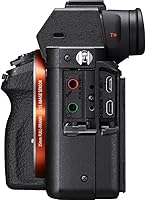
  • Connectivity: The body includes Wi-Fi, NFC, HDMI output, and Micro USB for tethering, file transfer, and remote control.
  • Memory Storage: A single SDXC-compatible card slot handles all storage; there is no secondary slot for backup or overflow recording.
  • Battery: Power is supplied by the NP-FW50 lithium-ion battery, which ships with the BC-VW1 wall charger included in the box.
  • Body Weight: The body weighs 625g without a lens attached, placing it well below most comparable full-frame DSLR bodies.
  • Lens Mount: The Sony E-mount accepts all full-frame FE lenses natively and APS-C E-mount lenses in an automatic crop mode.
  • File Formats: Still images are saved as JPEG at Basic, Fine, or Normal compression levels, or as 14-bit RAW files at full 42.4MP resolution.
  • Warranty: Sony provides a one-year limited warranty covering both parts and labor from the original date of purchase.

Related Reviews
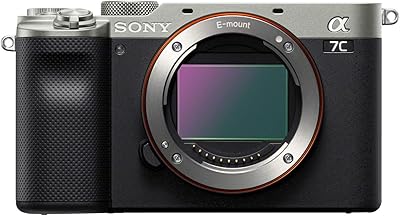
Sony Alpha 7C Full-Frame Mirrorless Camera
80%
93%
Autofocus Performance
91%
Image Quality
94%
Portability & Size
86%
Video Capability
62%
Battery Life
More
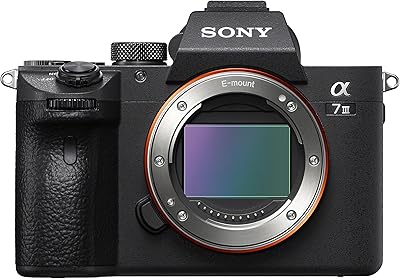
Sony a7 Full-Frame Mirrorless Camera
75%
93%
Image Quality
88%
Low-Light Performance
71%
Autofocus Accuracy
44%
Battery Life
79%
Build Quality
More
Sony a7 III
Sony a7 III
83%
93%
Autofocus Performance
91%
Low-Light & High-ISO Quality
92%
Image Quality & Dynamic Range
84%
Battery Life
81%
Video Capabilities
More
Sony Alpha a7R V
Sony Alpha a7R V
78%
97%
Image Quality
91%
Autofocus Performance
78%
Video Capabilities
88%
Autofocus Tracking Consistency
84%
Build Quality & Ergonomics
More
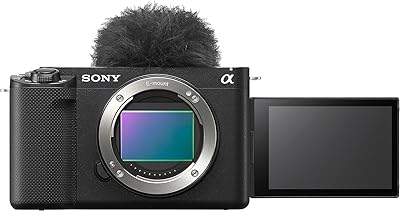
Sony Alpha 7R IV Full-Frame Mirrorless Camera
80%
97%
Image Quality & Resolution
91%
Autofocus Performance
94%
Dynamic Range
78%
Continuous Shooting Speed
83%
In-Body Image Stabilization
More
Sony ZV-E1
Sony ZV-E1
78%
94%
Video Quality
92%
Autofocus Reliability
91%
Image Stabilization
89%
Low-Light Performance
78%
Build Quality & Ergonomics
More
Sony Alpha 7CR Full-Frame Mirrorless Camera
78%
97%
Image Resolution & Detail
88%
Autofocus Performance
91%
In-Body Image Stabilization
93%
Dynamic Range
84%
Body Size & Portability
More
Panasonic LUMIX S5 Full Frame Mirrorless Camera
79%
93%
Video Quality
91%
Image Stabilization
67%
Autofocus Performance
88%
Low-Light / High ISO Performance
82%
Build Quality & Ergonomics
More
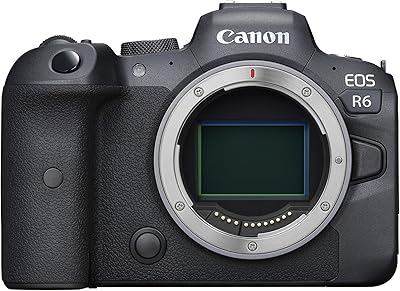
Canon EOS R6 Full-Frame Mirrorless Camera
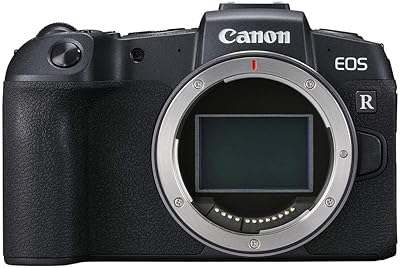
79%
94%
Autofocus Performance
91%
Image Stabilization
89%
High ISO and Low-Light Quality
76%
Video Capabilities
88%
Burst Speed and Action Performance
More
Canon EOS RP
Canon EOS RP
74%
88%
Image Quality
83%
Autofocus Performance
93%
Portability & Form Factor
54%
Battery Life
61%
Video Capabilities
More

FAQ

Honestly, it is the most common real-world complaint you will hear from a7R II owners. The NP-FW50 is a small cell for such a demanding sensor, and you can burn through one in roughly 200 to 300 shots depending on EVF usage, live view, and 4K recording. Most working photographers carry at least two or three spares. Buy extras before your first serious outing — it is not a luxury, it is a necessity.

Yes, using third-party adapters from brands like Metabones or Sigma, Canon EF, Nikon F, and many other mounts can attach to the E-mount body. Autofocus behavior varies significantly by adapter and lens combination — some work reliably for static subjects, others are noticeably slow. Manual focus with IBIS active is consistently usable across adapted glass regardless of the original brand.

It is a real issue, not an exaggeration, though context matters. In warm environments or after extended continuous 4K recording, the camera will display a temperature warning and halt recording. For short clips — interviews, B-roll, product detail shots — you are unlikely to hit the limit. For longer uninterrupted takes or shooting outdoors in summer heat, it becomes a genuine workflow constraint worth planning around.

It works well for weddings, particularly because the silent electronic shutter lets you shoot during ceremonies without any audible sound. Image quality and dynamic range handle mixed or challenging lighting well. The main practical concerns are battery life — bring several spares — and the single card slot, which some wedding photographers consider a dealbreaker given that dual-slot bodies offer in-camera redundancy for irreplaceable moments.

For still or slow-moving subjects in decent light — studio portraits, architecture, landscapes — the AF is accurate and fast enough for professional work. Where the age shows is subject tracking: birds in flight, athletes, and erratically moving subjects reveal real limitations. Cameras released several years after this body offer substantially better real-time tracking and eye-detection performance, so if tracking is central to your workflow, factor that gap into your decision.

Yes, with Sony's LA-EA3 or LA-EA4 adapter, A-mount lenses mount cleanly on this body and retain phase-detection autofocus rather than falling back to slower contrast-detect. This is one of the most practical reasons to choose this body if you are migrating from Sony's DSLR system with an existing A-mount lens collection.

Full-resolution RAW files typically land between 40 and 80MB each, depending on scene complexity. Editing them smoothly requires a reasonably current machine — a fast multi-core processor and at least 16GB of RAM are strongly advisable. Older computers will feel sluggish in Lightroom or Capture One, especially when working with large batches or applying detailed local adjustments.

For most scenarios, yes. The 2.4-million-dot OLED EVF is bright and sharp, and it does something optical finders cannot: it shows a live preview of your exposure and white balance before you press the shutter. There is a subtle lag in very low light or during fast panning, which some photographers notice at first, but it typically stops being an issue once you have a few hours of use on the camera.

Sony describes this high-res Sony body as having dust and moisture resistance through sealed controls, dials, and body panels. It carries no official IP ingress-protection rating, so it is more accurately described as resistant than weatherproof. Shooting in light rain or dusty conditions is generally manageable, but you should not expose it to heavy downpours or wet environments without additional precautions.

It depends heavily on budget and what you shoot. If you can stretch to an a7R III, the upgrades — dual card slots, stronger battery, improved AF tracking, and in-camera USB charging — are meaningful enough for professional use to justify the difference. On the used market, however, Sony's 42-megapixel mirrorless remains a compelling option for landscape, studio, and architectural photographers where resolving power matters more than burst speed or video endurance.

Where to Buy