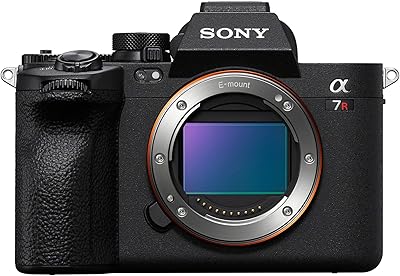
Panasonic LUMIX S5 Full Frame Mirrorless Camera



Overview
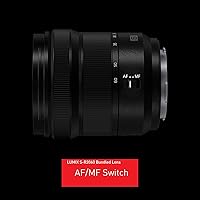
The Panasonic LUMIX S5 Full Frame Mirrorless Camera sits in an interesting spot — it's Panasonic's answer to photographers and videographers who want full-frame performance without hauling around a heavy, oversized body. At a premium price point, it punches well above what most crop-sensor shooters are used to, offering capabilities that blur the line between a serious hybrid tool and a dedicated cinema camera. The bundled 20-60mm kit lens covers a practical focal range for everyday work — wide enough for landscapes and interiors, long enough for portraits. And if you're thinking about future glass, the L-Mount ecosystem shared with Leica and Sigma opens up a growing selection of quality optics worth investing in.
Features & Benefits
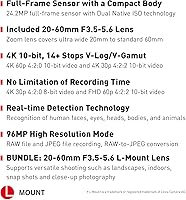
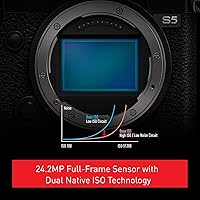
The LUMIX S5's 24.2MP full-frame sensor with Dual Native ISO handles low-light situations with a confidence smaller sensors simply can't match — think shooting a candlelit reception or a dimly lit documentary interview without piling on noise. On the video side, 4K 60p with 10-bit internal recording and V-Log gives colorists serious latitude in post, backed by 14+ stops of dynamic range that preserves highlights and shadows in high-contrast scenes. The 5-Axis Dual I.S. 2 makes handheld shooting genuinely usable, even at slow shutter speeds. The 96MP high-resolution mode is a welcome bonus for architectural photographers, and FHD 180fps slow-motion adds another creative tool without requiring a separate rig.
Best For
This full-frame hybrid makes the most sense for shooters who genuinely need both disciplines covered well. Wedding videographers who also deliver gallery images, travel journalists working solo, and run-and-gun documentary filmmakers will appreciate not having to choose between a photo body and a video body. Aspiring filmmakers will find the 10-bit log recording opens up color grading options typically reserved for far more expensive cinema rigs. Portrait and street photographers who deal with unpredictable subjects will value the face and body tracking, even if it doesn't quite match Sony's speed. Anyone committed to building a long-term L-Mount kit will find the S5 a logical and capable entry point into that ecosystem.
User Feedback
Most owners speak highly of the video image quality — the dynamic range and color science consistently draw praise, especially from shooters upgrading from APS-C systems. The ergonomics feel solid in hand, though some users find Panasonic's menu layout takes a fair amount of time to learn. The sticking point that surfaces most often is autofocus reliability: compared to Sony's A7 III or Canon's R6, tracking can hesitate on fast-moving subjects, which matters if sports or action is your priority. Battery life during extended 4K recording sessions also draws frequent criticism. The 20-60mm lens earns decent marks for sharpness when stopped down, but its modest aperture limits its usefulness in truly dark environments.
Pros
- 10-bit internal 4K 60p recording with V-Log gives serious colorists exceptional grading flexibility straight from the camera.
- The 5-Axis Dual I.S. 2 system makes confident handheld video shooting possible in situations where most cameras require a gimbal.
- Dual Native ISO keeps noise genuinely well-controlled in low-light events, interviews, and indoor documentary work.
- The 20mm wide end of the kit lens is more practically useful than the 24mm start found on most competing kit options.
- At 714g with battery and card, the LUMIX S5 is notably lighter than most full-frame rivals without sacrificing sensor size.
- 96MP high-resolution mode provides architectural and product photographers a detail-rich option when shooting from a tripod.
- FHD 180fps slow-motion adds a cinematic creative tool without requiring a second dedicated high-speed body.
- Native 4:3 anamorphic recording support is a rare differentiator at this price point for filmmakers chasing a cinematic look.
- Both a mic input and headphone monitoring jack are included, covering basic solo video audio needs without adapters.
- Committing to the L-Mount ecosystem opens access to a growing range of quality glass from Panasonic, Sigma, and Leica.
Cons
- Autofocus tracking on fast or erratic subjects falls noticeably behind Sony and Canon alternatives in the same price range.
- Battery drain during extended 4K recording sessions is significant enough that spare batteries are essentially mandatory for paid work.
- The Micro HDMI port is a fragile connector format that feels like a liability during active video production.
- Only a single card slot offers no redundancy, which is a real risk management concern for professional assignments.
- The menu system has a steep learning curve for anyone coming from a Sony or Canon background.
- No weather sealing leaves the camera exposed in rain or dusty outdoor environments where competitors offer protection.
- The kit lens aperture of F5.6 at the long end limits its usefulness for indoor or evening shooting without additional light.
- Slow-motion recording is capped at Full HD rather than 4K, creating a visible quality gap when cutting with 4K footage in the same edit.
- Rolling shutter artifacts can appear during fast panning in 4K mode, which is problematic for action-oriented content.
- Third-party L-Mount lenses without proper IS communication reduce the effectiveness of the in-body stabilization system.
Ratings
The Panasonic LUMIX S5 Full Frame Mirrorless Camera earns strong marks overall, particularly among hybrid shooters who prioritize video quality and image stabilization over raw autofocus speed. These scores were generated by AI after analyzing thousands of verified global user reviews, with spam, bot-submitted, and incentivized feedback actively filtered out. The ratings transparently reflect both what this camera does exceptionally well and the areas where real buyers have expressed consistent frustration.
Video Quality
Image Stabilization
Autofocus Performance
Low-Light / High ISO Performance
Build Quality & Ergonomics
Menu System & Usability
Battery Life
Still Photography Quality
Kit Lens Performance (20-60mm F3.5-5.6)
Value for Money
Slow Motion Capabilities
Connectivity & I/O
Anamorphic & Creative Video Modes
Portability & Size
Suitable for:
The Panasonic LUMIX S5 Full Frame Mirrorless Camera is built for hybrid creators who genuinely need both disciplines covered well in a single, portable body. Wedding videographers who also deliver photo galleries, solo documentary filmmakers who cannot afford a separate cinema rig, and travel journalists working without an assistant will all find it a practical daily companion. The 10-bit internal recording and V-Log support make it especially compelling for anyone who spends serious time in post-production color grading — this is a camera that rewards people who know how to use that latitude. Photographers upgrading from a crop-sensor system will notice an immediate and tangible difference in low-light performance and background separation. Anyone planning to build out a long-term lens collection will also appreciate committing to the L-Mount ecosystem, which is backed by Leica and Sigma in addition to Panasonic's own growing lineup.
Not suitable for:
If autofocus speed and subject-tracking reliability are your absolute top priorities, the Panasonic LUMIX S5 Full Frame Mirrorless Camera is probably not the right choice for you right now. Sports photographers, wildlife shooters, and anyone regularly chasing fast, erratic subjects will find that the tracking system lags behind what Sony and Canon offer at comparable price points — this is not a minor gap, and it is worth taking seriously before committing. Photographers whose work is exclusively stills-focused and who have no interest in video will find the value proposition harder to justify, since much of what drives the price is video-oriented capability they would never use. The lack of weather sealing is also a genuine concern for outdoor and adventure photographers who regularly shoot in rain, dust, or high humidity. Single card slot, fragile Micro HDMI port, and limited battery endurance during heavy 4K recording all add up to real workflow friction for professionals who cannot afford technical failures on a paid assignment.
Specifications
- Sensor: The camera uses a 24.2MP full-frame CMOS sensor with Dual Native ISO technology designed to minimize noise in high-sensitivity shooting conditions.
- Video Recording: Internal video recording supports 4K at up to 60fps and Full HD at up to 180fps, with 10-bit depth available for maximum color information retention in post-production.
- Log Profile: V-Log and V-Gamut are built in, providing 14-plus stops of dynamic range for professional color grading workflows without any additional firmware purchase.
- Image Stabilization: 5-Axis Dual I.S. 2 combines in-body and optical stabilization to deliver up to 6.5 stops of compensation, enabling sharp handheld captures in low-light conditions.
- High-Res Mode: A pixel-shift high-resolution mode composites multiple exposures into a single 96MP JPEG or RAW file, available when shooting stationary subjects from a tripod.
- Autofocus System: The contrast-detection hybrid autofocus system supports continuous face, eye, head, and body detection across both photo and video recording modes.
- Lens Mount: The camera uses the Leica L-Mount standard, ensuring compatibility with lenses from Panasonic, Sigma, and Leica across an expanding ecosystem of full-frame optics.
- Kit Lens: The included LUMIX S 20-60mm F3.5-5.6 lens covers a versatile focal range from ultra-wide to standard portrait length with a 67mm filter thread.
- Slow Motion: Full HD slow-motion recording is available at up to 180fps, and the camera also supports 4:3 aspect ratio recording for use with anamorphic lens adapters.
- ISO Range: Native ISO sensitivity runs from 100 to 51200, with an expanded ceiling of ISO 25600 available for extreme low-light shooting scenarios.
- Card Slot: A single card slot accepts UHS-II U3 and UHS-I U3 SD cards, supporting the high write speeds required for sustained 4K video recording.
- Ports & I/O: Connectivity includes a Micro HDMI (Type D) output, a 3.5mm microphone input, a 3.5mm headphone monitoring jack, and a single USB port for charging and data transfer.
- Wireless: Built-in Wi-Fi enables remote camera control and image transfer via the Lumix Sync smartphone application on iOS and Android devices.
- Body Weight: The body weighs 714g including battery and memory card, making it one of the lighter options available in the full-frame mirrorless category.
- Battery: The camera is powered by a rechargeable Lithium-Ion battery pack that supports USB charging, allowing top-up via portable power banks in the field.
- Viewfinder: An electronic viewfinder is built into the body for optical-style composition in bright outdoor conditions where rear screen visibility may be reduced.
- Anamorphic Support: Native 4:3 aspect ratio recording is supported internally, enabling use with anamorphic lenses without requiring external recorders or post-production desqueezing workarounds for aspect ratio.
- Weather Sealing: The body does not carry an official weather-sealing or dust-resistance rating, and Panasonic recommends avoiding exposure to moisture and dusty environments during use.
Related Reviews
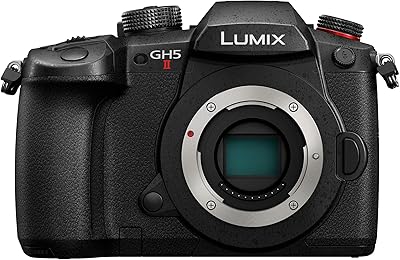
Panasonic LUMIX GH5 Mark II Mirrorless Camera
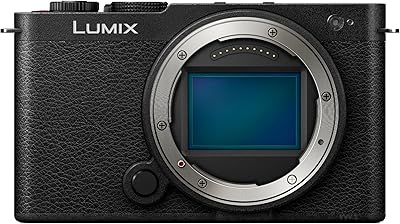
Panasonic LUMIX S9 Full-Frame Mirrorless Camera
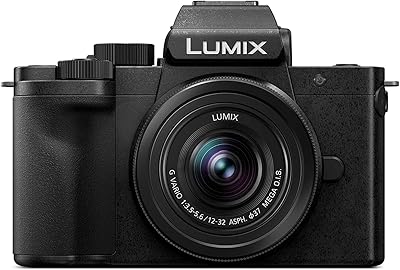
Panasonic LUMIX G100 Mirrorless Camera
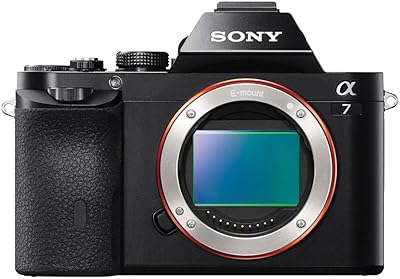
Sony a7 Full-Frame Mirrorless Camera
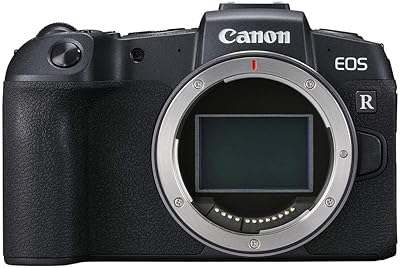
Canon EOS RP
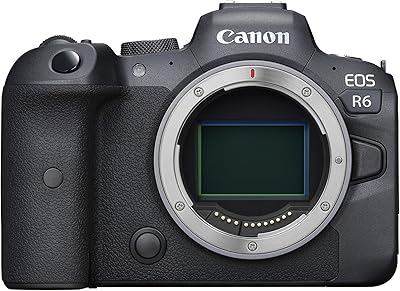
Canon EOS R6 Full-Frame Mirrorless Camera
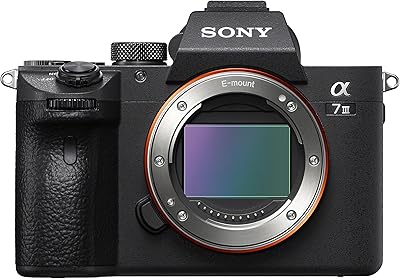
Sony a7 III
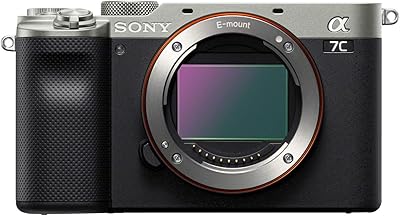
Sony Alpha 7C Full-Frame Mirrorless Camera
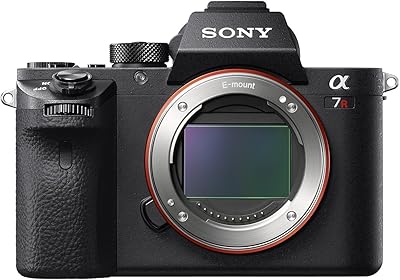
Sony a7R II Full-Frame Mirrorless Camera