

Overview

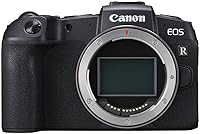
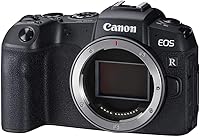
The Canon EOS RP arrived as Canon's lightest and most compact full-frame mirrorless body, aimed squarely at enthusiasts ready to step up from a crop-sensor DSLR without hauling a heavy kit. It sits at an accessible entry point into Canon's RF ecosystem, and if you already shoot with EF or EF-S lenses, the optional mount adapter lets you bring that glass along without starting from scratch. Yes, the mirrorless market has moved quickly and newer rivals have raised the bar considerably. But for a photographer who wants genuine full-frame rendering in a body that actually fits in a bag without complaints, this full-frame mirrorless body still makes a surprisingly strong case.

Features & Benefits

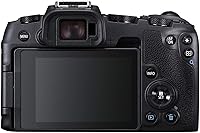
The 26.2MP full-frame sensor paired with the DIGIC 8 processor handles everyday shooting and respectable low-light work with confidence — files hold up well when you push them in post. Dual Pixel CMOS AF is genuinely quick, locking onto faces reliably in Eye AF mode for portraits and casual video alike. The 3.0-inch vari-angle touchscreen is a practical win for solo shooters or anyone who likes framing from the hip. Wi-Fi and Bluetooth connectivity works smoothly with Canon's mobile app. One honest caveat: 4K comes with a crop, which noticeably narrows your field of view, and there is no in-body stabilization — two things worth knowing clearly before committing.

Best For

If you shoot travel or street photography and want a full-frame body that won't wear you out by lunchtime, the EOS RP is a strong contender. DSLR upgraders with a collection of Canon EF glass will find the transition particularly smooth — attach the adapter and most lenses perform well. Content creators and vloggers will appreciate the flip-out touchscreen for self-recording, even accounting for the 4K limitations. Portrait photographers get genuine full-frame depth rendering without paying flagship prices. It's less suited to fast-action or professional event work, but for hobbyists and anyone building a lightweight everyday kit, Canon's compact full-framer fits that brief convincingly.

User Feedback

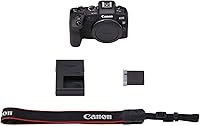
Owners consistently mention how natural this full-frame mirrorless body feels to carry all day — the compact size genuinely surprises people used to bulkier cameras. Eye AF earns consistent praise for portrait work. The frustrations, though, are equally consistent: battery life runs short, and most users recommend picking up a second LP-E17 immediately rather than discovering that mid-shoot. The 4K crop and lack of IBIS are frequently cited disappointments. The single card slot divides opinion sharply — casual shooters rarely mind, but event or wedding photographers will feel its absence keenly. Overall, hobbyist satisfaction sits high, while professionals tend to find themselves pushing against its limits fairly quickly.

Pros

  • Full-frame image quality in one of the lightest, most compact mirrorless bodies Canon has ever made.
  • Existing Canon EF and EF-S lens owners can adapt their glass with minimal loss in functionality.
  • Dual Pixel CMOS AF locks onto eyes reliably, making portrait and casual video shooting genuinely easy.
  • The vari-angle touchscreen is a practical win for low-angle shots and solo self-recording.
  • Full-frame depth-of-field rendering gives portraits a look that crop-sensor cameras struggle to match.
  • Built-in Wi-Fi and Bluetooth allow quick wireless image transfer without reaching for a cable.
  • 1080p video quality is clean and well-exposed for everyday content creation and vlogging.
  • An accessible entry point into Canon's RF lens ecosystem without committing to a flagship price.
  • The 26.2MP sensor produces files with strong dynamic range that respond well to editing in post.

Cons

  • 4K video applies a significant crop factor that noticeably narrows your field of view.
  • No in-body image stabilization means handheld video and low-light shots depend entirely on the lens.
  • Battery life is genuinely short — plan on carrying a spare LP-E17 as a matter of routine.
  • A single card slot makes this full-frame mirrorless body a hard pass for professional event work.
  • No weather sealing limits its usability when conditions turn wet, dusty, or unpredictable.
  • The small grip causes hand fatigue during extended shooting sessions, especially for larger hands.
  • Continuous shooting tops out at 5fps, which is insufficient for sports or fast-action subjects.
  • The EVF feels small and dated compared to viewfinders on competing bodies at similar price points.
  • Native RF lenses carry premium price tags that can strain the budget of buyers drawn in by the body cost.

Ratings

The Canon EOS RP has been put through its paces by thousands of verified buyers worldwide, and our AI has analyzed that feedback carefully — filtering out incentivized reviews and bot activity — to give you an honest picture of where this full-frame mirrorless body genuinely delivers and where it asks you to compromise. From travel photographers who swear by its portability to enthusiasts frustrated by its video limitations, both sides of the story are reflected in the scores below.

Image Quality
88%
The 26.2MP full-frame sensor consistently impresses users shooting portraits, landscapes, and everyday subjects. Files carry strong dynamic range and hold up well when edited in Lightroom, with colors that Canon shooters tend to love straight out of camera.
At very high ISO settings — think dimly lit indoor events — noise becomes more noticeable compared to newer full-frame sensors. Some users find they need to apply more noise reduction in post than they expected at this sensor size.
Autofocus Performance
83%
Dual Pixel CMOS AF earns strong marks, particularly in Eye AF mode for portrait shooting. Users report that locking onto a subject's eye in good light feels fast and reliable, making it practical for casual family sessions and solo vlogging.
In low-light or fast-action situations, the AF system loses some of its confidence — tracking a moving subject at a kids' sports event or in a dimly lit venue can produce more misses than users hope for at this level.
Portability & Form Factor
93%
This is arguably where Canon's compact full-framer earns its most consistent praise. At around 485g with battery and card, it disappears into a small shoulder bag and feels genuinely comfortable to carry through a full day of sightseeing or street shooting.
The compact grip divides opinion — users with larger hands often find extended shooting sessions tiring, and some describe reaching for controls as a little cramped. A hand grip accessory is a common aftermarket recommendation.
Battery Life
54%
46%
For a casual half-day outing — a weekend morning walk or a short portrait session — the LP-E17 battery is usually sufficient. Users who manage their EVF use and turn off Wi-Fi when not needed report stretching the battery further than the rated 250 shots.
Battery life is one of the most consistently flagged frustrations across real-world reviews. A full day of shooting, especially with video or live view, will drain the battery well before most photographers are done. Buying a spare battery at purchase is essentially mandatory advice from existing owners.
Video Capabilities
61%
39%
For 1080p content — YouTube vlogs, casual travel footage, behind-the-scenes clips — the EOS RP produces clean, well-exposed video that looks genuinely good on screen. The vari-angle touchscreen makes framing solo recordings much easier than a fixed screen would.
The 4K crop factor is a real problem that users frequently flag after purchase. The field of view narrows significantly in 4K mode, making wide-angle shots nearly impossible without an ultra-wide lens. Combined with no in-body stabilization, 4K footage can look shaky and feels like a secondary feature rather than a primary one.
Build Quality & Handling
74%
26%
The body feels solid for its weight class, with a well-organized button layout that Canon DSLR users will find familiar. The shutter mechanism feels responsive, and the overall construction inspires confidence for everyday enthusiast use.
There is no weather sealing, which limits its usability in light rain or dusty environments where many travel photographers find themselves. Users who previously shot with weather-sealed DSLRs notice this absence when conditions get unpredictable.
Lens Ecosystem & Compatibility
86%
For Canon DSLR users with existing EF or EF-S glass, the mount adapter situation works remarkably well. Most lenses retain full autofocus and image stabilization functionality, making the transition from a DSLR feel financially much less painful.
Native RF lenses, while optically outstanding, tend to sit at premium price points that can strain budgets for buyers who chose this body partly for its accessible cost. Building a native RF kit from scratch requires a longer-term investment.
Touchscreen & Display
81%
19%
The vari-angle touchscreen is a practical feature that users genuinely appreciate in daily shooting. Flipping it out for low-angle street shots or rotating it forward for self-recording works smoothly, and the touch-to-focus interface is responsive in both stills and video modes.
Outdoor visibility in bright sunlight is adequate but not class-leading — users shooting at the beach or in direct sun often find themselves tilting the screen aggressively to cut glare. Resolution is serviceable but not exceptional by current standards.
Electronic Viewfinder
69%
31%
Having an EVF at this price point in a full-frame body is genuinely useful, particularly for outdoor shooting where a screen alone makes framing difficult. Users appreciate being able to see exposure previews in real time before pressing the shutter.
The EVF is small and its resolution feels dated compared to viewfinders on competing bodies. Users coming from optical DSLR viewfinders often find the adjustment period noticeable, and the 0.70x magnification leaves some wanting a larger, more immersive framing experience.
Wireless Connectivity
77%
23%
Built-in Wi-Fi and Bluetooth work reliably for transferring images to a smartphone and controlling the camera remotely via Canon's app. Travel photographers find the wireless transfer workflow useful for sharing images quickly without reaching for a cable.
The Canon Camera Connect app has a reputation for being functional but not particularly polished — users occasionally report pairing instability and describe the experience as workable rather than effortless. It gets the job done without inspiring enthusiasm.
Low-Light Performance
79%
21%
The full-frame sensor provides a meaningful advantage over crop-sensor cameras in lower light conditions. Users shooting indoor events, restaurant dinners, or evening street photography report being able to push ISO higher than they could on a previous APS-C body while retaining usable results.
Without in-body stabilization, handheld low-light shots depend entirely on lens-based stabilization or a fast enough shutter speed, which forces ISO higher than ideal. Users without stabilized lenses feel this limitation more acutely in dimly lit environments.
Card Slot Configuration
48%
52%
For casual photographers, hobbyists, and content creators who shoot for personal use or social media, a single card slot is rarely a real obstacle. Day-to-day use simply does not require redundancy, and most users in this category never cite it as a problem.
For anyone shooting events, weddings, or professional work where card failure would be catastrophic, the single slot is a hard stop. This is the most polarizing hardware decision on the body, and users who discover its absence post-purchase tend to feel it should have been flagged more prominently before buying.
Value for Money
82%
18%
As an entry point into full-frame mirrorless photography, the EOS RP offers a genuinely accessible way to experience the image quality and lens system that was previously locked behind much higher price tags. For the right buyer, the cost-to-capability ratio feels fair.
Buyers comparing it against newer competitors at similar price points may find the feature set starting to show its age — no IBIS, a compromised 4K experience, and a single card slot are meaningful trade-offs that some feel should be priced more aggressively by now.
Continuous Shooting Speed
63%
37%
At 5 frames per second, the continuous shooting rate covers most everyday scenarios — a child's birthday party, casual wildlife at a nature reserve, or a friend running toward the camera on the beach. For unhurried subjects, it performs without complaint.
Sports photographers or anyone chasing fast-moving action will find 5fps limiting quickly. The buffer depth also draws criticism for filling up faster than users expect during longer bursts, which is a noticeable constraint for anyone accustomed to higher-end bodies.

Suitable for:

The Canon EOS RP is a natural fit for enthusiast photographers who want to experience full-frame image quality without the bulk or cost of a flagship body. If you're coming from a Canon DSLR and have a collection of EF lenses sitting on a shelf, the mount adapter makes this transition genuinely practical — your existing glass works well and your investment carries over. Travel and street photographers will appreciate how little space this full-frame mirrorless body takes up in a bag, and how easy it is to shoot for hours without fatigue. Portrait photographers benefit from the full-frame depth-of-field rendering that crop sensors simply can't replicate at equivalent focal lengths. Casual content creators and vloggers who shoot primarily in 1080p and need a flip-screen for solo recording will find the EOS RP covers that use case comfortably. For anyone who shoots on weekends, travels with a camera, or is building their first serious interchangeable-lens kit, Canon's compact full-framer makes a strong and sensible case.

Not suitable for:

The Canon EOS RP is not the right choice for photographers who rely on dual card slots for in-the-field backup — wedding and event shooters in particular should look elsewhere, because a single card failure at a critical moment is not an acceptable risk. Serious video creators will find the 4K crop factor and the absence of in-body image stabilization genuinely limiting; handheld 4K footage requires a stabilized lens to avoid looking rough, and the narrowed field of view complicates wide-angle shooting significantly. Sports and wildlife photographers chasing fast-moving subjects will outgrow the 5fps continuous shooting rate and the AF tracking limitations quickly. Anyone who regularly shoots in unpredictable outdoor conditions should also note the complete lack of weather sealing — light rain, dust, and sea spray are real hazards with this body. Finally, buyers expecting a camera that will grow with them into professional work may find themselves hitting the ceiling of what this full-frame mirrorless body offers sooner than they anticipated.

Specifications

  • Sensor: 26.2MP full-frame CMOS sensor delivers high-resolution files suitable for large prints and significant cropping in post-production.
  • Processor: DIGIC 8 image processor handles noise reduction, autofocus calculations, and image output with improved speed over its predecessor.
  • Autofocus: Dual Pixel CMOS AF covers approximately 88% x 100% of the frame and supports Eye AF for human subject detection in stills and video.
  • ISO Range: Native ISO range runs from 100 to 40000, expandable to a maximum of 51200 for low-light shooting scenarios.
  • Shutter Speed: Mechanical shutter range spans from 30 seconds to 1/4000 second, with a flash sync speed of 1/180 second.
  • Continuous Shooting: Burst shooting is rated at 5 frames per second with continuous autofocus and auto exposure active.
  • Video: Records 4K UHD at up to 25fps with a 1.7x crop factor applied, and 1080p Full HD at up to 60fps with no crop.
  • Display: 3.0-inch vari-angle capacitive touchscreen with a resolution of 1,040,000 dots rotates fully for self-recording and low-angle shooting.
  • Viewfinder: 0.39-inch OLED electronic viewfinder offers 0.70x magnification and approximately 100% frame coverage.
  • Mount & Compatibility: Canon RF mount is natively supported, with full EF and EF-S lens compatibility available via the Canon Mount Adapter EF-EOS R (sold separately).
  • Card Slot: Single SD/SDHC/SDXC card slot supports UHS-II speed class for faster write performance during burst shooting.
  • Battery: LP-E17 lithium-ion battery provides approximately 250 shots per charge under CIPA standard testing conditions.
  • Connectivity: Built-in Wi-Fi (802.11b/g/n) and Bluetooth 4.1 allow wireless image transfer and remote camera control via the Canon Camera Connect app.
  • Ports: Body includes a micro-HDMI output, USB 2.0 (Micro-B), and a 3.5mm microphone input jack for external audio recording.
  • Body Weight: Body weighs approximately 485g with battery and memory card installed, making it the lightest full-frame EOS mirrorless body at its release.
  • Dimensions: Body measures approximately 132.5 x 85.0 x 70.0mm, giving it a compact footprint comparable to some APS-C mirrorless cameras.
  • Weather Sealing: The body has no official weather or dust resistance sealing and should be protected from moisture and sand during use.
  • Image Stabilization: No in-body image stabilization is present; optical stabilization depends entirely on the lens being used.
  • File Formats: Captures stills in JPEG and RAW (CR3) format with 14-bit depth, and records video in MP4 format using the HEVC or H.264 codec.
  • Warranty: Covered by a one-year limited manufacturer warranty from Canon USA covering defects in materials and workmanship under normal use.

Related Reviews
Canon EOS R
Canon EOS R
88%
97%
Image Quality
94%
Autofocus Accuracy
91%
Video Performance
88%
Build Quality
90%
Ergonomics & Handling
More
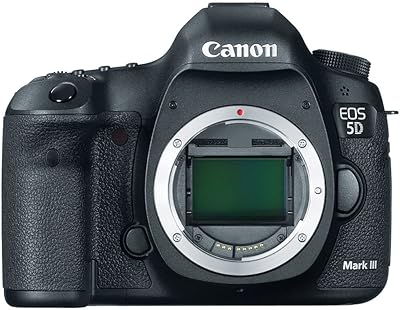
Canon EOS 5D Mark III
79%
93%
Autofocus Performance
89%
Image Quality
82%
Low-Light Capability
91%
Build Quality & Durability
61%
Video Capability
More
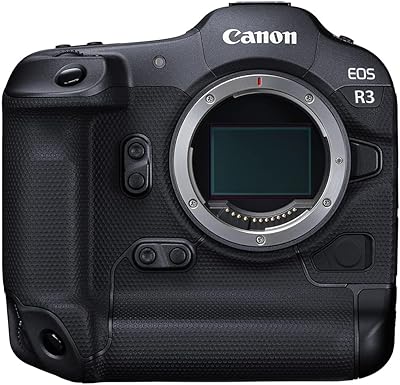
Canon EOS R3 Mirrorless Camera
89%
96%
Autofocus Performance
94%
Image Quality in Low Light
92%
Build Quality and Durability
93%
Video Recording Capabilities
89%
Usability and Ergonomics
More
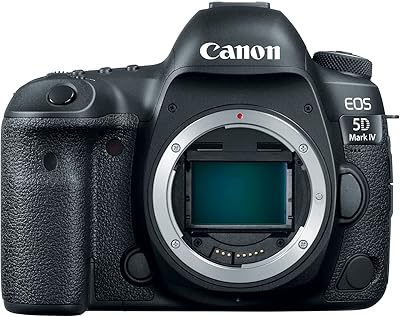
Canon EOS 5D Mark IV
82%
93%
Image Quality
89%
Autofocus Performance
94%
Build Quality & Durability
61%
Video Capabilities
88%
Low-Light Performance
More
Canon EOS R7
Canon EOS R7
83%
94%
Autofocus Performance
91%
Burst Speed & Pre-Capture
88%
Image Quality
83%
Video Quality
86%
In-Body Image Stabilization
More
Canon EOS R8
Canon EOS R8
75%
93%
Autofocus Performance
89%
Image Quality
84%
Video Quality
88%
Portability & Build
41%
Stabilization
More
Canon EOS 40D Digital SLR Camera
84%
90%
Image Quality
85%
Build Quality & Durability
87%
Battery Life
84%
Ease of Use
88%
Autofocus Performance
More
Canon EOS 60D DSLR Camera Body
85%
88%
Image Quality
91%
Build Quality
83%
Video Recording
86%
Autofocus Performance
89%
Ease of Use
More
Canon EOS R10 with RF-S18-150mm F3.5-6.3 IS STM
82%
93%
Autofocus Performance
88%
Image Quality
81%
Video Capability
91%
Ease of Use
84%
Build Quality & Portability
More
Canon EOS R6 Full-Frame Mirrorless Camera
87%
94%
Autofocus Performance
93%
Low-Light Performance
90%
Image Quality
85%
Ease of Use
91%
4K Video Quality
More

FAQ

You can absolutely use your existing Canon EF and EF-S lenses — you just need the Canon Mount Adapter EF-EOS R, which is sold separately. Autofocus, image stabilization, and exposure control all carry over reliably with most EF lenses, so if you have a collection of DSLR glass, this body is a very practical upgrade path.

It is noticeable enough to matter. When shooting in 4K, the EOS RP applies roughly a 1.7x crop to the sensor, which means a 24mm lens effectively behaves like a ~41mm lens. If wide-angle 4K footage is important to you, you would need an ultra-wide lens to compensate. For 1080p recording there is no crop, which is why many owners simply default to 1080p for most video work.

Unfortunately, yes — around 250 shots per charge under ideal conditions, and real-world use often comes in lower, especially if you are using the EVF heavily or leaving Wi-Fi enabled. The honest advice from long-term owners is to buy at least one spare LP-E17 battery at the same time you buy the camera. They are affordable and completely solve the problem.

Yes, Canon offers the EOS Webcam Utility software for both Windows and Mac that lets you connect the camera via USB and use it as a high-quality webcam. Alternatively, a clean HDMI output through a capture card works well for streaming setups. Both options are supported and work reliably.

It is not the ideal choice for those subjects. The 5fps burst rate and the AF tracking behavior in fast-action situations are limiting compared to bodies designed for that kind of work. For wildlife at a relaxed pace or casual sports sideline shots it can manage, but if action photography is a primary use case, a body with faster burst rates and more advanced subject tracking would serve you better.

The single card slot supports SD, SDHC, and SDXC cards up to the UHS-II speed standard. A UHS-I card will work fine for everyday shooting and 1080p video, but if you plan to shoot 4K or burst sequences regularly, a UHS-II card will give you faster write speeds and a deeper buffer. Brands like Sony, Lexar, and Sandisk all offer reliable UHS-II options.

Yes, it rotates fully to face forward, which makes solo recording and vlogging genuinely practical. The touchscreen is responsive and lets you tap to set focus while recording, which is useful when you are the one both in front of and behind the camera.

This is one of the camera's strongest areas. Eye AF works well in good lighting — it finds and locks onto eyes quickly, and the results in portrait shooting are consistently sharp. In lower light or when subjects are moving unpredictably it becomes less confident, but for portrait sessions, studio work, or family gatherings, the AF performance is genuinely impressive relative to the price point.

It is a capable and rewarding option for an enthusiast learner, particularly one who wants to grow into full-frame photography and Canon's lens ecosystem over time. The full manual controls, RAW shooting, and familiar Canon menu layout all make it a solid learning tool. That said, the short battery life and limited burst speed are things beginners should know about upfront — they are manageable, but worth planning around.

No, the body has no official weather sealing of any kind. This does not mean it will break at the first sign of cloud cover, but it does mean you should be careful in rain, at the beach, or in dusty environments. If you shoot regularly outdoors in variable conditions, a rain sleeve is cheap insurance, and pairing the body with a weather-sealed RF or EF lens does not compensate for the unsealed body itself.