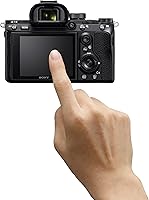
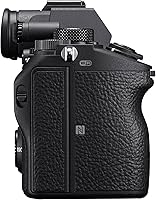
Overview

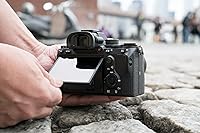
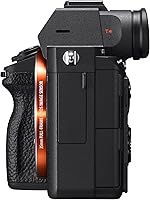
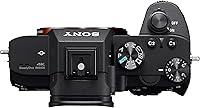
The Sony a7 III set a new standard when it launched, and years later it still holds its ground as one of the most capable full-frame mirrorless bodies at its price point. In a crowded market of newer rivals, the a7 III punches well above its weight — the magnesium alloy body feels solid without being cumbersome, the grip is deep and comfortable for extended shoots, and the controls fall naturally under your fingers whether you shoot stills or video. Sony's E-mount ecosystem is one of the broadest available, pairing this body with an impressive range of native lenses from compact primes to professional telephoto glass.

Features & Benefits

At the heart of this camera sits a 24.2MP BSI sensor capable of pulling extraordinary detail from challenging scenes — 15 stops of dynamic range means you can recover shadows and highlights that would destroy lesser sensors. The autofocus system covers 93% of the frame with 693 phase-detection points, and the eye-tracking works reliably enough in real shooting conditions to trust with fast-moving subjects. Burst shooters get up to 10fps with continuous tracking, while video users benefit from 4K recording alongside S-Log profiles and proper 3.5mm audio connections. Add in-body stabilization, weather sealing, and dual card slots, and the practical shooting experience is hard to argue with.

Best For

Sony's enthusiast workhorse earns its place most convincingly in the hands of portrait and wedding photographers — the eye-tracking autofocus is fast and reliable enough to let you focus on the moment rather than the mechanics. Travel shooters will appreciate the weather sealing and a battery that genuinely lasts a full day without anxiety. Hybrid creators who want usable 4K footage with proper audio monitoring will find this full-frame mirrorless more than capable without stepping into dedicated cinema camera territory. It also makes a compelling case for wildlife photographers moving up from crop sensors, and for DSLR users ready to cross over without sacrificing shooting depth.

User Feedback

Among the thousands of buyers who have lived with the a7 III long-term, the praise clusters around two things: autofocus reliability and low-light image quality that holds up even at high ISO settings. The dual card slots and improved battery life over older Sony bodies also come up repeatedly as genuinely useful daily advantages. That said, the criticism is consistent too — Sony's menu system remains a genuine frustration, especially for shooters arriving from Canon or Nikon, and the tilting screen's limited range of motion feels dated next to competitors offering fully articulating displays. Still, overall buyer satisfaction remains remarkably high, reflecting a camera that delivers where it counts most.

Pros

  • Eye-tracking autofocus locks onto subjects with confidence, even in challenging mixed lighting.
  • Exceptional low-light performance lets you shoot clean files at high ISO without heavy flash reliance.
  • Fifteen stops of dynamic range gives serious latitude to recover highlights and shadows in post.
  • In-body stabilization makes handheld shooting at slower shutter speeds genuinely practical.
  • Dual card slots provide real-time backup — a professional safety net on paid assignments.
  • Weather-sealed magnesium body holds up outdoors without treating every cloudy shoot as a risk.
  • 4K video with S-Log profiles and dedicated audio ports makes this a credible hybrid production tool.
  • The E-mount ecosystem offers one of the broadest native lens selections across all price points.
  • Battery life is strong enough for a full day of active shooting without mid-session anxiety.
  • 10fps continuous burst with full tracking keeps up with most fast-moving subjects reliably.

Cons

  • The menu system is cluttered and unintuitive — new users often spend hours finding basic settings.
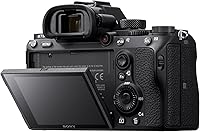
  • The tilting LCD cannot rotate to face forward, making solo video work unnecessarily awkward.
  • UHS-I card slots limit buffer clearing speed, which frustrates shooters firing long RAW bursts.
  • Newer bodies at similar prices now offer meaningfully better autofocus algorithms for erratic subjects.
  • The wireless transfer app is unreliable enough that many users default to a physical cable instead.
  • Building a proper E-mount lens kit carries a significant cost well beyond the body price.
  • The 4K crop mode slightly narrows the field of view, which catches some video shooters off guard.
  • Extreme expanded ISO performance falls short of what newer full-frame sensors can deliver cleanly.
  • Third-party lenses can produce inconsistent autofocus behaviour compared to native Sony glass.
  • Photographers arriving from Canon or Nikon often find the button layout logic requires real adjustment time.

Ratings

Our scores for the Sony a7 III are generated by AI after systematically analyzing thousands of verified global buyer reviews, actively filtering out incentivized, duplicate, and bot-driven feedback to surface genuine user experiences. The ratings reflect both the strengths that keep this full-frame mirrorless in high demand years after launch and the real frustrations that informed buyers should weigh before purchasing. Nothing has been smoothed over — the pain points are scored just as transparently as the wins.

Autofocus Performance
93%
The eye-tracking autofocus is the single feature users mention most often in positive terms — wedding and portrait photographers consistently report that it locks onto subjects with confidence even in mixed lighting. At events where you have one chance to nail the shot, that reliability matters enormously.
In very low contrast scenes or when subjects are partially obscured, the system can occasionally hunt before locking. A small number of users shooting fast and erratic wildlife found the tracking less consistent than Sony's newer generation bodies offer.
Low-Light & High-ISO Quality
91%
Shooting in dimly lit venues, evening street scenes, or indoor events without flash is where this camera genuinely impresses. Users routinely push ISO into the thousands and recover clean, usable files — a capability that directly reduces dependence on artificial lighting in real-world work.
At the extreme upper end of the expanded ISO range, noise becomes difficult to manage even in post-processing. Most buyers find the practical ceiling sits well below the maximum spec, and some note that competing bodies released since have narrowed this advantage.
Image Quality & Dynamic Range
92%
The 15-stop dynamic range gives photographers serious latitude when recovering highlights blown by harsh sunlight or pulling detail from deep shadows — a practical advantage in landscape, wedding, and documentary work. Files respond exceptionally well to editing, which experienced photographers consistently cite as a key reason they trust it for paid assignments.
At 24.2 megapixels, users who need to crop aggressively — wildlife photographers shooting distant subjects, for instance — may find the resolution limiting compared to higher-megapixel alternatives available at similar price points today.
Battery Life
84%
Around 710 shots per charge on the LCD is genuinely practical for a full day of event or travel photography without carrying a second battery. Buyers who previously used older Sony bodies or competing mirrorless systems frequently single out the improved stamina as a deciding factor in their purchase.
Heavy video recording or extended use of the electronic viewfinder drains the battery noticeably faster than the still-image rating suggests. Shooters covering multi-day events without reliable charging access still tend to carry a spare battery as a precaution.
Video Capabilities
81%
19%
4K recording paired with S-Log2 and S-Log3 profiles gives hybrid shooters a serious color grading foundation without spending on dedicated cinema equipment. The inclusion of both a mic input and headphone monitoring jack — genuinely rare at this tier — makes this a credible production tool for solo video creators.
The camera introduces a slight crop in 4K mode, which affects field of view and is a known frustration for videographers. There is also no fully articulating screen, which limits convenient framing for vlogging or solo shooting from unusual angles.
Build Quality & Weather Sealing
88%
The magnesium alloy construction feels substantial in hand without tipping into uncomfortable weight for all-day carry. Photographers who regularly shoot outdoors — weddings in unpredictable weather, travel in humid or dusty environments — report confidence in the sealing holding up under real conditions.
The weather sealing requires a sealed lens to be fully effective, which some users only discover after purchase. A few buyers in extreme conditions noted that the body is weather-resistant rather than waterproof, and have experienced moisture ingress in heavy rain.
Ergonomics & Handling
83%
The deep front grip and well-spaced buttons suit photographers with average to large hands comfortably through long shooting sessions. Controls for key functions like exposure compensation and AF area selection are placed logically, and most users adapt to the layout quickly.
Shooters transitioning from Canon or Nikon bodies often note an adjustment period with button placement and the overall layout logic. The joystick for moving focus points, while functional, feels slightly stiff to some users compared to newer Sony and rival bodies.
Menu System & Usability
58%
42%
Once a user has invested time in customizing the function menu and assigning frequently used settings to dedicated buttons, the shooting workflow becomes reasonably efficient. Experienced Sony users who have adapted to the system rarely cite it as a daily obstacle.
This is the most consistently criticized aspect across buyer feedback — new users frequently describe the menu structure as cluttered, illogically organized, and time-consuming to navigate. Photographers arriving from other systems can spend hours hunting for settings that should take seconds to locate.
Continuous Shooting Speed
86%
Ten frames per second with full autofocus and auto-exposure tracking is genuinely competitive for capturing fast action — sports sideline photographers and wildlife shooters report keeping up with moving subjects reliably. The silent shutter option adds versatility in quiet environments like ceremonies or theatre.
The buffer fills at a pace that can frustrate photographers shooting long sustained bursts, particularly when writing to UHS-I cards. Users who shoot RAW exclusively may notice the camera slowing down before a sequence is fully finished.
In-Body Image Stabilization
82%
18%
The 5-axis stabilization makes a tangible difference shooting handheld in lower light or with longer lenses — travel photographers consistently cite sharper keeper rates when shooting at slower shutter speeds without a tripod. It also benefits video users by smoothing out minor camera movement during handheld clips.
The stabilization is less effective when combined with older or third-party lenses that do not communicate lens data to the body. Some users also note that the IBIS is not as refined as what Sony's newer bodies or certain competitors now offer.
LCD Screen & Viewfinder
67%
33%
The electronic viewfinder at 0.78x magnification is large and clear, making manual focus and composition in bright outdoor light genuinely comfortable. Most stills photographers find the viewfinder experience strong enough for demanding work.
The tilting LCD is the most dated-feeling aspect of the body — it only tilts up and down, ruling out comfortable self-framing or low-angle shooting in portrait orientation. Competing cameras at similar price points now offer fully articulating or multi-direction screens that make this limitation more apparent.
Card Slot & Storage
87%
Dual card slots give working professionals the safety net of real-time backup or overflow recording — an important practical consideration for photographers on paid assignments where losing images is not an option. Buyers upgrading from single-slot bodies frequently cite this as a feature they quickly came to rely on.
Both slots are UHS-I rather than the faster UHS-II standard, which creates a bottleneck when shooting high-bitrate 4K video or clearing a full buffer quickly. Video-focused users in particular find this limiting compared to newer bodies that support faster card standards.
Lens Ecosystem Compatibility
94%
The Sony E-mount has matured into one of the most comprehensive native lens ecosystems available, covering everything from compact travel primes to professional-grade telephoto zooms. The breadth of choice across price points means buyers can build a kit that matches their budget and shooting style without compromise.
Premium native Sony G Master lenses carry significant price tags, and building out a full kit can push total investment well beyond the body cost. Third-party support has improved, but some users note inconsistent autofocus performance with non-Sony glass.
Wireless Connectivity
71%
29%
Built-in Wi-Fi and Bluetooth allow image transfer to a smartphone and remote camera control through Sony's Imaging Edge app, which travel and social media-focused photographers find useful for quick sharing without a laptop.
The Imaging Edge app receives consistent criticism for being slow, unintuitive, and prone to dropped connections — the hardware capability is there, but the software execution undermines the experience. Several users report relying on a physical cable transfer rather than wireless due to reliability issues.
Value for Money
89%
Given the combination of sensor performance, autofocus capability, weather sealing, and video features packed into one body, experienced buyers consistently judge the a7 III as strong value relative to what comparable performance costs elsewhere. It remains a benchmark for what a full-frame mirrorless body can deliver at its tier.
Newer full-frame bodies from Sony and rivals have appeared at similar price points with meaningful upgrades — improved autofocus algorithms, better screens, faster card slots — which makes the value calculation less straightforward today than it was at launch.

Suitable for:

The Sony a7 III is the kind of camera that genuinely earns its place in a working photographer's bag, and it suits a wide range of serious shooters. Wedding and portrait photographers will find the eye-tracking autofocus reliable enough to trust on the most important shots of a client's day, while the weather-sealed body handles unpredictable outdoor conditions without anxiety. Travel photographers benefit from a full-frame sensor in a manageable form factor, with battery life that realistically covers a full day of shooting without a mid-day charge hunt. Hybrid creators — those who shoot both stills and video — get a body that handles 4K footage with S-Log profiles, dedicated mic and headphone connections, and in-body stabilization, removing the need for a separate dedicated video camera. Photographers stepping up from crop-sensor bodies or crossing over from DSLR systems will find the jump in low-light performance and dynamic range immediately noticeable and practically useful.

Not suitable for:

Buyers who have never used a Sony body before should go in with realistic expectations about the learning curve — the menu system is genuinely complex, and the time spent navigating it during the first few weeks can be frustrating. If you primarily shoot video and need a fully articulating screen for solo work or vlogging, the a7 III's tilt-only LCD will feel like a constant compromise compared to rivals that have solved this problem. Photographers who regularly shoot extremely long bursts in RAW will hit the buffer and card write speed limits more often than they would like, since the UHS-I card slots are not the fastest available at this tier. Those chasing the absolute cutting edge in autofocus intelligence — particularly for erratic fast-action sports or wildlife — may find that Sony's own newer releases and competing systems have meaningfully pulled ahead. Finally, if the total cost of ownership is a concern, building out a meaningful Sony E-mount lens kit is a significant financial commitment beyond the body itself.

Specifications

  • Sensor: 24.2MP back-illuminated (BSI) full-frame Exmor R CMOS sensor with 1.8x readout speed for reduced rolling shutter and improved low-light performance.
  • Dynamic Range: 15 stops of dynamic range enabling significant highlight and shadow recovery in post-processing without visible banding or noise.
  • ISO Range: Native ISO 100–51,200, expandable to ISO 50–204,800 for shooting in extremely low-light environments.
  • Autofocus: 693 phase-detection and 425 contrast-detection AF points covering 93% of the image frame, with real-time eye-tracking for both humans and animals.
  • Burst Speed: Up to 10 frames per second continuous shooting with full AE/AF tracking, available in both silent electronic and mechanical shutter modes.
  • Stabilization: 5-axis in-body optical image stabilization (IBIS) offering up to 5 stops of compensation, effective with both native and adapted lenses.
  • Video: 4K UHD (3840×2160) video recording up to 30fps in XAVC S format, with S-Log2 and S-Log3 gamma profiles for professional color grading.
  • Audio I/O: Dedicated 3.5mm stereo microphone input and 3.5mm headphone output jack for real-time audio monitoring during video recording.
  • Battery Life: Rated at approximately 610 shots per charge via viewfinder and approximately 710 shots via LCD monitor using the NP-FZ100 lithium-ion battery.
  • Card Slots: Dual SD card slots supporting UHS-I cards, configurable for simultaneous backup recording, overflow, or file-type separation.
  • Viewfinder: 0.78x magnification OLED electronic viewfinder (EVF) with 2.36 million dots resolution for accurate exposure and color preview.
  • LCD Screen: 3-inch tilting TFT LCD touchscreen with 921,600 dot resolution, supporting tilt up and down but not full articulation.
  • Build: Magnesium alloy front, top, and rear panels with dust and moisture resistance sealing throughout the body construction.
  • Mount: Sony E-mount lens interface, compatible with the full range of native FE full-frame and APS-C E-mount lenses as well as adapted A-mount glass.
  • Connectivity: Built-in Wi-Fi (2.4GHz), Bluetooth 4.1, NFC, Micro-HDMI output, Micro-USB 2.0, and USB 3.1 Gen 1 (USB-C) for data transfer and tethering.
  • Shutter Speed: Mechanical shutter range of 1/8000 to 30 seconds, plus Bulb mode and a fully electronic silent shutter option.
  • File Formats: Captures still images in uncompressed 14-bit RAW, compressed RAW, and JPEG (Basic, Fine, Normal) formats simultaneously if required.
  • Dimensions: Body measures approximately 126.9 x 95.6 x 73.7mm and weighs approximately 565g with battery and memory card included.
  • In the Box: Includes rechargeable NP-FZ100 battery, AC-UUD12 AC adapter, shoulder strap, body cap, accessory shoe cap, eyepiece cup, and Micro-USB cable.
  • Warranty: Covered by Sony's standard one-year limited manufacturer warranty against defects in materials and workmanship from the date of purchase.

Related Reviews
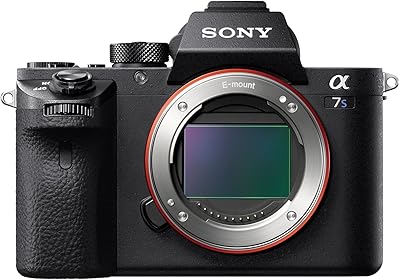
Sony a7S II Camera
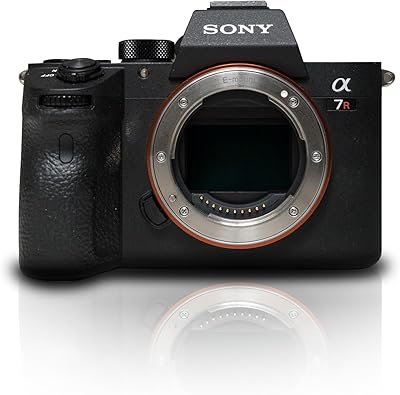
Sony a7S II Camera
85%
95%
Low-Light Performance
92%
4K Video Quality
88%
Autofocus Accuracy
91%
Build Quality and Durability
70%
Ease of Use for Beginners
More
Sony Alpha 7R III Mirrorless Camera
87%
96%
Image Quality
94%
Autofocus Performance
88%
Battery Life
91%
Build Quality
92%
Low-Light Performance
More
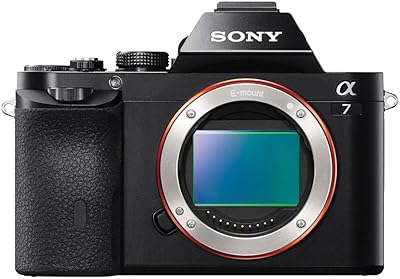
Sony a7 Full-Frame Mirrorless Camera Body
84%
91%
Image Quality
94%
Autofocus Performance
88%
Build Quality
72%
Battery Life
85%
Ease of Use
More
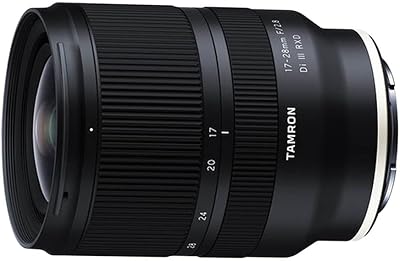
Tamron 17-28mm f/2.8 Di III RXD for Sony E-Mount
89%
91%
Autofocus Performance
88%
Build Quality
93%
Image Quality
89%
Low-Light Performance
90%
Portability
More
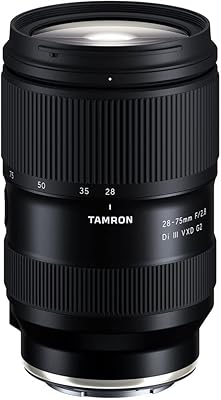
Tamron 28-75mm F/2.8 Di III VXD G2 for Sony E-Mount
87%
89%
Image Quality
92%
Autofocus Speed
85%
Build Quality
87%
Ease of Use
90%
Low-Light Performance
More
Tamron 20-40mm f/2.8 Di III VXD Lens for Sony E-Mount
88%
91%
Autofocus Speed
89%
Image Quality
93%
Portability
82%
Macro Performance
85%
Build Quality
More
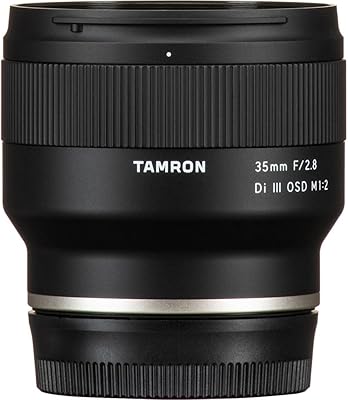
Tamron 35mm f/2.8 Di III OSD M1:2 Lens for Sony E-Mount
85%
94%
Image Quality
75%
Autofocus Speed
90%
Macro Performance
88%
Build Quality
91%
Portability
More
Tamron 35-150mm F/2-2.8 Di III VXD Lens for Sony E-Mount
85%
94%
Autofocus Speed
89%
Image Quality
92%
Low-Light Performance
88%
Build Quality
75%
Size and Weight
More
Tamron 24mm F/2.8 Di III OSD M1:2 Lens for Sony E-Mount
88%
89%
Image Quality
86%
Build Quality
95%
Portability
71%
Autofocus Speed
83%
Low Light Performance
More
Tamron 28-200mm F/2.8-5.6 Di III RXD for Sony E-Mount
88%
89%
Autofocus Performance
92%
Image Quality
95%
Portability & Weight
84%
Build Quality
68%
Low-Light Performance
More

FAQ

This is a body-only listing, so no lens is included. You will need to purchase at least one Sony E-mount lens separately. If you are just starting out, the Sony FE 28-70mm f/3.5-5.6 OSS is a common and affordable pairing, while more serious shooters often look at the FE 24-70mm f/2.8 G Master.

Honestly, yes — for most photographers it still holds up well. The sensor performance, autofocus reliability, and overall feature set remain competitive with many newer bodies at similar prices. Where it shows its age most is in the menu system, the tilt-only LCD, and the UHS-I card slots. If those specific limitations are dealbreakers for how you shoot, it is worth comparing against newer options. For image quality and AF performance day-to-day, few would be disappointed.

Yes, with a third-party adapter you can mount Canon EF, Nikon F, and many other lens mounts onto the E-mount body. Autofocus performance through an adapter varies — some adapters like the Sigma MC-11 for Canon EF lenses work quite well, while others may only support manual focus. Native Sony FE lenses will always give you the best autofocus experience.

In practice, it is one of the most reliable eye-AF systems available at this price point. For portraits, weddings, and events where your subject is clearly in frame, it locks quickly and holds well even when subjects move or partially turn away. It is less impressive when subjects are far away, in very low contrast scenes, or moving erratically — but for the majority of portrait and event work, most photographers find it trustworthy enough to rely on.

The card slots support UHS-I speeds, so spending on UHS-II cards will not give you any speed benefit — you can save money there. For RAW burst shooting, aim for UHS-I cards rated at V30 or higher (90MB/s write speed or above). Brands like Sony Tough, SanDisk Extreme Pro, and Lexar Professional are reliable choices that keep buffer clearing times reasonable.

The body is dust and moisture resistant, which covers light rain and splashes in practice. That said, the sealing is only as effective as the lens you attach — if your lens is not also sealed, moisture can still enter at the mount. For heavy downpours or shooting near water, most photographers use additional protection. It is not waterproof, but for typical outdoor shooting in variable weather it holds up reliably.

There is a slight crop factor in 4K mode compared to shooting full-frame stills, which effectively narrows your field of view a little. In practice, you may need to step back slightly or use a slightly wider lens than you would for stills. It is not a dramatic crop like some other bodies, but it is worth accounting for when planning a video shoot, particularly if you are working in tight spaces.

Most users coming from other brands report a genuine adjustment period of one to two weeks before things feel natural. The key practical tip is to spend time upfront configuring the custom function menu, assigning your most-used settings to the programmable buttons, and memorizing where the handful of settings you change regularly actually live. Once you have done that groundwork, day-to-day shooting becomes much smoother — but the initial learning curve is real and worth being prepared for.

You can charge the NP-FZ100 battery in-camera via the USB-C port, which is convenient for travel when you can top up from a power bank or laptop. However, many working photographers prefer a dedicated dual-channel battery charger purchased separately, as it charges faster and lets you charge a spare battery simultaneously without tying up the camera body.

It is capable enough for beginners with ambition, but it is not the most forgiving first camera. The menu complexity and the assumption that the user understands exposure fundamentals mean complete newcomers may feel overwhelmed. That said, if you are coming from a DSLR and already understand aperture, shutter speed, and ISO, the transition is very manageable. For someone starting completely from scratch, a camera with a more approachable interface might serve better as a first step.