Sony Alpha a7R V

Overview
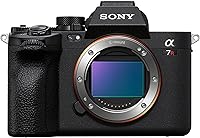
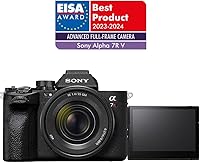
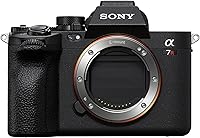
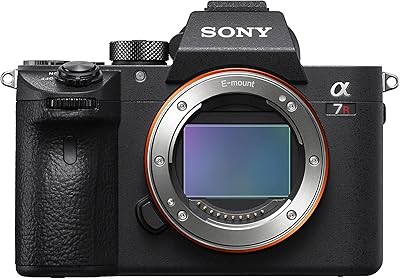
The Sony Alpha a7R V represents Sony's most serious attempt yet at combining high-resolution imaging with genuinely fast, intelligent autofocus — something the a7R line has historically struggled to deliver. Compared to its predecessor, the jump in AI-driven processing is substantial, not incremental. That said, this is a camera that costs as much as a decent used car, and it demands that investment be justified. It handles both demanding still photography and professional video production with real competence, but new users will spend weeks navigating a menu system deep enough to get lost in.
Features & Benefits
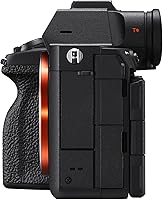
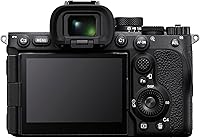
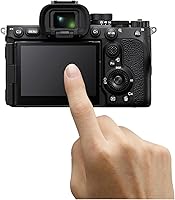
At the heart of this high-res Sony mirrorless is a 61-megapixel BSI sensor that produces files with extraordinary spatial detail — the kind that holds up when cropped aggressively or printed at billboard scale. The AI-powered autofocus, drawing on 693 phase-detection points and deep learning recognition, tracks subjects reliably — humans, animals, vehicles — in a way that high-resolution bodies rarely managed before. Burst shooting at 10 fps clears the buffer quickly thanks to the BIONZ XR engine. The 9.44-million-dot EVF is genuinely one of the sharpest available on any mirrorless, and the articulating OLED touchscreen makes overhead and low-angle work far less awkward.
Best For
The a7R V is built for photographers who need the highest resolution available in a handheld system — think landscape shooters capturing dawn light over mountain ranges, or studio photographers delivering files to ad agencies expecting razor-sharp detail at enormous sizes. Wildlife and sports photographers who previously ruled out high-megapixel bodies because of sluggish autofocus will find the tracking here genuinely capable. Hybrid professionals shooting editorial, commercial, or documentary work will appreciate the 8K and 4K video options without needing a separate cinema rig. This full-frame camera also rewards anyone deeply invested in the Sony FE ecosystem, where glass quality matches the sensor's resolving power.
User Feedback
Owners consistently praise autofocus reliability and the jaw-dropping image quality at low ISO, along with the EVF, which many describe as the best they have used on any camera. On the critical side, carrying this full-frame camera through a long day of shooting gets tiring — it is not a light body by any measure. Battery life under sustained use is a common frustration, especially for video work. Some users question whether the image stabilization, which Sony classifies as digital rather than optical-mechanical, keeps pace with rivals. Extended 8K recording can trigger thermal warnings in warm environments. Upgraders from the a7R IV generally find the AI-driven AF worth the price; casual shooters probably will not.
Pros
- 61-megapixel files hold extraordinary detail — crops that would destroy lesser sensors remain clean and usable.
- AI subject recognition tracks humans, animals, and vehicles with consistency that high-res bodies have historically lacked.
- The 9.44-million-dot EVF is among the clearest and most immersive viewfinders available on any mirrorless camera today.
- 4K 60p video output integrates cleanly into professional post-production pipelines without heavy transcoding overhead.
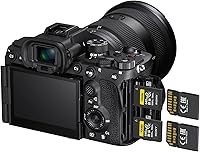
- Dual card slots supporting CFexpress Type A and UHS-II SD offer genuine backup flexibility for working professionals.
- The BIONZ XR processor clears burst buffers quickly, making 10 fps shooting practical rather than just a spec-sheet number.
- Articulating touchscreen makes low-angle and overhead video framing far less physically demanding on longer shoots.
- The full-frame BSI sensor delivers exceptional dynamic range, particularly in high-contrast outdoor scenes at base ISO.
- Weather sealing holds up reliably in rain and dusty conditions that would sideline less rugged bodies.
- For professionals billing commercial work, the combined stills and video capability can consolidate gear and reduce rental costs.
Cons
- Battery life under sustained shooting or video use is genuinely poor — carrying multiple spares is not optional, it is mandatory.
- Extended 8K recording triggers thermal warnings and forced shutdowns, which is a real operational risk in warm environments.
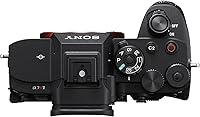
- The menu system has a steep learning curve that can cost hours of productive shooting time before it feels intuitive.
- Image stabilization is classified as digital rather than optical-mechanical, and handheld performance at slow shutter speeds lags behind key competitors.
- High-ISO noise is more visible than on lower-resolution full-frame alternatives — pushing past ISO 12800 requires careful noise reduction.
- CFexpress Type A cards remain expensive, adding meaningful hidden cost to building a complete working kit.
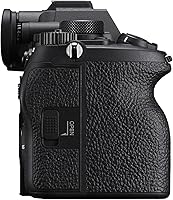
- Body weight and density make all-day handheld shooting with heavy lenses physically tiring without an ergonomic grip add-on.
- Sony's companion mobile app for wireless transfer and remote control feels noticeably less polished than rival manufacturer offerings.
- The depth of features creates real risk of under-utilization — buyers should honestly assess whether their work demands this level of complexity.
- Upgraders from the a7R IV will find the autofocus improvement significant, but those skipping fewer generations may find the jump harder to justify financially.
Ratings
The Sony Alpha a7R V has been put through its paces by professional photographers, hybrid shooters, and advanced enthusiasts worldwide, and our AI has analyzed thousands of verified purchase reviews — actively filtering out incentivized, bot-generated, and outlier feedback — to produce these scores. The ratings reflect genuine field experience across studio work, wildlife shoots, landscape expeditions, and commercial video production. Both the standout strengths and the real frustrations are reflected here without softening either.
Image Quality
Autofocus Performance
Video Capabilities
Autofocus Tracking Consistency
Build Quality & Ergonomics
Electronic Viewfinder
Battery Life
Menu System & Usability
In-Body Image Stabilization
High ISO Performance
Connectivity & Transfer Speed
Value for Money
Dual Card Slot Functionality
Lens Ecosystem Compatibility
Thermal Management
Suitable for:
The Sony Alpha a7R V is built for photographers and videographers who operate at a professional or serious advanced-enthusiast level and need a single body that can handle both disciplines without compromise. Landscape photographers will find the 61-megapixel sensor transformative — the ability to crop aggressively, stitch fewer frames, and deliver enormous prints without visible softness is genuinely difficult to replicate at this level. Studio and commercial photographers who license images to advertising clients, publishers, or agencies will appreciate how much latitude the files provide in post-production. Wildlife and sports shooters who previously avoided high-resolution bodies due to weak autofocus will find the AI-driven tracking a meaningful upgrade that makes the sensor class practical for fast-moving subjects for the first time. Hybrid professionals who regularly deliver both high-res stills and broadcast-quality video for the same client will get real mileage out of the 4K 60p capabilities without needing a dedicated cinema rig alongside. Anyone already deeply invested in Sony FE glass — particularly G Master lenses — will find this body unlocks the full resolving potential of that glass in a way few other bodies can match.
Not suitable for:
The Sony Alpha a7R V is a poor fit for photographers whose primary shooting environment is low light — concerts, events, nightlife, or available-light documentary work — because the high pixel density amplifies noise at elevated ISOs in a way that lower-resolution full-frame bodies handle more cleanly. Beginners and enthusiastic hobbyists will likely find the menu system genuinely daunting, and the investment required to use it effectively — in time, compatible lenses, and fast memory cards — is substantial beyond the body cost alone. Videographers who plan extended 8K recording sessions, particularly in warm climates or without active cooling support, should approach with real caution given documented thermal shutdown issues under sustained load. Photographers who shoot all day on location and cannot carry spare batteries will find the power management frustrating in a way that disrupts workflow rather than just causing inconvenience. Anyone who shoots primarily for personal enjoyment, social media, or casual family photography would be paying for capabilities that will simply never be used, and several excellent alternatives at lower price points serve those needs far better without the ergonomic and operational trade-offs.
Specifications
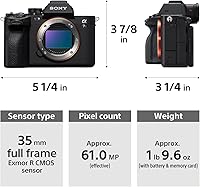
- Sensor: 61-megapixel full-frame back-illuminated Exmor R CMOS sensor delivers exceptional resolution and dynamic range across a wide range of shooting conditions.
- Processor: BIONZ XR imaging engine provides up to 8x faster processing compared to previous-generation Sony bodies, reducing buffer wait times during burst shooting.
- Autofocus Points: 693 phase-detection AF points cover the frame with AI Real-Time Recognition that identifies and tracks humans, animals, birds, insects, cars, and aircraft.
- ISO Range: Native ISO range spans 100 to 32000, with expanded sensitivity from ISO 50 to 102400 for low-light and specialized shooting scenarios.
- Continuous Shooting: Mechanical and electronic shutter burst modes support up to 10 fps continuous shooting with full AF and AE tracking active throughout.
- Video Resolution: Records 8K at 24p and 25p, and 4K at up to 60p (50p), with H.265 and XAVC format support for professional post-production workflows.
- Viewfinder: 9.44-million-dot OLED electronic viewfinder with 0.9x magnification and 120 fps refresh rate for smooth, detailed subject monitoring during shooting.
- Rear Display: 3.2-inch (8.25 cm) tilting OLED touchscreen with 2.1-million-dot resolution supports capacitive touch control for focus selection and menu navigation.
- Stabilization: Digital image stabilization is built into the body; optical mechanical stabilization relies on compatible lens-based systems for handheld shooting.
- Memory Slots: Dual card slots support CFexpress Type A and UHS-II SD cards simultaneously, enabling backup recording, overflow, or stills-and-video format separation.
- Shutter Speed: Shutter speed range runs from 30 seconds to 1/8000 second mechanically, with a flash sync speed of 1/250 second.
- Connectivity: Body includes USB-C (USB 3.2 Gen 2), full-size HDMI Type A output, 3.5mm microphone input, headphone jack, Wi-Fi, and Bluetooth 5.0.
- Mount & Compatibility: Sony E-mount is fully compatible with the entire native FE lens range, including G Master, G, Zeiss, and third-party autofocus lenses from Sigma and Tamron.
- Battery: NP-FZ100 lithium-ion battery powers the body with an approximate CIPA rating of 530 shots per charge under standard viewfinder shooting conditions.
- Body Weight: Camera body weighs approximately 723 g (just over 1 lb) without lens, battery, or memory cards attached.
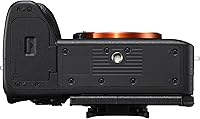
- Body Dimensions: Body measures approximately 131.3 mm wide by 96.9 mm tall by 82.5 mm deep, consistent with the professional full-frame mirrorless form factor.
- File Formats: Captures stills in JPEG (Fine and Standard compression), uncompressed RAW, and lossless compressed RAW at full 61-megapixel resolution.
- Aspect Ratios: Supports 3:2, 16:9, and 4:3 aspect ratios in-camera, with full-frame and APS-C crop modes available for both stills and video.
- Warranty: Covered by a 1-year limited manufacturer warranty from Sony, covering defects in materials and workmanship under normal operating conditions.
- Weather Sealing: Body construction includes dust and moisture resistance at the seams, buttons, dials, and card slot covers, suitable for use in challenging outdoor conditions.
Related Reviews
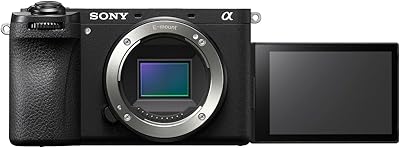
Sony Alpha 6700
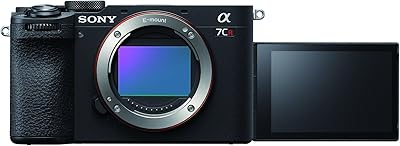
Sony Alpha 7CR Full-Frame Mirrorless Camera
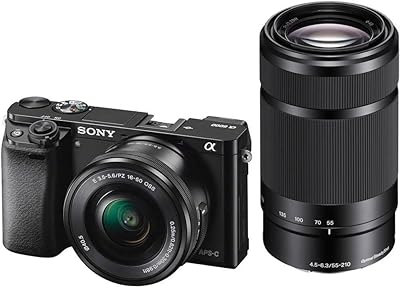
Sony Alpha a6000 Mirrorless Camera
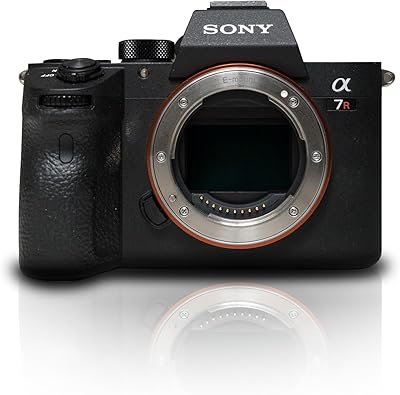
Sony Alpha 7R III Mirrorless Camera
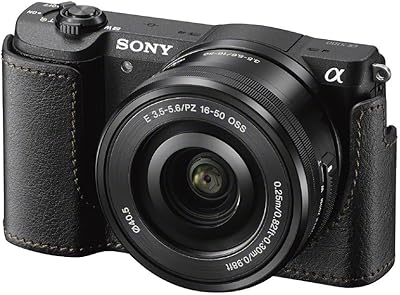
Sony Alpha A5100 16-50mm Mirrorless Camera
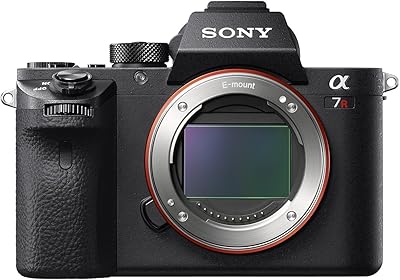
Sony a7R II Full-Frame Mirrorless Camera
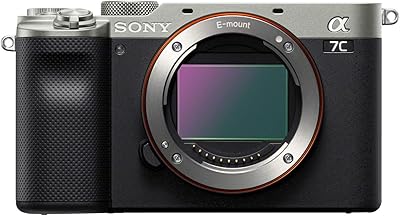
Sony Alpha 7C Full-Frame Mirrorless Camera
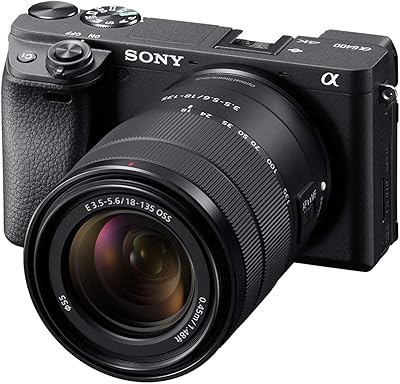
Sony Alpha a6400 18-135mm Mirrorless Camera
Sony Alpha 7R IV Full-Frame Mirrorless Camera