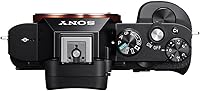
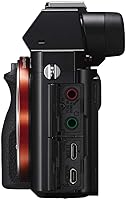
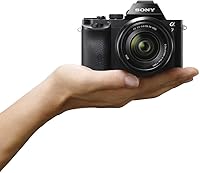
Overview

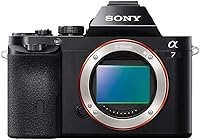
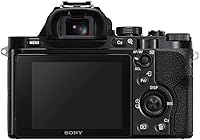
The Sony a7 Full-Frame Mirrorless Camera arrived in 2013 as the first interchangeable-lens camera to fit a full-frame sensor inside a genuinely compact mirrorless body — and that was a significant moment for the industry. Before it, full-frame performance meant committing to a DSLR the size and weight of a brick. Built around Sony's E-mount ecosystem, this camera opened the door to a growing library of native lenses while also accepting adapted glass from virtually every major mount. The body itself is compact and well-constructed, sitting noticeably lighter in hand than a comparable DSLR, yet retaining enough physical controls to feel like a serious photographic tool.

Features & Benefits

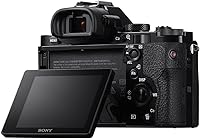
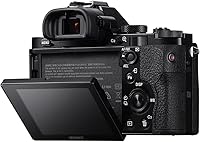
At the heart of this full-frame mirrorless body sits a 24.3-megapixel CMOS sensor that delivers strong dynamic range and resolves fine detail with ease. The expanded ISO range — stretching from 50 up to 25600 — makes low-light shooting genuinely practical rather than a last resort. Autofocus combines phase and contrast detection across 25 points; it handles single-shot work reliably, but continuous AF on fast-moving subjects shows its age compared to current-generation systems. The 0.71x electronic viewfinder provides a live exposure preview that many photographers prefer over an optical finder for critical manual focus work. A tilting 3-inch LCD with 1.23 million dots handles awkward shooting angles without fuss.

Best For

The Sony a7 suits photographers who are done hauling full DSLR rigs but refuse to give up sensor size. Travel photographers will appreciate the compact, lightweight build, while portrait and landscape shooters will find the full-frame rendering — that characteristic tonal depth and background separation — worth the investment. If you are switching from a Canon or Nikon DSLR, the E-mount ecosystem has matured enough that adapting existing glass or buying native lenses is a realistic path forward. Videographers in documentary or run-and-gun contexts will appreciate clean 1080p output and a working microphone input. This is not a beginner's camera; it rewards those with serious photographic intent.

User Feedback

Averaging 4.3 stars across 382 ratings, the Sony a7 earns consistent praise for image sharpness, natural color rendering, and solid low-light output — qualities that remain competitive even years after its release. The recurring complaint, and it is a fair one, centers on battery life: the NP-FW50 is a small cell that drains quickly with the EVF active, so carrying spares is essentially mandatory. The menu system draws regular criticism for feeling dense and poorly organized, especially from users migrating from other brands. Autofocus in single-shot mode generally satisfies, but continuous tracking on moving subjects is where the older architecture shows. A handful of buyers also flag that newer a7 models have raised the bar enough to make value comparison worthwhile before committing.

Pros

  • Full-frame 24.3MP sensor produces detailed, high-resolution images with excellent dynamic range.
  • Noticeably lighter and smaller than full-frame DSLRs, making it practical for all-day carry.
  • Wide ISO range handles low-light situations with natural results and manageable noise.
  • E-mount compatibility opens access to a broad and growing ecosystem of native and adapted lenses.
  • Electronic viewfinder shows a live exposure preview, which genuinely helps when shooting in tricky light.
  • Tilting LCD is a practical addition for shooting from low or high angles without contorting yourself.
  • Clean HDMI output makes it a viable option for videographers using external recorders.
  • RAW file support gives post-processing flexibility that many photographers consider non-negotiable.
  • Hot shoe with TTL flash support keeps professional lighting options fully on the table.
  • At its current market position, the Sony a7 offers full-frame image quality at a price point that newer bodies struggle to match.

Cons

  • The NP-FW50 battery drains quickly — most users will need two or three spares for a full shooting day.
  • Continuous autofocus on moving subjects is unreliable by modern standards and will frustrate action shooters.
  • The menu system is cluttered and unintuitive, especially for users coming from Canon or Nikon bodies.
  • No in-body image stabilization, meaning sharp handheld shots in low light depend entirely on the lens.
  • Video is capped at FHD 1080p with no 4K option, which limits its appeal for current video production needs.
  • Continuous shooting tops out at 4 fps, which is too slow for sports, birds in flight, or fast action.
  • The body lacks weather sealing, making it a risk in rain, dust, or humid outdoor environments.
  • Older AF architecture means single-point manual selection is reliable, but subject detection is absent.
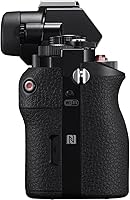
  • Grip depth is shallow, which can feel insecure when paired with larger, heavier lenses.
  • Given how far the a7 line has evolved, buying this body new requires honest comparison against current-generation alternatives.

Ratings

The scores below are generated by AI after analyzing thousands of verified global user reviews for the Sony a7 Full-Frame Mirrorless Camera, with spam, bot activity, and incentivized feedback actively filtered out to ensure the results reflect honest, real-world experience. We have weighted both the strengths buyers consistently celebrate and the friction points they repeatedly run into, so nothing has been glossed over. The result is a transparent, balanced picture of where this camera genuinely excels and where it asks for compromise.

Image Quality
93%
The 24.3MP full-frame sensor is the reason most people buy this camera, and it consistently delivers. Users shooting portraits report beautiful tonal separation and skin rendering, while landscape photographers praise the latitude in RAW files when pulling detail from shadows or recovering blown highlights during post-processing.
At very high ISO settings — above 12800 — noise reduction softens fine detail noticeably, which bothers photographers doing large-format prints. A small number of users also note that Sony's in-camera JPEG processing can look slightly clinical compared to competitors' color profiles out of the box.
Low-Light Performance
88%
Shooting in dim restaurants, evening street scenes, or indoor events without flash is genuinely comfortable up to ISO 3200 to 6400, where the full-frame sensor's larger photosites make a clear difference over APS-C cameras. Many users specifically switched from crop-sensor bodies after experiencing how much cleaner their indoor shots became.
The lack of in-body image stabilization means that low-light performance depends heavily on the lens being used — without optical stabilization in the glass, handheld shots at slower shutter speeds will show camera shake regardless of how clean the sensor is at high ISO.
Autofocus Accuracy
71%
29%
In single-shot mode with a stationary or slow-moving subject, the hybrid phase and contrast-detection system locks on accurately and quickly enough for portraits, street photography, and controlled studio work. Users doing deliberate, considered shooting rarely report missed focus in well-lit conditions.
Continuous autofocus tracking is a clear weak point and users are consistent about it — fast-moving subjects like children running, pets, or any sport will produce a meaningful number of out-of-focus frames. This is a first-generation mirrorless AF implementation and it shows when you push it beyond relaxed single-shot use.
Battery Life
44%
56%
The NP-FW50 charges via the included AC adapter and spare batteries are widely available and relatively inexpensive, which makes the low capacity manageable if you plan ahead. Users who shoot tethered or in studio environments where wall power is nearby report fewer disruptions from the limited battery life.
This is the most-cited frustration across user reviews, and for good reason — real-world performance with the EVF active often delivers fewer than 250 shots per charge. Photographers heading out for a full day of travel or event shooting universally report needing at least two, and often three, spare batteries to avoid running out of power at a critical moment.
Build Quality
79%
21%
The magnesium alloy body feels solid and premium in hand, with a weight and density that communicates build quality without being heavy. Users upgrading from entry-level bodies consistently remark that the Sony a7 feels like a significant step up in construction, with dials and buttons that have satisfying resistance and feel.
The absence of weather sealing is a genuine limitation that buyers feel acutely once they start shooting outdoors. Several users report anxiety using the camera in light rain or dusty environments, and a handful describe reluctantly leaving the body in their bag on days when weather-sealed DSLR counterparts would have been fine to use.
Handling & Ergonomics
67%
33%
The compact body is appreciated by users who have dealt with the fatigue of carrying full DSLR rigs, particularly on long travel days. The physical control layout — dedicated exposure dials, customizable buttons, and direct access to key settings — satisfies photographers who prefer working with tactile controls rather than navigating menus.
The grip is relatively shallow, which becomes uncomfortable and even slightly insecure when paired with larger, heavier lenses like a 70-200mm or fast 85mm. Users with larger hands in particular report that extended shooting sessions cause hand strain, and several suggest a battery grip accessory as a near-essential addition for all-day use.
Menu System & Usability
52%
48%
Once a user has spent time learning the menu structure and configured their custom buttons, day-to-day operation becomes more intuitive. Experienced Sony shooters and those who have used other Sony bodies in the past tend to adapt faster and report fewer ongoing frustrations once the initial setup is done.
The menu system is one of the most criticized aspects of this camera and the complaints are consistent and specific — too many pages, confusing grouping of settings, and a learning curve that feels steeper than it should be. Users migrating from Canon or Nikon bodies describe spending hours searching for basic settings that their previous cameras made immediately accessible.
Video Capability
63%
37%
For documentary-style interviews, behind-the-scenes content, or casual video work, the 1080p output is clean and usable, and the microphone input allows for proper external audio capture. The clean HDMI output is appreciated by videographers who run an external recorder and need an uncompressed feed.
The 1080p ceiling is increasingly hard to justify as 4K becomes the baseline expectation even in mid-range cameras. Users who bought this body with video as a meaningful use case often express regret, and several mention that they ended up supplementing it with a dedicated video body or upgrading sooner than expected.
Viewfinder Quality
82%
18%
The 0.71x electronic viewfinder is one of the better aspects of this body and users appreciate the live exposure preview it provides — being able to see exactly how a scene will render before pressing the shutter is something many photographers say they cannot go back from after experiencing it. It performs well in most lighting conditions.
In very bright outdoor light or when panning quickly, the EVF can exhibit slight lag and momentary blackout that optical viewfinder users find disorienting at first. A small number of users also note that the eyecup is not the most comfortable for extended sessions with glasses.
E-mount Ecosystem
91%
The E-mount lens ecosystem has grown substantially since this camera launched, and buyers who invest in it now benefit from a mature library that includes excellent native options from Sony, Sigma, Tamron, and Zeiss. Users who have built their kit over time consistently express satisfaction with the range of options now available across focal lengths and price points.
The high-quality native FE lenses remain expensive, and a user who buys the body without accounting for lens costs can find themselves in a more significant financial commitment than expected. Some users also note that adapted third-party lenses, while functional, can behave inconsistently with autofocus in ways that native lenses do not.
Portability
89%
At just over a pound, this full-frame mirrorless body is notably lighter and smaller than any full-frame DSLR alternative, and travel photographers consistently rate this as one of the most important reasons they chose it. Fitting a full-frame system into a small shoulder bag or daily carry is a genuinely different experience compared to hauling a DSLR kit.
Portability advantages shrink once you attach larger lenses — the compact body paired with a heavy zoom creates an imbalanced rig that is awkward to hold and no longer pocketable. Users who planned to use the camera primarily with compact primes get the most out of its size advantage.
Value for Money
74%
26%
At the right price point, the original Sony a7 remains a compelling way to enter the full-frame mirrorless ecosystem with a proven sensor and a body that will last years with careful use. Users who found the camera at a discounted price relative to launch consistently rate the value proposition positively.
At or near its original pricing, the value case weakens significantly when compared to what later-generation mirrorless bodies now offer for comparable investment. A number of users who paid a premium price acknowledge in retrospect that the newer a7 III addresses most of this model's known weaknesses and represents a smarter long-term purchase at a similar outlay.
Connectivity & Transfer
68%
32%
NFC pairing for wireless image transfer works reliably when it connects, and users appreciate having HDMI out for tethered shooting or monitor output during portrait sessions. The multi-interface hot shoe adds flexibility for accessories like wireless triggers and external microphones.
USB 2.0 transfer speeds feel slow when moving large RAW files off the card, and users shooting heavy workloads find it faster to use a dedicated card reader. Wi-Fi is dependent on the NFC pairing workflow, which some users describe as less intuitive than competing implementations from other brands.
RAW File Versatility
87%
The 14-bit ARW 2.3 RAW files give post-processing photographers substantial latitude for exposure correction, color grading, and noise management without visible banding or degradation. Landscape and portrait photographers who shoot RAW exclusively often describe the files as a highlight of the system, with tonal depth that holds up well even under aggressive editing.
Sony ARW files historically required dedicated software or plugins for optimal results, and users relying on older versions of Lightroom or Capture One report occasional color rendering inconsistencies versus Sony's own Imaging Edge software. Most modern editing tools have resolved this, but users on older software setups may still encounter compatibility friction.

Suitable for:

The Sony a7 Full-Frame Mirrorless Camera was built for photographers who know what they want and are ready to commit to a serious system. It is a natural fit for DSLR users who have grown tired of carrying heavy bodies and want to move to a more compact full-frame option without accepting a crop sensor compromise. Travel photographers in particular will appreciate the combination of a light, pocketable body and the kind of image quality that was previously locked behind much bulkier gear. Portrait and landscape shooters will find the 24.3-megapixel full-frame output gives them the tonal depth and resolving power their work demands. It also makes sense for videographers doing documentary or interview-style work who need a discreet, capable body with clean 1080p output and an external microphone input. If you are building a long-term Sony E-mount kit and plan to grow your lens collection over time, this body is a solid foundation for that investment.

Not suitable for:

Buyers who need fast, reliable continuous autofocus for sports, wildlife, or fast-moving subjects should look elsewhere — the Sony a7 is a first-generation mirrorless body, and its AF tracking simply does not perform at the level of more recent cameras in or near this price range. It is also a poor choice for anyone just picking up a camera for the first time; the menu system is notoriously dense, and the learning curve is real. Shooters who depend on all-day battery life without carrying spares will find the NP-FW50 a constant source of frustration — plan for 200 to 300 shots per charge under typical use. If high-frame-rate video or 4K recording is a requirement, this camera cannot deliver either. Finally, buyers comparing current-market options should be aware that newer iterations of the a7 line have addressed many of this model's shortcomings, and depending on pricing, the value case for the original may require careful consideration.

Specifications

  • Sensor: 24.3-megapixel full-frame CMOS sensor with a total resolution of 24.7MP, delivering high-detail images with strong dynamic range.
  • ISO Range: Native ISO spans 100 to 25600, expandable down to ISO 50, covering everything from bright daylight to low-light interior shooting.
  • Autofocus: Hybrid autofocus system with 25 contrast-detection points and phase-detection coverage, supporting single, continuous, and manual focus modes.
  • Shutter Speed: Mechanical shutter operates from 1/8000s to 30 seconds, with a flash sync speed of 1/250s.
  • Continuous Shooting: Shoots at up to 4 frames per second in continuous mode with autofocus active.
  • Video: Records Full HD 1080p video in AVCHD and MPEG-4 formats, with clean HDMI output available for external recording devices.
  • Viewfinder: 0.71x magnification electronic viewfinder provides a real-time live view of exposure and framing before the shot is taken.
  • LCD Screen: 3-inch tilting LCD with 1,230,000 dots, allowing low-angle and overhead composition without removing the camera from your hands.
  • Lens Mount: Sony E-mount, fully compatible with full-frame FE lenses as well as APS-C E-mount lenses in crop mode.
  • File Formats: Captures images in JPEG (DCF 2.0, EXIF 2.3) and uncompressed RAW (ARW 2.3) formats, with 14-bit depth in RAW mode.
  • Memory: Accepts SD, SDHC, and SDXC cards up to UHS-I speed class, as well as Memory Stick Duo, Pro Duo, and Pro-HG Duo formats.
  • Connectivity: Includes Micro USB 2.0, full-size HDMI output, NFC for wireless device pairing, and a 3.5mm microphone input jack.
  • Battery: Powered by a rechargeable NP-FW50 lithium-ion battery pack, rated for approximately 270 shots per charge under CIPA testing conditions.
  • Body Weight: Body-only weight of approximately 1.04 lbs (474g), significantly lighter than comparable full-frame DSLR bodies.
  • Flash: No built-in flash; features a multi-interface hot shoe with TTL metering support for external flash units and accessories.
  • Exposure Modes: Supports full Auto, Program, Aperture Priority, and Shutter Priority modes, along with a full suite of scene presets including portrait, landscape, and sports.
  • Metering: Three metering modes available: multi-segment, center-weighted, and spot metering for precise exposure control in varied lighting.
  • Warranty: Covered by a 1-year Sony manufacturer warranty including both parts and labor from the date of purchase.

Related Reviews
Sony a7 III
Sony a7 III
83%
93%
Autofocus Performance
91%
Low-Light & High-ISO Quality
92%
Image Quality & Dynamic Range
84%
Battery Life
81%
Video Capabilities
More
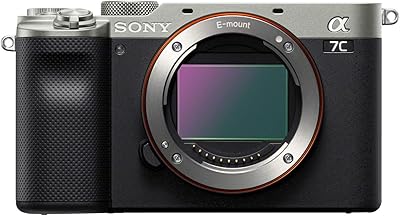
Sony Alpha 7C Full-Frame Mirrorless Camera
80%
93%
Autofocus Performance
91%
Image Quality
94%
Portability & Size
86%
Video Capability
62%
Battery Life
More
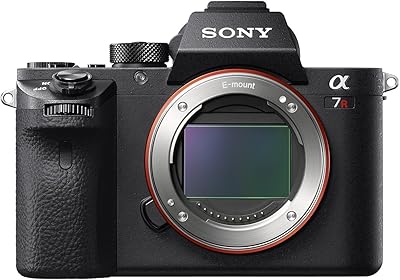
Sony a7R II Full-Frame Mirrorless Camera
75%
96%
Image Quality
93%
Dynamic Range
72%
Autofocus Performance
74%
Video Capabilities
88%
Image Stabilization
More
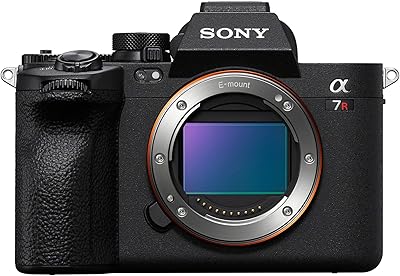
Sony Alpha 7R IV Full-Frame Mirrorless Camera
80%
97%
Image Quality & Resolution
91%
Autofocus Performance
94%
Dynamic Range
78%
Continuous Shooting Speed
83%
In-Body Image Stabilization
More
Sony Alpha a7R V
Sony Alpha a7R V
78%
97%
Image Quality
91%
Autofocus Performance
78%
Video Capabilities
88%
Autofocus Tracking Consistency
84%
Build Quality & Ergonomics
More
Sony ZV-E1
Sony ZV-E1
78%
94%
Video Quality
92%
Autofocus Reliability
91%
Image Stabilization
89%
Low-Light Performance
78%
Build Quality & Ergonomics
More
Sony Alpha 7CR Full-Frame Mirrorless Camera
78%
97%
Image Resolution & Detail
88%
Autofocus Performance
91%
In-Body Image Stabilization
93%
Dynamic Range
84%
Body Size & Portability
More
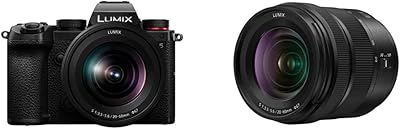
Panasonic LUMIX S5 Full Frame Mirrorless Camera
79%
93%
Video Quality
91%
Image Stabilization
67%
Autofocus Performance
88%
Low-Light / High ISO Performance
82%
Build Quality & Ergonomics
More
Canon EOS RP
Canon EOS RP
74%
88%
Image Quality
83%
Autofocus Performance
93%
Portability & Form Factor
54%
Battery Life
61%
Video Capabilities
More
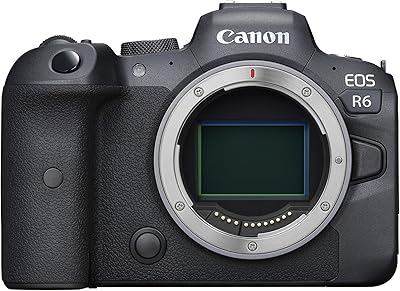
Canon EOS R6 Full-Frame Mirrorless Camera
79%
94%
Autofocus Performance
91%
Image Stabilization
89%
High ISO and Low-Light Quality
76%
Video Capabilities
88%
Burst Speed and Action Performance
More

FAQ

This listing is for the body only — no lens is included. You will need to purchase an E-mount lens separately. Sony offers a wide range of FE full-frame lenses, and third-party options from Sigma, Tamron, and others are also compatible.

Yes, with the right adapter. There are well-regarded third-party adapters that let you mount Canon EF, Nikon F, and other lens mounts onto the E-mount body. Autofocus performance with adapted lenses varies depending on the adapter and lens combination, so manual focus is often the more reliable route for legacy glass.

It is a genuine limitation. Under real-world shooting conditions with the EVF active, most users get somewhere between 200 and 280 shots per charge on a single NP-FW50 battery. If you are planning a full day of shooting, buying two or three extra batteries before you go out is not optional — it is just part of owning this camera.

No, the original a7 body does not have weather or dust sealing. Later models in the a7 line introduced sealing, but this version should be kept away from rain, heavy humidity, and dusty environments. A rain cover is worth keeping in your bag if you shoot outdoors regularly.

Single-shot autofocus is reliable and works well for portraits, landscapes, and most controlled scenarios. Continuous AF on fast-moving subjects — kids running, birds in flight, sports — is where this body shows its age. It will miss more than modern mirrorless cameras do, so if action photography is your main focus, a newer body would serve you better.

No, the Sony a7 tops out at Full HD 1080p. It does offer clean HDMI output so you can record to an external recorder, but the resolution ceiling is still 1080p. If 4K video is a requirement, you will need to look at the a7S II, a7 III, or later models in the lineup.

Honestly, it depends on your commitment level. The Sony a7 is not a casual point-and-shoot — the menu system is complex, the controls assume some prior knowledge, and the lack of a kit lens means additional upfront cost. That said, if you are a dedicated beginner willing to invest time in learning, it is a capable long-term system. Most first-time buyers would be better served starting with a more approachable body first.

It accepts SD, SDHC, and SDXC cards up to UHS-I speed class, as well as Sony Memory Stick Duo formats. For shooting RAW files or continuous bursts, a fast UHS-I card is recommended to avoid buffer slowdowns. UHS-II cards will physically fit but will only operate at UHS-I speeds in this body.

No, the original Sony a7 does not have in-body image stabilization. If stabilization is important to you — particularly for handheld video or shooting in dim light — you will either need to use an optically stabilized lens or step up to a newer a7 body that includes IBIS.

The original a7 remains capable for still photography, and the full-frame sensor quality holds up well. However, newer generations have improved substantially in autofocus, battery life, weather sealing, and video capabilities. Whether it is worth buying at the current price depends on what you can find it for — at the right price point it is a strong value, but at near-original pricing it is worth comparing closely against a used a7 III or a7C.

Where to Buy