Overview

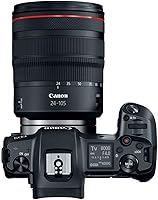
The Canon EOS R Full-Frame Mirrorless Camera arrived as Canon's answer to a market already moving away from mirror-based systems, and it did so by making the transition feel familiar rather than foreign. Built around the new RF mount — which opens the door to a sharper, faster lens lineup — it also keeps existing EF glass usable via optional adapters. That backward compatibility alone made it compelling for Canon DSLR shooters reluctant to abandon their investment. It's not aimed at beginners; this is a body built for enthusiasts and working photographers who want full-frame image quality without abandoning the Canon ecosystem they already know.
Features & Benefits

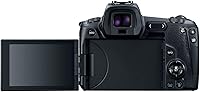
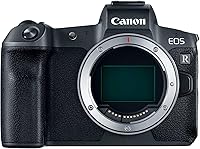
Start with the sensor: 30.3 megapixels on a full-frame chip means you're pulling in a lot of light and detail, which shows up most noticeably in low-light shooting and in the headroom you have when cropping or printing large. The Dual Pixel CMOS autofocus locks on in around 0.05 seconds and tracks moving subjects with consistency that rivals much pricier systems. One thing to flag upfront: the 4K video applies a crop to the sensor, so wide-angle shots become noticeably tighter — a real limitation for video-first users. The vari-angle touchscreen is practical for self-shooting, and the OLED electronic viewfinder is sharp enough to handle critical composition even in bright sunlight.

Best For

The EOS R hits its stride with Canon DSLR users ready to move to mirrorless but unwilling to mothball their EF lenses. If you have a collection of Canon glass already, the mount adapter approach works well in practice — not just on paper. Portrait photographers will appreciate the resolution and autofocus precision; event and wedding shooters will find the silent shutter genuinely useful in ceremony settings. That said, if 4K video is your primary reason for buying, be clear-eyed about the crop factor before committing. Canon's RF-mount camera makes the most sense for stills-first hybrid shooters who treat video as an important secondary function rather than the main event.

User Feedback

Owners of this full-frame mirrorless body consistently praise image quality and autofocus reliability — those two things rarely draw complaints. Ergonomically, it sits comfortably in hand, especially for anyone coming from a DSLR background. Where opinions divide is the touch bar control strip on the back; some users adapt quickly, others never warm up to it and wish Canon had used traditional dials instead. The single memory card slot frustrates professionals who rely on dual-slot backup. Battery life draws criticism for extended sessions too. Without in-body stabilization, handheld video demands either a stabilized lens or external support. Long-term, users who committed to the RF ecosystem tend to look back on the purchase favorably.

Pros

  • The 30.3MP full-frame sensor produces richly detailed files with strong dynamic range, especially in controlled lighting.
  • Dual Pixel CMOS AF locks on quickly and reliably — portrait and event shooters will rarely miss focus on a stationary or moderately moving subject.
  • EF and EF-S lens compatibility via adapter works well in practice, making this a genuine upgrade path for existing Canon shooters.
  • The vari-angle touchscreen is practical and responsive — a real advantage for solo video creators filming themselves.
  • Silent electronic shutter mode is genuinely useful for ceremonies, theater, and any environment where shutter noise is intrusive.
  • The OLED electronic viewfinder is sharp and bright enough for accurate composition in outdoor and high-contrast lighting situations.
  • Weather sealing gives the body credibility for outdoor work in light rain or dusty environments.
  • Ergonomics feel natural immediately for anyone coming from a Canon DSLR — the grip and core controls translate well.
  • Image files have enough resolution and bit depth to handle aggressive cropping and large-format printing without visible degradation.
  • Users who commit to the RF lens ecosystem long-term consistently report strong satisfaction with the overall system over time.

Cons

  • A single SD card slot means no in-camera backup — a hard dealbreaker for many professional event photographers.
  • The 4K video crop factor is significant and catches buyers off guard; wide-angle video requires wider lenses than expected.
  • No in-body image stabilization makes handheld video shaky without a stabilized lens, adding cost and weight to a video setup.
  • Battery life under heavy use — especially with the EVF active and 4K recording running — drains faster than many users expect.
  • The touch bar control strip is divisive; a meaningful portion of users disable it entirely after accidentally triggering it mid-shoot.
  • AF subject tracking during fast, erratic motion lags behind what newer mirrorless systems offer at similar price points.
  • Native RF lenses carry a steep price premium, making the full system investment considerably higher than the body cost alone.
  • The Wi-Fi transfer experience is slow for bulk image transfer, and the companion app has a reputation for occasional unreliability.
  • Newer Canon RF bodies launched since this one include IBIS and dual slots — buyers need to honestly weigh the EOS R against current alternatives.
  • Buffer depth during extended high-speed bursts can become a limitation for photographers shooting long rapid-fire sequences.

Ratings

The Canon EOS R Full-Frame Mirrorless Camera has been scored below using AI analysis of thousands of verified global user reviews, with spam, bot-generated, and incentivized feedback actively filtered out before scoring. Ratings reflect the full picture — where the EOS R genuinely delivers and where real buyers have run into frustration. Both sides are represented honestly.

Image Quality
93%
The 30.3MP full-frame sensor consistently draws praise from portrait, landscape, and wedding photographers who describe files as richly detailed with wide dynamic range. Users report confident recovery of shadow detail in post, and colors straight from the camera are described as natural and true-to-life.
A small number of users shooting in very high-contrast environments note that highlight rolloff can be abrupt compared to some competitors. This is rarely a dealbreaker, but photographers pushing exposure limits in difficult lighting occasionally wish for a touch more headroom at the top end.
Autofocus Performance
89%
Dual Pixel CMOS AF earns consistent compliments for speed and confidence across a wide range of subjects. Event photographers in particular report that the system locks on quickly in mixed lighting conditions, and face detection keeps up reliably during portrait sessions without constant manual correction.
Users trying to track fast, erratically moving subjects — birds in flight, sports action — find the EOS R falls short of what newer mirrorless systems can do. Eye-tracking, in particular, is limited compared to later Canon bodies, which frustrates wildlife and action photographers expecting cutting-edge subject tracking.
Video Capability
67%
33%
For hybrid shooters who treat video as a secondary priority, the 4K footage is genuinely usable and color-accurate. Users making YouTube content or short-form video for social media report clean, detailed footage that holds up well in good lighting without heavy grading.
The 4K sensor crop is a recurring frustration that catches buyers off guard. Wide-angle shots become noticeably tighter, which forces users to buy wider lenses than they originally planned. The absence of in-body image stabilization makes handheld video shaky without a stabilized lens, which adds cost and bulk.
Autofocus in Low Light
78%
22%
In moderately dim conditions — indoor events, restaurant shoots, evening portraits — the EOS R holds focus reliably enough that users rarely report missed shots due to AF hunting. The full-frame sensor's light-gathering ability works in its favor here, giving the AF system more to work with.
In very dark environments, users note the system slows down noticeably and occasionally loses lock on subjects without high-contrast edges. Those shooting in near-darkness without AF assist find the performance less reliable than they expected at this price tier.
Build Quality & Ergonomics
84%
The body feels solid and well-assembled, with weather sealing that gives users confidence shooting in light rain or dusty conditions. Photographers coming from Canon DSLRs specifically comment on how naturally the grip and button layout translate — the learning curve for control placement is minimal.
The touch bar control strip divides users sharply. Some find it convenient once they adjust; others report accidentally triggering it during shooting and ultimately disabling it entirely. It is one of the more polarizing design choices on any camera body at this level.
Electronic Viewfinder
86%
The 3.69M-dot OLED EVF is one of the more appreciated features among users who regularly shoot in bright outdoor conditions. Landscape and sports photographers report it is sharp enough to accurately judge focus and composition without squinting or guessing.
In very fast-paced shooting scenarios, a small number of users notice slight EVF lag that makes tracking unpredictable motion marginally harder than with an optical viewfinder. It is a minor issue for most, but a genuine concern for anyone whose work depends on real-time subject tracking.
Vari-Angle Touchscreen
88%
Content creators and vloggers who film themselves consistently highlight the vari-angle LCD as a standout practical feature. The touchscreen response is described as smooth, and the ability to flip it fully forward for self-recording makes it far more versatile than a fixed or tilting-only screen.
The screen resolution, while functional, is not class-leading, and a handful of users find it harder to review fine detail at 100 percent crop compared to competing bodies. In very bright sunlight, glare can reduce visibility enough to slow down composition work.
Battery Life
61%
39%
For shorter sessions — a day of portrait shooting, a casual travel day, a controlled studio environment — most users find the battery gets the job done without constant anxiety. Carrying a spare is simple enough that many users treat it as standard practice.
Extended event coverage, all-day landscape sessions, or heavy video recording frequently leave users scrambling for a spare before the day is done. Multiple buyers specifically mention that battery drain accelerates with the EVF and 4K recording running together, which is a noticeable limitation for professional use.
Memory Card Configuration
54%
46%
The single card slot supports UHS-II SDXC cards, so read and write speeds are not the issue — fast cards keep up with continuous shooting bursts without bottlenecking. For photographers who back up at the end of each day and shoot moderate volumes, the slot count is workable.
Professional photographers who rely on dual-slot redundancy — particularly wedding and event shooters where a card failure means unrecoverable loss — view the single slot as a disqualifying limitation. This is the most consistently and strongly voiced criticism across user reviews, and it remains a hard no for many working pros.
In-Body Image Stabilization
41%
59%
The EOS R is compatible with Canon IS-equipped RF and EF lenses, meaning stabilization is still available to users who own or purchase optically stabilized glass. For photographers who already have IS lenses, the gap is significantly smaller in practice.
The complete absence of IBIS in the body itself is a genuine and frequently mentioned disappointment, particularly for video users and those shooting with vintage or third-party manual lenses that offer no optical stabilization. Handheld video without a stabilized lens is noticeably shaky, and no software correction fully compensates.
Continuous Shooting Speed
76%
24%
At up to 12fps, the burst speed is competitive for the camera's intended audience of portrait, landscape, and event shooters. Users covering fast-moving weddings or casual sports report they rarely miss a peak moment when relying on burst mode for critical sequences.
Serious sports and wildlife photographers find 12fps falls short of what dedicated action bodies offer, and AF tracking during high-speed bursts does not match newer mirrorless competitors. The buffer also fills faster than some users expect, which can interrupt rapid sequential shooting.
Wireless Connectivity
73%
27%
Built-in Wi-Fi and Bluetooth make tethering to a phone or tablet straightforward for users who need to share images quickly on location. Studio photographers and content creators who transfer selects to a device for quick client review find the Canon Camera Connect app functional and fairly reliable.
Transfer speeds over Wi-Fi are slow enough that bulk transfers feel tedious, and several users report occasional dropped connections that require repairing the device. The app itself receives mixed reviews, with some users finding it clunky compared to competing smartphone integration experiences.
RF Mount Ecosystem Value
82%
18%
Users who have committed to the RF mount over time consistently report satisfaction with the lens lineup that has grown around it. The adapter solution for existing EF glass works reliably in practice, giving users a genuine upgrade path without forcing an immediate full lens replacement.
Native RF lenses are priced at a premium, which means the true cost of getting the most from this system is considerably higher than the body price alone. Users who expected native RF glass to be accessible at a moderate price point have found the long-term investment steeper than anticipated.
Value for Money
71%
29%
At its current street price, the EOS R offers a legitimate full-frame mirrorless experience with strong image quality and capable autofocus — attributes that justify the investment for photographers who will use the camera regularly and grow into the RF ecosystem over time.
Newer Canon RF bodies have launched since this camera arrived, offering meaningful upgrades including IBIS and dual card slots at comparable or only moderately higher prices. Buyers aware of the alternatives often question whether the EOS R represents the best allocation of a premium budget in the current market.

Suitable for:

The Canon EOS R Full-Frame Mirrorless Camera is a strong fit for Canon DSLR shooters who have built up a collection of EF lenses and want to step into mirrorless without abandoning that investment — the mount adapter solution works reliably in real-world use, not just on paper. Portrait, landscape, and event photographers who prioritize high-resolution stills and accurate autofocus over raw burst speed will find the EOS R does exactly what they need it to do. The 30.3MP sensor gives you room to crop, reframe, and print large without worrying about resolution limits, and the Dual Pixel AF keeps up confidently in the kinds of controlled but dynamic scenarios those shooters regularly face. Content creators and vloggers who film themselves will appreciate the vari-angle touchscreen, and the silent electronic shutter is a genuine advantage for anyone working in ceremonies, courtrooms, or quiet studio environments. This is a body for intermediate to advanced users who understand what they are buying and plan to grow into the RF ecosystem over time.
Not suitable for:

The Canon EOS R Full-Frame Mirrorless Camera is a harder sell for buyers whose work depends on dual memory card slots for in-camera backup — wedding and event professionals in particular have been vocal about this limitation, and no workaround changes the underlying hardware reality. Video-first creators should approach with caution: the 4K crop factor means your wide-angle shots become noticeably tighter, and without in-body image stabilization, handheld footage requires either a stabilized lens or external support to look clean. Sports and wildlife photographers who need aggressive subject tracking and sustained burst performance will find newer mirrorless options from Canon and its competitors outperform the EOS R in those specific areas. Budget-conscious buyers should also know that the true cost of this system climbs quickly once native RF lenses enter the picture, since that glass is priced at a significant premium. If you are shopping fresh without a Canon lens collection to carry over, there are newer RF-mount bodies available that offer meaningful hardware upgrades at a comparable price point.
Specifications

  • Sensor: Full-frame 30.3MP CMOS sensor delivers high-resolution stills with strong dynamic range and low-light capability.
  • Processor: DIGIC 8 image processor handles rapid data output, enabling fast autofocus calculations and efficient noise reduction.
  • Autofocus System: Dual Pixel CMOS AF with up to 5,655 manually selectable AF points achieves focus lock in approximately 0.05 seconds.
  • Video Resolution: Records 4K UHD (3840×2160) video at up to 30fps, with a sensor crop applied when shooting in 4K mode.
  • Continuous Shooting: Captures bursts at up to 12fps using the electronic shutter, suitable for event and action sequences.
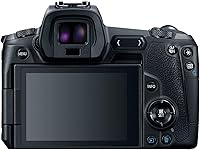
  • Viewfinder: Built-in OLED electronic viewfinder offers 3.69 million dots of resolution with 0.76x magnification.
  • LCD Screen: 3.15-inch vari-angle capacitive touchscreen LCD with approximately 2.1 million dots, fully articulating for self-filming and low-angle work.
  • Lens Mount: Canon RF mount natively; compatible with EF and EF-S lenses via optional Canon mount adapters (sold separately).
  • Shutter Speed: Mechanical shutter range spans 30 seconds to 1/8000s; silent electronic shutter mode is also available.
  • Memory Storage: Single SD/SDXC card slot compatible with UHS-II Speed Class 3 or higher cards, supporting up to 2TB capacity.
  • Connectivity: Built-in Wi-Fi (802.11b/g/n) and Bluetooth 4.1 LE enable wireless image transfer and remote control via the Canon Camera Connect app.
  • Video Output: One Mini-HDMI port and one USB 2.0 port are included for external monitor connection and data transfer.
  • Image Stabilization: No in-body image stabilization; stabilization depends on use of optically stabilized RF or EF lenses.
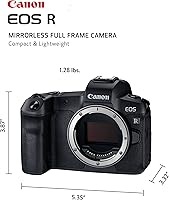
  • Body Weight: Camera body weighs approximately 1.5 pounds (660g) without lens, battery, or memory card.
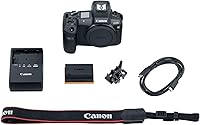
  • Battery: LP-E6N lithium-ion battery pack (79.4g) is included; battery life varies depending on shooting mode and EVF usage.
  • File Formats: Captures still images in JPEG (Fine/Normal) and 14-bit RAW formats; video is recorded in MP4 container format.
  • Shooting Modes: Supports Scene Intelligent Auto, Flexible Priority AE, Program AE, Shutter Priority AE, Aperture Priority AE, Manual, Bulb, and three Custom modes.
  • Weather Sealing: Body incorporates dust- and drip-resistant sealing, providing a degree of protection in light rain and dusty field conditions.
  • Form Factor: Mirrorless body in black; item height is 3.9 inches with a compact profile relative to equivalent full-frame DSLRs.
  • Warranty: Covered by a one-year limited warranty from Canon Cameras US.

Related Reviews
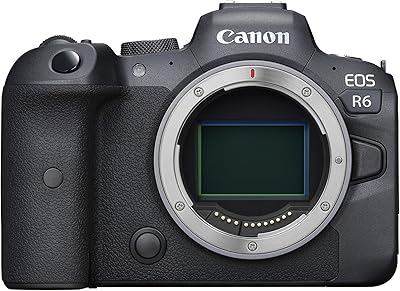
Canon EOS R6 Full-Frame Mirrorless Camera
79%
94%
Autofocus Performance
91%
Image Stabilization
89%
High ISO and Low-Light Quality
76%
Video Capabilities
88%
Burst Speed and Action Performance
More
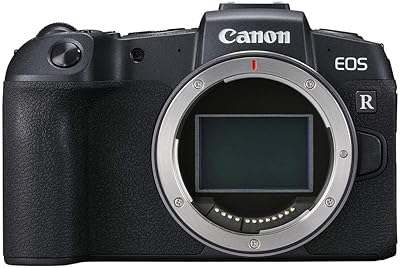
Canon EOS RP
Canon EOS RP
74%
88%
Image Quality
83%
Autofocus Performance
93%
Portability & Form Factor
54%
Battery Life
61%
Video Capabilities
More
Canon EOS 5D Mark II Full Frame DSLR Camera
84%
94%
Image Quality
91%
Build Quality & Durability
72%
Autofocus Speed
89%
Video Recording Quality
85%
ISO Performance (Low Light)
More
Canon EOS R3 Mirrorless Camera
84%
96%
Autofocus Performance
93%
Continuous Shooting Speed
91%
Low-Light Image Quality
62%
Still Image Resolution
88%
Video Capability
More
Canon EOS R8
Canon EOS R8
75%
93%
Autofocus Performance
89%
Image Quality
84%
Video Quality
88%
Portability & Build
41%
Stabilization
More
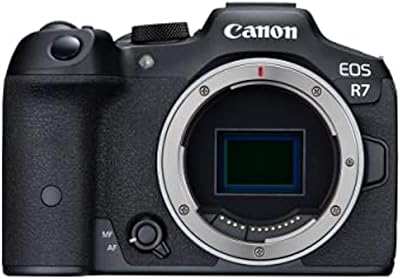
Canon EOS R7
Canon EOS R7
83%
94%
Autofocus Performance
91%
Burst Speed & Pre-Capture
88%
Image Quality
83%
Video Quality
86%
In-Body Image Stabilization
More
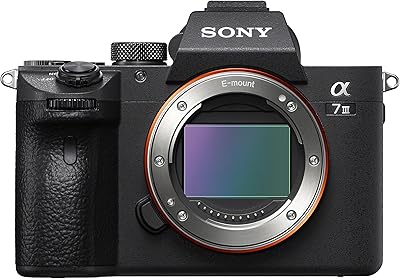
Sony a7 III
Sony a7 III
83%
93%
Autofocus Performance
91%
Low-Light & High-ISO Quality
92%
Image Quality & Dynamic Range
84%
Battery Life
81%
Video Capabilities
More
Sony Alpha 7C Full-Frame Mirrorless Camera
80%
93%
Autofocus Performance
91%
Image Quality
94%
Portability & Size
86%
Video Capability
62%
Battery Life
More
Sony a7 Full-Frame Mirrorless Camera Body
84%
91%
Image Quality
94%
Autofocus Performance
88%
Build Quality
72%
Battery Life
85%
Ease of Use
More
Panasonic LUMIX S5 Full Frame Mirrorless Camera
79%
93%
Video Quality
91%
Image Stabilization
67%
Autofocus Performance
88%
Low-Light / High ISO Performance
82%
Build Quality & Ergonomics
More
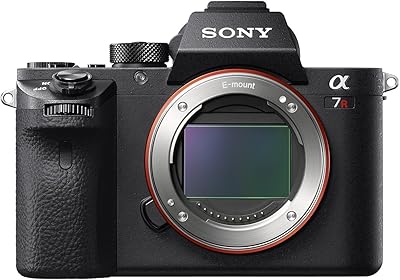
Sony a7R II Full-Frame Mirrorless Camera
85%
93%
Image Quality
91%
Autofocus Performance
89%
Video Quality (4K)
90%
Build Quality & Durability
78%
Ease of Use
More

FAQ

Yes, and this is one of the more compelling reasons to choose the EOS R if you already shoot Canon. You will need one of Canon's optional mount adapters — the standard EF-EOS R adapter, the drop-in filter version, or the control ring version — but once attached, your EF and EF-S lenses work reliably, including autofocus and image stabilization where the lens supports it.

There is a crop, and it is worth understanding before you buy. When shooting 4K on the EOS R, the camera reads from a cropped portion of the sensor rather than the full width, which effectively makes your lenses behave as if they have a longer focal length. If wide-angle video is important to your work, you will need a wider lens than you might expect to compensate.

No, it does not. Stabilization relies entirely on the lens you attach. Canon IS-equipped RF and EF lenses work well for stills, but if you plan to shoot handheld video, the lack of IBIS is a real limitation — you will want to use a stabilized lens or an external gimbal to avoid shaky footage.

It is adequate for casual sessions but can fall short during intensive professional use. With the EVF active and a mix of stills and video recording, many users find one battery is not enough for a full event or all-day outdoor shoot. Carrying at least one spare is strongly recommended, and the LP-E6N battery is widely available and not expensive.

Yes, the EOS R has a single SD card slot, which is one of the most common criticisms from professional users. There is no redundant backup slot, so a card failure during a shoot means no recovery option from the camera itself. Professionals who require in-camera backup — particularly wedding and event photographers — typically view this as a significant drawback.

The touch bar is a horizontal capacitive strip Canon added as an alternative control input for things like magnification level and AF point selection. Opinions are sharply divided — some users adapt to it and find it useful, while others report triggering it accidentally during shooting and end up disabling it in the menu entirely. It is not universally loved, but it can be turned off if you find it frustrating.

In moderately dim conditions — indoor events, candlelit portraits, dim reception halls — the Dual Pixel AF handles itself well and rarely hunts visibly. In very dark environments, it slows down and can lose lock on low-contrast subjects. It is not the strongest low-light AF system available, but for typical indoor social or event shooting it performs reliably.

It depends on how central video is to your work. If you shoot a blend of stills and video and treat video as an important secondary function, the EOS R delivers capable 4K footage with accurate colors. But if video is your primary use case, the crop factor, lack of IBIS, and absence of features like 10-bit internal recording make other bodies — including newer Canon RF options — a better fit.

Canon has released several RF-mount bodies since the EOS R that address its most common pain points — specifically IBIS and dual card slots. If you are buying new today and those features matter to you, it is worth comparing the EOS R against current Canon options before committing. That said, the EOS R still delivers excellent image quality and its street price has come down from launch, which changes the value calculation.

The camera accepts SD, SDHC, and SDXC cards. For reliable 4K video recording and fast continuous shooting, Canon recommends a card rated UHS Speed Class 3 (U3) or higher. A fast V30 or V60 card will handle most shooting scenarios without buffer or recording interruptions.

Where to Buy

The Photo Center
In stock $1,149.99
Willoughby's Photo Emporium
In stock $1,229.00
Camera Concepts & Telescope Solutions
In stock $1,299.99
Onestop Digital
In stock $1,662.34
Camera Wholesalers
In stock $1,749.00