Overview
The Canon EOS 5D Mark II DSLR Camera occupies a rare place in photography history — a camera that genuinely changed what photographers expected from a DSLR. When it launched, it brought full-frame image quality and 1080p video into the same body, a combination almost nobody had seen before. Today, labeled as an Old Model, it sells mostly through the used and refurbished market, and that's exactly where its value lies. This is a body-only listing, so factor in the cost of Canon EF glass before budgeting. Against modern mirrorless cameras, it shows its age in certain areas, but the core imaging credentials still hold up surprisingly well.
Features & Benefits
The 5D Mark II's 21.1MP full-frame sensor with 14-bit A/D conversion produces files with exceptional tonal depth — you get latitude to recover highlights and shadows in post that simply wasn't available on crop-sensor cameras at the same price point. ISO performance from 100 to 6400 remains genuinely usable, with well-controlled noise through ISO 1600. The DIGIC 4 processor manages 3.9 fps continuous shooting — not fast by today's standards, but adequate for events and portraits. Full HD 1080p video was extraordinary when this camera launched; it's modest by current expectations but still workable for controlled shoots. The 9-point autofocus handles deliberate, considered shooting well, though it won't track fast-moving subjects the way modern systems do.
Best For
This classic DSLR makes the most sense for photographers who already own Canon EF lenses and want to put them on a full-frame body without spending flagship money. It's a strong pick for studio and portrait work, where the combination of 21MP resolution and wide dynamic range matters far more than speed. Budget-conscious filmmakers who need manual exposure control and a clean 1080p signal will find it functional, if not cutting-edge. It also works well as a reliable backup body for professionals who shoot Canon systems. If you're moving up from a crop-sensor APS-C camera and want to understand what full-frame shooting actually feels like, this is an honest, capable way to get there.
User Feedback
Across 652 ratings averaging 4.3 out of 5, the dominant theme is satisfaction with image quality and build. Owners consistently praise the camera's solid magnesium-alloy construction and its performance in low-light conditions — the kind of real-world durability that holds up over years. The criticisms are fair and worth knowing: the AF system feels limited compared to anything mirrorless, Compact Flash cards are a hassle to source cheaply today, and there's no in-body stabilization. For anyone shopping in the used market — which is most buyers at this point — checking shutter actuations before purchasing is essential. Some one-star reviews reflect modern mirrorless expectations applied to a 2008 body, which isn't a useful comparison for someone who understands what they're buying.
Pros
- The 21.1MP full-frame sensor delivers files with impressive tonal depth and dynamic range for serious print work.
- ISO performance remains genuinely strong up to 1600, making low-light photography practical without excessive noise.
- Compatible with the entire Canon EF lens lineup — a significant advantage for anyone already invested in Canon glass.
- Solid magnesium-alloy body construction gives it a durability and in-hand weight that feel genuinely professional.
- Battery life of approximately 850 shots per charge makes it reliable across long shooting sessions.
- Full HD 1080p video with manual exposure control remains workable for deliberate, budget-conscious productions.
- A 4.3-star average across 652 user ratings reflects consistent satisfaction with image output and build quality.
- At used-market pricing, full-frame image quality is genuinely hard to match dollar for dollar.
- The optical viewfinder with 0.71x magnification offers a clear, natural shooting experience many photographers still prefer over electronic alternatives.
Cons
- The 9-point autofocus system struggles to track fast-moving subjects — a real liability for sports or wildlife shooting.
- Compact Flash cards are increasingly difficult to source affordably and add a hidden cost to ownership.
- No in-body image stabilization means longer lenses demand careful technique or reliance on lens-based stabilization.
- The fixed 3.2-inch LCD cannot tilt or articulate, making low-angle or overhead shots genuinely awkward.
- Video tops out at 1080p — there is no 4K option at any resolution or frame rate setting.
- Shutter actuations on used units vary widely; purchasing without confirming the count is a meaningful financial risk.
- Live View autofocus relies on contrast detection, making it slow and impractical for anything but static subjects.
- No built-in wireless connectivity — transferring images or enabling remote control requires additional accessories.
- The buffer and 3.9 fps burst rate leave little room for rapid-fire editorial or action sequences.
Ratings
These scores for the Canon EOS 5D Mark II DSLR Camera were generated by our AI review system after analyzing verified buyer feedback from across the globe, with spam, bot-driven, and incentivized reviews actively filtered out. The ratings reflect a balanced picture — both the genuine strengths that keep this camera in circulation years after its release and the real limitations that buyers consistently run into. Whether you are a longtime Canon shooter or a newcomer weighing your first full-frame body, the scores below give you an honest, unvarnished view of what this classic DSLR actually delivers.
Image Quality
Build Quality
Low-Light Performance
Autofocus Performance
Value for Money
Battery Life
Lens Compatibility
Video Capability
Burst Speed & Buffer
Display & Live View
Ergonomics & Handling
Connectivity & Workflow
Dynamic Range
Ease of Use
Suitable for:
The Canon EOS 5D Mark II DSLR Camera is a smart buy for a specific kind of photographer: someone who wants genuine full-frame image quality, already owns or plans to invest in Canon EF glass, and is not chasing the latest autofocus or video technology. Portrait and studio shooters will get the most out of it — 21MP of full-frame resolution with strong dynamic range is more than enough to produce large, detailed prints and handle demanding post-processing edits. It is equally well-matched to hobbyists stepping up from an APS-C body who want to feel the difference a full-frame sensor makes without paying current mirrorless prices. Canon professionals who need a dependable backup body that shares batteries and lenses with their primary kit will also find it earns its keep. Budget-conscious videographers who need manual exposure control and a clean 1080p signal for controlled, deliberate shoots — interviews, short films, documentary work — can get real value from it, as long as expectations are calibrated to a 2008-era platform.
Not suitable for:
The Canon EOS 5D Mark II DSLR Camera is not the right choice for anyone who needs fast, reliable subject tracking — the 9-point autofocus system, while adequate for stationary or slow-moving subjects, simply cannot keep pace with modern mirrorless AF performance. Sports photographers, wildlife shooters, or anyone regularly working with erratic or fast-moving subjects should look elsewhere. The absence of in-body image stabilization is also a real limitation for handheld shooting in low light or with longer focal lengths. Compact Flash storage is an increasingly inconvenient format, harder to source affordably than SD, and worth factoring into the total cost of ownership upfront. Anyone expecting 4K video, a tilting or articulating screen, or built-in wireless connectivity will find this body falls well short of current standards. If your work is primarily fast-paced, video-centric, or relies on modern autofocus features, a more recent body is the smarter investment.
Specifications
- Sensor: A 21.1MP full-frame CMOS sensor with 14-bit analog-to-digital conversion delivers wide dynamic range and rich tonal gradation across the entire image.
- ISO Range: Native ISO sensitivity runs from 100 to 6400, with expanded settings available for extreme low-light conditions beyond the standard range.
- Processor: The DIGIC 4 image processor manages noise reduction, color rendering, and in-camera JPEG processing for continuous shooting at up to 3.9 fps.
- Autofocus: A 9-point phase-detection AF system with cross-type sensitivity on all nine points provides accurate focus for stationary and moderately moving subjects.
- Video: Full HD video is recorded at 1920 x 1080 resolution in H.264/MPEG-4 format, with individual clips capped at 4GB per file.
- Display: A fixed 3.2-inch TFT-LCD screen with 920,000-dot resolution and seven adjustable brightness levels serves image review and Live View shooting.
- Viewfinder: The optical pentaprism viewfinder delivers 0.71x magnification and approximately 98% frame coverage for accurate, natural-feeling composition.
- Shutter Speed: Mechanical shutter range spans 1/8000 sec to 30 seconds, with Bulb mode for extended exposures and a maximum flash sync speed of 1/200 sec.
- Storage: Images write to Compact Flash cards (Type I or II) with UDMA support; faster UDMA cards reduce buffer clearing times during burst shooting.
- Battery Life: The LP-E6 lithium-ion battery is rated for approximately 850 shots per charge under standard shooting conditions.
- Connectivity: One USB 2.0 port supports tethered shooting and image transfer, while an HDMI output connects the body to external monitors or recording devices.
- Lens Mount: The Canon EF mount provides full electronic compatibility with the entire Canon EF lens ecosystem, including third-party EF-mount lenses from Sigma, Tamron, and Tokina.
- Body Weight: The body weighs 2.6 lbs without lens or battery, sitting in the mid-size SLR category with a solid, well-balanced feel in hand.
- Metering: Three metering modes are available: evaluative multi-zone, center-weighted average, and spot metering for precise or complex lighting situations.
- Shooting Modes: Exposure options include Program AE, Aperture Priority, Shutter Priority, Manual, Bulb, and depth-of-field AE, alongside multiple picture style presets.
- File Formats: Supported capture formats include RAW, sRAW1, sRAW2, JPEG, RAW+JPEG simultaneous, and MOV for video files.
- Flash Sync: The hot shoe supports Canon E-TTL II flash metering and is compatible with most third-party strobes via standard PC sync or optical triggering.
Related Reviews
Canon EOS 7D Mark II
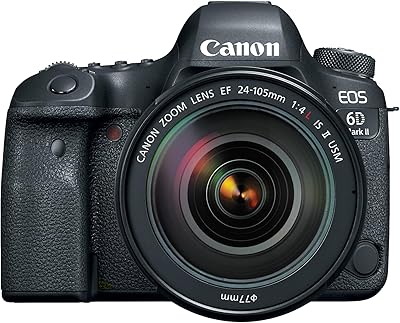
Canon EOS 6D Mark II with EF 24-105mm f/4L IS II USM
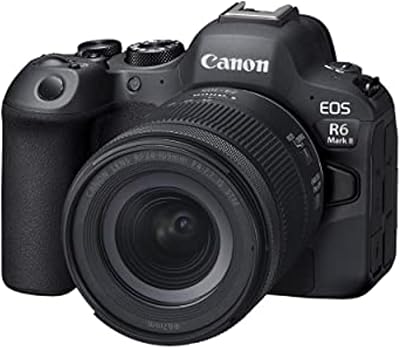
Canon EOS R6 Mark II Mirrorless Camera
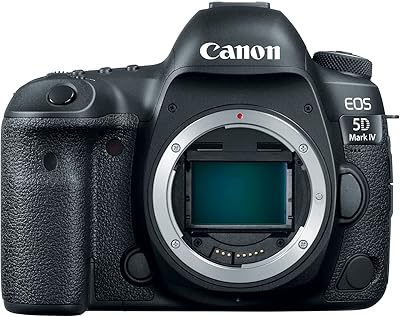
Canon EOS 5D Mark IV
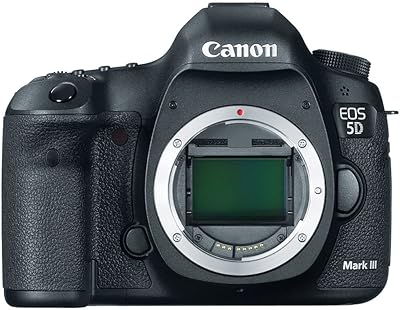
Canon EOS 5D Mark III
Canon EOS 60D DSLR Camera Body
Canon EOS 80D DSLR Camera with 18-135mm Lens
Canon EOS Rebel T6i
Canon EOS Rebel T7