Overview

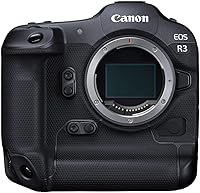
The Canon EOS R3 Mirrorless Camera sits at the top of Canon's RF lineup, built specifically for professionals who shoot fast, unpredictable subjects under pressure. This flagship mirrorless body strikes a deliberate balance — high-speed performance, capable video, and rugged weather sealing — without chasing the resolution numbers some rivals offer. At its price tier, it competes directly with Sony's A1 and Nikon's Z9, but Eye Control AF is the one feature neither competitor offers: you literally look at your subject in the viewfinder to set focus. Canon has also been unusually committed to post-launch firmware updates, adding meaningful video capabilities and AF improvements that have kept the body competitive well beyond its release date.
Features & Benefits

At the heart of the EOS R3 is a 24.1MP stacked BSI sensor that prioritizes speed and low-light output over raw resolution. The stacked design allows for a 30fps electronic shutter with virtually no rolling shutter distortion — critical when photographing sprinting athletes or birds in flight. The DIGIC X processor handles an ISO range stretching to 204800 in expanded mode, keeping images usable in poorly lit arenas or dusk-lit fields. Video shooters get 6K RAW at up to 60fps and, after the 1.2.0 firmware update, 4K at 120fps — a capability that was not available at launch. Dual card slots handle CFexpress Type B and UHS-II SD simultaneously, providing redundancy on assignments where losing a single shot is not an option.

Best For

Canon's professional mirrorless is most naturally at home in the hands of sports and press photographers who need a body that keeps up with unpredictable action while staying reliable through rain and rough handling. Wildlife and birding shooters will appreciate the animal subject detection and the sheer depth of the AF point coverage across the frame. Hybrid professionals — those who switch between stills and video on the same assignment — benefit from the broadcast-quality video options without carrying a second camera body. It is also the logical pinnacle body for anyone already invested in Canon's RF glass ecosystem, particularly the premium L-series telephoto lenses where the body's capabilities are fully realized.

User Feedback

Photographers who have spent time with the EOS R3 consistently single out Eye Control AF as genuinely transformative once properly calibrated — though most note that the initial calibration process takes patience and varies by lighting condition. The 24.1MP resolution draws the most criticism; at this price point, some buyers expect closer to 45MP, and those who crop heavily or print very large will feel the constraint. Battery endurance under heavy 6K video recording gets flagged as a real-world limitation. On the upside, former 1D X users report a surprisingly smooth ergonomic transition, and the ongoing firmware updates — praised repeatedly in user feedback — have kept this body feeling current rather than stagnant.

Pros

  • Eye Control AF lets you set focus simply by looking at your subject — nothing else on the market works this way.
  • The 30fps electronic shutter captures decisive moments in fast sports and wildlife that lower-speed bodies routinely miss.
  • Exceptional low-light performance keeps images publishable at ISO settings where many full-frame rivals start to fall apart.
  • The stacked sensor design virtually eliminates rolling shutter distortion during high-speed panning shots.
  • 6K RAW at 60fps and 4K at 120fps make this a credible hybrid body for serious video work alongside stills.
  • Dual card slots with CFexpress and UHS-II SD provide professional-grade redundancy on assignments where data loss is not an option.
  • Canon has delivered meaningful post-launch firmware updates that have genuinely expanded the body's capabilities over time.
  • Weather sealing and the integrated vertical grip handle demanding field conditions without the reliability concerns of bolt-on grip accessories.
  • Animal and vehicle subject detection is reliable enough to trust during fast wildlife and motorsports assignments.
  • Photographers transitioning from Canon DSLR flagships will find the handling familiarity cuts the learning curve dramatically.

Cons

  • At 24.1MP, heavy croppers and large-format print photographers will regularly hit the resolution ceiling.
  • Key video capabilities including 4K at 120fps were not available at launch and required waiting for a firmware update.
  • Eye Control AF demands patient personal calibration and can drift when lighting or eyewear conditions change during a session.
  • Battery life under sustained 6K video recording or prolonged burst shooting requires budgeting for multiple spare packs.
  • CFexpress Type B cards needed to unlock the fastest write speeds are a significant additional purchase on top of the body cost.
  • Wireless transfer speeds feel slow relative to the file sizes generated by 6K RAW or dense high-speed bursts.
  • Photographers with certain eye conditions or prescriptions report inconsistent results with the gaze-based focus selection feature.
  • The bulk and weight, while appropriate for DSLR veterans, will feel excessive to photographers coming from compact mirrorless bodies.
  • Canon's companion software and wireless workflow tools lag behind the overall hardware quality in polish and reliability.
  • The total system cost — body, glass, fast media cards, and spare batteries — is substantially higher than the body price alone suggests.

Ratings

The Canon EOS R3 Mirrorless Camera earns scores built from AI analysis of verified global buyer reviews, with spam, incentivized posts, and bot-generated feedback actively filtered out before any score is calculated. Across thousands of real-world accounts — from sideline sports shooters to wildlife photographers deep in the field — both the genuine strengths and the frustrating limitations are reflected honestly in every category below.

Autofocus Performance
96%
Users consistently describe the AF system as the most responsive they have ever used on any camera body. The combination of dense phase-detection coverage and the gaze-based focus selection means photographers are locking onto moving athletes or birds in flight faster than they can consciously react. In low-contrast or low-light conditions, the system holds its target with unusual confidence.
Eye Control AF requires careful personal calibration and can drift when lighting changes significantly mid-session, frustrating photographers who expected it to work flawlessly out of the box. A small number of users with certain eye characteristics or eyeglass prescriptions reported the feature was unreliable enough that they disabled it entirely.
Continuous Shooting Speed
93%
Thirty frames per second through the electronic shutter is fast enough to capture micro-expressions during a decisive sporting moment that most photographers would otherwise miss entirely. Even the 12fps mechanical shutter option feels brisk and confident, with a buffer deep enough to handle extended bursts without the camera grinding to a halt.
At the highest electronic shutter speeds, some users noted a slight increase in rolling shutter distortion when panning across very high-contrast scenes, which is a known physical limitation of even stacked sensors. A handful of wildlife photographers also found that buffer recovery time, while good, was not quite as instant as they hoped during prolonged rapid-fire sequences.
Low-Light Image Quality
91%
The stacked BSI sensor design pays real dividends in dim environments — indoor sports arenas, twilight wildlife settings, and poorly lit press conferences are where this body particularly distinguishes itself from non-stacked full-frame rivals. Files at ISO 6400 retain enough detail and color fidelity to be genuinely usable for editorial publication.
At expanded ISO settings above 51200, noise patterns become more structured and harder to clean up in post-processing without sacrificing fine detail. Users who regularly shoot above ISO 25600 noted that competing 45MP+ sensors, when downsampled, can sometimes produce cleaner-looking high-ISO output depending on the processing pipeline used.
Still Image Resolution
62%
38%
For action and sports work where the subject fills a reasonable portion of the frame, 24.1 megapixels is genuinely sufficient to deliver sharp, publishable images for both print and digital editorial use. Photographers working within their intended focal lengths rarely feel resolution-constrained in day-to-day professional shooting.
At this price tier, 24.1MP is the most polarizing specification on the entire camera. Users who crop aggressively — particularly wildlife photographers working at long distances — regularly bump into the resolution ceiling in a way that feels limiting compared to rivals offering 45MP or 50MP at similar or lower prices. Large-format printing beyond roughly A2 size also exposes the constraint.
Video Capability
88%
After the 1.2.0 firmware update unlocked 4K at 120fps, hybrid shooters found this body capable of covering both high-speed sports video and cinematic slow-motion work without compromise. The 6K RAW output at 60fps gives cinematographers serious flexibility in color grading and reframing in post-production.
Video capabilities that are now considered core selling points were not present at launch, which frustrated early adopters who paid full price and had to wait. Battery consumption during extended 6K RAW recording sessions is heavy enough that professionals shooting all-day video assignments routinely carry multiple spare LP-E19 packs.
Build Quality & Weather Sealing
94%
The magnesium alloy body inspires genuine confidence in punishing field conditions — photographers have reported using this camera in heavy rain at outdoor sporting events and in dusty, sandy wildlife environments without any operational issues. The integrated vertical grip eliminates a common point of failure found on bodies that use add-on battery grips.
The body's solid construction comes at a weight and bulk cost that some photographers notice after long days on their feet. Users transitioning from lighter mirrorless bodies occasionally find the form factor fatiguing during multi-hour handheld shooting sessions, even though veterans of DSLR flagships consider the size completely normal.
Ergonomics & Handling
89%
Photographers who previously used Canon's 1D X series DSLRs report a remarkably intuitive transition — button placement, grip depth, and overall balance feel deliberately familiar. The articulating touchscreen adds meaningful flexibility for low-angle or overhead shooting scenarios that a fixed screen simply cannot accommodate.
For photographers coming from smaller mirrorless bodies like the R5 or R6, the size and weight require a genuine adjustment period. A small number of users with smaller hands also noted that some controls feel positioned for larger hand sizes, requiring minor grip shifts to reach comfortably during fast-moving shoots.
Eye Control AF Usability
74%
26%
When it works well — in consistent lighting with a well-completed calibration — gaze-based focus selection is a genuinely different shooting experience that lets photographers keep their concentration on the scene rather than on joystick navigation. Sports photographers covering fast-changing multi-subject scenes praised it most enthusiastically.
Calibration is not a one-time setup; lighting changes, eyewear, and even fatigue can affect reliability, and re-calibrating in the field is an interruption most professionals do not want mid-assignment. Users with astigmatism or those who wear contact lenses reported more inconsistent results than those with standard uncorrected vision.
Battery Life
67%
33%
Under normal mixed-use stills shooting — reviewing images, moderate burst use, and standard autofocus operation — the LP-E19 battery delivers a session length that satisfies most professionals covering a half-day event without needing a swap. The integrated grip design means accessing the second battery slot is quick and clean.
Heavy 6K video recording or prolonged 30fps burst sessions drain the battery noticeably faster than the rated shot count suggests under typical real-world conditions. Photographers covering full-day events or multi-hour video shoots unanimously recommend budgeting for at least two additional batteries, adding to the overall system cost.
Firmware & Long-Term Support
92%
Canon's post-launch firmware record for this body has been unusually strong — multiple substantial updates have added features like 4K 120fps and Panning Assist that materially expanded what the camera can do, rather than simply fixing bugs. Users cite this as a meaningful factor when justifying the purchase cost over time.
Some users feel that capabilities that were present in competing bodies at launch — particularly advanced video frame rates — should not have required waiting for firmware updates. The cadence of updates has been praised but also created some uncertainty among buyers about what the camera's final feature set would be at purchase time.
Autofocus Subject Detection
91%
Animal subject detection and the expanded recognition for helmeted athletes represent genuine improvements over earlier Canon bodies, and wildlife photographers in particular praise how reliably the system locks onto birds in flight against complex backgrounds. Vehicle tracking for motorsports coverage also drew consistent positive feedback.
Subject detection performance is noticeably dependent on subject size in the frame — at extreme telephoto distances where the subject is small relative to the frame, the system occasionally hesitates or acquires the wrong element in a busy background. A small number of users reported occasional confusion between similar-looking subjects in multi-athlete scenes.
Storage & Memory Card System
86%
Dual slots covering CFexpress Type B and UHS-II SD give professionals genuine workflow flexibility — the fast CFexpress slot handles burst-heavy raw shooting without bottlenecking, while the SD slot provides accessible backup redundancy that most working photographers consider non-negotiable on paid assignments.
CFexpress Type B cards remain expensive and are not universally interchangeable with older XQD infrastructure some photographers already own. Users new to the format noted that equipping both card slots with high-speed media adds a meaningful upfront cost on top of the body price.
Viewfinder Quality
87%
The 0.76x electronic viewfinder provides a large, clear view that makes manual composition and evaluating focus feel natural rather than like staring into a digital display. Blackout during high-speed bursts is minimal enough that tracking fast subjects feels continuous rather than interrupted.
In very bright outdoor sunlight, some users found the EVF brightness adjustment required more fiddling than they wanted during fast-moving shoots. A small number of photographers who strongly prefer optical viewfinders for their zero-latency feel still find the EVF experience slightly different from what they were used to on DSLR flagships.
Connectivity & Workflow Integration
78%
22%
Built-in Wi-Fi enables reasonably fast wireless transfer to Canon's image transfer infrastructure, which news and sports photographers working on deadline find genuinely useful for getting images to editors quickly from the field. USB 3.0 wired transfer is fast enough for large RAW file batches.
The wireless transfer speed, while functional, lags behind what some photographers expect when offloading large 6K RAW files or dense burst sequences. A few users also noted that Canon's companion software ecosystem, while improving, still feels less polished than the overall hardware quality suggests it should be.
Value for Money
71%
29%
For professional photographers whose income depends directly on capturing decisive moments in difficult conditions, the body's combination of speed, AF depth, and video versatility justifies the investment when measured against what a missed shot or a lost assignment costs. Firmware updates extending the body's useful life strengthen the long-term value case.
At this price point, the 24.1MP resolution cap and the absence of some video features at launch are difficult to overlook, especially when competing bodies offer higher resolution or comparable video specs at lower prices. Enthusiast or semi-professional buyers who shoot a wide variety of subjects beyond action will likely find the value proposition harder to justify.

Suitable for:

The Canon EOS R3 Mirrorless Camera was built for professionals who simply cannot afford to miss the shot — sports photographers covering fast-moving athletes in unpredictable stadium lighting, photojournalists working press events where one frame tells the whole story, and wildlife photographers tracking birds in flight against cluttered backgrounds. If your work demands a body that can keep pace with 30fps bursts, hold autofocus on a helmeted cyclist through a corner, or switch fluidly between high-resolution stills and broadcast-quality video within the same assignment, this is the body that earns its place in a working kit. Wildlife and birding specialists will find the animal subject detection reliable enough to trust in the field, while hybrid shooters who need 6K RAW footage and crisp stills from the same session no longer need to carry separate rigs. Professionals already invested in Canon's RF lens ecosystem — particularly those pairing this body with long L-series telephotos — will feel the system working together in a way that justifies every dollar of the combined investment. If you transitioned from a Canon DSLR flagship and felt you were giving something up, this body is the answer.

Not suitable for:

Buyers who prioritize maximum resolution for landscape, studio, or commercial photography will find the Canon EOS R3 Mirrorless Camera a poor fit — at 24.1 megapixels, the sensor is optimized for speed rather than pixel density, and photographers who regularly crop aggressively or deliver large-format prints will feel that ceiling quickly. Enthusiast or advanced amateur shooters who shoot a broad mix of subjects — portraits, travel, architecture, casual street photography — are paying for a level of speed-focused engineering they will rarely push to its limits, and competing bodies offer better all-around value for that kind of varied shooting. The body size and weight, while welcome to DSLR veterans, will feel oversized and fatiguing for photographers accustomed to compact mirrorless systems. Budget-conscious buyers or those early in their professional careers should also be realistic about the additional cost burden: high-speed CFexpress Type B cards, spare batteries, and compatible RF glass quickly compound the total system investment well beyond the body price alone. If your work never demands sustained burst shooting, complex subject tracking, or professional-grade video, there are capable bodies at a fraction of the cost that will serve you just as well day to day.

Specifications

  • Sensor: Full-frame 24.1MP stacked back-side illuminated CMOS sensor with fast readout architecture optimized for high-speed continuous shooting and low-light performance.
  • Image Processor: DIGIC X processor handles all imaging tasks including noise reduction, autofocus computation, and video encoding at high speed and efficiency.
  • ISO Range: Native ISO range of 100–102400, expandable to a minimum of 50 and a maximum of 204800 for extreme low-light scenarios.
  • Continuous Shooting: Up to 30fps using the electronic silent shutter or up to 12fps with the mechanical shutter, both with full autofocus and auto-exposure tracking.
  • Autofocus System: Dual Pixel CMOS AF with 1,053 selectable AF points, covering subject detection for people, animals, and vehicles, plus gaze-based focus point selection via Eye Control AF.
  • Video Resolution: Records 6K RAW at up to 60fps, 4K at up to 120fps (requires firmware 1.2.0 or later), and Full-HD at up to 240fps, all uncropped.
  • Video Format: Video is recorded in MP4 container using H.264 or H.265 compression, with RAW video output also supported for maximum post-production flexibility.
  • Image Stabilization: In-body sensor-shift image stabilization works in conjunction with compatible RF lenses and includes a Panning Assist mode for tracking lateral subject motion.
  • Shutter Speed: Mechanical shutter range spans 30 seconds to 1/8000s; electronic shutter extends the maximum to 1/64000s for use in bright conditions without an ND filter.
  • Memory Card Slots: Two card slots are provided: Slot 1 accepts CFexpress Type B cards at up to 1000 MB/s write speed; Slot 2 accepts SD/SDHC/SDXC cards with UHS-II (U3) support.
  • Viewfinder: 0.76x magnification electronic viewfinder with high-resolution OLED display and minimal blackout during continuous high-speed shooting.
  • Rear Display: 3.2″ articulating capacitive touchscreen LCD that tilts and swings out for flexible framing in overhead, low-angle, or portrait-orientation shooting.
  • Lens Mount: Canon RF mount, compatible with all RF lenses natively and with EF/EF-S lenses via Canon's optional EF-EOS R mount adapter.
  • Connectivity: Built-in Wi-Fi for wireless image transfer and remote control, plus a single USB 3.0 port and Micro-HDMI video output port.
  • Body Construction: Magnesium alloy chassis with professional-grade weather sealing against dust and moisture, with an integrated vertical grip built into the main body.
  • Weight: Body weighs approximately 2.2 pounds (around 1000g) including battery and memory card but excluding any attached lens.
  • Battery: Uses the LP-E19 lithium-ion battery pack, rated at approximately 185 grams, with stamina that varies significantly depending on whether stills or video mode is used.
  • Flash System: Standard hot shoe mount supports Canon's eTTL flash system, with a maximum flash sync speed of 1/250s using the mechanical shutter.
  • File Formats: Still images can be saved as JPEG, HEIF, or RAW (Canon CR3 format), with 14-bit RAW depth available for maximum dynamic range in post-processing.
  • Warranty: Covered by a one-year manufacturer warranty from Canon USA, applicable to defects in materials and workmanship under normal use conditions.

Related Reviews
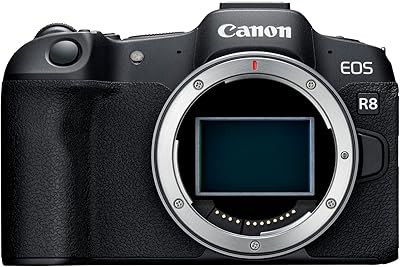
Canon EOS R8
Canon EOS R8
75%
93%
Autofocus Performance
89%
Image Quality
84%
Video Quality
88%
Portability & Build
41%
Stabilization
More
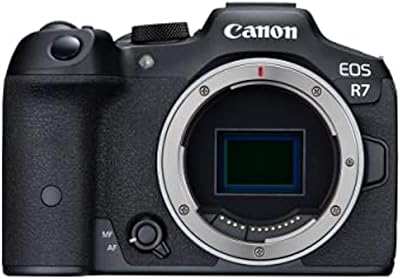
Canon EOS R7
Canon EOS R7
83%
94%
Autofocus Performance
91%
Burst Speed & Pre-Capture
88%
Image Quality
83%
Video Quality
86%
In-Body Image Stabilization
More
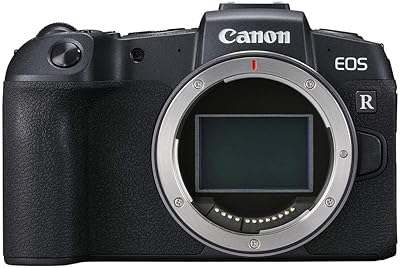
Canon EOS RP
Canon EOS RP
74%
88%
Image Quality
83%
Autofocus Performance
93%
Portability & Form Factor
54%
Battery Life
61%
Video Capabilities
More
Canon EOS R6 Full-Frame Mirrorless Camera
79%
94%
Autofocus Performance
91%
Image Stabilization
89%
High ISO and Low-Light Quality
76%
Video Capabilities
88%
Burst Speed and Action Performance
More
Canon EOS M100 Mirrorless Camera with 15-45mm Lens
84%
92%
Autofocus Performance
89%
Ease of Use
88%
Image Quality
95%
Portability/Weight
63%
Low-Light Performance
More
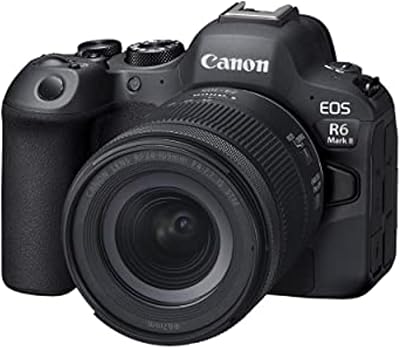
Canon EOS R5 Mirrorless Camera
81%
97%
Image Quality
95%
Autofocus Performance
82%
Video Capability
93%
Build Quality & Durability
88%
In-Body Image Stabilization
More
Canon EOS R6 Mark II Mirrorless Camera
83%
96%
Autofocus Performance
91%
Video Quality
89%
Burst Speed & Buffer
84%
Image Quality & Dynamic Range
93%
Build Quality & Weather Sealing
More
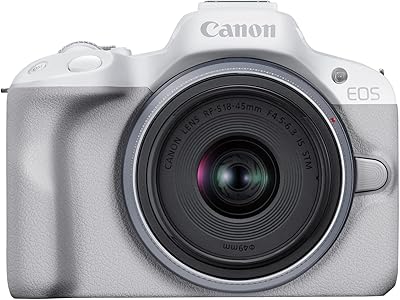
Canon EOS R50
Canon EOS R50
79%
93%
Autofocus Performance
88%
Image Quality
86%
4K Video Quality
57%
Battery Life
91%
Portability & Build
More
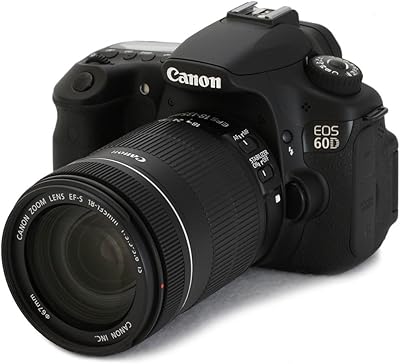
Canon EOS 60D DSLR Camera Body
85%
88%
Image Quality
91%
Build Quality
83%
Video Recording
86%
Autofocus Performance
89%
Ease of Use
More
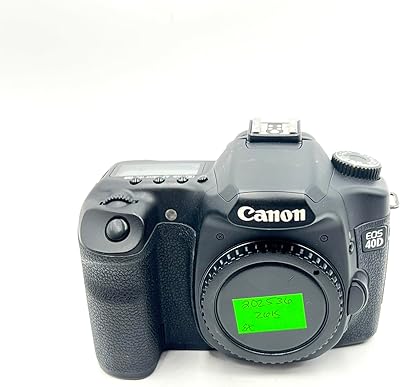
Canon EOS 40D Digital SLR Camera
84%
90%
Image Quality
85%
Build Quality & Durability
87%
Battery Life
84%
Ease of Use
88%
Autofocus Performance
More

FAQ

Your UHS-II SD cards will work in Slot 2 without any issue. However, to take full advantage of 30fps bursts or 6K RAW video recording, you really need a CFexpress Type B card in Slot 1 — standard SD cards simply cannot write data fast enough to keep up with the buffer. Budget for at least one high-speed CFexpress card as part of your initial purchase.

Setup is straightforward but requires patience — you calibrate it by looking at targets on screen, and the process takes a few minutes. The tricky part is that calibration can shift when lighting changes dramatically or if you wear glasses. Most users find it works impressively well once dialed in under consistent conditions, but some photographers with certain prescriptions or eye conditions report enough inconsistency that they prefer to use traditional joystick AF point selection instead.

Yes, but you need Canon's EF-EOS R mount adapter, which is sold separately. EF and EF-S lenses work well through the adapter, including autofocus and image stabilization, though you naturally lose access to RF-specific features like the control ring. If you are investing in new glass, RF lenses are the better long-term choice for this system.

No — that capability was added later through a firmware update (version 1.2.0). If you are buying the camera now, simply check that your firmware is up to date after unboxing and you will have full access to it. Canon has been genuinely good about adding meaningful features through free firmware updates, which is worth factoring into the value equation.

Both are exceptional at high-speed shooting, but they take different approaches. The EOS R3 offers the unique gaze-based focus selection that the A1 simply does not have, and many sports photographers find Canon's autofocus behavior more intuitive to control under pressure. The A1 counters with a higher 50MP resolution, which matters if you crop heavily. If you are already in the Canon RF ecosystem, the R3 is the natural choice; if you are starting fresh, trying both bodies hands-on before committing is worth the effort.

For a full day of mixed stills shooting — some burst sequences, reviewing images between sessions, moderate autofocus use — most photographers get through a solid half-day to full day on a single charge. The situation changes meaningfully if you are shooting sustained 6K RAW video, where battery drain is noticeably heavier. Working professionals covering all-day events almost universally carry at least two spare LP-E19 batteries as standard practice.

Very much so. Canon clearly designed the EOS R3 with 1D X users in mind — the grip depth, button layout, and overall handling feel deliberately close to the DSLR flagship. Most photographers who made that switch report a surprisingly short adjustment period, with the main learning curve being the electronic viewfinder rather than anything mechanical or ergonomic.

For most of the scenarios this body is designed for — sports, press, wildlife, events — yes, 24.1MP is entirely sufficient for editorial publication both in print and digitally. Where you will feel the constraint is if you regularly crop to less than 30 or 40 percent of the original frame, or if you need to produce very large prints from a distance-limited telephoto shot. Photographers who need both speed and higher resolution for the same work should look at how rivals like the Sony A1 balance those two demands.

It does, and this is one of the areas where user feedback is consistently positive. Photographers have used this body in heavy rain at outdoor sporting events and in sandy, dusty field environments without operational problems. The integrated vertical grip removes the seal gap that separate add-on grips can introduce, which is a real advantage over bodies that rely on accessory grips for portrait-orientation shooting.

Standard 4K and HD video records in MP4 using H.264 or H.265, which most editing software handles natively without any plugins. The 6K RAW format requires Canon's Cinema RAW Light processing or compatible professional software — if you are planning to shoot primarily in RAW video, confirm your editing pipeline supports it before committing. For run-and-gun hybrid shooters who want usable footage fast, the H.265 MP4 output is excellent and far easier to work with in standard post-production workflows.

Where to Buy

B&H Photo-Video-Audio
In stock $4,399.00
Newegg.com
In stock $4,399.00
Full Compass Systems
In stock $5,399.00
Willoughby's Photo Emporium
In stock $3,699.00
Abe's of Maine
In stock $3,749.00
Panamoz.com
In stock $3,969.00