
Overview

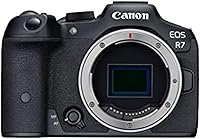
The Canon EOS R7 sits at the top of Canon's APS-C RF-mount lineup, and it earns that position with a combination of compact dimensions and professional-grade internals. This isn't a beginner's camera dressed up in enthusiast clothing — it's built specifically for photographers who shoot fast subjects and need reliable results under pressure. Wildlife shooters, sports photographers, and hybrid content creators are the natural audience here. At this price tier, it goes head-to-head with strong alternatives from Sony and Fujifilm, so Canon had to bring something substantial. For the most part, they did.

Features & Benefits

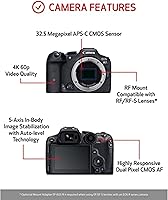
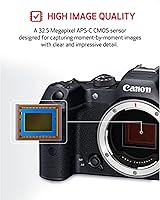
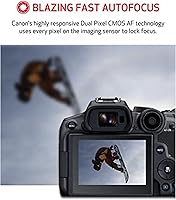
The 32.5-megapixel APS-C sensor paired with the DIGIC X processor delivers sharp, detailed files with solid dynamic range — useful when you're pushing shadows in post or cropping tightly into a distant bird or athlete. The subject detection built into the Dual Pixel CMOS AF II system is impressive in practice: 651 zones covering nearly the entire frame, locking onto eyes, animals, and moving vehicles with minimal fuss. Burst shooting at 15fps mechanical or 30fps electronic opens up real possibilities, and the RAW Burst pre-capture feature has clear value for unpredictable action. The 5-axis IBIS steadies handheld video reliably, while 4K recording with 10-bit output gives this APS-C mirrorless body credible video credentials alongside its stills pedigree.

Best For

This APS-C mirrorless body was built most naturally around fast, unpredictable subjects — birds in flight, athletes mid-stride, wildlife at a distance. The APS-C crop factor effectively extends your reach, which is a real asset when pairing with longer RF lenses. Sports and action shooters will appreciate the burst speed and pre-capture buffer. Vloggers and travel filmmakers get a capable 4K setup in a body light enough to carry all day. Canon DSLR users will find the control layout familiar enough to shorten the learning curve. That said, it's less compelling if your priority is low-light portraiture or depth-of-field control that only full-frame can offer — and RF lens prices mean kit costs grow well beyond the body.

User Feedback

Buyers consistently land at 4.7 stars, and the most common thread in positive reviews is the autofocus performance — particularly animal and bird detection, which shooters describe as noticeably more reliable than many competing systems. Battery life comes up repeatedly as a frustration: heavy burst sessions or prolonged video recording drain the included battery faster than many users expect, and carrying a spare quickly becomes non-negotiable. A few reviewers note viewfinder blackout during the fastest electronic burst rates, and rolling shutter artifacts with the electronic shutter do get called out on occasion. Overall, buyers come away satisfied — but those entering the RF ecosystem should factor in the substantial lens costs that often follow the initial body purchase.

Pros

  • Subject tracking for birds, animals, and athletes is among the best available in an APS-C body.
  • RAW Burst Mode with half-second pre-capture helps you recover peak moments before you fully press the shutter.
  • The APS-C crop factor effectively extends telephoto reach, a real asset for wildlife and sports shooters.
  • 5-axis in-body stabilization handles handheld video smoothly enough to reduce gimbal dependence for many shooters.
  • Uncropped 4K with 10-bit output gives Canon's R7 credible hybrid shooting credentials alongside its stills performance.
  • Weather sealing and a magnesium alloy chassis hold up during outdoor sessions without requiring babying.
  • Dual card slots provide redundant backup — a meaningful safety net for working photographers shooting irreplaceable moments.
  • Canon DSLR users will find the button layout and ergonomics familiar, cutting transition time substantially.
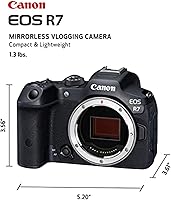
  • At around 1.1 pounds, this enthusiast mirrorless camera is light enough for all-day handheld use without fatigue.
  • 32.5MP resolution allows aggressive cropping in post while retaining enough detail for large prints or digital delivery.

Cons

  • Battery life under heavy burst shooting or sustained 4K recording is short enough that spare batteries are effectively mandatory.
  • RF-mount lenses carry a significant price premium, making total kit costs climb well beyond the body alone.
  • Electronic shutter rolling shutter artifacts are a real concern for lateral fast-action and motorsport shooting.
  • The buffer fills faster than expected during extended RAW Burst sequences, forcing unwanted pauses between runs.
  • 4K 60fps applies a noticeable crop, which limits wide-angle options for fast frame-rate video work.
  • Viewfinder blackout during the fastest electronic burst rates disrupts tracking on erratic subjects at critical moments.
  • High-ISO noise levels above 6400 are a meaningful step behind full-frame alternatives in the same price bracket.
  • The Micro-HDMI port is fragile and cables are harder to source on location than standard HDMI connectors.
  • One card slot is limited to UHS-I speeds, creating a throughput bottleneck during sustained high-speed RAW shooting.
  • Overheating warnings under prolonged 4K recording in warm outdoor conditions have been reported by a subset of users.

Ratings

The Canon EOS R7 earned its strong reputation across thousands of verified buyer reviews worldwide, and our AI-driven scoring reflects that consensus — filtering out incentivized, bot-generated, and outlier feedback to surface what real photographers actually experience. Scores cover everything from autofocus reliability in the field to the less-discussed realities of battery endurance and lens ecosystem costs. Both the standout strengths and the honest frustrations are reflected here so you can make a genuinely informed decision.

Autofocus Performance
94%
Subject detection for birds, animals, and athletes is consistently praised as class-leading among APS-C bodies. Photographers tracking erratic subjects — shorebirds banking over water or players cutting across a court — report that the system locks on and holds with minimal intervention, even in cluttered backgrounds.
In very low contrast or backlit scenes, the system occasionally hunts before confirming focus. A small number of wildlife shooters noted the animal eye detection can briefly lose track when a subject turns away or is partially obscured by vegetation.
Burst Speed & Pre-Capture
91%
The 30fps electronic shutter and RAW Burst Mode with half-second pre-capture give action shooters a meaningful safety net for peak moments that happen before you fully press the shutter. Sports photographers shooting fast-break plays or birds launching from a branch find this combination genuinely useful rather than gimmicky.
The electronic shutter introduces rolling shutter distortion with fast lateral movement — something motorsport and certain sports shooters have flagged as a real limitation. The buffer also fills faster than some users expect during extended RAW Burst sequences, requiring a pause before shooting resumes.
Image Quality
88%
The 32.5MP sensor produces files with strong detail retention and usable dynamic range, especially when shooting in RAW and recovering shadows in post. Landscape and wildlife photographers appreciate the ability to crop aggressively while retaining enough resolution for large prints or detailed crops of distant subjects.
High-ISO performance, while respectable for an APS-C sensor, shows more noise than a comparably priced full-frame alternative at ISO 6400 and above. Indoor sports or low-light event shooters who regularly push into high ISO ranges may find the output less clean than they hoped.
Video Quality
83%
Uncropped 4K with 10-bit output and Movie Servo AF makes this APS-C mirrorless body a credible hybrid option for vloggers and documentary-style shooters. The ability to record continuously for over 30 minutes without an artificial cutoff is a practical advantage for event coverage and longer takes.
Overheating warnings under sustained 4K recording in warm environments have been reported by a handful of users, particularly when filming outdoors in summer conditions. The 4K 60fps mode applies a crop, which frustrates shooters who want both the widest field of view and maximum frame rate simultaneously.
In-Body Image Stabilization
86%
The 5-axis IBIS with auto-level handling noticeably reduces camera shake during handheld video walks and slow-shutter stills in dim light. Travel photographers and vloggers who prefer not to carry a gimbal report smooth enough footage for most social and web use when moving at a steady pace.
IBIS effectiveness drops considerably with very long telephoto lenses where optical stabilization in the glass matters more. Some users also noted that the auto-level feature, while convenient, occasionally over-corrects horizon tilt in a way that requires manual adjustment in post.
Battery Life
61%
39%
The included LP-E6NH battery is a proven, widely available cell, and the fact that Canon ships a spare in the box with the body shows some self-awareness about endurance. For lighter shooting days — a few hundred stills with minimal video — most users manage comfortably on a single charge.
Heavy burst shooting or prolonged 4K recording drains the battery at a rate that frustrates working photographers on all-day assignments. Multiple reviewers treat carrying two or three batteries as a non-negotiable baseline, adding cost and bag weight that buyers should factor in from the start.
Build Quality & Weather Sealing
89%
The magnesium alloy chassis feels substantial despite the lightweight body, and the weather sealing gives outdoor photographers meaningful confidence when shooting in rain or dusty conditions. Wildlife photographers who spend long days in variable weather consistently mention that the body has held up well without babying.
The polycarbonate elements in the grip area feel slightly less premium compared to Canon's own full-frame RF bodies. A few users noted that while the sealing holds up in light rain, they would not trust it in heavy downpours without additional protection for ports and card slots.
Ergonomics & Handling
87%
The grip depth and button layout will feel familiar to anyone coming from Canon DSLRs, which significantly shortens the learning curve for long-time Canon users switching systems. At around 1.1 pounds, it sits comfortably during extended handheld sessions without causing fatigue the way heavier pro bodies do.
Photographers with larger hands occasionally find the grip slightly shallow for full-day shoots with heavy RF lenses attached. The touchscreen menus, while functional, have a learning curve for users accustomed to Canon's older DSLR menu architecture.
Electronic Viewfinder
74%
26%
The 1.15x EVF magnification gives a reasonably immersive view for action and wildlife framing, and the live subject tracking overlay is useful for monitoring AF coverage in real time. Most users coming from optical viewfinders adapt within a few sessions.
Viewfinder blackout during the fastest electronic burst rates is a real distraction when tracking fast subjects, and some photographers coming from optical systems find it jarring during critical moments. EVF resolution, while adequate, falls short of some competing bodies at a similar price point.
AF Subject Detection Accuracy
88%
People, vehicle, and animal detection modes are well-tuned and switch intelligently based on scene content. Bird photographers in particular praise the eye and body detection for perched and in-flight subjects, noting it outperforms older Canon systems by a meaningful margin in real field use.
Detection reliability degrades noticeably in very low light or heavily cluttered backgrounds where subjects partially overlap. A small segment of reviewers noted occasional misidentification between similar-looking subjects — such as switching focus between two athletes in close proximity.
Value for Money
79%
21%
For buyers who need fast autofocus, high burst rates, and solid video in a compact APS-C package, Canon's R7 delivers a feature set that would have required a much larger investment just a few years ago. Canon DSLR upgraders in particular feel they are getting strong technology for the body price.
The RF lens ecosystem skews expensive, and the body price alone can give pause when budget-conscious buyers calculate the full cost of building a practical kit. Competing APS-C systems from Fujifilm and Sony offer more affordable native glass options, which factors heavily into total cost comparisons.
Connectivity & Transfer Speed
77%
23%
Built-in Wi-Fi and Bluetooth allow wireless image transfer and remote control via Canon's mobile app, which content creators find useful for quick social media turnaround or tethered setups. USB 3.0 wired transfer is fast enough that card-to-computer dumps of large RAW sessions are not a bottleneck.
The Micro-HDMI port is a common frustration — the small connector is fragile and cables are less universally available than full-size HDMI, particularly when connecting to external monitors on location. A few users reported the Wi-Fi transfer speeds feeling sluggish compared to wired alternatives during large batch transfers.
Shooting Modes & Customization
84%
The depth of custom controls available through Canon's menu system is appreciated by experienced photographers who invest time configuring button assignments and custom modes to match their shooting style. Three custom shooting modes on the dial allow fast transitions between preset configurations for different scenarios.
The initial setup requires a significant time investment to configure properly, and the sheer number of menu options can overwhelm users coming from simpler systems or entry-level bodies. Less experienced photographers have noted the learning curve is steeper than they anticipated.
Dual Card Slot Reliability
82%
18%
Having two card slots for redundant backup or overflow shooting is a real confidence booster for professional and semi-professional use, particularly at events or in remote locations where losing files is not recoverable. Wedding and wildlife photographers specifically cite this as a deciding factor when choosing Canon's R7 over single-slot competitors.
One of the two slots is limited to SD UHS-I speeds rather than the faster UHS-II standard, which creates a throughput mismatch when shooting sustained high-speed bursts and can slow write times if the faster slot fills first. This is a noted compromise for a body aimed at demanding burst shooters.

Suitable for:

The Canon EOS R7 was built for photographers who chase fast, unpredictable subjects and need a body that keeps up without weighing them down. Bird and wildlife photographers get an especially strong match here — the APS-C crop factor extends effective reach on telephoto lenses, and the subject detection system handles erratic movement with genuine reliability. Sports shooters covering everything from youth athletics to professional events will find the burst speed and pre-capture mode genuinely useful rather than a marketing footnote. Vloggers and hybrid shooters who want uncropped 4K with solid stabilization in a carry-anywhere package also get a compelling option, particularly for travel content where a full-frame rig would be impractical. Canon DSLR users considering a mirrorless upgrade will find the ergonomics and menu logic familiar enough to shorten the transition considerably, making this APS-C mirrorless body a logical next step rather than a disorienting reinvention.

Not suitable for:

Buyers whose primary work revolves around low-light portraiture, studio sessions, or achieving the shallow depth of field that only full-frame sensors can produce will find that the Canon EOS R7 does not close that gap regardless of how capable its other systems are. Photographers who regularly push into ISO 6400 and above — think indoor sports without strong artificial lighting, or dimly lit event coverage — will encounter more noise than a comparably priced full-frame alternative delivers. Anyone building a new system from scratch should also think carefully about the broader cost picture: RF lenses skew expensive compared to APS-C ecosystems from competing brands, and the body price is only the starting point. Buyers on a strict total budget who need both a body and multiple lenses may find that rivals offer a more affordable path to a complete working kit. If your shooting is mostly casual travel photography or family snapshots, this enthusiast mirrorless camera is also well over-engineered for those needs and the investment is difficult to justify.

Specifications

  • Sensor: 32.5-megapixel APS-C CMOS sensor with a 1.6x crop factor relative to full-frame.
  • Image Processor: DIGIC X processor handles high-speed data throughput for burst shooting, subject detection, and video encoding.
  • Autofocus System: Dual Pixel CMOS AF II covers approximately 100% of the frame width and height with up to 651 selectable zones.
  • Burst Rate: Shoots at 15fps with the mechanical shutter and up to 30fps with the high-speed electronic shutter.
  • ISO Range: Native ISO range of 100–32000, expandable to a maximum of 51200 for low-light shooting.
  • Shutter Speed: Mechanical shutter reaches 1/8,000 sec; electronic shutter extends to 1/16,000 sec maximum.
  • Stabilization: 5-axis in-body image stabilization with auto-level and coordinated IS control when paired with compatible RF lenses.
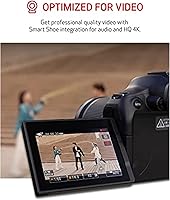
  • Video Resolution: Records uncropped 4K up to 60fps and Full HD up to 120fps in H.264 or H.265 MP4 format with 10-bit output.
  • Recording Limit: Supports continuous video recording in excess of 30 minutes per clip under normal operating conditions.
  • Viewfinder: Electronic OLED viewfinder with approximately 1.15x magnification and 100% frame coverage.
  • Body Weight: Approximately 1.1 pounds (612g) including battery and memory card.
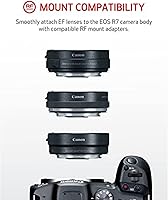
  • Lens Mount: Canon RF mount, compatible with the full range of RF and RF-S lenses as well as EF/EF-S lenses via optional adapter.
  • Card Slots: Dual card slots: one SD UHS-II and one SD UHS-I, supporting simultaneous recording, overflow, or redundant backup.
  • Connectivity: Built-in Wi-Fi and Bluetooth for wireless transfer and remote control, plus USB 3.0 Gen 2 and Micro-HDMI output.
  • Audio I/O: 3.5mm microphone input and 3.5mm headphone output for monitoring and external audio recording.
  • Weather Sealing: Body is sealed against dust and moisture at key seams, joints, and controls for outdoor reliability.
  • Battery: Powered by the LP-E6NH lithium-ion battery; an additional spare battery is included in the box.
  • Flash Sync: Maximum flash sync speed of 1/320 sec with a standard hot shoe mount for external flash and accessories.
  • File Formats: Stills captured in JPEG, HEIF, RAW, or C-RAW; video files saved as MP4 in H.264 or H.265 codec.
  • Warranty: Covered by a one-year limited manufacturer warranty from Canon USA.

Related Reviews
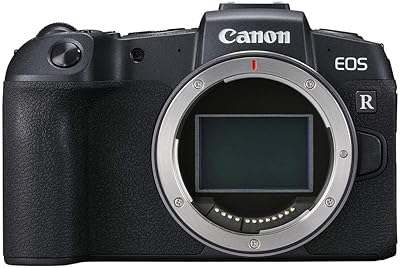
Canon EOS R
Canon EOS R
88%
97%
Image Quality
94%
Autofocus Accuracy
91%
Video Performance
88%
Build Quality
90%
Ergonomics & Handling
More
Canon EOS R3 Mirrorless Camera
89%
96%
Autofocus Performance
94%
Image Quality in Low Light
92%
Build Quality and Durability
93%
Video Recording Capabilities
89%
Usability and Ergonomics
More
Canon EOS 5D Mark IV
82%
93%
Image Quality
89%
Autofocus Performance
94%
Build Quality & Durability
61%
Video Capabilities
88%
Low-Light Performance
More
Canon EOS 5D Mark III
79%
93%
Autofocus Performance
89%
Image Quality
82%
Low-Light Capability
91%
Build Quality & Durability
61%
Video Capability
More
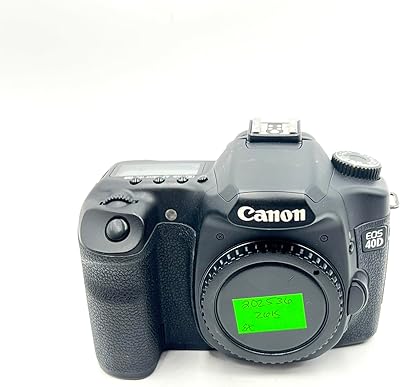
Canon EOS 40D Digital SLR Camera
84%
90%
Image Quality
85%
Build Quality & Durability
87%
Battery Life
84%
Ease of Use
88%
Autofocus Performance
More
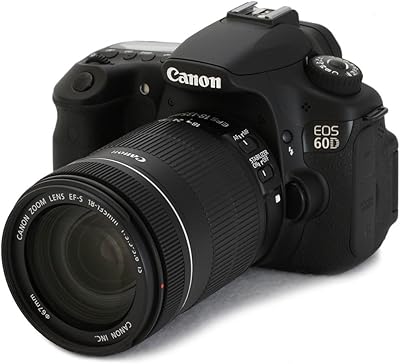
Canon EOS 60D DSLR Camera Body
85%
88%
Image Quality
91%
Build Quality
83%
Video Recording
86%
Autofocus Performance
89%
Ease of Use
More
Canon EOS R8
Canon EOS R8
75%
93%
Autofocus Performance
89%
Image Quality
84%
Video Quality
88%
Portability & Build
41%
Stabilization
More
Canon EOS 70D
Canon EOS 70D
82%
91%
Autofocus Performance
87%
Image Quality
78%
Video Capability
83%
Build Quality & Ergonomics
88%
Battery Life
More
Canon EOS R10 with RF-S18-150mm F3.5-6.3 IS STM
82%
93%
Autofocus Performance
88%
Image Quality
81%
Video Capability
91%
Ease of Use
84%
Build Quality & Portability
More
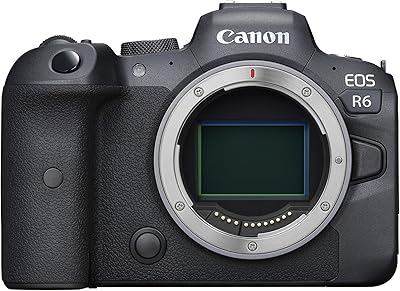
Canon EOS R6 Full-Frame Mirrorless Camera
87%
94%
Autofocus Performance
93%
Low-Light Performance
90%
Image Quality
85%
Ease of Use
91%
4K Video Quality
More

FAQ

Yes, but you will need the Canon Mount Adapter EF-EOS R, which is sold separately. It works reliably with the vast majority of EF and EF-S glass, including autofocus and image stabilization. That said, you will miss out on the full performance of the native RF lens system, particularly the most advanced AF features.

If you shoot primarily stills at a moderate pace, a single LP-E6NH charge gets you through a reasonable session. But if you are doing any sustained burst shooting or recording 4K video, the battery drains noticeably fast. Carrying at least one spare is genuinely advisable — the good news is that Canon includes a second battery in the box, which gives you a head start.

Under typical indoor or mild outdoor conditions, most users record well past 30 minutes without hitting a warning. In hot summer environments with direct sun exposure, a subset of users have reported thermal warnings during extended 4K sessions. Giving the body a short rest between long takes is a sensible precaution if you are shooting in warm conditions.

For most stills shooting, the electronic shutter is excellent and lets you hit 30fps silently. The caveat is rolling shutter distortion, which can appear when fast subjects cross the frame horizontally — think racing cars or tennis serves. If that describes your work, sticking to the mechanical shutter at 15fps is the safer choice.

In good light, the subject detection is genuinely impressive — it locks onto bird eyes in flight and holds tracking through erratic movement better than most competing APS-C bodies. In low contrast, heavy backlight, or when subjects are partially obscured by branches or other objects, the system can briefly lose its grip. It is not perfect, but for the target audience it is one of the strongest systems in this class.

It is a very natural step up, especially if you are already invested in Canon glass. The control layout and menu logic will feel familiar, and the performance jump — particularly in autofocus and video — is substantial. The main adjustment is committing to the RF mount ecosystem and accepting that native RF lenses carry a price premium over older EF glass.

At 4K up to 30fps, the recording is uncropped, using the full APS-C sensor area. When you push to 4K 60fps, a further crop is applied on top of the APS-C sensor size, which narrows your field of view noticeably. If wide-angle 4K footage at 60fps is important to your work, this is a real limitation worth factoring into your decision.

For walking shots and moderate movement, the 5-axis IBIS does a solid job of smoothing out camera shake — enough that many travel vloggers skip the gimbal entirely for casual content. For more dynamic movement like running shots or vehicle-mounted footage, a gimbal or stabilizer will still produce visibly cleaner results. It depends on how smooth you need the final output to be.

The sealing handles light rain and dusty environments well, and outdoor photographers consistently report it holds up during typical field use. It is not waterproof and Canon does not rate it to a specific IP standard, so it is not the right choice for shooting in heavy downpours or near surf without additional protection. Keeping port covers closed and using a rain sleeve in heavy weather is still good practice.

Yes, there is some blackout during high-speed electronic burst shooting, which some photographers find disorienting when tracking fast, unpredictable subjects. Canon's R7 does offer a pseudo-continuous display mode that reduces the sensation of blackout, but it comes at the cost of a slight motion lag in the viewfinder feed. Most shooters adapt to it after some practice, but it is worth being aware of before you commit.