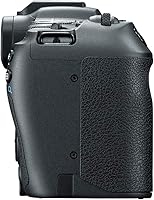
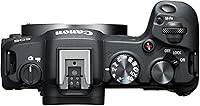
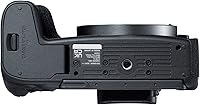
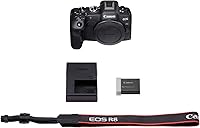
Overview

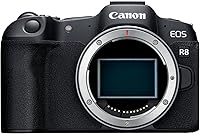
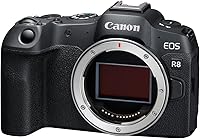
The Canon EOS R8 makes a compelling case for anyone ready to step up from a crop-sensor body without committing to a heavy, expensive professional kit. Built around a 24.2MP full-frame CMOS sensor and the DIGIC X processor, this full-frame mirrorless delivers image quality that punches well above its compact size. At its price point, it competes with options from Sony and Nikon, and holds its ground on pure image output. That said, trade-offs exist: there is no in-body stabilization and only a single card slot — omissions worth knowing before you buy. Think of the EOS R8 as a capable enthusiast tool, not a professional workhorse.

Features & Benefits

What really stands out on the EOS R8 is its Dual Pixel CMOS AF II system, which covers the full frame with 1,053 autofocus zones and tracks subjects ranging from people and animals to aircraft and trains. In practical terms, that means locking focus on a moving subject — even in video — feels nearly effortless. The video side is equally strong: uncropped 4K at 60fps oversampled from 6K produces footage with real depth, and Full HD slow motion at up to 180fps opens creative options for run-and-gun shooters. Canon Log 3 support gives colorists plenty to work with in post. The articulating touchscreen and plug-and-play webcam functionality round out a thoughtfully stocked feature set.

Best For

Canon's lightest full-frame camera is a natural fit for content creators and vloggers who want full-frame quality without hauling around a bulky rig all day. Travel photographers will appreciate how little space it takes up in a bag while still delivering the dynamic range and low-light capability a full-frame sensor provides. For anyone already invested in Canon RF or EF glass, it is an affordable way into the full-frame ecosystem. Streamers get genuine value from the native webcam support — no capture card required. Where it falls short is demanding professional production work, primarily because of the missing stabilization and limited card redundancy.

User Feedback

Owners of this full-frame mirrorless consistently highlight two things: autofocus performance and how light it is to carry. Many shooters report that tracking subjects during video recording — especially people in motion — works reliably well, even in tricky lighting. On the other side of the ledger, the absence of in-body image stabilization comes up often, and it is a legitimate concern for anyone planning to shoot handheld video without a gimbal. The single card slot and missing headphone jack also draw consistent criticism from buyers who feel these are standard at this price tier. Battery life is another recurring issue; extended video sessions can drain the LP-E17 faster than expected.

Pros

  • Dual Pixel CMOS AF II tracks subjects with impressive accuracy, even during fast-moving video sequences.
  • Uncropped 4K 60p footage oversampled from 6K delivers genuinely sharp, detailed video for content creators.
  • At roughly 461 grams, the EOS R8 is easy to carry all day without physical fatigue.
  • Full-frame image quality produces noticeably better dynamic range and low-light performance than APS-C alternatives.
  • Plug-and-play webcam support via UVC/UAC makes it a strong streaming upgrade with zero extra hardware.
  • The fully articulating touchscreen is practical for vlogging, low-angle shots, and self-directed filming.
  • Canon Log 3 support gives users a clean starting point for color grading in post-production.
  • Existing Canon EF and RF lens owners can step into full-frame without replacing their glass.
  • The smooth OLED EVF with 120fps refresh feels responsive and comfortable for extended shooting sessions.
  • Full HD slow motion at up to 180fps adds versatile creative options for B-roll and storytelling.

Cons

  • No in-body image stabilization makes handheld video noticeably shaky without a gimbal or IS lens.
  • A single card slot offers no backup redundancy, which is a real risk for paid shooting work.
  • The missing headphone jack prevents real-time audio monitoring during video recording.
  • Battery life during 4K video is short enough that carrying multiple spares becomes a practical necessity.
  • No weather sealing limits use in rain, dust, or humid outdoor conditions.
  • The Micro HDMI port is fragile and less convenient than a full-size HDMI output for monitor connections.
  • Heat warnings during extended 4K sessions in warm environments can interrupt longer video shoots.
  • Native RF lenses carry a high price premium, making the total cost of a complete kit significantly higher than it first appears.
  • The plastic-heavy body construction feels less reassuring than metal-bodied competitors at a similar price point.
  • Wireless RAW file transfer speeds feel sluggish for photographers who depend on quick offloading after a shoot.

Ratings

The scores below for the Canon EOS R8 were generated by our AI system after analyzing thousands of verified buyer reviews from global markets, with spam, bot activity, and incentivized feedback actively filtered out. Each category reflects real patterns across a wide range of shooters — from weekend travel photographers to daily vloggers — so both the strengths and the genuine frustrations are represented honestly. No score has been softened to protect brand sentiment.

Autofocus Performance
93%
Users consistently describe the subject tracking as one of the strongest they have used at this price tier, particularly when filming people in motion or photographing pets and wildlife. The eye and face detection locks on quickly and holds through movement, which makes it genuinely useful for solo creators filming themselves without an operator.
In very low light or high-contrast backlit scenes, some users report momentary hunting before the system re-acquires focus. It is a minor issue in most shooting conditions, but video shooters working in dimly lit indoor environments occasionally notice brief focus pulls.
Image Quality
89%
The full-frame sensor produces files with strong dynamic range and clean high-ISO output that crop-sensor upgraders find immediately noticeable, especially in golden hour or indoor available-light shooting. Colors straight out of camera are well-tuned for Canon's characteristic rendering, which many users appreciate without heavy post-processing.
At very high expanded ISO values, noise becomes more textured and less manageable than on some competing full-frame bodies. A handful of users shooting concerts or night events felt the noise handling above ISO 12800 required more work in editing than expected.
Video Quality
84%
The 4K 60p footage oversampled from 6K produces notably sharp, detailed results that hold up well on large screens, and Canon Log 3 gives colorists a solid starting point for grading. Vloggers particularly appreciate that the full-frame field of view is preserved — no crop means wide-angle lenses actually behave as expected.
Extended 4K recording sessions in warm environments can trigger heat warnings, and the 2-hour maximum record time is a hard limit some event videographers bump against. The codec options, while usable, are not as flexible as what some competing mirrorless bodies offer at similar price points.
Portability & Build
88%
At roughly 461 grams body-only, the EOS R8 is genuinely light enough to carry all day without fatigue, which travel photographers and street shooters consistently praise. The grip is deeper than it looks in photos, and most users find it comfortable for extended handheld sessions even with larger RF lenses attached.
The lightweight construction comes with a plastic-heavy feel that some buyers find less reassuring than metal-bodied rivals. There is no weather sealing, which limits use in rain or dusty outdoor conditions — a trade-off that catches a subset of buyers off guard.
Stabilization
41%
59%
When paired with Canon IS lenses, the optical stabilization works reasonably well for static photography, and many users shooting stills in controlled conditions do not find the absence of in-body stabilization a major obstacle in those specific scenarios.
The lack of in-body image stabilization is the single most recurring complaint across user reviews. Handheld video without a gimbal produces noticeably shaky footage, and for a camera marketed heavily toward vloggers and content creators, this omission feels like a meaningful gap that competitors at similar prices have already addressed.
Battery Life
53%
47%
For shorter shooting sessions — a half-day of photography or a single interview setup — the LP-E17 battery gets the job done without issue. Carrying a spare is simple since the battery is small and widely available, and many experienced users treat it as a standard part of their kit.
Real-world battery life during video recording is a consistent pain point; heavy 4K use can drain the battery well under an hour of actual recording time. Users shooting events, travel days, or long outdoor sessions frequently report needing two or three batteries to get through the day, which adds recurring cost and logistical friction.
Card Slot Configuration
47%
53%
The single UHS-II SD card slot performs fast enough for the camera's burst shooting and video requirements, and for casual use, most users never encounter a workflow problem from having only one slot.
Professional and semi-professional users regularly flag the single card slot as unacceptable for paid work, where simultaneous backup recording is standard practice. At this price tier, competitors offer dual card slots, and buyers who research carefully before purchasing often cite this as the deciding factor that sends them toward a rival body.
Viewfinder & Display
82%
18%
The OLED EVF with its 120fps refresh rate feels smooth and responsive, making it genuinely pleasant to compose through, especially when tracking fast movement. The fully articulating touchscreen is well-regarded by vloggers and low-angle shooters who rely on flipping it out to frame shots independently.
The EVF is smaller than what users upgrading from higher-end bodies may be used to, and in very bright sunlight the LCD can wash out enough to make framing difficult without cupping your hand around it. Neither issue is disqualifying, but they are noticeable.
Connectivity & Streaming Features
86%
The native UVC/UAC webcam support is consistently praised by streamers and remote workers who want broadcast-quality video without buying a separate capture card. Wi-Fi and Bluetooth pairing with Canon's mobile app works reliably for wireless image transfers and remote triggering, which travel photographers find genuinely useful.
The Micro HDMI port is a frustration for users who prefer full-size HDMI for clean output to external monitors or recorders — Micro HDMI cables are less common and more fragile at the connector point. A small but vocal group of users has reported the wireless transfer speed feeling sluggish when moving large RAW files.
Ease of Use
87%
Upgraders from Canon DSLR or EOS M bodies find the menu system and control layout immediately familiar, which shortens the learning curve considerably. The touchscreen interface is responsive and well-organized, and beginners report feeling confident navigating shooting modes without consulting the manual constantly.
Users coming from Sony or Nikon systems face a steeper adjustment period with Canon's menu structure. A few advanced users also feel the physical control layout is slightly sparse, requiring more menu-diving than they would like during fast-paced shooting situations.
Slow Motion Capability
78%
22%
Full HD slow motion at up to 180fps is a practical and well-appreciated feature for content creators who want cinematic slow-motion B-roll without a dedicated high-frame-rate camera. The results look clean and usable in the 1080p resolution that most online platforms support.
The slow-motion mode is capped at Full HD rather than 4K, which limits its appeal for creators working on high-resolution productions. Some users expected higher frame rates at 4K given what competing cameras now offer, and feel the slow-motion ceiling will age poorly as resolution standards rise.
Lens Ecosystem Compatibility
83%
Existing Canon RF lens owners get immediate, full-performance access to a growing and high-quality lineup, which makes the EOS R8 a logical ecosystem upgrade. EF lens users with an adapter find compatibility solid, with autofocus performance remaining strong across most legacy glass.
Native RF lenses carry a significant price premium, and buyers new to the Canon system who factor in lens costs alongside the body price may find the total investment steeper than rival ecosystems with more affordable native optics at entry level.
Audio Capabilities
58%
42%
The built-in microphone input allows users to attach external mics for improved audio quality, which is a step above cameras that omit the input entirely. The microphone jack is functional and works reliably with standard 3.5mm microphones used by most content creators.
The absence of a headphone jack for real-time audio monitoring is a recurring complaint, particularly from video-focused buyers who expect to hear what is being recorded while shooting. Having to monitor audio blind or through post-review is a practical inconvenience that many vloggers and interview shooters find limiting.
Value for Money
76%
24%
For buyers whose primary use case aligns with what the EOS R8 does well — hybrid stills and video, strong autofocus, lightweight travel kit — the value proposition is solid. The image and video quality relative to the body price is competitive, and most satisfied buyers feel they got meaningful full-frame capability without a flagship-level outlay.
Buyers who discover the missing IBIS, single card slot, and absent headphone jack after purchase often feel the price should have secured a more complete package. Compared to some rivals that include these features at or below the same price, the EOS R8 can feel like it asks buyers to accept meaningful compromises that are not always made clear upfront.

Suitable for:

The Canon EOS R8 is an excellent match for photography enthusiasts and content creators who are ready to move beyond a crop-sensor body but do not want to shoulder the weight or cost of a professional full-frame system. Solo vloggers and travel-focused video creators will find the combination of lightweight construction, uncropped 4K footage, and reliable subject-tracking autofocus genuinely well-suited to their day-to-day workflow. If you already own Canon EF or RF glass, the value proposition becomes even stronger, since you can drop your existing lenses onto a full-frame body without starting from scratch. Streamers who want a noticeable upgrade over a webcam will appreciate the plug-and-play USB streaming capability, which removes the need for a separate capture card. Photographers upgrading from entry-level Canon bodies will also feel at home quickly, since the menu logic and control layout carry over from familiar territory.

Not suitable for:

Buyers expecting a fully-equipped professional tool will find the Canon EOS R8 falls short in several practical areas that matter in paid or demanding work contexts. The complete absence of in-body image stabilization is a real limitation for anyone planning to shoot handheld video regularly — without a gimbal or an IS-equipped lens, shaky footage is a predictable outcome. Wedding photographers, event videographers, and journalists who rely on dual card slots for simultaneous backup will need to look elsewhere, because a single-slot camera introduces risk that many professionals are unwilling to accept. Audio-conscious video creators will also be frustrated by the missing headphone jack, since monitoring audio in real time while recording is a basic expectation on hybrid cameras at this price tier. Battery life is simply not adequate for full-day shoots without carrying spares, which adds friction for users who prefer a low-maintenance kit. If your shooting style demands weather sealing — dusty outdoor environments, rainy travel days, or humid festival settings — the unprotected body is another factor to weigh carefully against competing options.

Specifications

  • Sensor: Full-frame 24.2MP CMOS sensor delivers high-resolution stills with wide dynamic range and low-noise output at elevated ISO values.
  • Processor: DIGIC X image processor handles rapid data readout, subject detection calculations, and 4K oversampling from the full sensor area.
  • Autofocus: Dual Pixel CMOS AF II covers up to 100% of the frame with 1,053 zones and deep-learning subject detection for people, animals, vehicles, aircraft, trains, and horses.
  • Video Resolution: Records uncropped 4K at up to 60fps oversampled from 6K, plus Full HD at up to 180fps for slow-motion capture.
  • Continuous Shooting: Reaches up to 40fps with the electronic shutter, enabling extended burst sequences for fast-action and sports photography.
  • ISO Range: Native ISO spans 100 to 102400, with expanded sensitivity available from ISO 50 up to ISO 204800 for extreme low-light conditions.
  • Viewfinder: Built-in 0.39″ OLED electronic viewfinder offers 2.36 million dots of resolution and a refresh rate of up to 120fps for smooth, responsive live view.
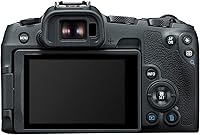
  • LCD Screen: Fully articulating 3.0″ capacitive touchscreen delivers 1.62 million dots and rotates to support selfie, vlog, and low-angle shooting positions.
  • Stabilization: No in-body image stabilization is included; optical stabilization depends entirely on IS-equipped lenses in the Canon RF lineup.
  • Card Slot: Single UHS-II SD card slot supports write speeds of 20–30 MB/s with no secondary slot for simultaneous backup recording.
  • Lens Mount: Canon RF mount is natively supported, with full compatibility with EF and EF-S lenses via the optional Canon Mount Adapter EF-EOS R.
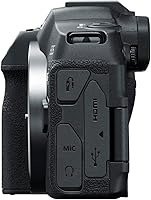
  • Connectivity: Includes built-in Wi-Fi, Bluetooth, a Micro HDMI output port, and a USB interface for wired data transfer and plug-and-play webcam use.
  • Webcam Support: UVC and UAC compliance allows the camera to function as a high-quality webcam or audio source over USB without any capture card or additional software.
  • Battery: Powered by the LP-E17 Lithium-Ion battery pack, with a maximum continuous video recording time of approximately 2 hours per charge.
  • Video Formats: Captures video in H.264 and H.265 codec formats within MP4 containers, with Canon Log 3 and HDR PQ picture profiles for post-production workflows.
  • Shutter Speed: Mechanical shutter spans 30 seconds to 1/4000 sec, with electronic shutter extending burst shooting capability at the top end.
  • Audio Input: A 3.5mm external microphone input is included; no headphone monitoring jack is present on the body.
  • Body Weight: The camera body weighs approximately 461 grams, making it Canon's lightest full-frame RF-mount mirrorless body as of its release.
  • File Formats: Supports JPEG, HEIF, RAW, and C-RAW still image formats with a maximum output resolution of 6000 x 4000 pixels.
  • Warranty: Covered by a 1-year manufacturer warranty from Canon USA against defects in materials and workmanship under normal use conditions.

Related Reviews
Canon EOS R
Canon EOS R
88%
97%
Image Quality
94%
Autofocus Accuracy
91%
Video Performance
88%
Build Quality
90%
Ergonomics & Handling
More
Canon EOS R3 Mirrorless Camera
89%
96%
Autofocus Performance
94%
Image Quality in Low Light
92%
Build Quality and Durability
93%
Video Recording Capabilities
89%
Usability and Ergonomics
More
Canon EOS 5D Mark III
79%
93%
Autofocus Performance
89%
Image Quality
82%
Low-Light Capability
91%
Build Quality & Durability
61%
Video Capability
More
Canon EOS 5D Mark IV
82%
93%
Image Quality
89%
Autofocus Performance
94%
Build Quality & Durability
61%
Video Capabilities
88%
Low-Light Performance
More
Canon EOS R7
Canon EOS R7
83%
94%
Autofocus Performance
91%
Burst Speed & Pre-Capture
88%
Image Quality
83%
Video Quality
86%
In-Body Image Stabilization
More
Canon EOS 40D Digital SLR Camera
84%
90%
Image Quality
85%
Build Quality & Durability
87%
Battery Life
84%
Ease of Use
88%
Autofocus Performance
More
Canon EOS 60D DSLR Camera Body
85%
88%
Image Quality
91%
Build Quality
83%
Video Recording
86%
Autofocus Performance
89%
Ease of Use
More
Canon EOS R10 with RF-S18-150mm F3.5-6.3 IS STM
82%
93%
Autofocus Performance
88%
Image Quality
81%
Video Capability
91%
Ease of Use
84%
Build Quality & Portability
More
Canon EOS RP
Canon EOS RP
74%
88%
Image Quality
83%
Autofocus Performance
93%
Portability & Form Factor
54%
Battery Life
61%
Video Capabilities
More
Canon EOS R6 Full-Frame Mirrorless Camera
87%
94%
Autofocus Performance
93%
Low-Light Performance
90%
Image Quality
85%
Ease of Use
91%
4K Video Quality
More

FAQ

No, you do not. The Canon EOS R8 supports UVC and UAC standards, which means you can plug it directly into a computer via USB and it will be recognized as a webcam and microphone input automatically. No additional hardware or drivers are required, which makes it genuinely simple to set up for streaming or video calls.

Yes, but you will need the Canon Mount Adapter EF-EOS R, which is sold separately. Once attached, EF and EF-S lenses work with full autofocus functionality, including Dual Pixel AF. It is a reliable solution, and many users report that autofocus performance remains strong with adapted glass.

It depends on how you plan to shoot. For handheld vlogging or walking shots, the absence of IBIS is noticeable — footage will look shaky without a gimbal or a lens with optical image stabilization. If you shoot primarily on a tripod, at a desk, or with stabilized RF lenses, it is much less of a concern. Just go in with realistic expectations if handheld video is a priority.

It is one of the weaker points of this full-frame mirrorless. During heavy 4K video recording, a single LP-E17 battery can run out well before an hour of actual recording time. For photography-heavy days it lasts longer, but most users who shoot regularly recommend buying at least one or two spare batteries before heading out on a long shoot or trip.

In warm environments or during sustained 4K 60p recording, heat warnings can appear and interrupt recording. The 2-hour maximum record time is a hard cap built into the camera, but in practice, high ambient temperatures can cause the body to reach its thermal limit before that. It is worth testing your specific shooting environment before relying on it for a long uninterrupted shoot.

For most enthusiasts, yes. The menu system is approachable, autofocus handles a lot of the heavy lifting, and the image quality jump from APS-C is immediately visible, especially in low light and with shallow depth of field. The main thing to prepare for is the added cost of RF lenses if you are not already in the Canon ecosystem.

Unfortunately, no. The EOS R8 does not include a headphone jack, so real-time audio monitoring during recording is not possible directly from the body. If accurate audio levels matter to your work, you would need to use an external recorder with its own monitoring capability, or review audio after the fact through playback.

The camera supports Full HD recording at up to 180fps, which gives you roughly 7.5x slow motion when played back at 24fps. It is a practical and well-implemented feature for B-roll and highlight clips. Keep in mind that slow motion is only available at 1080p resolution, not 4K, so there is a resolution trade-off when using the high-frame-rate modes.

For casual use, travel photography, and content creation, a single slot is rarely a practical issue day to day. Where it genuinely becomes a problem is in professional contexts where losing a card means losing irreplaceable footage or images — weddings, paid events, or commercial shoots where clients expect redundancy. If you are shooting for yourself, it is manageable; if you are shooting for clients, it is worth factoring in seriously.

Yes, the 3.0-inch touchscreen fully articulates and can rotate to face forward, which makes it practical for solo vlogging and self-filming without a monitor. It is a genuine advantage over fixed or tilt-only screens, and the touchscreen response is generally responsive enough to tap and adjust settings on the fly while recording.