Overview

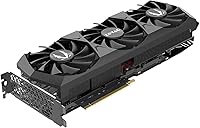
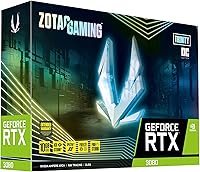
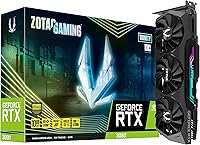
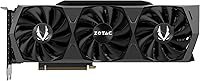
The ZOTAC GeForce RTX 3080 Trinity OC 10GB Graphics Card is NVIDIA's Ampere architecture in factory-overclocked form, purpose-built for gamers who take 4K seriously. ZOTAC ships this card with a higher-than-reference boost clock and a bespoke triple-fan cooler, so there is genuine out-of-box performance headroom without touching any software. This is the LHR edition, meaning the Ethereum mining hash rate is hardware-limited — a distinction that matters to miners but is largely irrelevant to gamers. Physically, at 12.5 inches long and weighing over 3 pounds, the ZOTAC Trinity OC is a substantial card that demands a roomy mid- or full-tower case to fit without clearance issues.
Features & Benefits

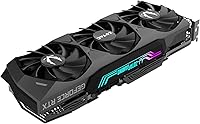
The memory setup here is genuinely impressive in practice: 10GB of GDDR6X running at 19 Gbps across a 320-bit bus gives the card enough bandwidth to handle high-resolution textures without stuttering, especially noticeable in demanding open-world 4K titles. The factory 1725 MHz boost clock gives this RTX 3080 Trinity OC a small but real performance edge over reference-clocked variants straight out of the box. Cooling is where ZOTAC has clearly invested — the IceStorm 2.0 system uses three fans with FREEZE Fan Stop, meaning the card runs completely silent at idle and only spins up under gaming or rendering workloads. Three DisplayPort 1.4a outputs and one HDMI 2.1 port cover virtually any display setup, and Spectra 2.0 RGB adds polish through the fans and lighted backplate.

Best For

This RTX 3080 Trinity OC is most at home driving a high-refresh 1440p or native 4K display in demanding AAA titles — that is the sweet spot where its bandwidth and raw compute land hardest. Content creators who also game will find it equally useful: GPU-accelerated video encoding and 3D rendering benefit noticeably from the Ampere architecture and VRAM bandwidth, making this a dual-purpose workhorse rather than a pure gaming toy. The four-display output support is a genuine advantage for productivity-focused multi-monitor setups. Builders planning compact cases should think carefully — this card needs real physical space. Those who value a quiet PC during everyday tasks will appreciate the fan-stop behavior, which cuts fan noise entirely at idle without any manual configuration required.

User Feedback

Buyers consistently highlight thermal performance as a strong point — under sustained gaming load, the card runs cooler than many expected, and noise levels stay reasonable even when the fans are active. The metal frontplate and lighted backplate get mentioned frequently as genuine quality touches that feel solid, not decorative afterthoughts. The recurring concern worth flagging is card length: multiple owners have noted tight clearance in mid-tower builds, and anyone with a compact case should measure before ordering. Power draw is another honest consideration — this card pulls around 320W under load, so a 750W or higher PSU is not optional, it is a real requirement. On overclocking, most buyers report modest additional headroom beyond the factory tune, but the factory OC is already well-optimized for most users.

Pros

  • Handles native 4K gaming with ease across virtually all current AAA titles.
  • Factory overclock delivers a small but real performance advantage over reference RTX 3080 cards.
  • IceStorm 2.0 triple-fan cooling keeps temperatures genuinely low even during long gaming sessions.
  • Fans shut off completely at idle, making this card dead silent during everyday desktop use.
  • Solid metal frontplate and lighted backplate feel built to last, not like decorative add-ons.
  • Four simultaneous display outputs cover almost any multi-monitor or productivity arrangement.
  • 19 Gbps GDDR6X memory bandwidth handles high-resolution texture streaming without hitching.
  • PCIe 4.0 interface ensures the card is not bandwidth-bottlenecked on modern platforms.
  • Spectra 2.0 RGB is well-implemented and does not interfere with airflow or thermal performance.
  • Out-of-box overclocking headroom exists for enthusiasts who want to push beyond the factory tune.

Cons

  • At 12.5 inches long, this card will not physically fit many popular mid-tower and all compact cases.
  • A 750W power supply is a hard requirement — buyers with older or weaker PSUs face an added upgrade cost.
  • 10GB of VRAM is starting to feel tight in some texture-heavy 4K titles as games grow more demanding.
  • The ZOTAC Trinity OC runs heavy at 3.09 lbs, which can stress PCIe slots without a GPU support bracket.
  • LHR hardware limits make this card a poor choice for anyone who also wanted meaningful mining performance.
  • Triple-slot width can block adjacent PCIe lanes, potentially limiting expansion card options in dense builds.
  • At close to 320W TDP, the card contributes noticeably to system heat output in poorly ventilated cases.
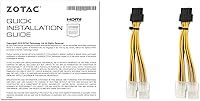
  • Included power adapters are basic dual 6-pin to 8-pin converters — a quality aftermarket cable is worth considering.
  • Fan noise under sustained heavy load is noticeable, though not excessive compared to competing triple-fan cards.
  • The newer RTX 40-series generation has made this card harder to justify at full retail pricing for new builds.

Ratings

Our AI has analyzed thousands of verified global buyer reviews for the ZOTAC GeForce RTX 3080 Trinity OC 10GB Graphics Card, actively filtering out incentivized, bot-generated, and spam submissions to surface what real owners actually experience. The scores below reflect a transparent picture of this card's genuine strengths and its real-world limitations, because both matter when you are spending serious money on a GPU.

Gaming Performance
92%
Owners consistently report smooth, high-frame-rate gameplay at native 4K in demanding titles like Cyberpunk 2077 and Horizon Forbidden West, with DLSS pushing frame rates even further. At 1440p, the card rarely breaks a sweat, making it a genuine multi-year investment for competitive and immersive gaming alike.
A small but vocal group of buyers note that 10GB of VRAM is beginning to feel constrained in a handful of texture-heavy titles at maximum 4K settings, requiring resolution or quality trade-offs to maintain smooth frame pacing. It is not a widespread complaint today, but it is a signal worth watching as games grow heavier.
Thermal Management
89%
The IceStorm 2.0 triple-fan system genuinely impresses buyers who run extended gaming sessions — GPU core temperatures under sustained load typically sit in a comfortable range that most owners consider well within safe long-term operating territory. Multiple reviewers specifically called out how the card runs cooler than their previous dual-fan cards.
In poorly ventilated cases or cramped mid-towers where airflow is restricted, temperatures creep up more noticeably than expected, and the fans work harder as a result. A few buyers with dense builds reported needing to add case fans to keep thermals from becoming an issue during summer months.
Noise Levels
86%
The FREEZE Fan Stop feature is one of the most appreciated aspects among buyers who use their PC for work during the day — at idle and under light load, the card is completely silent, which matters enormously in a quiet home office environment. Under gaming load, the fan noise is present but described by most as a low, inoffensive hum.
When the card is genuinely pushed hard — think long benchmark runs or GPU-intensive creative renders — the fans spin up to a level that some users in otherwise quiet setups find distracting. It is not unusually loud for a card at this power envelope, but buyers expecting near-silence under all conditions will be disappointed.
Build Quality
91%
The metal frontplate and lighted backplate draw consistent praise from buyers who have handled multiple GPU generations — the card feels dense, rigid, and well-assembled rather than hollow or plasticky. Several owners mentioned the backplate specifically as a standout quality touch that holds up well after extended use.
At 3.09 lbs, the card causes noticeable sag in horizontal builds without a support bracket, which a handful of buyers discovered only after installation. ZOTAC does not include a GPU brace in the box, which feels like an oversight for a card this heavy.
Value for Money
74%
26%
For buyers who secured this card at launch pricing or during periodic discounts, the performance-per-dollar calculation lands reasonably well against competing RTX 3080 variants. The factory overclock and premium cooling add tangible value over buying a reference-clocked alternative at a similar price.
With the RTX 40-series now widely available, several buyers who purchased this card at full retail pricing feel the value proposition has weakened considerably. Those comparing it directly to newer generation options at overlapping price points find it difficult to justify on a pure performance-per-dollar basis today.
Case Compatibility
63%
37%
Buyers with roomy full-tower and larger mid-tower cases report zero installation friction — the card slides in cleanly, clears drive bays, and leaves adequate room for cable management. Builders who did their measurements in advance consistently had positive installation experiences.
At 12.5 inches and triple-slot width, this card has generated more compatibility complaints than any other aspect in buyer reviews. Multiple owners had to reroute cables, remove drive cages, or in some cases return the card entirely because it simply did not fit their chosen case.
Power Efficiency
61%
39%
For users who already own a quality 850W or higher power supply, the card's power draw is a non-issue — it runs stably and without power-related instability in well-configured systems. Buyers coming from older GTX-era cards note that the performance jump justifies the higher wattage consumption.
The approximately 320W TDP under load means system-level power consumption is genuinely high, and several buyers were caught off guard by the need to upgrade their PSU before the card would even run stably. Running this card on an underpowered supply has caused system crashes and, in a few reported cases, shutdowns mid-session.
Display Connectivity
88%
Having three DisplayPort 1.4a outputs and one HDMI 2.1 port in a single card is a practical advantage that multi-monitor users and content creators genuinely benefit from — the ability to run four screens simultaneously without a hub or adapter is something buyers frequently highlight as a day-to-day convenience.
A small number of buyers who own older monitors or projectors relying on DVI or VGA connections noted that there is no native support for those interfaces, requiring adapters that can introduce compatibility headaches. It is an edge case, but worth flagging for anyone with older display infrastructure.
Ray Tracing Performance
83%
The 2nd Generation RT Cores handle ray tracing at 1440p and even 4K with DLSS enabled remarkably well, and buyers who play titles like Control, Watch Dogs: Legion, or Dying Light 2 with RT effects enabled report a genuinely impressive visual step up without crippling frame rates.
Running ray tracing at native 4K without DLSS assistance still results in frame rate drops that some buyers consider unacceptable for competitive play, requiring either resolution or ray tracing quality compromises. The card handles RT well for its generation but is not the effortless RT powerhouse that newer architectures have since become.
DLSS & AI Upscaling
87%
Buyers who lean into DLSS in supported titles consistently report it as a genuine quality-of-life improvement — recovering 30 to 50 percent frame rate in some cases while maintaining an image quality that is difficult to distinguish from native resolution in motion. It has meaningfully extended the card's useful lifespan at 4K.
DLSS support depends entirely on the game developer implementing it, and several buyers expressed frustration that their favorite titles still lack DLSS support years into the feature's availability. On games without DLSS, the card leans entirely on raw rasterization performance, which is strong but less differentiated.
RGB & Aesthetics
79%
21%
The Spectra 2.0 system with its lighted backplate gets regular compliments from buyers who care about a cohesive windowed-case build — the lighting is even, well-diffused, and syncs reliably with ZOTAC's FireStorm software. The backplate in particular is described as one of the better-looking implementations in the RTX 3080 market.
Some buyers found the FireStorm RGB control software less intuitive than third-party alternatives, and cross-brand RGB sync with non-ZOTAC ecosystem components is inconsistent. A handful of users also reported that the RGB did not survive a driver reinstall cleanly and required reconfiguration.
Installation Experience
77%
23%
For builders with appropriate cases and power supplies already in place, installation is described as clean and straightforward — the card slots in firmly, the connectors seat securely, and driver installation through GeForce Experience is well-documented and reliable. First-time builders with suitable hardware found it approachable.
The included dual 6-pin to 8-pin power adapters are considered low quality by a meaningful portion of experienced builders, with several recommending purchasing dedicated PCIe power cables instead. Buyers who did not pre-check their case clearance also ran into frustrating mid-installation discoveries about physical fit.
Creator Workload Performance
84%
Video editors running DaVinci Resolve and 3D artists using Blender report that this card handles GPU-accelerated render workloads at a level that makes a noticeable practical difference in daily productivity — export times and viewport interactivity are both meaningfully faster than mid-range alternatives.
For professional creators working with very large 3D scenes, 8K video timelines, or complex simulation data, 10GB of VRAM can become a real bottleneck that forces proxy workflows or resolution compromises. The card performs well for prosumer creative work but has real ceilings in truly professional production pipelines.
Long-Term Reliability
82%
18%
Buyers who have owned this card for a year or more generally report continued stable operation, with no widespread reports of sudden failures, coil whine, or thermal degradation over time. The metal construction and quality thermal compound application appear to contribute to durability across extended ownership periods.
A small subset of buyers reported intermittent driver stability issues on specific AMD platform builds, though these appear to be edge cases rather than a systemic hardware defect. Long-term GPU sag in builds without a support bracket is also a reported concern among owners who notice increasing connector stress over time.

Suitable for:

The ZOTAC GeForce RTX 3080 Trinity OC 10GB Graphics Card is built for gamers who have committed to 1440p or 4K as their target resolution and want a card that can genuinely sustain high frame rates in demanding titles without compromise. It is equally compelling for creative professionals who game — video editors, 3D artists, and motion designers who want GPU-accelerated rendering performance during the workday and serious gaming headroom in the evenings. Builders running multi-monitor setups will appreciate four simultaneous display outputs, a feature that is genuinely rare at this tier. Anyone who runs a quiet home office or living-room PC will benefit from the fan-stop behavior at idle, which keeps the system completely silent during everyday computing tasks. Those with roomy mid-tower or full-tower cases and a quality 750W or higher power supply will have no friction getting this card running at its best.
Not suitable for:

Budget-conscious buyers or anyone stepping up from a mid-range card for light gaming should look elsewhere — the performance headroom this card delivers only justifies the investment if you are actually targeting 4K or maxing settings at 1440p in the most demanding games available. Compact build enthusiasts working with mini-ITX or small form-factor cases will almost certainly hit clearance problems, as this is a 12.5-inch triple-slot card that physically does not fit many popular small cases. Anyone running a power supply under 700W should plan on an upgrade before even considering this purchase, since the card draws around 320W under full load and needs clean, stable power delivery. The ZOTAC GeForce RTX 3080 Trinity OC 10GB Graphics Card is also not the right pick for anyone who expected meaningful cryptocurrency mining performance, as the LHR hardware limitation puts a hard cap on Ethereum hash rates. And if 8K gaming is the goal, 10GB of VRAM creates a practical ceiling well before the display resolution does.
Specifications

  • GPU Architecture: Built on NVIDIA's Ampere architecture using the GA102 chip, which underpins the RTX 3080 series.
  • VRAM: Equipped with 10GB of GDDR6X memory, offering fast access for high-resolution textures and workloads.
  • Memory Bus: Uses a 320-bit memory interface, providing substantial bandwidth headroom for 4K rendering and large asset streaming.
  • Memory Speed: Memory operates at 19 Gbps, among the fastest available in the GDDR6X class at this capacity tier.
  • Boost Clock: Factory overclocked to a boost clock of 1725 MHz, slightly above NVIDIA's reference specification for this chip.
  • TDP: Rated at approximately 320W under full load, requiring a high-quality power supply with adequate headroom.
  • Cooling System: IceStorm 2.0 triple-fan cooling with FREEZE Fan Stop technology allows fans to stop entirely during low-load or idle operation.
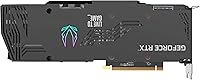
  • RGB Lighting: Spectra 2.0 RGB system covers the fan shroud and a lighted backplate, with software-controlled lighting customization.
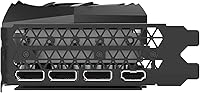
  • Display Outputs: Provides three DisplayPort 1.4a ports and one HDMI 2.1 port, supporting up to four simultaneous displays.
  • Max Resolution: Capable of outputting up to 8K (7680x4320) resolution via HDMI 2.1, though practical 8K gaming is constrained by VRAM capacity.
  • PCIe Interface: Uses a PCIe 4.0 x16 interface, ensuring full bandwidth compatibility with current-generation motherboards.
  • Slot Width: Occupies three expansion slots, which will block adjacent PCIe lanes on many motherboards.
  • Dimensions: Measures 12.5 x 4.8 x 2.3 inches, making case clearance a real consideration before purchase.
  • Weight: Weighs 3.09 lbs, which is substantial enough to warrant a GPU support bracket in most open-air builds.
  • API Support: Supports DirectX 12 Ultimate, Vulkan RT API, and OpenGL 4.6, covering all major modern gaming and professional graphics standards.
  • Ray Tracing: Includes 2nd Generation RT Cores for hardware-accelerated ray tracing in supported game titles and rendering applications.
  • AI Tensor Cores: Features 3rd Generation Tensor Cores, enabling DLSS upscaling and AI-accelerated workloads in compatible software.
  • LHR Edition: This is the Lite Hash Rate variant, which hardware-limits Ethereum mining throughput to approximately 43 MH/s.
  • Power Connectors: Requires two 8-pin power connectors; the box includes two dual 6-pin to 8-pin adapter cables.
  • OS Requirement: Officially supported on Windows 10 64-bit (build 2004 or later), with driver support also available for Windows 11.

Related Reviews

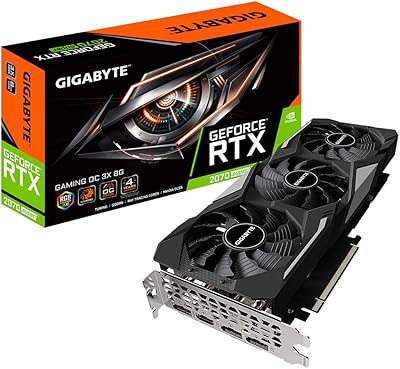
Gigabyte RTX 2070 Super Gaming OC Graphics Card
81%
91%
1440p Gaming Performance
93%
Thermal Management
88%
Noise Level
67%
Value for Money
62%
Ray Tracing Capability
More
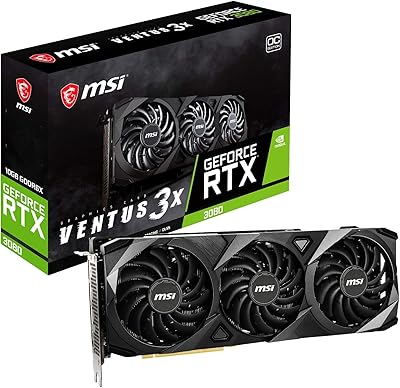
MSI RTX 3080 VENTUS 3X Graphics Card
82%
91%
Gaming Performance
87%
Thermal Management
78%
Noise Levels
69%
VRAM Capacity
88%
Build Quality
More
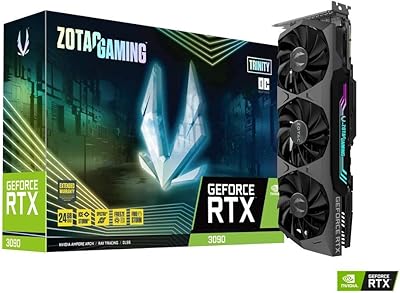
ZOTAC GeForce RTX 3090 Trinity OC 24GB Graphics Card
78%
88%
Thermal Performance
93%
VRAM Capacity & Utility
84%
Noise Levels
91%
Build Quality
58%
Value for Money
More
MSI GeForce RTX 2060 VENTUS 6G OC Graphics Card
86%
91%
Performance at 1080p
87%
Performance at 1440p
90%
Ray Tracing and DLSS Support
89%
VR Performance
88%
Cooling and Noise Levels
More
GIGABYTE GeForce RTX 5080 WINDFORCE OC SFF 16G
78%
93%
Gaming Performance
91%
DLSS 4 & AI Features
89%
SFF Compatibility & Fit
86%
Thermal Performance
84%
Noise Levels
More
ZOTAC GeForce RTX 4070 Ti Trinity OC Graphics Card
83%
93%
1440p Gaming Performance
71%
4K Gaming Performance
89%
Cooling Efficiency
91%
Noise Levels
88%
Build Quality
More
GIGABYTE RTX 5070 Gaming OC 12GB GPU
83%
93%
Gaming Performance at 1440p
76%
4K Gaming Capability
91%
Thermal Performance
94%
DLSS 4 and Multi Frame Generation
89%
Build Quality and Construction
More
GIGABYTE GeForce RTX 3050 Gaming OC 8GB Graphics Card
84%
91%
Value for Money
88%
Gaming Performance (1080p)
89%
Cooling Efficiency
84%
Build Quality
86%
Noise Level
More
GIGABYTE RTX 4080 Gaming OC 16GB GPU
81%
93%
Gaming Performance
89%
Thermal Management
91%
Build Quality
74%
Cooling Noise Level
86%
DLSS 3 & Frame Generation
More
GIGABYTE RTX 5060 WINDFORCE OC 8GB GPU
81%
93%
1080p Gaming Performance
76%
1440p Gaming Performance
61%
VRAM Adequacy
88%
Thermal Performance
84%
Noise Levels
More

FAQ

NVIDIA and ZOTAC both recommend a minimum 750W power supply for the RTX 3080. In practice, if your system has a high-core-count CPU or multiple storage drives, budgeting for an 850W unit gives you cleaner headroom and avoids potential instability under peak load. Do not try to run this card on anything under 700W.

It depends on the specific case. This card is 12.5 inches long and takes up three expansion slots, so you need to check your case's maximum GPU length specification before ordering. Most standard mid-towers with lengths of 320mm or more will fit it, but compact or budget mid-towers often top out shorter than that. Always measure first.

Not at all. The LHR hardware limitation only affects Ethereum mining hash rates — it has zero impact on gaming performance, rendering workloads, or any other typical use case. For a gamer, the LHR and non-LHR versions of this card perform identically.

Technically yes, since the HDMI 2.1 port supports 8K output. Realistically, 10GB of VRAM is a limiting factor at that resolution in modern games — you will hit memory constraints before the GPU itself runs out of processing power. For actual 8K gaming at acceptable frame rates, the ZOTAC GeForce RTX 3080 Trinity OC 10GB Graphics Card is borderline rather than comfortable. It is much better suited to 4K.
At idle and during light desktop use, the fans stop completely, so the card is silent. Under sustained gaming load, the IceStorm 2.0 system is audible but not particularly loud compared to competing triple-fan designs at this power level. Most users describe it as a low, consistent hum rather than an intrusive whine.

Up to four simultaneously, using any combination of the three DisplayPort 1.4a outputs and the single HDMI 2.1 port. This makes the ZOTAC Trinity OC a solid choice for productivity setups that need multiple screens alongside gaming.

Yes, fully. The Ampere architecture includes 3rd Generation Tensor Cores for DLSS and 2nd Generation RT Cores for hardware ray tracing. DLSS in particular is worth enabling in supported titles at 4K — it recovers a meaningful amount of frame rate with minimal visual tradeoff.

There is some additional headroom on most units, but the gains are modest. The factory overclock already pushes the chip reasonably close to what the silicon typically sustains stably. If you are comfortable using MSI Afterburner or ZOTAC FireStorm, you can experiment, but do not expect dramatic improvements over the out-of-box settings.

It is strongly recommended. At 3.09 lbs with a large triple-fan shroud, this card puts real stress on the PCIe slot when mounted horizontally. Over time, that weight can cause visible GPU sag. A simple aftermarket support bracket costs very little and protects both the card and your motherboard slot.

ZOTAC bundles its FireStorm utility for fan speed tuning, overclocking, and Spectra 2.0 RGB lighting control. It is straightforward to use and covers the basics well. If you prefer a third-party alternative, MSI Afterburner works with this card for performance monitoring and fan curve adjustments, though RGB control stays within FireStorm.