Overview
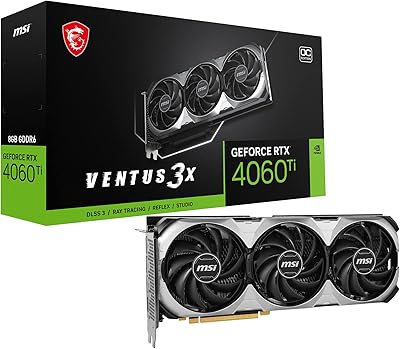
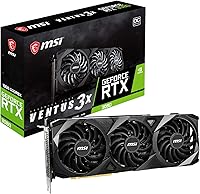
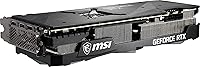
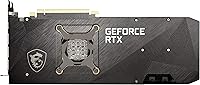
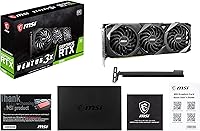
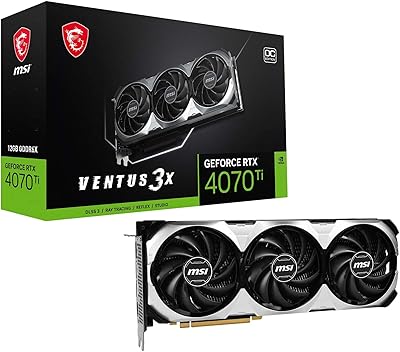
The MSI RTX 3080 VENTUS 3X Graphics Card is MSI's practical answer to how much cooling you can pack into an Ampere-based GPU without crossing into flagship pricing territory. Built on NVIDIA's Ampere architecture, it brings a genuine generational leap in rasterization performance alongside hardware-accelerated ray tracing that holds up at demanding resolutions. This isn't a halo product loaded with RGB and premium extras — it's a workhorse aimed at enthusiasts and creators who want consistent, strong output above all else. Worth noting upfront: it occupies three slots and runs long, so case compatibility deserves a check before you commit.
Features & Benefits
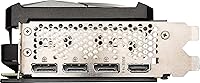
The Torx Fan 3.0 triple-fan arrangement is what sets this MSI triple-fan GPU apart from blower and dual-fan alternatives. Three fans working together push more air across the heatsink during extended sessions, though your case airflow still does meaningful work here — don't expect miracles in a poorly ventilated chassis. The 10GB of GDDR6X memory across a 320-bit bus supplies the bandwidth that high-resolution textures demand, keeping 4K workloads fluid in most titles. DLSS support adds another layer of performance headroom through AI upscaling. Connectivity covers three DisplayPort 1.4a outputs and one HDMI 2.1 port, which handles high-refresh monitors and modern displays without any adapter scrambling.
Best For
The RTX 3080 VENTUS 3X earns its place for gamers pushing 4K at ultra quality presets, where it handles demanding AAA titles confidently. At 1440p with a high-refresh panel, there's enough headroom that quality compromises are rarely necessary. Content creators doing GPU-accelerated video rendering and 3D work will appreciate Ampere's improved compute throughput as well. One honest caveat: 10GB of VRAM does have a ceiling. A growing number of texture-heavy 4K games are nudging against that limit, so heavy modders should weigh that carefully. Machine learning tasks and mainstream creative pipelines, however, sit comfortably within what this card can handle.
User Feedback
Buyers of this VENTUS 3X card consistently highlight thermal performance as a standout strength — temperatures stay manageable under prolonged load and fan noise remains unobtrusive during typical gaming, provided the case has reasonable airflow. The recurring complaint is physical: the card's length surprises people, and squeezing it into compact mid-tower builds with tight cable routing takes planning. A subset of users mention driver-related hiccups, though these appear transient and are not unique to MSI's implementation. On the value question, sentiment leans positive — most buyers feel the performance output justifies the cost, especially those coming from RTX 20-series or older AMD hardware looking for a meaningful step forward.
Pros
- Handles 4K gaming at high and ultra settings in most AAA titles without breaking a sweat.
- The triple Torx Fan 3.0 cooling setup keeps temperatures reasonable during extended gaming sessions.
- GDDR6X memory over a 320-bit bus delivers strong bandwidth for texture-heavy and high-resolution workloads.
- Factory overclock adds a stable performance bump without the instability risks of manual tuning.
- DLSS support gives meaningful frame rate headroom in supported titles without a visible quality trade-off.
- Three DisplayPort 1.4a outputs plus HDMI 2.1 cover virtually every modern monitor configuration.
- Ampere architecture brings genuine ray tracing performance, not just checkbox support.
- Resizable BAR compatibility squeezes out extra performance on supported platforms with no extra cost.
- Content creators benefit from GPU-accelerated rendering that cuts down on time-consuming export waits.
- Buyers upgrading from older-generation hardware will notice an immediate, tangible performance improvement.
Cons
- Card length is substantial and will not fit comfortably in many compact or crowded mid-tower cases.
- 10GB of VRAM is showing strain in a growing number of texture-heavy 4K games and heavy mod setups.
- A 750W or higher power supply is non-negotiable, adding to total system cost for those upgrading older rigs.
- Fan noise, while manageable during light workloads, increases noticeably under sustained heavy gaming.
- No premium extras like a robust RGB ecosystem or advanced bundled software for the asking price.
- NVLink multi-GPU support exists on paper but lacks meaningful application-level support for most workflows.
- Driver issues have appeared for some users, though they tend to be transient rather than persistent hardware problems.
- The triple-slot footprint blocks adjacent PCIe slots, which matters for users relying on secondary expansion cards.
Ratings
The scores below for the MSI RTX 3080 VENTUS 3X Graphics Card were generated by our AI system after analyzing thousands of verified global buyer reviews, with spam, bot submissions, and incentivized feedback actively filtered out. Both the strengths that make this VENTUS 3X card a compelling choice and the real frustrations that buyers encountered are transparently reflected in every category score.
Gaming Performance
Thermal Management
Noise Levels
VRAM Capacity
Build Quality
Physical Fit & Form Factor
Value for Money
Connectivity
Driver Stability
Ray Tracing Performance
DLSS Support
Installation Experience
Multi-Monitor Support
Overclocking Headroom
Suitable for:
The MSI RTX 3080 VENTUS 3X Graphics Card is a strong fit for enthusiast gamers who want to run demanding AAA titles at 4K resolution with high or ultra quality settings without constantly hitting thermal throttles or fan noise walls. It also suits high-refresh 1440p players who prefer maxed-out graphics settings over chasing the last few frames. Content creators working in GPU-accelerated video encoding, 3D rendering, or light machine learning pipelines will get real mileage from Ampere's compute throughput and the wide memory bandwidth the 320-bit GDDR6X bus provides. DLSS support makes it especially practical for creators and gamers who want quality rendering at lower native cost. If you're upgrading from an RTX 20-series card or an older AMD GPU, the generational performance gap here is meaningful enough to justify the move.
Not suitable for:
Buyers with compact or mid-tower cases should approach the MSI RTX 3080 VENTUS 3X Graphics Card with caution — its physical length demands real clearance, and fitting it alongside dense cable management or large CPU coolers can be a genuine puzzle. Gamers who heavily mod their games with high-resolution texture packs should be aware that 10GB of VRAM, while capable, is increasingly pressured by the most demanding 4K scenarios, and that ceiling will only become more relevant over time. This card is also not a sensible choice for anyone whose power supply sits below 750 watts, as the Ampere architecture draws serious power under load. Users hoping to run a multi-GPU setup for productivity or rendering should know that while NVLink is technically supported, software support for multi-GPU workflows has narrowed significantly across applications, making it a hard recommendation to justify for most people. Budget-conscious buyers expecting flagship-tier extras like premium RGB lighting, aggressive overclocking headroom, or bundled software utilities will find this a no-frills card by design.
Specifications
- GPU: The card is powered by the NVIDIA GeForce RTX 3080 processor built on the Ampere architecture.
- VRAM: It carries 10GB of GDDR6X memory for handling high-resolution textures and bandwidth-intensive workloads.
- Memory Bus: The 320-bit memory interface provides substantial bandwidth headroom for 4K gaming and GPU-accelerated tasks.
- Fan Setup: Three Torx Fan 3.0 fans work in tandem across the heatsink to manage thermals during sustained load.
- Display Outputs: Connectivity includes three DisplayPort 1.4a ports and one HDMI 2.1 port for flexible single or multi-monitor configurations.
- Slot Requirement: The card occupies two to three expansion slots, requiring adequate physical clearance inside the case.
- Multi-GPU: NVLink is supported for multi-GPU configurations, though broad application-level support for this feature has declined industry-wide.
- Overclock: This is the OC edition, meaning it ships with factory-boosted clock speeds slightly above NVIDIA reference specifications.
- Power Requirement: A high-wattage power supply of at least 750W is recommended to ensure stable operation under full load.
- Ray Tracing: Second-generation RT cores enable hardware-accelerated ray tracing at a level that makes the feature practical rather than purely decorative.
- AI Upscaling: DLSS is supported, allowing compatible games to render at lower native resolutions and reconstruct sharp output through AI processing.
- API Support: The card is fully compatible with DirectX 12 Ultimate and Vulkan for broad game and application coverage.
- Resizable BAR: Resizable BAR is supported, allowing the CPU to access the full GPU frame buffer at once on compatible platforms for additional performance gains.
- Architecture: Ampere delivers meaningful improvements in rasterization performance, shader throughput, and power efficiency compared to the preceding Turing generation.
- Output Standard: The HDMI 2.1 port supports up to 4K at 120Hz or 8K output on compatible displays without requiring additional adapters.
Related Reviews
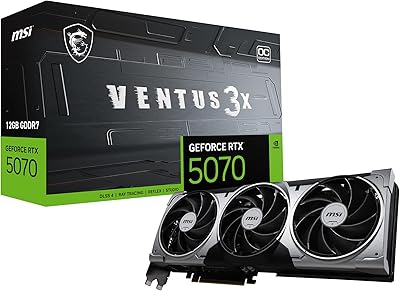
MSI RTX 5070 Ventus 3X OC 12GB
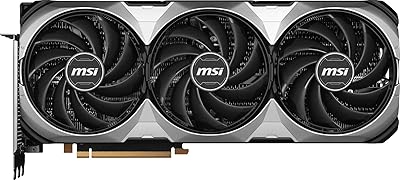
MSI GeForce RTX 4080 SUPER 16GB VENTUS 3X OC Graphics Card
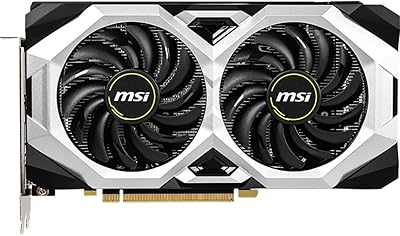
MSI GeForce RTX 2060 VENTUS 6G OC Graphics Card
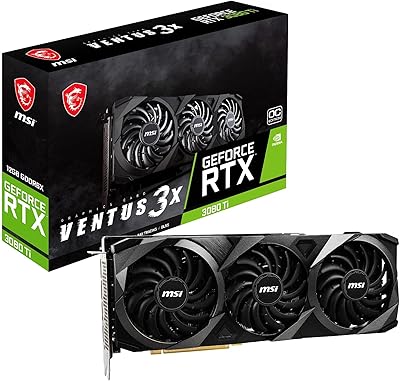
MSI RTX 3080 Ti Ventus 3X GPU
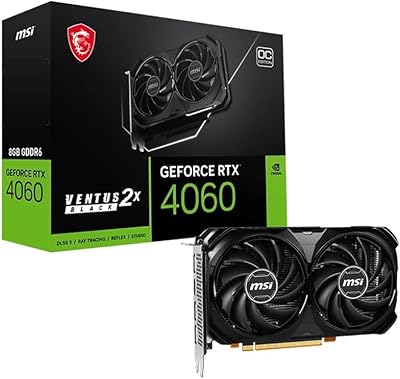
MSI RTX 4060 Ventus 2X Graphics Card
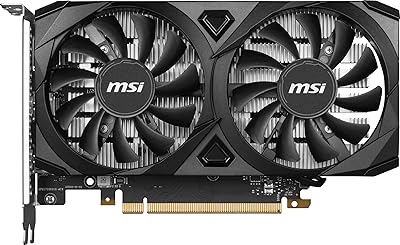
MSI RTX 3050 Ventus 2X Graphics Card
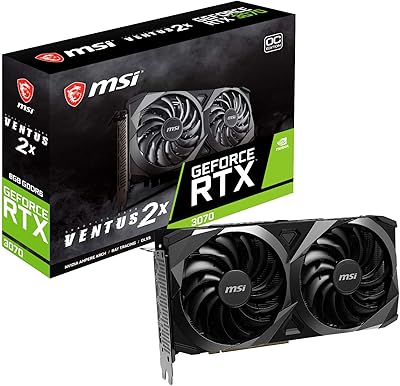
MSI RTX 3070 Ventus 2X OC GPU
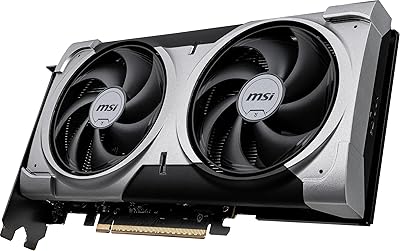
MSI RTX 5060 Ti 16GB Graphics Card
MSI RTX 4070 Ti VENTUS 3X GPU