Overview

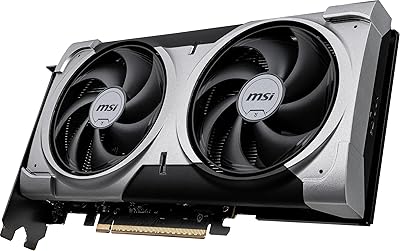
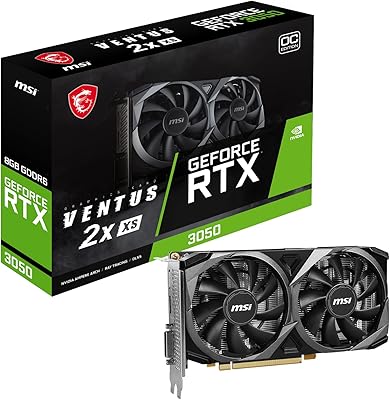
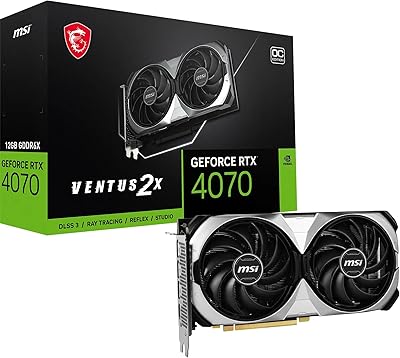
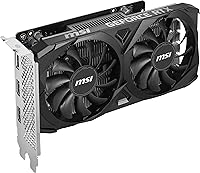
The MSI RTX 3050 Ventus 2X Graphics Card arrives in early 2024 as a practical option for budget-conscious builders who need a genuine discrete GPU without spending serious money. Built on Nvidia's Ampere architecture, it benefits from mature driver support and broad software compatibility — a real advantage over newer but less-tested silicon. The compact dual-fan body fits cases where bulkier cards simply cannot. Honest caveat upfront: the 96-bit memory bus is narrow for a 6GB card, and that bandwidth constraint does create a performance ceiling in newer, more demanding titles. Know that going in, and this Ventus 2X card makes a lot more sense.

Features & Benefits

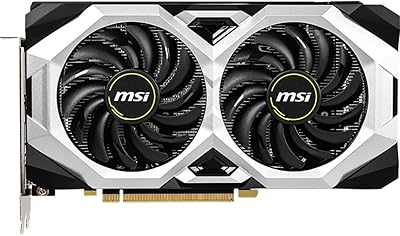
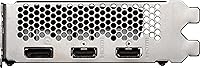
The Ventus 2X OC cooling setup uses dual Torx fans that spin down completely at idle, so the card is genuinely silent during web browsing, video playback, or light desktop tasks. Under gaming loads, thermals stay reasonable given the 75W TDP. Speaking of power: no external connector needed — this card runs entirely off the PCIe slot, which makes it an unusually painless drop-in upgrade for older prebuilt desktops with cramped, low-wattage PSUs. The RTX 3050 6GB does support ray tracing and DLSS, though at this performance tier both features work best in less-demanding titles — enabling ray tracing in modern AAA games will push the card noticeably. Connectivity is solid: two HDMI 2.1a ports and one DisplayPort 1.4a output.

Best For

This Ventus 2X card fits a surprisingly specific but real group of buyers. If you're running integrated graphics and want to play esports titles or older AAA games at 1080p medium settings, the performance jump here is substantial and immediately noticeable. It's also a strong pick for small form factor builds where a physically larger card simply isn't an option — at 7.4 inches long, it clears most ITX and mATX cases with room to spare. Home theater PCs get clean, modern display outputs without the heat or noise of a higher-end card. Office setups needing basic multi-monitor support without workstation GPU pricing will find it practical as well.

User Feedback

Across 173 ratings averaging 4.6 out of 5 stars, the most consistent praise centers on quiet idle operation and how smoothly the card installs into systems that couldn't take anything larger or more power-hungry. Buyers coming from integrated graphics frequently describe the improvement as dramatic for everyday gaming. Criticism is real and worth noting: several reviewers flag that the 96-bit bus becomes a bottleneck in newer titles, particularly at higher texture settings, and a handful question whether the value holds up against competing cards available for a modest premium. Thermals under sustained load draw mostly positive impressions. Overall sentiment leans clearly positive, but informed buyers should weigh the bandwidth limitation before committing.

Pros

  • Requires no external power connector, making it a true drop-in upgrade for older prebuilt systems with cramped PSUs.
  • The compact 7.4-inch dual-fan design fits small form factor and mATX cases where most cards cannot.
  • Fans stop spinning completely at idle, keeping the system whisper-quiet during everyday desktop use.
  • Ampere architecture brings mature, stable driver support and broad software compatibility out of the box.
  • Dual HDMI 2.1a outputs make multi-monitor and living-room media setups straightforward to configure.
  • The jump from integrated graphics to this RTX 3050 6GB is dramatic and immediately felt in real gaming scenarios.
  • A 75W TDP means minimal heat output, reducing thermal stress on budget cases with limited airflow.
  • Buyers consistently praise how easy and clean the installation process is, even for first-time builders.
  • 4.6-star average across 173 ratings reflects strong real-world satisfaction within its intended use-case.
  • DisplayPort 1.4a adds flexibility for users with newer monitors alongside the two HDMI ports.

Cons

  • The 96-bit memory bus creates a bandwidth bottleneck that limits performance in newer, texture-heavy titles.
  • Ray tracing support exists on paper, but enabling it in demanding games noticeably strains the card.
  • Some buyers question the long-term value when modestly pricier alternatives offer significantly more headroom.
  • 6GB of VRAM is becoming tight for modern AAA games, particularly at higher texture quality settings.
  • 1440p gaming is not a realistic target — the card is effectively limited to 1080p for anything demanding.
  • DLSS is available but works best in less-demanding titles; it cannot fully compensate for the bandwidth ceiling.
  • Performance in recent open-world titles can feel inconsistent, with occasional stutters under heavy scene loads.
  • For buyers near the upper end of the budget GPU range, the price-to-performance gap versus alternatives is noticeable.

Ratings

The scores below for the MSI RTX 3050 Ventus 2X Graphics Card were generated by our AI system after analyzing verified global buyer reviews, actively filtering out incentivized, bot-generated, and duplicate feedback to surface genuine user sentiment. We weighted both consistent praise and recurring frustrations equally, so what you see here reflects the honest spread of real-world experience — not a sanitized highlight reel.

1080p Gaming Performance
71%
29%
For esports titles and older AAA games at 1080p medium settings, the RTX 3050 6GB delivers smooth, consistent frame rates that feel like a genuine generational leap for anyone coming from integrated graphics. Buyers upgrading from a GT 1030 or no dedicated GPU frequently describe the improvement as transformative for their everyday gaming library.
In newer open-world releases and graphically demanding titles, the 96-bit memory bus becomes a real ceiling — frame rate drops and occasional stutters are commonly reported even when VRAM usage appears within limits. Users expecting this card to handle 2024 releases at high settings will consistently find themselves disappointed.
Memory Bandwidth
48%
52%
The 14 Gbps GDDR6 memory speed is competitive for the specification on paper, and in bandwidth-light workloads like desktop productivity, video playback, and low-demand games it performs without any obvious friction. Buyers using the card for office tasks or media center builds rarely notice a problem.
The 96-bit interface is the card's most criticized technical weakness, and it shows up repeatedly in user feedback as the reason performance falls short in modern games. Multiple reviewers specifically flag texture streaming issues and inconsistent frame pacing in titles that push memory bandwidth, making this a genuine design constraint rather than a minor footnote.
Installation Ease
93%
The absence of an external power connector is the single most praised practical feature among buyers upgrading older prebuilt desktops — it removes the most common installation obstacle entirely. Reviewers repeatedly describe a slot-in-and-boot experience, with drivers installing cleanly and the system recognizing the card immediately.
A small number of users in very compact prebuilt cases reported minor clearance friction during physical installation, though this was related to case design rather than the card itself. No meaningful software or driver issues were flagged during initial setup across the reviewed feedback pool.
Thermal Management
79%
21%
Under sustained gaming loads, temperatures stay in a range that most users describe as well-controlled given the card's compact cooler footprint and 75W TDP. The dual Torx fan setup moves enough airflow to prevent throttling in typical gaming sessions, and the card rarely gets uncomfortably hot to the touch.
In poorly ventilated cases or during extended summer sessions, some users noted temperatures climbing higher than expected and fan speeds ramping up noticeably. The cooling solution is adequate but has little thermal headroom for challenging environments — it is optimized for the card's typical use case, not edge cases.
Noise Level
88%
The zero-fan idle mode receives consistent praise from buyers using the card in quiet home office or living-room setups — during browsing, streaming, or light productivity, the system is effectively silent. Even under gaming load, the fan ramp is described as gradual and unobtrusive compared to louder budget competitors.
At full fan speed under heavy load, the noise is audible in a quiet room, though most users considered it acceptable rather than distracting. A small number of buyers noted the fans could produce a faint coil whine under specific load conditions, though this was not a widely reported issue.
Value for Money
63%
37%
For buyers with a firm budget ceiling and specific constraints — no spare PSU capacity, limited physical space, or a need to avoid any system modifications — this Ventus 2X card genuinely justifies its price within that narrow context. The combination of modern outputs, Ampere features, and silent idle operation does represent real value for the right buyer.
The recurring criticism in user feedback is that slightly higher spending unlocks significantly better performance from competing cards, and several reviewers explicitly state they would not buy this card again knowing what alternatives exist at a modest premium. Long-term value is the category where the most hesitation surfaces.
Build Quality
82%
18%
MSI's Ventus series has a reputation for solid construction, and buyer feedback on this card reflects that — the dual-fan shroud feels sturdy, the PCIe bracket is well-finished, and nothing about the physical build drew complaints related to flimsy materials or poor fitment. For an entry-level card, the fit and finish impresses.
The card uses a plastic shroud rather than a metal backplate, which some buyers noted feels less premium compared to higher-tier MSI models. This is a cost-appropriate decision, but buyers expecting metal-accented build quality at this price point will find the construction functional rather than impressive.
Driver Stability
91%
Ampere is a mature architecture with years of driver refinement behind it, and buyers consistently report clean, problem-free driver experiences — no crashes, no compatibility hiccups with popular games, and reliable behavior across Windows versions. This is a meaningful advantage over newer but less-proven GPU generations.
A very small number of users reported driver-related issues specific to certain game titles or system configurations, though these were isolated rather than systemic. No widespread driver problems were identified in the analyzed feedback, making this one of the card's most reliable aspects.
Display Connectivity
86%
Two HDMI 2.1a outputs plus a DisplayPort 1.4a port give buyers genuine flexibility for multi-monitor setups, and the dual HDMI configuration is particularly useful for living-room or home theater builds where HDMI is the dominant cable standard. Users setting up dual-display office rigs found the configuration painless.
The lack of a USB-C or Thunderbolt display output may disappoint buyers with newer monitors that favor those connections, though this is not unusual for cards in this segment. Three total outputs is adequate rather than generous compared to some competing cards that offer four ports.
Ray Tracing Capability
44%
56%
Hardware ray tracing support is present and works as advertised in lighter titles and older games with RT modes enabled — buyers who play less-demanding games with RT features occasionally report a noticeable visual improvement without unacceptable performance loss when DLSS is also active.
In any modern title with meaningful ray tracing demands, the RTX 3050 6GB struggles noticeably, and enabling RT in demanding games is generally not a practical choice. Most experienced buyers in the feedback pool treat ray tracing as a non-factor for purchasing decisions at this performance tier.
DLSS Support
67%
33%
DLSS 2 is fully supported and provides a real frame rate recovery mechanism in supported titles, which is particularly useful when the card is being pushed at the limits of its performance envelope. For buyers playing DLSS-compatible games at 1080p, the upscaling option adds practical flexibility.
DLSS cannot fully compensate for the underlying bandwidth constraints in the most demanding scenarios, and the image quality at lower DLSS quality settings at 1080p can introduce softness that some users find noticeable. It helps, but it is not a complete solution to the card's performance ceiling.
Compact Form Factor
89%
At 7.4 inches, this MSI entry-level GPU fits cases that simply cannot accommodate the 10-inch-plus cards that dominate the mid-range segment, and buyers in SFF and mATX builds consistently highlight this as the decisive reason they chose it. The low weight also eliminates PCIe slot sag concerns common with heavier cards.
The compact size is an advantage for specific builds but means the cooling solution has less surface area to work with compared to full-size cards. Buyers in well-ventilated full-tower cases might prefer a slightly larger cooler for better sustained thermal performance, even if the size itself is not a problem.
Power Efficiency
87%
A 75W TDP with no external power requirement is genuinely exceptional for a discrete gaming GPU, and buyers in older systems with 300–400W PSUs consistently report stable operation without any power-related instability. The card also contributes minimally to overall system heat output, which benefits thermal-sensitive builds.
The low power budget is both the card's efficiency strength and a performance constraint — higher performance would require more power, so the 75W ceiling is directly tied to the performance limitations buyers experience in demanding workloads. Efficiency and raw performance are in direct tension here.

Suitable for:

The MSI RTX 3050 Ventus 2X Graphics Card is genuinely well-matched to a specific kind of buyer: someone stepping up from integrated graphics for the first time, or upgrading an older prebuilt desktop that has a modest power supply and limited physical space. If your gaming ambitions center on esports titles, older AAA releases, or casual 1080p play at medium settings, this Ventus 2X card delivers a meaningful and immediately noticeable improvement without demanding a system overhaul. The no-external-power-connector design is a particular advantage for anyone working with a compact case or a low-wattage PSU — you simply slot it in and go. Home theater and media center builders also get a real benefit here, since the dual HDMI 2.1a outputs and modern display support cover most living-room setups cleanly. Office workstations needing basic dual-monitor support, without the cost of a professional GPU, will find this MSI entry-level GPU a sensible and quiet daily driver.

Not suitable for:

The MSI RTX 3050 Ventus 2X Graphics Card is a harder sell for anyone who games seriously or plans to play the latest titles at demanding settings. The 96-bit memory bus is the card's most significant structural limitation — it constrains memory bandwidth in ways that show up as stutters or texture pop-in in modern open-world games, even when VRAM headroom appears sufficient on paper. Buyers chasing consistent high-frame-rate 1080p in recent releases, or anyone eyeing 1440p gaming, will likely feel the ceiling quickly and find themselves wanting more. Ray tracing and DLSS are technically available, but enabling ray tracing in demanding titles strains the RTX 3050 6GB noticeably, so those features are not a meaningful draw at this tier. If your budget allows even a modest stretch toward a higher-performing card, the long-term value proposition of this Ventus 2X card weakens considerably — it occupies a narrow window where the use-case fit has to be very deliberate.

Specifications

  • GPU Chipset: Powered by the NVIDIA GeForce RTX 3050 processor built on the Ampere architecture, offering stable driver support and broad software compatibility.
  • Video Memory: Equipped with 6GB of GDDR6 memory running at 14 Gbps, providing adequate headroom for 1080p gaming and general desktop workloads.
  • Memory Interface: Uses a 96-bit memory bus, which limits peak memory bandwidth and can create a performance ceiling in texture-heavy or bandwidth-demanding applications.
  • Boost Clock: The GPU boosts up to 1492 MHz under load, delivering the card's peak performance in supported games and applications.
  • Display Outputs: Offers two HDMI 2.1a ports and one DisplayPort 1.4a port, supporting up to three simultaneous displays.
  • Max Resolution: Supports a maximum display output resolution of 7680x4320 (8K), suitable for high-resolution media playback and desktop use.
  • Cooling System: Features a dual Torx fan cooling design with a zero-fan idle mode that stops both fans completely during light loads and desktop use.
  • Power Connector: Requires no external PCIe power connector, drawing all required power directly from the motherboard slot, making it compatible with most legacy and low-wattage systems.
  • TDP: Rated at a 75W thermal design power, keeping heat output and system power draw low even under sustained gaming loads.
  • Card Length: Measures 7.4 inches in length, fitting comfortably in small form factor, mATX, and standard ATX cases with minimal clearance concerns.
  • Card Weight: Weighs 1.28 pounds, light enough to avoid significant sag on standard PCIe slots without additional support brackets in most builds.
  • Architecture: Built on Nvidia's Ampere GPU architecture, which includes support for hardware-accelerated ray tracing and DLSS AI upscaling via dedicated processing units.
  • API Support: Supports DirectX 12 Ultimate, OpenGL 4.6, and Vulkan, ensuring compatibility with the full range of modern gaming and creative software.
  • Form Factor: Designed as a dual-slot card, occupying two expansion bay slots in the chassis for installation.
  • Release Date: First made available in February 2024, positioning it as a current-generation entry-level option within the Ampere product family.

Related Reviews
MSI RTX 4060 Ventus 2X Graphics Card
82%
88%
1080p Gaming Performance
83%
Thermal Management
91%
Noise Level
71%
1440p Gaming Performance
63%
VRAM Adequacy
More
MSI RTX 3070 Ventus 2X OC GPU
79%
91%
1440p Gaming Performance
78%
Thermal Management
83%
Noise Level
62%
VRAM Adequacy
74%
Value for Money
More
MSI GeForce RTX 5060 Ti 16G VENTUS 2X OC Plus Graphics Card
87%
92%
Gaming Performance
89%
Cooling Efficiency
87%
Build Quality
91%
Compatibility with Modern Systems
88%
Price-to-Performance Ratio
More
MSI GeForce RTX 2060 VENTUS 6G OC Graphics Card
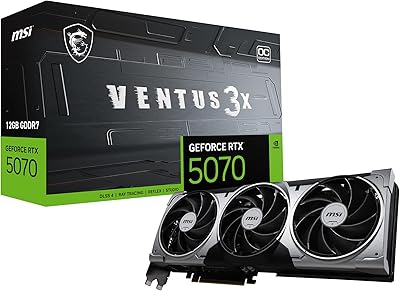
86%
91%
Performance at 1080p
87%
Performance at 1440p
90%
Ray Tracing and DLSS Support
89%
VR Performance
88%
Cooling and Noise Levels
More
MSI RTX 3050 Ventus 2X 8GB GPU
74%
73%
1080p Gaming Performance
66%
Value for Money
81%
Thermal Performance
84%
Noise Level
77%
Build Quality
More
MSI RTX 5070 Ventus 3X OC 12GB
82%
88%
Gaming Performance
86%
Thermal Management
83%
Noise Levels
84%
Build Quality
79%
Value for Money
More
MSI GeForce RTX 4080 SUPER 16GB VENTUS 3X OC Graphics Card
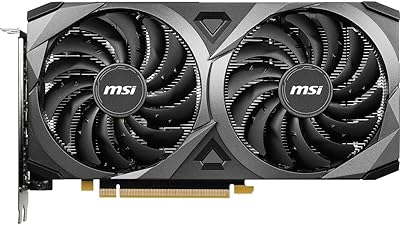
84%
96%
Gaming Performance
91%
Cooling Efficiency
65%
Power Consumption
89%
Build Quality
94%
4K/8K Gaming Compatibility
More
MSI GeForce RTX 4070 Ventus 2X 12G OC
86%
91%
Gaming Performance at 1440p
89%
Gaming Performance at 4K
94%
Cooling Efficiency
85%
Noise Levels
92%
Value for Money
More
MSI RTX 5070 Ventus 2X Graphics Card
82%
88%
Gaming Performance
84%
Thermal Management
86%
Noise Levels
91%
Build Quality
78%
DLSS 4 & AI Features
More
MSI RTX 3060 Ventus 2X 8GB Graphics Card
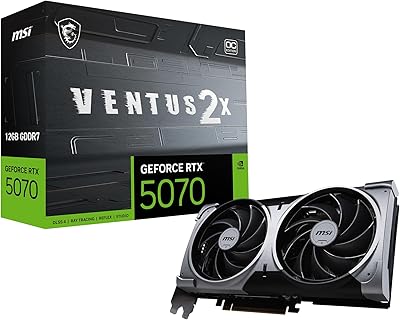
75%
88%
1080p Gaming Performance
67%
1440p Gaming Performance
54%
VRAM Adequacy
58%
Memory Bandwidth
91%
DLSS Performance
More

FAQ

Almost certainly not. The RTX 3050 6GB draws all its power from the PCIe slot itself — there is no external power connector required. As long as your system has a standard PCIe x16 slot and a PSU of at least 300W, you should be fine to install it without any other changes.

It depends heavily on what and how you play. Esports titles like Valorant, CS2, and Apex Legends run very well at 1080p. Older AAA games handle it comfortably at medium settings. For the latest open-world releases at high settings, you will hit limits — the 96-bit memory bus is a real constraint, and you should go in with realistic expectations rather than hoping for high-frame-rate performance in demanding new titles.

Memory bandwidth determines how quickly the GPU can move texture and scene data to and from VRAM. A 96-bit bus is narrower than the 128-bit or wider interfaces found on higher-tier cards, which means the RTX 3050 6GB can move less data per clock cycle. In practice, this shows up as performance drops or stutters in games with large, high-resolution textures — not because the card runs out of VRAM, but because it struggles to stream data fast enough.

For light creative tasks — 1080p video exports in Premiere Pro or DaVinci Resolve, basic 3D rendering, or Photoshop work — it is capable. Nvidia's NVENC encoder on Ampere is solid for streaming or recording. For heavy 4K video workflows or complex 3D scenes, the VRAM and bandwidth limitations will become a friction point, and you would benefit from a higher-tier card.

At 7.4 inches long, the MSI RTX 3050 Ventus 2X Graphics Card fits in the vast majority of small form factor and mATX cases. That said, always check your specific case's maximum GPU length spec before purchasing — some ultra-compact ITX designs cap out around 6 inches, which would be too tight.

No, not under normal circumstances. The fans only stop when the card is cool enough that passive airflow is sufficient — typically during desktop use, video streaming, or light tasks. Once temperatures rise under gaming load, the fans kick in automatically. Users consistently report that thermals stay well-managed during gaming sessions.

Technically yes, but practically it depends on the game. In lighter titles or older games with ray tracing support, you can enable it and maintain playable frame rates, especially with DLSS enabled to recover some performance. In demanding modern titles, turning on ray tracing will noticeably reduce frame rates to uncomfortable levels. Think of it as a nice-to-have in specific scenarios rather than a headline feature.

Yes — this Ventus 2X card has two HDMI 2.1a ports and one DisplayPort 1.4a, so dual-monitor setups are straightforward. You can even drive three displays simultaneously if your use-case calls for it, which makes it genuinely useful for office and productivity setups.

At idle and light loads, the fans are off entirely, so it is completely silent. Under sustained gaming loads, users generally describe the fan noise as mild and unobtrusive — it is audible if your case is open or the room is very quiet, but it does not stand out as a problem in typical gaming environments.

This is the most important question to ask before buying. If your budget has any flexibility, spending more on an RX 7600 or RTX 4060 opens up significantly better bandwidth, VRAM, and future-proofing. The RTX 3050 6GB makes clear sense when you genuinely cannot or do not want to spend more, when your system cannot accept a card that needs external power, or when physical size is a hard constraint. If none of those conditions apply to you, it is worth stretching the budget.

Where to Buy