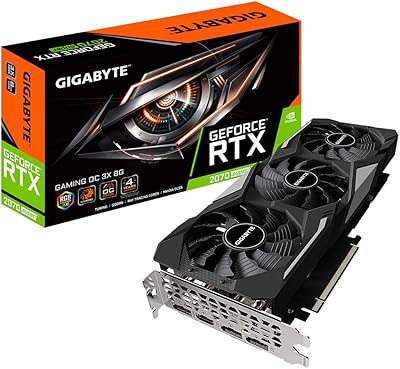
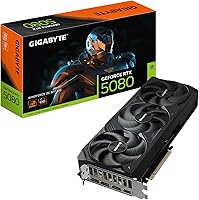
GIGABYTE GeForce RTX 5080 WINDFORCE OC SFF 16G

Overview
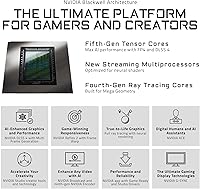
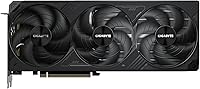
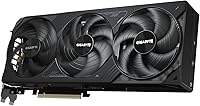
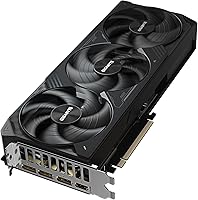
The GIGABYTE GeForce RTX 5080 WINDFORCE OC SFF 16G is one of the few genuinely flagship GPUs engineered from the ground up to fit inside compact small form factor cases. Built on NVIDIA's Blackwell architecture, it brings meaningful generational improvements over the RTX 4080 in both raw rasterization and AI-accelerated workloads. What makes this card stand out is that GIGABYTE managed to mount a proper triple-fan WINDFORCE cooler on a board under 12 inches long — something that typically forces a compromise. If you have been waiting for a true no-compromise SFF GPU, this is the most credible answer yet in the RTX 5000 generation.
Features & Benefits
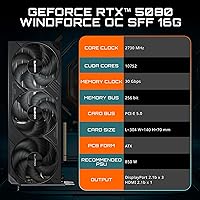
The headline specification is 16GB of GDDR7 memory on a 256-bit interface running at 2366 MHz — fast enough to handle 4K gaming textures and GPU-accelerated rendering without the bottlenecks that plagued tighter memory configs in the previous generation. PCIe 5.0 connectivity future-proofs the card for upcoming platforms, though you will feel it most on bandwidth-hungry creative workloads rather than gaming today. DLSS 4 multi-frame generation is the standout software feature, effectively multiplying output frame rates in supported titles well beyond what raw GPU horsepower alone can deliver. DisplayPort and HDMI outputs round things out for monitors, projectors, or TVs without any adapters needed.
Best For
This SFF RTX 5080 is purpose-built for a specific kind of buyer: the enthusiast who has committed to a compact chassis and refuses to step down to a mid-tier GPU to make it fit. That covers SFF PC builders chasing 4K gaming, content creators working in tight desk setups, and VR or sim users who need maximum GPU headroom in a small enclosure. It is also a strong pick for anyone upgrading from RTX 3000-series or early 4000-series hardware, where the performance jump is substantial. Buyers who prioritize quiet operation in thermally constrained cases will particularly value the WINDFORCE cooling approach here.
User Feedback
With a 4.6-star average across more than 300 ratings, buyers are broadly satisfied with GIGABYTE's compact flagship GPU. Recurring praise focuses on how cleanly it installs in cases that would typically reject a card of this performance tier, along with lower noise levels than expected under sustained gaming loads. On the critical side, some buyers flagged frustration around launch availability and the power connector requirements. A handful noted that early driver stability needed patience before settling down. Build quality and backplate rigidity drew mostly positive remarks, while GIGABYTE's companion software earned a more divided response — functional, but not a highlight for most users.
Pros
- Fits in SFF and compact ITX cases that lock out virtually every other flagship GPU on the market.
- DLSS 4 multi-frame generation delivers frame rate gains that raw spec comparisons simply cannot convey.
- WINDFORCE triple-fan cooling runs quieter than most buyers expected for a card at this performance level.
- The jump from RTX 3000-series hardware is dramatic enough to feel like a completely different computing experience.
- 16GB of GDDR7 memory handles 4K texture loads and GPU-accelerated creative work without breaking a sweat.
- PCIe 5.0 interface keeps the card relevant for the next platform generation without requiring an immediate upgrade.
- Solid build quality with a rigid backplate — no sag, no rattle, feels premium during installation and in the slot.
- Out-of-box factory tuning is well-calibrated, so most buyers get strong performance without touching any settings.
- DisplayPort and HDMI outputs cover virtually every monitor and TV setup without needing adapters.
Cons
- Launch-window driver instability frustrated early adopters and required patience before performance fully stabilized.
- Power connector requirements caught some buyers off guard, with older PSU cable sets needing replacement.
- GigaByte Control Center software drew mixed reviews — functional at best, unreliable for some users.
- Stock availability at launch was genuinely difficult, pushing some buyers toward inflated secondary market pricing.
- Three-monitor or productivity-heavy multi-display setups may find the output port count limiting.
- In poorly ventilated or sealed cases, fan ramp-up under sustained load becomes clearly audible.
- 16GB VRAM starts to feel tight for the most demanding professional AI and video workloads available today.
- The SFF premium makes this a poor value pick for anyone building in a standard mid-tower with no size constraint.
Ratings
The GIGABYTE GeForce RTX 5080 WINDFORCE OC SFF 16G earns a strong overall reception from the enthusiast community, and the scores below reflect what real buyers actually experienced — not marketing promises. Our AI analyzed verified global reviews, actively filtering out incentivized, bot-generated, and low-credibility submissions to surface honest sentiment. Both the genuine strengths and the friction points that surfaced repeatedly in owner feedback are transparently represented here.
Gaming Performance
DLSS 4 & AI Features
SFF Compatibility & Fit
Thermal Performance
Noise Levels
Memory & Bandwidth
Build Quality & Materials
PCIe Power Connector Setup
Driver Stability at Launch
Availability
Value for Money
GIGABYTE Software (Control Center)
Out-of-Box Experience
Connectivity & Output Options
Suitable for:
The GIGABYTE GeForce RTX 5080 WINDFORCE OC SFF 16G was built for a specific and underserved buyer: the PC enthusiast who has committed to a small form factor chassis and refuses to accept a mid-tier GPU as the price of that choice. If you are building or upgrading an ITX or compact mATX system and want to run demanding titles at 4K without thermal throttling or constant fan noise, this SFF RTX 5080 is genuinely one of the most capable options available in that physical envelope. Content creators and 3D artists who work from a compact workstation will appreciate the fast GDDR7 memory for GPU-accelerated rendering and large viewport scenes. Sim racing, flight sim, and VR users who need consistent high-fidelity output — and who happen to be running a space-constrained rig — will find the performance headroom well-suited to their demands. It is also a strong upgrade candidate for anyone still on RTX 3000-series or early RTX 4000-series hardware, where the generational leap is large enough to feel transformative rather than incremental.
Not suitable for:
The GIGABYTE GeForce RTX 5080 WINDFORCE OC SFF 16G makes much less sense if you do not actually have an SFF build constraint. In a standard mid-tower or full-tower case, a conventional-length RTX 5080 will often perform comparably or better at a lower price point, making the SFF-specific engineering premium hard to justify. Buyers on tighter budgets should look elsewhere entirely — this is a premium-tier card, and the value math only works if the compact dimensions are solving a real problem for your specific build. Professionals running extremely VRAM-hungry workloads, such as large-scale AI model inference or high-resolution multi-layer video pipelines, may find 16GB constraining over time compared to competing cards offering more headroom. If you are an early adopter who cannot tolerate any driver teething issues, it is worth knowing that launch-window buyers of new-architecture GPUs routinely face a stabilization period before the software catches up to the hardware. Finally, buyers with older power supplies or modular cable sets not rated for this tier of GPU should factor in the potential cost of upgrading their PSU before pulling the trigger.
Specifications
- GPU Model: The card is powered by the NVIDIA GeForce RTX 5080, built on the Blackwell architecture for next-generation rasterization and AI-accelerated rendering.
- VRAM: 16GB of GDDR7 memory provides high-bandwidth frame buffer capacity suited for 4K gaming and GPU-accelerated creative workloads.
- Memory Interface: The 256-bit memory bus balances bandwidth efficiency with the physical constraints of the compact SFF board design.
- Memory Speed: GDDR7 modules operate at 2366 MHz, delivering substantially higher effective bandwidth compared to GDDR6X found in previous-generation cards.
- PCIe Interface: PCIe 5.0 x16 connectivity ensures the card is compatible with current mainstream platforms and forward-compatible with next-generation motherboards.
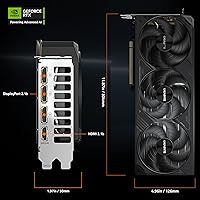
- Card Length: The PCB measures 11.96 inches in length, qualifying it as SFF-ready and compatible with compact cases that impose strict GPU length restrictions.
- Card Height: At 4.96 inches tall, the card occupies a standard dual or triple-slot profile depending on the specific case bracket configuration.
- Card Weight: The card weighs 2.73 lbs, which is manageable for most standard PCIe slots without requiring additional GPU support brackets in typical builds.
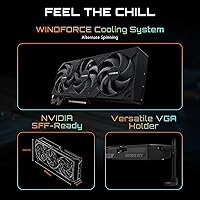
- Cooling System: GIGABYTE's WINDFORCE triple-fan cooling system uses a multi-heat-pipe layout to dissipate thermal load efficiently across the compact board surface.
- DLSS Support: Full DLSS 4 support includes multi-frame generation technology, which can multiply effective output frame rates significantly in supported game titles.
- Max Resolution: The card supports output resolutions up to 7680x4320 pixels, commonly referred to as 8K, across compatible displays.
- Video Outputs: Display connectivity includes both DisplayPort and HDMI ports, covering the full range of modern monitors, projectors, and television displays.
- Form Factor: The card carries NVIDIA's official SFF-ready designation, confirming it meets dimensional standards for installation in certified small form factor enclosures.
- Manufacturer: Designed and produced by GIGABYTE Technology, a Taiwanese hardware manufacturer with an established history in discrete graphics card production.
- Model Number: The official model designation is GV-N5080WF3OC-16GD, which identifies this specific WINDFORCE OC variant within GIGABYTE's RTX 5080 lineup.
- Architecture: NVIDIA's Blackwell GPU architecture underpins the card, succeeding the Ada Lovelace generation with improvements to shader efficiency and AI compute throughput.
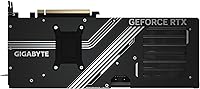
- Color & Finish: The card ships in a black finish with a rigid metal backplate that contributes to structural integrity and helps dissipate heat from the rear PCB surface.
- First Available: This model became available for purchase in January 2025, placing it among the earliest RTX 5000-series discrete graphics cards to reach the consumer market.
Related Reviews
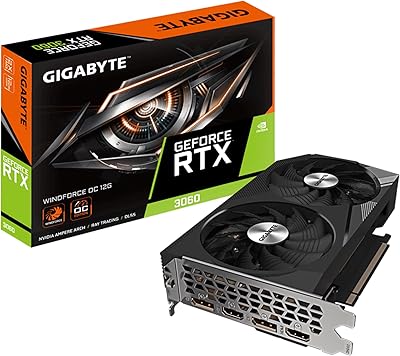
GIGABYTE GeForce RTX 3060 WINDFORCE OC 12GB Graphics Card
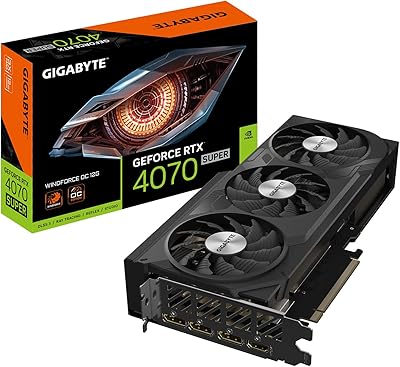
GIGABYTE RTX 4070 Super WINDFORCE OC GPU
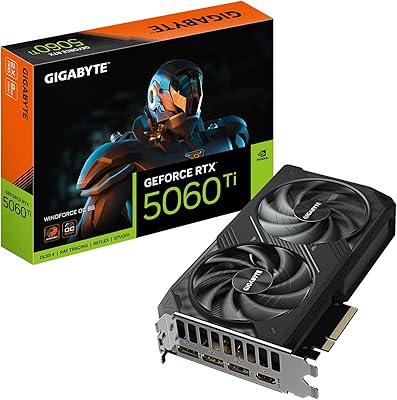
GIGABYTE RTX 5060 Ti 8GB Graphics Card
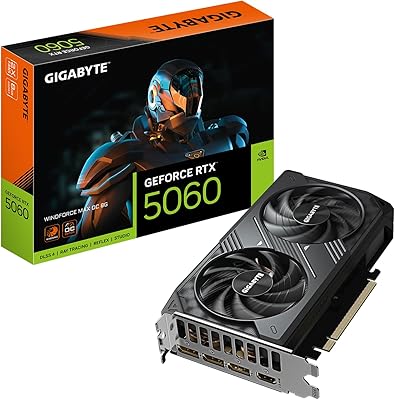
GIGABYTE RTX 5060 WINDFORCE OC 8GB GPU
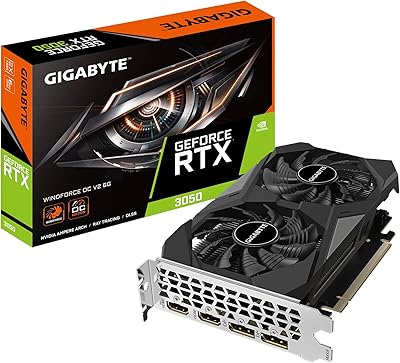
GIGABYTE GeForce RTX 3050 WINDFORCE OC V2 6G
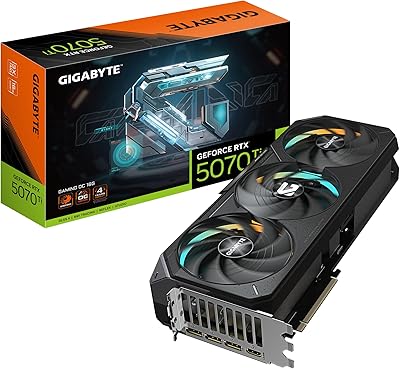
GIGABYTE GeForce RTX 5070 Ti Gaming OC 16G
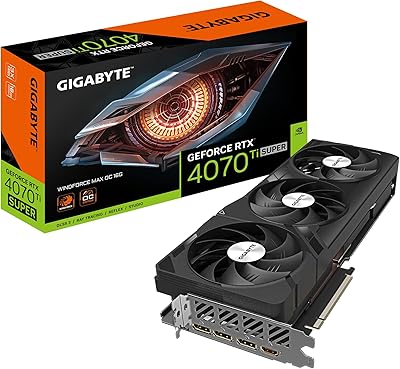
GIGABYTE GeForce RTX 4070 Ti Super WINDFORCE MAX OC 16GB
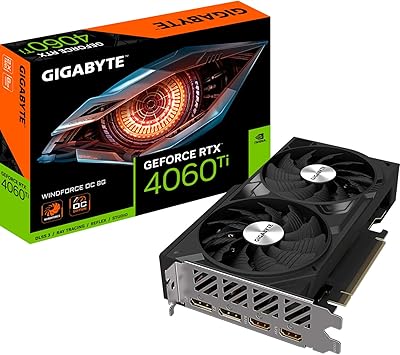
Gigabyte RTX 4060 Ti 8GB Graphics Card
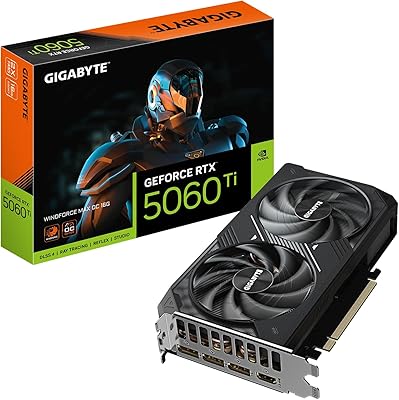
GIGABYTE GeForce RTX 5060 Ti WINDFORCE MAX OC 16G