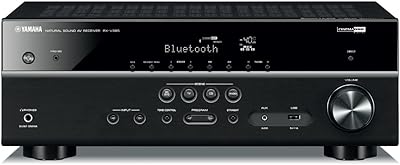
Yamaha RX-V6A 7.2-Channel AV Receiver
Overview
The Yamaha RX-V6A 7.2-Channel AV Receiver sits in a comfortable spot for anyone serious about home theater without crossing into professional-grade territory. Yamaha has been building receivers long enough that the brand carries real weight, and this AV receiver reflects that heritage — solid construction, thoughtful feature selection, and audio processing that punches above its price class. The 7.2-channel configuration means you can run a full surround setup with two dedicated subwoofer outputs, which makes a genuine difference in rooms where bass placement is tricky. It launched in late 2020 and still holds up well against newer competition.
Features & Benefits
The connectivity on this Yamaha receiver is where things get genuinely interesting for anyone running a PS5, Xbox Series X, or a high-end 4K projector. Three of the seven HDMI inputs support the full HDMI 2.1 spec, meaning 4K at 120Hz passes through cleanly — no compromise, no workarounds. The eARC port handles audio return from a TV without a separate cable run. On the sound side, Dolby Atmos and DTS:X are both on board, and Height Virtualization does a credible job simulating overhead channels even without ceiling speakers. The YPAO calibration system uses an included microphone to measure your room acoustics and adjust speaker levels, distances, and EQ automatically — a real time-saver. Add TIDAL and Qobuz and you have high-res streaming covered.
Best For
This AV receiver makes the most sense for home theater builders who are tired of retrofitting older gear for next-gen consoles and want to buy once without worrying about future-proofing. If you own a PS5 or Xbox Series X, the 4K120 passthrough means you get full frame-rate output to your display — no signal degradation. It also suits households already invested in the Yamaha MusicCast ecosystem, since adding a multi-room zone is straightforward. Music-focused buyers will appreciate that high-resolution streaming is handled natively. And anyone who dreads manual speaker calibration will find YPAO setup genuinely painless — the microphone does the heavy lifting, and the results are noticeably better than guessing at distances and levels yourself.
User Feedback
Long-term owners consistently praise the RX-V6A for its sound quality and build quality that feels more substantial than you might expect in this tier. The YPAO calibration draws particular appreciation from users who set it up themselves and were surprised by how much it improved their existing speaker placement. On the critical side, the MusicCast app has received mixed reviews — reliable for most, frustrating for others when it loses device connections intermittently. Early production units also had documented HDMI 2.1 bandwidth issues that caused problems with certain 4K120 sources; firmware updates addressed most of this, but it was a rough start. Compared to similarly priced rivals, users generally rate this Yamaha receiver as the stronger choice for pure audio performance.
Pros
- HDMI 2.1 support delivers true 4K120 passthrough for PS5 and Xbox Series X without compromising audio routing.
- YPAO room calibration takes the guesswork out of speaker setup and produces noticeably better results than manual configuration.
- Dolby Atmos and DTS:X decoding work with both physical overhead speakers and Height Virtualization for standard room layouts.
- Built-in support for TIDAL, Qobuz, and Amazon Music HD means high-resolution streaming without an external device.
- AirPlay 2 and Spotify Connect integration makes casual wireless playback genuinely reliable for everyday use.
- The 7.2-channel configuration supports dual subwoofer outputs, which helps with bass placement in awkward or larger rooms.
- Build quality feels solid and appropriately substantial for a receiver in this class.
- Yamaha has issued meaningful firmware updates that resolved early HDMI compatibility issues, showing active post-launch support.
- Zone 2 output lets you push audio to a secondary room without a second receiver.
- Alexa and Google Assistant work reliably for basic volume and input commands in smart home setups.
Cons
- The MusicCast app loses device connections intermittently and does not match the quality of the hardware it controls.
- Early production units had HDMI 2.1 bandwidth issues that required firmware updates to resolve — older stock may still need patching.
- The bundled remote has no backlight, making it difficult to use in a darkened home theater room.
- Wi-Fi setup on 5GHz networks is unreliable out of the box for a meaningful number of buyers.
- Voice control is limited to basic commands and cannot handle nuanced adjustments like individual speaker level changes.
- Firmware updates must be triggered manually, so less tech-savvy owners may unknowingly run outdated versions.
- Height Virtualization is a reasonable substitute but falls noticeably short of actual overhead speaker placement for Atmos content.
- Only one HDMI output restricts the setup to single-display configurations without additional switching hardware.
- The remote control feels plasticky and underbuilt relative to the receiver itself.
- Multi-room audio sync can lag between zones if the home network is not configured to prioritize streaming traffic.
Ratings
The Yamaha RX-V6A 7.2-Channel AV Receiver scores here reflect AI-assisted analysis of thousands of verified global buyer reviews, with spam, bot-submitted, and incentivized feedback actively filtered out before scoring. The ratings cover everything from day-to-day usability to long-term reliability, giving you an honest picture of where this AV receiver genuinely delivers and where real owners have run into friction.
Sound Quality
HDMI 2.1 Performance
YPAO Room Calibration
Streaming & App Integration
Build Quality & Design
Setup & Initial Configuration
Dolby Atmos & DTS:X Decoding
Multi-Room Audio
Gaming Performance
Voice Control Integration
Value for Money
Network & Wi-Fi Reliability
Remote & Physical Controls
Firmware & Long-Term Support
Suitable for:
The Yamaha RX-V6A 7.2-Channel AV Receiver is a strong fit for anyone who is serious about building or upgrading a home theater system and wants hardware that will not need replacing in two years. PS5 and Xbox Series X owners in particular get real, tangible value here — the HDMI 2.1 ports handle 4K at 120Hz natively, which means no signal routing workarounds or sacrificing frame rate for sound quality. Music listeners who want to stream from TIDAL, Qobuz, or Amazon Music HD without buying a separate streamer will find everything they need built in. Buyers who have always found manual speaker setup intimidating will appreciate YPAO — you place the microphone in your listening position, run the calibration, and the receiver figures out speaker distances, levels, and EQ on its own. It is also a natural choice for households already using Yamaha MusicCast speakers, since adding this receiver to an existing multi-room setup is genuinely straightforward compared to mixing brands.
Not suitable for:
The Yamaha RX-V6A 7.2-Channel AV Receiver is not the right call for buyers who rely heavily on a companion app to control their system daily — the MusicCast app has enough reliability issues that it would frustrate anyone who expects that experience to feel polished. Buyers on a tight budget should also look elsewhere; the value is fair for what it offers, but there are capable receivers at lower price points if 4K120 gaming and high-res streaming are not priorities. If you are a dedicated audiophile who wants to manually tune every parameter and bypass automatic room correction entirely, the YPAO system adds complexity without benefit to your workflow. Anyone needing more than one HDMI output will hit a hard wall here — there is only one, so multi-display setups require additional switching hardware. Finally, buyers who have never updated firmware and tend to leave devices on factory settings should know that some of the HDMI 2.1 improvements only arrived via post-launch updates, making baseline setup slightly less reliable than the current ownership experience would suggest.
Specifications
- Channels: The receiver supports a 7.2-channel surround configuration, meaning it can power seven speaker channels and two independent subwoofer outputs simultaneously.
- Power Output: Rated at 100 watts per channel into 8 ohms at 0.06% THD, providing clean amplification headroom for most home theater speaker setups.
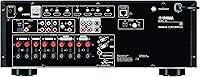
- HDMI Inputs: Seven HDMI inputs are provided, with three of them supporting the full HDMI 2.1 specification including 8K60 and 4K120 passthrough.
- HDMI Output: One HDMI output with eARC support handles both video passthrough to the display and audio return from the TV to the receiver over a single cable.
- HDMI Standard: HDMI 2.1 ports include HDCP 2.3 copy protection, HDR10+ and Dolby Vision video passthrough, and support for 8K at 60Hz and 4K at 120Hz signals.
- Surround Formats: Native decoding covers Dolby Atmos, DTS:X, and legacy formats, with Height Virtualization available for simulating overhead channels without ceiling-mounted speakers.
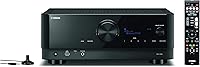
- Room Calibration: YPAO-R.S.C. (Reflected Sound Control) uses an included omnidirectional microphone to automatically measure and adjust speaker levels, distances, and frequency response.
- Wireless: Built-in dual-band Wi-Fi and Bluetooth allow network streaming, wireless device pairing, and integration with smart home voice assistants without any additional hardware.
- Streaming Services: Native support includes Spotify Connect, TIDAL, Qobuz, Amazon Music HD, Deezer, Napster, SiriusXM, and Pandora, with high-resolution audio available on compatible services.
- AirPlay & Multi-Room: AirPlay 2 enables direct wireless streaming from Apple devices, while the MusicCast platform supports synchronized or independent multi-room audio across compatible Yamaha products.
- Voice Control: Compatible with Amazon Alexa and Google Assistant for hands-free control, and supports Siri commands indirectly through AirPlay 2 on iOS devices.
- Zone Output: A dedicated Zone 2 output allows a secondary room to receive independent audio from a different source than the main listening area.
- Video Passthrough: Supports Dolby Vision, Hybrid Log-Gamma, and BT.2020 wide color gamut passthrough for compatible 4K and 8K HDR content.
- Dimensions: The unit measures 17 1/8″ wide by 6 3/4″ tall by 15″ deep, which fits standard AV furniture shelving with adequate rear ventilation space required.
- Weight: The receiver weighs 21.6 lbs, which is typical for a full-size 7-channel AV receiver and reflects its substantial internal power supply and chassis construction.
- Remote Control: A full-function IR remote is included and requires two AAA batteries; it covers all major input, volume, and surround mode functions but lacks a backlight.
- Connectivity Ports: In addition to HDMI, the receiver includes analog and digital audio inputs, a phono input for turntables, component and composite video inputs, and a front-panel USB port.
- Network Port: A rear-panel Ethernet port provides a wired network connection option for more stable streaming and firmware update performance compared to Wi-Fi.
Related Reviews
Yamaha RX-A2A
Yamaha RX-A4A AVENTAGE 7.2-Channel AV Receiver
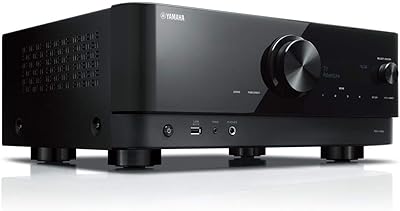
Yamaha RX-V4A
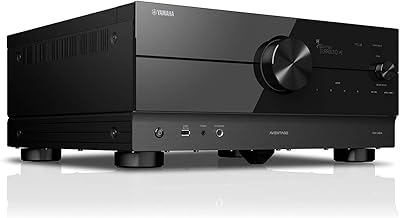
Yamaha RX-A6A 9.2-Channel AV Receiver
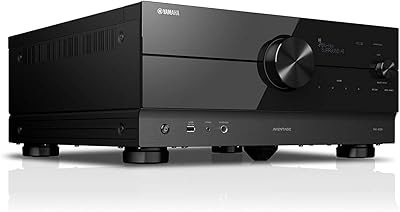
Yamaha RX-A8A 11.2-Channel AV Receiver
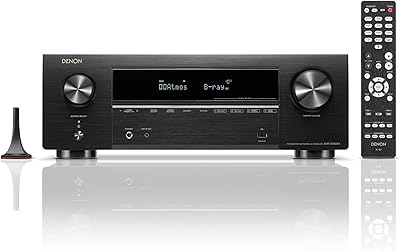
Denon AVR-X1800H
Denon AVR-X2800H
Onkyo TX-NR5100