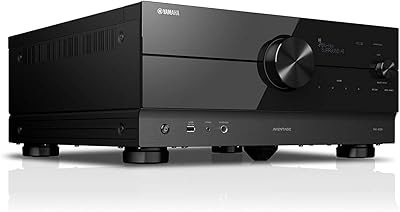
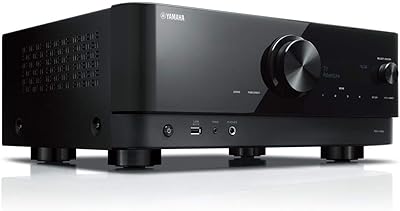
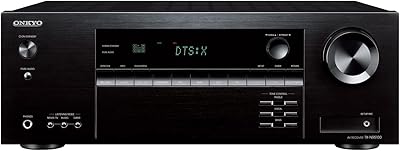
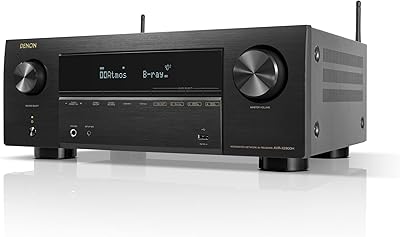
Overview

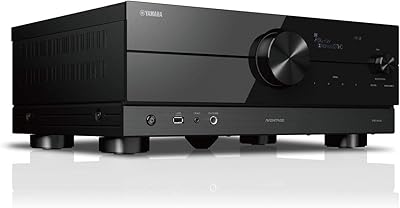
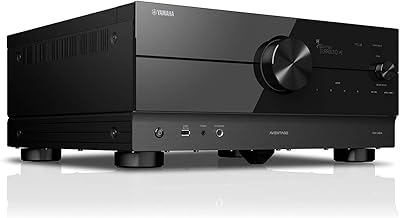
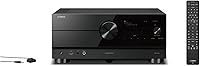
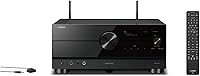
The Yamaha RX-A4A AVENTAGE 7.2-Channel AV Receiver sits at the top of Yamaha's consumer lineup, built for buyers who've outgrown mid-range gear and want something that will hold up in a serious dedicated theater room. At 110 watts per channel across seven channels, it has the muscle to drive demanding speaker loads without strain. It launched in 2021 into a competitive field — Denon and Marantz both offer strong alternatives at this tier — but the RX-A4A carves out its own space with YPAO R.S.C. calibration that goes well beyond basic auto-EQ. The chassis is classic Yamaha: heavy, symmetrical, understated. It doesn't shout for attention, but it doesn't need to.
Features & Benefits

Every one of the seven HDMI inputs on this Yamaha receiver handles 8K/60Hz and 4K/120Hz at the full 40 Gbps bandwidth — a detail that matters if you're connecting a PS5 or Xbox Series X and don't want bottlenecks at the receiver. ALLM and VRR support keep input lag and screen tearing in check during fast-paced gameplay. On the audio side, the format coverage is unusually broad: Dolby Atmos, DTS:X, and Auro-3D are all on board, which is more than most rivals offer at this price. Surround:AI dynamically adjusts processing based on what's actually playing rather than locking you into a static preset. Add Zone 2 output and a Roon Tested rating for serious streaming, and the feature set is hard to argue with.

Best For

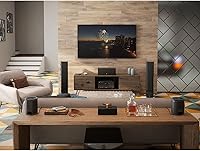
The RX-A4A makes the most sense for someone upgrading from a mid-tier receiver who wants noticeably better room calibration and broader format support, not just more watts. It's a natural fit for dedicated home theater rooms where YPAO's multipoint 3D measurement can do real work correcting acoustic problems that single-point systems miss. Gamers who've built their setup around a 4K/120Hz display will appreciate having ALLM and VRR handled at the receiver level. For music listeners, the Roon Tested certification and support for hi-res platforms like TIDAL and Qobuz make a genuine difference. If you're already in or building out Yamaha's MusicCast ecosystem, it slots in naturally as a whole-home audio hub.

User Feedback

Owners who've spent real time with this AVENTAGE unit consistently highlight the YPAO calibration as the standout — many say it outperforms competing auto-EQ systems at this price tier, especially in rooms with tricky acoustics. Build quality also earns consistent praise; the unit feels substantial in a way that budget receivers simply don't. The friction points are real, though. The setup menu looks and behaves like it belongs to an older generation of hardware — Denon's interface, for comparison, feels considerably more modern. The MusicCast app frustrates many users, particularly those new to Yamaha's network audio world. It's also worth planning for ventilation: the unit runs noticeably warm under extended heavy use, so don't box it in tightly.

Pros

  • YPAO R.S.C. multipoint calibration consistently outperforms basic auto-EQ systems in real-world acoustically challenging rooms.
  • All seven HDMI inputs handle 8K/60Hz and 4K/120Hz at full bandwidth — no compromises on any input.
  • Dolby Atmos, DTS:X, and Auro-3D support in one unit is rare and valuable for format-diverse content libraries.
  • ALLM and VRR work reliably with PS5 and Xbox Series X, keeping input lag low without manual fiddling.
  • The AVENTAGE anti-resonance chassis feels genuinely substantial — this is a unit built to last, not to impress on a shelf.
  • Roon Tested certification and hi-res streaming service support make the RX-A4A a credible music-first receiver, not just a movie box.
  • Zone 2 audio output adds a second-room listening option without any additional amplifier hardware.
  • AirPlay 2, Spotify Connect, and broad smart home integration cover nearly every daily use case for streaming and voice control.
  • Works with Sonos certification means it won't create ecosystem conflicts in households already running Sonos speakers.

Cons

  • The on-screen setup interface looks and behaves like it was designed several years ago — rivals have clearly moved on.
  • MusicCast app reliability frustrates a significant portion of users, particularly during initial network audio configuration.
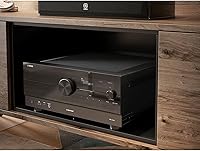
  • The unit runs noticeably warm under extended heavy use; cabinet installations with poor airflow are a genuine risk.
  • Early units had HDMI 2.1 bandwidth issues requiring firmware updates — buyers should verify current firmware before assuming full 4K/120Hz passthrough.
  • Surround:AI is unpredictable enough that many experienced users simply disable it and stick to manual presets.
  • No dedicated gaming mode consolidates ALLM, VRR, and low-latency settings into a single accessible toggle.
  • At this price, the software and app experience lags meaningfully behind what Denon and Marantz offer their buyers.
  • Zone 2 is audio only — multi-room video distribution requires separate hardware investment regardless.
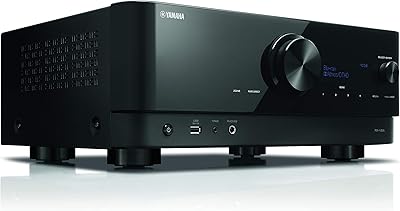
  • The physical design is purely functional; buyers expecting a visually distinctive flagship aesthetic will be underwhelmed.

Ratings

The Yamaha RX-A4A AVENTAGE 7.2-Channel AV Receiver scores below are generated by AI after analyzing thousands of verified owner reviews worldwide, with spam, bot activity, and incentivized submissions actively filtered out. Ratings reflect the full picture — what buyers genuinely love and where real frustrations surface — so you can weigh both sides before committing to a purchase at this price tier.
Audio Performance
93%
Owners consistently describe the sound as spacious and composed, especially when running full Dolby Atmos or Auro-3D content in larger rooms. The 110W per channel rating translates to real-world headroom — most users report the receiver handles dynamic peaks without compression even at reference levels.
A small number of users coming from high-end two-channel setups feel the stereo audio processing lacks the last degree of refinement compared to dedicated stereo amplifiers. At moderate volumes in smaller rooms, the difference over a well-configured mid-range receiver is harder to perceive.
Room Calibration (YPAO)
91%
YPAO R.S.C. with 3D multipoint measurement is repeatedly called out as one of the most accurate auto-calibration systems buyers have used at this price point. Users with acoustically challenging rooms — irregular shapes, mixed flooring, lots of glass — report noticeably better bass balance and imaging after running a full multipoint calibration.
The calibration process itself can be time-consuming, particularly for users who want to take full advantage of all measurement points. A handful of owners report that the low-frequency correction occasionally overcorrects in smaller rooms, requiring manual tweaking afterward.
HDMI & Video Handling
88%
Having all seven inputs support 8K/60Hz and 4K/120Hz at full 40 Gbps bandwidth is a practical advantage for anyone running multiple modern source devices — PS5, Xbox Series X, and a 4K streamer can all connect without any input being a bandwidth bottleneck. ALLM and VRR work reliably for gaming use.
Early production units had reported HDMI 2.1 bandwidth inconsistencies that required firmware updates to resolve — buyers should verify their unit is on the latest firmware before assuming full 4K/120Hz passthrough is active. A few users also report occasional handshake delays when switching between sources.
Gaming Performance
86%
ALLM ensures the display automatically switches to low-latency mode when a console is active, removing a common friction point for living room gaming setups. VRR support adds meaningful anti-tearing benefits when paired with a compatible TV or monitor, and the overall input lag added by the receiver is negligible in practice.
The receiver lacks a dedicated gaming mode that consolidates these settings into a single toggle, which means less experienced users may not realize all the gaming-optimized features are available. Setup of VRR and ALLM requires navigating menus that some find unintuitive.
Immersive Audio Format Support
94%
The combination of Dolby Atmos, DTS:X, and Auro-3D under one roof is genuinely uncommon even among premium receivers. Buyers who frequently watch content mixed in Auro-3D — particularly classical concerts and some European film releases — specifically sought out this unit for that reason alone.
Surround:AI, which dynamically adjusts the processing mode based on content, receives polarizing feedback. Some users find it helpful for mixed-use rooms where content types vary throughout the day, while others find it unpredictable and disable it in favor of fixed manual presets.
Streaming & Connectivity
82%
18%
The breadth of supported services — TIDAL, Qobuz, Amazon Music HD, Spotify, Deezer, and others — covers nearly every major hi-res and standard streaming platform without needing an external device. Roon Tested certification is a meaningful credential for users who manage large local music libraries alongside streaming.
AirPlay 2 and Spotify Connect work reliably, but the native streaming interface within the receiver's own menus is clunky compared to using a phone as a controller. Users on Android report slightly less polished integration than iOS users when using AirPlay 2.
MusicCast App & Ecosystem
58%
42%
For users who are already invested in the MusicCast ecosystem with multiple Yamaha devices, the whole-home audio integration works as promised. Zone 2 audio to a second room can be managed from the app without any additional amplifier hardware.
The MusicCast app is a consistent source of frustration — first-time Yamaha network audio users frequently describe setup as confusing, and the app's interface lags behind competitors like the Denon/Heos app in polish and responsiveness. Connectivity dropouts, while not universal, appear more often in user reports than they should at this price tier.
Setup Menu & UI
54%
46%
Once configured, the receiver operates reliably and the physical remote covers the most common daily operations without requiring app access. Experienced AV enthusiasts familiar with Yamaha's menu structure tend to navigate it efficiently after a short learning curve.
The on-screen setup UI looks and feels noticeably dated compared to rivals — Denon's AVR-X series and Marantz's equivalents both offer more visually modern interfaces with clearer logical flows. First-time buyers or those upgrading from a different brand frequently report the initial configuration process taking significantly longer than expected.
Build Quality & Design
92%
The AVENTAGE anti-resonance chassis is something owners notice immediately — the unit has a solidity and weight that clearly communicates premium construction. Fit and finish are tight, with no flex in the case or loose elements on the front panel.
The industrial, understated aesthetic won't appeal to everyone — the front panel design is functional rather than striking, and the unit looks largely identical to Yamaha receivers from several years ago. At this price, some buyers expect a more distinctive physical presence.
Heat Management
63%
37%
Under normal two-channel or moderate surround use, the unit stays at a manageable temperature and the cooling system is quiet. The chassis design does facilitate passive heat dissipation reasonably well during standard listening sessions.
Under sustained heavy load — long movie marathon sessions or extended gaming at high volumes — multiple long-term owners flag that the unit runs noticeably warm. Cabinet installations with limited airflow are genuinely risky; this receiver needs meaningful clearance above and around it to stay within safe operating temperatures.
Value for Money
74%
26%
Relative to what it offers — YPAO 3D multipoint, full 8K HDMI, Auro-3D, Roon Tested, Zone 2, and the AVENTAGE build standard — buyers who prioritize audio performance and long-term format compatibility tend to feel the price is justified compared to similarly spec'd alternatives.
At this price tier, the dated UI, MusicCast app frustrations, and heat concerns create friction that buyers of competing products at similar or lower prices don't encounter at the same frequency. Buyers who prioritize software experience over hardware quality may find better day-to-day satisfaction elsewhere.
Multi-Room Audio (Zone 2)
77%
23%
Zone 2 audio output is a practical convenience — running background music in a kitchen or patio without a second amplifier is straightforward once configured. Yamaha's MusicCast layer adds the ability to include that zone in a broader whole-home audio setup with other compatible devices.
Zone 2 is audio only and lacks the independent video routing that some buyers expect at this price. If you need multi-room video distribution, you'll need additional hardware regardless of the Zone 2 capability.
Smart Home Integration
79%
21%
Amazon Alexa and Google Assistant voice control for basic functions — volume, input switching, power — work reliably in practice. Works with Sonos certification is a genuine advantage for households that already have Sonos speakers and want unified control without ecosystem conflicts.
Voice assistant integration covers the basics but stops short of deep control; complex commands or navigation of streaming menus via voice are hit or miss. Users expecting the same depth of voice control they have with native smart speakers will find the integration limited.
Documentation & Setup Support
61%
39%
Yamaha provides reasonably detailed documentation, and the online support community for AVENTAGE receivers is active and experienced. Most technical questions about YPAO settings or HDMI configuration have been answered in detail in forums and user groups.
The included quick-start materials do not adequately prepare a non-technical buyer for the complexity of a full 7.2-channel setup with YPAO multipoint calibration. Several users note that reaching a well-optimized configuration required hours of community research that the official materials simply don't cover.

Suitable for:

The Yamaha RX-A4A AVENTAGE 7.2-Channel AV Receiver is built for buyers who are serious about home theater and have moved past the point where a mid-range receiver satisfies them. If you have a dedicated viewing room — especially one with irregular acoustics, mixed flooring, or challenging speaker placement — the YPAO R.S.C. multipoint calibration system alone is worth considering, as it handles room correction with a level of precision that most competitors at this tier don't match. Gamers who've invested in a 4K/120Hz display and want ALLM and VRR managed natively at the receiver level, without workarounds or compromises, will find the RX-A4A a genuinely capable hub for a modern living room stack. Serious music streamers will appreciate the Roon Tested certification and the unusually broad lineup of supported hi-res platforms — this isn't a receiver that treats music as an afterthought. If you're already building out a Yamaha MusicCast household, or planning to, it fits naturally as the anchor of a multi-room audio system without requiring additional amplification for Zone 2.
Not suitable for:

The Yamaha RX-A4A AVENTAGE 7.2-Channel AV Receiver is not the right call for buyers who prioritize a polished software experience alongside their hardware investment. The setup UI is genuinely dated by current standards, and the MusicCast app has a well-documented reputation for frustrating first-time users — if smooth, intuitive daily control matters as much to you as audio performance, competitors like Denon's AVR-X series may serve you better day-to-day. It's also not a great fit for compact cabinet installations; the unit runs warm under sustained heavy use, and without meaningful ventilation clearance, that becomes a real operational concern over time. Buyers who mainly want a capable stereo amplifier with some surround capability will be paying for a great deal of functionality they'll never use. If your room is small, your speaker count modest, or your primary concern is ease of setup rather than calibration depth, there are strong alternatives at lower price points that won't leave you wrestling with menus.

Specifications

  • Channels: The receiver operates as a 7.2-channel amplifier, supporting up to seven speaker channels plus two independent subwoofer outputs simultaneously.
  • Power Output: Rated at 110W per channel into 8 ohms at 0.09% THD, measured across all channels driven.
  • HDMI Inputs: Seven HDMI inputs are provided, all supporting 8K/60Hz and 4K/120Hz passthrough at 40 Gbps with HDCP 2.3 compliance.
  • HDMI Outputs: Three HDMI outputs are included, with eARC support on the main output for compatible soundbar or TV audio return.
  • Video Formats: Supported HDR formats include Dolby Vision, HDR10+, HLG, and BT.2020 for full compatibility with current and recent display standards.
  • Audio Formats: Native decoding covers Dolby Atmos, DTS:X, and Auro-3D, alongside legacy formats including Dolby TrueHD and DTS-HD Master Audio.
  • Room Calibration: YPAO R.S.C. with 3D multipoint measurement handles automatic speaker level, distance, and precision EQ calibration using a supplied microphone.
  • Gaming Features: Auto Low Latency Mode (ALLM) and Variable Refresh Rate (VRR) are supported across all HDMI inputs for next-generation console compatibility.
  • Wireless: Built-in dual-band Wi-Fi and Bluetooth 2.1 are included, alongside AirPlay 2 and Spotify Connect for wireless audio streaming.
  • Streaming Services: Natively supported services include Spotify, Amazon Music HD, Apple Music via AirPlay 2, TIDAL, Qobuz, Deezer, SiriusXM, and Pandora.
  • Roon Support: The unit carries Roon Tested certification, allowing it to function as a Roon output endpoint for users managing local and streaming music libraries.
  • Smart Home: Voice control is supported via Amazon Alexa and Google Assistant, and the unit carries Works with Sonos certification for cross-ecosystem compatibility.
  • Zone Support: Zone 2 line-level and speaker-level outputs allow independent audio playback in a second room without requiring a separate amplifier.
  • Analog Inputs: Connectivity includes stereo analog RCA inputs, a dedicated phono input for turntable connection, and optical and coaxial digital inputs.
  • Dimensions: The unit measures 17.38 x 17.13 x 7.5 inches (W x D x H), requiring substantial rack or shelf space for installation.
  • Weight: The receiver weighs 40.9 lbs, reflecting the heavy-gauge anti-resonance chassis construction characteristic of the AVENTAGE line.
  • Remote & Control: An IR remote control is included in the box; daily operation can also be handled via the MusicCast app on iOS or Android.
  • Power Requirements: The unit requires a standard AC power connection and ships with 2 AAA batteries for the included remote control.

Related Reviews

Yamaha RX-A2A
Yamaha RX-A2A
78%
91%
Sound Quality
88%
Build Quality
89%
Room Calibration (YPAO)
84%
Gaming Performance
82%
Streaming & Wireless Connectivity
More
Yamaha RX-V6A 7.2-Channel AV Receiver
84%
94%
Sound Quality (Dolby Atmos & DTS:X)
67%
Ease of Setup
91%
Video Performance (8K/4K pass-through)
89%
Connectivity (HDMI, Wi-Fi, Bluetooth)
88%
Multi-Room Audio (MusicCast)
More
Yamaha RX-A8A AVENTAGE 11.2-Channel AV Receiver
85%
94%
Audio Performance
89%
Connectivity Options
61%
Setup Complexity
91%
Gaming Features (4K/120Hz)
92%
Room Calibration (YPAO R.S.C.)
More
Yamaha RX-A6A AVENTAGE 9.2-Channel AV Receiver
86%
94%
Audio Performance
91%
Video Quality (8K/4K)
83%
Ease of Setup
88%
Connectivity Options
89%
Sound Calibration (YPAO R.S.C.)
More
Yamaha RX-V4A
Yamaha RX-V4A
80%
91%
Setup & Onboarding
79%
Sound Quality
83%
HDMI & Video Connectivity
88%
Streaming & Smart Features
74%
Build Quality & Design
More
Onkyo TX-NR5100
Onkyo TX-NR5100
79%
88%
Sound Quality
74%
HDMI & Video Passthrough
86%
Setup & Calibration
82%
Sonos Integration
83%
Build Quality & Design
More
Yamaha RX-V385
Yamaha RX-V385
75%
83%
Audio Quality
91%
Ease of Setup
88%
Build Quality
86%
Value for Money
79%
Connectivity & Inputs
More
Denon AVR-X2800H
Denon AVR-X2800H
78%
91%
Audio Performance
83%
Dolby Atmos & Spatial Audio
88%
Build Quality
92%
HDMI Connectivity
58%
Setup & Initial Configuration
More
Denon AVR-X1800H
Denon AVR-X1800H
81%
88%
Audio Performance
91%
Video Passthrough Quality
86%
Setup & Installation
74%
HEOS Multi-Room Streaming
83%
Build Quality & Design
More
Denon AVR-X2700H
Denon AVR-X2700H
79%
91%
Audio Performance
88%
Gaming Performance
86%
Video Passthrough Quality
84%
Build Quality & Design
76%
Setup & Calibration
More

FAQ

All seven HDMI inputs on the Yamaha RX-A4A AVENTAGE 7.2-Channel AV Receiver support 8K/60Hz and 4K/120Hz at the full 40 Gbps bandwidth — there are no second-tier inputs to watch out for. That said, early production units shipped with a firmware issue that affected full HDMI 2.1 bandwidth on some inputs, so it is worth checking that your unit is running the latest firmware before assuming everything is operating at full spec.
Yes, and it handles both well. ALLM automatically signals compatible displays to switch into low-latency mode when a console is active, so you don't have to manually toggle game mode on your TV every session. VRR support is also present for compatible displays, which reduces screen tearing during fast-paced gameplay. Both features work across all HDMI inputs.

It is worth doing — most owners who take the time report noticeably better bass balance and soundstage accuracy compared to manually configured settings. The process involves placing the supplied microphone at multiple listening positions in the room and running a series of test tones, which the receiver measures and uses to correct speaker levels, distances, and frequency response. It takes around 20 to 30 minutes to do properly, and in acoustically imperfect rooms — which describes most living rooms — the improvement is genuine.

It depends on your expectations and technical patience. The app works reliably once it is set up correctly, but the initial configuration process can be confusing, particularly for users who haven't used Yamaha's network audio products before. The interface itself feels behind the curve compared to competitors like Denon's Heos app. If you plan to use the receiver primarily with AirPlay 2 or Spotify Connect rather than MusicCast's native features, you can largely avoid the app after the initial network setup.

Yes, the Zone 2 output lets you send audio — either the same source or a different one — to speakers or a separate amplifier in another room simultaneously. You don't need any additional amplifier hardware if you use the Zone 2 speaker terminals directly. Keep in mind that Zone 2 is audio only; it doesn't carry video to a second room.

It does support Auro-3D natively, which is uncommon even among premium receivers. For most mainstream Hollywood releases, you won't use it — the majority of commercial content is mixed in Dolby Atmos or DTS:X. Where Auro-3D becomes genuinely useful is classical music recordings, certain European film releases, and a growing catalog of dedicated Auro-3D music and concert content. If that kind of content is part of your library, having native Auro-3D support is a meaningful advantage.

A closed or tightly enclosed cabinet is a real concern with this unit. Multiple long-term owners report that the receiver runs noticeably warm under extended heavy use — long movie sessions or gaming at higher volumes. Yamaha recommends several inches of clearance on all sides and above. If you're mounting it in a media cabinet, make sure there is active ventilation or at minimum substantial open space above the unit. A receiver running too hot over time will throttle performance and shorten its lifespan.

Yes, Works with Sonos certification means the RX-A4A can participate in a Sonos system without ecosystem conflicts. You can group it with Sonos speakers for whole-home playback and control it from the Sonos app alongside your other Sonos devices. It won't replace a dedicated Sonos amp for Sonos-native features, but for cross-ecosystem coexistence it works as advertised.

Both are strong receivers at a similar tier and share many features, including HDMI 2.1 bandwidth, Dolby Atmos, and DTS:X support. The RX-A4A has a meaningful edge in room calibration depth — YPAO R.S.C. with 3D multipoint is genuinely more sophisticated than Denon's Audyssey MultEQ XT32 in complex rooms. The Denon has the advantage in software: its Heos app is more polished and the setup UI is more modern. If calibration performance is your priority, this AVENTAGE unit tends to win; if day-to-day software experience matters more, Denon has the edge.

The honest answer is that it depends on how you use the receiver. Surround:AI analyzes content in real time and adjusts the surround processing mode automatically based on what it detects — action sequences, quiet dialogue, music. Some users in mixed-use rooms, where they might watch a drama, then an action film, then put on background music, find it genuinely convenient. Others, particularly those who prefer consistent and predictable audio behavior, find it unpredictable and simply turn it off in favor of a fixed manual preset. It is not a core reason to buy or avoid the unit.