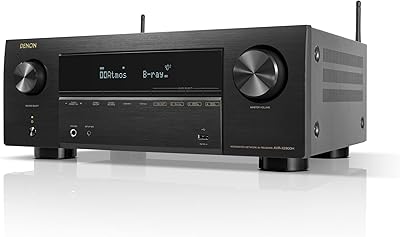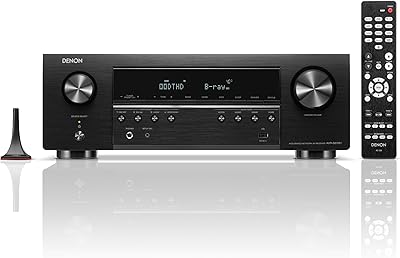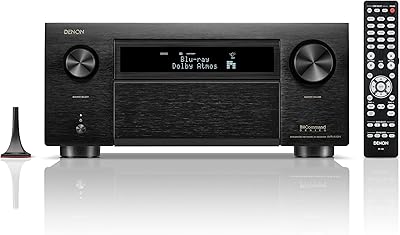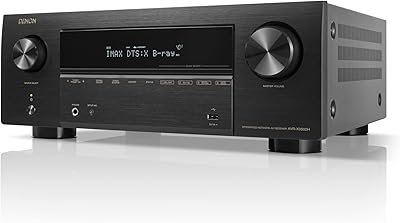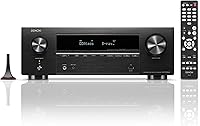

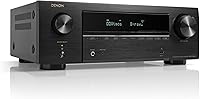
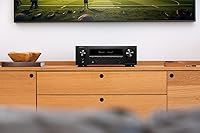


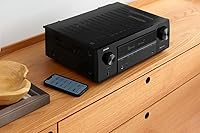
Overview

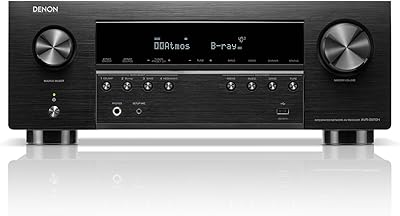
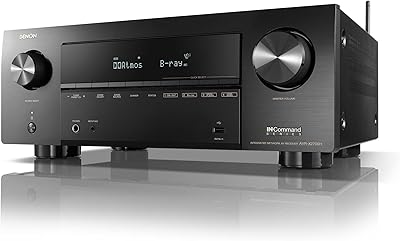
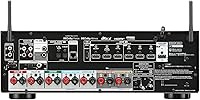
The Denon AVR-X1800H sits comfortably in the mid-range sweet spot — serious enough for a dedicated home theater setup, approachable enough for someone stepping up from a budget receiver for the first time. Denon has been building AV receivers for decades, and that experience shows in how thoughtfully this unit is laid out. The rear panel uses color-coded connections, and an on-screen setup guide walks you through calibration without requiring an engineering degree. It currently ranks among the top five audio component receivers on Amazon, which is not an accident — this AV receiver manages to check most of the boxes buyers at this tier actually care about.

Features & Benefits

What makes this Denon receiver stand out in its class is the combination of 8K HDMI passthrough and support for 4K at 120Hz — genuinely useful if you own a current-gen gaming console or plan to upgrade your display soon. On the audio side, Dolby Atmos and DTS:X deliver real height effects, and Height Virtualization Technology creates a convincing overhead soundstage even without ceiling-mounted speakers. Audyssey room correction does a solid job calibrating the output to your actual space rather than some ideal listening room. Throw in built-in HEOS for multi-room audio, AirPlay 2 and Bluetooth, plus compatibility with Alexa, Google Assistant, and Siri, and this AV receiver functions as a genuine control hub for the modern living room.

Best For

This AV receiver makes the most sense for a few distinct buyers. If you want genuine Dolby Atmos without spending flagship money, this is a logical stopping point. Gamers running a PS5 or Xbox Series X through a 4K/120Hz display will appreciate the low-latency HDMI 2.1 capability. Households already using HEOS speakers, Alexa, or Google Home will find integration feels natural rather than bolted on. It also works well for someone ditching a soundbar who wants actual discrete surround channels for the first time. Where it makes less sense: very large rooms where 80W per channel may leave you wanting more headroom, or buyers who need dual HDMI outputs for a multi-display setup.

User Feedback

Owners consistently praise how straightforward the initial setup is — the guided installation process and labeled connections reduce the usual frustration of wiring a surround system. Video passthrough quality also gets strong marks, with few complaints about signal issues even at higher resolutions. On the flip side, some users flag that the HEOS app can be inconsistent: occasional connectivity drops and a UI that feels dated compared to competing platforms. Buyers coming from the older AVR-X1700H generally report the upgrade feels worthwhile but not dramatic. At this price point, cross-shoppers often weigh this against Yamaha's RX-V series or Marantz entry models; most who chose this Denon receiver cite brand reliability and the HEOS ecosystem as the deciding factors.

Pros

  • Dolby Atmos and DTS:X support deliver genuine height effects without requiring ceiling speaker installation.
  • 4K/120Hz HDMI passthrough works reliably with current-gen gaming consoles, keeping input latency minimal.
  • The color-coded rear panel and on-screen wizard make initial setup accessible even for first-timers.
  • AirPlay 2 streaming sounds noticeably cleaner than standard Bluetooth for everyday music listening.
  • Audyssey room correction meaningfully improves audio quality in acoustically imperfect living rooms.
  • HEOS multi-room integration works well for households already invested in compatible Denon or Marantz speakers.
  • Six HDMI inputs accommodate a full source lineup without constant cable swapping.
  • The three-year manufacturer warranty offers above-average long-term protection for a component at this tier.
  • Voice control via Alexa and Google Assistant handles everyday tasks like volume and input changes reliably.
  • Height Virtualization Technology provides a convincing overhead soundstage even with a standard 5.1 speaker layout.

Cons

  • The HEOS app interface feels outdated and occasionally drops from the local network without warning.
  • Only one HDMI output makes dual-display home theater setups — TV plus projector — impractical without extra hardware.
  • Real-world amplification across all seven channels falls short of the single-channel rated power figure.
  • The included Audyssey microphone is basic, limiting calibration accuracy for critical listening setups.
  • The front display is dim and hard to read from normal viewing distances in a lit room.
  • Firmware and software troubleshooting support from Denon customer service draws consistently mixed reviews.
  • The physical remote is cluttered and difficult to navigate in a darkened home theater environment.
  • Buyers coming from the previous generation model will find the performance upgrade incremental rather than substantial.

Ratings

The Denon AVR-X1800H earned its ratings through AI-driven analysis of verified global buyer reviews, with spam, bot-generated, and incentivized submissions actively filtered out before scoring. Across thousands of real-world assessments — from first-time home theater builders to seasoned AV enthusiasts — both the genuine strengths and recurring frustrations of this AV receiver are reflected transparently in the scores below.

Audio Performance
88%
Most owners report a noticeably wide, immersive soundstage when running Dolby Atmos content — movie watching in particular draws consistent praise. The Audyssey calibration does real work here, compensating for less-than-ideal room acoustics that would otherwise muddy dialogue and bass.
At higher volumes with all channels driven simultaneously, some users note the 80W rating does not tell the whole story — the receiver can feel underpowered in larger rooms. Bass management also requires manual tuning beyond what Audyssey sets automatically for best results.
Video Passthrough Quality
91%
The 8K-ready HDMI section handles 4K at 120Hz without signal degradation, which PlayStation 5 and Xbox Series X owners specifically call out as a major win. HDR formats including Dolby Vision and HDR10+ pass through cleanly with zero noticeable lag reported in the vast majority of gaming sessions.
A smaller subset of users encountered intermittent HDMI handshake issues, typically requiring a power cycle to resolve. These appear more common with certain older TV models and are not universal, but they are worth knowing about before committing.
Setup & Installation
86%
The color-coded rear panel and on-screen setup wizard genuinely reduce the intimidation factor for first-time surround sound builders. Most buyers report being fully operational within an hour, which is fast for a 7.2-channel system with multiple source inputs to configure.
The initial speaker calibration process, while guided, still requires accurate microphone placement to produce useful results — buyers who rush this step often report underwhelming sound until they redo it properly. The remote control layout also draws criticism for being cluttered and difficult to read in a dark room.
HEOS Multi-Room Streaming
74%
26%
For households already in the HEOS or Amazon ecosystem, the multi-room integration works reliably and feels genuinely convenient — queuing different music in different rooms without a third-party hub is a real quality-of-life improvement. Spotify and Tidal connect quickly and stream without audible compression artifacts.
The HEOS mobile app is the most polarizing element of this receiver. Users consistently flag an outdated interface, occasional dropout from the local network, and sluggish response times that break the experience. It works, but it lags well behind competitors like Sonos in software polish.
Build Quality & Design
83%
The chassis feels appropriately solid for a mid-range component — nothing flexes under pressure, and the front panel controls have a satisfying tactile quality. The clean, understated design fits into most entertainment center setups without looking out of place next to modern TVs.
The ventilation requirements are substantial; the unit runs warm during extended use and needs meaningful clearance above it. A few buyers also noted the front display is dim and difficult to read from across the room without adjusting brightness settings manually.
Wireless Connectivity
81%
19%
Wi-Fi, Bluetooth, and AirPlay 2 all function reliably for day-to-day streaming, with AirPlay 2 in particular drawing praise for its low-latency, lossless audio quality compared to standard Bluetooth. Pairing new devices is quick and stays stable across listening sessions.
Bluetooth range is adequate but not exceptional — moving to an adjacent room can introduce stuttering. Wi-Fi connectivity on dual-band networks occasionally requires manual band selection for stable performance, which is a minor but unnecessary friction point.
Voice Control Integration
78%
22%
Alexa and Google Assistant commands for basic functions — volume, input switching, playback — work consistently and respond quickly. For households already running smart home routines, folding this AV receiver into existing automations is straightforward.
Voice control covers only a subset of the receiver's functions; deeper settings still require the app or remote. Siri integration via AirPlay 2 is more limited than Alexa or Google Assistant, and some users expected tighter native HomeKit support that is not present.
Gaming Performance
89%
The combination of 4K/120Hz passthrough, HDMI 2.1 bandwidth, and consistently low input latency makes this AV receiver a strong choice for current-gen console setups. Gamers playing fast-paced titles report no perceptible audio delay relative to on-screen action.
Variable Refresh Rate pass-through behavior has caused occasional compatibility headaches with certain monitor and TV combinations. ALLM (Auto Low Latency Mode) works as expected in most cases, but users should verify compatibility with their specific display before assuming full feature support.
Value for Money
82%
18%
Relative to what buyers would spend building a comparable feature set from separate components, this AV receiver represents a reasonable consolidation of capabilities at its price tier. The three-year manufacturer warranty adds tangible long-term value that entry-level alternatives rarely offer.
Cross-shoppers comparing it to Yamaha RX-V and Marantz NR models at similar price points note that feature parity is close enough to make the decision non-obvious. Some buyers feel the HEOS app quality gap is hard to justify when competing ecosystems offer a more refined software experience for comparable money.
Surround Sound Formats
87%
Full support for Dolby Atmos, DTS:X, and DTS Virtual:X covers every major format a buyer is likely to encounter on streaming platforms and physical media today. Height Virtualization Technology does a credible job simulating overhead audio even in a conventional 5.1 speaker layout.
DTS Virtual:X and Height Virtualization results are noticeably room- and speaker-dependent — buyers with budget bookshelf speakers sometimes find the virtual height effects unconvincing. True Atmos with physical height channels still sounds meaningfully better, and the virtualization is more of a bonus than a full substitute.
App Experience
62%
38%
The HEOS app covers the basics: source selection, volume, EQ adjustments, and streaming service access are all accessible from a phone without reaching for the remote. For users who primarily stream from Spotify or Tidal, the app gets the job done reliably enough.
Beyond basic functions, the app experience deteriorates — navigation feels dated, loading times are sluggish, and UI bugs appear across both iOS and Android. This is the most consistent complaint across all buyer demographics and is a notable weak point relative to the hardware quality.
Room Correction (Audyssey)
79%
21%
Audyssey MultEQ runs a speaker calibration routine that genuinely improves out-of-box sound in acoustically imperfect rooms, which describes most living rooms. Buyers in smaller spaces with reflective walls report the most dramatic improvements after calibration.
Audyssey's results vary significantly based on microphone placement and whether the calibration is run in a quiet environment. The included microphone is functional but basic, and enthusiast buyers often find the built-in MultEQ editor limiting compared to the full software available on pricier Denon models.
Input & Output Flexibility
84%
Six HDMI inputs cover most real-world source combinations — a gaming console, a streaming stick, a Blu-ray player, and a cable box can all stay permanently connected without cable swapping. The additional analog and optical inputs add compatibility with older source equipment.
Only a single HDMI output limits setups where two displays — such as a projector and a TV — need to receive signal simultaneously. Buyers with dual-display home theaters may find this a dealbreaker that forces them to look at pricier alternatives.
Customer Support & Warranty
76%
24%
The three-year manufacturer warranty is notably longer than the one-year coverage common among competitors at this tier, which gives buyers meaningful peace of mind on a component that is expected to anchor a system for years. Warranty claims are generally processed without major friction.
Responsiveness of Denon customer support for technical troubleshooting — particularly firmware-related issues — draws mixed reviews. Some users report resolution times that feel slow relative to the product tier, and phone support availability varies by region.

Suitable for:

The Denon AVR-X1800H is a strong fit for anyone building or upgrading a dedicated home theater in a small-to-medium sized room — particularly those who want genuine Dolby Atmos performance without paying flagship prices. Current-gen gamers will find it especially practical: the 4K/120Hz HDMI passthrough and low-latency handling make it one of the more capable options at this price tier for PS5 or Xbox Series X setups. Households already running Alexa or Google Home routines will slot this AV receiver into their smart home without friction, and HEOS users gain a natural hub for multi-room audio across compatible speakers. Cord-cutters who lean heavily on Spotify, Tidal, or Amazon Music HD will appreciate having one device that handles both the surround sound and the streaming without requiring a separate media player. It also makes a compelling case for anyone graduating from a soundbar or an aging 5.1 setup who wants a real step up in audio dimensionality, especially given the three-year warranty that provides longer coverage than most rivals at this level.

Not suitable for:

Buyers furnishing a large dedicated home theater room — think 400 square feet or more — should be cautious: the Denon AVR-X1800H is rated at 80W per channel under single-channel test conditions, and real-world output across all seven channels simultaneously will fall short of that figure, potentially leaving bigger spaces feeling underpowered at reference listening levels. Anyone who relies on a projector alongside a television will run into a hard limitation immediately, as there is only one HDMI output — dual-display setups are simply not supported without an external splitter. If software experience is a priority — and for many buyers it reasonably is — the HEOS app lags behind the polish of competitors in the Sonos or Yamaha MusicCast ecosystems, which may frustrate users who expect the app to match the hardware quality. Those upgrading from the previous AVR-X1700H looking for a dramatic performance leap may also find the generational difference more incremental than transformative. And for anyone who needs advanced room correction beyond what Audyssey MultEQ provides, higher-tier Denon or Marantz models with Audyssey XT32 will deliver more precise calibration results.

Specifications

  • Channels: This AV receiver supports a 7.2-channel configuration, meaning it can drive seven speaker channels and two independent subwoofer outputs simultaneously.
  • Power Output: Rated at 80W per channel, measured with a single channel driven at 8 ohms — real-world output across all channels simultaneously will be lower.
  • HDMI Inputs: Six HDMI inputs are provided on the rear panel, all supporting HDCP 2.3 and compatible with 8K/60Hz and 4K/120Hz source signals.
  • HDMI Output: A single HDMI output supports 8K/60Hz and 4K/120Hz passthrough with up to 40Gbps bandwidth, sufficient for current display standards.
  • HDR Support: The receiver passes through Dolby Vision, HDR10+, HLG, and Dynamic HDR without processing, preserving the original HDR metadata for the display.
  • Surround Formats: Supported decoding formats include Dolby Atmos, DTS:X, DTS Virtual:X, and Denon Height Virtualization Technology for virtual overhead audio.
  • Room Correction: Audyssey MultEQ automatic room correction is included, using a supplied microphone to calibrate speaker levels, distances, and frequency response.
  • Wireless: Built-in dual-band Wi-Fi, Bluetooth, and Apple AirPlay 2 are all supported for wireless audio streaming from phones, tablets, and streaming services.
  • Multi-Room Audio: HEOS multi-room streaming is built in, enabling synchronized or independent audio playback across other HEOS-compatible speakers in the home.
  • Streaming Services: Direct streaming is supported for Spotify, Tidal, Amazon Music HD, TuneIn, and other services via the HEOS platform over Wi-Fi.
  • Voice Control: Amazon Alexa, Google Assistant, and Apple Siri are all compatible for voice-based control of volume, input selection, and playback functions.
  • Dimensions: The unit measures 13.3″ wide by 17.1″ deep by 6″ tall, requiring adequate ventilation clearance above and around the chassis during operation.
  • Weight: The receiver weighs 23 pounds, which is typical for a full-size 7.2-channel component and should be factored into shelf load planning.
  • USB Port: A front-panel USB Type-A port allows direct playback of audio files from compatible flash drives and is also used for firmware updates.
  • Video Upscaling: The receiver supports 8K upscaling of lower-resolution source content, though output quality depends on source material and display compatibility.
  • Impedance: The amplifier section supports speaker loads of 4 to 16 ohms, making it compatible with a wide range of aftermarket and OEM speaker systems.
  • Warranty: Denon provides a three-year manufacturer warranty on this receiver, which is notably longer than the one-year coverage standard at this price tier.
  • Batteries: Two AAA batteries are included in the package for use with the supplied infrared remote control.
  • Availability Date: This model was first made available for purchase in August 2023 and is confirmed as not discontinued by the manufacturer.
  • Model Number: The official model designation is AVRX1800H, with Amazon ASIN B0CFWQP9MC used for product identification on that platform.

Related Reviews
Denon AVR-S760H
Denon AVR-S760H
79%
88%
Audio Performance
84%
Setup & Installation
79%
HDMI & Video Handling
86%
Gaming Features
81%
Wireless Connectivity
More
Denon AVR-X2800H
Denon AVR-X2800H
78%
91%
Audio Performance
83%
Dolby Atmos & Spatial Audio
88%
Build Quality
92%
HDMI Connectivity
58%
Setup & Initial Configuration
More
Denon AVR-X6800H
Denon AVR-X6800H
80%
94%
Audio Performance
92%
Surround Sound & 3D Audio
89%
Room Calibration (Audyssey)
83%
HDMI & Video Handling
86%
Gaming Performance
More
Denon AVR-S670H 5.2 Ch Home Theater Receiver
84%
88%
Value for Money
90%
Video Quality
87%
Ease of Setup
85%
Audio Quality
89%
Connectivity
More
Denon AVR-X3800H 9.4-Ch 8K UHD AV Receiver
85%
95%
Audio Quality
93%
Video Quality
72%
Setup & Installation
89%
Connectivity Options
77%
User Interface & Controls
More
Denon AVR-A10H
Denon AVR-A10H
81%
94%
Audio Performance
92%
Build Quality
96%
Channel Flexibility
58%
Setup & Ease of Use
89%
Gaming Performance
More
Denon AVR-S970H
Denon AVR-S970H
79%
91%
Audio Performance
93%
Gaming Performance
88%
Setup & Calibration
79%
Build Quality
52%
Remote Control
More
Denon AVR-X2700H
Denon AVR-X2700H
79%
91%
Audio Performance
88%
Gaming Performance
86%
Video Passthrough Quality
84%
Build Quality & Design
76%
Setup & Calibration
More
Denon Home 550 Wireless Soundbar
86%
91%
Sound Quality
87%
Ease of Setup
90%
Build Quality
94%
Wireless Connectivity
88%
Alexa Integration
More
Denon HEOS Amp Wireless Amplifier
86%
91%
Sound Quality
89%
Connectivity Options
94%
Ease of Setup
87%
Multi-Room Performance
78%
App Usability
More

FAQ

It is genuine. The Denon AVR-X1800H includes HDMI 2.1-capable inputs that pass 4K/120Hz signals through to your display without downgrading the signal. Owners using a PS5 or Xbox Series X consistently confirm it works as expected with compatible televisions and monitors.

You can absolutely use it with a standard 5.1 setup — just configure the receiver to match your speaker layout during the setup process. The extra channels simply remain unused, and you can always add speakers later if you decide to expand to a full 7.1 or Atmos configuration.

The Height Virtualization Technology does create a sense of overhead audio, but it is a simulation rather than a true Atmos experience. Most casual viewers find it convincing enough for everyday movie watching, but serious home theater enthusiasts will notice the difference compared to a setup with physical height channels.

It lands somewhere in between. The app handles the basics — streaming, volume, input switching — without major issues most of the time. The honest caveat is that the interface feels dated and the app can occasionally disconnect from the network, requiring a restart. If slick app design matters to you, it is a real limitation worth knowing about upfront.

Yes, Google Assistant integration is built in and works reliably for basic commands like adjusting volume or switching inputs. If your home runs on Alexa instead, that works just as well — and AirPlay 2 handles Siri-based requests for Apple users.

Easier than you might expect for a 7.2-channel receiver. The on-screen setup guide walks you through connecting speakers and sources step by step, and the rear panel connections are color-coded to reduce confusion. Most first-time buyers report being up and running within an hour, though running the Audyssey calibration properly does take a bit of patience.

For a room in the range of 200 to 350 square feet, it is generally sufficient at normal to moderately high listening levels. The important context is that 80W is measured with only one channel driven — actual output across all seven channels simultaneously will be lower. Very large rooms or listeners who prefer reference-level volume may find it falls short.

Not directly — this AV receiver has only one HDMI output, so it can only send video to one display at a time. If you genuinely need dual outputs, you would need an external HDMI splitter, or you should look at higher-tier receivers that offer two HDMI outputs natively.

Both are strong contenders and the decision often comes down to ecosystem preference. Yamaha MusicCast is generally considered more polished on the software side than HEOS, while this Denon receiver tends to edge out Yamaha in raw HDMI feature support and the breadth of HDR format compatibility. If multi-room audio and app quality are top priorities, Yamaha is worth a serious look; if video passthrough and Atmos performance matter more, this AV receiver holds its own well.

If your current receiver is functioning well, the upgrade is incremental rather than transformational — you get improved HDMI bandwidth, updated HDR format support, and a refreshed chipset, but the fundamental audio performance is in a similar range. Where the upgrade makes the clearest case is for users who specifically need 4K/120Hz passthrough for a new gaming console or display that the older model cannot fully support.