
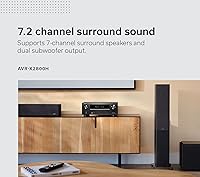
Overview

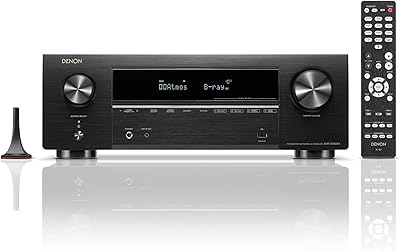
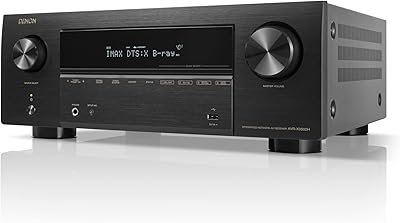
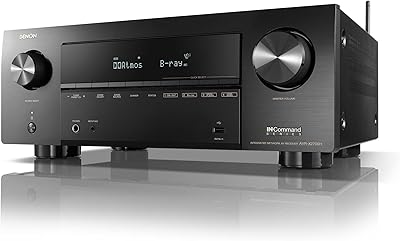
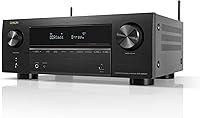
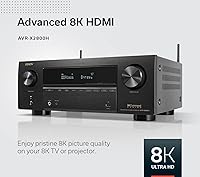
The Denon AVR-X2800H sits confidently in the mid-to-upper tier of home theater receivers — serious enough for dedicated enthusiasts, but not priced into the stratosphere where only professionals venture. Denon has been building AV equipment long enough that their reliability reputation precedes them, and this model reflects that pedigree well. The 8K-ready design isn't just a marketing checkbox; it's a practical consideration if you're planning to upgrade your display in the next few years. That said, unlocking everything this AV receiver offers takes patience. The feature set is deep, and first-time users should expect a meaningful setup process before things really click into place.

Features & Benefits

At 95W per channel across all seven channels, this Denon receiver has enough headroom to fill a large living room without straining. The 8K/60Hz passthrough with eARC support means your current investment is protected as display technology advances. On the audio side, Dolby Atmos and DTS:X deliver genuine spatial depth when paired with physical height speakers — but the virtual height processing modes, while impressive for what they are, don't fully replicate ceiling-mounted speakers. The built-in HEOS platform handles multi-room streaming reliably, and with Wi-Fi, Bluetooth, Spotify, and Pandora all integrated, it doubles as a capable whole-home audio hub.

Best For

This AV receiver is a natural fit for anyone stepping up from a 5.1 setup who wants real room to grow — whether that means adding height speakers for true Atmos or expanding into a full 7.2 configuration later. Buyers with mixed source libraries will appreciate the phono input for a turntable alongside three dedicated 8K HDMI inputs for modern consoles and players. Those already using HEOS speakers elsewhere in their home will find integration straightforward. If you're new to AV receivers entirely, budget time for calibration — the Audyssey setup rewards patience but is far from plug-and-play.

User Feedback

Buyers consistently praise the sound quality and build of this Denon receiver, with many noting it punches above its class for both movie nights and music listening. HEOS multi-room performance draws particular appreciation from users already inside the Denon ecosystem. Where opinions diverge is around setup — the Audyssey calibration process has a real learning curve, and the companion app gets mixed marks for reliability. The remote and on-screen menus are functional but feel dated compared to rivals at similar price points. Long-term reliability reports skew positive, though a handful of buyers flagged slow responses from customer support.

Pros

  • Genuine Dolby Atmos depth when used with physical height speakers — noticeably better than virtual alternatives.
  • Six HDMI inputs mean you can connect every device in your rack without a separate switch.
  • HEOS multi-room streaming works reliably day-to-day within the Denon ecosystem.
  • Phono input lets turntable owners skip the external preamp and simplify their setup.
  • Audyssey room correction makes a real, audible difference once the calibration is done properly.
  • Comprehensive HDR format support — Dolby Vision, HDR10+, and HLG all pass through cleanly.
  • Three-year manufacturer warranty provides solid coverage for a receiver at this investment level.
  • Voice control works across Apple HomeKit, Amazon Alexa, and Google Assistant without choosing sides.
  • 95W per channel delivers convincing headroom in larger living rooms without audible strain.
  • Dual subwoofer outputs give you flexibility to run two subs for more even low-frequency coverage.

Cons

  • The setup app is unreliable during Audyssey calibration — easily the most frustrating part of ownership.
  • On-screen menus look visually dated and navigate slowly compared to competing receivers.
  • The included remote is cluttered and prone to mis-presses in a dark home theater environment.
  • Virtual height processing modes are a meaningful step down from physical overhead speakers.
  • Customer support response times drew repeated criticism from buyers who ran into post-purchase issues.
  • HEOS app stability suffers after network changes or firmware updates, requiring manual reconnection.
  • The phono stage won't satisfy moving-coil cartridge users without adding a separate outboard preamp.
  • Smart home voice commands are shallow — input switching and volume only, with little room for nuance.

Ratings

The Denon AVR-X2800H earns strong marks across most categories, and the scores below reflect what real buyers worldwide actually experienced — not the highlight reel. Our AI analyzed thousands of verified purchase reviews, actively filtering out incentivized and bot-generated submissions, to surface an honest picture of where this AV receiver genuinely delivers and where it asks for compromise. Strengths in audio performance and connectivity are real, but so are the friction points around setup and interface usability.

Audio Performance
91%
Most owners describe the sound as punchy and well-layered, especially during action-heavy movie scenes where the surround channels and subwoofer outputs work together convincingly. At reference listening levels in mid-sized rooms, the 95W per channel feels authoritative without hardness or fatigue.
A small but consistent group of audiophiles note that the AVR-X2800H doesn't quite match the transparency of higher-end separates at the same volume levels. Stereo music listening, while good, occasionally feels less refined than the surround performance suggests it could be.
Dolby Atmos & Spatial Audio
83%
When paired with physical overhead or height speakers, Dolby Atmos performance genuinely impresses — overhead effects in well-mixed content like nature documentaries and blockbuster films feel spatially convincing. Buyers with full Atmos setups regularly call this a standout feature for the price tier.
The virtual height processing modes, Dolby Height Virtualization and DTS Virtual:X, are a real step down from the physical speaker experience — useful as a fallback but not a true substitute. Users who purchased expecting virtual Atmos to match dedicated height channels often felt the results were modest.
Build Quality
88%
The chassis feels solid and appropriately heavy for a component-grade receiver, with a front panel that doesn't flex or rattle. Buyers report that even after extended daily use the unit runs quietly and cool, which adds confidence in long-term durability.
The plastic fascia around the front display and control buttons feels slightly incongruent with the otherwise sturdy metal housing. A few buyers noted the front-panel knobs, while functional, lack the premium tactile resistance you might expect at this price point.
HDMI Connectivity
92%
Six HDMI inputs including three dedicated 8K ports is genuinely generous — users with a mix of a gaming console, Blu-ray player, streaming stick, and older cable box can connect everything without a separate switch. The eARC output works reliably for passing audio back from compatible TVs.
The HDMI port layout on the rear panel is tight, and users with thicker third-party cables sometimes struggle to seat connectors without awkward angles. A small number of buyers also reported intermittent handshake issues with certain TV brands that required firmware updates to resolve.
Setup & Initial Configuration
58%
42%
The Audyssey MultEQ XT room correction system, once properly completed, does produce a noticeably balanced and room-tuned result. Buyers with some AV experience describe the guided process as thorough, and the improvement over uncalibrated settings is genuinely meaningful.
First-time AV receiver owners frequently describe the initial setup as overwhelming — the on-screen menus are dense, the Audyssey microphone process takes real time, and the manual does not do enough to simplify things. The setup app experience drew repeated criticism for being unreliable during the calibration phase specifically.
HEOS Multi-Room Performance
79%
21%
Within the Denon and HEOS ecosystem, multi-room audio works as advertised — grouping rooms and controlling playback from the HEOS app is responsive when the system is healthy. Streaming from Spotify and other connected services through the receiver directly is a daily convenience many buyers rely on.
HEOS reliability outside ideal network conditions gets mixed marks; some users report dropouts or devices disappearing from the app after router changes or firmware updates. The app itself is functional but has not kept pace visually or responsively with competing platforms.
Smart Home Integration
74%
26%
Apple HomeKit, Alexa, and Google Assistant support covers nearly every smart home ecosystem in active use, which buyers appreciate not having to think about. Voice control for basic functions like volume and input switching works consistently across all three platforms.
The depth of voice control is shallow — you can turn the unit on, adjust volume, and switch inputs, but more nuanced commands often go unrecognized. Users expecting the same smart home fluency as dedicated smart speakers found the integration functional but not particularly polished.
Remote Control
61%
39%
The included remote covers all core functions and is large enough to handle comfortably in low light. Buyers who prefer a physical remote over app control appreciate having all major inputs and audio modes accessible without unlocking a phone.
The remote layout is cluttered, with small buttons packed closely together in a way that leads to frequent mis-presses in dark rooms. Multiple reviewers described it as a carryover design that feels out of step with the premium positioning of the unit itself.
On-Screen Menu & UI
63%
37%
The on-screen interface is logically organized once you learn its structure, and advanced users who spend time with it can access virtually every configuration parameter the receiver offers. For deep customization sessions it gets the job done.
The graphical design of the menus looks noticeably dated compared to competitors, and navigation response can feel sluggish when stepping through multiple sub-menus. Buyers accustomed to modern smart TV interfaces frequently flagged the UI as a weak point in their overall experience.
Streaming & Source Integration
81%
19%
Direct Bluetooth pairing works quickly and stays stable during extended playback sessions, making casual listening from a phone effortless. Built-in support for Spotify, TuneIn, and similar services means casual users rarely need to route audio through a separate device.
AirPlay 2 performance is solid but occasionally drops briefly after the receiver has been idle. Users streaming hi-res audio noted that the available services skew toward mainstream platforms, with fewer options for dedicated hi-fi streaming compared to some competing units.
Video Passthrough Quality
87%
8K/60Hz and 4K/120Hz passthrough works cleanly without introducing visible lag or compression artifacts, which matters most for gaming users running high-refresh-rate setups. HDR format support is comprehensive — Dolby Vision, HDR10+, and HLG all pass through without compatibility issues in tested configurations.
A limited number of users reported inconsistent HDR handshake behavior with specific TV and source combinations that required toggling settings to resolve. These issues appear to be edge cases, but they do exist and were frustrating for the buyers who encountered them.
Value for Money
76%
24%
For buyers who use the full feature set — Atmos, multi-room HEOS, 8K inputs, and smart home control — the price-to-capability ratio holds up well against comparable receivers from Sony and Yamaha. The three-year manufacturer warranty adds meaningful peace of mind at this investment level.
Buyers who primarily want stereo performance or a simpler setup may find they are paying for capabilities they will rarely touch. At this price, some buyers expected the app experience and remote quality to reflect the premium positioning more clearly than they do.
Long-Term Reliability
78%
22%
The majority of buyers who have owned the unit for a year or more report no hardware failures or degraded performance. Denon's firmware update cadence has been consistent, addressing a number of early compatibility issues within the first year of release.
A recurring minority of reviews flag customer support responsiveness as slow when issues do arise, which amplifies frustration for buyers dealing with setup or hardware problems. A small cluster of reports around HDMI board failures exists, though not at a frequency that suggests a systemic defect.
Phono Input & Legacy Source Support
82%
18%
Having a phono input on a modern 8K receiver is a genuine differentiator — vinyl listeners don't need a separate preamp to connect a turntable, which simplifies the rack setup considerably. The phono stage performs cleanly for the use case, earning consistent praise from record collectors.
The phono stage is competent but not audiophile-grade — buyers with high-output moving-magnet cartridges are fine, but those running lower-output moving-coil setups will likely want an external preamp. It covers the need for most users without fully satisfying enthusiast-level vinyl listeners.

Suitable for:

The Denon AVR-X2800H is built for the kind of home theater enthusiast who has outgrown a basic soundbar or entry-level receiver and is ready to invest in something that can anchor a serious listening room for years. If you're stepping up from a 5.1 setup and want a clear upgrade path — whether that means adding height speakers for genuine Atmos or eventually expanding to a full 7.2 configuration — this AV receiver gives you that runway without forcing you to buy flagship hardware today. Vinyl listeners will appreciate having a phono input sitting right alongside three 8K HDMI ports, meaning you don't have to choose between a modern and a legacy source setup. Those already using HEOS speakers in other rooms will find the multi-room integration works naturally, turning the receiver into a hub rather than a standalone box. And if your household runs on Apple HomeKit, Alexa, or Google Assistant, the native compatibility means one less device that needs a workaround to fit into your existing smart home setup.

Not suitable for:

The Denon AVR-X2800H is probably not the right choice if you're a first-time AV receiver buyer expecting a straightforward plug-and-play experience — the Audyssey calibration process, the dense menu system, and the occasionally temperamental setup app all demand patience and a willingness to troubleshoot. Pure stereo listeners who mostly spin records or stream music without a full speaker array around them would be paying for a lot of surround-sound architecture they'd rarely use, and there are more streamlined two-channel amplifiers at this price that would serve them better. If your room is small, the 95W per channel is more power than you'll ever realistically need, which shifts the value calculation considerably. Buyers who expect a premium remote control and a slick, modern on-screen interface to match the hardware investment are likely to be disappointed — both feel like they belong to an older product generation. And if post-sale customer support matters to you, the mixed feedback around Denon's responsiveness is worth factoring into your decision before committing.

Specifications

  • Channels: The receiver supports a 7.2-channel configuration, meaning it can power seven speaker channels and two independent subwoofer outputs simultaneously.
  • Power Output: Each of the seven amplifier channels delivers 95 watts into 8 ohms, measured across the full 20Hz–20kHz frequency range at 0.08% THD.
  • HDMI Ports: There are eight HDMI ports in total — six inputs and two outputs — with three of those inputs certified for 8K signal passthrough.
  • Video Passthrough: The unit supports 8K/60Hz and 4K/120Hz HDMI passthrough with HDCP 2.3 compliance and eARC on the main HDMI output.
  • HDR Formats: Supported HDR formats include Dolby Vision, HDR10+, HDR10, HLG, and Dynamic HDR for broad compatibility with modern displays and source material.
  • Audio Decoding: The receiver decodes Dolby Atmos, Dolby TrueHD, DTS:X, DTS-HD Master Audio, and includes Dolby Height Virtualization and DTS Virtual:X for height synthesis.
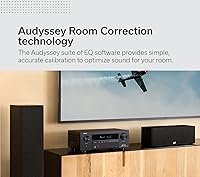
  • Room Correction: Audyssey MultEQ XT automatic room correction is built in, using a supplied calibration microphone to measure and adjust speaker levels, distances, and frequency response.
  • Multi-Room Audio: The built-in HEOS platform enables multi-room audio distribution to other HEOS-compatible speakers and devices across the same network.
  • Wireless Connectivity: The unit includes dual-band Wi-Fi and Bluetooth for wireless streaming from phones, tablets, and network music services without a separate adapter.
  • Streaming Services: Natively supported streaming services include Spotify, Pandora, TuneIn, Amazon Music, and SiriusXM, all accessible through the HEOS app.
  • Smart Home: Compatible with Apple HomeKit, Amazon Alexa, and Google Assistant, allowing voice control of basic functions including power, volume, and input selection.
  • Legacy Inputs: Analog inputs include a dedicated phono stage for turntable connection, plus composite and component video inputs for older source devices.
  • Digital Inputs: Digital audio connectivity includes both optical (Toslink) and coaxial digital inputs alongside a front-panel USB port for direct device playback.
  • Subwoofer Outputs: Two independent subwoofer pre-outputs allow connection of dual subwoofers for more even bass distribution across larger listening spaces.
  • Dimensions: The unit measures 17.1 inches wide, 13 inches deep, and 6.6 inches tall, requiring standard AV rack or shelf clearance for adequate ventilation.
  • Warranty: Denon provides a three-year manufacturer warranty covering defects in materials and workmanship from the original purchase date.
  • Remote Control: A full-function IR remote control is included in the box, along with two AAA batteries required for its operation.
  • Manufacturer: The AVR-X2800H is designed and manufactured by Denon, a brand with over a century of history in audio and home theater equipment.

Related Reviews
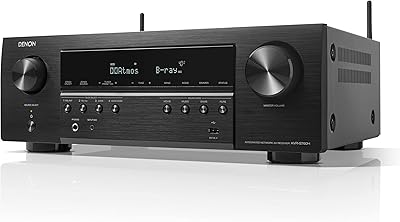
Denon AVR-S760H
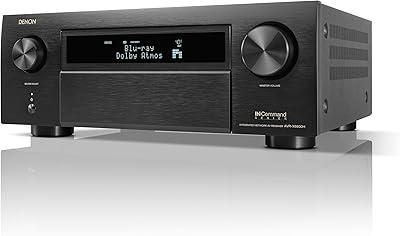
Denon AVR-S760H
79%
88%
Audio Performance
84%
Setup & Installation
79%
HDMI & Video Handling
86%
Gaming Features
81%
Wireless Connectivity
More
Denon AVR-X6800H
Denon AVR-X6800H
80%
94%
Audio Performance
92%
Surround Sound & 3D Audio
89%
Room Calibration (Audyssey)
83%
HDMI & Video Handling
86%
Gaming Performance
More
Denon AVR-X1800H
Denon AVR-X1800H
81%
88%
Audio Performance
91%
Video Passthrough Quality
86%
Setup & Installation
74%
HEOS Multi-Room Streaming
83%
Build Quality & Design
More
Denon AVR-S670H 5.2 Ch Home Theater Receiver
84%
88%
Value for Money
90%
Video Quality
87%
Ease of Setup
85%
Audio Quality
89%
Connectivity
More
Denon AVR-X3800H 9.4-Ch 8K UHD AV Receiver
85%
95%
Audio Quality
93%
Video Quality
72%
Setup & Installation
89%
Connectivity Options
77%
User Interface & Controls
More
Denon AVR-A10H
Denon AVR-A10H
81%
94%
Audio Performance
92%
Build Quality
96%
Channel Flexibility
58%
Setup & Ease of Use
89%
Gaming Performance
More
Denon AVR-X2700H
Denon AVR-X2700H
79%
91%
Audio Performance
88%
Gaming Performance
86%
Video Passthrough Quality
84%
Build Quality & Design
76%
Setup & Calibration
More
Denon AVR-S970H
Denon AVR-S970H
79%
91%
Audio Performance
93%
Gaming Performance
88%
Setup & Calibration
79%
Build Quality
52%
Remote Control
More
CyberPower AVRG750U AVR UPS System
82%
92%
Value for Money
85%
Setup & Installation
64%
Battery Runtime
88%
Surge Protection
80%
Design & Build Quality
More
Denon Home 550 Wireless Soundbar
86%
91%
Sound Quality
87%
Ease of Setup
90%
Build Quality
94%
Wireless Connectivity
88%
Alexa Integration
More

FAQ

No, but the experience is noticeably different depending on your setup. The Denon AVR-X2800H supports Dolby Height Virtualization and DTS Virtual:X, which simulate overhead sound using your existing floor-level speakers. It works reasonably well for casual viewing, but if you want genuinely convincing height effects, adding a pair of physical upward-firing or ceiling-mounted speakers makes a significant difference. Most dedicated home theater builders eventually go the physical speaker route.

Quite a few. There are six HDMI inputs, so you could have a gaming console, Blu-ray player, streaming stick, cable box, and more all connected simultaneously without unplugging anything. Add in the optical, coaxial, and analog inputs and you have coverage for virtually any combination of modern and legacy sources.

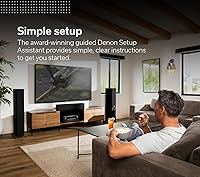
It depends on your background. If you've set up an AV receiver before, the process will feel familiar even if the menus are dense. For first-timers, the Audyssey calibration alone can take 30 to 45 minutes, and the on-screen interface isn't especially intuitive. Budget a full afternoon for the initial setup and don't rush the calibration — it has a meaningful impact on how the system sounds in your specific room.

Yes, there's a dedicated phono input built into this AV receiver. For standard moving-magnet cartridges, the internal phono stage works well and sounds clean. If you're running a lower-output moving-coil cartridge, you may want an external preamp to get the most out of your setup, but for the majority of vinyl listeners the built-in stage is perfectly adequate.

Generally yes, especially within a stable home network. Users who have other HEOS-compatible Denon or Marantz speakers find the grouping and playback controls work smoothly through the HEOS app. That said, some owners report that the app can lose track of devices after a router reboot or firmware update and needs a manual refresh. It's solid day-to-day but not quite as polished as some competing platforms.

Absolutely — 4K compatibility is fully supported, including 4K/120Hz passthrough for high-refresh-rate gaming. The 8K capability is there for future-proofing if you upgrade your display down the line, but it doesn't limit performance in any way on a current 4K setup.

Yes, HomeKit is natively supported, so once the receiver is added to your Home app you can use Siri to control it. Basic commands like turning it on or off, adjusting volume, and switching inputs work reliably. More complex audio commands are not supported through voice, so for deeper control you'd still use the HEOS app or the physical remote.

eARC, or Enhanced Audio Return Channel, lets your TV send high-quality audio back to the receiver over the same HDMI cable you're already using for video. If you watch apps directly on your TV — like Netflix or Disney+ through the built-in smart TV platform — eARC means that audio gets routed to your speakers in full quality, including Dolby Atmos where available. If all your sources plug directly into the receiver rather than the TV, you may never need it, but it's a useful option to have.

At 95 watts per channel, this AV receiver handles medium to large living rooms comfortably. Most buyers running it in spaces up to about 400 to 500 square feet report plenty of headroom at normal listening and reference movie levels. For very large open-plan spaces or dedicated home theater rooms with high ceilings, you may eventually want more power, but for typical home use the output is more than sufficient.

Yes, the calibration microphone needed for the Audyssey MultEQ XT room correction process comes included. You position it at your primary listening seat, run the automatic measurement sequence from the setup menu, and the receiver adjusts speaker levels, delays, and EQ curves to suit your room. It's worth doing properly even if it takes some time — the difference between calibrated and uncalibrated sound in most rooms is clearly audible.