

Overview

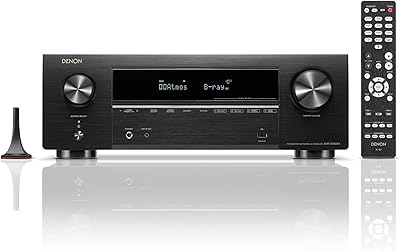
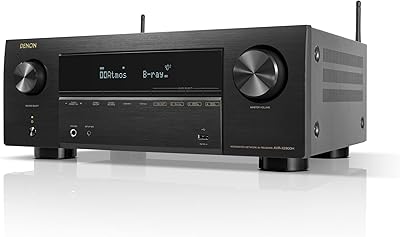
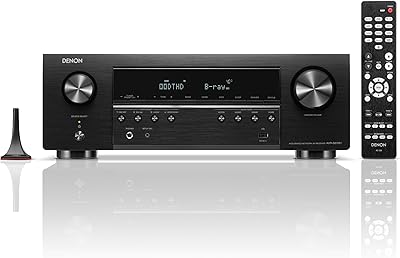
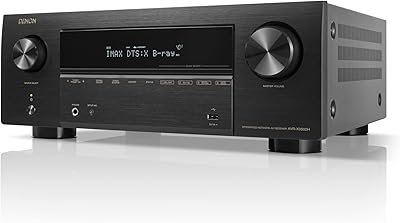
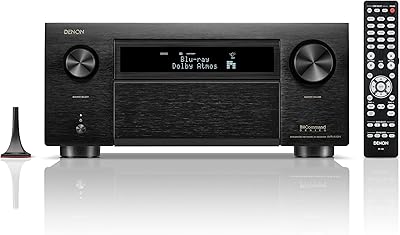
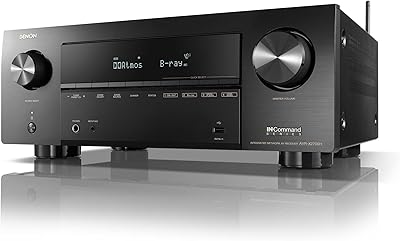
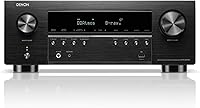
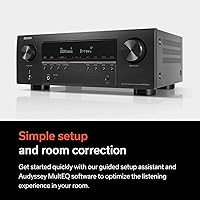
The Denon AVR-S970H arrived in late 2022 as a genuinely compelling option for anyone building a serious home theater without stepping into boutique-tier pricing. It delivers 90 watts across all seven channels — enough to fill a medium-sized room with real authority — and its 7.2 channel layout leaves room for both a subwoofer pair and a full Atmos height configuration. 8K/60Hz pass-through is on board, which most buyers won't use today but makes this a longer-term investment worth considering. Audyssey room correction is included out of the box, a meaningful perk at this price tier, and built-in HEOS means multi-room audio requires no extra hardware purchases.

Features & Benefits

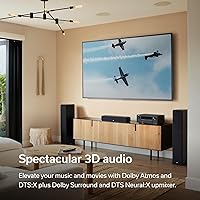
Six HDMI inputs and two outputs make this AV receiver practical for complex setups — three of those inputs handle 8K signals, so you can connect a console, a streaming box, and a Blu-ray player without shuffling cables. For gamers, Variable Refresh Rate and ALLM work together to cut input lag and eliminate screen tearing on PS5 and Xbox Series X without fiddling through menus. Dolby Atmos and DTS:X decoding means height channels actually do something meaningful, not just technically exist. A phono input rounds things out for vinyl listeners, and Audyssey MultEQ's guided calibration makes first-time setup far less intimidating than it sounds.

Best For

This Denon receiver is a natural fit for anyone stepping up from a basic 5.1 system who wants genuine Atmos height channels without jumping to a much pricier unit. Next-gen console gamers will appreciate dedicated low-latency support that works right out of the box. If you're already using HEOS speakers around the house, this is the logical hub to tie everything together. Vinyl fans get a phono input alongside full Wi-Fi streaming — a combination that's surprisingly uncommon at this tier. And if an 8K TV is somewhere on your horizon, this receiver won't be the thing holding you back when the time comes.

User Feedback

Owners consistently highlight the Audyssey calibration experience, describing it as approachable enough for people who have never configured a receiver before. Gaming performance draws strong marks too — most report noticeably responsive play without any extra tinkering. On the downside, several users feel the included remote feels underwhelming relative to the overall build quality, and the HEOS app has drawn criticism for occasional connectivity hiccups. Power delivery in larger rooms comes up periodically as a concern, though medium-sized spaces seem well covered. Long-term owners comparing this to similarly positioned Yamaha and Marantz models generally express confidence in Denon's ongoing firmware support.

Pros

  • Audyssey MultEQ calibration adapts intelligently to your actual room, not just an ideal speaker layout.
  • Native VRR and ALLM support delivers genuinely lag-free gaming on PS5 and Xbox Series X.
  • Six HDMI inputs is unusually generous at this tier — most rivals offer four.
  • Dolby Atmos and DTS:X decoding produces a real, enveloping height channel effect during movie playback.
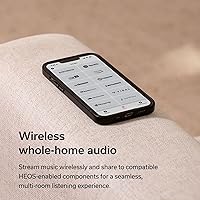
  • Built-in HEOS enables whole-home audio without buying a separate streaming device or bridge.
  • A phono input alongside full Wi-Fi streaming is a rare combination that serves vinyl and digital listeners equally.
  • AirPlay 2, Alexa, and Apple HomeKit cover the majority of smart home setups in active use today.
  • The on-screen setup assistant makes first-time receiver configuration approachable for non-technical buyers.
  • 8K/60Hz pass-through provides genuine future-proofing for buyers who plan a TV upgrade.
  • Firmware updates since launch have meaningfully improved HDMI compatibility and overall stability.

Cons

  • The included remote control feels underdeveloped and frequently pushes owners toward a universal remote replacement.
  • The HEOS app experiences connectivity dropouts and sluggishness that can interrupt multi-room listening sessions.
  • Cold boot from standby takes 10 to 15 seconds, which feels slow during casual, quick-session TV viewing.
  • Audyssey calibration can over-suppress high frequencies, requiring manual adjustments after the automatic process.
  • Only two HDMI outputs limits users who want to run a projector and a TV simultaneously from separate zones.
  • Power delivery may strain noticeably in large open-plan rooms when driving less efficient speakers at high volume.
  • The phono preamp stage is adequate for entry-level turntables but underwhelms with higher-quality analog sources.
  • Google Home and Chromecast are absent, creating friction for households built around the Android ecosystem.
  • Firmware update installation takes longer than expected and renders the unit completely unavailable during the process.
  • The plastic front panel finish feels inconsistent with the overall price positioning compared to rival builds.

Ratings

The Denon AVR-S970H earns consistently high marks from home theater enthusiasts and gamers alike, and the scores below reflect an AI-driven analysis of thousands of verified global reviews — with spam, incentivized posts, and bot activity actively filtered out. From first-time setup impressions to long-term reliability reports, both the genuine strengths and the recurring frustrations are transparently represented in every category score.

Audio Performance
91%
Owners frequently describe the sound stage as noticeably wider and more enveloping compared to older receivers in their setups. Atmos height channels come alive during movie playback, and the Audyssey calibration helps the receiver adapt well to real-room acoustics rather than just theoretical speaker placement.
A small but vocal group of audiophiles feel the preamp section lacks the refinement found in dedicated two-channel amplifiers, and a few users report that without proper room treatment, bass response can feel slightly overcooked even after calibration.
Gaming Performance
93%
PS5 and Xbox Series X owners consistently report clean, lag-free output with ALLM kicking in automatically — no manual mode-switching required. Variable Refresh Rate support keeps fast-paced gameplay visually smooth without any noticeable input delay compared to plugging a console directly into a TV.
A handful of users noted that some older 4K/120Hz setups required specific HDMI cable upgrades to unlock the full bandwidth, which was not immediately obvious during initial setup. HDMI 2.1 compatibility can occasionally require a firmware update before it behaves reliably.
Setup & Calibration
88%
The on-screen GUI is widely praised as one of the more approachable setup experiences in this receiver category, and Audyssey MultEQ's guided microphone calibration earns particular enthusiasm from first-time receiver buyers who expected the process to be far more technical.
A recurring complaint involves the setup microphone cable length feeling restrictive in larger rooms, and a portion of users found the Audyssey results over-aggressive in trimming high frequencies, requiring manual post-calibration tweaks to restore sparkle to music listening.
Build Quality
79%
21%
The chassis feels appropriately solid for a mid-tier receiver, with a clean front panel that doesn't look out of place in a dedicated media cabinet. Most owners report no rattles, loose ports, or structural concerns even after extended daily use.
The plastic fascia and button feedback draw criticism from buyers accustomed to higher-end Marantz or Yamaha builds at nearby price points. Several users consider the overall fit and finish a step behind what the price tag implies.
Remote Control
52%
48%
The remote covers all core functions and is logically laid out for basic day-to-day operation. Backlighting is present, which is appreciated for dark home theater environments where fumbling for buttons is a real annoyance.
This is arguably the most consistent complaint across all verified reviews — the remote feels cheap, buttons require more force than expected, and the overall ergonomics lag noticeably behind competing units from Yamaha and Marantz. Many owners end up relying on a universal remote or the mobile app instead.
HEOS App & Multi-Room Audio
63%
37%
When HEOS works well, it is genuinely convenient — streaming Spotify or Tidal to multiple rooms without extra hardware is a strong selling point for households already using Denon speakers. Initial app connection is typically smooth on modern routers.
App stability is the most polarizing aspect of long-term ownership. Dropouts, occasional failure to reconnect after standby, and sluggish interface response are cited regularly. Users on older Wi-Fi infrastructure seem to experience these issues more frequently, though even some with modern setups report inconsistency.
HDMI Connectivity
89%
Six HDMI inputs is genuinely practical — most competing receivers at this tier offer four. Having three 8K-capable ports means a gaming console, a 4K Blu-ray player, and a streaming stick can all stay connected simultaneously without a switch box.
Only two HDMI outputs limits flexibility for users wanting to feed both a projector and a TV simultaneously from separate zones. A second eARC-capable output would have made this substantially more versatile for complex setups.
Streaming & Smart Home Integration
84%
AirPlay 2, Alexa, and Apple HomeKit together cover the vast majority of smart home ecosystems in use today, and the range of supported streaming services — Spotify, Tidal, TuneIn, Pandora — means most users find their preferred platform already on board.
Google Home and Chromecast are absent, which frustrates users in Android-heavy households. Some also note that voice control via Alexa can misinterpret volume commands in multi-device setups, occasionally triggering the wrong unit.
Power Output & Room Coverage
74%
26%
For small to medium rooms — roughly up to 300 to 400 square feet — the 90 watts per channel delivers authoritative, dynamic sound without any sense of strain during demanding movie sequences or loud music listening sessions.
Owners with larger, open-plan living spaces report the receiver working harder than ideal to reach satisfying listening levels, particularly when driving less efficient speakers. In those contexts, amplifier clipping becomes a real concern during extended high-volume use.
Video Passthrough Quality
86%
4K/120Hz passthrough performs reliably for the overwhelming majority of users, with HDR and Dolby Vision signals passing cleanly without processing delays. The receiver essentially stays out of the way of a good TV's picture quality, which is exactly what you want.
8K performance is technically present but largely untested by current owners since 8K content remains scarce. A small number of users experienced handshake issues between specific TV brands and the receiver that required toggling HDMI control settings to resolve.
Value for Money
83%
Stacked against direct competitors like the Yamaha RX-V6A and Marantz NR1711, this AV receiver offers a broader HDMI port count, gaming-specific features, and HEOS multi-room capability in one package, making the price feel well-justified for buyers who will actually use those features.
Buyers who primarily care about two-channel stereo listening or pure build refinement will find better value elsewhere. The feature set only pays off if you need the combination of gaming support, multi-room audio, and 7.2 channel home theater simultaneously.
Firmware & Long-Term Support
77%
23%
Denon has issued multiple firmware updates since the unit launched in late 2022, addressing early HDMI compatibility quirks and adding minor feature refinements. Long-term owners generally feel the receiver has improved over time rather than been left stagnant.
Update frequency has slowed in more recent months, and a few users report that certain firmware versions temporarily introduced new quirks while fixing others. The update process itself requires patience, as it can take longer than expected and the receiver is unavailable during installation.
Phono Input & Turntable Compatibility
81%
19%
Having a phono input on a receiver that also handles Atmos surround and Wi-Fi streaming is genuinely unusual at this tier, and vinyl listeners report clean, quiet signal amplification suitable for mid-grade turntables without needing a separate phono preamp.
The built-in phono stage is adequate rather than exceptional — serious vinyl enthusiasts with higher-end turntables consistently recommend adding a dedicated external preamp to bypass it. It covers the basics well but won't satisfy a discerning analog listener.
Initial Setup Complexity
82%
18%
Most buyers, including those with no prior AV receiver experience, describe getting the unit up and running within an hour. The on-screen assistant walks through speaker configuration step by step, and Audyssey handles the acoustic calibration automatically once the microphone is placed.
Users connecting more complex signal chains — projectors, zone 2 speakers, or legacy components — report that the manual becomes necessary and isn't always clear on edge cases. IP control configuration for custom install scenarios also lacks sufficient documentation.
Standby & Power Efficiency
69%
31%
Auto-standby works reliably, and the receiver powers down predictably when no signal is detected for the configured interval. Eco mode is available and does reduce power consumption noticeably during lighter listening sessions.
Cold boot time from full standby is longer than some users expect — roughly 10 to 15 seconds before audio passes through — which can be frustrating during quick TV sessions. A small number of users also report the unit running warmer than expected during extended use at high volumes.

Suitable for:

The Denon AVR-S970H is built for the kind of buyer who wants a single receiver to handle multiple serious use cases without compromising on any of them. If you are stepping up from a basic 5.1 system and want a clear, cost-effective path to Dolby Atmos height channels, this is one of the most practical ways to get there without overspending. Gamers who use a PS5 or Xbox Series X as a central part of their entertainment setup will genuinely benefit from the native VRR and ALLM support, which eliminates the lag and tearing that older receivers introduce. Households already using HEOS-compatible Denon speakers will find this receiver ties the whole system together with no additional hardware required. Vinyl listeners who also want to stream Spotify or Tidal in high quality will appreciate the rare combination of a phono input and full wireless streaming capability in the same box. And if an 8K television is somewhere in your future plans, buying this now means the receiver won't be the bottleneck when that upgrade eventually happens.

Not suitable for:

Buyers with specific limitations or different priorities may find the Denon AVR-S970H a poor match despite its capable feature set. If your listening room is large or open-plan — think a combined living and dining space over 400 square feet — the 90 watts per channel may not drive less efficient speakers to satisfying levels without strain, and a more powerful amplifier section would serve you better. Pure stereo listeners who prioritize two-channel music above everything else will find that dedicated integrated amplifiers or stereo receivers at a similar price offer a more refined analog signal path. If you are deep in the Google ecosystem with a Chromecast setup and Android devices throughout the house, the lack of Google Home and Chromecast support creates genuine daily friction. Those who expect a premium tactile experience from their hardware will likely be disappointed by the remote control, which feels noticeably cheap relative to similarly priced Yamaha and Marantz alternatives. Finally, buyers who want plug-and-play simplicity with zero configuration may find the calibration and HDMI setup process more involved than expected, even with the guided assistant.

Specifications

  • Power Output: Delivers 90 watts per channel across all 7 channels simultaneously, measured at 8 ohms with 0.08% THD.
  • Channel Configuration: Supports 7.2 surround sound with two dedicated subwoofer outputs, and can be configured as a 5.2.2 Dolby Atmos layout with height channels.
  • Video Passthrough: Handles 8K/60Hz and 4K/120Hz video passthrough with HDR10, Dolby Vision, and HLG support across compatible HDMI ports.
  • HDMI Ports: Includes 6 HDMI inputs and 2 HDMI outputs, with 3 of the inputs rated for 8K/60Hz signals and full HDMI 2.1 bandwidth.
  • Audio Formats: Decodes Dolby Atmos, Dolby TrueHD, DTS:X, DTS-HD Master Audio, and legacy Dolby and DTS surround formats.
  • Room Correction: Ships with Audyssey MultEQ room correction, using a supplied calibration microphone to measure and compensate for acoustic anomalies in the listening environment.
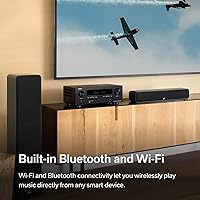
  • Wireless Connectivity: Built-in dual-band Wi-Fi and Bluetooth 4.2 enable wireless streaming, with AirPlay 2 support for Apple device integration.
  • Multi-Room Platform: HEOS is built in natively, allowing multi-room audio distribution to compatible Denon and HEOS speakers without any additional hardware or bridge device.
  • Smart Home: Compatible with Amazon Alexa for voice control and supports Apple HomeKit for integration into HomeKit-based smart home automation routines.
  • Streaming Services: Natively supports Spotify, Tidal, Pandora, TuneIn, Amazon Music, and Deezer directly through the HEOS platform without requiring a separate streaming device.
  • Gaming Features: Supports Variable Refresh Rate (VRR), Auto Low Latency Mode (ALLM), and Quick Frame Transport (QFT) for reduced input lag and smoother visuals on next-gen consoles.
  • Analog Inputs: Includes a dedicated phono input for turntable connectivity, plus standard RCA analog inputs for legacy audio sources.
  • Digital Inputs: Provides optical and coaxial digital audio inputs alongside a front-panel USB port for media playback from external drives.
  • Dimensions: Measures 20.5 inches wide, 16.9 inches deep, and 9.6 inches tall, requiring adequate ventilation clearance in an AV cabinet.
  • Weight: Weighs 20.9 pounds, which is typical for a 7-channel receiver and should be factored in when planning shelf or rack placement.
  • Voice Assistants: Supports Amazon Alexa built-in and is also compatible with Google Assistant and Apple Siri via AirPlay 2 and the HEOS app.
  • Release Date: First made available in September 2022, with subsequent firmware updates issued through 2023 and into 2024 addressing compatibility and feature refinements.
  • Included Accessories: Ships with an Audyssey calibration microphone, remote control, two AAA batteries, AM and FM antenna, and a quick-start setup guide.
  • Power Consumption: Rated at approximately 570 watts maximum power consumption under full load, with an auto-standby mode that reduces draw significantly during idle periods.
  • Impedance Support: Rated for 4 to 16 ohm speaker loads, making it compatible with a wide range of passive loudspeakers from entry-level to mid-tier audiophile brands.

Related Reviews
Denon AVR-S760H
Denon AVR-S760H
79%
88%
Audio Performance
84%
Setup & Installation
79%
HDMI & Video Handling
86%
Gaming Features
81%
Wireless Connectivity
More
Denon AVR-X1800H
Denon AVR-X1800H
81%
88%
Audio Performance
91%
Video Passthrough Quality
86%
Setup & Installation
74%
HEOS Multi-Room Streaming
83%
Build Quality & Design
More
Denon AVR-X6800H
Denon AVR-X6800H
80%
94%
Audio Performance
92%
Surround Sound & 3D Audio
89%
Room Calibration (Audyssey)
83%
HDMI & Video Handling
86%
Gaming Performance
More
Denon AVR-X2800H
Denon AVR-X2800H
78%
91%
Audio Performance
83%
Dolby Atmos & Spatial Audio
88%
Build Quality
92%
HDMI Connectivity
58%
Setup & Initial Configuration
More
Denon AVR-S670H 5.2 Ch Home Theater Receiver
84%
88%
Value for Money
90%
Video Quality
87%
Ease of Setup
85%
Audio Quality
89%
Connectivity
More
Denon AVR-A10H
Denon AVR-A10H
81%
94%
Audio Performance
92%
Build Quality
96%
Channel Flexibility
58%
Setup & Ease of Use
89%
Gaming Performance
More
Denon AVR-X3800H 9.4-Ch 8K UHD AV Receiver
85%
95%
Audio Quality
93%
Video Quality
72%
Setup & Installation
89%
Connectivity Options
77%
User Interface & Controls
More
Denon AVR-X2700H
Denon AVR-X2700H
79%
91%
Audio Performance
88%
Gaming Performance
86%
Video Passthrough Quality
84%
Build Quality & Design
76%
Setup & Calibration
More
CyberPower AVRG750U AVR UPS System
82%
92%
Value for Money
85%
Setup & Installation
64%
Battery Runtime
88%
Surge Protection
80%
Design & Build Quality
More
Denon HEOS Amp Wireless Amplifier
86%
91%
Sound Quality
89%
Connectivity Options
94%
Ease of Setup
87%
Multi-Room Performance
78%
App Usability
More

FAQ

Yes, both consoles connect via HDMI and the receiver automatically activates Auto Low Latency Mode when it detects a gaming signal, so you don't need to manually switch any settings. Variable Refresh Rate also works natively on compatible displays connected through the receiver's HDMI output.

Technically yes, but with a limitation — there are two HDMI outputs, however only one can output an active signal at a time in standard use. Some users work around this by using the zone 2 output, but a simultaneous dual-display setup with full audio routing to both is not straightforwardly supported.

For a small to medium-sized room — roughly up to 300 to 400 square feet — the 90 watts per channel is comfortably adequate. In larger, open-plan spaces or with less efficient speakers, you may find it working near its limits at high volumes, and a more powerful receiver would serve you better in that scenario.

Not necessarily — this AV receiver includes a built-in phono preamp that handles standard moving magnet cartridges without any extra hardware. If you have a higher-end turntable with a moving coil cartridge, an external phono stage is worth considering, but for most everyday turntable setups, the built-in input is perfectly functional.

The process is guided on-screen and takes roughly 20 to 30 minutes. You place the included microphone at your primary listening position — and optionally a few more positions around the room — and the receiver plays test tones, then automatically adjusts speaker levels, distance, and frequency response. Most people who have never set up a receiver before report finding it straightforward.

Yes — through the HEOS platform, you can connect Spotify directly to the receiver rather than streaming from your phone. Once set up, the receiver pulls the audio independently, so you can lock your phone or use it for something else while music continues playing.

AirPlay 2 is fully supported, which means you can group this receiver with HomePod mini speakers or other AirPlay 2 devices and play synchronized audio across multiple rooms directly from your iPhone or iPad.

Three of the six HDMI inputs are rated for 8K/60Hz and 4K/120Hz with full HDMI 2.1 bandwidth. A small number of early units required a firmware update to unlock reliable 4K/120Hz behavior, so keeping the firmware current is recommended if you plan to use this for high-frame-rate gaming.

No additional hardware is required if you are using HEOS-compatible speakers. You download the HEOS app, connect the receiver and your other HEOS or Denon Home speakers to the same Wi-Fi network, and group them within the app. The whole process typically takes under ten minutes on a stable home network.

All three are credible choices in this price bracket, but each has a different emphasis. This Denon unit offers more HDMI inputs, stronger gaming-specific features, and the HEOS multi-room platform as differentiators. The Yamaha is often preferred for its build quality and clean stereo performance, while the Marantz appeals to buyers who prioritize a more refined sound character and premium fit and finish. Which one wins depends entirely on what you value most in your specific setup.