Overview

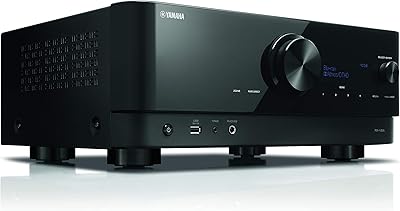
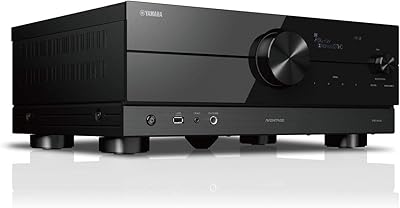
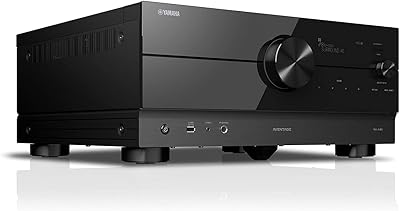
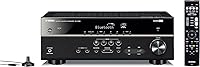
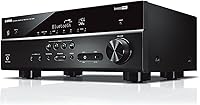
The Yamaha RX-V385 is Yamaha's no-nonsense entry point into 5.1-channel home theater, built for people who want real surround sound without drowning in setup complexity or overspending. It sits comfortably in the mid-range tier — enough features to feel complete, not so many that you need a manual just to watch a movie. The included YPAO microphone handles room calibration automatically, which is a genuine relief if you have never tuned a receiver before. Bluetooth is on board for casual music streaming. Worth noting: if you already know you want Wi-Fi or multi-room audio, the step-up RX-V4A is worth the extra spend.

Features & Benefits

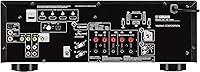
Four HDMI inputs handle a modern living room without any switching hassle — you can keep a gaming console, Blu-ray player, streaming box, and cable box all plugged in at once. The passthrough supports 4K at 60Hz with HDR10, Dolby Vision, and HLG, so your TV gets the full picture signal intact. On the audio side, Dolby TrueHD and DTS-HD decoding means lossless sound from Blu-ray discs rather than compressed formats. The 70 watts per channel is plenty for a medium-sized room at comfortable listening volumes. One honest flag: there is no Wi-Fi. Bluetooth works fine for phone streaming, but if you expected AirPlay or Spotify Connect, this receiver does not have them.

Best For

This AV receiver is a natural fit for anyone putting together their first proper home theater on a realistic budget. Pair it with a basic 5.1 speaker set and a 4K TV and you have a complete, capable system without cutting corners on the essentials. It works especially well in apartments and mid-sized rooms, where 70 watts per channel produces more volume than most people will ever need. If you want simple IR remote control with no app dependency, that simplicity is baked in here. That said, it is not the right call for someone chasing Dolby Atmos height channels, 8K video, or whole-home audio distribution — those needs point clearly toward a higher-tier receiver.

User Feedback

With over 3,000 ratings averaging 4.5 stars, owner satisfaction for this Yamaha receiver is hard to argue with. The most consistent praise is for easy setup and the build quality you expect from Yamaha — solid, no flex, feels like it belongs on a proper AV rack. Sound quality gets regular compliments too, especially from buyers upgrading from a soundbar. The recurring frustrations are worth knowing upfront: Bluetooth range is modest, zone control is absent entirely, and a meaningful number of owners eventually traded up specifically to get Wi-Fi or Atmos support. YPAO calibration gets mixed responses — most find it accurate, but some note it struggles in irregularly shaped rooms.

Pros

  • Yamaha RX-V385 brings genuine brand reliability at a price that does not require compromise on core audio quality.
  • YPAO auto-calibration makes proper speaker setup accessible even for complete home theater beginners.
  • Lossless Dolby TrueHD and DTS-HD Master Audio decoding ensures Blu-ray discs sound as intended.
  • Four HDMI inputs handle a full living room device lineup without any manual cable swapping.
  • 4K HDR passthrough with Dolby Vision and HDR10 keeps the video chain intact for modern TVs.
  • Build quality feels genuinely solid — this is not a unit that rattles or runs hot during long sessions.
  • Seventy watts per channel is more than sufficient for apartment-sized and medium-sized room listening.
  • Bluetooth pairing for casual phone or tablet streaming works reliably for everyday background audio.
  • Over 3,000 verified owners averaging 4.5 stars reflects real-world satisfaction that is hard to dismiss.
  • The adjustable audio delay of up to 500ms gives practical flexibility for lip-sync correction across different displays.

Cons

  • No Wi-Fi means AirPlay, Spotify Connect, and network streaming are simply not available on this receiver.
  • Bluetooth range is modest — moving to an adjacent room frequently drops the connection mid-playback.
  • Dolby Atmos and DTS:X are not supported, so height-channel audio tracks will not decode properly.
  • No HDMI 2.1 means gamers lose 4K/120Hz, VRR, and ALLM on current-generation consoles.
  • Zone control is completely absent, making multi-room audio setups impossible without additional hardware.
  • The front panel display is small and difficult to read from a normal seating distance.
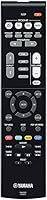
  • The included remote feels cheap and has no backlight, making it frustrating to use in a dark room.
  • YPAO calibration can misread acoustics in open-plan or irregularly shaped rooms, requiring manual correction afterward.
  • Only one HDMI output and no eARC limits flexibility for more complex display or soundbar configurations.
  • As a 2018 platform, no firmware update can add missing modern features — what you buy is what you get.

Ratings

The Yamaha RX-V385 earns its strong reputation across thousands of verified owner reviews, and our AI-generated scores reflect exactly that breadth — drawn from global buyer feedback with spam, bot activity, and incentivized reviews actively filtered out. Across more than a dozen categories, the scores capture both what this AV receiver genuinely gets right and the real-world friction points that honest buyers report after months of daily use.

Audio Quality
83%
For a receiver in this price tier, the sound output consistently impresses first-time home theater owners. Lossless decoding via Dolby TrueHD and DTS-HD Master Audio means Blu-ray playback sounds rich and detailed, with a clean, controlled soundstage across all five channels.
At higher volumes, some listeners notice a slight thinning in the midrange compared to pricier separates. It is not a flaw that casual viewers would catch, but dedicated listeners playing back demanding orchestral or multichannel music content may want more headroom.
Ease of Setup
91%
The YPAO automatic calibration microphone is genuinely one of the most beginner-friendly features here — you plug it in, run the setup routine, and the receiver adjusts speaker levels and distances on its own. Most owners report having a working 5.1 system within 30 minutes of unboxing.
The on-screen menus can feel dated and navigating deeper settings with the IR remote takes patience. Users coming from smart TV interfaces sometimes find the visual design of the setup screens underwhelming and harder to parse than expected.
Build Quality
88%
Yamaha's reputation for solid hardware construction carries through here. The chassis feels dense and well-assembled, the binding post terminals grip speaker wire firmly, and nothing about the unit feels like it was built to a price. Owners regularly comment that it simply feels like a professional piece of kit.
The front panel is utilitarian to the point of being bare — minimal labeling and a small display that is hard to read from across the room. The included remote is functional but feels plasticky relative to the receiver itself.
Value for Money
86%
Considering the Yamaha brand reliability, lossless audio decoding, four HDMI inputs, and 4K HDR passthrough all in one package, the price point lands well for what you actually get. Buyers upgrading from a soundbar or a cheaper no-name receiver consistently describe it as a worthwhile leap.
The absence of Wi-Fi at this price stings a little when competing receivers from other brands include it. Buyers who discover that limitation after purchase often feel the value equation shifts, particularly if wireless streaming was part of their intended use.
Connectivity & Inputs
79%
21%
Four HDMI inputs cover the typical living room lineup — a 4K streaming stick, a gaming console, a Blu-ray player, and a cable or satellite box can all stay connected simultaneously. The 4K/60p passthrough with HDR10 and Dolby Vision support keeps the unit relevant alongside modern TVs.
There is only one HDMI output, and the lack of eARC means audio return from a smart TV is limited to ARC. Anyone running a more complex setup with multiple displays or needing advanced HDMI 2.1 features will hit a ceiling quickly.
Wireless Performance
54%
46%
Bluetooth connectivity handles casual phone streaming adequately. Pairing is straightforward, and for background music or podcast listening it works without complaint. Owners who just want to occasionally stream from a phone find it perfectly serviceable for that narrow use case.
There is no Wi-Fi, which rules out AirPlay, Spotify Connect, and any network streaming without a separate device. Bluetooth range is also modest — moving to another room often drops the connection, and multiple owners specifically flagged this as a disappointment after purchase.
Room Calibration (YPAO)
77%
23%
In typical rectangular living rooms, YPAO does a commendable job of balancing speaker output levels and setting distances automatically. Most owners with standard room shapes report a noticeable improvement in imaging and dialogue clarity after running the calibration routine.
In L-shaped rooms, rooms with hard reflective surfaces, or open-plan spaces, YPAO can misread the acoustic environment and produce uneven results. A handful of owners report needing to manually correct speaker levels after calibration in non-standard room layouts.
Power Output & Volume Headroom
74%
26%
Seventy watts per channel is more than enough to fill a 300 to 400 square foot room at realistic listening levels. For typical movie watching and TV use, the amplifier section never feels strained, and background noise in the signal is essentially inaudible.
Large rooms or high-efficiency speakers that expose the amplifier at sustained high volumes reveal the limits of this power rating. Buyers with bigger spaces or plans to use more demanding speaker loads should consider stepping up to a higher-output model.
4K & HDR Video Passthrough
82%
18%
The HDMI implementation handles 4K at 60Hz with full 4:4:4 color, plus HDR10, Dolby Vision, and HLG — which covers the vast majority of 4K content on streaming services and Blu-ray. Most owners report zero issues passing video signals through to their TVs.
There is no 4K/120Hz or VRR support, which matters for gaming consoles like the PS5 or Xbox Series X running at their full capabilities. Gamers who want to future-proof their setup will eventually need a receiver with HDMI 2.1 bandwidth.
Remote Control
61%
39%
The IR remote covers all basic functions — input switching, volume, and menu navigation — without requiring any app or Bluetooth pairing. For users who just want a simple physical controller, it handles daily use without much friction.
The remote feels cheap in hand, the button layout is dense and not particularly intuitive, and there is no backlighting for dark room use. HDMI-CEC works as a partial workaround for TV remote control, but the included remote itself is a weak point.
Audio Format Support
87%
Dolby TrueHD, Dolby Digital Plus, DTS-HD Master Audio, and DTS are all decoded natively. For anyone with a Blu-ray player and a physical disc collection, this covers every major lossless and lossy format without needing external processing.
There is no Dolby Atmos or DTS:X object-based audio support — height channels simply are not part of this receiver's design. Buyers drawn in by the Yamaha name who later discover their Blu-ray discs include Atmos tracks that will not decode properly tend to be frustrated.
Zone Control & Multi-Room Audio
38%
62%
For single-room use, the lack of zone control is irrelevant, and the receiver performs its primary job without any compromise. Buyers who explicitly want a dedicated single-room system will not miss what is not there.
There is no zone B output and no multi-room capability whatsoever. Anyone hoping to pipe audio to a second room — a patio, bedroom, or kitchen — will need to look elsewhere. This is a hard limitation, not a setting buried in a menu.
Gaming Performance
66%
34%
The audio delay adjustment range of 0 to 500ms gives gamers flexibility to sync sound to their display manually, and the clean amplifier section reproduces game audio with solid positional accuracy. For casual console gaming, it performs without obvious problems.
No VRR, no ALLM, and no 4K/120Hz passthrough mean this receiver is already behind current-generation gaming console requirements. Dedicated gamers who plan to use a PS5 or Xbox Series X at full spec will find the HDMI implementation a bottleneck.
Reliability & Longevity
89%
Yamaha's track record for AV receiver durability is well-established, and owner reports back it up. Units purchased at launch in 2018 are still in regular service without reported hardware failures, and the thermal management keeps the chassis cool even during extended use.
Being a 2018 model, the hardware platform is now showing its age in terms of HDMI specification and format support. There are no firmware updates that can add missing features like eARC or Atmos, so its long-term relevance depends entirely on how the buyer's needs evolve.
Packaging & Unboxing Experience
72%
28%
The unit arrives well-protected, and Yamaha includes the YPAO calibration microphone, a basic remote, and AAA batteries in the box. Everything needed to get started on day one is present, which new buyers appreciate.
The printed quick-start guide is minimal, and the full manual is a dense PDF that intimidates first-time receiver owners. A more visual, step-by-step setup guide would reduce the number of buyers who struggle with initial speaker wiring and input configuration.

Suitable for:

The Yamaha RX-V385 is a natural fit for anyone building their first real home theater system and wanting the reassurance of a trusted brand without taking a financial leap of faith. If you are stepping up from a soundbar or a basic two-channel setup, this receiver delivers a genuine surround sound experience that will feel like a meaningful upgrade. It works particularly well in apartments and medium-sized living rooms, where 70 watts per channel produces plenty of volume without ever feeling strained. Cord-cutters pairing it with a 4K TV and a modest 5.1 speaker package will find the four HDMI inputs, 4K HDR passthrough, and YPAO auto-calibration cover everything they need out of the box. Users who prefer a straightforward, no-app-required setup — just connect, calibrate, and watch — will appreciate the simplicity this receiver is clearly designed around.

Not suitable for:

Buyers who plan to stream music wirelessly via AirPlay, Spotify Connect, or any network audio protocol should look elsewhere — the Yamaha RX-V385 has no Wi-Fi, and that is not a limitation that can be patched or worked around within the unit itself. If Dolby Atmos or DTS:X is on your list, this receiver cannot decode object-based audio formats, so any Atmos track on a Blu-ray or streaming service will be downmixed rather than rendered with height information. Gamers running a PS5 or Xbox Series X at full capability will hit a hard wall with the HDMI implementation, which lacks 4K/120Hz passthrough, VRR, and ALLM. Anyone with a large room, high-demand speakers, or ambitions to run audio in a second zone will also find this receiver underpowered and architecturally limited for those use cases. If your needs are likely to grow toward any of these features within the next two or three years, spending more now on a higher-tier model is the smarter long-term move.

Specifications

  • Channel Configuration: This receiver supports a 5.1-channel surround sound layout, accommodating a front left, center, front right, surround left, and surround right speaker plus a dedicated subwoofer output.
  • Power Output: Rated at 70 watts per channel into 8 ohms at 0.09% THD with two channels driven, providing ample clean amplification for small to medium-sized rooms.
  • HDMI Inputs: Four HDMI inputs and one HDMI output are included, all compliant with HDCP 2.2 and supporting HDR10, Dolby Vision, HLG, and BT.2020 wide color gamut.
  • 4K Passthrough: Video passthrough supports 4K resolution at up to 60Hz with full 4:4:4 chroma sampling, preserving color fidelity from source to display without processing degradation.
  • Audio Decoding: Native decoding covers Dolby TrueHD, Dolby Digital Plus, DTS-HD Master Audio, and standard DTS and Dolby Digital for comprehensive lossless and lossy format support.
  • Wireless Connectivity: Bluetooth is the sole wireless technology onboard; there is no Wi-Fi, AirPlay, or network streaming capability built into the unit.
  • Room Calibration: YPAO (Yamaha Parametric room Acoustic Optimizer) auto-calibration is included, using a supplied microphone to measure and adjust speaker levels, distances, and equalization automatically.
  • Audio Delay: A manually adjustable audio delay range of 0 to 500 milliseconds is available to correct lip-sync issues between the audio and video output on any connected display.
  • Speaker Terminals: Five-way binding post terminals are used for all speaker connections, accepting bare wire, pin connectors, banana plugs, and spade lugs for flexible speaker cable compatibility.
  • Zone Control: No zone B or secondary audio zone output is available on this model; it is a single-room receiver only.
  • Remote Control: An infrared (IR) remote control is included; HDMI-CEC is also supported, allowing basic control of connected devices through the receiver via a single remote.
  • Dimensions: The unit measures 17-1/8″ wide by 6-3/8″ tall by 12-3/8″ deep, fitting standard AV rack shelves and most entertainment center cavities.
  • Weight: The receiver weighs 17 pounds, reflecting a solid all-metal chassis construction typical of Yamaha's AV hardware.
  • Batteries Required: Two AAA batteries are required for the remote control and are included in the box at the time of purchase.
  • HDMI-CEC Support: HDMI-CEC is supported, enabling interconnected control between the receiver and compatible TVs or source devices over the HDMI connection.
  • Subwoofer Output: One dedicated RCA subwoofer pre-out is provided for connecting a powered subwoofer as part of the 5.1 channel configuration.
  • Availability Date: The Yamaha RX-V385 was first made available in April 2018 and has not been discontinued by the manufacturer as of the time of this writing.
  • Manufacturer: Designed and manufactured by Yamaha Corporation, a Japanese audio and electronics company with decades of experience in professional and consumer AV equipment.

Related Reviews
Yamaha RX-V6A 7.2-Channel AV Receiver
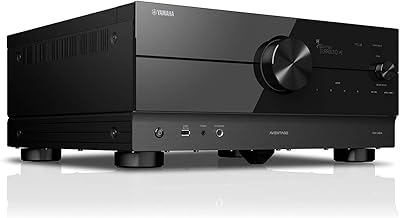
84%
94%
Sound Quality (Dolby Atmos & DTS:X)
67%
Ease of Setup
91%
Video Performance (8K/4K pass-through)
89%
Connectivity (HDMI, Wi-Fi, Bluetooth)
88%
Multi-Room Audio (MusicCast)
More
Yamaha RX-V4A
Yamaha RX-V4A
80%
91%
Setup & Onboarding
79%
Sound Quality
83%
HDMI & Video Connectivity
88%
Streaming & Smart Features
74%
Build Quality & Design
More
Yamaha RX-A6A AVENTAGE 9.2-Channel AV Receiver
86%
94%
Audio Performance
91%
Video Quality (8K/4K)
83%
Ease of Setup
88%
Connectivity Options
89%
Sound Calibration (YPAO R.S.C.)
More
Yamaha RX-A8A AVENTAGE 11.2-Channel AV Receiver
85%
94%
Audio Performance
89%
Connectivity Options
61%
Setup Complexity
91%
Gaming Features (4K/120Hz)
92%
Room Calibration (YPAO R.S.C.)
More
Yamaha RX-A2A
Yamaha RX-A2A
78%
91%
Sound Quality
88%
Build Quality
89%
Room Calibration (YPAO)
84%
Gaming Performance
82%
Streaming & Wireless Connectivity
More
Yamaha RX-A4A AVENTAGE 7.2-Channel AV Receiver
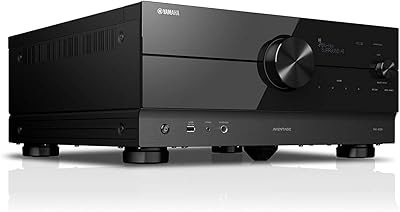
78%
93%
Audio Performance
91%
Room Calibration (YPAO)
88%
HDMI & Video Handling
86%
Gaming Performance
94%
Immersive Audio Format Support
More
Yamaha CM500 Headset
86%
94%
Microphone Clarity
85%
Comfort & Fit
90%
Build Quality
82%
Noise Isolation
88%
Sound Accuracy
More
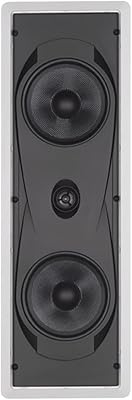
Yamaha NSIW960 In-Wall Speaker
87%
88%
Sound Quality
91%
Ease of Installation
74%
Bass Performance
87%
Build Quality
95%
Size & Fit
More
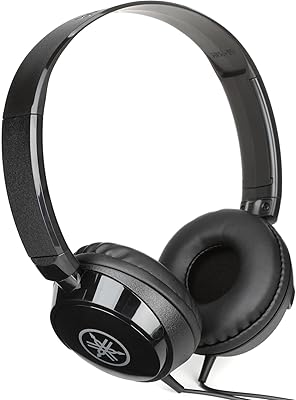
Yamaha HPH-50B Headphones
81%
89%
Comfort for Long Sessions
87%
Sound Quality & Clarity
82%
Build Quality & Durability
91%
Portability & Weight
55%
Noise Isolation
More
Yamaha HPH-100WH Headphones
84%
87%
Sound Quality
92%
Comfort & Fit
88%
Build Quality
91%
Value for Money
80%
Cable Length & Flexibility
More

FAQ

No, it does not. The Yamaha RX-V385 is a 5.1-channel receiver and cannot decode object-based formats like Dolby Atmos or DTS:X. If those are on your must-have list, you will need to look at a higher-tier model in Yamaha's lineup or a competing receiver that explicitly lists Atmos support.

Not directly — this AV receiver has no Wi-Fi, so there is no Spotify Connect, AirPlay, or any built-in streaming service. Your best option is to connect your phone or tablet via Bluetooth, which works reliably for casual listening, though the range is limited to roughly the same room as the receiver.

Yes, it handles 4K passthrough at up to 60Hz with HDR10, Dolby Vision, and HLG all supported. Your TV will receive the full HDR signal intact as long as your source device and HDMI cables are also capable of carrying it.

You get four HDMI inputs, so you can keep four devices permanently connected — for example, a gaming console, a 4K Blu-ray player, a streaming stick, and a cable box — and switch between them without any cable swapping.

For most buyers, it makes a real difference. You place the included microphone at your listening position, run the setup routine, and the receiver automatically adjusts speaker output levels and timing to match your room. It works best in standard rectangular spaces — if your room has an unusual shape or lots of hard reflective surfaces, the results can be inconsistent and you may need to make a few manual corrections afterward.

The rated output is measured at 8 ohms, and the receiver can also drive 6-ohm speakers without issue. Running 4-ohm speakers is not officially recommended and could cause the protection circuit to trip during sustained high-volume playback, so it is best to stick with 6- or 8-ohm rated speakers.

No — this Yamaha receiver has no zone B output and no multi-room audio capability at all. It is strictly a single-room device. If running audio in a second room is important to you, you will need to step up to a model that specifically lists zone B or Zone 2 support.

It will work with both consoles, but with limitations. The HDMI implementation supports 4K at up to 60Hz, not the 4K/120Hz, VRR, or ALLM that current-generation consoles support at full capability. For everyday gaming at 4K/60Hz it is perfectly functional, but if you want to take full advantage of your console's output, you will eventually need a receiver with HDMI 2.1.

It is one of the more beginner-friendly options in its class. The YPAO auto-calibration handles the most intimidating part — speaker level balancing and distance measurement — automatically. Most first-time owners report having everything connected and calibrated within 30 to 45 minutes. The main hurdle is typically figuring out speaker wire polarity, which the manual walks through clearly.

Yes, it includes analog RCA audio inputs, so you can connect a CD player, a turntable with a built-in phono preamp, or any other analog source. If your turntable does not have a built-in preamp, you will need an external phono preamp between the turntable and the receiver, as there is no dedicated phono stage onboard.