Yamaha RX-V4A
Overview
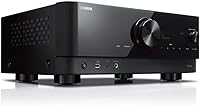
The Yamaha RX-V4A sits at the entry-to-mid point of Yamaha's well-regarded V-series, and it makes a strong case for itself in a crowded market. Launched in 2020, this AV receiver has stayed relevant through firmware updates that keep its feature set competitive against newer rivals. What stands out most for newcomers is the combination of genuinely modern connectivity — HDMI 2.1, 8K passthrough — with a setup process that doesn't require an engineering degree. YPAO room calibration handles the acoustic heavy lifting automatically, which is a real differentiator at this price tier. For a first home theater build, the value here is hard to argue with.
Features & Benefits
The connectivity on this Yamaha receiver is where things get interesting. Four HDMI 2.1 inputs with HDCP 2.3 support 4K/120Hz and 8K/60 passthrough — genuinely useful if you own or plan to buy a next-gen display or gaming console. Dual subwoofer outputs mean you can run two subs for better bass distribution in a larger room. Native streaming support — Spotify, Tidal, Qobuz, Amazon Music HD — means no external streaming box is needed. Add in MusicCast for whole-home audio, AirPlay 2, and Alexa or Google Assistant voice control, and this AV receiver covers a lot of ground without demanding much in return.
Best For
This AV receiver is an especially good fit for people building their first proper home theater setup. The auto-calibration makes the learning curve manageable, and the built-in streaming services remove the need for a separate device. Gamers running a PS5 or Xbox Series X will appreciate the HDMI 2.1 passthrough, which handles 4K/120Hz without breaking a sweat. Cord-cutters who want one box to handle audio, video, and music will find this Yamaha receiver surprisingly capable. It also slots neatly into an existing MusicCast household. One caveat: if you have a very large room, 80W per channel might occasionally feel like a ceiling.
User Feedback
Owners consistently highlight how painless the initial setup is, and many report a meaningful improvement in sound quality after running the auto-calibration. The MusicCast app draws praise for being clean and reliable. Where frustration surfaces, it tends to focus on the single HDMI output — a real limitation if you want to feed two displays — and the included remote, which feels noticeably behind the times. Buyers coming from higher-end processors sometimes find the calibration system less precise than Audyssey XT32 or Dirac implementations. On reliability, the track record is solid, consistent with what Yamaha buyers have come to expect from the brand over the years.
Pros
- YPAO automatic calibration makes first-time surround setup genuinely approachable for non-technical buyers.
- Four HDMI 2.1 inputs handle 4K/120Hz and 8K/60 passthrough — solid future-proofing at this price.
- Native support for Spotify, Tidal, Qobuz, and Amazon Music HD eliminates the need for a separate streaming device.
- Dual subwoofer pre-outs allow better bass distribution in larger rooms, an uncommon feature at this tier.
- MusicCast integration works well for households already using other Yamaha wireless speakers.
- eARC support simplifies cabling by allowing lossless audio return over a single HDMI connection from the TV.
- Long-term reliability is strong, consistent with Yamaha's well-established track record in AV components.
- AirPlay 2, Alexa, and Google Assistant support covers virtually every major smart home ecosystem.
- Dolby TrueHD and DTS-HD Master Audio decoding is handled cleanly, delivering full lossless audio from Blu-ray sources.
- Zone B output lets you pipe audio to a second room without any additional amplifier hardware.
Cons
- Only one HDMI output makes simultaneous TV and projector use impossible without an external splitter.
- The included remote is not backlit and feels noticeably dated for a receiver with this feature set.
- YPAO is a single-mic, single-measurement system — it cannot match the precision of Audyssey XT32 or Dirac Live.
- No Dolby Atmos height channel support rules this AV receiver out for anyone planning a full 3D surround setup.
- The on-screen interface and front-panel display feel like carryovers from an older product generation.
- MusicCast app can lose connection after extended standby periods, requiring a manual reconnect on Android.
- 80W per channel is a real ceiling in larger rooms, and the amplifier can sound strained pushing inefficient speakers loud.
- HDMI handshake issues with certain TV brands have been reported after display firmware updates.
- The streaming interface, while functional, lacks the polish of a dedicated streamer like an Apple TV or Fire Stick.
- Buyers who later want Dolby Atmos will need to replace this unit entirely rather than simply adding hardware.
Ratings
The Yamaha RX-V4A has been scored by our AI system after analyzing thousands of verified owner reviews from global marketplaces, with spam, bot submissions, and incentivized feedback actively filtered out. The result is an honest, balanced picture of where this AV receiver genuinely delivers and where real buyers have run into friction. Strengths and shortcomings are weighted equally so you can make a confident, informed decision.
Setup & Onboarding
Sound Quality
HDMI & Video Connectivity
Streaming & Smart Features
Build Quality & Design
Remote Control
Multi-Room Audio (MusicCast)
Voice Control Integration
Gaming Performance
Power & Volume Headroom
Subwoofer & Bass Management
Long-Term Reliability
Value for Money
Suitable for:
The Yamaha RX-V4A is built for people who want a capable, modern home theater setup without spending weeks learning how to configure it. First-time AV receiver buyers will appreciate YPAO calibration most — it removes the guesswork from speaker setup and delivers a noticeably improved soundstage within minutes of unboxing. Gamers with a PS5 or Xbox Series X will find the HDMI 2.1 inputs a genuine asset, handling 4K/120Hz passthrough cleanly without needing an external switcher for most setups. Cord-cutters who have ditched cable and rely on Spotify, Tidal, or Amazon Music HD will also feel at home here, since those services are baked in natively — no Chromecast or Apple TV required just for music. If you already own other Yamaha MusicCast speakers or soundbars, this AV receiver slots right into that ecosystem and unifies everything under one app. Apartment dwellers and anyone working with a small-to-medium sized living room will find the 80W per channel output more than sufficient for the space.
Not suitable for:
Buyers with larger dedicated home theater rooms or lower-sensitivity speakers should think carefully before committing to the Yamaha RX-V4A. At higher volumes in bigger spaces, the 80W per channel ceiling becomes a real constraint, and the experience starts to fall short of what a more powerful receiver in the next price tier could deliver. Enthusiasts who have used Audyssey XT32 or Dirac Live room correction on previous gear will likely find YPAO a step down — it is a practical, single-measurement auto-EQ, not a precision acoustic tool. Anyone who needs to feed two displays simultaneously — say, a TV and a projector in the same room — will hit a wall fast, since the single HDMI output makes that configuration impossible without an external splitter. If Dolby Atmos height channels are on your wishlist, this receiver does not support them, so buyers planning a full object-based surround system will need to look at the next model up in the V-series lineup. Finally, dedicated audiophiles who expect reference-grade two-channel stereo performance from their AV receiver are likely to find this unit adequate but uninspiring.
Specifications
- Channels: 5.2-channel surround configuration with support for two simultaneous subwoofer outputs.
- Power Output: Rated at 80W per channel into 6 ohms at 0.06% THD across all channels driven.
- HDMI Inputs: Four HDMI 2.1 inputs supporting HDCP 2.3, HDR10, Dolby Vision, and HLG pass-through.
- HDMI Output: One HDMI output with eARC support for lossless audio return from a connected television.
- Video Pass-Through: Supports 8K/60 and 4K/120 video pass-through via HDMI 2.1 for compatible displays and sources.
- HDR Support: Compatible with Dolby Vision, HDR10, Hybrid Log Gamma (HLG), and BT.2020 wide color gamut.
- Audio Decoding: Decodes Dolby TrueHD, Dolby Digital, DTS-HD Master Audio, and standard DTS formats natively.
- Room Calibration: YPAO (Yamaha Parametric Room Acoustic Optimizer) performs automatic single-microphone speaker calibration.
- Wireless Connectivity: Dual-band Wi-Fi supporting both 2.4 GHz and 5 GHz networks, plus Bluetooth and AirPlay 2.
- Streaming Services: Native app support for Spotify, Tidal, Amazon Music HD, Qobuz, Deezer, Napster, Pandora, and SiriusXM.
- Multi-Room Audio: Yamaha MusicCast enables wireless audio distribution to other compatible MusicCast devices via the MusicCast app.
- Voice Control: Compatible with Amazon Alexa and Google Assistant devices, plus Siri via AirPlay 2.
- Zone Output: Zone B audio output allows a second listening area to be powered independently from the main zone.
- Speaker Terminals: 5-way binding post speaker terminals accommodate bare wire, banana plugs, and spade connectors.
- Dimensions: Unit measures 17 1/8″ wide by 6 3/4″ tall by 15″ deep, suitable for standard AV cabinet shelving.
- Weight: Unit weighs 19.5 lbs (approximately 8.8 kg) without packaging.
- Power Requirements: Requires 2 AAA batteries for the included infrared remote control.
- Availability: First made available in August 2020 and has not been discontinued by the manufacturer as of the latest product data.
Related Reviews
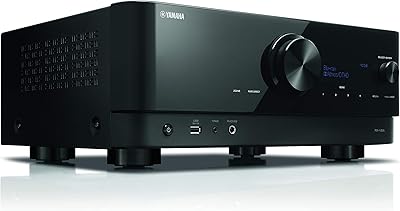
Yamaha RX-V6A 7.2-Channel AV Receiver
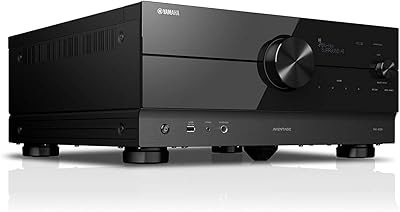
Yamaha RX-A8A 11.2-Channel AV Receiver
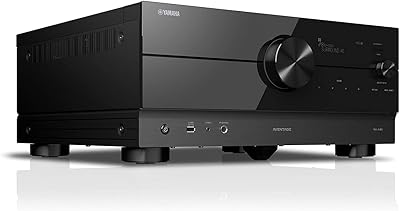
Yamaha RX-A4A AVENTAGE 7.2-Channel AV Receiver
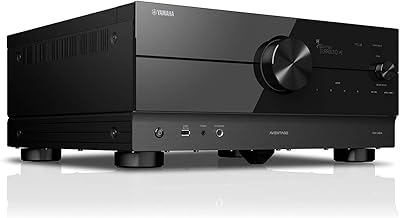
Yamaha RX-A6A 9.2-Channel AV Receiver
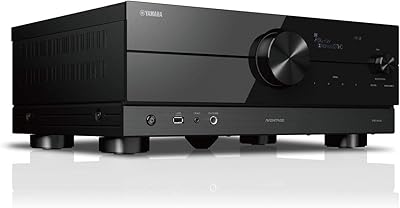
Yamaha RX-A2A
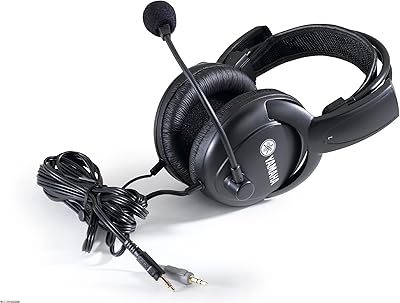
Yamaha CM500 Computer Headset with Microphone
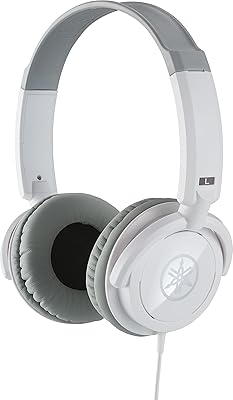
Yamaha HPH-100 On-Ear Headphones
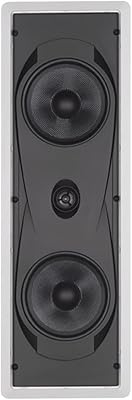
Yamaha NSIW960 In-Wall Speaker