Overview

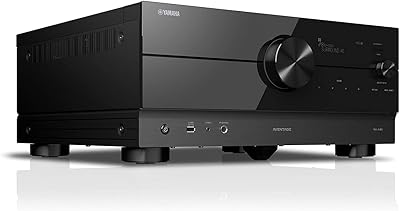
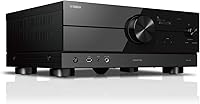
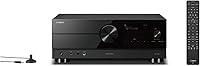
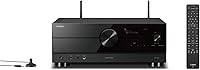
The Yamaha RX-A2A arrived in late 2020 as part of Yamaha's AVENTAGE lineup, slotting comfortably between the brand's entry-level receivers and its top-tier flagships. It's a 7.2-channel unit rated at 100 watts per channel, which is plenty for most living room setups without being overkill. The A.R.T. Wedge chassis — a signature anti-resonance design — gives it a physical rigidity you can feel the moment you pick it up. This is a receiver built with real intention, and it shows in how it handles everything from a quiet drama to a bombastic action sequence without losing composure.

Features & Benefits

What stands out most about this AVENTAGE receiver is how well its features translate into real listening experiences. Dolby Atmos and DTS:X decoding brings genuine height and depth to compatible content — you'll notice sound moving overhead in a way that cheaper receivers simply can't replicate. The YPAO R.S.C. room calibration is a highlight: run the multi-point measurement once, and the receiver automatically adjusts speaker levels, distances, and EQ to match your room. Surround:AI adds another layer, analyzing content in real time and tweaking the audio profile accordingly. On the connectivity side, AirPlay 2, Spotify Connect, MusicCast, and support for TIDAL, Qobuz, and Amazon Music HD mean your streaming options are well covered.

Best For

This Yamaha unit is a natural fit for anyone stepping up from a budget receiver who wants proper immersive audio without spending flagship money. Gamers with a PS5 or Xbox Series X will appreciate ALLM and VRR support, which reduces input lag automatically and keeps frame rates stable — no digging through settings menus. Apple users will find AirPlay 2 integration genuinely useful for day-to-day music listening. The MusicCast ecosystem works well if you already own other Yamaha devices, though mixing in third-party brands can be hit or miss. If you've always dreaded speaker calibration, the multi-point YPAO setup removes that headache almost entirely.

User Feedback

Owners consistently praise the sound staging and imaging, particularly on well-recorded music and Atmos-mixed films. The build quality earns repeat compliments too — this doesn't feel like a unit that will rattle loose after a year of use. On the critical side, the Yamaha app has drawn complaints about reliability, with MusicCast occasionally dropping connections or requiring restarts to reconnect. A few buyers have flagged the HDMI input limitation — only three of the seven inputs handle 4K/120Hz or 8K, so gamers need to plan which port they use. The remote and on-screen menus feel functional but dated for the price, which is a fair gripe.

Pros

  • Dolby Atmos and DTS:X decoding delivers convincing overhead audio in a properly configured 7.1 or 5.1.2 setup.
  • YPAO R.S.C. multi-point room calibration produces genuinely impressive results with minimal user effort.
  • ALLM support automatically activates low-latency mode for connected gaming consoles — no manual switching needed.
  • AirPlay 2 integration works reliably and consistently for Apple device users streaming daily music.
  • The A.R.T. Wedge chassis feels substantially built compared to most competitors at this price tier.
  • All seven HDMI inputs support 4K/60Hz with Dolby Vision and HDR10+, covering virtually every current source device.
  • High-resolution streaming services including TIDAL, Qobuz, and Amazon Music HD are supported natively.
  • Zone 2 audio output lets you extend sound to a second room without buying a separate amplifier.
  • Roon Tested certification makes this AVENTAGE receiver a practical hub for dedicated music listeners using Roon.
  • Surround:AI adapts audio processing across different content types without requiring manual DSP mode changes.

Cons

  • Only three of the seven HDMI inputs support 4K at 120Hz or 8K passthrough — a fact not clearly communicated at purchase.
  • The companion app feels dated and unreliable for a product at this price, frustrating users who prefer app-based control.
  • MusicCast multi-room performance becomes inconsistent when non-Yamaha devices are added to the ecosystem.
  • The physical remote uses budget-grade plastic that feels mismatched against the premium build of the receiver itself.
  • On-screen menu navigation is functional but slow and visually outdated compared to rivals from Denon and Marantz.
  • Firmware updates have occasionally introduced HDMI handshake issues that required a factory reset to resolve.
  • Ventilation design can cause the unit to run warm in enclosed AV cabinets with limited airflow clearance.
  • The MusicCast app interface has not kept pace with modern UX standards, requiring occasional re-pairing after updates.

Ratings

Our AI rating system analyzed thousands of verified global user reviews for the Yamaha RX-A2A, actively filtering out incentivized submissions and bot-generated feedback to surface what real buyers actually experience. The scores below reflect a balanced picture of where this AVENTAGE receiver genuinely excels and where it falls short of expectations — no glossing over the rough edges.

Sound Quality
91%
Owners consistently describe the soundstage as wide and well-defined, especially with Dolby Atmos content where height channels create a convincing sense of space overhead. On stereo music, the clarity across the frequency range earns praise even from buyers with high-end speaker setups who expected to outgrow the receiver quickly.
At very high volumes in larger rooms, some users notice a slight compression in dynamic range compared to higher-powered flagship units. It is not a dealbreaker for most, but buyers with large, acoustically demanding spaces should factor this in before purchasing.
Build Quality
88%
The A.R.T. Wedge chassis gives this Yamaha unit a noticeably solid feel — buyers frequently comment that it feels more substantial than competitors at a similar price point. The front panel controls are firm and well-spaced, and the overall fit and finish projects confidence that it will hold up over years of daily use.
A small number of users have reported that the ventilation design runs the unit warmer than expected in enclosed AV cabinets, requiring careful placement for airflow. The remote, while functional, feels plasticky relative to the premium impression the chassis itself makes.
Room Calibration (YPAO)
89%
The multi-point YPAO R.S.C. calibration is one of the most frequently praised aspects across user reviews. Buyers who had never attempted manual speaker setup found the process straightforward and were genuinely surprised by how much the automated EQ improved their sound in difficult room shapes.
A subset of users with complex speaker arrangements — particularly those running height channels at unusual angles — found the YPAO results needed manual fine-tuning afterward. The calibration microphone is also not the most sensitive, which can produce inconsistent results in very reverberant rooms.
Gaming Performance
84%
ALLM support means the receiver automatically switches to low-latency mode when a game console is detected, which is a genuine quality-of-life improvement for PS5 and Xbox Series X owners who switch frequently between movies and gaming. VRR passthrough keeps things smooth during fast-paced gameplay on compatible displays.
Only three of the seven HDMI inputs support 4K at 120Hz or 8K passthrough, which catches some buyers off guard after assuming all ports were equal. Gamers running multiple next-gen consoles need to plan their input routing carefully, and this limitation is not clearly communicated at the point of purchase.
Streaming & Wireless Connectivity
82%
18%
The breadth of supported streaming services — TIDAL, Qobuz, Amazon Music HD, Spotify Connect, and more — means most buyers find their preferred platform already integrated without needing a separate streamer. AirPlay 2 works reliably for Apple households, allowing iPhone and Mac audio to route directly with minimal setup.
Wi-Fi connectivity, while generally stable, has produced occasional dropout reports in homes with congested 2.4GHz networks. A wired Ethernet connection resolves this for most users, but those relying purely on wireless in larger homes may encounter intermittent hiccups.
MusicCast Multi-Room Audio
71%
29%
Within an all-Yamaha ecosystem, MusicCast works as advertised — syncing audio to compatible soundbars, speakers, and other AVENTAGE receivers with reasonable reliability. Users who had already invested in Yamaha products found the multi-room experience a genuine convenience for whole-home audio.
Buyers attempting to mix MusicCast with third-party smart speakers or receivers ran into compatibility friction that required workarounds. The MusicCast app itself has drawn consistent criticism for its dated interface and occasional need to re-pair devices after firmware updates, which undermines the premium experience the hardware promises.
HDMI & Video Passthrough
83%
All seven HDMI inputs support 4K at 60Hz with HDR formats including Dolby Vision, HDR10+, and HLG, which covers the vast majority of real-world use cases without any configuration needed. eARC on the output works reliably with most modern televisions, simplifying audio return from smart TV apps.
The tiered HDMI 2.1 implementation — where only three inputs support the higher bandwidth modes — is a recurring source of buyer frustration, particularly for those who discover the limitation after setup. Yamaha could have communicated this distinction more clearly in product materials.
App Experience
58%
42%
The AV Controller app handles basic functions adequately — input switching, volume, and zone control work without major issues for most users. Initial setup guidance within the app is cleaner than some competing apps in the category.
Beyond the basics, the app feels unpolished for a product at this price tier. Users report sluggish response times, occasional connection failures requiring an app restart, and an interface that has not kept pace with modern UX standards. Several reviewers noted they reverted to the physical remote out of frustration.
Value for Money
79%
21%
Compared to similarly priced competitors, this AVENTAGE receiver packs a strong combination of audio processing, calibration capability, and connectivity into one box. Buyers who did their research generally feel the feature-to-price ratio holds up well against rivals from Denon and Marantz in the same tier.
A portion of buyers feel the asking price is slightly aggressive given the app shortcomings and the tiered HDMI 2.1 support. Those who expected a fully flagship-level experience in every dimension sometimes express mild disappointment once the initial enthusiasm settles.
Setup & Usability
76%
24%
The initial hardware setup is straightforward, and the YPAO calibration makes the acoustic configuration feel approachable for first-time AV receiver buyers. Yamaha's on-screen setup wizard covers the basics in a logical sequence that most users complete without needing the manual.
The on-screen menu system feels dated compared to rivals with more visually refined interfaces. Navigating advanced DSP settings or fine-tuning speaker crossover points requires patience and a willingness to dig through nested menus, which casual users often find discouraging.
Remote Control
62%
38%
The remote covers all essential functions and has a logical layout that experienced AV users will adapt to quickly. Backlighting is present, which is appreciated in dark home theater environments.
The build quality of the remote does not match the receiver itself — the plastic feels budget-grade and buttons require more deliberate presses than users expect. Several reviewers noted they replaced it with a universal remote or shifted to app control fairly early on.
Surround:AI Processing
77%
23%
Users who watch a wide mix of content — streaming TV, older DVDs, live sports, and modern blockbusters — appreciate that Surround:AI adjusts the audio processing without requiring manual mode switching. It handles mixed-quality source material more gracefully than a fixed DSP preset would.
Audiophiles who prefer complete manual control over DSP settings find Surround:AI adds an unpredictable layer they would rather bypass entirely. In some content types, particularly older stereo recordings, the processing can occasionally feel heavy-handed in how it synthesizes surround effects.
Zone 2 Performance
73%
27%
Zone 2 output gives buyers the ability to pipe audio to a secondary room — a kitchen, office, or patio — without needing a separate amplifier. For a household that wants background music in multiple spaces, this is a practical and genuinely useful inclusion at this price point.
Zone 2 is audio-only, which limits its appeal for buyers hoping to extend video to a second screen. The output power in Zone 2 is also modest, meaning it is best suited for smaller secondary spaces with efficient speakers rather than a full second listening room.
Long-Term Reliability
81%
19%
The majority of long-term owners — those who have used the unit for two or more years — report no significant hardware failures or degradation in performance. Yamaha's reputation for durability in the AV receiver category is largely borne out by the feedback pattern for this model.
A small but notable cluster of users have reported HDMI handshake issues after firmware updates, requiring a factory reset or manual troubleshooting to resolve. Yamaha's firmware release cadence has been inconsistent, with some fixes taking longer to arrive than users expected.

Suitable for:

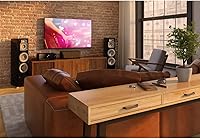
The Yamaha RX-A2A is a strong match for anyone who has outgrown a basic receiver and wants a meaningful audio upgrade without committing to flagship-tier pricing. Home theater enthusiasts setting up a 5.1 or 7.1 speaker system in a mid-sized room will find the YPAO room calibration alone worth the investment — it removes the guesswork that intimidates so many first-time surround sound builders. Gamers running a PS5 or Xbox Series X will appreciate the automatic low-latency switching via ALLM, which means one less setting to toggle when moving between a movie and a gaming session. Apple households benefit from AirPlay 2 working reliably as a daily music-streaming path, and anyone already invested in Yamaha audio products will find MusicCast a genuinely practical way to extend audio to a second room. If you stream music from high-resolution platforms like TIDAL or Qobuz and want those files handled natively by the receiver rather than a separate device, this AVENTAGE receiver covers that too.

Not suitable for:

Buyers expecting a fully flagship-grade experience in every dimension may find themselves underwhelmed by certain aspects of this Yamaha unit. Those planning to connect three or more next-gen gaming consoles simultaneously need to know upfront that only three of the seven HDMI inputs support 4K at 120Hz — routing conflicts will force compromises. The companion app, while serviceable for basic control, is not polished enough to replace the physical remote for anyone who values a smooth digital interface, and users who rely heavily on app-driven multi-room control may find the MusicCast experience frustrating when mixing in non-Yamaha speakers or smart home devices. Buyers with large, acoustically challenging rooms — high ceilings, open floor plans, or dedicated listening spaces with demanding speaker loads — should consider whether 100 watts per channel is sufficient or whether a more powerful amplifier is the smarter investment. Finally, if a clean, modern on-screen menu interface is a priority, competing receivers in this price range offer more refined navigation that the Yamaha RX-A2A does not currently match.

Specifications

  • Channels: 7.2-channel configuration with support for 7 speaker outputs plus 2 subwoofer outputs simultaneously.
  • Power Output: Rated at 100W per channel into 8 ohms at 0.06% THD, measured with two channels driven.
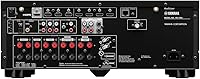
  • HDMI Inputs: Seven HDMI inputs and one HDMI output, all supporting HDCP 2.3 and HDR passthrough.
  • HDMI Bandwidth: All inputs support 4K at 60Hz; three specific inputs support 8K at 60Hz and 4K at 120Hz.
  • eARC Support: The HDMI output supports eARC, enabling high-quality audio return from compatible televisions without a separate optical cable.
  • Audio Decoding: Full decoding support for Dolby Atmos, DTS:X, Dolby TrueHD, DTS-HD Master Audio, and Auro-3D.
  • Video Formats: Passes through Dolby Vision, HDR10+, HLG, and BT.2020 on all HDMI inputs without signal degradation.
  • Room Calibration: YPAO R.S.C. (Reflected Sound Control) with multi-point measurement for automatic speaker level, distance, and EQ optimization.
  • Wireless: Dual-band Wi-Fi and Bluetooth 2.1 are built in, with no external adapter required for wireless network connection.
  • Streaming Protocols: Supports AirPlay 2, Spotify Connect, and MusicCast for multi-room audio distribution across compatible devices.
  • Streaming Services: Native integration with Amazon Music HD, TIDAL, Qobuz, Deezer, Pandora, and SiriusXM; certified as Roon Tested.
  • Gaming Features: ALLM (Auto Low Latency Mode) and VRR (Variable Refresh Rate) passthrough are supported for next-gen console gaming.
  • Zone Output: Zone 2 audio output allows independent audio playback in a secondary room using the receiver's internal amplification.
  • Voice Control: Compatible with Amazon Alexa and Vera controllers for basic voice-driven operation including volume and input switching.
  • Phono Input: A dedicated phono input is included for connecting a turntable directly without a separate phono preamplifier.
  • Chassis Design: Features Yamaha's A.R.T. Wedge (Anti-Resonance Technology) base design to minimize vibration interference with audio components.
  • Dimensions: The unit measures 14.63 x 17.13 x 6.75 inches (depth x width x height), requiring adequate shelf clearance for ventilation.
  • Weight: The receiver weighs 25.4 pounds, reflecting the density of its internal transformer and chassis construction.
  • Remote Control: Includes an infrared remote control requiring two AAA batteries; no rechargeable battery or USB charging is provided.
  • Sonos Compatibility: Works with Sonos ecosystem devices, allowing this AVENTAGE receiver to participate in Sonos multi-room audio setups.

Related Reviews
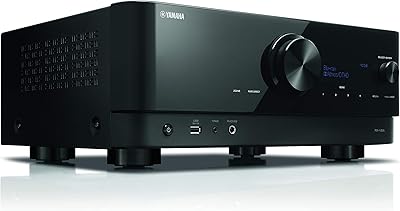
Yamaha RX-V6A 7.2-Channel AV Receiver
84%
94%
Sound Quality (Dolby Atmos & DTS:X)
67%
Ease of Setup
91%
Video Performance (8K/4K pass-through)
89%
Connectivity (HDMI, Wi-Fi, Bluetooth)
88%
Multi-Room Audio (MusicCast)
More
Yamaha RX-V4A
Yamaha RX-V4A
80%
91%
Setup & Onboarding
79%
Sound Quality
83%
HDMI & Video Connectivity
88%
Streaming & Smart Features
74%
Build Quality & Design
More
Yamaha RX-V385
Yamaha RX-V385
75%
83%
Audio Quality
91%
Ease of Setup
88%
Build Quality
86%
Value for Money
79%
Connectivity & Inputs
More
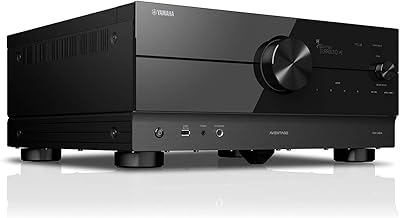
Yamaha RX-A4A AVENTAGE 7.2-Channel AV Receiver
78%
93%
Audio Performance
91%
Room Calibration (YPAO)
88%
HDMI & Video Handling
86%
Gaming Performance
94%
Immersive Audio Format Support
More
Yamaha RX-A6A AVENTAGE 9.2-Channel AV Receiver
86%
94%
Audio Performance
91%
Video Quality (8K/4K)
83%
Ease of Setup
88%
Connectivity Options
89%
Sound Calibration (YPAO R.S.C.)
More
Yamaha RX-A8A AVENTAGE 11.2-Channel AV Receiver
85%
94%
Audio Performance
89%
Connectivity Options
61%
Setup Complexity
91%
Gaming Features (4K/120Hz)
92%
Room Calibration (YPAO R.S.C.)
More
Yamaha CM500 Headset
86%
94%
Microphone Clarity
85%
Comfort & Fit
90%
Build Quality
82%
Noise Isolation
88%
Sound Accuracy
More
Yamaha HPH-50B Headphones
81%
89%
Comfort for Long Sessions
87%
Sound Quality & Clarity
82%
Build Quality & Durability
91%
Portability & Weight
55%
Noise Isolation
More
Yamaha AG03 DJ Mixer
86%
88%
Sound Quality
93%
Portability
91%
USB Connectivity
85%
Ease of Use
87%
Build Quality
More
Panasonic RX-D550 Boombox
83%
88%
Sound Quality
92%
Portability
79%
Bass Performance
85%
Ease of Use
80%
Build Quality
More

FAQ

Yes, but with a caveat worth knowing before you buy. The receiver has seven HDMI inputs, but only three of them support 4K at 120Hz. So if you want both consoles running at full next-gen specs simultaneously, you will need to use two of those three high-bandwidth inputs and plan your routing accordingly. The ALLM feature works automatically on supported inputs, so low-latency mode kicks in without you having to change any settings.

For most people, setup is surprisingly manageable. You connect your speakers, plug in the included calibration microphone, place it at your listening position, and let YPAO do its work — the whole process takes about 10 to 15 minutes. The multi-point option, where you measure from several seating positions, takes a bit longer but produces noticeably better results in rooms with awkward acoustics. You can always tweak manually afterward if something sounds off to your ears.

Absolutely. AirPlay 2 is built in, so anything you can play on an Apple device can be sent directly to this AVENTAGE receiver from the same Wi-Fi network. That includes Apple Music, Spotify, Qobuz, podcasts — whatever you have open. There is no adapter or additional device needed.

Honestly, it depends on how deeply you want to integrate them. MusicCast works best within a Yamaha-only ecosystem. If you are trying to sync it with Sonos, Amazon Echo, or Google speakers, you will run into friction because those platforms do not speak the same protocol. The Works with Sonos feature helps bridge that gap for Sonos users specifically, but do not expect seamless cross-brand multi-room performance across the board.

It can, especially in a tightly enclosed space without ventilation gaps. The unit generates meaningful heat during extended use, and Yamaha recommends at least a couple of inches of clearance on all sides. If your cabinet has solid doors and limited airflow, you may want to consider a ventilated shelf or leave the cabinet doors open during use to avoid thermal throttling over long sessions.

Both. Dolby Atmos from streaming services like Netflix and Disney Plus is delivered over eARC from your TV, assuming your TV supports eARC and the streaming app passes Atmos through. For Blu-ray, you connect the player directly via HDMI and get full lossless Dolby TrueHD Atmos decoding. Either path works well, though the lossless Blu-ray path is the higher quality option if audio fidelity matters to you.

Surround:AI analyzes whatever content is playing — film, music, sports, TV — and automatically selects and adjusts the surround processing mode in real time. In practice, it means you are not manually switching between DSP presets when you go from a movie to a live concert broadcast. Most casual users appreciate not having to think about it. Dedicated listeners who want full manual control over DSP settings can bypass it and set modes themselves.

Yes, there is a dedicated phono input on the rear panel, so you can connect a turntable with a standard moving-magnet cartridge without needing a separate phono preamp. If you have a moving-coil cartridge, you will still need an external phono stage, as the built-in input is designed for moving-magnet only.

The included remote is functional but uninspiring. It covers all the core functions and is backlit, which helps in a dark room. That said, many owners end up switching to a Logitech Harmony or similar universal remote after a few months because the included one is plasticky and the button layout is not the most intuitive for quick input switching during daily use. It is worth budgeting for if a clean remote experience matters to you.

The main differences as you move up the AVENTAGE line are amplifier power, additional processing features, more refined internal component quality, and in some cases extra HDMI inputs or more sophisticated room calibration tools. This Yamaha unit sits in the mid-to-upper portion of the range, so it already includes the core features most buyers need. Unless you have a very large room, demanding speakers, or specific features found only in the flagship tier, most buyers will not feel limited by what this receiver offers.