Overview

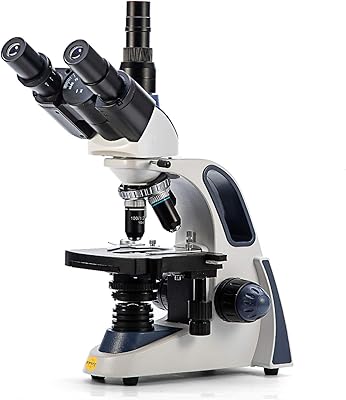
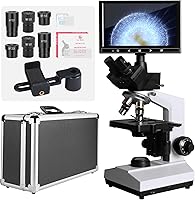
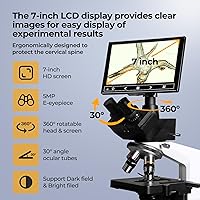
The Vabiooth Darkfield Brightfield Trinocular Compound Microscope sits in an interesting middle ground — capable enough for serious lab work, yet accessible enough that a dedicated biology student or home researcher won't feel overwhelmed. What separates this darkfield and brightfield scope from standard compound models is its ability to switch between illumination modes, letting you reveal organism contrast that regular brightfield alone simply cannot show. The built-in 7-inch LCD monitor is genuinely useful for extended sessions, saving your neck from the awkward posture that comes with hours at an eyepiece. One important note: the manufacturer explicitly states darkfield here is intended for cells and microorganisms, not live blood analysis. The included aluminum carry case adds a layer of practical protection that feels appropriate for the investment.
Features & Benefits

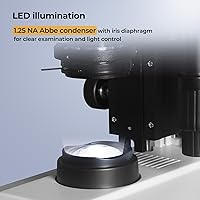
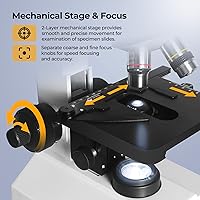
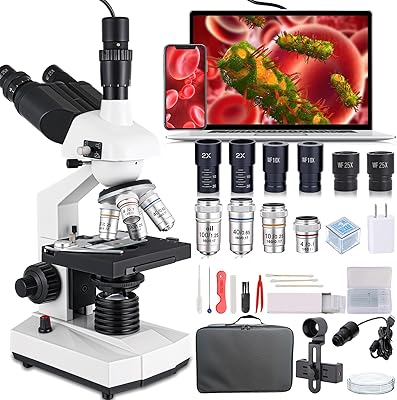
Three wide-field eyepieces — 10X, 16X, and 25X — give you real flexibility in how much of a slide you take in at once, and a 5MP digital eyepiece feeds a live image straight to the built-in screen for sharing or capture without extra hardware. Four achromatic objectives cover everything from low-power scanning to oil-immersion work at the upper end, where you can resolve individual bacteria or fine cellular structures. The double-layer mechanical stage deserves mention: its 1.0mm X-Y divisions let you mark coordinates and return to a precise location reliably, which matters enormously when you're cross-referencing slides. The NA 1.25 Abbe condenser with its iris diaphragm handles light control precisely, and the 30-degree tilted trinocular head keeps your posture honest through long sessions.

Best For

This trinocular microscope makes the most sense for biology students and science educators who regularly need both illumination modes in one instrument rather than two separate setups. Lab technicians examining tissue samples, microorganisms, or cellular material will appreciate the combination of optical quality and the on-screen display for collaborative review. Home lab enthusiasts who want a serious tool without stepping up to full institutional pricing will find this scope hits a reasonable balance. If your workflow involves sharing live views with a colleague or student sitting beside you, the integrated monitor removes the need for a laptop or external camera rig. The calibrated stage also suits anyone whose work demands precise slide revisiting, not just casual browsing.

User Feedback

Buyers who've put this lab compound microscope through regular use tend to praise image clarity at mid-magnifications and how straightforward it is to toggle between the two lighting modes. The monitor gets consistent appreciation for reducing eye fatigue. That said, getting darkfield alignment right takes patience — several users note the learning curve is steeper than expected, particularly for those new to condenser adjustment. Oil-immersion technique at the highest magnification also trips up beginners. The 2500X figure is achievable, but only under ideal conditions; treat it as a ceiling, not a starting point. Carry case sturdiness gets mixed marks — fine for storage, less convincing for rough transport. The 5MP digital eyepiece produces decent screen images, though optical eyepiece views remain noticeably sharper.

Pros

  • Dual brightfield and darkfield modes in one instrument eliminate the need for two separate microscopes.
  • The 7-inch rotating LCD monitor reduces eye strain during long sessions and makes real-time observation sharing practical.
  • Three wide-field eyepiece options provide genuine flexibility to suit different viewing preferences and slide types.
  • The calibrated mechanical stage lets you record and reliably return to exact slide coordinates during cross-referencing work.
  • A 5MP digital camera is built in, so image capture requires no external hardware, adapter, or laptop.
  • The 30-degree inclined trinocular head noticeably reduces neck and back discomfort across extended work sessions.
  • Worldwide voltage compatibility makes this darkfield and brightfield scope usable globally without any power adapters.
  • Four achromatic objectives span a wide practical range, from broad low-power scanning to fine oil-immersion detail work.
  • LED illumination with adjustable brightness delivers consistent, controllable light without the hassle of periodic bulb replacements.
  • The aluminum carry case provides solid protection for the optics and accessories during storage between sessions.

Cons

  • Darkfield condenser alignment requires patience and prior technical knowledge — beginners frequently struggle to get it right initially.
  • The maximum magnification figure is achievable only under ideal conditions with oil immersion; everyday practical limits are lower.
  • At over 19 pounds, this lab compound microscope feels cumbersome if you need to move or reposition it often.
  • The carry case handles storage well but shows limitations under the demands of regular or rough transport.
  • Oil-immersion technique at the highest objective is not beginner-friendly and takes meaningful practice to execute without errors.
  • The 5MP digital eyepiece delivers noticeably softer images compared to what you see looking directly through the optical eyepieces.
  • Live blood analysis is explicitly excluded by the manufacturer, ruling out a meaningful segment of interested buyers entirely.
  • Setup instructions could be significantly clearer; many users report turning to external resources just to configure darkfield mode.
  • The 7-inch monitor resolution is adequate for general viewing but falls short for serious photographic documentation work.
  • No spare parts or replacement accessories are bundled in, which can cause delays if something fails mid-session.

Ratings

Our AI-generated scores for the Vabiooth Darkfield Brightfield Trinocular Compound Microscope were produced by systematically analyzing verified buyer reviews from markets worldwide, with spam, bot-generated, and incentivized submissions actively identified and excluded from the analysis. The resulting ratings reflect a genuinely balanced picture of this lab compound microscope — concrete strengths are credited where the data supports them, and recurring frustrations are surfaced without softening. Both sides of the ownership experience are transparently represented so you can make a fully informed buying decision.
Optical Clarity
83%
At low to mid-range magnifications — the range most users actually work in daily — image sharpness and contrast are consistently praised. Stained cell specimens and microorganism slides resolve with clean edge definition that performs well above what you might expect at this price tier. For biology coursework and routine lab observation, the optics deliver reliably.
At the very top of the magnification range, image quality becomes heavily dependent on slide preparation and lighting conditions. Several users report that without properly stained specimens and careful condenser adjustment, fine cellular detail at high power can look soft or washed out, requiring extra preparation time.
Darkfield Performance
74%
26%
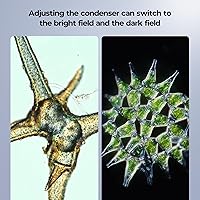
When properly aligned, the darkfield mode genuinely sets this scope apart from standard single-mode compound alternatives. Organisms and fine cellular structures that would blend into a bright background under standard illumination pop with striking contrast under darkfield — a real advantage for microbiology students and researchers working with unstained specimens.
Getting to that point reliably requires patience. Aligning the condenser correctly for darkfield is a multi-step process that trips up many first-time users, and the included instructions do not walk you through it with enough detail. Some buyers report spending over an hour before achieving a usable darkfield image on their first session.
Digital Imaging
71%
29%
Having a 5MP digital camera built directly into the eyepiece port is a genuine convenience for anyone who documents specimens regularly. You can route a live image to the built-in monitor for group viewing or begin capturing images without needing a separate camera adapter, external software dongle, or USB microscope attachment.
Image quality through the digital eyepiece is noticeably softer than what you see looking directly through the optical eyepieces, and at higher magnifications this gap widens. Users who need sharp, publication-ready photographs will find the 5MP output falls short and will likely need to invest in a more capable imaging solution separately.
LCD Monitor
82%
18%
The 7-inch rotating display is one of the more practical features on this darkfield and brightfield scope, particularly for classroom use or collaborative lab sessions. Being able to reposition the screen toward a second viewer without touching the microscope itself saves constant readjustment and makes shared observation sessions considerably more manageable.
The monitor resolution is adequate for general observation but shows its limits when evaluating fine specimen detail or checking critical focus at higher magnifications. A number of users also noted that the screen picks up ambient glare in brightly lit lab environments, which softens the displayed image and complicates fine adjustment.
Value for Money
79%
21%
Combining dual illumination modes, a built-in digital camera, a 7-inch monitor, and a precision mechanical stage into one instrument at this price tier is not common — most competitors charge more for fewer features or offer a similar feature count with noticeably weaker optics. For students and home lab users, the overall package represents a strong return.
Buyers who primarily need brightfield imaging will find they are paying for darkfield capability they may rarely use, and those who need professional-grade results will hit the ceiling of what this scope can deliver. The value proposition is strong for the intended dual-mode audience but thinner for users at either end of the spectrum.
Build Quality
86%
The metal construction gives this trinocular microscope a tangible solidity that plastic-bodied alternatives simply cannot match. The coaxial coarse and fine focus knobs feel precise and smooth, and the mechanical stage moves without wobble or slack. For a mid-range instrument, the physical assembly is reassuringly substantial and inspires confidence during hands-on work.
A few users noticed minor cosmetic imperfections out of the box, and some report the trinocular port fitting requires more careful alignment than expected when swapping in the digital eyepiece. Nothing that affects core function, but the overall fit and finish does not quite reach the standard of dedicated research-grade instruments.
Mechanical Stage Precision
88%
The double-layer mechanical stage is one of the most consistently praised features among users who do systematic slide work. The 1.0mm X-Y divisions let you log slide coordinates and return to a precise location minutes or hours later — a practical necessity when cross-referencing samples or running through structured lab exercises with students.
The stage travel range, while adequate for standard slides, feels limiting to users working with larger or non-standard mounted specimens. A few buyers also noted that the rack stop adjustment requires trial and error to set correctly for their preferred slide thickness, which adds friction during initial configuration of the instrument.
Ease of Setup
62%
38%
The brightfield side of this scope assembles and operates in a way that science-literate buyers will find manageable within the first hour. Focus knobs are well-labeled, stage controls are intuitive, and standard compound microscopy functions come together without requiring external guidance for those with any prior lab experience at all.
Darkfield setup is where the experience becomes significantly harder. Condenser alignment for darkfield illumination is a multi-step process that the included documentation handles poorly, leaving many buyers piecing the process together from online forums and video tutorials — an avoidable frustration for a scope where darkfield is a primary selling point.
Ergonomics & Comfort
81%
19%
The 30-degree inclined trinocular head makes a meaningful difference during extended sessions compared to vertical-tube microscopes that force awkward neck angles. Users who spend an hour or more examining slides — students in structured lab sessions or technicians working through sample batches — frequently cite reduced neck and shoulder fatigue as a standout benefit.
At just over 19 pounds, repositioning the scope on a bench requires deliberate effort, and the fixed 30-degree angle, while comfortable for most, does not accommodate every user's height or seating preference. Shared scopes across users with meaningfully different ergonomic needs may expose this fixed angle as a limitation over time.
Illumination Quality
84%
The LED light source draws consistent praise for delivering stable, flicker-free illumination across the full brightness range. Unlike older halogen setups, the LED runs cool enough that specimens are not affected by heat buildup during long sessions, and the brightness adjustment is smooth enough to dial in precise contrast for a given slide type.
In darkfield mode, the illumination system places higher demands on condenser alignment — even slight misalignment of the iris diaphragm can result in uneven lighting across the field of view. A small number of users also report that maximum LED brightness falls noticeably short when working with the highest-power oil-immersion objective.
Eyepiece Versatility
87%
Three wide-field eyepiece options give users real control over how much of a slide they take in at a single glance, which is particularly useful when shifting between scanning a full tissue section and zeroing in on a specific cellular feature. Swapping between eyepieces is quick and the interpupillary adjustment holds focus reliably through the change.
The 25X eyepiece, while useful for reaching higher total magnifications, narrows the field of view noticeably, and users new to high-power eyepieces often find the eye relief uncomfortably short for extended viewing sessions. The eyepieces also lack rubber eyecups, which spectacle wearers in particular would have appreciated for managing ambient light.
Portability & Storage
67%
33%
The aluminum carry case is a real plus for anyone who keeps the scope on a storage shelf between sessions or moves it between benches within the same building. The body and accessories fit snugly enough that nothing shifts during short moves, and the aluminum shell provides solid resistance against incidental bumps and knocks.
At nearly 20 pounds combined, the scope and case are genuinely heavy for anything beyond short-distance moves, and the single handle does not make carrying over longer distances comfortable. Users who expected to transport the scope regularly reported that the case functions better as a protective storage box than a practical travel solution.
Condenser & Light Control
81%
19%
The NA 1.25 Abbe condenser gives users meaningful control over light cone angle and specimen contrast — something that budget scopes with fixed condensers simply cannot offer. Fine-tuning the iris diaphragm while observing the effect on specimen contrast in real time becomes a genuinely satisfying and productive skill once the user understands the relationship.
The condenser's full potential only becomes accessible once you understand how iris diaphragm position affects image quality across both illumination modes, and this takes time and deliberate practice. Users unfamiliar with basic illumination principles may find themselves running the condenser in a suboptimal position for weeks without realizing their images could be sharper.
Oil-Immersion Usability
68%
32%
The spring-loaded 100X oil-immersion objective is the right tool for resolving the finest detail a light microscope can produce — bacteria, fine intracellular structures, chromosome preparations — and having it included at this price point is not guaranteed. Users with prior lab experience report that results at this objective, once technique is dialed in, are genuinely impressive.
For users approaching oil immersion for the first time, the learning curve is steep and the included guidance is thin. Applying the correct amount of oil, achieving proper focus without pushing the objective into the slide, and cleaning up correctly afterward are skills that require real practice, and costly damage to the objective lens is not uncommon among beginners.
Documentation Quality
54%
46%
The manual covers brightfield basics competently enough — focus adjustment, stage movement, and eyepiece swapping are explained in a way that gets most users up and running without significant frustration. For buyers with any prior microscopy background, what is included serves as a reasonable reference document for routine day-to-day operation.
For darkfield setup and oil-immersion technique, the documentation falls significantly short of what this scope demands. Multiple buyers describe the darkfield alignment instructions as vague or incomplete, forcing them to rely on third-party tutorials to get the mode working — a meaningful gap for a feature that is central to why someone chooses this scope over simpler alternatives.

Suitable for:

The Vabiooth Darkfield Brightfield Trinocular Compound Microscope is a strong fit for biology students, science educators, and dedicated home lab researchers who need dual illumination modes without buying two separate instruments. If your work involves examining microorganisms, cell structures, or tissue samples and you regularly switch between standard and darkfield lighting, this scope handles both without compromise. The built-in 7-inch monitor makes it particularly practical for classroom or collaborative settings where multiple people need to view the same slide at the same time. Lab technicians who need to mark and return to specific slide coordinates will appreciate the calibrated mechanical stage, which brings a level of precision typically reserved for more expensive setups. Anyone planning to document findings digitally will also benefit from the integrated 5MP camera, removing the need for a separate adapter or laptop connection entirely.
Not suitable for:

Anyone drawn specifically to live blood analysis should look elsewhere — the Vabiooth Darkfield Brightfield Trinocular Compound Microscope is explicitly not designed for that application, and the manufacturer states this clearly. Buyers expecting plug-and-play simplicity at the darkfield setting will likely run into frustration; aligning the condenser for proper darkfield illumination has a genuine learning curve that beginners routinely underestimate. If your budget is firm and brightfield imaging is all you need, simpler and lighter options exist that require far less setup knowledge. This scope also tips the scales at over 19 pounds, making it more of a permanent bench fixture than something you move around regularly. Finally, anyone chasing the maximum magnification figure as a primary use case should temper expectations — that ceiling requires oil immersion and near-ideal conditions, and it is not representative of what you will use day to day.
Specifications

  • Magnification Range: Four achromatic objective lenses combine with three wide-field eyepieces to deliver ten discrete magnification levels spanning 40X at the low end up to 2500X at the high end.
  • Eyepieces: Three glass wide-field eyepieces are included — WF10X, WF16X, and WF25X — each set at a 30-degree ergonomic tilt to reduce viewing strain.
  • Objective Lenses: The four achromatic objectives are 4X, 10X, 40X (spring-loaded), and 100X (spring-loaded, oil-immersion), covering a broad range of specimen work from low-power scanning to fine cellular detail.
  • Digital Camera: A 5MP E-eyepiece camera is included for capturing still images and routing live video directly to the built-in LCD screen without requiring an external device.
  • Built-in Display: A 7-inch LCD monitor rotates a full 360 degrees, so the screen can be repositioned toward collaborators or adjusted for comfortable individual viewing angles.
  • Condenser: An NA 1.25 Abbe condenser with an iris diaphragm is fitted as standard, supporting both brightfield and darkfield illumination through a single shared optical path.
  • Illumination: A 1W transmitted LED light source with adjustable brightness provides steady, cool illumination without the heat output or replacement costs associated with halogen alternatives.
  • Mechanical Stage: The double-layer mechanical stage measures 110x120mm with an X-Y travel range of 70x30mm and 1.0mm graduated divisions for recording and revisiting precise slide positions.
  • Head Configuration: The trinocular head is inclined at 30 degrees and rotates a full 360 degrees, accommodating a wide range of user heights, postures, and workspace orientations.
  • Power Input: The unit accepts 110–240V AC power input, making it compatible with standard electrical outlets across North America, Europe, Asia, and most other regions.
  • Interpupillary Distance: The interpupillary distance is adjustable between 55mm and 75mm, allowing different users to achieve proper binocular alignment without losing focus.
  • Diopter Adjustment: An ocular diopter adjustment range of plus or minus 5 diopters lets users compensate for natural differences in eyesight between their left and right eyes.
  • Item Weight: The microscope body weighs 19.03 pounds, reflecting a robust metal construction intended for fixed bench use rather than regular transport.
  • Package Dimensions: The shipping package measures 18.07 x 14.57 x 9.92 inches, sized to contain the microscope body and all bundled accessories securely.
  • Carry Case: An aluminum protective carry case is included in the package, designed to house the microscope and its accessories safely during storage.
  • Imaging Modes: The scope natively supports both brightfield and darkfield observation through a single shared condenser system, switchable depending on specimen and research requirements.
  • Stage Precision: The X and Y axes of the mechanical stage each feature 1.0mm graduated markings, enabling users to log coordinates and return to a specific location on a slide reliably.

Related Reviews
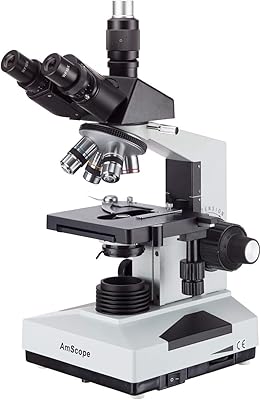
AmScope T490B Compound Trinocular Microscope
74%
88%
Optical Clarity
91%
Trinocular Head
78%
Camera Integration
86%
Mechanical Stage
89%
Build Quality
More
Poothoh SMXWJ-02 Trinocular Compound Microscope
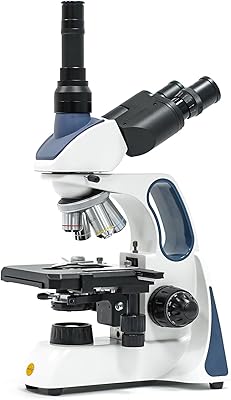
73%
83%
Optical Clarity
88%
Build Quality
67%
USB Camera Performance
84%
Mechanical Stage
81%
Illumination
More
SWIFT SW400 Trinocular Compound Microscope
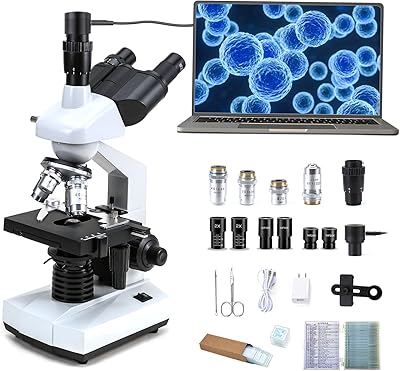
78%
91%
Optical Image Quality
89%
Focusing System
88%
Build Quality
86%
Objective Lenses
84%
Ergonomics & Comfort
More
Crspexil 2024 Trinocular Compound Microscope
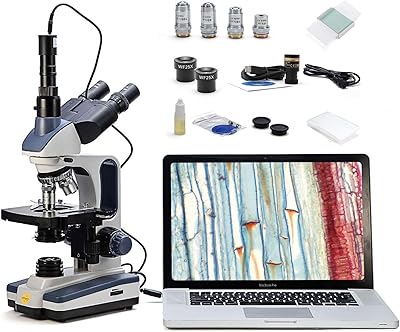
71%
78%
Optical Clarity
74%
Camera Performance
76%
Build Quality
82%
Value for Money
71%
Ease of Setup
More
SWIFT SW350T Trinocular Compound Microscope
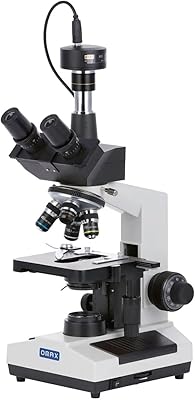
79%
91%
Optical Clarity
88%
Build Quality
54%
Camera Quality
57%
Software Usability
86%
Ergonomics
More
OMAX M837ZL-C100U Trinocular Compound LED Microscope
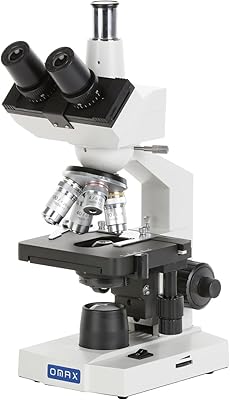
71%
83%
Optical Clarity
81%
Build Quality
67%
Camera Performance
78%
Stage Precision
76%
Ergonomics
More
OMAX M83ES 40X-2000X Lab Trinocular Biological Compound LED Microscope
84%
91%
Magnification Performance
89%
LED Illumination Quality
87%
Build Quality & Durability
93%
Ease of Setup
85%
Focus Mechanism
More
Swift SW380T Trinocular Compound Microscope
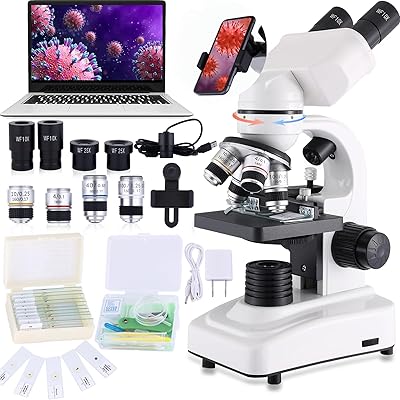
81%
83%
Optical Clarity
89%
Build Quality
81%
Focusing Mechanism
77%
Trinocular Head & Camera Compatibility
86%
Mechanical Stage
More
AmScope M150C Compound Microscope
81%
88%
Build Quality
76%
Optical Clarity
69%
Magnification Range
84%
Value for Money
91%
Kit Contents
More
Herwicm RM Binocular Compound Microscope
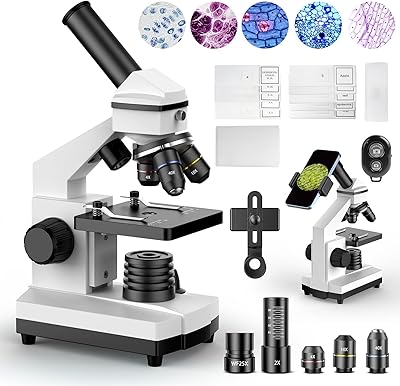
73%
78%
Optical Clarity
74%
Build Quality
86%
Ease of Setup
76%
Focusing Mechanism
81%
Lighting System
More

FAQ

No, and this is important to know before purchasing. The manufacturer explicitly states that the darkfield mode is intended for examining organisms and cells, not for live blood analysis. If live blood work is your primary goal, you will need a scope specifically configured and marketed for that application.

It takes some patience, particularly if you have never worked with darkfield before. Proper alignment involves adjusting the iris diaphragm and centering the condenser, which sounds straightforward but can feel confusing on your first few attempts. Most users get comfortable with the process after a handful of practice sessions, and there are solid tutorial resources online if the included documentation feels insufficient.

The 7-inch screen is a standalone feature designed for direct on-scope viewing rather than external output. The 5MP digital eyepiece feeds a live image to that display, and depending on your setup you may be able to pair it with compatible software on a computer, but the monitor itself does not natively mirror to an external screen out of the box.

Technically yes, but it is best understood as a ceiling figure rather than an everyday working magnification. Reaching it requires the 100X oil-immersion objective paired with the highest-power eyepiece, a properly prepared and stained slide, the correct immersion oil, and well-controlled lighting. For most users, the mid-range magnification levels are where clarity and usability are at their best.

This is a transmitted-light compound microscope, so it works with thin, prepared slides — fixed tissue sections, stained cell cultures, mounted microorganism samples, and similar materials. It is not designed for opaque or thick three-dimensional objects, which would require a stereo or reflected-light microscope instead.

Yes, it uses the universally common 25x75mm glass slide format, which is the standard size found in virtually all lab supply catalogs and educational science retailers. Prepared slide sets for biology and microbiology are widely and inexpensively available in that format.

You will need immersion oil to get usable results from the 100X objective, and it is not included. Standard Type A immersion oil is inexpensive and easy to find through scientific supply stores or online. After each oil-immersion session, clean the objective carefully with proper lens tissue to prevent residue from hardening on the glass.

The case works well for protecting the scope during storage and short moves between rooms or workspaces. For frequent travel or any situation involving rough handling, it has received mixed feedback — some users found it reassuring, others less so. If you plan to transport it regularly, adding foam padding or a padded equipment bag alongside the case is a sensible precaution.

Not independently. The 5MP camera feeds live images to the built-in screen, and to save files you would need to connect it to a computer using the camera interface. The scope does not include an onboard SD card slot or built-in USB storage for the camera output.

It is well-suited for upper-level high school biology or introductory university lab coursework, especially where students need to examine microorganisms, tissue sections, or cell structures. The dual illumination modes offer more capability than a basic student scope, and the screen makes documenting observations straightforward. Students new to darkfield work should expect a short learning curve for that mode, but the brightfield side is accessible from day one.