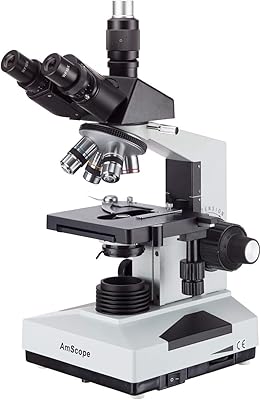
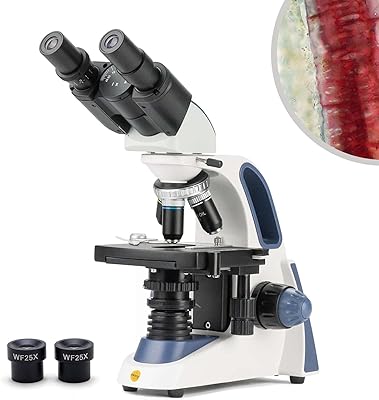
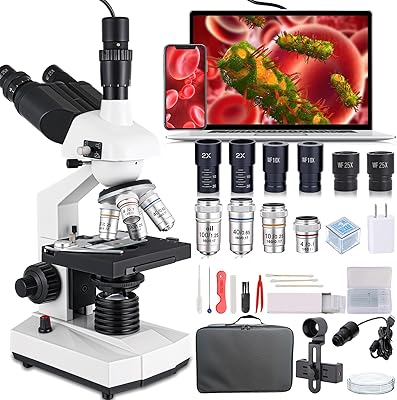
Overview

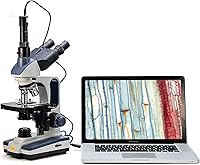
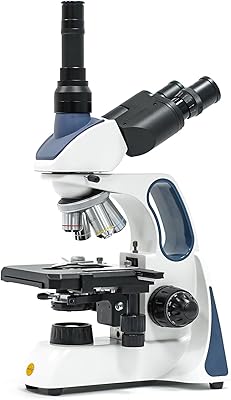
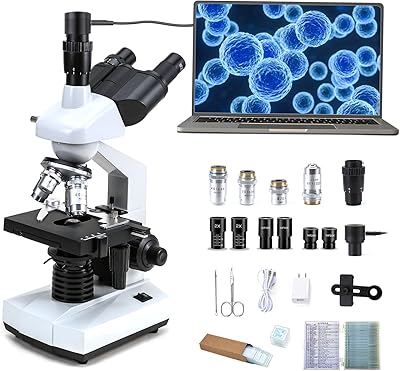
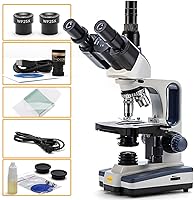
The SWIFT SW350T Trinocular Compound Microscope sits in an interesting position — it's not a toy, but it's also not priced like institutional lab equipment. This research-grade scope ships with a 1.3MP camera and image processing software, making it genuinely useful for anyone who needs to document specimens, not just observe them. The Siedentopf head design alone separates it from the crowded field of basic student scopes — fully rotatable, it allows multiple users to share the instrument without constant readjustment. A bundled kit of 100 blank slides and cover slips means you can start working the same day it arrives, which is a thoughtful touch.
Features & Benefits

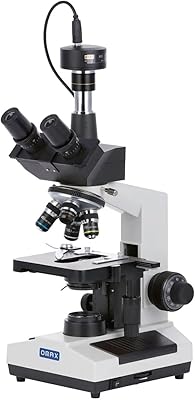
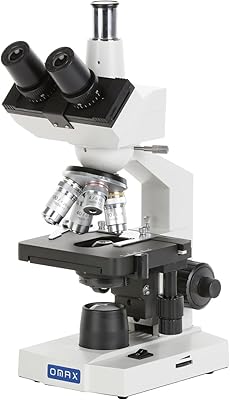
What makes the SW350T genuinely capable is the range it covers. Six magnification levels — from 40X up to 2500X — span a wide spread of practical applications: 40X is comfortable for scanning tissue sections, while 1000X and beyond opens up bacterial and fine cellular detail. The double-layered mechanical stage allows precise positional control that single-layer stages simply can't match. Interchangeable 10X and 25X wide-field eyepieces add real flexibility without extra cost. The LED-powered Abbe condenser delivers bright, even illumination without heat buildup, and the trinocular port means attaching a camera doesn't require removing an eyepiece or disrupting the optical path at all.

Best For

This trinocular microscope makes the most sense for people who need more than a basic viewing instrument. Advanced high school and university biology students benefit from its documentation capabilities — photographing and annotating specimens adds genuine academic value. It's equally at home in a small clinical or shared lab environment, since the rotatable head eliminates constant eyepiece re-adjustment between users. Classroom educators will find real utility in projecting live specimen images through the bundled camera and software. That said, if you only need occasional casual viewing with no interest in image capture, a simpler binocular scope would likely serve you just as well for considerably less.

User Feedback

The SW350T holds a strong 4.4-star rating across hundreds of verified buyers, and the praise is consistent: optical clarity and build quality come up repeatedly, with users noting the scope feels solid and well-machined rather than plastic-heavy. Assembly gets positive marks too — most buyers find it straightforward right out of the box. Where things get more nuanced is the camera and software. The 1.3MP sensor handles basic documentation adequately but feels behind current standards, and some users on newer operating systems report compatibility friction — though Swift does offer a downloadable software version that sidesteps the CD issue. Customer support is generally described as responsive in buyer reports.

Pros

  • Optical clarity is consistently praised by buyers across a wide range of specimen types and magnification levels.
  • The rotatable Siedentopf head makes this a genuinely practical choice for multi-user labs or classrooms.
  • Six magnification levels from 40X to 2500X cover an impressively broad range of real-world applications.
  • The double-layered mechanical stage allows precise, repeatable slide positioning that cheaper stages cannot match.
  • Bundled 100-slide and cover slip kit means you can start working the same day it arrives.
  • Build quality feels solid and well-machined — noticeably more substantial than typical student-grade scopes.
  • The trinocular port lets you add a camera without removing an eyepiece or interrupting the optical path.
  • Interchangeable 10X and 25X wide-field eyepieces add useful flexibility without additional cost.
  • Swift customer support is generally described as responsive when users encounter setup or software issues.
  • LED illumination stays cool during long sessions and offers smooth adjustable brightness control.

Cons

  • The 1.3MP camera resolution feels dated compared to affordable third-party USB microscope cameras available today.
  • Software compatibility issues have been reported on newer operating systems, requiring extra troubleshooting steps.
  • No optical drive means most modern laptop users must contact Swift to request a downloadable software version.
  • At over 10 pounds, this scope is not easily portable between rooms or field locations.
  • The 2500X upper magnification requires oil-immersion technique — beginners may struggle without prior experience.
  • Fine-focus control responsiveness has drawn occasional criticism for feeling less precise than expected at high magnification.
  • The included camera software lacks the polish of standalone imaging applications, especially for advanced editing workflows.
  • No built-in storage or Wi-Fi — image capture depends entirely on a tethered computer connection.

Ratings

The SWIFT SW350T Trinocular Compound Microscope earns its strong reputation across hundreds of verified global purchases, and these scores reflect an AI-assisted analysis of that real-world buyer data — with spam, incentivized reviews, and bot activity actively filtered out before scoring. Across categories ranging from optical performance to software usability, both the genuine strengths and the recurring frustrations are weighted transparently. The result is an honest picture of where this research-grade scope excels and where it asks buyers to make compromises.
Optical Clarity
91%
Buyers consistently describe crisp, well-resolved images across the mid-range magnification levels — particularly 100X to 400X, where the DIN achromatic objectives perform at their best. Students and hobbyists working with prepared slides report noticeably sharper detail compared to entry-level scopes they had previously owned.
At the upper end of the magnification range, some users note increased chromatic fringing and reduced contrast, which is common for achromatic objectives pushed toward their limits. A few researchers working with unstained specimens found the image quality less forgiving than they expected at 1000X and above.
Build Quality
88%
The metal-heavy construction gives this trinocular microscope a noticeably solid, well-balanced feel that plastic-bodied scopes in the same price range cannot match. Buyers frequently comment that it arrived well-packaged and showed no wobble or misalignment straight out of the box.
A small number of buyers reported minor play in the focusing rack after extended use, suggesting the tolerances, while good for the price tier, are not at the level of dedicated laboratory instruments. The coarse focus knob tension also drew occasional complaints about inconsistent resistance.
Camera Quality
54%
46%
For basic documentation — capturing a specimen image to annotate, attach to a lab report, or share in a classroom setting — the included 1.3MP camera does the job without requiring any additional purchase. It is a real convenience to have imaging capability bundled in rather than paying separately.
The 1.3MP resolution is genuinely dated by current standards, and buyers who expected publication-quality or even social-media-ready images were disappointed. Side-by-side comparisons with affordable third-party USB cameras that offer 5MP or more make the bundled sensor feel like a weak link in an otherwise capable system.
Software Usability
57%
43%
The included imaging software covers the basics well — live preview, image capture, on-screen measurement, and EDF stitching are all functional features that add real educational value for students and instructors. Users who managed a clean install on compatible systems found the interface navigable after a short learning curve.
Compatibility issues on newer operating systems are a recurring frustration, and the CD-only delivery method creates an immediate barrier for laptop users without optical drives. Several buyers reported spending significant time troubleshooting installations before contacting Swift for a downloadable alternative.
Ergonomics
86%
The 30-degree viewing tilt on the Siedentopf head is genuinely appreciated by users who spend extended sessions at the eyepiece — multiple buyers noted reduced neck and shoulder strain compared to straight-tube scopes they had used previously. The rotatable head design also makes sharing the instrument between multiple users much more practical in a lab or classroom setting.
At just over 10 pounds, portability is limited — moving the scope between rooms or workstations requires deliberate effort, and it is not a scope you casually relocate. A couple of users with shorter reach found the focus knobs slightly awkward to operate at certain stage positions.
Mechanical Stage
82%
18%
The double-layered mechanical stage draws consistent praise for its smooth, controlled movement, especially from buyers upgrading from fixed or single-layer stages. Precise X-Y repositioning makes systematic slide scanning noticeably more efficient and less fatiguing over a long session.
A subset of users found the fine-focus control less responsive than expected at high magnifications, describing it as requiring more deliberate adjustment than the coarse focus. Stage tension can feel slightly loose when the scope is new, though most users report it settles in with use.
Illumination
89%
The LED light source paired with the Abbe condenser delivers even, bright illumination that buyers across skill levels appreciated — especially during longer viewing sessions where halogen heat buildup would otherwise become uncomfortable. The adjustable brightness dial is smooth and covers a wide enough range for both high-contrast and delicate specimens.
A few users working with very dark-field or polarized light techniques noted the LED setup lacks the adaptability of more advanced illumination systems found on higher-end scopes. The condenser adjustment also requires some familiarity to optimize properly, which can frustrate newer users who expect plug-and-play results.
Setup & Assembly
84%
Most buyers report a straightforward unboxing and assembly experience, with components that fit together logically without requiring specialized tools or prior microscopy knowledge. The included instructions are clear enough that the majority of users are viewing slides within 30 minutes of opening the box.
The software setup experience drags down what would otherwise be a near-frictionless process — particularly for users who discover mid-setup that their computer lacks a CD drive. A handful of buyers also noted that some component fit was slightly looser than expected, requiring minor adjustment to eliminate optical wobble.
Value for Money
78%
22%
For buyers who genuinely need a trinocular instrument with documentation capabilities, the overall package — scope, camera, software, and 200-piece slide kit — represents solid value relative to purchasing these components separately. The optical and mechanical quality noticeably outpaces what similarly priced monocular and basic binocular scopes offer.
Buyers who later realize the camera is too limited for their needs may end up spending extra on a third-party replacement, which erodes the value proposition somewhat. Casual users who do not require image capture or multi-user sharing would find the price hard to justify compared to simpler alternatives.
Included Accessories
83%
Shipping 100 blank slides and 100 optical glass cover slips with the scope is a genuinely practical touch that removes the immediate need for a follow-up order. The quality of the included glass is described as adequate to good by most buyers, with few complaints about scratching or optical distortion.
The cover slips are thin and require careful handling, which beginners occasionally find fiddly during specimen preparation. Beyond the slides and camera, the accessory package is otherwise minimal — no prepared specimen slides for reference, and no immersion oil is included despite the 100X oil-immersion objective being part of the set.
Customer Support
77%
23%
Swift's support team receives generally positive mentions in buyer feedback, particularly around software download requests and troubleshooting assistance. Response times are described as reasonable, and most issues raised — especially around software delivery — appear to get resolved without extended back-and-forth.
Support quality is not perfectly consistent, and a portion of buyers report slower or less helpful responses when dealing with hardware-related queries rather than software issues. Users outside North America occasionally note that warranty service logistics add friction to what should be a simpler resolution process.
Magnification Range
79%
21%
The six available magnification levels give this research-grade scope genuine versatility — from wide-field scanning at 40X to fine cellular and bacterial detail at 400X to 1000X, the practical working range suits a broad variety of specimen types and educational objectives without requiring objective changes mid-session.
The advertised 2500X ceiling is more of a theoretical maximum than a practically useful setting — image quality at that level is limited by the optics rather than magnification itself, and experienced users recognize this as empty magnification. Buyers unfamiliar with this optical concept may feel misled by the headline specification.
Eyepiece Flexibility
81%
19%
The inclusion of both 10X and 25X wide-field eyepieces in the box is a meaningful differentiator — most scopes at this tier ship with a single fixed eyepiece, and having the option to switch adds real versatility for users working across different specimen types or sharing the scope with users who prefer different fields of view.
Swapping eyepieces requires care to avoid introducing dust into the optical tube, and the process can feel slightly awkward for users unfamiliar with optical equipment. A few buyers also noted that the 25X eyepiece introduces slightly more edge distortion than the 10X, which is typical for high-power wide-field optics but still worth knowing.

Suitable for:

The SWIFT SW350T Trinocular Compound Microscope is a strong fit for anyone who needs a capable, well-built instrument that goes meaningfully beyond entry-level viewing. Advanced high school and university students in biology or microbiology will appreciate the documentation features — being able to photograph and annotate specimens adds real academic value that a basic binocular scope simply cannot provide. Shared lab environments benefit from the fully rotatable Siedentopf head, which allows multiple users to adjust the instrument to their own comfort without disrupting the optical setup. Educators who want to display live specimen images to a class will find the trinocular port and bundled camera genuinely useful for that purpose. Enthusiast microscopists upgrading from a starter monocular or binocular scope will notice the jump in build quality and optical precision immediately, and the included slide and cover slip kit means there is no waiting around to get started.
Not suitable for:

The SWIFT SW350T Trinocular Compound Microscope is probably not the right choice for a few specific buyer profiles, and it is worth being honest about those gaps. If your primary interest is high-resolution specimen photography or scientific imaging for publication, the bundled 1.3MP camera will feel limiting quickly — it is adequate for documentation and basic annotation, but it is not a substitute for a dedicated research-grade imaging camera. Users running the latest versions of macOS or Windows 11 should be aware that the software has drawn some compatibility complaints, and since it originally shipped on CD, those without optical drives will need to request a download link from Swift directly. Absolute beginners who just want occasional casual viewing of pond water or plant cells would likely be better served by a simpler, lighter binocular scope that costs considerably less. Professional clinical labs with institutional procurement standards will likely find the specification ceiling too modest for specialized diagnostic work.
Specifications

  • Magnification Range: The scope covers six magnification levels from 40X to 2500X via four DIN achromatic objectives.
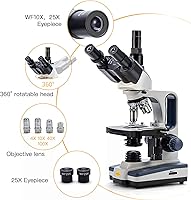
  • Objectives: Four DIN achromatic objectives are mounted on a revolving turret, providing focal options at 4X, 10X, 25X, and 100X.
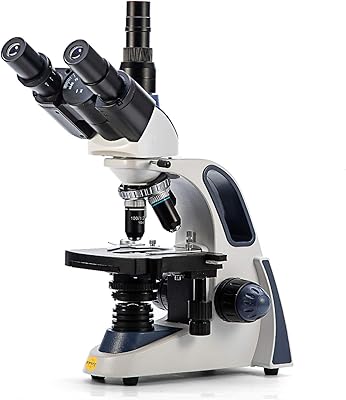
  • Head Type: The Siedentopf trinocular head is fully rotatable for shared use and fixed at a 30-degree ergonomic viewing angle.
  • Eyepieces: Two wide-field eyepieces are included — 10X and 25X — and are interchangeable to suit different specimen and user needs.
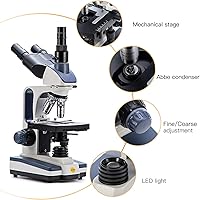
  • Stage: A double-layered mechanical stage with a secure slide holder allows precise, repeatable X-Y positioning of specimen slides.
  • Illumination: An LED light source with adjustable brightness transmits light upward through an Abbe condenser for optimized specimen illumination.
  • Condenser: The Abbe condenser is positioned below the stage and works in conjunction with the LED to control light focus and intensity.
  • Camera: A 1.3MP integrated camera is included and connects via the trinocular port for image capture, recording, and livestreaming.
  • Software: The bundled imaging software is compatible with Mac OS X and Windows Vista, 7, 8, and 10 in both 32-bit and 64-bit editions.
  • Software Features: The included software supports advanced functions such as image stitching, extended depth of field (EDF), and on-screen measurement tools.
  • Weight: The assembled unit weighs 10.34 pounds, reflecting a solid, metal-heavy build quality typical of research-grade instruments.
  • Dimensions: The packaged unit measures 18.5 x 13.25 x 9.75 inches, accommodating the full optical column and accessories.
  • Included Accessories: The package includes 100 pre-cleaned blank glass slides and 100 optical glass cover slips, ready for immediate specimen preparation.
  • Viewing Port: The trinocular head accepts a third eyepiece or camera attachment without removing or replacing the primary binocular eyepieces.
  • Power Input: The unit is rated at 240 volts and uses an LED light source, which runs cool and requires no bulb replacement under normal use.
  • Brand: The SW350T is manufactured by NJEDU and sold under the SWIFT brand, which focuses on educational and research-grade optical instruments.
  • Market Ranking: This scope holds the number 8 position in the Lab Compound Trinocular Microscopes category on Amazon and ranks within the top 1,100 in Camera and Photo Products overall.

Related Reviews

SWIFT SW400 Infinity-Corrected Trinocular Compound Microscope
85%
94%
Optical Performance
91%
Build Quality
88%
Ease of Use
89%
Magnification Range
86%
Illumination Quality
More
Swift SW380T Trinocular Compound Microscope
81%
83%
Optical Clarity
89%
Build Quality
81%
Focusing Mechanism
77%
Trinocular Head & Camera Compatibility
86%
Mechanical Stage
More
SWIFT SS121 Compound Monocular Microscope Kit
80%
88%
Build Quality
81%
Optical Clarity
84%
Illumination System
86%
Ease of Use
72%
Magnification Range
More
SWIFT SW200DL Compound Monocular Microscope
81%
83%
Optical Clarity
78%
Magnification Range
91%
Dual Illumination System
88%
Build Quality & Durability
86%
Fine Focus Mechanism
More
AmScope T490B Compound Trinocular Microscope
74%
88%
Optical Clarity
91%
Trinocular Head
78%
Camera Integration
86%
Mechanical Stage
89%
Build Quality
More
Swift SW380B Binocular Compound Microscope
79%
83%
Optical Clarity
88%
Build Quality
86%
Ergonomics & Comfort
79%
Magnification Range & Versatility
81%
Focusing System
More
Poothoh SMXWJ-02 Trinocular Compound Microscope
73%
83%
Optical Clarity
88%
Build Quality
67%
USB Camera Performance
84%
Mechanical Stage
81%
Illumination
More
Crspexil 2024 Trinocular Compound Microscope
71%
78%
Optical Clarity
74%
Camera Performance
76%
Build Quality
82%
Value for Money
71%
Ease of Setup
More
OMAX M837ZL-C100U Trinocular Compound LED Microscope
71%
83%
Optical Clarity
81%
Build Quality
67%
Camera Performance
78%
Stage Precision
76%
Ergonomics
More
Vabiooth Lab Darkfield & Brightfield Trinocular Compound Microscope 40X-2500X Magnification
83%
91%
Magnification Performance
87%
Ease of Use
93%
Image Clarity
89%
Illumination Quality
85%
Build Quality
More

FAQ

The camera is included in the box — it is a 1.3MP unit that attaches to the trinocular port. It is not the highest resolution sensor available, but it handles documentation, basic recording, and classroom display tasks well without any additional purchase required.

This is a real friction point worth knowing upfront. The software originally ships on a CD, but Swift offers a downloadable version — you just need to contact their customer support directly to request the download link. Most users report the process is straightforward once you reach out.

Officially the software is listed as compatible with Windows Vista through Windows 10 and Mac OS X. Some users on newer operating systems have reported compatibility issues. If you are running Windows 11 or a recent macOS version, it is worth contacting Swift before purchasing to confirm current compatibility status.

Assembly is generally straightforward and most buyers complete it without needing to reference the manual extensively. The components are well-labeled, and the scope arrives partially pre-assembled. Budget around 20 to 30 minutes for a careful first-time setup.

Yes. The trinocular port accepts standard camera attachments, and many users swap in a higher-resolution USB camera for better image quality. Just confirm the adapter thread size matches your chosen camera before purchasing a third-party option.

The key difference is the third optical port. On a binocular scope, both ports go to your eyes only. The SWIFT SW350T Trinocular Compound Microscope adds a third port specifically for attaching a camera or additional eyepiece, so you can view and document simultaneously without any optical compromise.

At 2500X you are pushing into what optical microscopists call empty magnification — the image gets larger but not meaningfully sharper. It is achievable, but for most practical work, the 400X to 1000X range is where this scope performs most reliably. The 100X oil-immersion objective requires immersion oil and proper technique to use well at the higher end.

The double-layered mechanical stage on this scope gets positive marks from most buyers for its smooth, controlled movement. A small number of users have noted the fine-focus knob feels slightly less precise at very high magnifications, but overall it is a clear step up from the single-layer stages found on basic models.

It depends on the student. For a serious biology student who wants to document experiments, study microbiology, or prepare for university-level coursework, this research-grade scope offers real room to grow. For a younger student doing occasional casual exploration, a simpler and more affordable scope would be a more practical starting point.

Swift is known for providing customer support and warranty service on their products, and buyer reports generally describe positive experiences when issues arise. For the most current and specific warranty terms, it is best to check directly with Swift or the retailer at the time of purchase, as terms can vary by region and seller.

Where to Buy