
Overview

The Crspexil 2024 Trinocular Compound Microscope lands in a crowded mid-range market with a notably complete package for its price tier. Released in 2024, it targets students, dedicated hobbyists, and semi-professional users who want more than a toy scope but don't need research-institution hardware. What separates it from basic beginner microscopes is the inclusion of a 5MP digital camera and a 30-piece prepared slide set — genuinely useful extras that cost real money if purchased separately. Crspexil is a newer brand, which gives some buyers pause, and rightfully so. That said, the feature set here is hard to dismiss. Just go in knowing it is a capable educational tool, not a clinical-grade instrument.

Features & Benefits

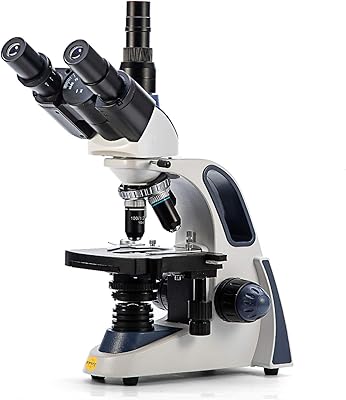
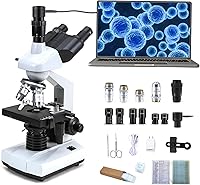
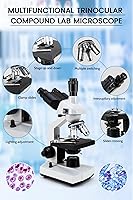
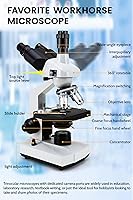
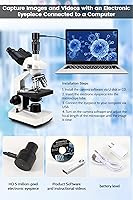
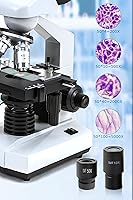
The trinocular head is arguably the standout design choice here. Unlike binocular models, it lets you view through the eyepieces and capture images simultaneously — no swapping attachments mid-session. This compound microscope kit covers magnifications from 40X up to 5000X using wide-field eyepieces and four achromatic objective lenses, though the 40X to 400X range is where it performs most reliably. The Abbe condenser gives meaningful control over light intensity and contrast, which matters when distinguishing fine details on a slide. LED illumination keeps things consistent across sessions. The USB-connected 5MP camera lets you throw live images onto a laptop or projector — genuinely handy for classroom demonstrations or sharing findings with others.

Best For

This trinocular microscope fits a fairly specific buyer profile, and it fits it well. High school and college students studying biology or microbiology will get real mileage from the included slides and the camera's ability to share specimens on-screen. Home educators building a science-focused curriculum will appreciate having everything needed in one box. Hobbyists — mycologists checking spore structure, amateur naturalists, or gem enthusiasts examining mineral inclusions — will find the magnification range practical. Small teaching environments on tighter budgets also make a natural fit. It is not the right call for professional laboratory work, but for anyone learning, exploring, or teaching, the Crspexil scope covers a lot of ground.

User Feedback

Buyers consistently praise image clarity at moderate magnifications, particularly in the 100X to 400X range, and most find the camera straightforward to connect and use. The 30-slide kit gets frequent mentions as a welcome inclusion. On the critical side, the 5000X maximum is theoretical — real-world sharpness falls off well before that ceiling, which surprises buyers expecting sharp images at maximum zoom. A few Mac users have flagged minor friction getting the USB camera recognized, though most resolve it with a driver update. Build quality feedback is generally positive on the metal frame, but some note accessory parts feel lighter than expected. Brand support remains an open question given Crspexil's short track record, so checking warranty terms beforehand is wise.

Pros

  • The trinocular head lets you view specimens and capture camera images at the same time, with no interruption to your workflow.
  • A 5MP USB camera is included, making it easy to display live images on a laptop or projector for group learning.
  • The 30-piece prepared slide kit means you can start exploring immediately without buying anything extra.
  • Image clarity in the practical 40X to 400X magnification range is consistently praised by buyers across use cases.
  • The Abbe condenser gives real control over lighting and contrast, which noticeably improves specimen detail at higher magnifications.
  • LED illumination stays consistent across sessions and does not generate the heat that older halogen systems produce.
  • The metal frame feels solid and well-weighted for a scope in this price category, giving it a more professional feel than budget alternatives.
  • Wide-field eyepiece options — WF10x, WF25x, and WF2x — offer genuine flexibility for different specimen types and observation goals.
  • The 360-degree rotatable head is a practical convenience in shared or classroom settings where multiple users work from different angles.
  • For the price, the overall feature-to-value ratio is difficult to match among comparable trinocular kits currently available.

Cons

  • The advertised 5000X magnification is a theoretical maximum; real-world image sharpness drops significantly at extreme zoom levels.
  • Mac users have reported occasional driver friction when setting up the USB camera, which adds unwanted setup time.
  • Some accessory components feel noticeably lighter and less durable than the main metal body of the scope.
  • Crspexil is a newer brand with a short support history, making it harder to assess long-term warranty reliability.
  • No dedicated software bundle is included, so users must source compatible imaging software independently for advanced camera features.
  • At nearly 9 pounds, this compound microscope kit is not particularly portable and needs a stable, dedicated workspace.
  • Customer service responsiveness is inconsistently reported, which is a real concern if something goes wrong after purchase.
  • The 100X oil immersion objective requires immersion oil not included in the kit, adding an extra purchase for users who need it.

Ratings

The scores below reflect our AI-driven analysis of verified global buyer reviews for the Crspexil 2024 Trinocular Compound Microscope, with spam, bot-submitted, and incentivized feedback actively filtered out before scoring. Each category captures what real users consistently praised and where they ran into genuine frustrations — nothing is softened or cherry-picked. The result is an honest, data-grounded picture of where this compound microscope kit delivers and where it falls short.

Optical Clarity
78%
22%
At mid-range magnifications — particularly between 100X and 400X — users report impressively sharp, well-defined specimen images that rival scopes sold at significantly higher prices. Students examining cell structures and hobbyists inspecting insect anatomy consistently find the glass achromatic objectives produce clean, color-accurate results in everyday observation sessions.
Image quality degrades noticeably as magnification climbs beyond 400X, and the advertised 5000X ceiling is essentially unusable for meaningful work. Users expecting crisp resolution at extreme magnifications are regularly disappointed, and this remains the most cited optical limitation across reviews.
Camera Performance
74%
26%
The 5MP USB camera is one of the stronger inclusions at this price tier, and most Windows users find it connects and delivers a usable live feed within minutes of setup. Teachers and hobbyists who want to project specimen images onto a screen or share captures with others find it genuinely functional for those tasks.
Mac users face a frustrating onboarding experience, often requiring driver hunting before the camera is recognized at all. Beyond connectivity, the camera output at higher magnifications shows noise and softness that limits its usefulness for any serious documentation or presentation work.
Build Quality
76%
24%
The main body and frame feel reassuringly solid — the metal construction gives this trinocular microscope a heft and rigidity that plastic-bodied budget scopes cannot match. Users consistently note that the core instrument feels well-assembled and stable on a desk, which matters during fine-focus adjustments.
Several buyers point out that smaller accessory components — lens caps, slide clips, and the condenser adjustment ring — feel noticeably lighter and cheaper than the rest of the unit. Over time, these secondary parts are where wear and breakage are most likely to appear, which is worth factoring in for heavy regular use.
Value for Money
82%
18%
When users tally up what is included — trinocular head, 5MP camera, multiple eyepiece sets, four objective lenses, Abbe condenser, and 30 prepared slides — the overall package represents strong value relative to what comparable kits charge. For students and home educators, the cost-per-feature ratio is one of the most frequently praised aspects in reviews.
Buyers who stretch the scope beyond its intended use case — expecting clinical-grade optics or professional imaging output — quickly feel the price reflects compromises. For casual to semi-professional users it feels fair; for anyone with demanding needs, it starts to feel like a false economy given the optical ceiling.
Ease of Setup
71%
29%
Physical assembly is manageable for most users without prior microscopy experience, and the included accessories are clearly organized. Windows users in particular tend to have a smooth first-session experience, with the camera connecting without significant technical hurdles.
Mac compatibility is the most persistent setup complaint, with USB camera recognition failing out of the box for a meaningful share of Apple users. The absence of bundled software also means new users must independently source and configure imaging applications, which adds friction that better-packaged competitors avoid.
Magnification Range
66%
34%
The range of interchangeable eyepieces combined with four objective lenses gives users genuine flexibility for different specimen types and observation goals. Switching between low-power overview observation at 40X and detailed cellular work at 400X is smooth and well-suited to educational and hobbyist routines.
The 5000X maximum printed on the box misleads a significant share of buyers into expecting something this scope simply cannot deliver optically. Honest practical magnification tops out around 400X to 1000X for usable results, and Crspexil would serve buyers better by being upfront about this rather than leading with a theoretical ceiling.
Illumination Quality
83%
The LED light source performs consistently across extended sessions, maintaining steady brightness without the heat buildup that older halogen systems generate. Users working with delicate specimens appreciate that LED illumination does not risk drying or warping slides during longer observation periods.
Some users find the LED intensity adjustment range too limited for certain specimen types, particularly when trying to balance illumination for darker or thicker slides. There is no filter slot or polarizing accessory included, which restricts specialized lighting techniques that more experienced users occasionally require.
Included Accessories
84%
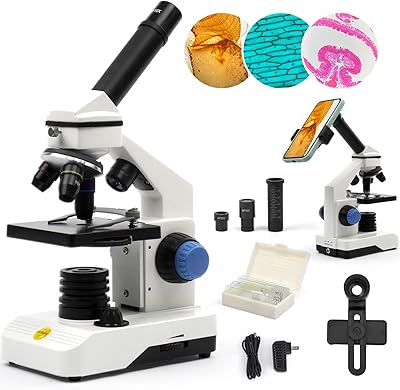
The 30-piece prepared slide set is the standout accessory inclusion — it gives first-time users a ready-made library of specimens to explore without any additional cost or preparation. Combined with the multiple eyepiece pairs, this compound microscope kit is among the more complete out-of-box packages available at its price point.
Immersion oil for the 100X objective is absent from the kit, which is a notable omission given that oil immersion is required to use that lens properly. Buyers who expect a fully self-contained kit are caught off guard by this gap, and it is worth knowing before you plan a session around high-magnification oil work.
Brand Reliability
57%
43%
Crspexil has positioned itself competitively as a value-oriented lab instrument brand, and the 2024 model shows a clear attempt to include features that more established names charge considerably more for. For buyers willing to accept some uncertainty around long-term support, the initial product experience is generally positive.
With only a brief market history, Crspexil has not yet built the after-sales track record that gives buyers confidence when something goes wrong. Customer service response times and warranty claim outcomes have been inconsistent in reported experiences, making it a genuine risk factor for buyers who depend on reliable manufacturer support.
Ergonomics & Comfort
73%
27%
The 45-degree viewing angle is a thoughtful ergonomic choice that makes extended observation sessions more comfortable compared to fully upright designs. The 360-degree head rotation is also a practical feature in shared or classroom settings where different users approach the scope from varying positions.
At nearly 9 pounds, this is not a scope you will want to move around frequently, and its footprint demands a dedicated workspace. Younger or smaller users may find the physical weight and head height slightly awkward without a height-adjustable chair or lab stool to compensate.
Focus Mechanism
75%
25%
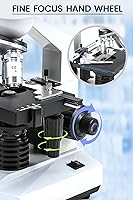
Both coarse and fine focus controls operate smoothly enough for practical educational and hobbyist use, and most users find they can lock onto a focal plane without excessive hunting. For routine slide work in the 40X to 400X range, the focus mechanism performs reliably across repeated sessions.
At higher magnifications, some users report slight play or drift in the fine focus mechanism that makes holding a precise focal plane more challenging than it should be. This is not unusual at this price tier, but it is worth noting for anyone who needs consistent focal stability for image capture work.
Camera Software Compatibility
59%
41%
The USB camera is broadly compatible with standard imaging applications on Windows, and free tools like AmScope software work without major configuration for basic capture and live display needs. For straightforward classroom projection or snapshot documentation, the software side gets the job done.
No imaging software is bundled in the box, leaving users to research and install their own solution independently — a step that trips up less tech-savvy buyers. Advanced features like measurement overlays, time-lapse recording, or calibrated image analysis require third-party paid software that adds to the total cost of ownership.
Portability & Storage
51%
49%
The packaging dimensions are compact enough that the scope can be stored in a dedicated cabinet or shelf without taking up excessive space in a home lab or classroom. The structured box it arrives in can double as a basic storage solution for occasional users.
Weighing close to 9 pounds with no carry handle or dedicated case included, transporting this trinocular microscope between locations is genuinely inconvenient. Users who need a scope they can move between classrooms, field stations, or multiple work areas will find this a persistent logistical frustration.

Suitable for:

The Crspexil 2024 Trinocular Compound Microscope is a strong match for students at the high school or college level who need a capable, camera-ready scope for biology, microbiology, or life sciences coursework. Home educators building a proper science lab will appreciate that it arrives with 30 prepared slides and accessories, making it genuinely ready to use out of the box rather than requiring a separate shopping list. Hobbyists with a serious curiosity — mycologists examining spore prints, amateur naturalists cataloguing insect anatomy, or gem enthusiasts inspecting mineral structure — will find the 40X to 400X practical range covers most of what they need. The built-in trinocular head and USB camera also make this compound microscope kit a sensible pick for small tutoring centers or classroom environments where projecting live specimen images adds real teaching value. If you are shopping for a gift for a science-curious teenager or young adult, the completeness of this kit removes a lot of the guesswork.

Not suitable for:

The Crspexil 2024 Trinocular Compound Microscope is not the right tool for professional laboratory or clinical environments where instrument reliability, traceable calibration, and manufacturer support are non-negotiable. The 5000X maximum magnification figure is largely theoretical — real optical clarity starts to degrade well before that ceiling, so researchers or diagnosticians who routinely work at extreme magnifications will find this scope falls short. The brand has a limited track record, which means long-term warranty support and parts availability are genuine unknowns; buyers who depend on a microscope for professional work simply cannot afford that uncertainty. Mac users should also be aware that USB camera connectivity has caused friction for some, and while it is usually fixable, it adds setup friction that more plug-and-play professional instruments avoid. If your needs sit anywhere near clinical diagnostics, advanced research, or sustained daily professional use, this trinocular microscope is not the tier to buy at.

Specifications

  • Brand: Manufactured and sold under the Crspexil brand, first listed on Amazon in January 2024.
  • Head Type: Trinocular head with 360-degree rotation, allowing simultaneous eyepiece observation and camera capture.
  • Magnification Range: Supports magnification from 40X to a theoretical maximum of 5000X via combined eyepiece and objective configurations.
  • Eyepieces: Includes three pairs of wide-field eyepieces: WF2x, WF10x, and WF25x, all interchangeable.
  • Objective Lenses: Four achromatic objective lenses at 4X, 10X, 40X, and 100X are mounted on a rotating nosepiece.
  • Camera: A 5.0MP digital electronic eyepiece camera captures still images and live video via USB connection.
  • Connectivity: USB interface allows connection to Windows laptops and Apple computers via an included USB converter.
  • Condenser: An Abbe condenser is fitted beneath the stage to control light focus and improve specimen contrast.
  • Light Source: LED illumination system provides consistent, low-heat lighting suitable for extended observation sessions.
  • Lens Material: Optical components including eyepieces and objective lenses are constructed from glass, not plastic.
  • Item Weight: The assembled unit weighs approximately 8.8 pounds (around 4 kg), requiring a stable, dedicated surface.
  • Dimensions: Packaged dimensions measure 15.35 x 11.93 x 7.56 inches, suitable for standard desk or lab bench placement.
  • Voltage: The unit is rated at 240 volts; buyers in regions using 110–120V should verify adapter compatibility before use.
  • Included Slides: A set of 30 pre-prepared microscope slides is included in the box for immediate use upon setup.
  • Viewing Angle: The trinocular head is positioned at a 45-degree real angle of view for comfortable upright observation posture.
  • Release Year: This microscope was first made available for purchase in January 2024 as an updated model from Crspexil.

Related Reviews
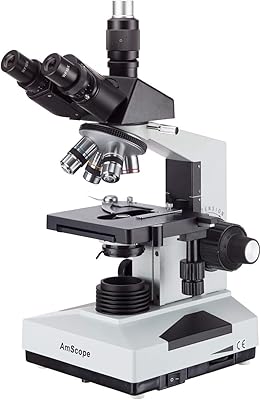
AmScope T490B Compound Trinocular Microscope
74%
88%
Optical Clarity
91%
Trinocular Head
78%
Camera Integration
86%
Mechanical Stage
89%
Build Quality
More
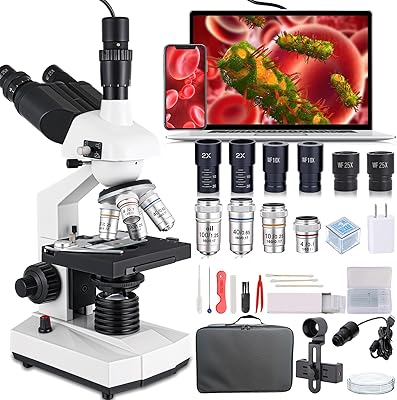
Poothoh SMXWJ-02 Trinocular Compound Microscope
73%
83%
Optical Clarity
88%
Build Quality
67%
USB Camera Performance
84%
Mechanical Stage
81%
Illumination
More
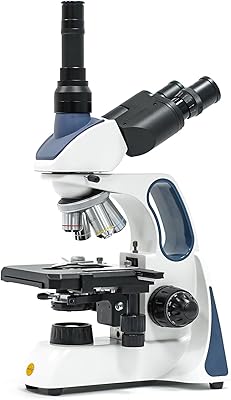
SWIFT SW400 Trinocular Compound Microscope
78%
91%
Optical Image Quality
89%
Focusing System
88%
Build Quality
86%
Objective Lenses
84%
Ergonomics & Comfort
More
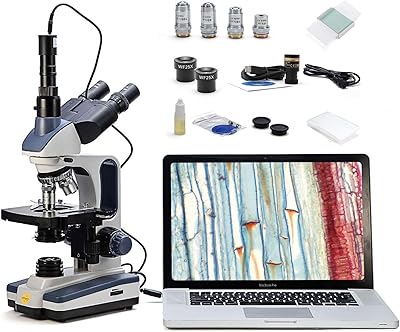
SWIFT SW350T Trinocular Compound Microscope
79%
91%
Optical Clarity
88%
Build Quality
54%
Camera Quality
57%
Software Usability
86%
Ergonomics
More
OMAX M837ZL-C100U Trinocular Compound LED Microscope
71%
83%
Optical Clarity
81%
Build Quality
67%
Camera Performance
78%
Stage Precision
76%
Ergonomics
More
OMAX M83ES 40X-2000X Lab Trinocular Biological Compound LED Microscope
84%
91%
Magnification Performance
89%
LED Illumination Quality
87%
Build Quality & Durability
93%
Ease of Setup
85%
Focus Mechanism
More
Vabiooth Darkfield Brightfield Trinocular Compound Microscope
76%
83%
Optical Clarity
74%
Darkfield Performance
71%
Digital Imaging
82%
LCD Monitor
79%
Value for Money
More
Swift SW380T Trinocular Compound Microscope
81%
83%
Optical Clarity
89%
Build Quality
81%
Focusing Mechanism
77%
Trinocular Head & Camera Compatibility
86%
Mechanical Stage
More
PalliPartners SWXWJ-1 Compound Microscope
76%
83%
Optical Clarity (Low Power)
57%
Optical Clarity (High Power)
76%
Build Quality & Stability
81%
Focus System Usability
79%
Illumination System
More
SWIFT SS121 Compound Monocular Microscope Kit
80%
88%
Build Quality
81%
Optical Clarity
84%
Illumination System
86%
Ease of Use
72%
Magnification Range
More

FAQ

Not quite the way the number implies. The 5000X figure is a theoretical maximum calculated by combining the highest-power eyepiece with the 100X oil objective, but real optical clarity falls off well before that point. Most users find that 400X is the practical sweet spot for sharp, usable images, and pushing beyond that introduces blur and reduced contrast. Set your expectations at 400X to 1000X for meaningful results.

Yes, it can connect to Apple computers via the included USB converter, but the experience is not always plug-and-play. A handful of Mac users have reported needing to install a specific driver before the camera is recognized. It is worth checking for the latest compatible driver version before your first session to avoid frustration during setup.

For most users, no. The kit includes 30 prepared slides, the camera, eyepieces, and objective lenses, so you can start observing right away. The one exception is if you plan to use the 100X oil immersion objective — that requires immersion oil, which is not included and needs to be purchased separately.

Most buyers report a manageable setup process. The physical assembly is straightforward, and the scope is fairly intuitive once you understand how to adjust the coarse and fine focus knobs. The camera setup takes a little more patience, particularly on Mac, but on Windows it tends to connect without much trouble. A beginner should expect to spend 20 to 40 minutes getting fully comfortable with the system.

Yes, and this is one of the more practical uses for this trinocular microscope. Once the USB camera is connected to a laptop, you can use compatible imaging software to display a live feed on a projector or external monitor. It works well for classroom demonstrations or group observation sessions where everyone needs to see the same specimen simultaneously.

The main body and frame are metal, which gives the scope a solid, reassuring feel. That said, some of the smaller accessory parts — lens caps, slide clips, and similar components — are plastic and feel lighter than the rest of the unit. For regular but careful educational use it should hold up fine; it is not designed for heavy-duty institutional environments where equipment takes a lot of daily abuse.

No software is bundled with the Crspexil 2024 Trinocular Compound Microscope, so you will need to source a compatible imaging application independently. Free options like AmScope software or similar microscope camera utilities work for basic image capture and live display. More advanced features like measurement overlays or time-lapse recording will require third-party software, some of which may have a cost.

It is better suited to high school age and above rather than younger children. The optics are glass rather than plastic, the instrument is nearly 9 pounds, and some of the prepared slides include biological specimens that require a degree of maturity and care to handle properly. Younger children would likely find it physically awkward and may need close adult supervision throughout.

This is a fair concern. Crspexil is a relatively new brand, and its long-term support track record is still being established. User experiences with customer service have been mixed — some report responsive assistance, others have had slower resolution times. Before purchasing, it is worth checking the current warranty terms and confirming return policies through the retailer, just to have a clear safety net in place.

The core difference is the third optical port on the head. A binocular scope has two eyepieces for comfortable two-eyed viewing, while this trinocular model adds a dedicated camera port. That means you can look through both eyepieces while simultaneously capturing images or video through the camera — you do not have to choose between observing and recording. For anyone who wants to document specimens or share live views, the trinocular head is a meaningful practical advantage.