Overview

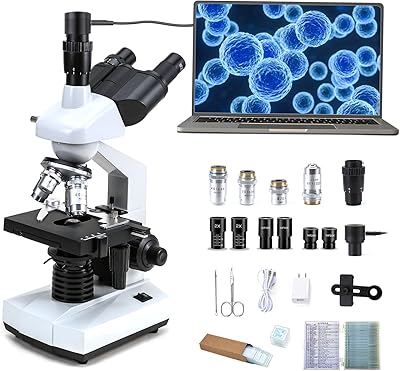
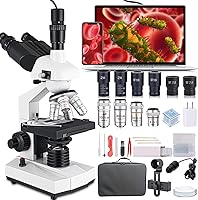
The Poothoh SMXWJ-02 Trinocular Compound Microscope sits in an interesting spot — substantial enough in build and capability to satisfy serious hobbyists and classroom educators, yet priced well below true laboratory-grade instruments. It ships with a 1.3MP USB camera that connects to both Mac and Windows, letting you display live specimens on a monitor or projector without any additional hardware. The all-metal body feels noticeably more solid than the plastic-heavy scopes that dominate the beginner tier. Poothoh is not a brand with decades of reputation behind it, and that is worth keeping in mind — but the specs and construction suggest a manufacturer that knows its way around optical equipment.
Features & Benefits

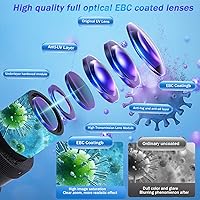
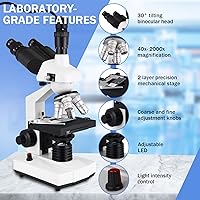
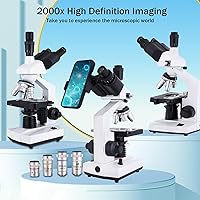
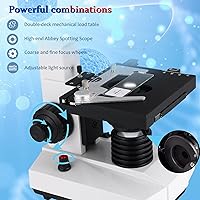
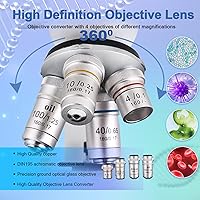
The four achromatic objectives — 4x, 10x, 60x, and 100x — give this trinocular microscope a practical magnification range that covers most biological work comfortably. One thing worth clarifying: the advertised 5000x figure folds in digital zoom; the true optical ceiling is around 1000x, which is still more than capable for cell-level examination. The trinocular head is genuinely useful — you can keep an eye to the eyepiece while the camera simultaneously feeds a laptop screen, no swapping required. The NA1.25 Abbe condenser with its adjustable iris diaphragm gives you real control over light intensity and contrast, and the double-layer XY mechanical stage makes repositioning slides precise and frustration-free. LED lighting rounds things out with steady, consistent illumination.

Best For

This compound microscope makes the most sense for people who have outgrown a basic entry-level scope and want something that can genuinely pull double duty — both for eyepiece observation and digital output. Educators and students who need to project a specimen to a class or record a session for remote learners will find the built-in camera port particularly practical. It also suits homeschool families and dedicated hobbyists who want a durable instrument without stepping into professional pricing. Small veterinary practices or independent researchers operating on tighter budgets may find it adequate for routine work. If your workflow involves documenting and archiving specimens regularly, the USB camera integration is a genuine time-saver rather than just a nice extra.

User Feedback

Across around 136 ratings, the Poothoh scope holds a 4.0-star average — respectable, though not a sign that every buyer walked away thrilled. On the positive side, users frequently highlight image clarity and build quality as standout strengths, and setting up the USB camera tends to go smoothly for most. The criticisms worth paying attention to involve chromatic fringing when pushing to the highest magnifications and questions about the bundled camera software, which is fairly standard in this segment. A few buyers also flag concerns about after-sales support, which is a legitimate consideration when buying from a newer brand. The 100x oil-immersion objective appears to perform reasonably well, though results can vary depending on slide preparation and oil quality.

Pros

  • Solid all-metal body feels noticeably more substantial than competing plastic-frame scopes in this price range.
  • The trinocular head lets you view through the eyepiece and feed the camera simultaneously, no attachment swapping needed.
  • Four achromatic objectives cover a practical magnification span that handles most biological and materials work comfortably.
  • NA1.25 Abbe condenser with adjustable iris diaphragm gives real, fine-grained control over contrast and illumination.
  • USB camera works plug-and-play on both Windows and Mac, making classroom projection straightforward.
  • Double-layer mechanical XY stage allows smooth, repeatable slide navigation without losing your position.
  • LED illumination stays consistent across long sessions and does not generate the heat that older halogen setups produce.
  • A 4.0-star average across over 130 ratings suggests this compound microscope delivers on its core promises for most buyers.
  • The 100x oil-immersion objective is included and functional, which is not guaranteed at this price point.

Cons

  • Poothoh is a relatively unknown brand, and long-term after-sales support remains an open question for buyers.
  • The 1.3MP camera resolution is on the lower end — fine for streaming and basic documentation, but limiting for detailed image analysis.
  • The 5000x maximum magnification claim is heavily reliant on digital zoom, which degrades image quality noticeably at those levels.
  • Bundled camera software is reported to be basic and clunky, and third-party alternatives may be needed for a smoother workflow.
  • Chromatic fringing can appear at the highest magnification settings, which is a known compromise in this price tier.
  • At 8.4 pounds and a fairly upright 13-inch profile, the scope is not easy to move around once set up in a workspace.
  • The 240V voltage rating may require a step-down converter for users in countries with 110V to 120V standard power supply.
  • Buyers sensitive to brand reputation may find the lack of established manufacturer history harder to overlook when making a considered investment.

Ratings

The scores below reflect an AI-driven analysis of verified global buyer reviews for the Poothoh SMXWJ-02 Trinocular Compound Microscope, with spam, incentivized, and bot-generated feedback actively filtered out before scoring. Each category captures both the genuine enthusiasm and the honest frustrations real users have reported, so you get a clear picture of where this compound microscope earns its keep and where it falls short. Nothing has been softened to protect the brand.

Optical Clarity
83%
Users consistently praise the sharpness of images through the eyepieces, particularly at mid-range magnifications between 40x and 400x where the achromatic objectives perform at their best. Educators and hobbyists examining plant cells, blood smears, and water organisms report clean, well-resolved images that hold up comfortably for extended study sessions.
At the upper end of the optical range — especially using the 100x oil-immersion objective — some users notice chromatic fringing around high-contrast specimen edges, which is a known compromise of achromatic rather than plan-achromatic optics. This is unlikely to bother casual users but may frustrate those doing detailed analytical work.
Build Quality
88%
The all-metal construction is one of the most frequently praised aspects across buyer reviews, with users noting that it feels solid and well-balanced compared to plastic-body scopes in the same price range. The focusing knobs, stage controls, and nosepiece all operate smoothly without the looseness or wobble that tends to appear in cheaper instruments over time.
A handful of users have flagged minor quality-control inconsistencies — occasional stiff focus mechanisms or slight misalignment in the trinocular head — suggesting that unit-to-unit variation is not entirely eliminated. These are not widespread complaints, but they are worth acknowledging given the brand's limited manufacturing track record.
USB Camera Performance
67%
33%
For classroom projection, live streaming to a remote audience, or basic specimen documentation, the included USB camera does the job without requiring additional purchases. Plug-and-play compatibility with both Windows and Mac means most users are up and running within minutes, which is genuinely convenient for educators setting up in a hurry.
At 1.3MP, the camera resolution is modest by current standards, and buyers expecting crisp, publication-ready images will be underwhelmed. Fine structural detail visible through the eyepiece does not always translate faithfully to the camera feed, and low-contrast specimens in particular can look flat or noisy on screen.
Mechanical Stage
84%
The double-layer XY mechanical stage is a clear upgrade over the basic spring clip stages found on entry-level scopes, allowing users to scan across slides methodically without losing their place or knocking the specimen. Biology students doing systematic cell counts and hobbyists mapping larger specimens both report that the stage movement is smooth and predictable.
At very high magnifications, minor mechanical play in the stage controls can cause small positional jumps, which interrupts fine navigation. Users also note that the stage travel range, while adequate for standard slides, feels slightly limiting when working with larger or irregularly shaped specimens.
Illumination
81%
19%
The LED light source provides steady, consistent illumination across long sessions without generating the heat that older halogen setups produce, which matters when working with temperature-sensitive specimens or simply sitting at the scope for an hour or more. Combined with the adjustable iris diaphragm, users have good control over brightness and contrast for different specimen types.
Some users find the LED color temperature a touch cool for certain staining techniques that benefit from warmer light, and the intensity range, while adjustable, does not extend as low as some sensitive specimens ideally require. These are fine-tuning concerns rather than fundamental flaws, but they are worth noting for advanced users.
Condenser & Optics System
79%
21%
The NA1.25 Abbe condenser is a meaningful inclusion at this price tier and gives users real leverage over image contrast when paired with the iris diaphragm — something completely absent on entry-level instruments. Experienced microscopists appreciate having the ability to adjust the condenser height and aperture to suit specific objective and specimen combinations.
Buyers new to compound microscopy often find condenser adjustment unintuitive at first, and the lack of detailed guidance in the manual means there is a learning curve before users extract the full benefit from this feature. For complete beginners, the condenser may go largely unused for months.
Software & Digital Tools
52%
48%
The USB camera functions reliably as a basic image capture and live preview device, and for users who only need to display a live feed on a monitor or take occasional snapshots, the bundled software is serviceable enough to get started without spending extra money right away.
The bundled camera software is widely described as clunky, outdated in its interface, and limited in features like measurement tools, time-lapse, and annotation — things that comparable third-party apps handle far better. Most users who rely on digital capture end up switching to free alternatives like AmScope software relatively quickly.
Ease of Setup
77%
23%
Assembly is reported to be straightforward for the majority of buyers, with the optical components arriving pre-aligned and the USB camera connecting without driver installation on modern operating systems. Users with any prior microscopy experience typically have the scope operational and ready to use within fifteen to twenty minutes of unboxing.
The included instruction manual is considered thin and poorly translated in places, which creates confusion for first-time microscope owners who need clear guidance on condenser adjustment, oil-immersion technique, and camera software installation. A better-written quick-start guide would reduce the number of early frustrations significantly.
Value for Money
76%
24%
For buyers who genuinely need a trinocular head, a mechanical stage, and a built-in camera port, this compound microscope delivers a combination of features that would typically cost considerably more from established optical brands. Educators and serious hobbyists who use it regularly tend to feel the price-to-capability ratio is fair for what they receive.
Buyers who purchase this scope primarily for the USB camera or the headline 5000x magnification claim may feel misled once they discover the camera resolution limitations and the digital-zoom dependency behind that upper figure. Value perception drops noticeably when expectations are set by marketing language rather than technical reality.
After-Sales Support
54%
46%
Poothoh does engage with dissatisfied customers and has responded to some negative reviews with offers to resolve issues, suggesting at least a baseline level of post-purchase accountability. For straightforward problems like missing accessories or cosmetic damage on arrival, the brand appears willing to act.
As a newer and less-established brand, Poothoh does not have the service infrastructure or parts availability that buyers of Olympus, Zeiss, or Amscope instruments can rely on. Long-term repair support and warranty enforcement are genuine unknowns, and several buyers have flagged slow or inconsistent communication when issues arose after the initial purchase window.
Optical Magnification Range
78%
22%
The four-objective configuration covers a genuinely useful span for biological work — from low-power 40x overviews of tissue sections down to 1000x oil-immersion examination of individual cells. For a single instrument, this versatility is a practical strength that reduces the need to own multiple scopes for different tasks.
The gap between the 10x and 60x objectives leaves a missing 40x intermediate step that many microscopists consider essential for comfortable navigation across a slide. Users accustomed to a 40x objective in that middle position often find themselves jumping between magnifications more abruptly than they would prefer.
Portability & Storage
62%
38%
At 8.4 pounds, the Poothoh scope is manageable enough for a single person to move between rooms or transport to a classroom, and the compact 11 by 13-inch footprint fits on most standard desks without dominating the workspace.
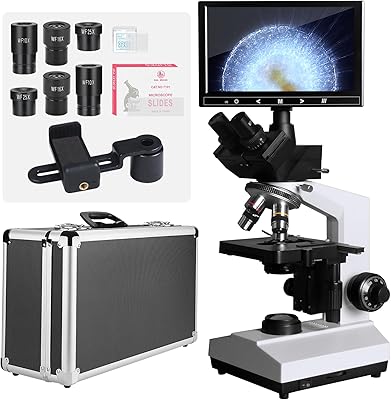
The weight and rigid profile make it impractical for regular transport in a bag or case, and the scope does not come with a carrying case or dust cover in the box. Users who need to store it between sessions or move it frequently will need to source a cover separately to protect the optics.
Compatibility with Accessories
71%
29%
The trinocular port uses a standard C-mount interface, meaning buyers can upgrade to a higher-resolution third-party camera in the future without replacing the entire scope. The standard slide format and objective thread size also mean replacement objectives and prepared slides are widely available from generic suppliers.
The 240V power rating is a real compatibility issue for North American buyers, requiring a step-down converter that adds cost and a point of failure to the setup. This detail is easy to overlook at the point of purchase and frustrates US and Canadian buyers who discover it after the fact.

Suitable for:

The Poothoh SMXWJ-02 Trinocular Compound Microscope is a strong fit for educators, advanced students, and dedicated hobbyists who want a meaningful step up from basic consumer scopes without committing to the cost of a fully professional instrument. Teachers who need to project live specimen images onto a classroom screen or stream sessions to remote learners will find the built-in camera port genuinely practical rather than a gimmick. Homeschool families with a serious interest in biology or natural sciences will appreciate the durable all-metal build, which can handle years of regular use without the wobble and fragility that plague cheaper plastic alternatives. Citizen scientists and amateur biologists who regularly prepare and document slides — blood smears, water samples, plant tissue — will benefit from having a camera output that allows archiving without interrupting the viewing session. Small veterinary clinics or independent researchers operating on constrained budgets may also find this trinocular microscope adequate for routine specimen checks and basic documentation workflows.
Not suitable for:

The Poothoh SMXWJ-02 Trinocular Compound Microscope is not the right tool for professional laboratory environments where instrument pedigree, calibration traceability, and manufacturer support infrastructure genuinely matter. Anyone expecting to do serious research at the limits of optical resolution should be aware that the 1.3MP USB camera is modest by current standards — it will not produce the image quality that a dedicated microscopy camera or a higher-tier instrument would deliver. The advertised 5000x figure is largely the product of digital zoom layered on top of the 1000x optical ceiling, so buyers who need that upper range for genuine analytical work will find it misleading in practice. If long-term warranty support and a responsive after-sales service network are priorities, the relative newness of the Poothoh brand introduces real uncertainty that more established names do not. Budget-focused buyers who only need occasional, low-magnification viewing would also be overspending here — a simpler binocular scope would serve them just as well for less.

Specifications

  • Brand: This microscope is manufactured and sold under the Poothoh brand, model number SMXWJ-02.
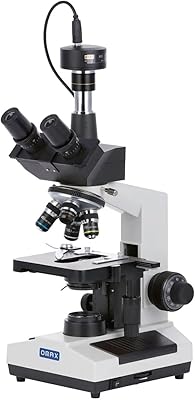
  • Head Type: The trinocular head provides two eyepiece ports for direct viewing and a third dedicated port for camera attachment.
  • Objectives: Four achromatic objectives are included — 4x, 10x, 60x, and 100x — mounted on a rotating nosepiece.
  • Magnification: Optical magnification ranges from 40x to 1000x; the stated 5000x figure incorporates additional digital zoom from the camera software.
  • Camera: A 1.3MP USB 2.0 digital camera is integrated into the trinocular port for live viewing, image capture, and video recording.
  • OS Compatibility: The included USB camera is compatible with Windows and Mac OS X operating systems.
  • Condenser: An NA1.25 Abbe condenser with an adjustable iris diaphragm controls the intensity and angle of light reaching the specimen.
  • Stage: The double-layer mechanical XY stage allows controlled, bidirectional movement for precise specimen positioning.
  • Illumination: An LED light source mounted beneath the stage provides consistent, low-heat illumination suitable for extended observation sessions.
  • Body Material: The main body and arm are constructed from metal, contributing to the scope's overall rigidity and 8.4-pound weight.
  • Dimensions: The assembled microscope measures approximately 11″ in length, 6.69″ in width, and 13″ in height.
  • Weight: The unit weighs 8.4 pounds, reflecting the all-metal construction used throughout the frame and stage.
  • Voltage: The scope is rated at 240V, which may require a step-down converter for use in 110V to 120V power environments.
  • Color: The microscope is finished in black across all major external components.
  • Eyepiece Field Angle: The eyepieces offer a 45-degree real angle of view, which is standard for compound microscopes in this class.

Related Reviews
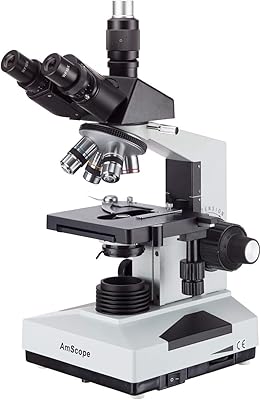
AmScope T490B Compound Trinocular Microscope
74%
88%
Optical Clarity
91%
Trinocular Head
78%
Camera Integration
86%
Mechanical Stage
89%
Build Quality
More
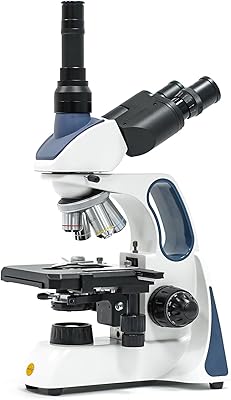
SWIFT SW400 Infinity-Corrected Trinocular Compound Microscope
85%
94%
Optical Performance
91%
Build Quality
88%
Ease of Use
89%
Magnification Range
86%
Illumination Quality
More
SWIFT SW350T Trinocular Compound Microscope
79%
91%
Optical Clarity
88%
Build Quality
54%
Camera Quality
57%
Software Usability
86%
Ergonomics
More
Crspexil 2024 Trinocular Compound Microscope
71%
78%
Optical Clarity
74%
Camera Performance
76%
Build Quality
82%
Value for Money
71%
Ease of Setup
More
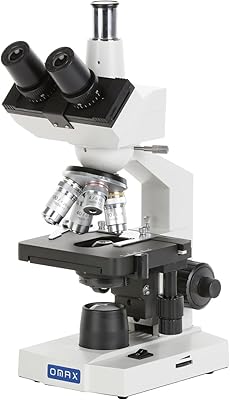
OMAX M837ZL-C100U Trinocular Compound LED Microscope
71%
83%
Optical Clarity
81%
Build Quality
67%
Camera Performance
78%
Stage Precision
76%
Ergonomics
More
OMAX M83ES 40X-2000X Lab Trinocular Biological Compound LED Microscope
84%
91%
Magnification Performance
89%
LED Illumination Quality
87%
Build Quality & Durability
93%
Ease of Setup
85%
Focus Mechanism
More
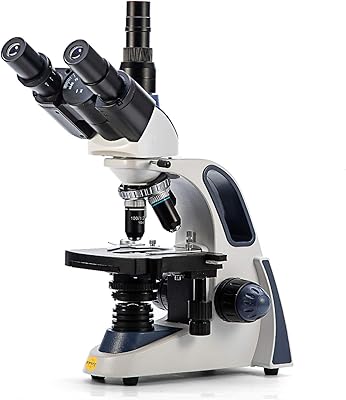
Vabiooth Lab Darkfield & Brightfield Trinocular Compound Microscope 40X-2500X Magnification
83%
91%
Magnification Performance
87%
Ease of Use
93%
Image Clarity
89%
Illumination Quality
85%
Build Quality
More
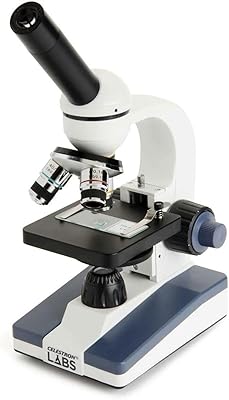
Swift SW380T Trinocular Compound Microscope
81%
83%
Optical Clarity
89%
Build Quality
81%
Focusing Mechanism
77%
Trinocular Head & Camera Compatibility
86%
Mechanical Stage
More
Poothoh ZC-2545 Compound Monocular Microscope
72%
83%
Optical Clarity (Mid-Range Magnification)
51%
Maximum Magnification Realism
88%
Build Quality & Durability
84%
Focus System Performance
79%
LED Illumination Quality
More
PalliPartners SWXWJ-1 Compound Microscope
76%
83%
Optical Clarity (Low Power)
57%
Optical Clarity (High Power)
76%
Build Quality & Stability
81%
Focus System Usability
79%
Illumination System
More

FAQ

For most users on Windows 10 and newer, the camera is recognized as a standard USB device without needing a dedicated driver. Mac OS X also handles it reasonably well. That said, the bundled software for capturing and recording images is fairly basic, so many users end up switching to a free third-party option like AmScope or even OBS for streaming.

The true optical magnification tops out at around 1000x when you combine the 100x oil-immersion objective with the 10x eyepiece. The 5000x figure you see in the listing factors in digital zoom applied through the camera software, which comes at a visible cost to image sharpness. For serious work, stick to the optical range.

Yes, the 100x objective is an oil-immersion lens, which means you need to apply a drop of immersion oil between the objective and the coverslip to get a usable image at that magnification. Immersion oil is typically not included in the box, so you will need to purchase it separately — it is inexpensive and widely available.

That is one of the more practical use cases for this trinocular microscope. Because the camera connects via USB and shows up as a standard webcam on your computer, you can share the feed through any platform that supports camera input, including Zoom, Google Meet, or OBS for streaming. Image quality at 1.3MP is adequate for classroom purposes, though it will not impress anyone accustomed to higher-resolution setups.

You can observe larger bacteria at 1000x optical magnification, but resolving fine bacterial detail consistently requires good slide preparation, quality immersion oil, and some practice. This scope is capable in the right hands, but it is not a replacement for a fully calibrated research-grade instrument if bacteriology is your primary focus.

The double-layer XY mechanical stage is a genuine upgrade over the clip-style stages found on entry-level scopes, and most users report that it holds position well during normal use. Some minor drift at very high magnifications is not unusual for any mechanical stage in this price range, but it is not a significant issue for typical observation and documentation work.

The scope is rated at 240V, which means it is designed for international power standards rather than the 110V to 120V outlets common in the United States. You will need a step-down voltage converter to use it safely in the US. This is worth factoring into your setup cost before purchasing.

Yes, the trinocular port is a standard C-mount compatible interface, so you can replace the included camera with a higher-resolution microscopy camera from brands like AmScope or SVBONY when you are ready to upgrade. The existing camera works fine for basic documentation, but the port itself is not a bottleneck if you want better image quality down the line.

Most buyers report that assembly is straightforward — the major components arrive pre-aligned, and basic operation does not require calibration beyond adjusting the condenser height and diaphragm to suit your specimen and lighting preference. The focus controls are smooth and responsive out of the box for most units. If you have used any compound microscope before, you will feel at home within a few minutes.

Poothoh states that they will work with customers to resolve any dissatisfaction, but as a relatively new and lesser-known brand, the depth and reliability of their after-sales support is harder to verify than with established names. If warranty coverage is a priority for you, it is worth reaching out to the seller directly before purchasing to understand the specific terms, and keeping all packaging and documentation after delivery.