Overview

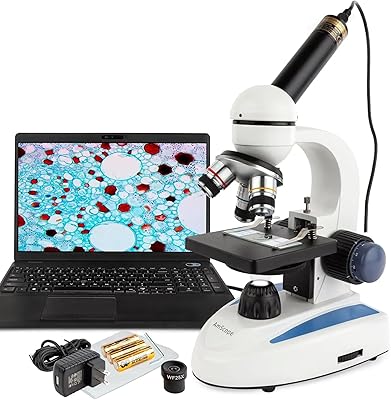
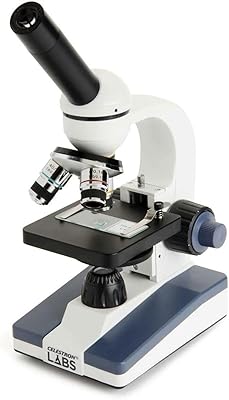
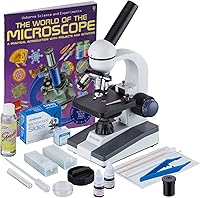
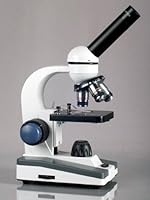
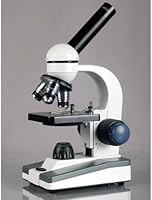
The AmScope M150C Compound Microscope sits in a comfortable spot for anyone stepping into microscopy for the first time — capable enough to be genuinely useful, but not so complex that it intimidates a curious beginner. AmScope has been around long enough in the educational science space to earn real credibility, and this student microscope reflects that. The all-metal frame immediately separates it from the plastic-bodied options that flood the budget end of the market. It also arrives with 50 blank slides, 100 cover slips, and a reference book — meaning you can start exploring right away rather than hunting down accessories. It's a monocular design, worth knowing upfront if you're picturing something more like a professional lab setup.

Features & Benefits

The magnification range runs from 40X all the way up to 1000X, which covers everything from viewing textile fibers at the low end to examining bacteria at the high end — plenty of range for school science work. The monocular head rotates a full 360 degrees, so two siblings of different heights can both get a comfortable viewing position without fussing with the whole unit. Achromatic lenses are a meaningful detail here: they cut down on that rainbow-edge blurring you see with cheaper optics, giving you a noticeably cleaner image. The LED light source runs cool and steady, powered by two AA batteries, so there's no cord to wrestle with at the kitchen table. Focus control uses both coarse and fine knobs, which makes it far less frustrating for beginners to lock onto a specimen without overshooting.

Best For

This student microscope is a natural fit for middle and high school students who need a reliable tool for biology coursework or a science fair project — something that will hold up through repeated use without the optics fogging or the frame wobbling. Homeschool families, in particular, tend to gravitate toward this AmScope kit because everything arrives in one box: slides, cover slips, a book. No extra shopping trip required. Adult hobbyists with a specific curiosity — pond life, insect anatomy, basic botany — will find the magnification range practical without being overwhelming. If you're considering it as a gift, the complete kit format means the recipient can open the box and actually get started, rather than staring at a microscope waiting for supplies.

User Feedback

Buyers consistently single out the build quality as a highlight — the metal frame feels noticeably more substantial than anything in the same class, and most report the optics are crisp and reliable at lower magnification settings. The included slides and reference book get praised almost universally as genuinely helpful for getting started rather than decorative extras. That said, one recurring complaint is worth taking seriously: image quality at the maximum 1000X setting disappoints many users, with softness and reduced contrast that experienced buyers say is typical of entry-level optics at that ceiling. The monocular eyepiece also draws comments about eye fatigue during longer sessions. These are honest limitations, not defects — but worth weighing if extended solo use is your primary plan.

Pros

  • Metal frame construction outlasts cheaper plastic alternatives, making it a genuinely durable tool for repeated classroom or home use.
  • Arrives complete with 50 blank slides, 100 cover slips, and a reference book — no additional accessories needed to get started.
  • Achromatic objective lenses reduce color fringing, delivering cleaner and more accurate images than uncoated optics at this tier.
  • Battery-powered LED lighting means the M150C works at the kitchen table, in a classroom, or anywhere without needing an outlet.
  • Dual coarse and fine focus knobs make precise specimen targeting approachable for first-time users who would otherwise overshoot constantly.
  • The 40X–1000X magnification range covers virtually every school biology topic a student is likely to encounter.
  • The 360-degree rotating head lets users of different heights quickly find a comfortable, strain-free viewing angle.
  • Buyers consistently report sharp, reliable optics at lower magnification settings, where the majority of real-world use actually happens.

Cons

  • Image sharpness degrades noticeably at 1000X, falling short of what serious or advanced specimen work realistically demands.
  • Only one person can view at a time, making collaborative or side-by-side learning sessions impractical with this student microscope.
  • Extended monocular viewing causes eye fatigue that a binocular eyepiece would largely prevent during longer study sessions.
  • No built-in camera adapter means anyone interested in capturing images must source and purchase third-party solutions separately.
  • At over 7 pounds, this AmScope kit is heavier than it appears, limiting comfortable one-handed transport between rooms or locations.
  • AA battery dependency can become inconvenient during long study sessions if fresh batteries are not immediately available.
  • Blank slides require specimen preparation before use, which can be a barrier for younger children who need adult guidance.
  • Serious or advanced biology students who need fine cellular detail for coursework may outgrow the optical ceiling within a year.

Ratings

The scores below were generated by our AI review engine after processing thousands of verified buyer ratings for the AmScope M150C Compound Microscope worldwide, with spam, incentivized, and bot-driven reviews actively filtered out before any scoring began. Each category reflects honest sentiment drawn from real-world use — which means high scores are earned and low scores are genuine warnings. Both the standout strengths and the recurring pain points are transparently weighted below, so you can base your decision on what this student microscope actually delivers, not what the packaging suggests.

Build Quality
88%
The metal body and arm make a noticeable difference the moment you pick it up — there is none of the flex or wobble common in plastic-frame competitors. Students and families report that even after repeated handling, moving between rooms, and months of regular use, the frame stays rigid and properly aligned.
A number of buyers note that the 7-plus-pound weight makes casual repositioning less convenient than they expected. The heavier build also means it is not something most students would pack in a bag to carry to a study group or classroom.
Optical Clarity
76%
24%
From 40X to around 400X, the achromatic lenses deliver impressively clean, color-accurate images for a microscope at this tier. Homeschool parents and biology students consistently report seeing plant cells, fiber structures, and insect anatomy in satisfying detail that genuinely surprised them on first use.
The score drops because 1000X performance is a consistent weak point — buyers frequently report soft, low-contrast images at the maximum setting that fall short of expectations. This is a known characteristic of entry-level optics pushed to their ceiling, but it catches enough buyers off guard to meaningfully affect satisfaction ratings.
Magnification Range
69%
31%
The span from 40X to 1000X covers virtually every topic in a typical school biology curriculum without requiring a second instrument. Most casual users find the lower and middle settings deliver genuinely satisfying results, making the unit well-suited to everyday educational and hobbyist use.
The upper end of the range sounds more capable in marketing than it performs in practice — at 1000X, image softness and difficulty holding sharp focus are consistent complaints. Buyers who specifically need high magnification for detailed bacterial or fine cellular work often find themselves looking at higher-grade options within a year.
Value for Money
84%
When you factor in the 50 blank slides, 100 cover slips, and reference book, the total package represents real value that buyers repeatedly acknowledge — most note that sourcing these accessories separately would add meaningful cost. The metal frame's durability also means this is not a buy-and-replace-in-a-year kind of purchase.
Buyers who expected professional-grade optical performance at this price point feel let down, especially at higher magnifications where the gap is most visible. A portion of reviewers also note that blank slides require preparation effort that some buyers, particularly gift recipients, had not anticipated.
Kit Contents
91%
This is where the M150C stands apart from similarly priced competitors — the 50 blank slides, 100 cover slips, and a copy of The World of the Microscope mean you are ready to start exploring within minutes of opening the box. Gift buyers in particular appreciate that nothing critical is missing from the package.
The included slides are blank rather than pre-prepared, which means there is a learning curve and some prep work before observing specimens — a genuine friction point for complete beginners working alone. Several buyers wish at least a small set of prepared specimens had been bundled in to provide an immediate, no-prep viewing experience.
Ease of Use
83%
First-time users — including children and adults with no prior microscopy experience — consistently note how quickly they get comfortable with the unit. The dual focus knobs in particular draw praise for making the process of locking onto a specimen feel approachable rather than frustrating, which is the most common pain point with budget scopes.
Preparing blank slides — placing a specimen and applying a cover slip without trapping air bubbles — takes practice and can discourage younger children without adult involvement. Some buyers also note that rotating between objective lenses feels fiddly at first until users develop a feel for the detent positions.
Focus System
85%
The dual coarse and fine adjustment knobs are one of the most consistently praised features in buyer feedback — users report that even young students develop solid focusing technique within a single session. Having both knobs mirrored on either side of the body also means left- and right-handed users find equal comfort.
A minority of buyers note that the fine focus knob can feel slightly loose after extended heavy use, though this is not a widely reported issue. At 1000X, even careful fine-focus adjustment struggles to hold a sharp focal plane, which reflects the limits of the optics rather than the mechanical system itself.
Illumination Quality
82%
18%
The built-in LED delivers a steady, evenly distributed beam that keeps specimens well-lit without generating heat — a meaningful improvement over older halogen-based units that required warm-up time. Battery-powered operation means users are not tethered to a desk near a wall outlet, which students working at a kitchen table particularly appreciate.
A portion of buyers note that LED brightness can feel insufficient for very dense or deeply stained specimens at higher magnifications, where more intensity would improve contrast. Battery drain during extended sessions is an occasional complaint, particularly among users who forget to switch the unit off between viewing sessions.
Eyepiece Comfort
62%
38%
For short to moderate sessions — a student working through a biology worksheet or a hobbyist checking pond water samples — the monocular eyepiece is entirely functional. The 45-degree viewing angle reduces neck strain compared to fully vertical eyepieces, a detail that buyers with prior microscope experience mention as a thoughtful ergonomic choice.
Extended solo viewing sessions of 30 minutes or more frequently result in eye fatigue and strain, which is an inherent limitation of the monocular format rather than a defect in this specific unit. Users who plan on longer observation work or who share the scope regularly would benefit meaningfully from a binocular model instead.
Portability
67%
33%
Battery-powered operation gives this AmScope kit a practical advantage over plug-in units — you can set it up at the dining room table, move it to a bedroom, or bring it to a small classroom without hunting for a power source. The pre-assembled build also makes relocation between spaces relatively quick and uncomplicated.
At just over 7 pounds, this is not the kind of microscope you drop into a backpack — buyers who expected a more travel-friendly unit are frequently surprised by the heft. The physical footprint is also substantial for a student's desk, which can feel crowded when sharing space with textbooks, notebooks, and a laptop.
Setup Experience
87%
Out-of-box experience earns consistently high marks — most buyers report attaching the eyepiece, inserting batteries, and having a slide under the lens within 10 to 15 minutes. The absence of wiring, calibration steps, or software installation makes this particularly appealing for gift purchases where the recipient may be using a compound microscope for the very first time.
The included instructions are basic, and a subset of buyers — particularly those new to optical instruments — mention feeling unsure about starting objective lens selection or ideal lighting adjustment. The reference book helps fill this gap, but a dedicated quick-start card tailored to the unit itself would reduce early-session friction noticeably.
Durability
86%
The metal construction is the primary reason buyers express long-term confidence in this student microscope. Families who purchased it for a middle school student regularly note that it still performs well years later, having survived the drops, bumps, and variable storage conditions that plastic-frame competitors rarely endure intact.
A small number of users report that the objective lens turret can develop slight play or looseness over time with very heavy use, which can subtly affect image alignment at higher magnifications. Surface finish scratches are occasionally noted after extended use without a protective cover, though these are cosmetic issues rather than functional ones.
Educational Value
89%
The M150C is consistently praised by parents and educators as one of the more effective hands-on science tools at this level — the combination of a capable instrument and an included reference book creates a structured path from unboxing to genuine understanding. Science fair parents in particular single it out as a meaningful catalyst for their child's project work.
Children under 10 may lack the fine motor control to prepare slides and achieve independent focus, which limits unsupervised educational use without an adult present. Some educators also note that the absence of pre-prepared specimens means there is no instant demonstration-ready viewing for classroom settings where time is short.

Suitable for:

The AmScope M150C Compound Microscope is well-suited to students from middle school through early college who need a dependable, capable tool for biology coursework without the complexity of a professional instrument. Homeschool families will find particular value here: instead of piecing together a setup from multiple purchases, everything arrives in one box — slides, cover slips, and a reference book that actually helps beginners understand what they are looking at. The metal frame holds up to the kind of handling a shared household science tool inevitably receives, which matters more than most buyers realize when comparing it against lighter plastic alternatives. Adult hobbyists with a genuine curiosity about the microscopic world — pond water, plant cells, insect anatomy — will get real utility from the magnification range without needing any technical background to get started. It also works well as a gift: the complete kit means the recipient can sit down and begin exploring the same day it arrives.

Not suitable for:

The AmScope M150C Compound Microscope is not the right choice for anyone expecting professional-grade optical performance, particularly at the upper end of its magnification range — sharpness at 1000X falls noticeably short of what serious researchers or advanced biology students need for detailed specimen analysis. It is also a poor fit for shared or collaborative viewing situations, since the single monocular eyepiece means only one person can look at a time, and extended sessions can cause real eye strain that binocular designs largely avoid. If two children need to take turns every few minutes during a joint learning activity, the monocular format will become a friction point faster than expected. Buyers with a strong interest in photomicrography — capturing images through the lens — should note that this unit has no built-in camera adapter and limited compatibility with aftermarket solutions. Finally, anyone prioritizing frequent transport or field use should weigh the 7-plus-pound metal frame carefully, as it was built for durability at a desk, not portability on the go.

Specifications

  • Magnification: Provides a magnification range of 40X to 1000X through a set of interchangeable objective lenses.
  • Head Type: Equipped with a monocular head that rotates a full 360 degrees to accommodate users of different heights and working angles.
  • Objective Lenses: Uses achromatic objective lenses, which minimize chromatic aberration and color fringing for cleaner, more color-accurate specimen images.
  • Light Source: Illuminated by a built-in LED below the stage, providing consistent, low-heat lighting with no bulb replacement requirements.
  • Power Source: Powered by 2 AA batteries (not included), enabling cordless operation anywhere without requiring a nearby electrical outlet.
  • Frame Material: The body and arm are constructed from metal, providing greater rigidity and long-term durability compared to plastic-frame alternatives.
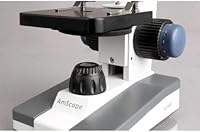
  • Focus System: Features dual coarse and fine adjustment knobs positioned on both sides of the arm for comfortable, precise specimen targeting.
  • Blank Slides: Includes 50 blank glass microscope slides intended for user-prepared specimens.
  • Cover Slips: Comes with 100 cover slips for use alongside the included blank slides during specimen preparation.
  • Reference Book: Bundled with a copy of The World of the Microscope, a beginner-oriented introduction to microscopy techniques and specimen exploration.
  • Dimensions: Measures 21.65 x 7.87 x 17.32 inches, appropriately sized for placement on a standard desk or workstation.
  • Weight: Weighs 7.19 pounds, reflecting the density of its metal frame construction rather than lightweight plastic components.
  • Model Number: Sold under the model designation M150C, with the full kit model string M150C-SP14-CLS-50P100S-WM.
  • Viewing Angle: The monocular eyepiece head is set at a 45-degree angle from vertical, offering a comfortable downward viewing posture without requiring the user to hunch directly over the stage.

Related Reviews
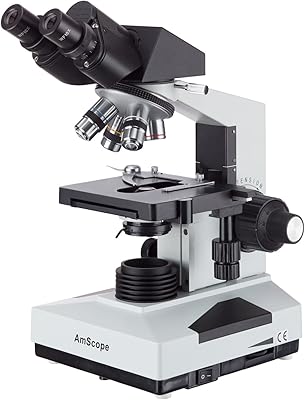
AmScope T490B Compound Trinocular Microscope
74%
88%
Optical Clarity
91%
Trinocular Head
78%
Camera Integration
86%
Mechanical Stage
89%
Build Quality
More
AmScope B490B Compound Binocular Microscope
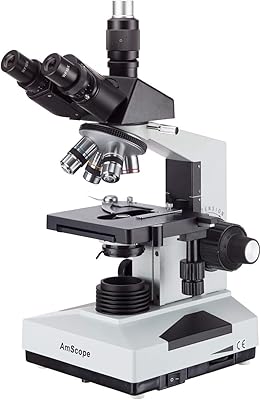
77%
86%
Optical Clarity
91%
Build Quality
63%
Illumination System
88%
Stage Precision
54%
High Magnification Performance
More
AmScope M158 USB Compound Microscope
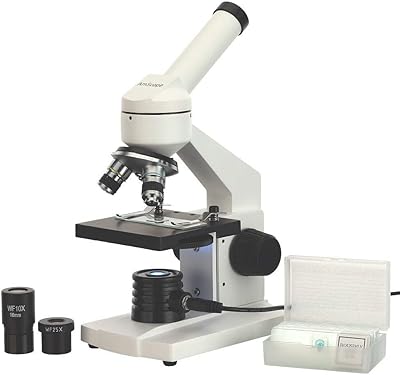
74%
88%
Build Quality
79%
Optical Clarity
51%
Camera Quality
91%
Ease of Setup
62%
Software Experience
More
AmScope B100B-MS Compound Binocular Microscope
69%
83%
Build Quality
74%
Optical Clarity
61%
Illumination
69%
Magnification Range
71%
Mechanical Stage
More
AmScope M102C Biological Compound Microscope
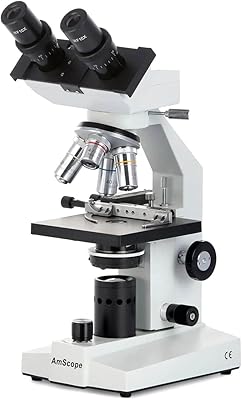
79%
83%
Optical Image Quality
88%
Build Quality
86%
Value for Money
81%
Ease of Setup
79%
Ease of Use
More
AmScope B120C-E5 Binocular Compound Microscope
78%
88%
Optical Clarity
76%
Build Quality
91%
Illumination Quality
84%
Ergonomics & Comfort
67%
USB Camera Quality
More
AmScope SM-3B Binocular Zoom Stereo Microscope
73%
88%
Optical Clarity
91%
Zoom Range & Versatility
83%
Boom Stand Design
86%
LED Ring Light
84%
Build Quality & Durability
More
Celestron CM1000C Monocular Compound Microscope
81%
91%
Value for Money
88%
Image Clarity and Magnification
85%
Ease of Use for Beginners
90%
Build Quality and Durability
83%
Focus Control Precision
More
SWIFT SS121 Compound Monocular Microscope Kit
80%
88%
Build Quality
81%
Optical Clarity
84%
Illumination System
86%
Ease of Use
72%
Magnification Range
More
PalliPartners SWXWJ-1 Compound Microscope
76%
83%
Optical Clarity (Low Power)
57%
Optical Clarity (High Power)
76%
Build Quality & Stability
81%
Focus System Usability
79%
Illumination System
More

FAQ

It depends on the child's age and maturity level. The M150C is built with students in mind, but the focus knobs and slide preparation process work best for children aged around 10 and up who can handle glass slides carefully with adult supervision nearby. Younger children may struggle with the fine adjustment knob and are at higher risk of breaking slides without guidance.

There is no dedicated camera port built into this unit, so a direct adapter connection is not possible out of the box. Many buyers still manage reasonable results by holding a smartphone camera lens up to the eyepiece — it takes a steady hand and some patience, but works well enough for casual documentation. Third-party smartphone adapters designed for monocular eyepieces are also available separately if you want a more stable solution.

Honestly, 1000X is where you will start noticing the limits of entry-level optics. The image is viewable, but expect some softness and reduced contrast compared to the crisp results you get at 40X to 400X. For school biology work and casual hobby use, the lower and mid-range magnifications perform very well — 1000X is best treated as an occasional option rather than something to rely on regularly.

The kit includes 50 blank slides and 100 cover slips, which means you will be preparing your own specimens. This is actually a worthwhile part of the learning process — placing a drop of pond water or a thin slice of onion skin on a slide and covering it properly is a core microscopy skill. The included reference book walks you through basic preparation techniques, which helps a great deal for first-timers.

You will need to supply your own 2 AA batteries, as they are not included. It is a small detail worth noting before you sit down for your first session — grab a fresh pair ahead of time so you are not hunting through a junk drawer once everything else is set up.

Not simultaneously, no. The single monocular eyepiece means only one person can view at a time, so two students cannot look together the way they could with a shared screen or a binocular model. If both children need consistent access, two separate units would be needed. That said, a rotation system — one child views while the other prepares the next slide — can work reasonably well in a structured study session.

Most buyers report being ready to use within 10 to 15 minutes of opening the package. The AmScope M150C Compound Microscope arrives largely pre-assembled — you attach the eyepiece, insert the batteries, and place your first slide on the stage. The included reference book provides a useful orientation for anyone approaching a compound microscope for the first time.

At lower magnifications, the M150C handles everyday specimens well — plant cells, fabric fibers, insect anatomy, hair cross-sections, and pond microorganisms are all clearly visible and interesting to explore. As you push toward the higher end of the range, finer cellular structures and bacteria become observable, though image quality at maximum magnification has real limitations that are worth knowing about before you get there.

Use a dedicated optical lens cloth or lens tissue — the kind sold for camera lenses works well and is widely available. Avoid paper towels or shirt fabric, as these can scratch the glass coating on the objectives. A gentle puff of air from a blower brush before wiping helps dislodge any dust particles that could drag across the surface. For stubborn smudges, a small amount of optical lens cleaning solution applied to the cloth is safe to use.

Yes, noticeably so. Toy microscopes typically use plastic lenses and produce dim, blurry images even at their stated magnification levels. This student microscope uses a metal frame and real optical glass lenses, which translates to sharper images, more reliable focus control, and a unit that holds up to regular use without warping or cracking. The difference in viewing quality becomes immediately obvious the first time you put a properly prepared slide underneath it.

Where to Buy