Overview

The Ubiquiti UAP-AC-M Outdoor Mesh Access Point is Ubiquiti's answer to a persistent networking problem: how do you get reliable Wi-Fi to the far corner of your property without running conduit? This outdoor access point sits firmly in prosumer territory — dual-band 802.11ac, weatherproof housing, and powered entirely over Ethernet, so placement is not constrained by outlet locations. It has earned a strong reputation among networking enthusiasts, and the ratings reflect that. One thing to know upfront: this is not a consumer device you configure through a phone app. It is managed through UniFi Controller software, which rewards those familiar with it and frustrates those who are not.
Features & Benefits

The UAP-AC-M runs dual-band 802.11ac across 2.4 GHz and 5 GHz, with a combined spec throughput of 1167 Mbps — though real-world speeds in mesh mode will be noticeably lower, as with any wireless backhaul setup. What makes this outdoor access point genuinely practical is 24V passive PoE: power travels over the same Ethernet cable carrying data, and the injector ships in the box. Mounting is straightforward given the slim, 5.4-ounce body. The fixed external antennas are tuned for outdoor coverage patterns, and once adopted into UniFi Controller, you get centralized monitoring, traffic analytics, and firmware management across your entire site from a single dashboard.

Best For

This UniFi mesh node is a natural fit for homeowners who need solid coverage across a backyard, detached garage, or outbuilding — anywhere a consumer extender would struggle with interference or drop-outs. Small business operators covering parking areas or outdoor seating will find it equally capable. IT professionals and integrators already running UniFi environments will appreciate how quickly the UAP-AC-M slots into an existing setup. It is also a strong pick for anyone who needs to avoid running power cables to the mounting point, since PoE handles both. If you are replacing a flimsy consumer outdoor extender with something that will actually hold up over years, this is the right level of hardware to step into.

User Feedback

Among the most consistent things buyers mention is long-term reliability — units running outdoors for years with no reboots or drop-outs. Range and signal stability in open outdoor environments earn repeated praise. The included PoE injector also gets positive mentions; not having to source it separately is a small but appreciated detail. On the other side, first-time Ubiquiti users frequently flag the UniFi Controller setup as a real learning curve — not insurmountable, but not trivial either. A notable portion of buyers also wish the hardware supported Wi-Fi 6, and that is a fair point. The 802.11ac standard is aging, and for anyone building a network meant to last several more years, it is worth factoring in before purchasing.

Pros

  • Outdoor range and signal stability are consistently strong, even across large open properties.
  • 24V passive PoE ships in the box, so you are not sourcing an injector separately.
  • The UAP-AC-M is weatherproof and built to handle years of outdoor exposure without issues.
  • Mesh uplink capability lets you extend coverage without digging trenches or running new cable.
  • UniFi Controller gives you centralized monitoring and management across every node on your network.
  • At its price point, this outdoor access point competes well against far more expensive enterprise alternatives.
  • Many buyers report units running continuously for multiple years with no hardware failures or reboots.
  • Lightweight compact body makes pole or wall mounting quick and clean without heavy hardware.
  • Dual-band operation lets you separate traffic across 2.4 GHz and 5 GHz for better client management.
  • Integrators and IT teams find it straightforward to adopt into existing UniFi deployments.

Cons

  • UniFi Controller setup has a genuine learning curve that will frustrate non-technical buyers.
  • This UniFi mesh node runs 802.11ac (Wi-Fi 5), not Wi-Fi 6, which limits long-term future-proofing.
  • Wireless mesh backhaul noticeably reduces real throughput compared to the 1167 Mbps spec figure.
  • No standalone configuration option — a UniFi Controller instance is required to unlock full functionality.
  • The 24V passive PoE standard is non-standard and not compatible with common 802.3af or 802.3at switches.
  • Buyers without any prior Ubiquiti experience face a steeper initial time investment to get the system running correctly.
  • No built-in app-based setup — the management workflow assumes familiarity with network administration concepts.
  • Hardware design dates to 2016, meaning software support will eventually reach end-of-life on a timeline Ubiquiti controls.

Ratings

The Ubiquiti UAP-AC-M Outdoor Mesh Access Point has been scored by our AI system after analyzing thousands of verified global buyer reviews, with spam, bot submissions, and incentivized feedback actively filtered out. The scores below reflect an honest composite of real-world experiences — covering everything from outdoor deployment ease to long-term reliability — and do not shy away from the friction points buyers actually encounter. Both where this outdoor access point excels and where it genuinely falls short are represented transparently.

Outdoor Range & Coverage
91%
Buyers deploying this UniFi mesh node across large yards, parking areas, and between buildings consistently report stable signal at distances that leave consumer-grade extenders far behind. In open outdoor environments with line of sight, coverage holds up well even for bandwidth-demanding tasks like video streaming or VoIP calls at range.
Coverage drops more noticeably than expected when obstructions like thick walls, dense hedging, or outbuilding roofing are in the path. A small number of buyers in heavily wooded or obstructed properties found they needed a second unit to fill gaps they had hoped one would handle.
Build Quality & Weatherproofing
88%
The housing feels purposefully constructed for long-term outdoor exposure, and buyers in climates with heavy rain, humidity, and temperature swings report units holding up without degradation over multiple years. The slim cylindrical form factor also resists wind loading better than flat-panel alternatives.
A handful of buyers noticed the Ethernet port area is the most vulnerable point in wet conditions if the cable seal is not properly managed during installation. The white finish can show UV-related yellowing after extended direct sun exposure, which is a cosmetic issue rather than a functional one.
Setup & Configuration
58%
42%
For buyers already familiar with the UniFi ecosystem, adopting this outdoor access point into an existing controller setup is fast and straightforward — typically a matter of minutes. The UniFi Controller interface itself is detailed and capable once you understand its structure.
First-time Ubiquiti users frequently describe the initial setup as a steep and frustrating experience, particularly around understanding the controller adoption process and 24V passive PoE requirements. There is no guided setup wizard comparable to consumer mesh systems, and troubleshooting early configuration issues often requires forum research.
Long-Term Reliability
93%
This is arguably the UAP-AC-M's strongest real-world attribute. A notable volume of reviewers specifically mention units that have been running continuously outdoors for two, three, or even four years without a single unplanned reboot or hardware failure, which is exceptional at this price tier.
A small but consistent minority of buyers report units that developed connectivity instability after firmware updates, requiring manual intervention to restore normal operation. These cases appear more common when running the controller software on lower-powered hardware like an older Raspberry Pi.
Mesh Wireless Performance
74%
26%
The wireless uplink capability genuinely works and gives buyers the flexibility to extend coverage without digging trenches or running new Ethernet cable to the mounting point. For everyday browsing, streaming, and light business use over a mesh backhaul, most buyers report satisfactory throughput.
Real-world mesh throughput is meaningfully lower than the 1167 Mbps aggregate spec, since one radio band is partially consumed by the backhaul link. Power users expecting near-wired speeds over a wireless mesh connection will find the performance underwhelming compared to a proper wired backhaul setup.
Value for Money
86%
Compared to enterprise-grade outdoor access points from Cisco or Aruba that perform similarly, the UAP-AC-M is priced at a fraction of the cost, making it compelling for prosumers and small business deployments. Buyers who need reliable, centrally managed outdoor Wi-Fi without a large capital outlay consistently rate the value favorably.
Buyers comparing it against consumer outdoor mesh nodes from brands like Eero or Orbi may feel the value is less obvious, especially once they factor in the time investment required to learn the UniFi ecosystem. If setup complexity leads to hours of troubleshooting, the effective cost-per-working-hour rises quickly.
PoE Power Delivery
83%
Including the 24V passive PoE injector in the box removes a sourcing headache that catches many buyers off guard with competing products. Being able to run a single Ethernet cable to the mount point and handle both data and power cleanly is a practical win for outdoor installs.
The 24V passive PoE standard is incompatible with mainstream 802.3af and 802.3at PoE switches, which surprises buyers who expect to power the unit directly from their existing managed switch. This non-standard voltage requirement adds a physical injector to the cable run, which some installers find inelegant in tidy rack environments.
UniFi Ecosystem Integration
89%
For anyone already running UniFi switches, routers, or indoor access points, this outdoor access point slots into the same controller dashboard with no extra software or licensing required. Traffic monitoring, SSID management, and firmware updates across all devices from a single pane of glass is genuinely useful for ongoing network management.
The dependency on UniFi Controller is also the ceiling on flexibility — buyers who want to migrate to a different vendor later will find the UAP-AC-M effectively incompatible with other management platforms. The ecosystem lock-in is real, and it deserves consideration before committing to a multi-unit deployment.
Mounting & Installation Ease
81%
19%
The lightweight body and included mounting hardware make physical installation approachable for a single person, even at height. Buyers report the pole-mount design works well on standard fence posts, conduit, or purpose-built outdoor mast hardware, and the cable entry point is reasonably well-positioned for weatherproofing.
The included mounting kit covers basic scenarios but lacks the versatility some professional installers want for non-standard surface types or angled mounting. A few buyers note the mounting collar can feel slightly loose on poles at the smaller end of the compatible diameter range.
Wi-Fi Standard & Future-Proofing
61%
39%
802.11ac (Wi-Fi 5) still handles the real-world throughput requirements of most homes and small businesses without difficulty today, and the dual-band implementation is competent for its generation. Buyers not running large numbers of Wi-Fi 6 client devices will not feel a tangible gap in day-to-day performance.
The hardware launched in 2016 and is based on an aging wireless standard, which is the most significant long-term concern buyers raise. As Wi-Fi 6 and Wi-Fi 6E client devices become the norm, this outdoor access point will increasingly become a bottleneck, and Ubiquiti will eventually sunset firmware support on this model.
Controller Software Quality
77%
23%
The UniFi Controller provides a depth of visibility and control that no consumer outdoor Wi-Fi product comes close to matching — VLAN tagging, guest portal management, per-client traffic stats, and RF environment analysis are all accessible without additional licensing fees.
The controller interface has a well-documented history of UI changes between major versions that occasionally break familiar workflows or relocate settings without clear documentation. Buyers running self-hosted controller instances also report occasional database corruption issues after improper shutdowns.
Antenna & Signal Quality
79%
21%
The fixed external antennas perform well for the intended outdoor omnidirectional coverage pattern, and buyers note the signal quality is consistent across the coverage area rather than falling off sharply at the edges. For most yard-to-building or outdoor-seating scenarios, the antenna design is well-matched to the use case.
The fixed antenna configuration means there is no option to swap in higher-gain directional antennas for point-to-point links where a narrower beam and longer throw would be more appropriate. Buyers needing true point-to-point bridging over longer distances will find dedicated Ubiquiti airMAX products better suited.
Firmware & Update Reliability
72%
28%
Ubiquiti has maintained active firmware development for the UAP-AC-M across several years, delivering security patches and feature improvements. Buyers running current firmware on stable controller versions generally report no issues with update reliability.
A persistent subset of user reports describes specific firmware versions introducing throughput regressions or mesh stability issues that required rolling back to a previous build. Ubiquiti's update release notes are not always detailed enough to flag breaking changes before deployment.

Suitable for:

The Ubiquiti UAP-AC-M Outdoor Mesh Access Point is built for people who know what they need and are comfortable configuring it. Homeowners with large properties — think sprawling backyards, detached garages, barn workshops, or pool areas — will find this outdoor access point solves coverage problems that consumer gear simply cannot handle reliably. Small business owners covering outdoor seating, parking lots, or warehouse yard areas get enterprise-grade reliability without enterprise-grade pricing. IT professionals and network integrators already running a UniFi environment will appreciate how naturally this UniFi mesh node slots into an existing deployment, requiring minimal extra configuration. The 24V passive PoE support is a genuine practical advantage for anyone mounting in a location where running a separate power line would be costly or complicated. If your goal is a centrally managed, weatherproof access point that you can trust to stay up without babysitting, this hardware delivers exactly that.

Not suitable for:

The Ubiquiti UAP-AC-M Outdoor Mesh Access Point is the wrong purchase for anyone expecting a simple plug-and-play setup experience. If your networking comfort zone ends at resetting a consumer router, the UniFi Controller requirement alone will likely result in frustration — there is a real learning curve, and it is not optional. Buyers who are not already running or willing to set up UniFi Controller software should look at more consumer-friendly outdoor options before committing here. This outdoor access point also runs on 802.11ac (Wi-Fi 5), which means buyers focused on future-proofing for Wi-Fi 6 client devices will eventually hit the ceiling of this hardware. Real-world mesh throughput is also meaningfully lower than the 1167 Mbps headline spec, so if you need maximum wireless bandwidth rather than reliable coverage, a wired backhaul solution would serve you better. Finally, buyers looking for a standalone unit with no additional software dependency or cloud account will find the UniFi ecosystem model does not accommodate that preference well.

Specifications

  • Wireless Standard: The UAP-AC-M operates on 802.11ac (Wi-Fi 5), supporting dual-band communication across 2.4 GHz and 5 GHz simultaneously.
  • Max Throughput: Combined aggregate throughput is rated at up to 1167 Mbps across both bands under ideal conditions.
  • PoE Type: The unit is powered via 24V passive PoE, and a compatible PoE injector is included in the box.
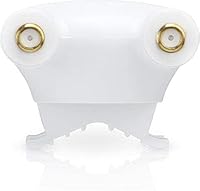
  • Antenna Type: Fixed external antennas are integrated into the housing, tuned specifically for outdoor coverage patterns and extended range.
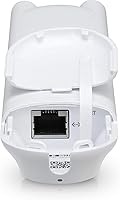
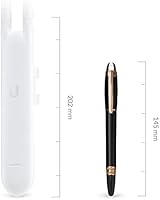
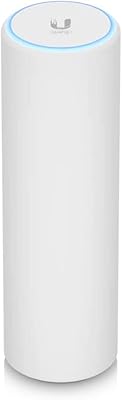
  • Dimensions: The access point measures 1.34″ x 1.81″ x 13.94″, making it a slim, pole-friendly form factor.
  • Weight: At 5.4 oz, the unit is lightweight enough for single-person mounting without additional rigging equipment.
  • Memory Type: The UAP-AC-M uses DDR3 SDRAM for onboard system memory.
  • Processor: The unit is equipped with a single onboard processor handling all wireless and network management tasks.
  • Operating System: The device runs on RouterOS and is managed through Ubiquiti's UniFi Controller software platform.
  • Connectivity: The access point supports 802.11ac wireless connectivity and includes an Ethernet port for wired uplink or PoE power input.
  • Frequency Bands: Dual-band operation covers both 2.4 GHz for range-focused clients and 5 GHz for higher-throughput connections.
  • Color: The unit ships in white, designed to be unobtrusive when mounted on exterior walls or poles.
  • Manufacturer: The UAP-AC-M is designed and manufactured by Ubiquiti Networks, a US-based networking equipment company.
  • Model Number: The official model designation is UAP-AC-M, part of Ubiquiti's UniFi Access Point product line.
  • Release Date: This access point was first made available in December 2016 and has remained in active production since.
  • Use Case: The unit is purpose-built for outdoor and mesh deployment scenarios, including wireless bridging without a wired backhaul.
  • Voltage: The device operates at 24 volts, supplied exclusively through the included passive PoE injector.
  • Weatherproofing: The housing is built to withstand outdoor environmental exposure, supporting year-round exterior deployment in varied climates.

Related Reviews
Ubiquiti UAP-AC-M-PRO Unifi Access Point
85%
88%
Overall Performance
90%
Wi-Fi Speed
85%
Installation Ease
89%
Range and Coverage
92%
Build Quality
More
Ubiquiti UniFi HD UAP-AC-HD Access Point
85%
89%
Performance
78%
Ease of Setup
91%
Coverage & Range
85%
Reliability
93%
Integration with UniFi Controller
More
Ubiquiti UniFi UAP-AC-PRO Access Point
80%
94%
Network Stability & Uptime
89%
Wi-Fi Signal Range & Penetration
58%
Setup & Initial Configuration
81%
Value for Money
86%
Multi-Device Performance
More
Ubiquiti UAP-AC-IW-PRO In-Wall Access Point
77%
88%
Wireless Performance
84%
Build Quality & Hardware Design
61%
Installation Experience
47%
PoE Power Requirement Clarity
91%
UniFi Ecosystem Integration
More
Ubiquiti airCube AC Wireless Access Point
79%
93%
Ecosystem Integration
91%
PoE Passthrough
74%
Wireless Coverage
78%
Setup & Installation
82%
Build Quality
More
Ubiquiti U6-Mesh Wi-Fi 6 Access Point
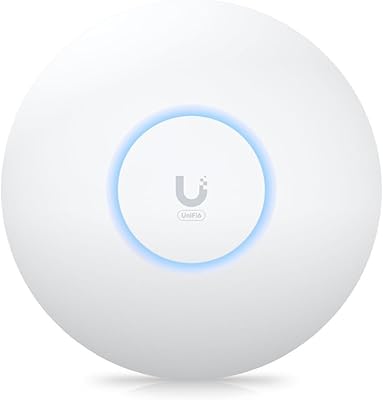
79%
93%
Wireless Performance
54%
Setup & Configuration
91%
Build Quality & Durability
88%
Coverage Range
74%
Value for Money
More
Ubiquiti U6+
Ubiquiti U6+
80%
88%
Wireless Performance
54%
Setup & Configuration
84%
Range & Coverage
82%
Build Quality & Design
91%
PoE+ Implementation
More
EnGenius ENH1350EXT Outdoor Wi-Fi Access Point
76%
88%
Build Quality
91%
Weatherproof Performance
83%
Wi-Fi Range (2.4 GHz)
67%
Wi-Fi Range (5 GHz)
54%
Ease of Setup
More
Ubiquiti UniFi 6 Pro (U6-Pro)
80%
93%
Wireless Performance
89%
Range & Coverage
54%
Setup & Installation
78%
Value for Money
88%
Build Quality & Design
More
TP-Link Omada EAP225-Outdoor
82%
88%
Outdoor Range
91%
Build Quality & Weatherproofing
84%
Wi-Fi Performance & Stability
67%
Setup & Installation
83%
Omada Ecosystem Integration
More

FAQ

Yes, you do. The UAP-AC-M cannot be fully configured as a standalone device — it requires adoption into the UniFi Controller software to unlock its settings and management features. The controller can run on a local machine, a dedicated Ubiquiti device like a Cloud Key, or a self-hosted server. There is no meaningful workaround for this requirement, so factor it into your setup plan before purchasing.

It comes included. Ubiquiti ships a 24V passive PoE injector with the unit, which is appreciated because this is a non-standard PoE voltage that your existing 802.3af or 802.3at switch will not supply. Do not assume your current PoE switch will power it — it almost certainly will not without the included injector or a compatible 24V source.

Yes, that is one of its core capabilities. The UAP-AC-M supports wireless uplink, meaning it can connect back to your main network over Wi-Fi rather than requiring a wired Ethernet backhaul. Keep in mind that mesh throughput will be lower than a wired connection, since one radio band is partially occupied handling the backhaul link.

In open outdoor conditions with clear line of sight, coverage of 100 to 150 meters is achievable for most client devices. Obstacles like walls, dense foliage, or buildings will reduce that range. For a typical residential backyard or a small commercial outdoor area, the coverage is more than adequate for normal Wi-Fi usage.

It is one of the better options available for exactly that scenario. The combination of outdoor-rated housing, flexible PoE power delivery, and mesh uplink capability means you can mount it on an exterior wall or pole between your home and the outbuilding without needing to trench cable for both power and data. Many buyers use it for precisely this purpose.

It can, but with some nuance. The access point itself will handle Wi-Fi clients regardless of what router sits behind it. However, the UniFi Controller is still required for configuration, even if your router is from another brand. You are essentially adding a managed access point to your network — your existing router continues to handle DHCP and routing, while the UAP-AC-M handles wireless duties.

The unit includes basic mounting hardware suitable for pole or wall installation. The slim cylindrical body is designed to attach to a standard pole mount, and the included accessories cover most common outdoor mounting scenarios. If you have a specific installation requirement, third-party mounting brackets are also widely available.

Ubiquiti has maintained firmware updates for the UAP-AC-M for several years, but it is worth noting the hardware launched in 2016. Ubiquiti does eventually reach end-of-life on older hardware, so this is not a product you should expect to receive software support indefinitely. For most buyers it remains fully functional and well-supported today, but it is a consideration if you are planning a five-plus year deployment.

Yes, and this is one of the strongest aspects of the UniFi ecosystem. The UniFi Controller lets you manage any number of access points from a single dashboard — monitor client connections, adjust radio settings, push firmware updates, and view network-wide traffic data all in one place. It is far more capable than anything you get with consumer mesh systems.

It is well-suited for small business environments, particularly for outdoor coverage needs like patios, parking areas, or warehouses. The managed access point model, centralized controller, and hardware reliability all lean toward professional deployment rather than casual home use. Businesses that already rely on UniFi gear indoors will find it a natural and cost-effective extension of their existing infrastructure.

Where to Buy