Overview

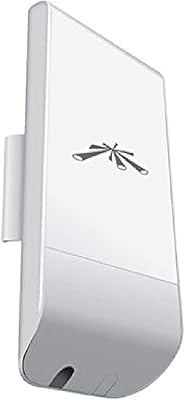
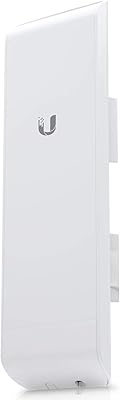
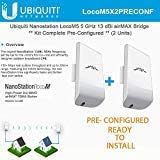
The Ubiquiti NanoStation LocoM5 is a compact and efficient 5GHz wireless bridge designed for outdoor use. This outdoor networking kit is built for both Point-to-Point (PtP) and Point-to-MultiPoint (PtMP) connections, making it ideal for expanding or establishing networks in remote or challenging areas. Pre-configured for easy setup, it allows for fast deployment without requiring advanced technical knowledge. Whether you're connecting distant buildings or offering wireless coverage in large outdoor spaces, this wireless bridge delivers reliable performance with minimal hassle.
Features & Benefits

The AirMAX technology in this 5GHz access point ensures scalable and high-performance wireless networking, capable of handling multiple connections with low latency. Equipped with a dual-polarity panel antenna, it improves signal strength and range, even in challenging environments. The weatherproof design makes it suitable for outdoor installations, withstanding various weather conditions. With versatile firmware that offers both bridge and routing configuration, users can tailor the device to their specific networking needs, offering flexibility for a wide range of scenarios.

Best For

This outdoor networking kit is perfect for home users looking to extend their wireless coverage to distant or hard-to-reach areas. Small businesses in need of cost-effective and reliable wireless bridging solutions will also find it a great fit. Additionally, it is a solid choice for Internet Service Providers (ISPs) who are setting up or expanding Point-to-MultiPoint (PtMP) networks. Its compact form factor, ease of deployment, and strong performance make it a versatile solution for both residential and commercial uses.

User Feedback

Users consistently praise the easy installation and setup process, which allows even those with minimal technical expertise to get the system up and running quickly. Many appreciate its solid performance in rural or long-distance connections, where it provides a reliable wireless link. However, some have reported occasional signal degradation in areas with heavy interference or high network congestion. Despite this, the device remains popular for its affordability and performance, particularly in outdoor or remote setups.

Pros

  • This device is highly valued for its <b>easy installation</b>, even by users with limited technical knowledge.
  • Long-range <b>performance in rural areas</b> makes it ideal for connecting remote locations.
  • The <b>weatherproof design</b> ensures reliable operation in outdoor environments, including harsh conditions.
  • Its compact size and <b>simple deployment</b> make it a great choice for quick setups without a lot of equipment.
  • The integration of AirMAX technology allows for <b>scalable networking</b> as user needs grow.
  • Users appreciate the <b>high throughput</b>, which delivers solid performance for both point-to-point and point-to-multipoint networks.

Cons

  • Some users report <b>signal degradation in congested areas</b>, especially in urban environments with many competing networks.
  • The device's <b>limited configuration options</b> may not meet the needs of users who require more advanced customization.
  • Not the best option for long-term use in areas with <b>high levels of interference</b> from other wireless devices.
  • Occasional reports of inconsistent <b>long-distance performance</b> in areas with a lot of physical obstructions.
  • The device is not ideal for those who need a <b>highly flexible solution</b> with extensive configuration controls out of the box.

Ratings

After analyzing verified user reviews from a variety of global platforms and languages, the ratings for this wireless bridge reflect both its strengths and areas for improvement. Spam, bot-generated, and off-topic reviews were filtered out to ensure only high-quality, authentic feedback contributed to these results. Both the ease of installation and its long-range performance in rural areas are frequently praised, while some users have mentioned challenges with signal degradation in congested environments. The scores below capture the diverse user experiences across these factors.

Ease of Installation
91%
Many users appreciate how straightforward the installation process is, especially for those with limited technical expertise. The plug-and-play design and clear setup instructions make it easy to get up and running without requiring additional tools or technical knowledge.
However, some users have noted that while the initial setup is easy, troubleshooting or fine-tuning settings can be more complex for non-expert users. A few also felt the lack of more detailed documentation could be a hurdle for beginners with specific network configurations.
Signal Range and Performance
85%
Users frequently highlight the solid performance of this device, particularly in rural areas or long-distance setups. The dual-polarity antenna ensures a stable signal even over large distances, and many buyers report minimal drop-offs in connectivity compared to other wireless solutions.
Some buyers report that while the signal is strong over long distances, performance may suffer in heavily congested areas. In urban environments with high interference, some users have experienced more frequent signal degradation, which affects reliability.
Durability and Weatherproofing
88%
The weatherproof design is highly praised by those using the device outdoors, as it performs well in harsh conditions such as rain, high winds, and direct sunlight. Users appreciate the rugged build that allows the unit to withstand outdoor elements without any signs of wear or failure.
While the durability is generally well-received, a few users have pointed out that extreme weather conditions, such as heavy snowfall or temperatures below freezing, can impact performance. Some buyers have had to adjust placement to avoid interference from these extreme conditions.
Setup Time
93%
The quick and easy setup is one of the standout features, with many users completing the installation within minutes. Pre-configured for immediate use, this wireless bridge doesn't require additional software setup or complicated steps, making it an ideal choice for those who need a quick solution.
A small number of users felt that while setup is fast, there isn't much room for advanced customization during the initial stages. Some were hoping for more flexibility to adjust settings or configurations right from the start.
Network Reliability in Rural Areas
87%
In rural environments, this device delivers excellent reliability and stability, offering dependable wireless connections over long distances. Users in remote areas report strong, consistent performance, making it ideal for bridging networks where traditional connectivity solutions fall short.
However, some users in very remote or sparsely populated areas have experienced occasional connectivity interruptions due to limited line-of-sight or severe environmental conditions. These users suggest a higher placement or alternative positioning may be required to optimize the connection.
Signal Degradation in Congested Areas
60%
40%
When used in less congested areas, the device provides reliable and stable performance, with minimal signal degradation. Many users find it ideal for rural or suburban deployments where interference is low.
However, users in urban environments with many competing wireless signals have reported significant signal degradation. In high-traffic areas, performance drops as interference from neighboring networks increases, leading to reduced reliability and speed.
AirMAX Technology Scalability
89%
The scalability of AirMAX technology is appreciated by small businesses and ISPs who rely on its high-performance networking capabilities. Users often mention that the device can handle growing network demands, making it a solid investment for expanding wireless networks with minimal upgrades.
Despite its scalability, some users have mentioned that configuring the device to its full potential can be challenging for those without prior experience with AirMAX. A steep learning curve for advanced features can be a turn-off for beginners.
Value for Money
92%
This device is frequently considered a great value for the price. Many users find it offers reliable, high-performance networking at a fraction of the cost of alternative solutions, especially in rural and business environments. The balance of cost and quality is one of its key selling points.
While it offers excellent value overall, some users believe that additional features like built-in PoE injectors or more customizable options could enhance its appeal. A few users mentioned that they would have preferred a more premium build for the price.
Firmware Versatility
84%
The versatile airOS firmware allows users to choose between bridge and routing configurations, making it adaptable for different network setups. This flexibility is appreciated by those needing to adjust their system based on changing requirements.
However, some users felt that the firmware interface could be more user-friendly. A few mentioned that while the device has many options, the complexity of navigating settings can be overwhelming for those new to networking equipment.
Compatibility with Other Ubiquiti Devices
87%
Compatibility with other Ubiquiti products is one of the key advantages for those building a complete network solution. Users appreciate the seamless integration with other devices, which simplifies network expansion and reduces compatibility issues.
Some users have experienced minor issues with compatibility when integrating the device with non-Ubiquiti equipment. While the device works well within the Ubiquiti ecosystem, there are occasional challenges when connecting to third-party products.
Antenna Performance
90%
The dual-polarity panel antenna significantly boosts signal range and strength, providing a stable and strong connection over extended distances. Users in large outdoor areas often report no noticeable drop in performance compared to other more expensive models.
A few users have reported that the antenna can sometimes be less effective in highly obstructed environments. When there are physical barriers like dense foliage or buildings, the signal strength tends to decrease.
Long-Term Reliability
81%
19%
Many users have praised this device for its longevity, with several reporting consistent performance even after months or years of use. Its robust construction and weatherproof design make it a reliable choice for long-term deployment.
Some buyers have mentioned experiencing a decline in performance after extended use, particularly in areas with extreme temperatures. A few also found that over time, the device's software required frequent updates or reconfigurations to maintain optimal performance.

Suitable for:

The Ubiquiti NanoStation LocoM5 is ideal for small businesses, home users, and internet service providers (ISPs) who require a reliable wireless bridging solution for outdoor areas. Its simple setup process makes it particularly appealing for those with limited technical knowledge, allowing users to quickly establish Point-to-Point (PtP) or Point-to-MultiPoint (PtMP) connections. Rural areas with limited infrastructure will especially benefit from its long-range performance, providing stable connections in otherwise hard-to-reach locations. Additionally, ISPs looking for an affordable solution to deploy wireless networks will appreciate the scalability of AirMAX technology and its ability to handle growing network demands without breaking the bank.

Not suitable for:

This wireless bridge may not be the best choice for users in urban or highly congested areas where signal interference from other networks is common. While it performs well in open spaces, some users have reported performance degradation in crowded environments, such as densely populated cities with high wireless traffic. Additionally, individuals who require a high degree of customization or advanced features may find the firmware options a bit limited. For those who need a more robust and flexible solution with extensive configuration options right out of the box, this device may feel restrictive in terms of fine-tuning and advanced settings.

Specifications

  • Frequency: Operates on the 5GHz frequency band for reduced interference and high-speed performance.
  • Wireless Type: Uses Ubiquiti’s AirMAX technology to support scalable and high-performance wireless networking.
  • Network Type: Supports both Point-to-Point (PtP) and Point-to-MultiPoint (PtMP) configurations.
  • Antenna: Equipped with a dual-polarity panel antenna to enhance signal strength and range.
  • Operating System: Runs on Ubiquiti's airOS, which allows for flexible network configuration and management.
  • Weatherproof: Designed with a rugged, weatherproof build to withstand harsh outdoor conditions.
  • Power Supply: Powered by a 24V Passive PoE (Power over Ethernet) supply for easy installation and cable management.
  • Throughput: Provides high-performance throughput suitable for demanding outdoor networking applications.
  • Dimensions: Measures 8.54 x 6.5 x 3.7 inches, making it compact and easy to install in outdoor locations.
  • Weight: Weighs 2.01 pounds, which makes it lightweight for easy mounting and transport.
  • Software Features: Supports advanced software features like VLAN, QoS, and traffic shaping for optimized network management.
  • Compatibility: Compatible with a variety of networking devices and systems for seamless integration into existing networks.
  • Temperature Range: Operates in temperatures ranging from -40°F to 158°F (-40°C to 70°C), ensuring reliable performance in extreme weather conditions.
  • Mounting: Includes a versatile mounting bracket for easy installation on poles or flat surfaces.
  • Security: Supports multiple encryption protocols, including WPA2, to secure wireless connections.
  • Management Interface: Managed through a web-based interface, making configuration and monitoring straightforward.
  • Port Type: Features one Gigabit Ethernet port for data and power input, enabling efficient connectivity.
  • Color: The device comes in a neutral white color to blend in with most outdoor environments.

FAQ

The Ubiquiti NanoStation LocoM5 is designed for quick and easy installation. It's pre-configured for immediate deployment, which is ideal for users with limited technical expertise. Simply mount the device, connect it to power using Passive PoE, and it’s ready to use within minutes.

The range of this 5GHz wireless bridge varies depending on environmental factors, but in ideal conditions, it can cover distances of up to 5+ miles for point-to-point connections. For point-to-multipoint setups, it can support multiple connections over long distances as well.

Yes, this device is designed for high-performance, capable of handling broadband speeds with ease. Its high throughput and AirMAX technology enable stable and fast connections, making it suitable for heavy internet usage, especially in rural or long-distance setups.

Yes, the Ubiquiti NanoStation LocoM5 features a rugged, weatherproof design, making it ideal for outdoor environments. It can withstand harsh weather conditions such as rain, snow, and high winds, ensuring consistent performance in a variety of climates.

Configuration is simple and intuitive with the airOS operating system. After connecting the device, you can access the configuration page via a web browser. You can choose between different modes, such as bridge or routing, to tailor the device to your network needs.

AirMAX is Ubiquiti's proprietary technology that enhances the scalability and performance of wireless networks. It allows for efficient bandwidth management, reducing interference and improving overall network capacity. This makes the NanoStation LocoM5 ideal for both small businesses and ISP providers.

Yes, the Ubiquiti NanoStation LocoM5 is well-suited for both home users and small businesses. It provides reliable and high-performance wireless connectivity for remote areas or outdoor spaces where traditional routers may not reach.

While the Ubiquiti NanoStation LocoM5 is primarily designed for outdoor use, it can technically be used indoors as long as there’s sufficient line-of-sight between the connected devices. However, its weatherproofing and range capabilities are optimized for outdoor environments.

Some users report signal degradation in densely populated areas with many competing wireless signals, which can affect performance. Additionally, while the device excels in rural and open environments, it may struggle with obstacles like thick walls or metal structures that block signals.

The NanoStation LocoM5 uses a 24V Passive PoE power supply, which means it can receive both power and data over a single Ethernet cable, simplifying installation and reducing cable clutter.