Overview

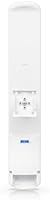
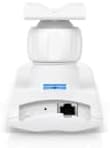
The Ubiquiti LiteAP AC LAP-120 Sector Access Point is a professional-grade outdoor radio built for WISPs, network integrators, and anyone serious about deploying reliable point-to-multipoint wireless links — not for someone trying to extend home Wi-Fi. Its defining characteristics are a 120-degree beam coverage and 5GHz airMAX AC technology, which together make it a practical head-end unit for serving multiple client radios from a single pole mount. Priced in the mid-range, it sits above consumer-grade hardware without demanding a carrier-class budget. That said, this outdoor airMAX AP is built to operate within Ubiquiti's ecosystem — paired with airMAX client devices and managed through airOS or UISP — so expect a real learning curve if you are new to the platform.

Features & Benefits

The most practical aspect of the LAP-120 is how much coverage it delivers from a single installation point. Its 120-degree horizontal beamwidth means one unit can serve a wide arc of subscribers without stacking multiple radios side by side, and the integrated 16 dBi directional antenna handles that reach without any external hardware. On the protocol side, airMAX AC TDMA is a genuine advantage over standard 802.11ac in dense deployments — it schedules transmissions to reduce collisions and keep latency predictable across many simultaneous clients. Throughput reaches up to 450 Mbps under ideal conditions, though real-world figures vary with distance, client hardware, and local RF environment. Power delivery via 24V passive PoE keeps the installation clean and flexible.

Best For

This sector access point is a natural fit for small WISP deployments where a single tower or rooftop mount needs to feed broadband to a cluster of nearby subscriber sites. It also works well on large campuses, farms, or industrial properties where trenching cable across the grounds is neither cost-effective nor practical. Network integrators building point-to-multipoint backhaul segments will appreciate how cleanly it slots into the broader airMAX ecosystem — pair it with LiteBeam or NanoBeam client radios and you have a cohesive, manageable link. One critical note: the LAP-120 is a head-end device only. Compatible client hardware is required to complete any working link, so factor that into your total deployment cost before purchasing.

User Feedback

Sitting at 4.2 stars across 100 ratings, the LAP-120 earns its score primarily from buyers who deployed it as intended. Recurring praise centers on outdoor build quality, consistent throughput at distance, and strong value compared to pricier commercial alternatives. On the friction side, several buyers flagged that a passive PoE injector is not always included in the box — worth confirming before installation day. Configuration also assumes comfort inside airOS or UISP; users expecting a consumer router interface will find the experience unexpectedly involved. Most of the critical reviews reflect an audience mismatch rather than a genuine product shortcoming. Buyers who understood what they were purchasing came away largely satisfied.

Pros

  • A single unit covers a full 120-degree arc, cutting the number of radios needed per tower or rooftop significantly.
  • The integrated 16 dBi antenna delivers solid gain without any additional external hardware to source or mount.
  • airMAX AC TDMA scheduling keeps latency low and reduces interference when serving multiple clients simultaneously.
  • The weatherproof, pole-mountable enclosure is built for permanent outdoor installation across a wide range of climates.
  • 24V passive PoE power delivery simplifies cabling and removes the need for a local power outlet at the mount point.
  • The LAP-120 offers strong value for professional-grade outdoor wireless compared to pricier commercial alternatives.
  • Deep integration with UISP makes remote monitoring and management straightforward for operators running multiple sites.
  • Verified buyers consistently report reliable throughput at distance when the link is properly configured and aligned.

Cons

  • A passive PoE injector is not reliably included in the box — confirm kit contents before scheduling installation.
  • This sector access point requires compatible airMAX client radios on the subscriber end, adding cost that is easy to overlook initially.
  • Configuration through airOS assumes prior experience with Ubiquiti platforms; there is no simplified setup wizard for newcomers.
  • Real-world throughput can fall well short of the 450 Mbps ceiling depending on distance, interference, and client hardware quality.
  • The 5GHz band offers limited penetration through heavy foliage or building materials, making line-of-sight a hard requirement.
  • No built-in routing or switching capability means additional network hardware is needed to complete even a basic deployment.
  • Firmware updates and ecosystem changes can occasionally introduce compatibility or stability issues, requiring active monitoring.
  • Buyers outside the Ubiquiti airMAX ecosystem will face a steep onboarding curve with limited transferable skills to other platforms.

Ratings

The Ubiquiti LiteAP AC LAP-120 Sector Access Point scores here reflect AI-driven analysis of verified global buyer reviews, with spam, bot-submitted, and incentivized feedback actively filtered out before scoring. Ratings cover the full picture — where this outdoor airMAX AP genuinely excels and where real operators have run into friction — so you can make a confident, informed decision before purchasing.
Wireless Performance
83%
Operators running small WISP deployments consistently report stable, predictable throughput at distances where consumer-grade hardware simply falls apart. The airMAX AC TDMA protocol keeps latency low even when several client radios are active simultaneously, which matters a great deal for real-time applications like VoIP across subscriber links.
Real-world speeds land noticeably below the 450 Mbps ceiling in most deployments, especially beyond 1 km or in environments with moderate RF interference. Buyers expecting near-rated throughput in mixed-vendor or non-line-of-sight scenarios tend to come away disappointed.
Build Quality
88%
The housing feels solid and purpose-built for permanent outdoor exposure — installers working in wet or high-UV environments report no premature degradation after extended periods on the mast. Connector ports are well-protected, and the overall fit and finish sits clearly above what you find on budget-tier outdoor radios.
A small number of users noted that the mounting hardware included is functional but not the most robust option for high-wind installations, prompting some integrators to supplement with heavier-duty pole clamps. The white finish, while practical for heat, can show environmental staining over several years.
Ease of Setup
61%
39%
For network engineers and WISP operators already familiar with airOS, the configuration workflow is logical and well-structured. Link alignment, TDMA settings, and traffic shaping controls are all accessible within a clean web interface, and UISP integration makes multi-site management far more efficient once the initial setup is complete.
Buyers without prior Ubiquiti experience frequently cite setup complexity as their primary frustration, and the critical reviews largely trace back to this mismatch. There is no simplified onboarding wizard, and the dependency on a separately sourced 24V passive PoE injector catches first-time deployers off guard more often than it should.
Value for Money
84%
Compared to commercial-grade sector APs from competing vendors at similar or higher price points, the LAP-120 delivers a compelling package — integrated 16 dBi antenna, airMAX AC protocol, and durable outdoor housing without requiring additional RF accessories. WISP operators frequently cite it as one of the better cost-per-link options available in its class.
The total deployment cost is higher than the unit price suggests once you factor in compatible client radios, a PoE injector, and mounting hardware. Buyers who treat the sticker price as the all-in cost tend to feel misled, even though those extras are standard practice in professional wireless deployments.
Range & Coverage
81%
19%
The 120-degree beamwidth combined with 16 dBi gain gives this sector access point a genuinely broad and deep coverage footprint from a single installation point. Operators serving rural subscriber clusters report reliable links at distances that would be impossible with consumer outdoor APs, particularly in open terrain with clear line-of-sight.
The 5 GHz band's limited ability to penetrate foliage or structures means any obstruction in the Fresnel zone can significantly degrade real-world range. Deployments in wooded or semi-urban environments require careful link planning, and some buyers in denser areas found coverage more constrained than spec sheets implied.
Ecosystem Compatibility
79%
21%
Within the Ubiquiti airMAX ecosystem, the LAP-120 integrates cleanly with LiteBeam AC, NanoBeam AC, and other airMAX client radios, giving operators a cohesive end-to-end platform. UISP cloud management ties everything together across multiple sites, which experienced integrators find genuinely time-saving.
Compatibility outside the Ubiquiti ecosystem is limited — mixed-vendor deployments lose airMAX TDMA benefits and can behave unpredictably. Operators who later want to introduce non-Ubiquiti client hardware will find the transition more complicated than expected.
Latency & Stability
82%
18%
The TDMA scheduling engine does a solid job of keeping round-trip latency in check under normal multi-client load, which is particularly valued by operators whose subscribers use latency-sensitive applications like video calls or online gaming. Link stability in well-planned deployments is consistently praised in verified operator feedback.
In environments with high ambient 5 GHz interference — near dense residential areas or industrial sites with competing wireless equipment — some operators report periodic instability that requires channel planning adjustments. Latency can spike under heavy aggregate load when the sector approaches bandwidth saturation.
Installation Experience
72%
28%
The unit is light enough for a solo installer to manage on a ladder or tower, and the pole-mount form factor is straightforward once the bracket is in position. Experienced field technicians report clean, fast installs with minimal cabling complexity thanks to the single PoE cable run.
The PoE injector situation remains a recurring complaint — its absence from some kit configurations leads to avoidable on-site delays. Antenna alignment for optimal performance also requires patience and ideally a second person or a signal strength tool, which first-time deployers often underestimate.
Management & Monitoring
78%
22%
UISP offers a capable centralized dashboard for operators managing multiple LAP-120 units across different sites, including remote firmware updates, link health graphs, and alert configurations. For a platform at this price tier, the management tooling is more mature than most alternatives.
The airOS interface, while functional, shows its age in certain areas and lacks some of the modern UX polish buyers expect from newer platforms. Occasional firmware updates have introduced temporary bugs, and the proprietary OS means you are fully dependent on Ubiquiti for ongoing software support.
Interference Resistance
74%
26%
airMAX AC TDMA provides a meaningful practical advantage over standard 802.11ac in shared-spectrum environments by reducing uncoordinated transmissions between clients. Operators in semi-rural areas with moderate neighboring Wi-Fi activity report the protocol handles coexistence better than generic access points at comparable price points.
In genuinely dense RF environments, such as suburban rooftops with multiple overlapping 5 GHz networks, the LAP-120 still struggles to fully isolate its links from external interference. Some operators have needed to experiment with channel selection and transmit power tuning before achieving acceptable stability.
Documentation & Support
67%
33%
Ubiquiti's community forum (the UI Community) is an active and practically useful resource, with experienced operators sharing configuration templates, troubleshooting guides, and deployment case studies. For buyers willing to engage with the community, the collective knowledge base compensates for gaps in official documentation.
Ubiquiti's official support has been a recurring criticism across the brand — not specific to the LAP-120, but relevant nonetheless. Direct technical support is limited, and the official documentation, while adequate, can feel sparse compared to what enterprise networking vendors provide.
Weatherproofing
86%
Verified buyers operating the LAP-120 in coastal, high-humidity, and cold-climate environments generally report that the enclosure holds up well over multi-year deployments without requiring protective aftermarket covers. The design clearly prioritizes outdoor durability as a core requirement, not an afterthought.
A small number of long-term deployments in extreme coastal salt-air environments have noted accelerated connector corrosion, suggesting that additional weatherproofing tape around cable entry points is a sensible precaution in the harshest conditions.
Throughput Consistency
76%
24%
Under stable conditions with well-aligned links and compatible client hardware, the LAP-120 delivers consistent throughput that holds steady over time rather than degrading as more clients are added — a common weakness in standard Wi-Fi sector designs. Operators running bandwidth-managed subscriber plans report reliable delivery against provisioned rates.
Throughput consistency drops noticeably when the sector is serving many simultaneous clients near its practical capacity limit, or when link quality is marginal due to distance or partial obstruction. Operators who did not plan link budgets carefully before deployment are the most likely to encounter this issue.

Suitable for:

The Ubiquiti LiteAP AC LAP-120 Sector Access Point is purpose-built for operators and integrators who need to distribute wireless broadband across a wide outdoor area from a single mounting point. Small WISPs are the clearest fit — if you are running last-mile service to a cluster of homes or small businesses within a few kilometers, this outdoor airMAX AP gives you a cost-effective head-end that can serve a broad 120-degree arc without stacking hardware. It also works well on large campuses, farms, warehouses, or industrial sites where laying cable across open ground is impractical or cost-prohibitive. Network integrators already working within the Ubiquiti airMAX ecosystem will find the LAP-120 slots in cleanly alongside client-side radios like the LiteBeam or NanoBeam. Anyone comfortable with airOS or UISP management and familiar with point-to-multipoint design concepts will get reliable, predictable results from this unit.
Not suitable for:

The Ubiquiti LiteAP AC LAP-120 Sector Access Point is genuinely the wrong tool for anyone expecting a consumer networking experience. It is not a router, not a standalone access point, and not a plug-and-play solution — it requires compatible airMAX client radios on the subscriber end to form any working wireless link, which adds to the total deployment cost and complexity. Home users hoping to extend Wi-Fi coverage around a property, or small offices looking for a simple outdoor AP, will find the configuration interface unfamiliar and the ecosystem requirements frustrating. The 5GHz band also means real-world performance is sensitive to distance, line-of-sight obstructions, and local RF interference, so buyers in dense urban environments or heavily wooded terrain may see throughput fall well short of the rated maximum. Without a solid understanding of wireless link budgets, TDMA scheduling, and PoE power requirements, the setup process alone can become a significant barrier.
Specifications

  • Frequency Band: Operates exclusively on the 5 GHz band, which provides cleaner airspace and higher throughput compared to the congested 2.4 GHz band.
  • Wi-Fi Standard: Built on IEEE 802.11ac, offering modern AC-class wireless performance suited to high-density outdoor deployments.
  • MIMO Configuration: Uses a 2x2 MIMO antenna arrangement to improve link reliability and data throughput across the coverage arc.
  • Max Throughput: Rated up to 450 Mbps under optimal conditions; real-world speeds vary with distance, client hardware, and local interference levels.
  • Antenna Gain: Integrated directional antenna delivers 16 dBi of gain, providing meaningful reach without requiring any external antenna accessories.
  • Beamwidth: Horizontal beamwidth of 120 degrees allows a single unit to cover a wide sector arc from one pole or tower mount.
  • Protocol: Runs Ubiquiti's proprietary airMAX AC TDMA protocol, which schedules client transmissions to reduce collisions and keep latency predictable in multi-client environments.
  • Power Input: Powered via 24V passive PoE, eliminating the need for a local power outlet at the installation point and simplifying outdoor cabling runs.
  • Operating System: Ships with Ubiquiti's proprietary airOS firmware, which provides link management, traffic shaping, and integration with the UISP cloud platform.
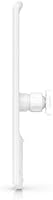
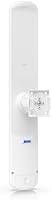
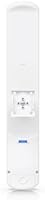
  • Form Factor: Designed as a pole-mountable outdoor enclosure with a weatherproof housing suited for permanent installation in varied climate conditions.
  • Dimensions: Measures 2.1 x 3.1 x 17.8 inches, giving it a slim, elongated profile that mounts neatly on a standard mast or pole.
  • Weight: Weighs 14.9 oz, light enough for a single installer to handle comfortably during a pole-mount installation.
  • Color: Finished in white, which helps minimize heat absorption and keeps the unit visually unobtrusive in most outdoor settings.
  • Manufacturer: Designed and manufactured by Ubiquiti Networks, a company with a long track record in professional-grade wireless infrastructure hardware.
  • Model Number: Official model designation is LAP-120, with the US variant sold as LAP-120-US.
  • Deployment Type: Functions as a point-to-multipoint sector head-end — it is a transmit-side AP, not a standalone router or client bridge.
  • Ecosystem: Designed to operate as part of the Ubiquiti airMAX ecosystem, pairing with client-side radios such as the LiteBeam AC or NanoBeam AC series.
  • Availability: Listed as not discontinued by the manufacturer as of the product data available, indicating ongoing production and support.

Related Reviews

Ubiquiti airCube AC Wireless Access Point
79%
93%
Ecosystem Integration
91%
PoE Passthrough
74%
Wireless Coverage
78%
Setup & Installation
82%
Build Quality
More
Ubiquiti UniFi UAP-AC-PRO Access Point
80%
94%
Network Stability & Uptime
89%
Wi-Fi Signal Range & Penetration
58%
Setup & Initial Configuration
81%
Value for Money
86%
Multi-Device Performance
More
Ubiquiti UAP-AC-M-PRO Unifi Access Point
85%
88%
Overall Performance
90%
Wi-Fi Speed
85%
Installation Ease
89%
Range and Coverage
92%
Build Quality
More
Ubiquiti UniFi AC HD Access Point
81%
91%
Build Quality
88%
Wireless Performance
87%
Range & Coverage
48%
Setup & Installation
72%
Management Software
More
Ubiquiti UAP-AC-IW-PRO In-Wall Access Point
77%
88%
Wireless Performance
84%
Build Quality & Hardware Design
61%
Installation Experience
47%
PoE Power Requirement Clarity
91%
UniFi Ecosystem Integration
More
Ubiquiti U6+
Ubiquiti U6+
80%
88%
Wireless Performance
54%
Setup & Configuration
84%
Range & Coverage
82%
Build Quality & Design
91%
PoE+ Implementation
More
Ubiquiti UniFi 6 Pro (U6-Pro)
80%
93%
Wireless Performance
89%
Range & Coverage
54%
Setup & Installation
78%
Value for Money
88%
Build Quality & Design
More
Ubiquiti UniFi U7 Pro
82%
91%
Wireless Performance
88%
Build Quality
83%
Range & Coverage
67%
Ease of Setup
78%
Value for Money
More
Ubiquiti UniFi 6 Lite Access Point
82%
88%
Wireless Performance
62%
Setup & Installation
91%
Build Quality
86%
Value for Money
71%
Controller Software
More
Ubiquiti U6-Mesh Wi-Fi 6 Access Point
79%
93%
Wireless Performance
54%
Setup & Configuration
91%
Build Quality & Durability
88%
Coverage Range
74%
Value for Money
More

FAQ

The LAP-120 is a sector head-end, not a complete link on its own. To actually pass traffic, you need compatible airMAX client radios — such as Ubiquiti LiteBeam AC or NanoBeam AC units — installed at each subscriber or remote location. A 24V passive PoE injector may also not be included in the box, so confirm the kit contents before your installation day.

Technically it runs Wi-Fi, but practically it is not the right tool for that job. The Ubiquiti LiteAP AC LAP-120 Sector Access Point is built around airMAX AC TDMA, which prioritizes scheduled multi-client transmissions over casual device connectivity. Standard laptops, phones, and tablets will not associate with it in the way they would with a normal access point. If you need outdoor Wi-Fi for everyday devices, look at Ubiquiti's UniFi AP line instead.
The learning curve is real but manageable if you are comfortable with concepts like IP addressing, link budgets, and PoE. The airOS interface is web-based and reasonably logical, but it assumes you know what settings like channel width, transmit power, and TDMA distance mean. Ubiquiti's documentation and community forums are genuinely useful resources. Budget extra time on your first deployment.

With a well-aligned line-of-sight link and a compatible client radio, distances of several kilometers are achievable — many WISP operators report clean links at 3 to 5 km. That said, performance drops quickly if there is foliage, terrain, or buildings interrupting the path. The 5 GHz band does not penetrate obstacles well, so true line-of-sight is a hard requirement, not a suggestion.

In standard 802.11ac mode it can, but you lose all of the airMAX AC TDMA benefits that make this unit worthwhile in multi-client deployments. For serious WISP or point-to-multipoint use, running mixed-vendor setups on this platform is not recommended. Stick with compatible airMAX AC client hardware to get the performance and stability the LAP-120 is designed to deliver.

It is designed for permanent outdoor deployment and handles rain, UV exposure, and typical temperature variation without additional enclosures. That said, in extremely harsh environments — coastal salt air, extreme cold below rated thresholds, or direct exposure to flooding — extra attention to connector sealing and grounding is always good practice regardless of the hardware brand.

This depends heavily on how much bandwidth each subscriber consumes and the overall link quality, but many operators run 20 to 50 active client radios per sector under normal WISP conditions. The airMAX AC TDMA protocol handles client scheduling efficiently, so the practical limit is usually bandwidth saturation before the radio itself becomes the bottleneck.

Yes, Ubiquiti's UISP platform (formerly UNMS) supports centralized management of airMAX devices including this outdoor airMAX AP. You can monitor link status, push firmware updates, and manage configurations across multiple sites from a single dashboard. For operators running more than a handful of units, setting up UISP early in the deployment is strongly recommended.

The LAP-120 requires a 24V passive PoE injector — not the 802.3af or 802.3at active PoE that most enterprise switches provide. Ubiquiti sells compatible injectors separately, and third-party 24V passive injectors also work. Do not assume one is in the box; check the specific listing or packaging contents before ordering to avoid a delay on installation day.

For the specific use case it targets, yes. The airMAX AC platform is mature and well-supported, and the hardware design remains competitive for WISP and point-to-multipoint deployments at this price tier. Ubiquiti has kept the firmware updated and the unit is not discontinued. If you are already in the airMAX ecosystem or building one from scratch, the LAP-120 continues to deliver solid value compared to alternatives in its class.

Where to Buy