

Overview

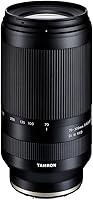
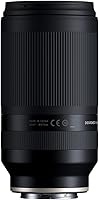
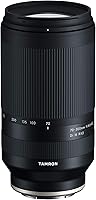
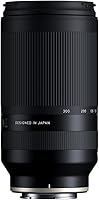
The Tamron 70-300mm Di III RXD Telephoto Lens is a lightweight zoom built specifically for Sony E-mount mirrorless cameras, covering both full-frame and APS-C bodies. For photographers moving beyond a kit lens and wanting genuine reach without hauling a heavy bag, this telephoto zoom hits a practical sweet spot. The 70-300mm range handles a wide variety of subjects — birds in the park, kids at a soccer game, candid portraits from a distance, or compressed travel scenes. Tamron backs it with a 6-year USA warranty, which is notably generous at this price tier. Just be clear going in: this is a capable consumer telephoto, not a professional-grade super-telephoto.

Features & Benefits

The RXD autofocus motor is one of the first things you notice in use — it locks on quickly and operates nearly silently, which matters a lot if you shoot video or want to stay discreet around wildlife. Optically, the 15-element design keeps center-frame sharpness strong at most focal lengths. One underappreciated bonus: the minimum focus distance is closer than most lenses in this class, giving you real flexibility for flowers or small subjects without switching lenses. The moisture-resistant construction handles light rain and dusty trails, though it is not fully weather-sealed, so do not push it through a downpour. The variable aperture, f/4.5 at 70mm narrowing to f/6.3 at 300mm, is manageable in bright outdoor light but limiting once you move indoors.

Best For

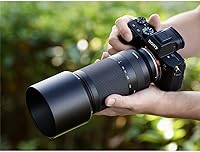
This Sony E-mount lens makes the most sense for a fairly specific kind of photographer: someone with a Sony mirrorless body who wants real reach at a reasonable cost. Travel photographers will appreciate how little space it takes up compared to a similarly ranged zoom from a decade ago. It pairs especially well with APS-C bodies like the a6600 or a6700, where the crop factor effectively gives you a 450mm equivalent reach. For wildlife and birding on daytime outings, it performs admirably. That said, shooters without in-body image stabilization should know there is no optical stabilization built in, so handheld shots at 300mm demand a fast shutter or very steady hands. Beginners moving up from a kit lens will find the handling familiar and the image quality a clear step forward.

User Feedback

Among more than 600 verified owners, the Tamron 70-300mm earns a 4.7 out of 5 average, which is genuinely impressive for a consumer telephoto. The most consistent praise centers on center-frame sharpness and autofocus reliability — people using it for birds and youth sports report confident, repeatable tracking. The most noted criticism is edge softness when shooting wide open at 300mm, and a handful of users flag the variable aperture as a real constraint for indoor events or dim venues. Several reviewers draw a direct comparison with the pricier Sony 70-350mm G OSS, often concluding that this lens delivers strong value for everyday telephoto work. The 6-year warranty comes up repeatedly as a reassuring safety net that few competing lenses at this level can match.

Pros

  • Fast, near-silent RXD autofocus makes tracking birds, athletes, and moving subjects reliable and responsive.
  • At just 1.2 pounds, this telephoto zoom is light enough to carry all day without fatigue.
  • Center-frame sharpness is consistently strong across the zoom range in good lighting conditions.
  • The closer-than-average minimum focus distance adds welcome versatility for flowers and small subjects.
  • Moisture-resistant construction holds up well during light rain and dusty outdoor conditions.
  • A 6-year USA warranty is unusually generous for a lens in this category and price range.
  • Compatible with both full-frame and APS-C Sony E-mount bodies, making it a flexible long-term investment.
  • On APS-C bodies, the effective reach extends well beyond 300mm, great for wildlife and sports.
  • Autofocus operates quietly enough for video work and candid shooting without drawing attention.
  • Compared to the Sony 70-350mm G OSS, the Tamron 70-300mm delivers strong optical performance at a noticeably lower cost.

Cons

  • The aperture narrows to f/6.3 at 300mm, which severely limits usability in low-light or indoor environments.
  • No built-in optical image stabilization means handheld shots at long focal lengths require a steady hand or fast shutter.
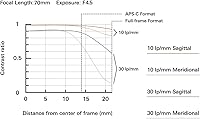
  • Edge and corner sharpness drops noticeably when shooting wide open at the 300mm end.
  • Photographers using Sony bodies without in-body image stabilization will struggle with blur at longer focal lengths.
  • The variable aperture complicates video work, causing exposure shifts during zoom pulls.
  • Not weather-sealed — moisture resistance handles a light drizzle but is not reliable in heavy rain or wet conditions.
  • At 300mm on full-frame, achieving sharp handheld results in anything but bright light is genuinely challenging.
  • The lens hood is sold separately, which is an easy-to-miss added cost for outdoor shooters.

Ratings

The scores below reflect an AI-driven analysis of verified global buyer reviews for the Tamron 70-300mm Di III RXD Telephoto Lens, with spam, bot-generated, and incentivized submissions actively filtered out before scoring. Each category captures both the genuine strengths that earned this telephoto zoom its loyal following and the real friction points that actual owners encountered in the field. Nothing is sugar-coated — the numbers reflect what photographers truly experienced across thousands of documented uses.

Image Sharpness
83%
Center-frame sharpness consistently impresses users shooting birds, athletes, and compressed travel scenes in good light. Across focal lengths from 70mm through around 200mm, owners report clean, detailed results that hold up well when viewed at full resolution on screen or in moderate prints.
Edge and corner sharpness at 300mm wide open is a recurring complaint, particularly from full-frame shooters who notice softness away from the center subject. Stopping down helps, but in fast-moving situations where you cannot choose your aperture freely, this limitation becomes genuinely frustrating.
Autofocus Performance
88%
The RXD motor earns consistent praise for locking onto subjects quickly and with minimal hunting, even on challenging targets like birds in flight or children sprinting across a soccer field. Users on modern Sony bodies like the a7 IV and a6700 report confidently reliable tracking that feels well above average for the price tier.
In lower-contrast scenes or dim light, a minority of users note occasional hesitation before the lens confirms focus, which can mean missed moments during fast action. It also does not match the tenacity of Sony G Master or Sony G lenses when tracking erratically moving subjects at 300mm.
Build Quality
79%
21%
The lens feels solid and well-assembled in hand, with no flex or looseness in the zoom ring that budget lenses often suffer from. The moisture-resistant seals give outdoor photographers meaningful confidence on overcast days, light rain, and dusty trails without adding significant bulk or weight.
It is important to be clear: moisture resistance is not weather sealing, and a handful of users who tested it in heavier rain or saltwater coastal environments reported concern about long-term seal integrity. The plastic exterior, while lightweight, does not convey the premium tactile feel of Sony G or Zeiss alternatives.
Value for Money
93%
Across hundreds of reviews, value is the single most frequently praised aspect of this telephoto zoom — buyers feel they received optical and AF performance that genuinely exceeds what the price tag would suggest. Repeated comparisons to the Sony 70-350mm G OSS, which costs significantly more, frequently conclude that the Tamron delivers 80-90% of the experience at a fraction of the investment.
A small segment of buyers who later upgraded to the Sony 70-350mm G OSS felt the Tamron fell short in stabilization and corner sharpness, making them feel the price gap was ultimately justified. For casual shooters the value is undeniable, but serious wildlife or sports photographers may outgrow it faster than expected.
Low-Light Performance
57%
43%
At 70mm with f/4.5, the lens handles indoor ambient light reasonably well for portraits or casual shots, and users shooting golden-hour landscapes or slightly overcast outdoor scenes report clean and usable results without needing extreme ISO settings.
Once you zoom into the 200-300mm range, the maximum aperture of f/6.3 forces significant ISO increases in anything but bright light, resulting in noticeable noise on most Sony bodies. Indoor sports, evening events, and poorly lit venues are genuinely challenging scenarios where this lens consistently disappoints compared to fixed-aperture alternatives.
Portability & Weight
94%
At just 1.2 pounds, this is one of the lightest 70-300mm options available for Sony mirrorless, and owners regularly highlight how easy it is to carry all day during bird walks, travel days, or long hiking trips without shoulder fatigue. Its compact dimensions make it a realistic fit in a mid-sized camera bag alongside a second lens.
A small number of users note that the lightweight construction makes the camera-lens combination feel slightly front-light on larger Sony bodies, which takes adjustment for photographers accustomed to heavier telephoto setups. The compact size also means a relatively narrow zoom ring that some larger-handed users find slightly awkward at the long end.
Optical Stabilization
41%
59%
Photographers using IBIS-equipped Sony bodies like the a7 III, a7C, or a6600 report that the combination works well enough for handheld shooting at moderate telephoto lengths, achieving usable results down to reasonable shutter speeds in good light.
The complete absence of in-lens optical stabilization is a significant disadvantage, especially for buyers using older Sony bodies without IBIS. At 300mm, even minor camera shake produces visible blur, and users on non-IBIS bodies frequently report frustration that they cannot shoot handheld in anything but bright daylight without accepting a high miss rate.
Autofocus Noise
91%
The RXD motor operates nearly silently during focus acquisition, which makes this Sony E-mount lens a reliable choice for video shooters who record with an on-camera microphone. Wildlife photographers also appreciate that the quiet operation does not startle birds or animals at close range.
In very quiet recording environments with a highly sensitive external microphone placed close to the camera, a faint mechanical sound is occasionally audible during large focus transitions. This is not a common complaint, but it has been noted by a small number of video-focused reviewers in controlled environments.
Close-Focus Versatility
77%
23%
The closer-than-average minimum focus distance genuinely surprises users who expected a standard telephoto experience — owners regularly photograph wildflowers, insects, and textured surfaces with results that approach what a dedicated close-up lens would deliver. At 70mm, the working distance is comfortable enough to avoid spooking small wildlife subjects.
At 300mm, the minimum focus distance extends to nearly 60 inches, which means close-up shooting at the long end requires more physical space than some users expect. It is not a macro lens replacement, and users hoping for 1:1 magnification will need to look elsewhere.
Warranty & Support
89%
The 6-year Tamron USA limited warranty repeatedly surfaces in user reviews as an unexpected confidence booster — it signals a level of manufacturer commitment that is rare among consumer telephoto lenses and gives buyers peace of mind over a longer ownership horizon than most competitors offer.
Some users outside the USA note that the 6-year term applies specifically to Tamron USA purchases and that international warranty coverage terms differ, occasionally causing confusion for buyers who purchased gray-market units or imported lenses to access the extended protection.
Zoom Ring Feel
74%
26%
The zoom action is smooth and consistent without the stiffness or looseness that plagues many budget zooms, and users report that the ring does not creep when the lens is pointed downward — a practical bonus during handheld outdoor use on long days.
A portion of users feel the zoom ring travel is slightly short for precise framing adjustments at distance, making it easy to overshoot your intended focal length when tracking moving subjects. The ring also lacks any distance scale markings, which mildly inconveniences more technically minded shooters.
Bokeh Quality
72%
28%
At wider focal lengths and close subject distances, the 7-blade rounded aperture produces reasonably smooth background separation that works well for environmental portraits and isolated wildlife subjects against natural backdrops like foliage or water.
At 300mm and f/6.3, the shallow depth of field is thin enough to isolate subjects but the bokeh transitions can appear slightly nervous or busy when the background contains high-frequency detail like tree branches or fences. It does not match the creamy rendering of faster telephoto primes in this regard.
Compatibility & Ecosystem Fit
88%
Full native compatibility with Sony's autofocus ecosystem means Eye AF, Animal Eye AF, and subject tracking all function exactly as expected on supported bodies — there are no third-party protocol limitations that sometimes hamper non-native lenses. Firmware updates have also been delivered to improve AF behavior over the product's lifespan.
The lens is exclusively designed for Sony E-mount and offers zero compatibility with Nikon Z, Canon RF, or other mirrorless systems, which limits its audience. Photographers who shoot across multiple camera ecosystems will need a separate telephoto solution for non-Sony bodies.

Suitable for:

The Tamron 70-300mm Di III RXD Telephoto Lens is a strong match for Sony mirrorless shooters who want meaningful reach without committing to a heavy, expensive professional zoom. It is particularly well-suited to birders and wildlife enthusiasts who primarily shoot outdoors in decent light, where the fast RXD autofocus and compact form factor genuinely shine. Travel photographers will find it easy to justify the bag space — it weighs just 1.2 pounds and covers a versatile range that handles everything from compressed cityscapes to candid portraits across a crowded plaza. On APS-C bodies like the a6700, the effective reach stretches even further, making it a natural pairing for anyone who shoots sports sidelines, air shows, or wildlife reserves on a regular basis. Photographers upgrading from a basic kit lens will also find the step up in image quality and autofocus speed immediately noticeable. The 6-year Tamron USA warranty adds a layer of ownership confidence that is rare at this price point and makes it easier to commit to as a long-term kit staple.

Not suitable for:

The Tamron 70-300mm Di III RXD Telephoto Lens has real limitations that certain buyers should think carefully about before purchasing. If you regularly shoot in low light — indoor sports arenas, evening events, dim gymnasiums — the variable aperture narrowing to f/6.3 at the long end will be a consistent frustration, and no amount of technique fully compensates for that light loss at 300mm. There is also no built-in optical image stabilization, which means handheld shooting at the longer focal lengths demands either a body with in-body stabilization or very disciplined shutter speed discipline; owners of older Sony bodies without IBIS should treat this as a near-dealbreaker. Professionals or advanced enthusiasts who need edge-to-edge sharpness wide open — for example, shooting fast action where the subject might land anywhere in the frame — will likely find the corner softness at 300mm unsatisfying. Videographers who need smooth, consistent aperture throughout a zoom pull will also run into complications with the variable aperture design. If your budget allows and stabilization or low-light capability is a priority, the Sony 70-350mm G OSS is worth the added investment.

Specifications

  • Focal Length: This telephoto zoom covers a 70-300mm focal length range, suitable for wildlife, sports, portraits, and travel photography.
  • Maximum Aperture: The lens features a variable maximum aperture of f/4.5 at 70mm, narrowing to f/6.3 at 300mm.
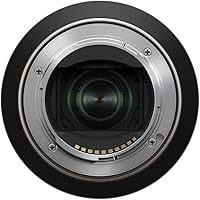
  • Lens Mount: Designed exclusively for Sony E-mount, it is fully compatible with both full-frame and APS-C Sony mirrorless bodies.
  • Optical Formula: The optical design consists of 15 elements arranged in 10 groups to balance center sharpness with a compact physical profile.
  • Autofocus System: Autofocus is driven by Tamron's RXD (Rapid eXtra-silent stepping Drive) motor, delivering fast and near-silent focus acquisition.
  • Min Focus Distance: The minimum focus distance is 31.5″ (approximately 80cm) at the wide end and 59.1″ (approximately 150cm) at 300mm.
  • Max Magnification: Maximum magnification ratio reaches 1:9.4 at the wide end and 1:5.1 at the telephoto end, enabling close-up versatility.
  • Stabilization: This lens does not include built-in optical image stabilization and relies on the camera body's in-body stabilization (IBIS) if available.
  • Weather Resistance: The lens features moisture-resistant construction to handle light rain and dusty outdoor conditions, but it is not fully weather-sealed.
  • Dimensions: The lens measures 5.8 × 3 × 3 inches (approximately 148 × 76mm) in its stored position.
  • Weight: The lens weighs 1.2 pounds (approximately 545g), making it one of the lighter options in its focal length class.
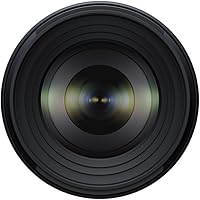
  • Filter Thread: The lens accepts 67mm screw-in filters at the front element.
  • Aperture Blades: The aperture diaphragm uses 7 rounded blades to produce smooth, circular bokeh in out-of-focus areas.
  • Warranty: Tamron provides a 6-year limited warranty in the USA, which is notably longer than most competing lenses in this category.
  • Model Number: The official Tamron model number for this lens is AFA047S700, with Amazon ASIN B08K3MXZCZ.
  • Availability Date: This lens was first made available for purchase on September 25, 2020.
  • Manufacturer: The lens is manufactured and warranted by Tamron USA, a subsidiary of Tamron Co., Ltd., based in Japan.
  • Best Sellers Rank: This lens ranks #15 in the SLR Camera Lenses category on Amazon, reflecting strong and consistent consumer demand.

Related Reviews
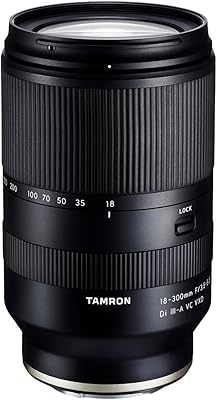
Tamron 18-300mm F/3.5-6.3 Zoom Lens
81%
91%
Autofocus Speed & Accuracy
96%
Zoom Range Versatility
74%
Image Sharpness
88%
Optical Image Stabilization
61%
Low-Light Performance
More
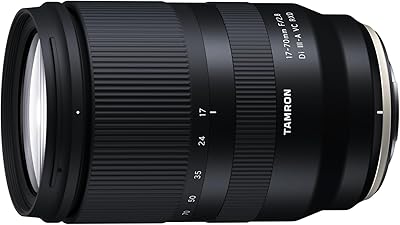
Tamron 17-70mm F/2.8 Di III-A VC RXD Zoom Lens for Fujifilm X
86%
91%
Image Quality
88%
Vibration Compensation (VC) Effectiveness
84%
Autofocus Performance
90%
Build Quality and Durability
85%
Low Light Performance
More
Tamron 11-20mm F/2.8 Di III-A Wide-Angle Lens
84%
91%
Image Sharpness
88%
Autofocus Performance
86%
Build Quality & Weather Sealing
74%
Value for Money
67%
Distortion & Optical Corrections
More
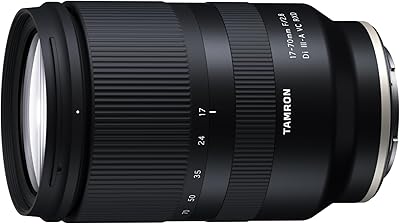
Tamron 17-70mm f/2.8 Di III-A Zoom Lens
82%
91%
Optical Sharpness
93%
Aperture Versatility
84%
Autofocus Performance
86%
Image Stabilization
82%
Build Quality & Durability
More
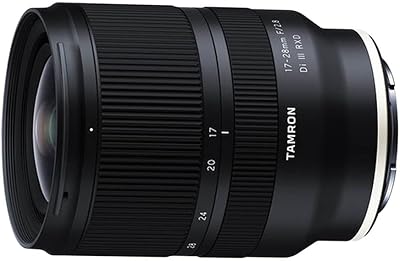
Tamron 17-28mm f/2.8 Di III RXD Lens
80%
88%
Image Sharpness
91%
Autofocus Performance
79%
Build Quality
93%
Portability & Size
86%
Low-Light Performance
More
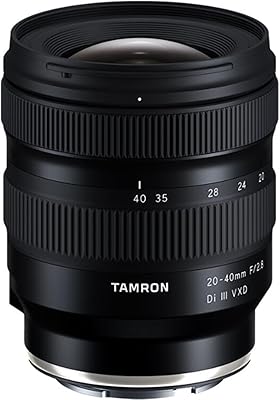
Tamron 20-40mm f/2.8 Di III VXD Lens
80%
91%
Image Sharpness
89%
Autofocus Performance
83%
Build Quality & Durability
94%
Size & Portability
67%
Zoom Range Versatility
More
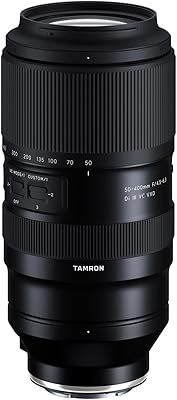
Tamron 50-400mm f/4.5-6.3 Telephoto Zoom Lens
82%
83%
Image Quality
81%
Autofocus Performance
93%
Zoom Range Versatility
58%
Low-Light Capability
76%
Build Quality
More
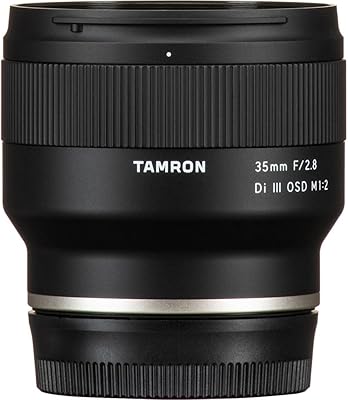
Tamron 35mm f/2.8 Di III OSD M1:2 Lens for Sony E-Mount
85%
94%
Image Quality
75%
Autofocus Speed
90%
Macro Performance
88%
Build Quality
91%
Portability
More
Canon EF 75-300mm III Telephoto Zoom Lens
70%
74%
Image Sharpness
58%
Autofocus Speed
69%
Build Quality
83%
Zoom Smoothness
88%
Value for Money
More
Tamron 28-200mm F/2.8-5.6 Mirrorless Zoom Lens
79%
93%
Versatility
74%
Image Sharpness
88%
Autofocus Performance
63%
Build Quality
41%
Weather Resistance
More

FAQ

Yes, it is fully compatible with all Sony E-mount bodies, including APS-C cameras like the a6000, a6100, a6400, a6600, and a6700. On APS-C, the crop factor gives you an effective reach of around 105-450mm equivalent, which is excellent for wildlife and sports.

No, the Tamron 70-300mm Di III RXD Telephoto Lens does not have optical image stabilization inside the lens itself. If your Sony body has in-body image stabilization (IBIS) — like the a7 III, a7 IV, or a6600 — it will compensate reasonably well. If your body lacks IBIS, you will need to use faster shutter speeds, especially at 300mm, to avoid motion blur.

The lens has moisture-resistant construction, so light drizzle and dusty trails are generally fine. That said, it is not fully weather-sealed like a professional-grade lens, so you should avoid shooting in heavy rain or submerging it in any way. Think of it as splash-resistant rather than waterproof.

It works well for video in many situations — the RXD autofocus motor is very quiet, so you will not pick up focus noise on your audio track. The main drawback for video is the variable aperture: if you zoom while recording, the exposure will shift, which can be disruptive. For static or slow zoom shots in good light, it performs nicely.

Center sharpness at 300mm is genuinely solid, especially stopped down one or two stops. Wide open at f/6.3 and 300mm, the center holds up well but the edges and corners do soften noticeably. For most subject types — birds against sky, athletes on a field — this is rarely a practical problem, but if you need edge-to-edge sharpness across the frame, you may find it limiting.

For a lens in this price range, the autofocus is impressively responsive. It handles birds in flight and running athletes reasonably well, especially when paired with Sony bodies that have strong AF processing like the a7 IV or a6700. It is not on par with a professional sports telephoto, but for casual wildlife and youth sports, it gets the job done more often than not.

At the wide 70mm end, the minimum focus distance is about 31.5″ (roughly 80cm), and at 300mm it is around 59.1″ (about 150cm). That is closer than many telephoto zooms, which means you can fill the frame with flowers, insects, or smaller objects without needing a dedicated macro lens. It is not a true macro, but the close-focus capability is a genuine practical bonus.

No, a lens hood is not included in the box. Tamron sells a compatible hood separately. It is worth picking one up, particularly for outdoor shooting where side light can cause flare, and it also helps protect the front element from accidental bumps.

The Sony 70-350mm G OSS has a slight reach advantage and adds optical image stabilization, which is a meaningful real-world benefit. It is also sharper in the corners at longer focal lengths. The trade-off is a notably higher price. If stabilization is critical to you or you shoot frequently without IBIS, the Sony may be worth the extra cost. For photographers who have IBIS in their body and prioritize value, this Tamron lens delivers a very competitive result.

Tamron's 6-year limited warranty covers manufacturing defects in materials and workmanship under normal use conditions. It does not cover accidental damage, physical abuse, or unauthorized modifications. To qualify, the lens must be purchased from an authorized US retailer and registered with Tamron USA. Six years is an unusually long coverage period for a consumer lens and offers solid peace of mind over the long term.

Where to Buy