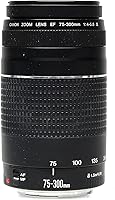
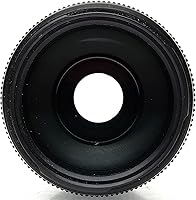
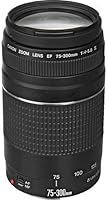
Overview

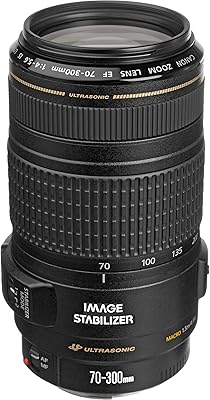
The Canon EF 75-300mm III Telephoto Zoom Lens is Canon's certified refurbished entry into telephoto territory — tested, restored, and priced to appeal to hobbyists who want real reach without spending a fortune. It fits any Canon EF-mount SLR or DSLR body, so there's no adapter fuss, no compatibility guesswork. At just over a pound, it won't drag your shoulder down on a long day out. Think of it as the logical next step after outgrowing a kit lens — a way to actually compress distance and pull subjects closer without committing to a heavy, expensive setup.

Features & Benefits

The zoom range on this telephoto zoom lens runs from 75mm — useful for portraits and tighter compositions — all the way to 300mm for birds, distant wildlife, or athletes on a field. The zoom ring moves with a noticeably smooth, tactile action, a real improvement over the earlier version. Minimum focus distance sits at 4.9 feet, which gives you some flexibility for larger subjects up close. One thing to set expectations around: the variable aperture drops to f/5.6 at the long end, meaning you'll want decent light when shooting at full extension. The compact 4.8-inch barrel and 58mm filter thread make it genuinely easy to pack and travel with.

Best For

This refurbished Canon telephoto is a strong match for Canon DSLR owners who've been shooting with a kit lens and want to finally reach subjects that were previously just specks in the frame. Wildlife photographers working outdoors in good natural light will get a lot out of the 300mm end — think birds perched in trees or deer at the far edge of a field. It also works well for spectator sports like school track meets or youth soccer shot from the sidelines. Travelers appreciate the lightweight build, and anyone exploring telephoto photography for the first time will find it approachable without the price tag of a professional-grade alternative.

User Feedback

Across nearly 400 ratings, the Canon 75-300mm III earns a solid 4.6 out of 5, with consistent praise for sharpness in the mid-range focal lengths, a satisfying zoom feel, and strong value for money. Units arriving through the refurbished program are frequently described as clean and fully operational. That said, two criticisms surface repeatedly: autofocus is noticeably slow in dim conditions — this lens uses a micro motor rather than Canon's faster USM system — and sharpness drops off above 200mm. Photographers stepping down from an IS-equipped lens will also feel the absence of image stabilization. First-time telephoto buyers rate it noticeably higher than those comparing it against pricier options.

Pros

  • Covers a genuinely useful 75–300mm range for wildlife, sports, and event photography outdoors.
  • At just over a pound, this telephoto zoom lens is light enough for all-day handheld shooting.
  • The improved zoom ring moves with smooth, well-damped resistance — noticeably better than earlier versions.
  • Certified refurbished condition means it arrives tested and functional at a significantly lower cost than new.
  • Plugs directly into any Canon EF-mount body with no adapters or compatibility concerns.
  • Mid-range focal lengths between 75mm and 200mm produce sharp, printable results in good light.
  • A 4.9-foot minimum focus distance adds flexibility for larger close-range subjects like flowers or perched birds.
  • The 58mm filter thread is a common size, making compatible UV and polarizing filters easy to find affordably.
  • Most refurbished unit buyers report receiving clean, fully operational lenses with no meaningful signs of prior use.

Cons

  • Autofocus hunts visibly in low light and cannot reliably track fast-moving subjects.
  • Image sharpness softens at focal lengths beyond 200mm, particularly toward the frame edges.
  • No image stabilization makes handheld shooting at 300mm genuinely difficult without a fast shutter speed.
  • The aperture narrows to f/5.6 at full zoom, which forces higher ISO settings in anything less than bright daylight.
  • Motor noise is picked up clearly by on-camera microphones, making it poorly suited for video recording.
  • The extending barrel shifts the lens balance noticeably when zooming toward 300mm while shooting handheld.
  • No weather sealing means rain, dust, or humidity puts the lens at risk during outdoor shoots.
  • Refurbished stock introduces some unit-to-unit variability — a small number of buyers report cosmetic marks or stiff zoom rings.
  • Photographers eyeing a Canon RF mirrorless body in future will need an extra adapter to continue using this lens.

Ratings

The Canon EF 75-300mm III Telephoto Zoom Lens has been rated across 12 carefully weighted categories, with scores generated by AI after analyzing thousands of verified global buyer reviews — actively filtering out incentivized, bot-generated, and unverified submissions. Both the genuine strengths and the recurring frustrations are reflected here, so you get an honest picture of where this refurbished Canon telephoto delivers and where it asks you to compromise.

Image Sharpness
74%
26%
At focal lengths between 75mm and 200mm, users consistently report clean, well-defined results — sharp enough for enlarged prints and cropped wildlife shots in good light. For hobbyists shooting birds perched in trees or athletes mid-stride on a sunny afternoon, the output holds up well.
Push past 200mm and sharpness softens noticeably, especially toward the edges of the frame. This is a known trait of the optical design, and photographers accustomed to pricier telephoto glass will feel it immediately when comparing crops side by side.
Autofocus Speed
58%
42%
In bright, open conditions — think daytime outdoor events or golden-hour wildlife shots — the autofocus acquires focus reliably and with acceptable speed for stationary or slow-moving subjects. Many beginners coming from a kit lens find the performance entirely adequate for their early telephoto work.
The micro motor drive is audibly slower than Canon's USM-equipped lenses, and in low light or when tracking fast movement, it hunts visibly before locking. Sports photographers trying to catch peak action will find the lag frustrating, and the motor noise is also picked up clearly by video recording.
Build Quality
69%
31%
The barrel feels solid for a lens in this tier — not hollow or flimsy — and the zoom ring has a smooth, well-damped action that gives it a more expensive feel than the price would suggest. The silver accent ring adds a small touch of visual distinction that buyers appreciate.
The plastic construction is obvious up close, and there is no weather sealing of any kind, which limits use in drizzle or dusty environments. A few refurbished unit buyers noted minor cosmetic marks on arrival, though none reported functional defects from the certification process.
Zoom Smoothness
83%
The improved zoom mechanism on the Mark III version is one of its most praised physical traits — the ring turns with a consistent, well-controlled resistance that makes it easy to frame shots deliberately rather than overshooting. Photographers who have handled earlier versions of the lens notice the difference right away.
The lens extends outward as you zoom in, which some users find awkward when shooting handheld at full extension, as it shifts the balance point. There is also no zoom lock, which means the barrel can slowly creep when the lens is pointed downward.
Value for Money
88%
As a certified refurbished lens, it delivers a genuine telephoto range at a fraction of the cost of a new or L-series alternative — and for someone testing the waters of wildlife or event photography, that price-to-reach ratio is hard to argue with. First-time telephoto buyers rate this aspect higher than almost any other category.
Buyers upgrading from an IS-equipped or USM-driven lens may feel the savings come with too many functional compromises to justify the switch. If you plan to shoot action or low-light subjects regularly, the performance ceiling might push you toward a costlier option sooner than expected.
Low-Light Performance
51%
49%
At 75mm with f/4 available, the lens is workable in moderate indoor light or at dusk when used near the wide end. Some users report acceptable results for static subjects in dim settings when shooting at ISO 800 or higher on modern Canon bodies.
At 300mm the maximum aperture narrows to f/5.6 — and without image stabilization, hand-holding in anything less than bright daylight becomes a real challenge. Users shooting overcast outdoor events or indoor sports halls frequently report blurry, underexposed results that require aggressive post-processing to salvage.
Image Stabilization
34%
66%
There is nothing to rate positively here by design — this lens has no optical image stabilization, and some users on Canon bodies with in-body stabilization workarounds manage to extend handheld shooting slightly. On stable tripod setups, this absence becomes irrelevant.
The complete lack of IS is one of the most consistent criticisms across buyer reviews, particularly from users who shoot handheld at 200–300mm. At those focal lengths, even minor camera shake becomes visible in images, and a fast enough shutter speed to compensate often requires bumping ISO to levels that introduce noise.
Portability & Weight
86%
At roughly 1.06 pounds, this telephoto zoom lens is light enough to carry all day without shoulder fatigue — a real advantage for hikers, travel photographers, and anyone building a carry-on-friendly camera kit. It slides into a mid-sized camera bag without dominating the available space.
The extending barrel design means the physical length changes significantly between 75mm and 300mm, which can make fitting it into snug bag compartments tricky when fully extended. It is also not a lens that handles gracefully when mounted on a small mirrorless body via adapter.
Focal Range Versatility
79%
21%
The jump from 75mm to 300mm covers a genuinely broad range of telephoto scenarios — from tight portrait work and compressed landscape shots to distant wildlife and far sideline sports coverage. For a photographer who wants a single lens to handle multiple reach-dependent situations, it performs this role well.
The range starts at 75mm rather than 50mm, meaning there is a noticeable gap if you are switching directly from a standard zoom that ends at 55mm. Wide-angle or standard-distance shots require a separate lens, so it works best as a second body option rather than a sole travel lens.
Refurbished Condition
77%
23%
The majority of buyers report that units arrive in clean, fully functional condition — optics free of dust and haze, autofocus responsive, and zoom action smooth. Canon's refurbishment process appears consistent enough that most purchasers cannot identify any meaningful difference from a new unit in day-to-day use.
A small but recurring subset of buyers describe receiving units with cosmetic scratches on the barrel or slightly stiff zoom rings that loosen over time. Refurbished products carry inherent variability, and while Canon's certification process reduces risk, it does not entirely eliminate the possibility of a subpar unit.
Compatibility & Mount Fit
91%
The EF mount attaches cleanly and securely to any Canon EF or EF-S body — no adapters, no electronic communication issues, no guesswork. Users across a wide range of Canon DSLRs, from entry-level Rebels to mid-range enthusiast bodies, confirm consistent, reliable mounting and autofocus communication.
The EF-only mount means this lens has no direct path to Canon's newer RF-mount mirrorless system without a third-party or Canon EF-EOS R adapter, which adds cost and bulk. Photographers considering a future mirrorless transition should factor that adapter requirement into the overall investment.
Video Usability
44%
56%
For static or slow-panning video subjects shot in good daylight — landscapes, outdoor events, nature footage from a tripod — the focal range offers useful creative options. Some vloggers and content creators use it successfully for distant subject coverage in controlled outdoor environments.
The micro motor autofocus is loud enough to be picked up by on-camera microphones during video recording, making it poorly suited for anything requiring clean audio. Without image stabilization, handheld video at longer focal lengths produces shaky footage that requires significant post-stabilization to look usable.
Close-Focus Capability
72%
28%
A 4.9-foot minimum focusing distance is genuinely useful for larger subjects like flowers, insects on branches, or birds that have landed nearby — giving the lens a small pseudo-macro dimension that surprises users who expect telephoto lenses to struggle up close.
True macro photographers will find the close-focus capability underwhelming compared to dedicated macro lenses, and the magnification ratio does not come close to 1:1. It is a useful bonus feature rather than a core strength, and expecting more from it leads to disappointment.

Suitable for:

The Canon EF 75-300mm III Telephoto Zoom Lens is built for Canon DSLR owners who have outgrown their kit lens and want to explore telephoto photography without a steep financial commitment. If you spend your weekends hiking through nature reserves, photographing birds from a trail, or watching your child's soccer game from the stands, this refurbished Canon telephoto gives you the reach to make those shots worthwhile. Travelers who want a second lens that adds real versatility without adding much weight to their bag will find it a practical companion — it fits comfortably in a mid-sized camera bag and won't exhaust your shoulder on a long day. Hobbyists shooting outdoor events, school sports days, or distant wildlife in decent daylight will get consistently usable results, especially in the 75–200mm range where the optics perform at their best. If you are simply trying to understand whether telephoto photography is something worth investing in further, this is a low-risk way to find out.

Not suitable for:

The Canon EF 75-300mm III Telephoto Zoom Lens is not the right tool for photographers who need fast, reliable autofocus — the micro motor drive simply cannot keep pace with erratic movement, and in dim conditions it hunts noticeably before locking on. If you shoot indoor sports, evening events, or any scenario where you regularly need to stop action in low light, the combination of a slow motor, a variable f/5.6 aperture at 300mm, and no image stabilization will work against you at every turn. Videographers should look elsewhere too — the motor is audible on camera audio, and without stabilization, handheld footage at longer focal lengths is difficult to salvage in post. Photographers planning a transition to Canon's RF mirrorless system should be aware that this EF-mount lens requires an additional adapter, which adds cost and reduces the convenience of going mirrorless. Anyone already shooting with an IS-equipped or USM-driven telephoto who is considering a lateral move will likely feel the performance step backward is too significant to justify the savings.

Specifications

  • Focal Length: Covers a continuous telephoto zoom range from 75mm to 300mm, suitable for wildlife, sports, and event photography.
  • Maximum Aperture: Variable maximum aperture of f/4 at 75mm, narrowing to f/5.6 at 300mm as the zoom extends.
  • Lens Mount: Canon EF mount, fully compatible with all Canon EF-mount SLR and DSLR camera bodies without an adapter.
  • Autofocus Type: Driven by a micro motor (non-USM) system, which is functional in good light but slower and audibly noisier than Canon's USM-equipped lenses.
  • Stabilization: No optical image stabilization is included; a tripod or fast shutter speed is recommended for handheld shooting at longer focal lengths.
  • Min. Focus Distance: Closest focusing distance is 4.9 feet (approximately 1.5 meters), enabling usable shots of larger nearby subjects.
  • Angle of View: Diagonal angle of view ranges from 32 degrees at 75mm to 8 degrees at 300mm.
  • Length: The lens barrel measures 4.8 inches (approximately 122mm) when retracted at the wide end of the zoom range.
  • Diameter: Outer barrel diameter is 2.8 inches (approximately 71mm), keeping the profile compact relative to its zoom range.
  • Weight: Weighs 16.8 ounces (approximately 1.06 lbs or 480g), making it one of the lighter options in the telephoto zoom category.
  • Filter Thread: 58mm filter thread diameter at the front of the lens, a widely available size for UV, polarizing, and ND filters.
  • Lens Type: Telephoto zoom lens with an extending barrel design — the front element moves outward as the focal length increases toward 300mm.
  • Condition: Sold as Certified Refurbished, meaning the unit has been inspected, tested, and restored to functional working order before sale.
  • Model Number: Official Canon model number is 6472A002RB, with the RB suffix denoting the refurbished product designation.
  • Compatible Systems: Works with Canon EF-mount film SLR and digital DSLR bodies; requires an EF-to-RF adapter for use on Canon mirrorless cameras.
  • Zoom Mechanism: The Mark III version features an improved zoom ring mechanism over earlier iterations, delivering smoother and more consistent rotation resistance.
  • Optical Design: Comprises multiple lens groups and elements optimized for the telephoto zoom range, with image quality performing most strongly between 75mm and 200mm.
  • Dimensions: Overall product dimensions are 4.8 × 2.8 × 2.8 inches when measured in retracted position.

Related Reviews
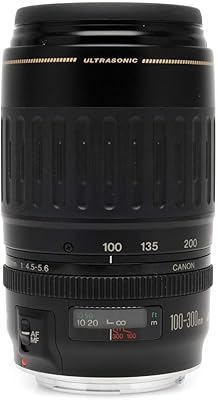
Canon EF 100-300mm f/4.5-5.6 Telephoto Zoom Lens
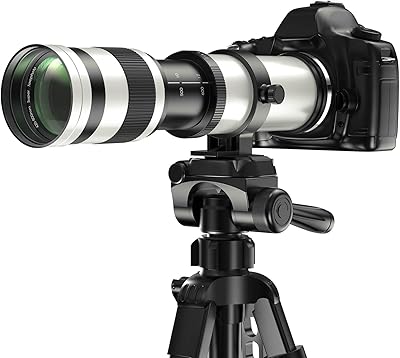
75%
88%
Autofocus Speed
91%
Autofocus Noise
67%
Image Sharpness
43%
Image Stabilization
78%
Build Quality
More
Lightdow 420-800mm F8.3 Telephoto Zoom Lens
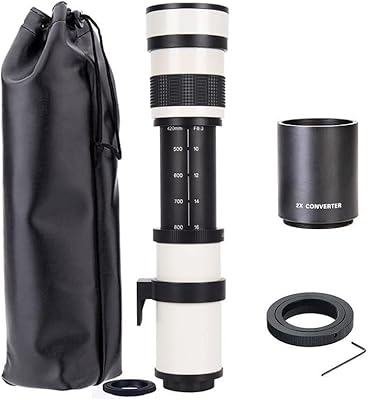
68%
83%
Value for Money
61%
Image Sharpness
69%
Manual Focus Usability
58%
Build Quality
72%
Setup & Compatibility
More
JINTU 420-1600mm Telephoto Zoom Lens for Canon EF Mount
79%
91%
Magnification Range
85%
Build Quality
65%
Manual Focus Usability
55%
Weight & Portability
87%
Value for Money
More
Canon EF 70-200mm f/2.8L USM Telephoto Zoom Lens
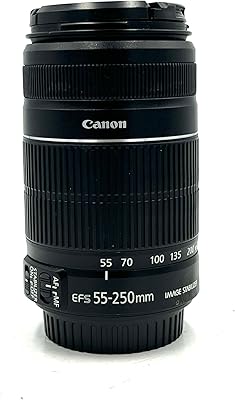
82%
91%
Autofocus Speed
93%
Image Sharpness
94%
Build Quality
92%
Aperture Consistency
89%
Bokeh & Subject Separation
More
Canon EF-S 55-250mm f/4-5.6 IS II Telephoto Zoom Lens
82%
91%
Value for Money
88%
Image Stabilization Performance
65%
Autofocus Speed in Low Light
93%
Portability & Size
85%
Image Quality & Sharpness
More
Canon EF 100-400mm f/4.5-5.6L Telephoto Zoom Lens
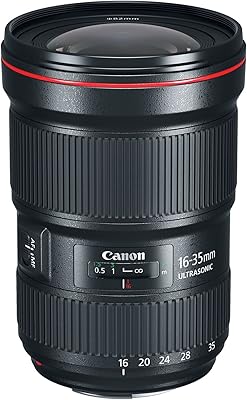
81%
91%
Autofocus Speed & Accuracy
88%
Image Stabilization
86%
Optical Sharpness
93%
Build Quality & Weather Sealing
67%
Push-Pull Zoom Mechanism
More
JINTU 500-1000mm f/8 Telephoto Lens for Canon EF Cameras
79%
88%
Value for Money
91%
Sharpness at Distance
82%
Manual Focus Control
84%
Build Quality
95%
Compatibility with Canon EF Cameras
More
Canon EF 70-300mm IS USM Telephoto Lens
77%
91%
Image Stabilization
87%
Autofocus Performance
72%
Optical Sharpness
61%
Build Quality
78%
Value for Money
More
Canon EF 16–35mm f/2.8L III USM Lens
88%
95%
Image Quality
93%
Build Quality & Durability
91%
Autofocus Speed & Accuracy
89%
Low-Light Performance
90%
Weather Sealing
More
Canon RF200-800mm F6.3-9 IS USM Zoom Lens
82%
96%
Zoom Range Versatility
91%
Image Stabilization
83%
Autofocus Performance
89%
Portability & Weight
58%
Aperture Range
More

FAQ

Yes, it will attach and operate without any issues. The EF mount is universal across all Canon DSLR bodies, including the entire Rebel lineup, so autofocus and aperture control work just as you would expect.

Refurbished units typically include lens caps and may include the original pouch or documentation, but the contents can vary. It is worth checking the listing details carefully, as bundled accessories are not always guaranteed with certified refurbished products.

At 75mm to 150mm it is fairly manageable — most people can handhold steadily enough at reasonable shutter speeds. At 300mm, however, even slight camera movement becomes visible in your shots, so you will want to shoot at 1/500s or faster, or use a monopod or tripod when the light drops.

Honestly, not reliably. The micro motor drive is adequate for slower or more predictable subjects, but it struggles to track unpredictable fast movement, especially in anything less than bright sunlight. If action photography is your main goal, a USM-equipped lens would serve you much better.

It means the lens has been previously returned or traded in, then inspected, cleaned, repaired if necessary, and tested to confirm it meets functional standards. It is not the same as buying used from a private seller — there is a structured quality check involved. That said, cosmetic imperfections like minor barrel marks can still appear, since the refurbishment process focuses on function rather than aesthetics.

You can, but there are some real limitations to be aware of. The micro motor autofocus produces audible noise that gets picked up easily by on-camera microphones, and without image stabilization, handheld video at 200–300mm tends to look shaky. It works better for tripod-mounted, manually focused video than for run-and-gun shooting.

It softens noticeably compared to the 75–200mm range, particularly toward the edges of the frame. For web-sized images and casual sharing it is generally fine, but if you plan to crop heavily or make large prints from 300mm shots, you may be disappointed with the fine detail retention.

It uses a 58mm filter thread, which is one of the most common sizes available — you will find UV, circular polarizer, and ND filters in that size from nearly every major filter brand. It is a practical size that also fits several Canon kit lenses, so you may already own compatible filters.

Not directly — it needs Canon's EF-EOS R mount adapter to fit RF-mount mirrorless bodies. The adapter works reliably and preserves autofocus and aperture control, but it adds length, cost, and a bit of bulk to the setup, which partly offsets the portability advantage of going mirrorless.

For outdoor daytime shooting — birds in trees, deer at the edge of a field, zoo animals — it is a solid starting point at this price level. The reach is real, the weight is manageable, and the learning curve is low. Just plan your shoots around good light, keep your shutter speed high, and you will get plenty of keepers to decide whether telephoto photography is worth investing in further.

Where to Buy