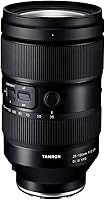
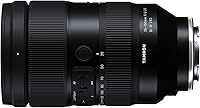
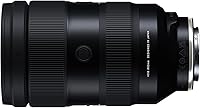
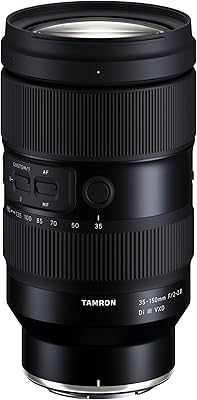
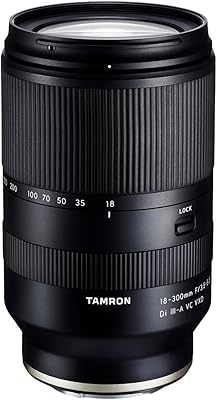
Overview

The Tamron 35-150mm F/2-2.8 Di III VXD Lens arrived in late 2021 as something genuinely new: a single zoom covering a range that portrait and event photographers had previously needed two or three primes to handle. What makes it stand apart is its F/2-2.8 variable aperture — no other zoom had pulled that off across this focal range before. It's built for Sony FE mount and works on both full-frame and APS-C bodies. The price reflects serious optical and mechanical engineering, not a budget compromise. If you're going in expecting a consumer zoom, recalibrate — this is pro-grade glass built for people who shoot for a living.
Features & Benefits

Starting at F/2 on the wide end means you can shoot in dim church light without hammering ISO, and at 150mm the F/2.8 maximum still produces background separation that flatters portraits cleanly. The VXD linear motor drives autofocus that is fast and nearly silent — a real advantage when recording video or tracking a moving subject in a crowded room. Close-focus capability down to 13 inches at 35mm is genuinely useful; it is not macro territory, but it handles detail shots without a lens swap. Sharpness holds well across the zoom range, and the build includes weather sealing and a tactile zoom ring that feels considered rather than an afterthought.

Best For

This fast-aperture zoom was practically designed with wedding photographers in mind — one body, one lens, ceremony to reception, without hunting through a bag. Portrait shooters get the compression they want at 150mm and enough close-focus reach at the wide end to work creatively in tight spaces. Travel photographers who prefer traveling light but won't sacrifice image quality will find it a convincing single-lens solution, though the 41-ounce weight is a real consideration for full-day carry. Video shooters benefit from the quiet motor and smooth focal transitions. It also makes strong sense for Sony mirrorless users coming off kit glass who want a meaningful upgrade without buying multiple lenses.

User Feedback

Across more than 170 verified ratings, the Tamron 35-150mm holds a 4.6-star average — and the praise runs consistent: sharpness wide open, reliable autofocus in mixed light, and the simple freedom of not swapping glass mid-shoot. The criticism that surfaces regularly is weight. At just over 2.5 pounds, this all-in-one Sony lens is noticeably heavier than a single prime, and photographers shooting all day on a strap feel it by the afternoon. A few buyers also flagged that the included lens hood feels slightly underwhelming given where the price sits. Mount fit and build quality on Sony bodies earn consistent compliments. Most buyers treat the weight as a trade-off they accept willingly.

Pros

  • The F/2 maximum aperture at 35mm handles low-light venues without forcing painful ISO compromises.
  • Sharpness holds up impressively across the full zoom range, even shot wide open.
  • VXD autofocus is fast and quiet enough for both video work and tracking moving subjects in stills.
  • Covering 35mm to 150mm in one barrel genuinely replaces two or three separate lenses for most portrait and event workflows.
  • Weather sealing makes this all-in-one Sony lens a practical choice for outdoor shoots in unpredictable conditions.
  • The 13-inch minimum focusing distance at the wide end adds creative flexibility that most zoom lenses in this class cannot match.
  • Background separation at 150mm F/2.8 produces results that feel closer to a prime than a typical zoom.
  • Build quality and mount fit on Sony bodies earn consistent praise from long-term users.
  • The 6-year USA warranty offers meaningful peace of mind for a working professional investment.
  • Holds a 4.6-star average across a substantial number of verified ratings, reflecting reliable real-world satisfaction.

Cons

  • At 41 ounces, the weight becomes a real physical fatigue factor during full-day shoots.
  • The included lens hood feels noticeably underwhelming relative to where the price sits.
  • Buyers expecting prime-level optical perfection at every focal length and aperture combination will find occasional soft corners.
  • No optical image stabilization built in, so you rely entirely on Sony in-body stabilization for slower shutter work.
  • The size can feel front-heavy on smaller Sony APS-C bodies, affecting handling balance.
  • Chromatic aberration, while generally well-controlled, can appear in high-contrast edge situations and may require post-processing correction.
  • The fast-aperture zoom occupies a premium price tier that demands serious budget commitment upfront.
  • Not an ideal choice if your shooting style regularly demands focal lengths beyond 150mm, leaving you needing a second lens anyway.

Ratings

Our AI rating engine analyzed verified global buyer reviews for the Tamron 35-150mm F/2-2.8 Di III VXD Lens, actively filtering out incentivized, duplicate, and bot-generated feedback to surface what real photographers actually experience in the field. Scores reflect a calibrated synthesis of recurring praise and persistent pain points, so both the highs and the honest frustrations are represented transparently below.

Optical Sharpness
92%
Photographers consistently report that the Tamron 35-150mm resolves fine detail with impressive clarity even when shot wide open — a quality that surprises users coming from slower kit zooms. Wedding shooters in particular note that reception candids at F/2 hold up well at full resolution, with center sharpness that competes with dedicated primes.
Corner sharpness at the wide end wide open draws occasional criticism, with some full-frame users noting mild softness toward the edges of the frame at 35mm F/2. Stopping down to F/2.8 or F/4 resolves most of this, but it is worth knowing if corner-to-corner uniformity is critical to your work.
Autofocus Performance
89%
The VXD linear motor earns consistent praise for its speed and subject-acquisition reliability, especially when paired with Sony bodies that support real-time Eye AF. Event photographers report that tracking a moving subject across a reception dance floor or a ceremony aisle feels confident and rarely results in a missed focus pull.
In challenging mixed or low-contrast lighting — think dimly lit reception halls with colored uplighting — a small number of users report occasional hesitation or brief hunting before lock-on. It is not a dealbreaker for most scenarios, but photographers who shoot in genuinely difficult light should factor this in.
Aperture Versatility
94%
The F/2 maximum at the wide end is the single most praised feature among verified buyers, giving photographers a meaningful low-light advantage that no other zoom in this focal range can match. Portrait shooters love that they can keep ISO lower during dim indoor ceremonies while still maintaining a shutter speed fast enough to freeze movement.
The variable aperture means that zooming from 35mm to 150mm during a single shot or video pan will shift the exposure from F/2 to F/2.8, which requires compensation in manual video work. For stills shooters in auto or aperture priority this is largely invisible, but video operators need to account for it when pulling zoom during a take.
Build Quality
87%
The physical construction earns strong marks from buyers who put the lens through demanding professional use — outdoor weddings, travel shoots, and multi-hour event coverage. The barrel feels solid without any play in the zoom ring, and the moisture-resistant sealing gives working photographers confidence when light rain arrives unexpectedly on location.
The bundled lens hood receives consistent criticism as the one weak point in an otherwise well-assembled package, with several reviewers describing it as feeling disproportionately thin and plasticky relative to the price of the lens itself. A few users also note that the zoom ring travel feels slightly short for precise framing adjustments at longer focal lengths.
Value for Money
78%
22%
When measured against the combined cost of two or three primes needed to cover the same 35–150mm range at comparable apertures, the Tamron 35-150mm represents a genuinely compelling consolidation of investment. Buyers who previously owned a 35mm and an 85mm prime report that this all-in-one Sony lens effectively replaces both without a meaningful sacrifice in output quality.
The price sits firmly in premium territory, and buyers who compare it against cheaper zoom alternatives with slower apertures sometimes question whether the low-light advantage justifies the gap. For hobbyist photographers who rarely push into low-light event scenarios, the cost-benefit calculation is harder to justify than it is for working professionals.
Video Usability
83%
The near-silent VXD motor is one of the most frequently praised video-specific qualities in verified reviews, with on-camera microphone users reporting that focus hunting does not bleed into recorded audio during typical run-and-gun shooting. Smooth aperture transitions and reliable Eye AF tracking make it a practical choice for solo videographers who cannot stop to adjust between shots.
The lack of built-in optical stabilization means handheld video quality depends heavily on the IBIS capability of the body it is mounted on, and users with older Sony bodies report that longer focal lengths handheld can produce noticeable micro-jitter in footage. The variable aperture during zoom also requires deliberate exposure management for professional video production.
Portability & Weight
58%
42%
Relative to packing two or three separate lenses, photographers acknowledge that one barrel at 41 ounces is still a net reduction in total carry weight for a full event kit. Travel photographers who shoot with a single-body setup report that the lens fits in a mid-sized camera bag without the organizational burden of managing multiple glass options.
At over 2.5 pounds, this is a physically demanding lens for full-day handheld shooting, and multiple verified reviewers specifically mention arm and neck fatigue by the afternoon of a long event. Photographers used to lightweight primes describe the first few weeks with this fast-aperture zoom as a noticeable physical adjustment, particularly when using a standard neck strap.
Bokeh Quality
86%
Background separation at 150mm F/2.8 consistently draws praise for producing smooth, creamy out-of-focus transitions that flatter portrait subjects and separate them cleanly from busy backgrounds. Wedding photographers note that the rendering at longer focal lengths feels closer to a dedicated portrait prime than to a typical zoom, which is a meaningful quality for client-facing work.
At shorter focal lengths in the range, some users note that busy backgrounds can render with slightly more busyness in the out-of-focus areas than a fast prime would produce at equivalent apertures. The difference is subtle and largely irrelevant at typical viewing sizes, but photographers who routinely shoot at 35–50mm and critically evaluate bokeh rendering will notice it.
Close-Focus Capability
81%
19%
The 13-inch minimum focus distance at 35mm is consistently flagged as a pleasant surprise by buyers who did not expect strong close-up performance from a zoom of this range. Detail shots at weddings — rings, florals, stationery — become practical without pulling a macro lens from the bag, which photographers working solo find genuinely useful.
At 150mm, the minimum focus distance extends considerably, which limits close-up versatility at the telephoto end of the range. Photographers who expected macro-adjacent performance across the full focal range report some disappointment, and it is important to be clear that the impressive 13-inch figure applies only at the wide end.
Chromatic Aberration Control
74%
26%
For typical event and portrait shooting, chromatic aberration is well-controlled and rarely surfaces as a visible issue in final images at normal display sizes. Most users report that standard in-camera corrections or a single Lightroom lens profile pass handles any fringing without requiring manual intervention on a shot-by-shot basis.
Under high-contrast edge conditions — bright window light behind a subject, strongly backlit outdoor portraits — lateral chromatic aberration can appear at the wide end wide open and requires correction in post. Photographers who frequently shoot in contrasty backlit scenarios report that it is a consistent enough characteristic to warrant a correction step in their editing workflow.
Compatibility & Mount Fit
91%
Mount fit and communication with Sony bodies receives strong marks across verified reviews, with photographers reporting that it integrates cleanly with Sony's full AF feature set including Eye AF, animal recognition, and real-time tracking on current-generation bodies. Firmware update support from Tamron through their TAP-in Console also gives buyers a path to future improvements.
Compatibility is limited strictly to Sony E-Mount, so photographers who shoot across multiple camera systems or who are considering a future system switch will find zero cross-platform flexibility here. There is also no Nikon Z or Canon RF version available, meaning this lens is a Sony-ecosystem commitment.
Warranty & Support
88%
The 6-year limited USA warranty stands out clearly from the field — most competing third-party lenses offer a fraction of that coverage — and working professionals cite it as a meaningful factor in the purchase decision. Tamron's USA service reputation is generally positive among verified buyers who have actually used it, with reasonable turnaround times reported.
The extended warranty requires product registration to be valid, and a handful of buyers report only discovering this requirement after an issue arose, leading to friction during a support claim. International buyers outside the USA are not covered by the 6-year term and receive standard regional warranty terms, which is an important distinction for buyers purchasing through grey-market channels.
Low-Light Performance
91%
The fast aperture pays its most obvious dividends in indoor low-light environments where slower zooms force a painful choice between high ISO noise and motion blur. Photographers shooting dimly lit venues — churches, reception halls, stage performances — report being able to keep ISO at manageable levels while maintaining shutter speeds fast enough for sharp results.
Even with F/2 available, extremely dark environments still demand high ISO on the sensor side, and the absence of optical stabilization means that very slow shutter speeds for static subjects require either a monopod or reliance on the body's IBIS. Users on older Sony bodies with weaker in-body stabilization report that the low-light advantage is partially offset by this limitation.

Suitable for:

The Tamron 35-150mm F/2-2.8 Di III VXD Lens is an excellent fit for working photographers who need to cover a wide range of shooting situations without carrying multiple lenses. Wedding and event photographers in particular will appreciate how naturally it moves from 35mm environmental shots to compressed 150mm portraits without a single lens swap during a ceremony. Portrait photographers shooting on Sony full-frame bodies get genuinely flattering background blur even at the longer end, which is rare in a zoom at this price tier. Video creators who shoot run-and-gun will find the near-silent VXD autofocus and smooth zoom range a practical daily tool. Travel photographers willing to accept some extra weight in exchange for a true one-lens kit will also get strong value here, especially those who shoot in variable lighting conditions where the fast aperture pays dividends.
Not suitable for:

Photographers who prioritize low pack weight above everything else should think carefully before committing to the Tamron 35-150mm F/2-2.8 Di III VXD Lens — at over 2.5 pounds, it is a noticeable presence in the bag and on the strap over a long shoot day. Dedicated macro shooters will find the close-focus capability useful but not sufficient; this is not a replacement for a true macro lens. Buyers on a tight budget looking for a versatile zoom will find more affordable options in the Sony ecosystem, though with meaningful sacrifices in low-light performance and build quality. Photographers who shoot primarily ultrawide or beyond 150mm will also find the focal range leaves gaps on both ends of their needs. If you already own a sharp set of primes in the 35mm-to-135mm range and rarely feel limited by lens swaps, the cost-benefit calculation here becomes much harder to justify.

Specifications

  • Focal Length: Covers a 35–150mm zoom range, bridging wide environmental framing and compressed short telephoto in a single barrel.
  • Max Aperture: Opens to F/2 at 35mm and maintains F/2.8 at 150mm, delivering fast light-gathering across the full zoom range.
  • Lens Mount: Designed exclusively for Sony FE (E-Mount), compatible with both full-frame and APS-C Sony mirrorless bodies.
  • Autofocus: Powered by Tamron's VXD linear motor system, providing fast, precise, and near-silent autofocus for stills and video.
  • Min Focus Distance: Achieves a minimum object distance of 13″ at the 35mm end, allowing unusually close subject framing for a zoom of this range.
  • Dimensions: Measures 6.2 × 3.5 × 3.5 inches, making it a physically substantial but relatively consolidated lens given its zoom range.
  • Weight: Weighs 2.57 pounds (41.1 oz), which is heavier than a single prime but lighter than carrying multiple lenses covering the same range.
  • Weather Sealing: Features moisture-resistant construction throughout the barrel, providing practical protection during outdoor shoots in light rain or dusty environments.
  • Lens Type: Classified as a standard zoom lens optimized for portrait, event, and general-purpose photography on Sony mirrorless systems.
  • Model Number: Tamron's official model designation for this lens is AFA058S700.
  • Brand: Manufactured by Tamron, a Japanese optical company with decades of experience producing third-party lenses for major camera systems.
  • Release Date: First made available in October 2021, making it a relatively recent lens with an established track record among working photographers.
  • Warranty: Backed by a 6-year limited warranty for USA buyers, which is notably longer than most competing third-party lenses in this category.
  • Format Support: Fully compatible with Sony full-frame sensors and APS-C crop-sensor bodies, with the field of view adjusting accordingly on smaller sensors.
  • Lens Category: Ranked #41 in the SLR Camera Lenses category on Amazon, reflecting strong sustained demand among Sony system photographers.

Related Reviews

Tamron 35-150mm F/2-2.8 Di III VXD for Nikon Z
85%
82%
Autofocus Performance
91%
Image Quality (Sharpness & Color Accuracy)
88%
Build Quality & Durability
85%
Ease of Use & Ergonomics
87%
Portability & Weight
More
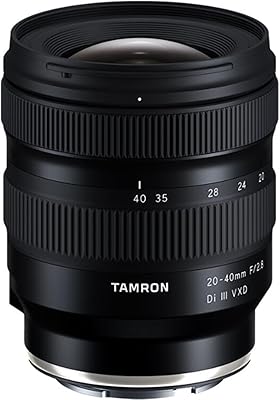
Tamron 20-40mm f/2.8 Di III VXD Lens
80%
91%
Image Sharpness
89%
Autofocus Performance
83%
Build Quality & Durability
94%
Size & Portability
67%
Zoom Range Versatility
More
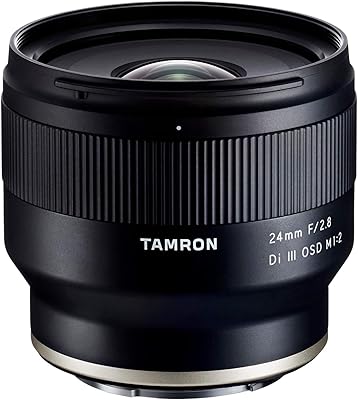
Tamron 24mm F/2.8 Di III OSD Lens
79%
91%
Image Sharpness
93%
Value for Money
74%
Build Quality & Durability
71%
Autofocus Performance
88%
Macro Capability
More
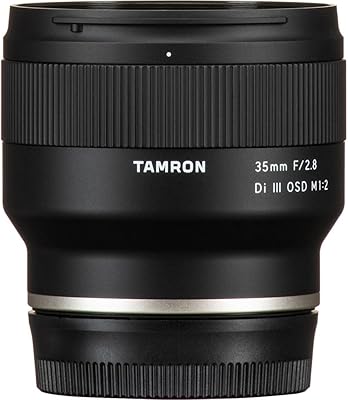
Tamron 35mm f/2.8 Di III OSD M1:2 Lens for Sony E-Mount
85%
94%
Image Quality
75%
Autofocus Speed
90%
Macro Performance
88%
Build Quality
91%
Portability
More
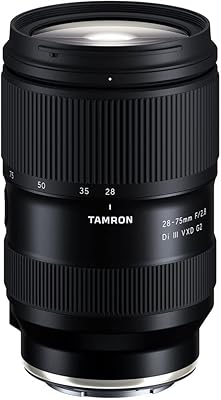
Tamron 28-75mm F/2.8 Di III VXD G2 for Sony E-Mount
87%
89%
Image Quality
92%
Autofocus Speed
85%
Build Quality
87%
Ease of Use
90%
Low-Light Performance
More
Tamron 17-70mm F/2.8 Di III-A VC RXD Zoom Lens for Fujifilm X
86%
91%
Image Quality
88%
Vibration Compensation (VC) Effectiveness
84%
Autofocus Performance
90%
Build Quality and Durability
85%
Low Light Performance
More
Tamron 11-20mm F/2.8 Di III-A Wide-Angle Lens
84%
91%
Image Sharpness
88%
Autofocus Performance
86%
Build Quality & Weather Sealing
74%
Value for Money
67%
Distortion & Optical Corrections
More
Tamron 17-70mm f/2.8 Di III-A Zoom Lens
82%
91%
Optical Sharpness
93%
Aperture Versatility
84%
Autofocus Performance
86%
Image Stabilization
82%
Build Quality & Durability
More
Tamron 17-28mm f/2.8 Di III RXD Lens
80%
88%
Image Sharpness
91%
Autofocus Performance
79%
Build Quality
93%
Portability & Size
86%
Low-Light Performance
More
Tamron 50-400mm f/4.5-6.3 Telephoto Zoom Lens
82%
83%
Image Quality
81%
Autofocus Performance
93%
Zoom Range Versatility
58%
Low-Light Capability
76%
Build Quality
More

FAQ

It works on both. The Tamron 35-150mm F/2-2.8 Di III VXD Lens is designed for the Sony FE mount, which fits all Sony E-Mount bodies including APS-C cameras like the a6700. On a crop-sensor body, the effective field of view shifts to roughly 52–225mm equivalent, which actually makes it an even longer reach at the telephoto end.
Yes, for most real-world situations. The VXD linear motor is genuinely quick and pairs well with Sony's on-body subject tracking. Photographers shooting events and fast-moving portraits report reliable performance in good light. In very low light or with erratic subject movement, like any zoom, it can occasionally hesitate, but it handles typical event and portrait work without issues.

The VXD motor is near-silent, which is one of its real strengths for video work. If you are using an on-camera microphone at close range, you are unlikely to hear any focus hunting in your audio. That said, for critical audio recording, an external mic placed away from the body is always the safer choice regardless of the lens.

Honestly, it is something you feel. At just over 2.5 pounds, it is not light, and by the end of a long shoot day on a neck strap, your body will know it is there. Most photographers who use this all-in-one Sony lens as their primary wedding lens recommend a good shoulder strap or a dual-camera harness to distribute the load. The trade-off is that you are not swapping lenses constantly, which has its own ergonomic benefit.

No, there is no optical stabilization inside the barrel itself. You rely on Sony's in-body image stabilization (IBIS) for handheld compensation at slower shutter speeds. On bodies with strong IBIS, like the a7 IV or a7R V, this works well in practice. If you are shooting on an older Sony body with weaker stabilization, keep that in mind for low-light handheld video work.

The Tamron 35-150mm uses a 82mm filter thread. That is a larger diameter than many lenses, so if you are planning to use existing filters, check your current collection before buying. 82mm filters are widely available but tend to cost more than smaller sizes, so factor that in if you shoot with polarizers or ND filters regularly.

At 150mm and F/2.8, background blur is genuinely smooth and flattering — clearly in a different league from a kit zoom. It does not quite match the absolute rendering quality of a top-tier 135mm F/1.8 prime wide open, but for most portrait and event work, the difference is not meaningful in final images. The fast-aperture zoom delivers results that will satisfy most photographers who are not pixel-peeping at 100 percent.

Yes, it communicates fully with Sony's AF systems, including Eye AF for humans and animals, real-time tracking, and phase-detect autofocus on compatible bodies. Third-party lens compatibility with Sony's advanced AF features has improved significantly in recent years, and the Tamron 35-150mm is a well-supported option in that regard.

At 150mm, the minimum focusing distance increases to around 29.5 inches (about 75cm), which is typical for a zoom in this class. The impressive 13-inch close-focus spec applies specifically at the 35mm wide end. If tight macro-style shots at telephoto lengths are part of your workflow, a dedicated macro lens would still be necessary.

It is a legitimate differentiator. Most competing third-party lenses offer only one or two years of coverage, so six years from Tamron USA is genuinely meaningful for a working professional who puts gear through regular use. Just make sure you register the lens with Tamron after purchase, as the extended warranty typically requires registration to be valid. Keep your proof of purchase on file as well.

Where to Buy