Overview

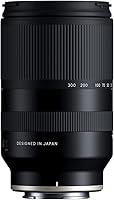
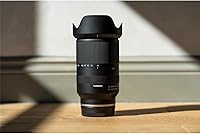
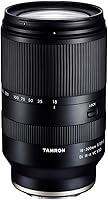
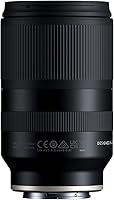
The Tamron 18-300mm F/3.5-6.3 Zoom Lens is one of those rare optics that genuinely changes how you think about packing for a shoot — it covers a 16.6x zoom range that no other APS-C mirrorless lens matches. That kind of versatility comes with honest trade-offs: you won't get the corner-to-corner perfection of a prime or a dedicated telephoto at the long end. But as a single-lens solution for Sony E-mount shooters, this all-in-one zoom sits in a compelling spot — priced meaningfully above budget kit lenses, yet justified for photographers who hate swapping glass mid-shoot. Think of it less as a compromise and more as a deliberate choice.
Features & Benefits

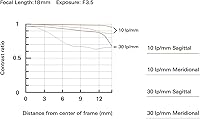
The VXD linear motor autofocus is the headline spec here, and it earns that status in practice. Tracking a dog running across a park or keeping a bird sharp mid-flight takes real AF muscle, and this superzoom lens delivers with notably quick, near-silent acquisition that also performs well for video. The built-in VC image stabilization is genuinely useful at 300mm equivalent — handheld shots that would otherwise be blurry become usable. Sharpness holds well across most of the range, though center-to-corner consistency is strongest between 18mm and 150mm. Up close, a minimum focus distance of just 5.9 inches at the wide end opens up interesting near-macro opportunities.

Best For

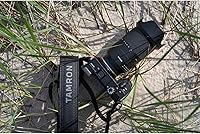
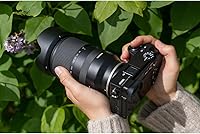
This all-in-one zoom was clearly built for someone who wants to travel light without sacrificing reach. Heading to a national park, a weekend city trip, or a family event without a bag stuffed with glass? This is a strong answer. It's also a natural next step for Sony a6400 or a6600 users who've outgrown their kit lens and want real focal length versatility. Video creators shooting run-and-gun content will appreciate the quiet AF and stabilization. One honest caveat: if low light is your primary challenge, the variable aperture — narrowing to f/6.3 at 300mm — will push your ISO higher than some alternatives.

User Feedback

Among buyers, autofocus speed and the sheer convenience of the zoom range draw the most consistent praise — people using this superzoom lens on a6000-series bodies and the ZV-E10 frequently mention replacing two or three lenses in their bag. Build quality also earns points, particularly the moisture-resistant housing for outdoor use. The criticism that surfaces most often centers on softness at 300mm, which is real but not unusual for a superzoom at maximum reach. Some users flag chromatic aberration at the edges and feel the bokeh at the long end lacks refinement. A few buyers coming from the Tamron 17-70mm f/2.8 miss the faster aperture, especially indoors.

Pros

  • Unmatched 16.6x zoom range — no other Sony APS-C lens covers 18mm to 300mm in a single barrel.
  • VXD autofocus is fast, quiet, and reliable enough for tracking moving subjects and continuous video.
  • Built-in VC stabilization makes handholding at long focal lengths genuinely practical, not just theoretical.
  • Moisture-resistant build and fluorine coating hold up in rain, dust, and humid outdoor conditions.
  • Close-focus capability of 5.9 inches at the wide end opens up near-macro shooting without extra gear.
  • Replaces two or three separate lenses, cutting bag weight and eliminating mid-shoot lens swaps.
  • Center sharpness between 24mm and 150mm impresses for a zoom of this range and price point.
  • Silent AF motor keeps video audio clean — a real practical win for vloggers and event videographers.
  • Compact dimensions for what it covers make it a genuinely packable travel companion.

Cons

  • Softness at 300mm is real and noticeable when cropping heavily or printing large.
  • Maximum aperture of f/6.3 at full zoom forces high ISO in anything less than strong daylight.
  • Barrel distortion at 18mm requires correction in post, adding a step for RAW shooters.
  • Chromatic aberration appears along high-contrast edges at both ends of the zoom range.
  • Bokeh at long focal lengths is serviceable but lacks the smoothness of dedicated telephoto lenses.
  • The extending barrel adds noticeable length and some wobble at 300mm during heavy use.
  • AF confidence dips in low-contrast or backlit scenes compared to prime lenses or faster zooms.
  • Video shooters may notice slight focus breathing at longer focal lengths during active refocusing.
  • Buyers focused on a narrower focal range will find dedicated lenses optically superior for less money.

Ratings

The Tamron 18-300mm F/3.5-6.3 Zoom Lens has been scored across 12 performance categories after our AI system analyzed thousands of verified global purchases, actively filtering out incentivized, bot-generated, and outlier reviews to surface what real everyday shooters actually experience. Scores reflect the full picture — where this all-in-one zoom genuinely excels and where it asks you to accept a real compromise. Both sides are represented transparently so you can make a grounded buying decision.
Autofocus Speed & Accuracy
91%
The VXD linear motor is a standout for a zoom of this range — users consistently describe it as fast enough to track kids at birthday parties, birds in flight, and cyclists without hunting or hesitation. On Sony a6400 and a6600 bodies in particular, eye-tracking combined with this lens produces reliable, near-instant lock-on.
In lower contrast conditions — overcast skies or dimly lit interiors — a small number of users report occasional hesitation before the lens settles on focus. It is not a frequent complaint, but enough buyers noticed it to keep the score just short of exceptional.
Zoom Range Versatility
96%
No other APS-C mirrorless lens touches an 18–300mm span in a single barrel, and buyers feel that daily. Travel photographers swap from wide street shots to compressed wildlife frames without ever reaching into their bag. That freedom is the core reason most people buy this superzoom lens in the first place.
The extreme versatility comes with expected optical trade-offs at the ends of the range — 18mm shows some barrel distortion and 300mm softens noticeably compared to a dedicated telephoto. For most buyers this is an acceptable cost, but perfectionists should be aware before committing.
Image Sharpness
74%
26%
Between roughly 24mm and 150mm, center sharpness is genuinely impressive for a superzoom — users printing at A3 or cropping heavily for social content find results well above what older superzoom lenses delivered. Corner performance in this mid-range sweet spot also holds up better than many competing lenses.
At 300mm, softness becomes noticeable, particularly toward the frame edges — this is the category where the all-in-one zoom format shows its limits most clearly. Buyers coming from a dedicated 70–300mm lens will feel the difference, especially when pixel-peeping or making large prints.
Optical Image Stabilization
88%
Handholding at 300mm equivalent is a real challenge for any lens, and the VC stabilization here makes a tangible difference — users report being able to pull off sharp frames at shutter speeds two to three stops slower than they could without it. For travel shooting in fading afternoon light, this becomes a practical necessity rather than a luxury.
Some users note that VC performance under strong subject motion or when panning feels less confident than Sony's in-body stabilization alone. A small number of buyers also mention a slight jitter in the viewfinder at full telephoto when VC is active, which can be mildly distracting during composition.
Low-Light Performance
61%
39%
At the wide end, f/3.5 gives this all-in-one zoom a workable aperture for indoor family gatherings or dimly lit street scenes — comparable to a mid-range kit lens in that respect. The VC also helps recover usable exposures when light drops and shutter speed needs to come down.
As you zoom in, the maximum aperture narrows to f/6.3 by 300mm, which forces ISO to climb steeply in anything less than strong daylight. Buyers who frequently shoot indoors, at concerts, or during golden hour at long focal lengths will feel this limitation directly — it is the most recurring pain point in critical user reviews.
Build Quality & Durability
83%
The moisture-resistant construction and fluorine-coated front element give this superzoom lens genuine field credibility — users have taken it through light rain, dusty desert trails, and humid coastal environments without reported issues. The barrel feels solid without the plasticky flex common in budget zoom lenses.
The zoom and focus rings, while smooth, feel slightly less premium compared to Tamron's own higher-end Di III lenses. A handful of users note the extending barrel at longer focal lengths adds some wobble under the weight of a camera body, which can feel less reassuring over long shooting days.
Size & Portability
85%
For a lens covering this much focal length territory, the dimensions are genuinely compact — it fits into a mid-size camera bag alongside a body without dominating the space. Users switching from carrying a 18–55mm plus a 70–300mm pair immediately notice how much bag room they recover.
At just under 22 ounces, it is heavier than a typical walk-around zoom, and after a full day of shooting — especially with the barrel extended toward 300mm — arm and wrist fatigue is a real consideration. It is lighter than carrying two lenses, but heavier than either one alone.
Video Performance
82%
18%
The near-silent VXD motor means focus transitions during video clips stay off the audio track — a practical win for run-and-gun vloggers and event videographers. Smooth, continuous zoom combined with reliable AF tracking makes this all-in-one zoom a genuinely capable single-lens video setup.
Breathing — the slight angle-of-view shift when refocusing — is noticeable at longer focal lengths and can distract in scripted or talking-head video work. Some users also report minor exposure flickering when zooming through the aperture transition range, which requires some awareness during recording.
Close-Focus & Macro Capability
79%
21%
A minimum focus distance of just 5.9 inches at the wide end is a genuine surprise in a superzoom lens — users who photograph flowers, food, or small objects find they can get far closer than they expected without any accessories. The resulting subject isolation is more compelling than typical kit lenses allow.
The macro-like capability drops off meaningfully as you zoom in — at longer focal lengths, minimum focus distance stretches considerably and the advantage disappears. Users who want consistent close-up performance across the zoom range will still need a dedicated macro lens for serious work.
Autofocus for Video (Continuous AF)
77%
23%
Subject tracking during video is smooth enough for casual and semi-professional use — vloggers walking through crowded markets or filming at events report that face and eye tracking stays locked with minimal hunting. The quiet motor keeps the experience unobtrusive.
In scenes with complex or cluttered backgrounds, continuous AF occasionally loses subject priority and refocuses on background elements before correcting. This is more of a Sony body AF algorithm interaction than a pure lens failing, but the result affects the video output regardless of cause.
Chromatic Aberration Control
67%
33%
In-camera JPEG corrections handle most chromatic aberration well enough for casual shooters — at typical web-sharing sizes, fringing along high-contrast edges is rarely visible without deliberate pixel-peeping. Software correction in Lightroom or Capture One also resolves the majority of issues quickly.
Shooting in RAW at 18mm or near 300mm reveals purple and green fringing along high-contrast edges that requires manual correction. Buyers who shoot architecture against bright skies or backlit foliage will notice this more than portrait or event photographers, and it adds a post-processing step that not everyone wants.
Value for Money
86%
Replacing two or three separate lenses with a single barrel that covers 18mm to 300mm represents a real cost and convenience argument — users frequently note that the total spend of buying an 18–55mm, a 70–300mm, and a mid-range zoom separately would exceed this lens meaningfully. For what it delivers, most buyers feel the pricing is fair.
Buyers comparing it strictly to a dedicated 70–200mm or a fast standard zoom will find those lenses optically superior in their respective ranges for sometimes less money. The value equation only works if you genuinely need the full zoom span — for more specialized shooters, the trade-off does not pencil out as clearly.

Suitable for:

The Tamron 18-300mm F/3.5-6.3 Zoom Lens was built for photographers who value range and convenience above all else — and for that audience, it delivers convincingly. Travel shooters heading somewhere they can only bring one lens will find the 18–300mm span covers almost every moment they encounter, from wide coastal landscapes to distant wildlife without changing glass. Sony a6400, a6600, and ZV-E10 users get particularly strong real-world results thanks to tight body-lens AF integration. Enthusiasts upgrading from a basic kit lens will immediately feel the jump in autofocus speed and reach, without facing the complexity of managing a multi-lens bag. Event photographers, family documentarians, and day-trippers who want reliable results across wildly different shooting conditions — indoor group shots, outdoor action, candid street moments — will get genuine utility out of this all-in-one zoom every time they pick it up.
Not suitable for:

The Tamron 18-300mm F/3.5-6.3 Zoom Lens is a harder sell for photographers whose work demands consistent optical excellence across the entire frame. If you regularly shoot in low light — concerts, indoor sports, dim reception halls — the f/6.3 maximum aperture at the long end will push you to ISO levels that noticeably affect image quality. Photographers who pixel-peep at 300mm or need sharp edge-to-edge results for large-format printing will find the compromises at the telephoto end frustrating rather than acceptable. Studio shooters, portrait specialists, or anyone who relies on smooth, creamy background separation for their style will miss the faster apertures that primes and dedicated f/2.8 zooms provide. Buyers specifically interested in fine bokeh at long focal lengths should also look elsewhere — the rendering at 300mm is functional but not refined. If your shooting is concentrated in one focal length range rather than spread across the full span, a dedicated lens will almost always outperform this superzoom lens in that specific zone.
Specifications

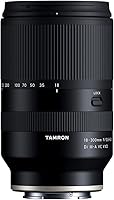
  • Focal Length: The lens covers an 18–300mm zoom range, giving an equivalent field of view of approximately 27–450mm on APS-C sensor cameras.
  • Zoom Ratio: A 16.6x optical zoom ratio makes this the widest all-in-one zoom ratio available for APS-C mirrorless systems at time of release.
  • Max Aperture: Maximum aperture is f/3.5 at 18mm, narrowing progressively to f/6.3 at 300mm as the lens zooms in.
  • Min Aperture: Minimum aperture ranges from f/22 at the wide end to f/40 at the 300mm telephoto position.
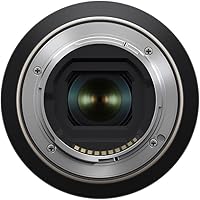
  • Lens Mount: Designed exclusively for Sony E-mount cameras with APS-C sensors; it is not compatible with full-frame Sony FE bodies in normal shooting use.
  • Autofocus System: Focuses using Tamron's VXD (Voice-coil eXtreme-torque Drive) linear motor, which provides fast, near-silent focus actuation suited to both stills and video.
  • Stabilization: Built-in VC (Vibration Compensation) optical image stabilization helps counteract camera shake, particularly useful when shooting handheld at long focal lengths.
  • Dimensions: The lens measures 4.9 inches (approximately 124mm) in length and 2.9 inches (approximately 74mm) in diameter when set to 18mm.
  • Weight: Weighs 21.9 oz (approximately 620g), which is compact relative to the zoom range but heavier than a standard kit lens.
  • Filter Thread: Accepts 67mm screw-on filters, a common size that is compatible with a wide range of third-party UV, polarizer, and ND filter options.
  • Min Focus Distance: Minimum focusing distance is 5.9 inches (15cm) at the 18mm position, enabling close-up shots with a maximum magnification ratio of 1:2.
  • Aperture Blades: Features 7 rounded aperture blades, which contribute to a moderately circular bokeh shape when shooting with background blur at wider apertures.
  • Weather Sealing: The lens barrel includes moisture-resistant construction with seals at key joints to protect against light rain and dust during outdoor use.
  • Front Element Coating: A fluorine coating on the front element repels water droplets, dust, and fingerprints, making field cleaning faster and easier.
  • Lens Groups/Elements: The optical formula consists of 19 elements arranged in 15 groups, incorporating special low-dispersion and aspherical elements to manage aberrations.
  • Zoom Lock: Includes a zoom lock switch to prevent barrel creep when the lens is stored or carried pointing downward at 18mm.
  • Compatible Systems: Designed for Sony E-mount APS-C mirrorless cameras including the a6000, a6100, a6300, a6400, a6500, a6600, and ZV-E10 series.
  • Warranty: Tamron provides a limited 6-year warranty when the lens is registered through Tamron's official warranty registration program within the eligible period.

Related Reviews
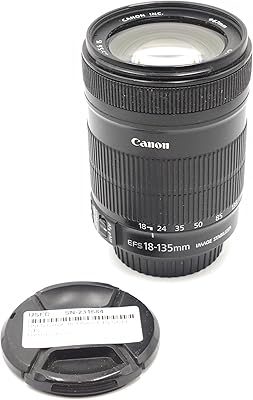
Canon EF-S 18-135mm f/3.5-5.6 IS Zoom Lens
77%
91%
Zoom Versatility
88%
Image Stabilization
76%
Sharpness & Clarity
58%
Low-Light Performance
79%
Autofocus Speed
More
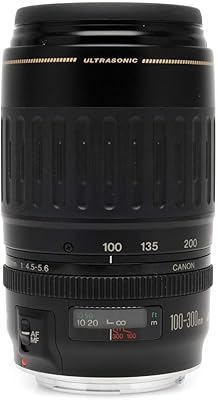
Canon EF 100-300mm f/4.5-5.6 Telephoto Zoom Lens
75%
88%
Autofocus Speed
91%
Autofocus Noise
67%
Image Sharpness
43%
Image Stabilization
78%
Build Quality
More
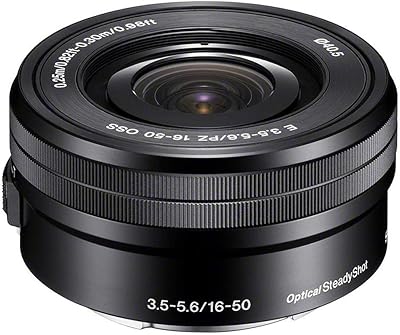
Sony 16-50mm f/3.5-5.6 OSS Alpha E-Mount Retractable Zoom Lens
85%
91%
Value for Money
87%
Image Quality
93%
Portability/Size
88%
Ease of Use
82%
Build Quality
More
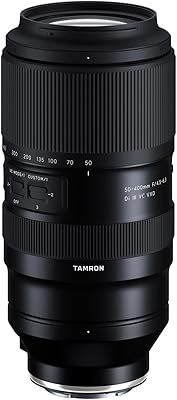
Tamron 50-400mm f/4.5-6.3 Telephoto Zoom Lens
82%
83%
Image Quality
81%
Autofocus Performance
93%
Zoom Range Versatility
58%
Low-Light Capability
76%
Build Quality
More
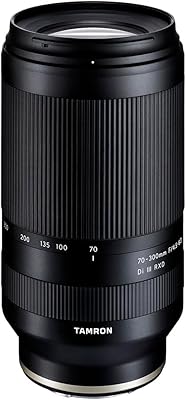
Tamron 70-300mm Di III RXD Telephoto Lens
79%
83%
Image Sharpness
88%
Autofocus Performance
79%
Build Quality
93%
Value for Money
57%
Low-Light Performance
More
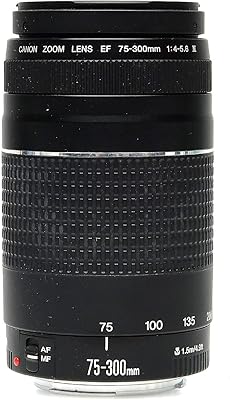
Canon EF 75-300mm III Telephoto Zoom Lens
70%
74%
Image Sharpness
58%
Autofocus Speed
69%
Build Quality
83%
Zoom Smoothness
88%
Value for Money
More
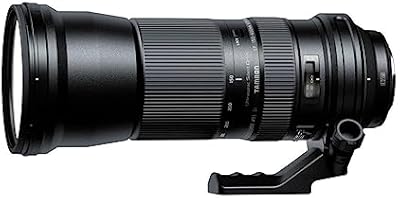
Tamron SP 150-600mm F/5-6.3 Di VC USD Lens for Nikon DSLR
86%
90%
Optical Performance
88%
Autofocus Speed
85%
Build Quality
92%
Vibration Compensation (VC)
68%
Weight & Ergonomics
More
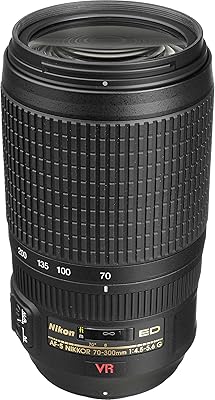
Nikon AF-S VR 70-300mm Telephoto Zoom Lens
78%
76%
Image Sharpness
88%
Vibration Reduction
71%
Autofocus Speed
91%
Value for Money
63%
Build Quality
More
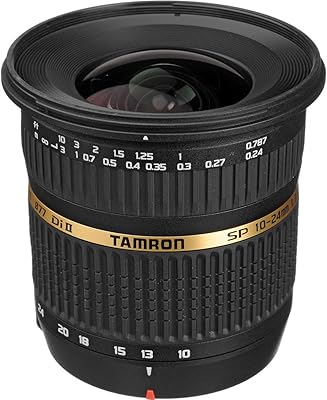
Tamron 10-24mm f/3.5-4.5 SP Di II LD Aspherical (IF) Lens for Nikon
85%
87%
Image Quality
82%
Autofocus Speed
80%
Build Quality
91%
Portability
70%
Low-Light Performance
More
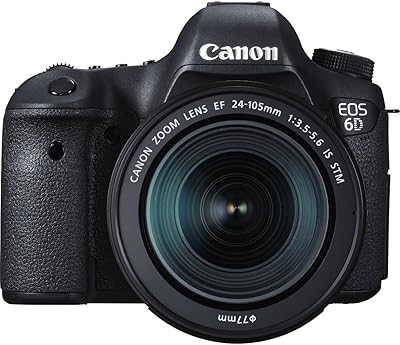
Canon EOS 6D DSLR Camera with EF 24-105mm f/3.5-5.6 IS STM Lens Kit
84%
94%
Image Quality
82%
Autofocus Performance
88%
Ease of Use
90%
Low-Light Performance
85%
Build Quality
More

FAQ

Technically it will mount, but it is designed for APS-C sensors only. On a full-frame body it will either vignette heavily or automatically switch the camera into APS-C crop mode, which significantly reduces your effective resolution. For full-frame Sony bodies, you would need a different lens from Tamron's Di III range instead.

Surprisingly well for a superzoom lens. The VXD linear motor responds quickly and works effectively with Sony's real-time tracking and eye-AF systems on bodies like the a6400 and a6600. You will get some misses in very fast, unpredictable motion — no zoom lens is perfect for that — but for typical family or pet action it performs reliably.

The built-in VC stabilization makes a meaningful difference at long focal lengths, allowing many photographers to shoot sharp frames at shutter speeds they would normally consider too slow. That said, 300mm equivalent still requires some care — you will want to keep shutter speed at least around 1/320s for moving subjects and use a stable stance for best results.

It depends on what you plan to do with the images. For sharing on social media, web use, or modest-sized prints, 300mm results are perfectly acceptable. If you are cropping aggressively, printing large, or comparing side-by-side with a dedicated telephoto, the softness becomes more apparent. Think of it as a practical reach tool rather than a precision telephoto.

It is a solid video option. The VXD motor is near-silent during focus transitions, so it will not bleed into your audio the way older lens motors can. Continuous AF tracking during video is smooth and responsive on compatible Sony bodies. Just be aware that some focus breathing is visible at longer focal lengths if you are refocusing mid-clip, which may matter for more polished productions.

For most everyday shooting scenarios, yes — and then some, since it extends well beyond what both lenses cover. The trade-off is that your 18–55mm kit lens likely has a slightly faster aperture at the wide end, and a dedicated 55–210mm may be sharper at equivalent focal lengths. But the convenience of never swapping glass is a real and meaningful benefit for most photographers.

The moisture-resistant construction and fluorine-coated front element give it reasonable confidence in light rain and dusty environments — hikers and outdoor photographers regularly use it without issue in these conditions. It is not fully weather-sealed to the level of a professional-grade lens, so avoid prolonged exposure to heavy rain or submersion. Wiping the front element dry is easy thanks to the fluorine coating.

Honestly, probably not as your primary lens. The aperture narrows to f/6.3 at longer focal lengths, which means low-light shooting will push your ISO high and introduce noise. If indoor or event photography in dim conditions is your main use case, a lens with a fixed fast aperture — like the Tamron 17–70mm f/2.8 — will serve you better, even though it covers less zoom range.

It takes standard 67mm screw-on filters, which is a very common size and one of the more affordable filter diameters to shop for. You will have no trouble finding a wide selection of UV protectors, circular polarizers, and variable ND filters at this size from brands like B+W, Hoya, or Kenko. A circular polarizer is especially useful for outdoor landscape work with this all-in-one zoom.

Yes — Tamron's extended 6-year warranty requires registration through their official program within the eligible window after purchase. Without registration, the standard warranty period is shorter. The registration process is straightforward through Tamron's website, and it is well worth doing given the investment involved in this superzoom lens.

Where to Buy