Overview

The Tamron 20-40mm f/2.8 Di III VXD Lens arrived in late 2022 as one of the more unconventional additions to Sony E-mount glass, and that unconventional zoom range is exactly what makes it worth a serious look. Rather than chasing the crowded 24-70mm territory, Tamron pushed wider to 20mm while capping the long end at 40mm — a deliberate trade-off that prioritizes compact portability over reach. The result is a lens aimed squarely at hybrid shooters, vloggers, and travelers who want a fast, capable walkaround without the bulk that typically comes with an f/2.8 constant-aperture zoom.
Features & Benefits

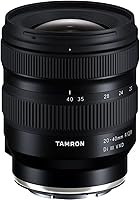
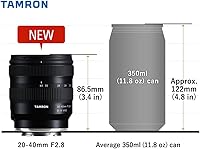
This compact f/2.8 zoom holds its f/2.8 aperture whether you are shooting at 20mm in a dim restaurant or pulling back to 40mm for a quick environmental portrait — no hunting for extra light mid-shoot. The VXD linear motor autofocus is genuinely quick and near-silent, which matters a lot if you are recording video and cannot have focus-hunting noise bleed into audio. Weighing under 13 ounces with an internal zoom design that keeps the barrel length constant, it packs surprisingly well. The close-focus ability at the wide end lets you get noticeably nearer to a subject than most standard zooms allow, though it does not replace a dedicated macro lens. Weather sealing rounds out a practical, well-considered package.

Best For

This Tamron wide-to-normal lens is an easy recommendation for Sony A7 or A7C series owners who want one versatile lens for a trip without filling a bag. Vloggers will particularly appreciate how the wide end captures context-rich self-facing shots while the autofocus stays locked and quiet throughout. Hybrid shooters who toggle constantly between photo and video modes will find the consistent aperture and fast AF a real practical advantage in mixed lighting. It also suits photographers who occasionally shoot close-up detail work and want near-macro flexibility without a second lens. If your shooting style leans wide and you value a lightweight kit, this is a strong fit.

User Feedback

The 20-40mm Tamron holds a strong overall rating, with most buyers landing on sharpness and handling as the standout positives — many note it performs well wide open, which is not always a given at f/2.8. AF speed draws consistent praise from video-focused users. Where opinions diverge is the zoom range itself: photographers accustomed to reaching 70mm find 40mm feels abrupt, while others say it forces smarter composition. The lack of optical stabilization surfaces occasionally in feedback, though most Sony body owners report that in-body stabilization covers them adequately in normal conditions. A few users flag bokeh at 40mm as ordinary rather than distinctive, but for the size and price tier, most consider that a fair trade-off.

Pros

  • Genuinely compact for an f/2.8 constant-aperture zoom — noticeably lighter than comparable Sony G-series glass.
  • Sharpness at f/2.8 is strong enough that stopping down feels optional rather than necessary in most situations.
  • The VXD autofocus motor is fast, near-silent, and reliable for video — a real practical advantage over noisier AF systems.
  • Weather sealing holds up well for outdoor and travel use, including light rain and dusty environments.
  • The 20mm wide end is meaningfully useful for vlogging, interior shots, and environmental storytelling.
  • Close-focus capability at the wide end adds genuine versatility for detail shots without carrying an extra lens.
  • Internal zoom design keeps the physical size constant throughout the range — no extending barrel to bump or knock.
  • Value compared to Sony-branded f/2.8 zooms is compelling, with optical performance that narrows the gap considerably.
  • Handles well on compact Sony bodies — balanced, not front-heavy, comfortable for extended one-handed shooting.

Cons

  • The 40mm long end will feel abrupt and limiting for anyone used to reaching 70mm on a standard zoom.
  • No optical image stabilization makes handheld video on older Sony bodies genuinely challenging in motion.
  • Barrel distortion at 20mm without automatic lens correction applied is pronounced and requires post-processing attention.
  • Bokeh rendering at 40mm is ordinary — acceptable but not the kind of background separation that flatters portrait subjects.
  • The exterior plastic feel does not inspire the same long-term confidence as premium Sony or Zeiss construction.
  • Corner sharpness on high-resolution bodies like the A7R series can soften noticeably when shooting wide open at 40mm.
  • In rapid near-to-far focus transitions, the AF can hesitate slightly — not ideal for unpredictable or fast-moving subjects.
  • The 20-40mm Tamron has no hard zoom lock, which some users find inconvenient when carrying the lens pointed downward.

Ratings

The Tamron 20-40mm f/2.8 Di III VXD Lens has been scored below using AI analysis of verified global buyer reviews, with spam, bot activity, and incentivized submissions actively filtered out. Scores reflect the full spectrum of real ownership experiences — from enthusiastic long-term users to buyers who found the lens fell short of their expectations. Both the strengths and the genuine trade-offs are represented without sugarcoating.
Image Sharpness
91%
Buyers consistently report that this compact f/2.8 zoom delivers impressive center sharpness even at its widest aperture, which is not a given for fast zoom lenses at this price tier. Corner performance at 20mm holds up well for landscapes and architecture, with many users noting they rarely feel the need to stop down for critical shots.
At 40mm, a small number of users detected slightly softer corners when shooting wide open, particularly on higher-resolution bodies like the A7R series. It is a minor issue for most shooting scenarios, but pixel-peepers working with large prints may notice it.
Autofocus Performance
89%
The VXD linear motor is one of the most praised aspects of the 20-40mm Tamron among video users. Tracking locks on quickly in low light and transitions between focal points smoothly without the hunting or breathing that plagues cheaper AF systems — a meaningful advantage during run-and-gun shooting.
A handful of buyers reported occasional hesitation when switching between very close subjects and distant backgrounds in rapid succession. It is not a systemic flaw, but users shooting fast-moving subjects like kids or pets indoors noted it was not quite as tenacious as Sony G-series lenses in those edge-case scenarios.
Build Quality & Durability
83%
The weather-sealed construction earns real appreciation from travel and outdoor photographers who have used this Tamron wide-to-normal lens in light rain and dusty conditions without issue. The barrel feels solid and the zoom ring operates smoothly with no wobble, which inspires confidence during extended shooting days.
A few users noted that the plastic feel of certain exterior elements does not quite match the premium impression of Sony G or Zeiss glass, which matters to photographers who equate tactile quality with long-term reliability. Nothing has been reported as breaking, but the build does not feel as robust as lenses costing significantly more.
Size & Portability
94%
For an f/2.8 constant-aperture zoom, the size of this compact f/2.8 zoom borders on remarkable. Travel photographers switching from a 24-70mm f/2.8 report a dramatic reduction in bag weight, and the internal zoom design means the barrel never extends awkwardly when shooting at 40mm.
While small for its class, it is still visibly larger than Tamron's own primes or the 17-28mm f/2.8 sibling, so buyers expecting something close to a pancake lens will need to recalibrate expectations. It fits comfortably in a jacket pocket, but only just.
Zoom Range Versatility
67%
33%
For wide-angle-first shooters — street photographers, vloggers filming in tight indoor spaces, or landscape photographers — the 20mm starting point is genuinely useful and the 40mm end covers standard field-of-view needs for everyday shots and environmental portraits without requiring a second lens.
This is where the lens divides opinion most sharply. Buyers accustomed to reaching 70mm on a standard zoom frequently feel stranded at 40mm, describing the range as feeling incomplete for anything involving subject isolation or moderate telephoto work. It is a deliberate design compromise, but it is not for everyone.
Video Usability
92%
Content creators and hybrid shooters rate this lens very highly for video, citing the near-silent AF motor, minimal focus breathing, and the wide end that makes self-filming or tight-room vlogging genuinely practical. The constant aperture also means exposure does not shift when zooming during a shot.
The absence of built-in optical image stabilization is the one consistent video-related complaint. Users shooting handheld on older Sony bodies without strong IBSS report that stabilization can feel inadequate at slower shutter speeds, particularly when walking or filming in motion.
Low-Light Performance
86%
The consistent f/2.8 aperture across the full zoom range makes a tangible difference when shooting at indoor events, dimly lit restaurants, or golden-hour street scenes. Buyers report pulling off sharp shots in conditions where a variable-aperture kit lens would struggle noticeably.
At f/2.8 on a full-frame sensor, bokeh isolation at 40mm is modest at best — the background separation is functional but not dramatic. Users who prioritize subject-background separation for portraits in low light occasionally find themselves wishing for a slightly longer focal length or wider aperture.
Close-Focus Capability
74%
26%
The ability to focus very close at the wide end is a genuine bonus that surprises many buyers. For shooting product details, food, or small objects during travel, the 20-40mm Tamron gets noticeably closer than competing zoom lenses, reducing the need to carry a dedicated close-up lens.
It is important to be clear: this is not a macro lens. The magnification ratio at the wide end is useful for close-up work but falls well short of life-size reproduction. Users who bought the lens expecting dedicated macro performance expressed disappointment, though those with realistic expectations were generally pleased.
Optical Stabilization
48%
52%
On Sony bodies with strong in-body image stabilization — particularly the A7 IV, A7C II, and A7R V — most buyers report that the lack of lens-based OIS is a non-issue for everyday handheld shooting. The camera-body combination handles the stabilization workload adequately in normal conditions.
For users on older Sony bodies or in scenarios where IBSS struggles — slow shutter pans, walking video, or long-exposure handheld attempts — the absence of optical stabilization in the lens is a real limitation. It is arguably the single biggest functional weakness of this compact f/2.8 zoom for buyers who shoot in those conditions frequently.
Bokeh & Background Rendering
69%
31%
At 20mm with the lens at its minimum focus distance, the background blur is more noticeable than most wide lenses can produce, and users shooting close-up environmental portraits report pleasing subject separation. The aperture blades produce reasonably rounded bokeh circles under controlled conditions.
At 40mm, background blur is functional rather than artistic. Several buyers who primarily shoot portraits noted that out-of-focus areas have an ordinary, occasionally slightly busy quality compared to a dedicated portrait prime. For work where bokeh aesthetics are a priority, this lens will feel like a compromise.
Chromatic Aberration Control
81%
19%
High-contrast edges in architectural shots and backlit scenes show minimal fringing according to most buyers, and in-camera or Lightroom corrections handle any residual aberrations cleanly. For a zoom lens covering this focal range, the control is considered above average by users who shoot regularly in challenging light.
At the wide end with strong backlighting, a small number of reviewers noted visible lateral chromatic aberration that required correction in post-processing. It is not worse than comparable lenses, but it is worth flagging for photographers who prefer to deliver images with minimal post-production editing.
Distortion Control
72%
28%
When shooting with Sony bodies that apply automatic lens corrections, distortion at 20mm is handled cleanly without any visible barrel distortion in the final image. Buyers using the lens for architecture and interior photography report straight lines with corrections applied.
Without automatic correction profiles — for instance, when shooting in RAW and disabling lens corrections in post — barrel distortion at 20mm is quite pronounced. Photographers who prefer to shoot with corrections disabled or who use third-party raw processors that lack a full profile for this lens may find the native distortion more work to manage.
Value for Money
88%
Relative to Sony's own f/2.8 zoom options for the E-mount system, this Tamron wide-to-normal lens delivers comparable optical performance at a meaningfully lower cost. Buyers who have owned both brands frequently cite the price gap as justification for the trade-offs, particularly for travel and hybrid shooting use cases.
A subset of buyers who needed a more conventional focal range — or who upgraded to a Sony G Master lens after purchase — felt the investment was only partially justified by the unique zoom range. For photographers who already own a 24-70mm equivalent, the case for adding this lens is narrower and requires a clear use-case need.
Handling & Ergonomics
84%
The zoom and focus rings are well-damped and placed intuitively, making one-handed operation practical during video recording. Users who shoot street photography or documentary-style work appreciate that the lens balances well on compact Sony bodies without feeling front-heavy.
Some buyers with larger hands found the compact barrel slightly cramped for extended manual focus use, and the zoom throw is on the shorter side for those who prefer precise manual zoom adjustments. These are minor ergonomic preferences rather than functional limitations, but worth noting for shooters who spend significant time in manual control.

Suitable for:

The Tamron 20-40mm f/2.8 Di III VXD Lens is a natural fit for Sony mirrorless shooters who prioritize portability without giving up a fast, constant aperture. Travel photographers heading somewhere they want to carry as little glass as possible will find this lens covers the most-used focal lengths in a package that barely registers in a bag. Vloggers and content creators will particularly appreciate the wide end for self-facing shots in cramped spaces, paired with autofocus that stays quiet and reliable during recording. Hybrid shooters who move fluidly between photo and video — think documentary-style work, event coverage, or family trips — benefit from a lens that does not require exposure compensation when zooming mid-shot. It also suits Sony A7C or A7 IV owners who want a single walkaround lens that handles low-light indoor scenes, outdoor street shooting, and occasional close-up detail work without swapping glass.
Not suitable for:

Photographers who rely on a 70mm equivalent for compressed portraits, event candids, or any moderate telephoto work will quickly feel the limits of this compact f/2.8 zoom — 40mm is simply where the lens stops, and no amount of cropping fully compensates for that missing reach. The Tamron 20-40mm f/2.8 Di III VXD Lens also falls short for shooters on older Sony bodies with weaker in-body stabilization, since there is no optical stabilization in the lens itself, making handheld video or low-shutter-speed stills noticeably harder to keep steady. Wildlife, sports, and action photographers will find neither the reach nor the burst-tracking tenacity they need here. Anyone expecting dedicated macro capability — true life-size reproduction for insects, coins, or fine product detail — should look elsewhere, as the close-focus performance, while useful, is firmly in close-up rather than macro territory. And for users who already own a Sony G Master 24-70mm f/2.8 or similar, the case for adding this lens is narrow unless the wide-angle starting point and compact size address a specific, identified gap in their kit.
Specifications

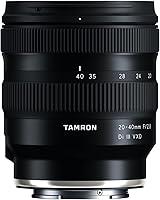
  • Focal Length: Covers a wide-to-normal zoom range of 20mm to 40mm, suitable for full-frame Sony E-mount cameras.
  • Max Aperture: Maintains a constant f/2.8 maximum aperture throughout the entire zoom range.
  • Lens Mount: Designed exclusively for Sony E-mount, fully compatible with full-frame mirrorless bodies.
  • Autofocus System: Uses Tamron's VXD (Voice-coil eXtreme-torque Drive) linear motor for fast, precise, and near-silent autofocus operation.
  • Optical Formula: Constructed with 12 elements arranged in 11 groups, incorporating special low-dispersion and aspherical elements.
  • Min Focus Distance: Focuses as close as 0.17m (6.7 in) at the 20mm end, enabling close-up shooting with useful subject magnification.
  • Max Magnification: Achieves a maximum magnification ratio of 1:3.8 at the wide end, allowing close-up detail capture without a dedicated macro lens.
  • Image Stabilization: No optical image stabilization is built into the lens; stabilization relies entirely on the camera body's in-body system (IBSS).
  • Filter Thread: Accepts 67mm screw-on filters, consistent with other lenses in Tamron's Sony E-mount lineup for shared filter use.
  • Zoom Type: Internal zoom design keeps the overall barrel length constant regardless of the focal length selected.
  • Weight: Weighs approximately 12.9 oz (365g), making it notably lighter than most competing constant f/2.8 zoom lenses.
  • Dimensions: Measures 3.4 inches in length with a maximum diameter of 2.92 inches (86.2mm x 74.1mm).
  • Weather Sealing: Features moisture-resistant construction throughout the barrel, offering protection during light rain, humidity, and dusty outdoor conditions.
  • Aperture Blades: Equipped with 7 rounded aperture blades designed to produce smooth, circular bokeh highlights at wider aperture settings.
  • Zoom Lock: Does not include a dedicated zoom lock switch; the internal zoom mechanism relies on barrel tension to hold position.
  • Lens Hood: Ships with a petal-type lens hood included in the box, designed for the 67mm filter thread diameter.
  • Release Year: First made available in October 2022, positioning it as part of Tamron's second-generation Sony E-mount lens series.
  • Model Number: Official Tamron model designation is AFA062S700, used for warranty registration and service identification.

Related Reviews
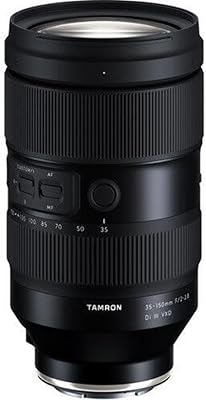
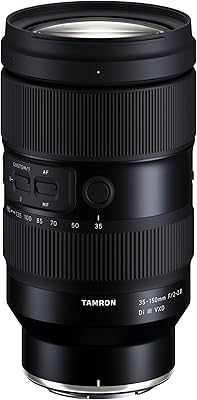
Tamron 35-150mm F/2-2.8 Di III VXD Lens
84%
92%
Optical Sharpness
89%
Autofocus Performance
94%
Aperture Versatility
87%
Build Quality
78%
Value for Money
More
Tamron 35-150mm F/2-2.8 Di III VXD for Nikon Z
85%
82%
Autofocus Performance
91%
Image Quality (Sharpness & Color Accuracy)
88%
Build Quality & Durability
85%
Ease of Use & Ergonomics
87%
Portability & Weight
More
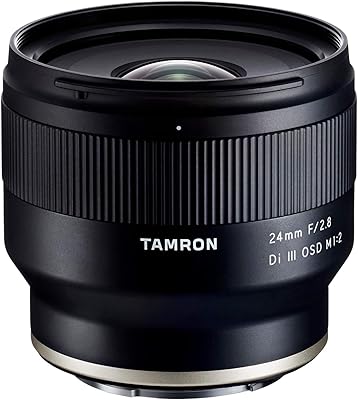
Tamron 24mm F/2.8 Di III OSD Lens
79%
91%
Image Sharpness
93%
Value for Money
74%
Build Quality & Durability
71%
Autofocus Performance
88%
Macro Capability
More
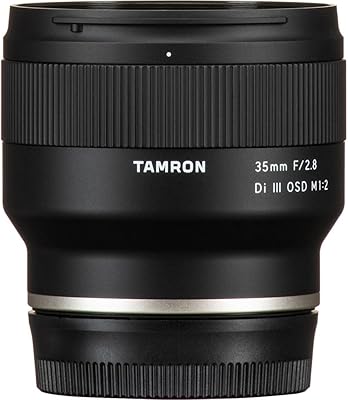
Tamron 35mm f/2.8 Di III OSD M1:2 Lens for Sony E-Mount
85%
94%
Image Quality
75%
Autofocus Speed
90%
Macro Performance
88%
Build Quality
91%
Portability
More
Tamron 28-75mm F/2.8 Di III VXD G2 for Sony E-Mount
87%
89%
Image Quality
92%
Autofocus Speed
85%
Build Quality
87%
Ease of Use
90%
Low-Light Performance
More
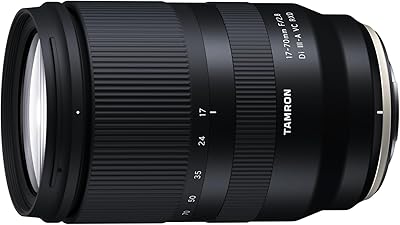
Tamron 17-70mm F/2.8 Di III-A VC RXD Zoom Lens for Fujifilm X
86%
91%
Image Quality
88%
Vibration Compensation (VC) Effectiveness
84%
Autofocus Performance
90%
Build Quality and Durability
85%
Low Light Performance
More
Tamron 11-20mm F/2.8 Di III-A Wide-Angle Lens
84%
91%
Image Sharpness
88%
Autofocus Performance
86%
Build Quality & Weather Sealing
74%
Value for Money
67%
Distortion & Optical Corrections
More
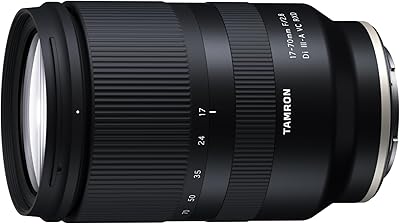
Tamron 17-70mm f/2.8 Di III-A Zoom Lens
82%
91%
Optical Sharpness
93%
Aperture Versatility
84%
Autofocus Performance
86%
Image Stabilization
82%
Build Quality & Durability
More
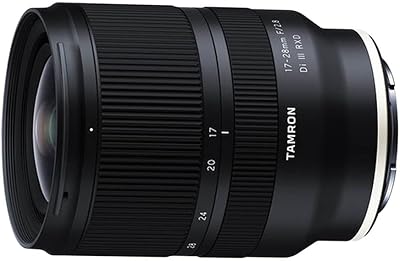
Tamron 17-28mm f/2.8 Di III RXD Lens
80%
88%
Image Sharpness
91%
Autofocus Performance
79%
Build Quality
93%
Portability & Size
86%
Low-Light Performance
More
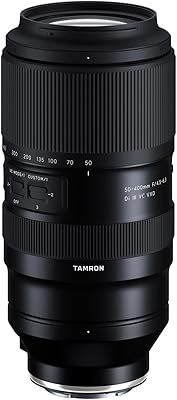
Tamron 50-400mm f/4.5-6.3 Telephoto Zoom Lens
82%
83%
Image Quality
81%
Autofocus Performance
93%
Zoom Range Versatility
58%
Low-Light Capability
76%
Build Quality
More

FAQ

Yes, it will mount and function on any Sony E-mount body, including APS-C cameras. On APS-C, the crop factor effectively turns it into a 30-60mm equivalent, which is a useful range but loses the wide-angle feel that makes this lens special. If you shoot primarily on APS-C, you may want to consider a lens designed with that sensor size in mind for better wide-angle coverage.

In practice, yes. The VXD linear motor is one of the quieter AF systems available in this lens category, and most users report that it does not bleed audible noise into recordings when using an external microphone mounted on the hot shoe. With the camera's built-in mic at close range, faint mechanical sounds are theoretically possible under very quiet conditions, but this is rarely a real-world issue for typical vlogging or interview setups.

Yes, and this is one of the more consistently praised real-world strengths of this compact f/2.8 zoom. On bodies like the A7 IV or A7C II, the lens communicates well with Sony's real-time tracking and eye-AF algorithms, keeping subjects locked reliably during both stills and video. It is not quite as tenacious as Sony's own G Master glass in chaotic or rapidly changing scenes, but for the vast majority of everyday shooting it performs very well.

It depends heavily on which Sony body you are using. On current-generation bodies with strong in-body stabilization — the A7C II, A7 IV, FX3, or A7R V — most shooters find the stabilization performance more than adequate for walking shots and casual handheld video. On older bodies like the original A7 III or A7C, the IBSS is less powerful, and you will notice more shake during movement. If you shoot a lot of walking footage on an older body, a gimbal becomes a more practical solution than relying on the camera alone.

The Tamron 20-40mm f/2.8 Di III VXD Lens gets noticeably closer than most standard zoom lenses at the wide end, which is genuinely useful for food photography, flat lays, or small product detail shots. That said, it is not a macro lens — you will not fill the frame with a small coin or a bee on a flower. For food and product work at a normal scale, it does a solid job. For true close-up magnification work, a dedicated macro lens remains the better tool.

The two lenses are genuinely different tools. The 17-28mm starts wider and suits landscape, architecture, and immersive environmental shots, but it tops out at 28mm, which is quite limiting for everyday scenes. This Tamron wide-to-normal lens starts slightly narrower at 20mm but extends to 40mm, giving you a more usable normal field of view for portraits and street shooting. For a single-lens travel setup, most hybrid shooters find the 20-40mm the more versatile choice; for dedicated wide-angle work, the 17-28mm wins on the short end.

Honestly, it depends on your shooting habits. If you are used to a 24-70mm zoom, you will occasionally feel stranded at 40mm — there will be moments where you want just a bit more reach and cannot get it without moving your feet. On the other hand, shooters who think wide-first and use the zoom range as a compositional tool rather than a reach tool adapt quickly and appreciate the lightweight trade-off. It is worth being honest with yourself about how often you actually shoot beyond 40mm before buying.

The moisture-resistant construction is designed to handle real-world outdoor shooting — drizzle, humidity, and brief exposure to light rain are well within its intended tolerance. It is not the same as full professional weather sealing on a Sony G Master lens, so you should not leave it exposed during a downpour or shoot in heavy rain for extended periods. For travel and everyday outdoor use, it holds up reliably and most users report no weather-related issues.

No — this is an internal zoom design, so the physical length of the lens stays exactly the same whether you are at 20mm or 40mm. This is a meaningful practical advantage for travel and video work, since the front element does not push forward into a hood or shift the lens balance on the camera during shooting.

The lens takes 67mm filters, which is a common size shared with several other Tamron E-mount lenses — convenient if you already own 67mm glass. A circular polarizer is useful for outdoor and travel shooting, and a UV or protective filter is worth considering if you shoot in rough conditions frequently. The lens ships with a petal-type hood already included, so you do not need to budget for that separately. A good quality UV filter, a polarizer, and a neutral density filter for video work in bright conditions covers most bases.

Where to Buy