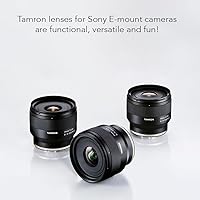
Overview

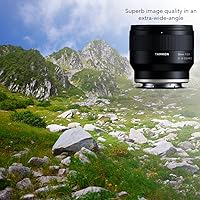
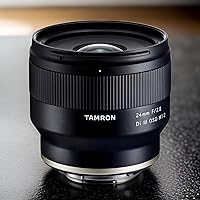
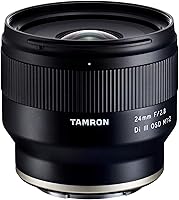
The Tamron 24mm F/2.8 Di III OSD Lens arrives as a genuinely compact wide-angle prime built for Sony E-mount shooters who want real optical quality without carrying extra weight. Sony's own first-party 24mm options cost significantly more, making this Tamron wide-angle prime an attractive proposition for budget-conscious photographers who refuse to compromise on sharpness. What sets it apart at this focal length is a 1:2 macro capability — unusual and genuinely useful for close-up detail work. Add moisture-resistant construction for outdoor reliability, and compatibility with both full-frame and APS-C bodies, and you have a versatile lens that punches well above its price class.
Features & Benefits

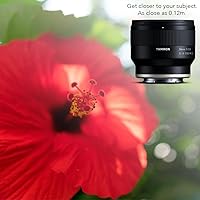
At F/2.8, this compact Sony E-mount lens offers enough light-gathering ability to handle dim interiors and evening street scenes without immediately reaching for higher ISO settings. The OSD autofocus motor runs quietly — a real advantage if you shoot video and need clean audio without mechanical noise bleeding into recordings. Then there is the close-focusing ability: a 1:2 reproduction ratio lets you fill the frame with small subjects in ways a standard wide prime simply cannot. Sharpness across the frame is a clear priority in the optical design, and the moisture-resistant build means you are not rushing to pack the lens away the moment clouds roll in.

Best For

This Tamron wide-angle prime makes the most sense for travel photographers who treat every gram as a negotiation — at 7.6 ounces, it disappears into a small bag without demanding attention. Sony APS-C shooters get a sharp, affordable 24mm option that is harder to find than it should be. Full-frame users gain a lightweight everyday wide lens with the bonus of macro reach when the situation calls for it. Videographers running compact rigs will appreciate the quiet AF motor. And for photographers stepping away from kit lenses for the first time, shooting at a fixed focal length like 24mm is one of the fastest ways to sharpen compositional instincts.

User Feedback

Across more than 300 ratings, the 24mm Tamron holds a 4.4-star average — a number that reflects genuine satisfaction rather than hype. Buyers consistently praise its sharpness and value, particularly those comparing it against pricier Sony alternatives. The compact size earns repeated appreciation from real-world users who carry it daily. Autofocus performs well in good light, though a handful of users note it can hunt in low-contrast or dim conditions — worth knowing if that describes your typical shooting environment. Some reviewers mention moderate corner vignetting at wide-open apertures and slight barrel distortion, both of which software correction handles easily. The macro capability, interestingly, catches many buyers by pleasant surprise.

Pros

  • Sharpness from center to mid-frame is genuinely impressive for a lens at this price point.
  • The 1:2 macro capability adds creative versatility that no comparable wide prime in this class offers.
  • At 7.6 ounces, the 24mm Tamron is light enough to carry daily without it becoming a burden.
  • OSD autofocus is quiet enough for video use without mechanical noise interfering with audio.
  • Works with both full-frame and APS-C Sony bodies, making it a flexible long-term investment.
  • Moisture-resistant construction holds up in light rain and dusty conditions most travel shooters encounter.
  • Value relative to Sony first-party wide primes is one of the strongest arguments in its favor.
  • Compact dimensions pair naturally with smaller Sony mirrorless bodies without looking or feeling mismatched.
  • The 1:2 macro feature consistently surprises buyers who did not expect close-focusing ability from a wide prime.

Cons

  • Autofocus hunts noticeably in low-contrast or dimly lit environments, frustrating event and indoor photographers.
  • Corner sharpness on full-frame at F/2.8 requires stopping down to fully satisfy critical viewers.
  • Barrel distortion is prominent in uncorrected RAW files, adding post-processing work for third-party editors.
  • Vignetting at wide-open apertures is pronounced on full-frame bodies and needs correction in demanding scenarios.
  • Plastic construction feels adequate but noticeably less premium than lenses in higher price brackets.
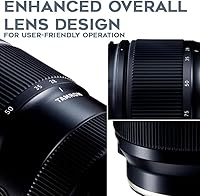
  • The focus ring offers light resistance with an imprecise feel that makes manual focus adjustments less satisfying.
  • Focus breathing during video focus pulls is present and can be distracting in more deliberate cinematic work.
  • Exclusively Sony E-mount compatibility limits resale value and long-term flexibility if you switch systems later.
  • Some chromatic aberration and fringing appear at high-contrast edges, particularly around backlit subjects.

Ratings

The Tamron 24mm F/2.8 Di III OSD Lens has been evaluated by our AI rating system after analyzing hundreds of verified global buyer reviews, with spam, bot activity, and incentivized feedback actively filtered out. The result is an honest scorecard that reflects where this compact Sony E-mount lens genuinely excels and where real-world users have run into friction. Both the strengths and the trade-offs are represented transparently below.
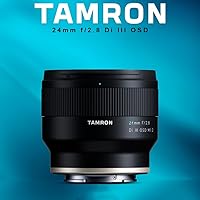
Image Sharpness
91%
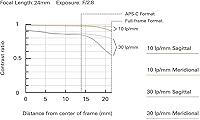
Center sharpness is a consistent highlight across verified reviews — users shooting architecture, landscapes, and street scenes report crisp, detailed results even wide open. Stopped down to F/5.6 or F/8, sharpness extends convincingly toward the corners, which matters for landscape photographers who need edge-to-edge clarity.
Corner performance at F/2.8 on full-frame bodies draws occasional criticism, with some users noting softness that requires stopping down to fully resolve. For APS-C shooters this is less of an issue, but full-frame photographers who frequently shoot wide open should set realistic expectations.
Value for Money
93%
This is where the 24mm Tamron earns its strongest praise. Buyers repeatedly express surprise at the optical quality relative to what they paid, especially when comparing it against Sony's first-party wide primes that cost considerably more. For photographers building a Sony kit on a budget, it represents a genuinely smart allocation.
A small number of users feel the price-to-build ratio could be better, pointing to the plastic construction as a reminder that cost savings had to come from somewhere. Those upgrading from premium glass may notice the difference in tactile feel even if the optical output holds up well.
Build Quality & Durability
74%
26%
Moisture-resistant construction gives this lens a practical edge for outdoor shooters who don't want to pack up every time the weather turns. Users who have shot in light rain or dusty environments report no issues, and the compact form feels solid enough for daily carry.
The body is predominantly plastic, and buyers accustomed to metal-barreled lenses will feel the difference immediately. The zoom ring action and overall tactile feedback have been described as adequate but uninspiring — functional rather than premium, which is an honest reflection of the price point.
Autofocus Performance
71%
29%
In well-lit conditions, the OSD motor tracks subjects quickly and quietly — a combination that video shooters particularly appreciate when recording with an external microphone. For static subjects and casual street photography, the AF is reliably accurate and fast enough that it rarely becomes a limiting factor.
Low-light autofocus is where users most frequently voice frustration. Hunting behavior in dim or low-contrast scenes has been reported consistently enough to be a genuine concern for event or indoor photographers. It is not a dealbreaker, but it is the most commonly cited performance limitation in verified feedback.
Macro Capability
88%
The 1:2 reproduction ratio is genuinely unusual for a 24mm prime, and buyers who discover it after purchase consistently describe it as an unexpected bonus. Food photographers, botanists, and detail-oriented travel shooters have found real creative value in the close-focusing ability that a standard wide prime simply cannot offer.
Achieving sharp macro shots requires careful handholding technique or a stable surface, since the short working distance at maximum magnification leaves very little room for camera shake. Users expecting DSLR-style macro handling may need time to adjust their approach when working at the minimum focus distance.
Size & Portability
94%
At 7.6 ounces, this is a lens that disappears into a small camera bag or coat pocket without demanding attention. Travel photographers and street shooters consistently cite the compact dimensions as a primary reason they chose it — it pairs naturally with the small Sony mirrorless bodies it was designed for.
For photographers used to larger lenses, the compact size can occasionally make handling feel a little cramped, particularly when adjusting aperture or focus manually. This is a minor ergonomic trade-off rather than a structural flaw, but worth noting for users with larger hands.
Low-Light Performance
76%
24%
F/2.8 at 24mm gives the lens enough light-gathering ability for indoor available-light shooting and evening cityscapes without pushing ISO into territory where noise becomes distracting. Users who shoot at golden hour or in modestly lit interiors report clean, usable results at reasonable sensitivity settings.
F/2.8 is respectable but not exceptional for low-light work — photographers coming from faster primes will notice the difference in challenging conditions. Combined with AF hunting in dim scenes, dedicated low-light shooters may find themselves wishing for an extra stop of aperture.
Video Suitability
82%
18%
The OSD motor earns consistent praise from video users who need quiet AF operation. Focus transitions are smooth enough for casual video work, and the compact size makes it a natural choice for gimbal-mounted or handheld run-and-gun setups where weight balance matters.
Focus breathing — the slight shift in field of view during focus pulls — has been noted by more experienced videographers and can be an annoyance in narrative or cinematic shooting contexts. It is manageable but present, and dedicated video producers may want to factor this into their decision.
Optical Distortion Control
67%
33%
Barrel distortion is moderate and correctable, and most Sony bodies apply in-camera lens correction automatically, which means the majority of users never actually see the uncorrected output in practice. For photographers shooting JPEGs or relying on Sony's imaging pipeline, distortion is essentially a non-issue.
Raw shooters who process images in third-party software without automatic lens profiles applied will encounter noticeable barrel distortion that requires manual correction. Chromatic aberration and fringing at high-contrast edges have also been flagged by users in specific shooting conditions, particularly around backlit subjects.
Vignetting at Wide Aperture
63%
37%
Vignetting is largely expected at F/2.8 on a wide prime at this price, and most buyers accept it as a trade-off. On APS-C bodies, the crop factor reduces corner light falloff significantly, making this a less pressing concern for that segment of users.
On full-frame bodies, corner darkening at F/2.8 is pronounced enough that several users specifically mention it as a limitation. Stopping down to F/4 or F/5.6 brings meaningful improvement, but photographers who need consistent wide-open exposure across the frame for architectural or interior work should prepare for post-processing correction.
Compatibility & Mount Fit
89%
Mount fitment on Sony E-mount bodies is consistently reported as solid and secure, with no play or wobble noted across a wide range of camera bodies. The lens communicates cleanly with Sony's imaging systems, including EXIF data transmission and in-body image stabilization coordination on compatible bodies.
Compatibility is limited exclusively to Sony E-mount, so photographers shooting other mirrorless systems have no path to adaptation. This is a design decision rather than a flaw, but it does restrict the resale audience and long-term flexibility for photographers who might switch systems.
Manual Focus Experience
61%
39%
Manual focus is functional and adequate for photographers who occasionally want direct control — focus peaking on Sony bodies pairs reasonably well with the focus ring for precise work in still subjects and product photography scenarios.
The focus ring feel has been described as light and somewhat lacking in resistance, which makes precise fine-tuning feel less controlled than on lenses with more deliberate mechanical feedback. Users who rely heavily on manual focus for video or portrait work may find the experience less satisfying than expected.
Weather Sealing Confidence
72%
28%
The moisture-resistant construction has held up for users shooting in light drizzle, dusty markets, and humid coastal environments. Outdoor travel photographers treating this as their go-anywhere wide lens generally report confidence in using it without obsessing over weather conditions.
The lens is described as moisture-resistant rather than fully weather-sealed, and that distinction matters in genuinely harsh conditions. Buyers expecting the level of protection found on professional-grade glass may be disappointed — it handles incidental exposure well but is not designed for sustained rain or submersion.
Overall User Satisfaction
86%
A 4.4-star average across more than 300 verified ratings is a meaningful signal of genuine buyer satisfaction, not a lucky streak. The consistent themes — sharpness, value, portability — point to a lens that delivers reliably on its core promises for the audience it was built for.
Satisfaction does dip among users who expected it to match the performance ceiling of much more expensive alternatives. Managing expectations is key — buyers who approach it as a capable, compact budget prime tend to leave happy, while those expecting flagship-level optical perfection occasionally come away underwhelmed.

Suitable for:

The Tamron 24mm F/2.8 Di III OSD Lens is an excellent fit for Sony mirrorless photographers who want a capable wide-angle prime without the weight penalty or the price tag of first-party alternatives. Travel photographers in particular will appreciate how naturally it fits into a compact kit — it adds almost nothing to bag weight while covering one of the most versatile focal lengths for landscapes, architecture, and environmental portraits. Sony APS-C shooters get a sharp, affordable 24mm option that is genuinely difficult to find at this price tier, and full-frame users gain the added bonus of 1:2 macro reach for close-up detail shots that most wide primes cannot touch. Videographers running lean setups will find the quiet OSD autofocus motor a practical asset, especially when recording with a microphone where mechanical noise matters. Beginners moving away from kit lenses for the first time will also benefit from the discipline of shooting at a fixed focal length, and this compact Sony E-mount lens makes that transition approachable without a painful financial commitment.
Not suitable for:

Photographers who regularly shoot in demanding low-light conditions — think indoor events, night markets, or dark performance venues — may find the Tamron 24mm F/2.8 Di III OSD Lens comes up short when autofocus reliability matters most, as hunting in dim or low-contrast scenes is one of the most consistently reported frustrations among real buyers. Full-frame shooters who routinely work wide open and need edge-to-edge sharpness from corner to corner will likely need to stop down, which limits the creative flexibility some photographers depend on. Users who shoot RAW and prefer to process images in third-party software without automatic lens correction profiles should also be prepared for visible barrel distortion and corner vignetting that requires manual attention in post. Anyone expecting the tactile build quality of professional-grade glass — metal barrels, firm focus rings, fully weather-sealed construction — will be disappointed by the plastic-forward design, which is functional but clearly reflects the budget positioning. Finally, photographers shooting non-Sony mirrorless systems have no use case here at all, since this lens is exclusively designed for the Sony E-mount ecosystem with no meaningful adaptation path.
Specifications

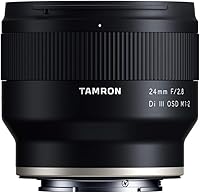
  • Focal Length: Fixed 24mm wide-angle focal length, suitable for landscapes, architecture, street photography, and environmental portraiture.
  • Maximum Aperture: F/2.8 maximum aperture provides solid light-gathering capability and moderate background separation for a wide-angle prime.
  • Lens Mount: Sony FE (E-mount) native mount, designed to communicate fully with Sony mirrorless camera bodies without adapters.
  • Sensor Compatibility: Compatible with both Sony full-frame and APS-C E-mount mirrorless cameras, providing flexibility across Sony's mirrorless lineup.
  • Macro Reproduction: Offers a 1:2 maximum reproduction ratio, allowing unusually close focusing for fine detail and near-macro creative work.
  • Autofocus Motor: OSD (Optimized Silent Drive) motor delivers quiet, responsive autofocus operation well suited to both stills and video recording.
  • Minimum Focus Distance: Close-focusing distance enables the 1:2 macro reproduction ratio, placing the lens in a unique position among 24mm primes.
  • Weather Resistance: Moisture-resistant construction provides practical protection against light rain, humidity, and dusty outdoor shooting conditions.
  • Dimensions: The lens measures 2.5 inches in length with a diameter of 2.87 inches, making it genuinely compact for everyday carry.
  • Weight: At 7.6 ounces, this is one of the lighter wide-angle primes available for the Sony E-mount system.
  • Lens Type: Wide-angle prime with a fixed focal length, offering a consistent field of view and encouraging deliberate compositional choices.
  • Filter Thread: Standard front-element filter thread allows use of circular polarizers, ND filters, and other common photographic filters.
  • Model Number: Official Tamron model number is TM24F28S, used for warranty registration, firmware updates, and authorized service identification.
  • Release Date: First made available in October 2019, with the lens now having a well-established track record across several years of real-world use.
  • Average Rating: Holds a 4.4 out of 5 star average across 321 verified ratings on Amazon, reflecting consistent buyer satisfaction over time.
  • Manufacturer: Designed and manufactured by Tamron, a Japanese optical company with decades of experience producing third-party lenses for major camera systems.

Related Reviews
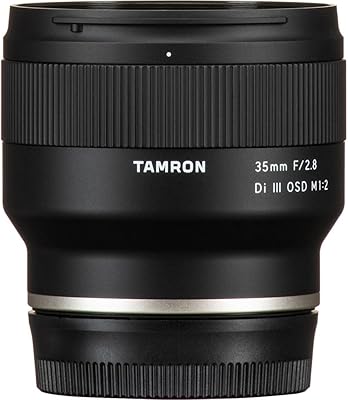
Tamron 35mm f/2.8 Di III OSD M1:2 Lens for Sony E-Mount
85%
94%
Image Quality
75%
Autofocus Speed
90%
Macro Performance
88%
Build Quality
91%
Portability
More
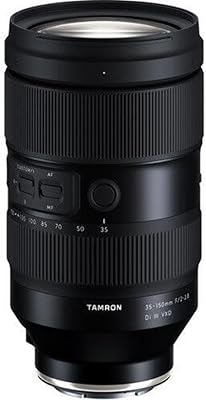
Tamron 35-150mm F/2-2.8 Di III VXD Lens
84%
92%
Optical Sharpness
89%
Autofocus Performance
94%
Aperture Versatility
87%
Build Quality
78%
Value for Money
More
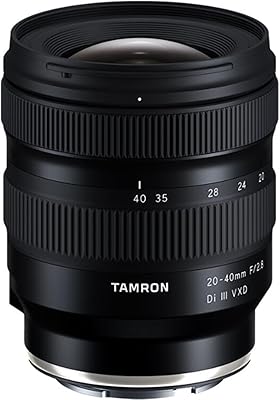
Tamron 20-40mm f/2.8 Di III VXD Lens
80%
91%
Image Sharpness
89%
Autofocus Performance
83%
Build Quality & Durability
94%
Size & Portability
67%
Zoom Range Versatility
More
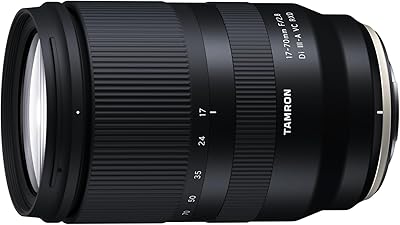
Tamron 17-70mm F/2.8 Di III-A VC RXD Zoom Lens for Fujifilm X
86%
91%
Image Quality
88%
Vibration Compensation (VC) Effectiveness
84%
Autofocus Performance
90%
Build Quality and Durability
85%
Low Light Performance
More
Tamron 11-20mm F/2.8 Di III-A Wide-Angle Lens
84%
91%
Image Sharpness
88%
Autofocus Performance
86%
Build Quality & Weather Sealing
74%
Value for Money
67%
Distortion & Optical Corrections
More
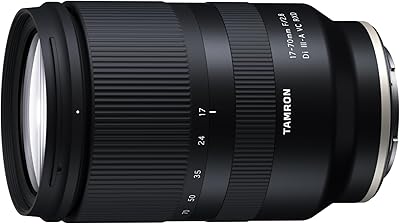
Tamron 17-70mm f/2.8 Di III-A Zoom Lens
82%
91%
Optical Sharpness
93%
Aperture Versatility
84%
Autofocus Performance
86%
Image Stabilization
82%
Build Quality & Durability
More
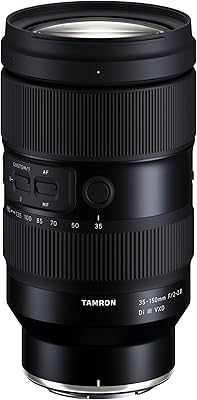
Tamron 35-150mm F/2-2.8 Di III VXD for Nikon Z
85%
82%
Autofocus Performance
91%
Image Quality (Sharpness & Color Accuracy)
88%
Build Quality & Durability
85%
Ease of Use & Ergonomics
87%
Portability & Weight
More
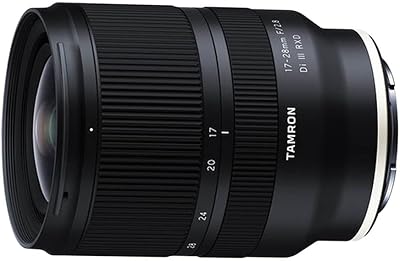
Tamron 17-28mm f/2.8 Di III RXD Lens
80%
88%
Image Sharpness
91%
Autofocus Performance
79%
Build Quality
93%
Portability & Size
86%
Low-Light Performance
More
Tamron 28-75mm F/2.8 Di III VXD G2 for Sony E-Mount
87%
89%
Image Quality
92%
Autofocus Speed
85%
Build Quality
87%
Ease of Use
90%
Low-Light Performance
More
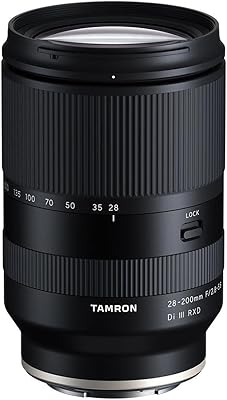
Tamron 28-200mm F/2.8-5.6 Mirrorless Zoom Lens
79%
93%
Versatility
74%
Image Sharpness
88%
Autofocus Performance
63%
Build Quality
41%
Weather Resistance
More

FAQ

Yes, the 24mm Tamron is fully compatible with Sony APS-C E-mount bodies like the a6000, a6100, a6400, and a6600. Keep in mind that on an APS-C sensor, the 24mm focal length effectively becomes around 36mm due to the crop factor, which changes the field of view compared to shooting on a full-frame body.

For video, the OSD motor is one of this lens's genuine strengths — it operates quietly enough that you won't hear it on recordings made with an on-camera or nearby microphone. Focus transitions are smooth for casual and documentary-style video. That said, in low light or with low-contrast subjects, AF can hunt, so if you shoot a lot of dimly lit video, manual focus may give you more reliable results.

It is genuinely useful, and it surprises a lot of buyers who picked up this compact Sony E-mount lens primarily for wide-angle work. At 1:2, you can fill the frame with a subject roughly the size of a credit card, which opens up real creative possibilities for flowers, food, textures, and product detail shots. It does require steady hands or a stable surface at minimum focus distance.

There is noticeable barrel distortion in uncorrected files, but Sony bodies automatically apply lens correction profiles when shooting JPEG, and many Sony raw workflows apply the correction automatically too. If you shoot raw in a third-party editor like Lightroom, the correction profile is available and easy to apply with one click. It is only really a manual effort if you prefer to work without profiles.

Optically, it holds up impressively well against Sony's first-party wide primes in center sharpness and overall rendering, especially at this price gap. Where it falls short is in autofocus speed, corner performance on full-frame at wide apertures, and build quality feel. If you need top-tier AF tracking or the absolute best corner-to-corner resolution wide open, Sony's own options have an edge — but for most everyday shooting, the difference is smaller than the price gap suggests.

It handles light rain and incidental splashes without issue, and users who have shot in drizzly conditions or dusty environments report no problems. That said, it is described as moisture-resistant rather than fully weather-sealed, so it is not built for sustained downpours or professional outdoor assignments in harsh weather. Treat it sensibly and it will hold up well for normal travel and outdoor use.

No, the lens itself does not include optical image stabilization. However, it does work in conjunction with Sony in-body image stabilization (IBIS) on bodies that support it, such as the a7 III, a7C, and a6600. If your body has IBIS, you will benefit from stabilization when shooting handheld at slower shutter speeds.

At F/2.8 on a full-frame camera, corner darkening is noticeable — it is one of the more consistently mentioned optical quirks among full-frame users. Stopping down to F/4 or F/5.6 brings significant improvement. For JPEG shooters, in-camera correction handles much of it automatically. APS-C users are largely unaffected due to the crop.

The 24mm Tamron uses a standard front-element filter thread, so you can use circular polarizers, neutral density filters, and other common filters with it. Check the specific filter thread diameter for your filter collection before purchasing — Tamron lists the exact size in the official product specifications on their website.

It is a solid choice for that purpose. A fixed 24mm focal length teaches you to think carefully about your position relative to your subject, which is one of the most effective ways to improve compositional awareness. The compact size, manageable weight, and forgiving price make it easy to carry and experiment with daily. Just be aware that 24mm is a fairly wide perspective — if you primarily shoot portraits or subjects at mid-distance, a 35mm or 50mm prime might feel more intuitive as a starting point.

Where to Buy