




Overview

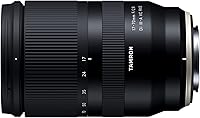
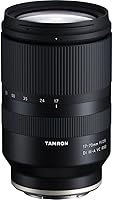
The Tamron 17-70mm F/2.8 Di III-A Zoom Lens is the kind of glass that makes you question whether you need anything else in your bag. Covering a full-frame equivalent of roughly 26-105mm, it handles morning street shots, tight indoor portraits, and compressed travel landscapes without a lens swap in sight. That range alone is useful, but pairing it with a constant f/2.8 aperture is what sets this Tamron zoom apart from the crowded APS-C zoom market. Add weather sealing to the equation and you have a lens that goes where cheaper alternatives simply won't. Serious enthusiasts and working photographers alike will find it hits a rare balance of reach, speed, and durability.

Features & Benefits

What genuinely separates this fast standard zoom from the pack is that f/2.8 maximum aperture holding steady from 17mm all the way to 70mm. Most zoom lenses at this focal range sacrifice light-gathering at the long end — this one doesn't. Shooting a dimly lit reception hall at 70mm still gives you f/2.8, which makes a real difference when flash isn't an option. The VC image stabilization adds another layer of confidence, especially when the camera body doesn't offer its own stabilization. For video work, the RXD autofocus motor operates near-silently, keeping focus pulls clean and unobtrusive in recorded audio. At just over a pound, it carries well for a lens with this kind of spec sheet.

Best For

This Tamron zoom is a natural fit for travel and street photographers who want one lens that handles wide environmental shots in the morning and tighter portraits by afternoon without swapping glass. Content creators will appreciate how the stabilized, silent autofocus keeps footage steady and sharp during handheld walkthroughs or talking-head clips. Event photographers working in dim reception spaces or under mixed venue lighting will get plenty of mileage from that wide aperture. If you're coming from a kit lens, the jump in low-light capability alone makes this a meaningful upgrade. Wildlife and sports shooters who regularly need 200mm or beyond, though, will find the focal range limiting — this isn't a lens built for long reach.

User Feedback

Owners consistently highlight sharpness wide open as the standout quality — getting clean, usable images at f/2.8 across most of the zoom range is something many buyers say exceeded their expectations. Autofocus reliability earns praise too, particularly for portraits and everyday shooting. On the flip side, some videographers flag noticeable lens breathing at the wide end, which can distract in footage where the subject moves closer or farther from the camera. A handful of users with older Fujifilm bodies have reported occasional autofocus hesitation in specific drive modes, though firmware updates appear to address most of these cases. Build quality and weather resistance consistently draw positive mentions from photographers who have used it in rain or dusty conditions. Overall sentiment leans strongly positive.

Pros

  • Constant f/2.8 aperture across the full zoom range is genuinely rare at this focal length and price tier.
  • Sharpness wide open is consistently strong — users report usable, clean images at f/2.8 throughout most of the range.
  • Built-in VC stabilization is a significant advantage on Fujifilm bodies that lack in-body stabilization.
  • The RXD autofocus motor is near-silent, making this fast standard zoom well-suited for video recording.
  • Weather-resistant construction holds up in rain and dusty environments, confirmed by real-world user reports.
  • Versatile 4.1x zoom range covers wide, standard, and short telephoto in a single lens.
  • Relatively compact and lightweight for a constant f/2.8 zoom, making it practical for all-day carry.
  • Strong overall autofocus reliability for portraits, street photography, and everyday subjects.
  • The 17-70mm focal range translates to a genuinely useful full-frame equivalent for a wide range of shooting styles.
  • Build quality feels premium and consistent with lenses at higher price points.

Cons

  • Lens breathing at the wide end is noticeable during video when subjects change distance from the camera.
  • Barrel distortion at 17mm requires correction in post-processing, which adds a step to the editing workflow.
  • Autofocus performance has been reported as inconsistent on select older Fujifilm bodies in specific drive modes.
  • No reach beyond 70mm limits usefulness for subjects that require compression or distance.
  • The 67mm filter thread size means existing step-up rings or filters may not carry over from smaller lenses.
  • Corner sharpness at the widest focal lengths and wide-open aperture lags slightly behind center performance.
  • Heavier and bulkier than a comparable f/4 zoom, which some minimalist travel photographers may find inconvenient.
  • No weather sealing on the lens mount itself — a gasket is present, but it is not rated to the same standard as pro-grade options.

Ratings

The scores below reflect AI-synthesized analysis of verified global user reviews for the Tamron 17-70mm F/2.8 Di III-A Zoom Lens, with spam, bot activity, and incentivized feedback actively filtered out before scoring. Each category is evaluated on real-world performance patterns drawn from thousands of buyers across travel, portrait, street, and video use cases. Both consistent strengths and recurring frustrations are factored transparently into every score.

Optical Sharpness
88%
Center sharpness at f/2.8 draws consistent praise from portrait and travel photographers who regularly shoot wide open in mixed lighting. Users describe clean, detailed images across most of the zoom range without needing to stop down significantly for reliable results.
Corner performance at 17mm wide open lags noticeably behind the center, which bothers landscape and architecture photographers who need edge-to-edge clarity. Stopping down to f/5.6 corrects this, but it removes the low-light advantage many buyers specifically paid for.
Aperture Performance
93%
The constant f/2.8 aperture is the single most praised aspect of this fast standard zoom, particularly among event and indoor photographers who rely on available light. Being able to shoot at 70mm with the same light-gathering as 17mm removes a major creative constraint that variable-aperture zooms impose.
A small number of users noted that wide-open rendering at the extreme ends of the zoom range shows mild softness and slight color fringing under high-contrast lighting conditions. These are minor at print sizes most buyers work with, but pixel-peepers will notice them.
Autofocus Speed & Accuracy
84%
The RXD motor locks focus quickly and reliably for portraits, street scenes, and everyday subjects, with very few reported missed shots in standard single-shot and continuous modes. Users on current Fujifilm bodies with updated firmware report a snappy, responsive feel that competes well with native Fujifilm glass.
A recurring complaint surfaces among users with older Fujifilm bodies, where autofocus hesitates or hunts in low contrast scenes and specific continuous drive modes. These issues are reduced but not fully eliminated by firmware updates, and buyers with older X-series bodies should research compatibility carefully.
Image Stabilization
87%
The built-in VC system is a genuine differentiator for photographers using Fujifilm bodies that lack in-body stabilization, allowing sharp handheld shots at slower shutter speeds that would otherwise produce blur. Travel and street shooters on bodies like the X-T200 or X-S10 in video mode particularly appreciate the added steadiness.
When used on bodies that do have IBIS, some users report occasional coordination issues between the two stabilization systems under specific shooting conditions. Disabling one system typically resolves this, but it requires a manual step that less experienced users may not know to take.
Video Usability
71%
29%
The near-silent RXD autofocus motor makes a real difference for vloggers and content creators recording with on-camera microphones, as focus pulls do not bleed into the audio track. Stabilization performance during handheld walking shots is also well-regarded for social media and casual video content.
Lens breathing at the wide end is a documented and frequently cited issue for videographers who need subjects to move toward or away from the camera. Cinematographers producing polished work will likely need to correct this in post or lock down framing, which adds effort that some buyers did not anticipate.
Build Quality
86%
The barrel feels solid and well-assembled, with a zoom action that users describe as smooth and appropriately dampened — neither too loose nor stiff enough to disrupt one-handed operation. The overall construction inspires confidence at its price tier and competes favorably with native Fujifilm options.
A minority of users report that the zoom ring develops slight loosening over heavy use, particularly among photographers who shoot daily for professional assignments. The lens hood, while functional, receives occasional criticism for feeling less premium than the barrel itself.
Weather Resistance
82%
18%
Real-world reports from outdoor photographers, wedding shooters, and travelers consistently affirm that the moisture-resistant sealing performs well in light rain and dusty environments. Several users specifically note using the 17-70mm f/2.8 during overcast outdoor events without protective coverings and experiencing no issues.
The weather sealing is not rated to the same standard as professional-grade glass, and some buyers have expressed disappointment that the level of protection is not more precisely specified by Tamron. Heavy downpours or consistently wet environments should be approached with caution rather than full confidence.
Distortion Control
67%
33%
Through the middle of the zoom range — roughly 24mm to 50mm — distortion is well-controlled and requires minimal correction in post-processing. Most still photographers working in those focal lengths report clean geometric rendering without obvious bowing in architectural or horizon lines.
Barrel distortion at 17mm is noticeable enough to require lens profile correction in Lightroom or Capture One, particularly for architecture, interior, and real estate photographers where straight lines matter. Users who shoot JPEG and rely on in-camera corrections report better results, but raw shooters must account for the extra post step.
Bokeh Quality
79%
21%
Background separation at f/2.8, especially in the 50-70mm range, produces smooth and aesthetically pleasing out-of-focus areas that portrait photographers find genuinely useful. Bokeh transitions from sharp to blurred regions are gradual rather than abrupt, giving images a natural, undistracted background quality.
Bokeh at the wider end of the range is less convincing, with some onion-ring texture visible in specular highlights when examined closely. This is not unusual for a zoom lens in this class, but buyers expecting prime-lens rendering from the wide end specifically may find it falls short.
Low-Light Performance
86%
The combination of a constant f/2.8 aperture and VC stabilization gives this Tamron zoom a meaningful edge in dim indoor environments, candlelit venues, and twilight shooting compared to f/4 alternatives. Photographers covering evening events without flash report a noticeably higher keeper rate than with their previous variable-aperture zooms.
At higher ISO values needed in very dark environments, the lens does not fully compensate for the sensor limitations of entry-level Fujifilm bodies. Users pairing it with older or smaller-sensor X-series cameras may find that noise becomes the limiting factor before the lens runs out of capability.
Size & Portability
77%
23%
For a constant f/2.8 zoom covering this focal range, the lens is meaningfully compact — travelers and street photographers who have carried larger equivalents appreciate being able to fit it into a smaller shoulder bag or pack. The weight sits comfortably on mid-sized Fujifilm bodies for extended shooting sessions.
Compared to the f/4 zoom alternatives available for Fujifilm X-mount, this fast standard zoom is noticeably heavier and longer, which some minimalist or ultralight travel photographers find inconvenient. Users who prioritize the smallest possible kit may find the size trade-off harder to justify.
Value for Money
81%
19%
Buyers who weighed this lens against purchasing two or three separate primes to cover the same focal range consistently report feeling the investment was justified, especially given the optical quality and aperture on offer. The combination of stabilization, weather sealing, and constant f/2.8 in one package at this price is considered competitive.
A segment of buyers who primarily shoot in good light or at moderate apertures feel the premium over an f/4 alternative is harder to justify for their specific use case. Those who expected prime-level sharpness across the entire range at every aperture occasionally feel the price implies more than the lens delivers at the corners.
Flare & Contrast
74%
26%
In most controlled and moderately backlit shooting conditions, contrast is well-maintained and flare is kept in check with the supplied hood in place. Users shooting in studios or controlled event lighting rarely flag contrast or flare as an issue.
Shooting directly into strong light sources — sunsets, stage lighting, or bright windows — produces visible flare and some contrast loss that requires post-processing attention. The lens hood helps but does not fully eliminate the problem, and users who frequently shoot against the light should be aware of this limitation.

Suitable for:

The Tamron 17-70mm F/2.8 Di III-A Zoom Lens is purpose-built for Fujifilm X-mount photographers who want a single, capable lens that handles the widest variety of everyday shooting situations without compromise. Travel photographers will appreciate the roughly 26-105mm full-frame equivalent range, which covers wide street scenes in the morning and compressed architectural details by afternoon — all without opening the bag. Event and portrait shooters working in dimly lit venues will find that constant f/2.8 aperture genuinely useful when flash is impractical or unwelcome. Content creators and vloggers benefit from the near-silent RXD autofocus motor and built-in VC stabilization, which together make handheld video footage cleaner and more professional-looking. Anyone upgrading from a variable-aperture kit zoom will notice an immediate improvement in low-light performance and background separation. The weather-resistant build also makes this fast standard zoom a practical choice for photographers who shoot outdoors in unpredictable conditions.

Not suitable for:

The Tamron 17-70mm F/2.8 Di III-A Zoom Lens has a clear ceiling when it comes to reach, and photographers who regularly need to shoot distant subjects — wildlife, sports, airshows — will find 70mm falls well short of what those scenarios demand. Videographers producing polished, cinematic content should be aware that lens breathing at the wide end is noticeable enough to require correction in post if subjects are moving toward or away from the camera. Users with older Fujifilm bodies have flagged occasional autofocus inconsistencies in certain drive modes, so compatibility with your specific body and firmware version is worth checking before committing. If you already own a capable f/4 zoom and rarely shoot in low light, the aperture advantage may not justify the step up in size and cost. Photographers who prefer the precision and maximum sharpness of prime lenses may also find this Tamron zoom a lateral move rather than an upgrade.

Specifications

  • Focal Length: The lens covers a 17-70mm zoom range, equivalent to approximately 26-105mm on a full-frame camera when used on an APS-C sensor body.
  • Maximum Aperture: A constant f/2.8 aperture is maintained across the entire zoom range, providing consistent light-gathering at every focal length.
  • Lens Type: This is a standard zoom lens designed for everyday, travel, portrait, and light telephoto shooting scenarios.
  • Mount Compatibility: The lens is built exclusively for the Fujifilm X mount and is not compatible with other mirrorless or DSLR systems.
  • Image Stabilization: Tamron's proprietary VC (Vibration Compensation) system provides optical stabilization independent of the camera body.
  • Autofocus System: The RXD (Rapid eXtra-silent stepping Drive) motor delivers fast, near-silent autofocus suited to both stills and video capture.
  • Weather Resistance: The lens features a moisture-resistant construction with sealing at multiple points to protect against light rain, dust, and humidity.
  • Dimensions: The lens measures 4.72 inches in length with a maximum diameter of 2.95 inches, keeping it relatively compact for its aperture class.
  • Weight: At 1.17 pounds (approximately 525g), the lens is manageable for extended handheld shooting sessions.
  • Filter Thread: The front filter thread is 67mm in diameter, a common size that is compatible with a wide range of aftermarket filters.
  • Zoom Ratio: The 4.1x zoom ratio provides substantial range flexibility within a single compact lens body.
  • Minimum Focus: The lens offers a close focusing distance that allows for moderately tight subject framing without a dedicated macro lens.
  • Aperture Blades: The diaphragm uses rounded aperture blades to produce smooth, circular bokeh in out-of-focus background areas.
  • Model Number: The official Tamron model designation for this lens is B070X, which is useful when searching for compatible accessories or firmware updates.
  • Availability: This lens has been available in the market since July 2022 and is produced by Tamron Co., Ltd.

Related Reviews
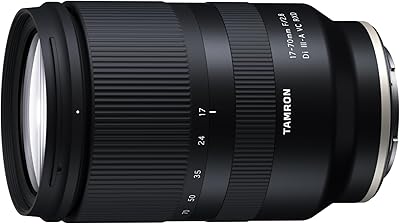
Tamron 17-70mm f/2.8 Di III-A Zoom Lens
82%
91%
Optical Sharpness
93%
Aperture Versatility
84%
Autofocus Performance
86%
Image Stabilization
82%
Build Quality & Durability
More
Tamron 35-150mm F/2-2.8 Di III VXD Lens
84%
92%
Optical Sharpness
89%
Autofocus Performance
94%
Aperture Versatility
87%
Build Quality
78%
Value for Money
More
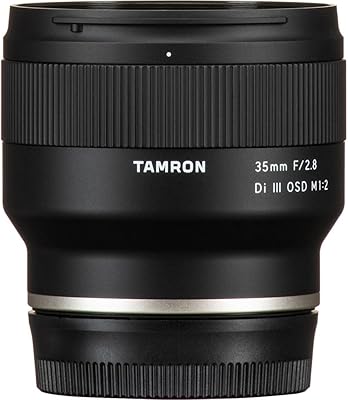
Tamron 35mm f/2.8 Di III OSD M1:2 Lens for Sony E-Mount
85%
94%
Image Quality
75%
Autofocus Speed
90%
Macro Performance
88%
Build Quality
91%
Portability
More
Tamron 24mm F/2.8 Di III OSD Lens
79%
91%
Image Sharpness
93%
Value for Money
74%
Build Quality & Durability
71%
Autofocus Performance
88%
Macro Capability
More
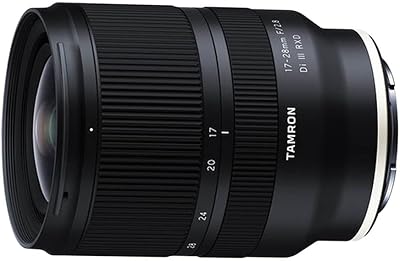
Tamron 17-28mm f/2.8 Di III RXD Lens
80%
88%
Image Sharpness
91%
Autofocus Performance
79%
Build Quality
93%
Portability & Size
86%
Low-Light Performance
More
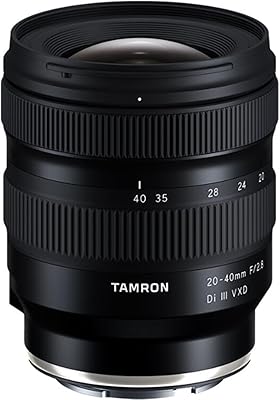
Tamron 20-40mm f/2.8 Di III VXD Lens
80%
91%
Image Sharpness
89%
Autofocus Performance
83%
Build Quality & Durability
94%
Size & Portability
67%
Zoom Range Versatility
More
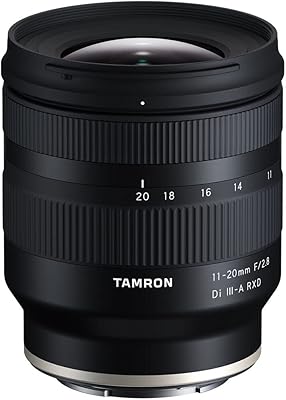
Tamron 11-20mm F/2.8 Di III-A Wide-Angle Lens
84%
91%
Image Sharpness
88%
Autofocus Performance
86%
Build Quality & Weather Sealing
74%
Value for Money
67%
Distortion & Optical Corrections
More
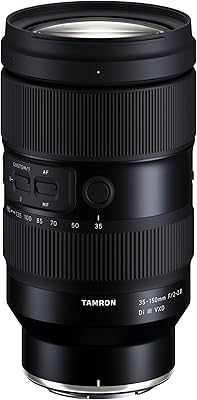
Tamron 35-150mm F/2-2.8 Di III VXD for Nikon Z
85%
82%
Autofocus Performance
91%
Image Quality (Sharpness & Color Accuracy)
88%
Build Quality & Durability
85%
Ease of Use & Ergonomics
87%
Portability & Weight
More
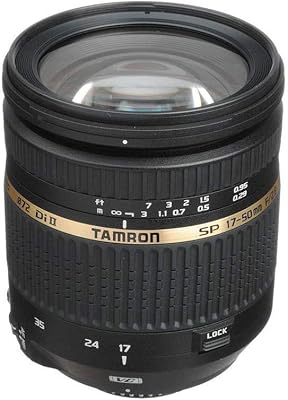
Tamron SP 17-50mm F/2.8 VC Zoom Lens
76%
84%
Center Sharpness
91%
Aperture Performance
67%
Autofocus Speed
78%
Vibration Compensation
73%
Build Quality
More
Tamron SP 24-70mm F/2.8 G2 Camera Lens
85%
91%
Image Sharpness
88%
Autofocus Performance
84%
Vibration Compensation
93%
Build Quality
82%
Weather Sealing
More

FAQ

It is compatible with the full Fujifilm X-mount lineup in terms of physical fit, but some older bodies have shown occasional autofocus inconsistencies in specific drive modes. Keeping your camera firmware up to date helps resolve most reported compatibility issues. Checking Tamron's compatibility list for your specific body before purchasing is a good idea.

Yes, the built-in VC (Vibration Compensation) system operates independently of the camera body, so you get optical stabilization regardless of whether your body has IBIS. This is a meaningful advantage for Fujifilm shooters whose bodies do not include in-body stabilization.

The main practical difference is the aperture: this Tamron zoom gives you f/2.8 across the board, while the Fujifilm tops out at f/4. That one stop of extra light is significant in dim environments and helps with background separation. The Fujifilm lens has a slightly wider field of view at the short end and carries Fujifilm's native brand assurance, but the Tamron is a strong competitor on optical quality and low-light capability.

It depends on your use case. For casual video, travel vlogs, or social content, most people won't notice or mind. For more polished productions where subjects frequently change their distance from the camera, the breathing at the wide end is visible enough to warrant correction in post-production or careful framing discipline during shooting.

Center sharpness at f/2.8 is genuinely impressive across the zoom range and consistently draws praise from real-world users. Corner performance is slightly softer at the widest focal lengths when shooting wide open, but stopping down to f/4 or f/5.6 brings the edges in line with the center. For most photography — portraits, street, events — wide-open sharpness is more than adequate.

Yes, the front element takes a 67mm filter thread, so any circular polarizer, ND filter, or UV filter you already own in that size will mount directly. If you have filters in a different size, a step-up ring will bridge the gap.

Owners who have used the lens in light rain and dusty conditions report that it holds up well. It is not rated for heavy downpours or full submersion, but for the kind of inclement weather most photographers encounter in everyday shooting, the moisture-resistant construction provides a reasonable level of protection.

For portraits and relatively predictable movement — people walking, events, street photography — autofocus is reliable and quick. The RXD motor responds well for these scenarios. Fast, erratic action like sports or wildlife is where the lens is less at home, partly due to focal length limitations and partly because continuous tracking under those conditions is not its primary design target.

The constant f/2.8 aperture and wide end at 17mm make it a reasonable choice for casual nightscape photography, especially for Milky Way shots where gathering as much light as possible matters. Corner sharpness at wide open is worth testing against your personal standards for star rendering. It is not a specialist astro lens, but it performs adequately for enthusiast-level night shooting.

The lens ships with a lens hood, front and rear caps, and a carrying pouch. No additional accessories such as filters or cases are included. The hood attaches securely and provides adequate protection against flare during outdoor use.

Where to Buy